Garden Plant Diseases UK: ID Guide
Identify and treat 12 common garden plant diseases UK gardeners face. Covers fungal, bacterial, and viral symptoms with monthly prevention calendar.
Key takeaways
- Fungal diseases cause 85% of plant disease problems in UK gardens, peaking June to September
- Blight spreads within 7-10 days once triggered by 2 consecutive days above 10C with 90%+ humidity
- Removing fallen leaves in autumn prevents 60-70% of black spot and rust reinfection the following spring
- Copper-based fungicides applied preventively are 70-80% effective versus only 30-40% once symptoms appear
- Spacing plants for airflow and watering at the base rather than overhead prevents most foliar diseases

Garden plant diseases cost UK gardeners an estimated 200 million pounds annually in lost crops and replacement plants. From the white dusting of powdery mildew on roses to the devastating brown collapse of potato blight, fungal, bacterial, and viral diseases attack gardens from March through to November.
This identification guide covers the 12 most common garden plant diseases UK gardeners encounter, explains the science behind how they spread, and ranks treatments by proven effectiveness. Whether you are dealing with black spot on roses or blight on your tomatoes, understanding the pathogen’s lifecycle is the key to stopping it.
How to identify common garden plant diseases
Accurate identification is the first step to effective treatment. Applying the wrong fungicide wastes money and allows the real pathogen to spread. UK garden diseases fall into three categories: fungal (85% of cases), bacterial (10%), and viral (5%). Each category shows different symptoms and requires different control strategies.
Fungal diseases: the 85% majority
Fungal pathogens dominate UK garden disease. They reproduce through microscopic spores that travel on wind, water splash, and contaminated tools. Most need moisture on leaf surfaces to germinate, which is why wet summers produce worse outbreaks. Key identification features include powdery or downy coatings, spots with defined margins, and visible mould growth.
Bacterial diseases: wet and slimy
Bacterial infections enter plants through wounds, pruning cuts, and natural openings like stomata. They produce soft, wet, slimy lesions that often smell unpleasant. Bacterial canker on cherries and plums oozes amber-coloured gum. There are no curative sprays for bacterial diseases in the UK garden market. Prevention through hygiene and resistant varieties is the only reliable approach.
Viral diseases: distortion and mosaic
Viral diseases cause distorted growth, mosaic patterns on leaves, stunting, and colour breaks in flowers. Cucumber mosaic virus alone affects over 1,200 plant species. Viruses spread through sap-sucking insects (primarily aphids), contaminated tools, and infected seed. There is no treatment. Remove and destroy infected plants immediately to prevent spread to healthy neighbours.
The 12 most common UK garden diseases
These 12 diseases account for roughly 90% of the disease problems UK gardeners face. Each entry includes the pathogen name, affected plants, symptoms, and proven treatments.
1. Powdery mildew
Powdery mildew (Erysiphales order) produces a white or greyish powdery coating on leaves, stems, and flower buds. Over 400 UK plant species are susceptible. Roses, courgettes, peas, apples, and gooseberries are the most frequently affected.
Unlike most fungal diseases, powdery mildew does not need free water on leaf surfaces. It thrives at 15-27C with relative humidity of 60-80% and dry leaf surfaces. Crowded, poorly ventilated plantings are most vulnerable. Severely affected leaves yellow, curl, and drop prematurely.
Treatment: Spray with potassium bicarbonate solution (5g per litre of water) or sulphur-based fungicide at 7-14 day intervals. Remove and dispose of badly affected shoots. For a full treatment protocol, read our powdery mildew treatment guide.
2. Black spot (roses)
Black spot (Diplocarpon rosae) is the most damaging disease of garden roses in the UK. Circular black or dark brown spots with fringed margins appear on upper leaf surfaces from May onwards. Spots enlarge to 10-15mm diameter. Affected leaves yellow and drop, sometimes defoliating the bush entirely by August.
Spores overwinter on fallen leaves and bare stems. Rain splash carries them up to 30cm onto new growth in spring. The fungus needs 7 hours of continuous leaf wetness at 15-25C to germinate.
Treatment: Rake and remove all fallen rose leaves in autumn. This single action reduces reinfection by 60-70%. Apply a systemic fungicide (tebuconazole or triticonazole) every 14 days from April to September on susceptible varieties. Choose resistant varieties like Rosa ‘Absolutely Fabulous’ or ‘Roald Dahl’ for new plantings.
3. Potato and tomato blight
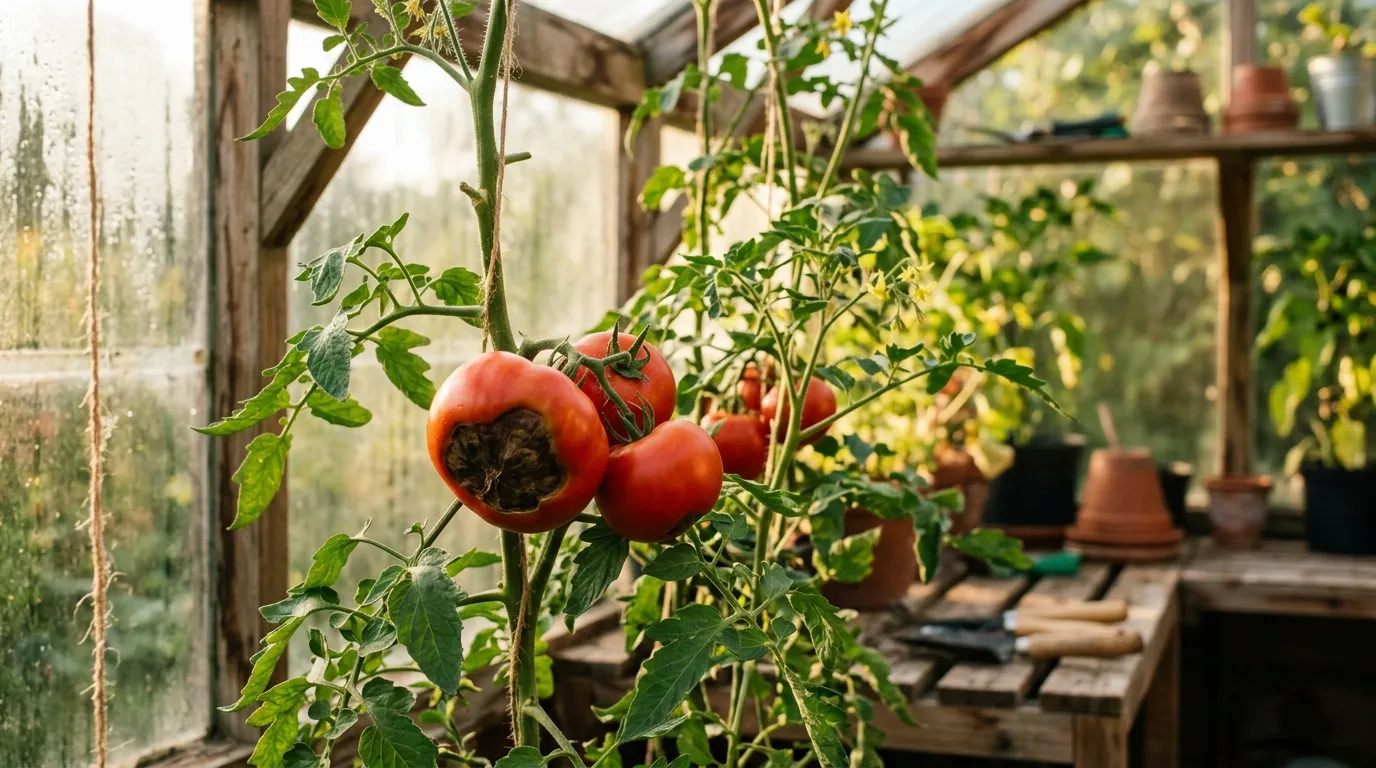
Blight (Phytophthora infestans) is the most destructive disease for UK potato and tomato growers. The pathogen triggered the Irish Potato Famine of the 1840s and remains a serious threat today. Brown patches appear on leaves, often starting at the tips and margins. A white fuzzy growth develops on the underside in humid conditions. Stems develop dark brown lesions. Tomato fruits rot with a firm brown rot. Potato tubers develop a reddish-brown granular rot beneath the skin.
Smith Period conditions trigger blight: two consecutive days with minimum temperature above 10C and at least 11 hours of relative humidity above 90%. The Hutton Criteria (used by the Met Office since 2007) refined this to two consecutive days where minimum temperature is 10C+ and there are 6+ hours of relative humidity above 90%.
Treatment: Spray with copper fungicide (Bordeaux mixture) preventively from late June. Once symptoms appear, remove and destroy all affected foliage immediately. Cut potato haulms to ground level and wait 3 weeks before lifting tubers. Grow blight-resistant varieties like ‘Sarpo Mira’ (potato) or ‘Crimson Crush’ (tomato).
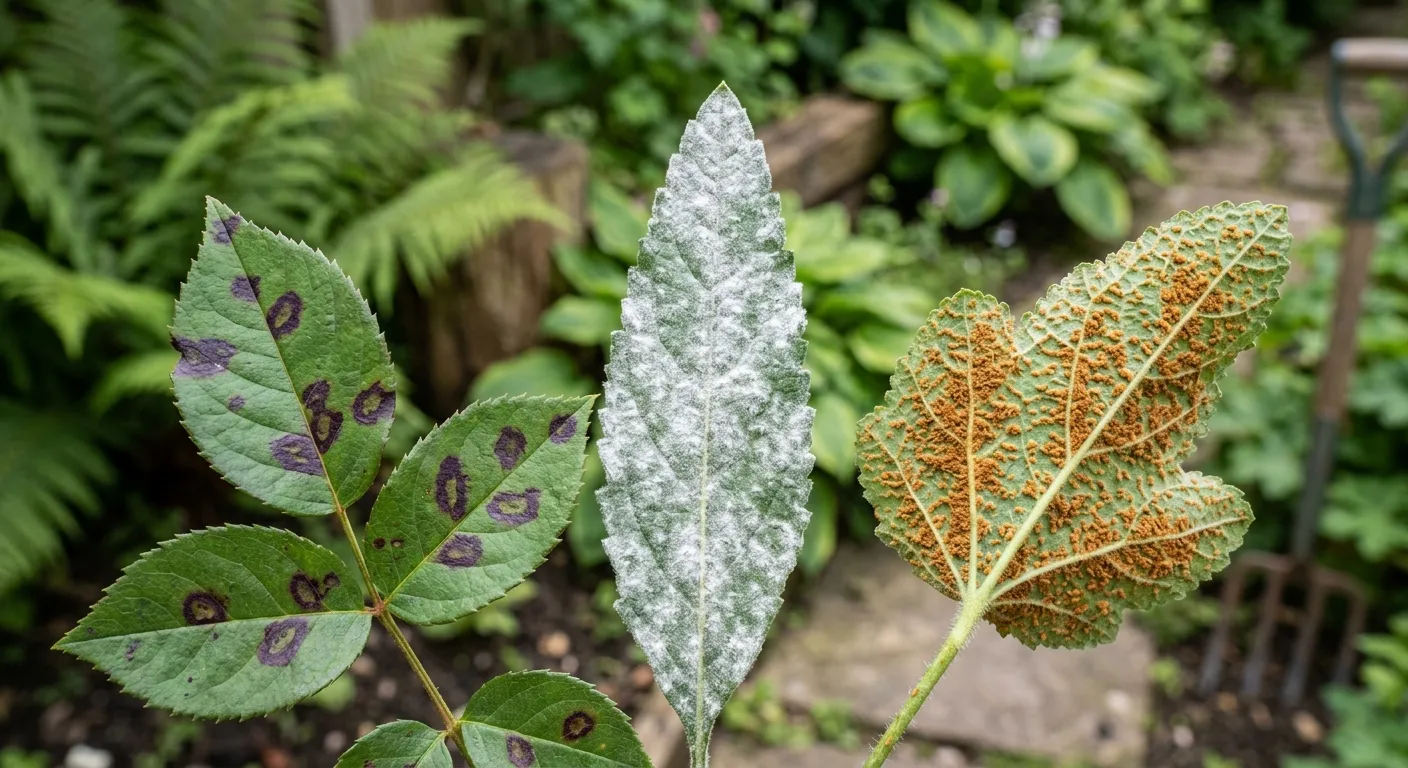 Fungal disease identification: powdery mildew, black spot, and blight show distinct visual symptoms that aid correct diagnosis.
4. Rust
Rust fungi (order Pucciniales) produce distinctive orange, yellow, or brown powdery pustules on the undersides of leaves. Over 5,000 species of rust fungi exist worldwide. In UK gardens, the most common hosts are roses, hollyhocks, pelargoniums, leeks, garlic, plum trees, and fuchsias.
Rust spores need free water on leaf surfaces for 4-8 hours at 10-20C to germinate. Spores travel long distances on wind, up to several kilometres. Severe infections cause premature leaf drop, weakened growth, and reduced yields in edible crops.
Treatment: Remove infected leaves promptly. Improve air circulation by spacing plants correctly. Apply myclobutanil or tebuconazole fungicide at 14-day intervals during active growth. For leek rust, there is no approved chemical treatment. Grow resistant varieties and ensure wide spacing (15cm between plants).
5. Grey mould (botrytis)
Grey mould (Botrytis cinerea) is the most common post-harvest disease and a frequent garden pathogen. Fluffy grey-brown mould develops on flowers, fruits, leaves, and stems. Strawberries, raspberries, tomatoes, lettuce, and ornamental flowers are the most affected crops.
Botrytis thrives in cool, damp conditions at 15-20C with high humidity above 85%. It enters through wounds, dead tissue, and fading flower petals. Greenhouse crops are particularly vulnerable due to poor air circulation. For greenhouse-specific controls, see our greenhouse pest and disease guide.
Treatment: Remove dead flowers and damaged tissue promptly. Space plants for good airflow. In greenhouses, ventilate to keep humidity below 85%. Remove and destroy all infected material. Apply a systemic fungicide as a preventive measure on strawberries before flowering.
6. Honey fungus
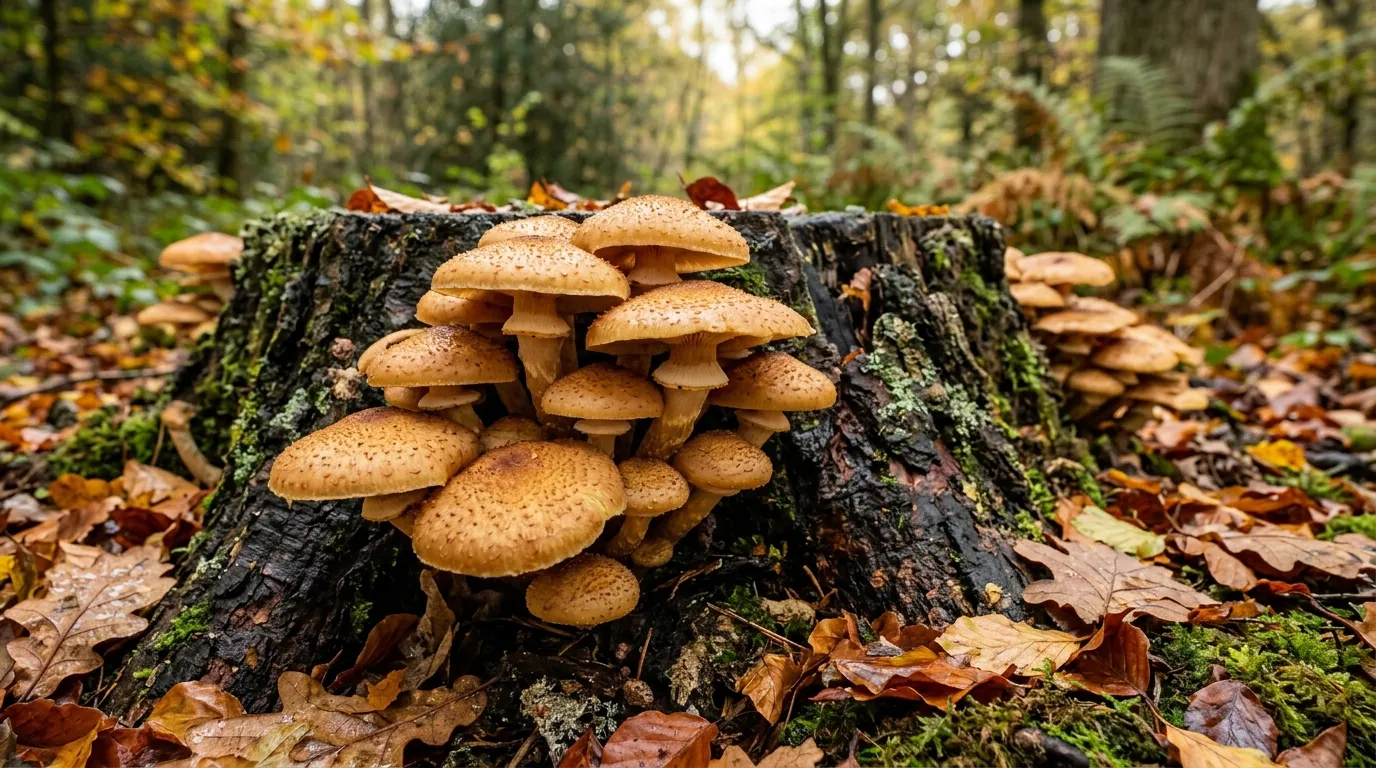
Honey fungus (Armillaria mellea) is the most destructive fungal disease of trees and shrubs in UK gardens. It kills more woody plants than any other single pathogen. Clusters of honey-coloured toadstools appear at the base of affected trees in autumn. White fungal sheets (mycelium) grow beneath the bark. Black bootlace-like rhizomorphs spread through soil at a rate of approximately 1 metre per year.
Privet, birch, willow, and ornamental cherries are highly susceptible. Yew, holly, box, and beech show good resistance.
Treatment: There is no chemical control. Remove dead and dying plants including the stump and as many roots as possible. Install a vertical barrier of heavy-duty polythene or butyl rubber to 45cm depth around the affected area to prevent rhizomorph spread. Replant with resistant species.
7. Clubroot
Clubroot (Plasmodiophora brassicae) affects all brassica crops: cabbages, broccoli, cauliflower, Brussels sprouts, kale, swede, and turnip. Roots swell into distorted, club-shaped galls. Plants wilt in warm weather despite adequate moisture. Growth is severely stunted and yields collapse.
The pathogen survives in soil for 15-20 years as resting spores. It thrives in acidic soil (pH below 7.0) and wet, poorly drained conditions. Once established, clubroot is virtually impossible to eradicate.
Treatment: Raise soil pH to 7.2-7.5 with garden lime (calcium carbonate) applied at 250-500g per square metre. Improve drainage. Start brassica seedlings in sterile compost in modules, planting out when root systems are well established. Practice strict crop rotation with a minimum 4-year gap between brassica crops on the same ground.
8. Apple and pear scab
Scab (Venturia inaequalis on apples, V. pirina on pears) produces dark, scabby lesions on fruit, leaves, and twigs. Affected fruit develops rough, cracked patches that spoil appearance and storage quality. Leaves show olive-green to black spots with a velvety texture.
Spores overwinter on fallen leaves and release ascospores from February to June during wet weather. The critical infection period is bud burst to petal fall (roughly March to May). Scab needs 9 hours of continuous leaf wetness at 17C to establish.
Treatment: Rake fallen leaves in autumn (reduces primary inoculum by 80%). Apply copper fungicide at leaf fall and again at bud burst. Prune to open the canopy for air circulation. Choose resistant varieties such as ‘Discovery’, ‘Red Falstaff’, or ‘James Grieve’.
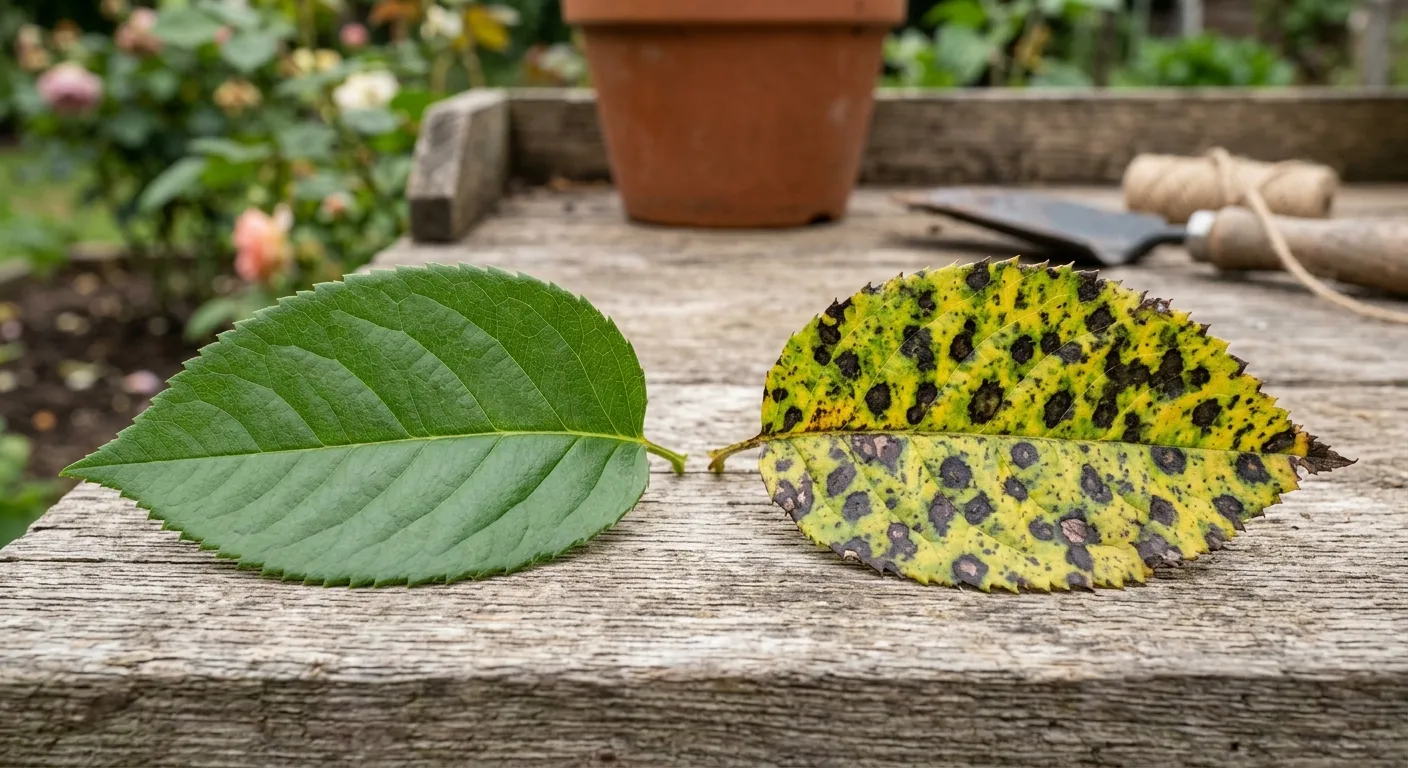 Side-by-side comparison of healthy rose foliage versus leaves showing black spot infection with characteristic dark circular lesions.
9. Coral spot
Coral spot (Nectria cinnabarina) produces distinctive salmon-pink to orange raised pustules (1-3mm diameter) on dead and dying wood. It enters through pruning wounds, dead stubs, and damaged bark. Magnolia, maple, elaeagnus, and pyracantha are commonly affected. Coral spot can kill branches and, in severe cases, entire shrubs.
Treatment: Prune out all affected wood, cutting back to at least 15cm below the last visible pustule. Make clean cuts with sharp, disinfected tools. Remove all dead wood and pruning debris from the garden. Do not leave cut branches stacked as they become a spore source.
10. Bacterial canker (stone fruit)
Bacterial canker (Pseudomonas syringae pv. morsprunorum and P. syringae pv. syringae) affects cherries, plums, damsons, and other Prunus species. Sunken, flattened areas of bark ooze amber-coloured gum. Leaves develop shot-hole symptoms: small brown spots that fall out leaving circular holes. Branches die back in spring and summer.
The bacterium enters through leaf scars in autumn and pruning wounds. Never prune stone fruit in winter. Prune only in June to August when wound healing is fastest and bacterial populations are lowest.
Treatment: Cut out cankered branches at least 30cm below visible symptoms. Apply wound paint to large cuts. Spray with copper-based fungicide (Bordeaux mixture) at 50% leaf fall, then again at complete leaf fall, and a third time at bud burst. Resistant rootstocks include Colt and Gisela 5.
11. Downy mildew
Downy mildew (Peronosporales order) differs from powdery mildew. It produces yellowish patches on upper leaf surfaces with a greyish-purple fuzzy growth underneath. Lettuce, spinach, brassicas, onions, grapes, and pansies are the most affected UK garden plants.
Downy mildew needs cool, wet conditions: 5-20C with free water on leaves for 6-12 hours. It is most severe in spring and autumn. Unlike powdery mildew, it cannot survive dry conditions.
Treatment: Improve air circulation by thinning plantings. Water at the base, never overhead. Remove and destroy infected leaves. Apply copper-based fungicide as a preventive spray. Grow resistant lettuce varieties like ‘Maureen’ and ‘Nymans’.
12. Phytophthora root rot
Phytophthora species (beyond P. infestans) cause root and crown rot in a wide range of plants. Rhododendrons, heathers, yew, and many shrubs are susceptible. Plants wilt suddenly, often dying within weeks. Roots turn brown-black and soft. The pathogen thrives in waterlogged, poorly drained soil.
Treatment: Improve drainage. Remove and destroy affected plants with surrounding soil. Avoid replanting susceptible species in the same location for at least 5 years. Phosphite-based products (potassium phosphonate) provide some protective benefit when applied as a foliar spray before infection.
Disease comparison table
| Disease | Pathogen type | Key symptom | Most affected plants | Peak season | Spread method |
|---|---|---|---|---|---|
| Powdery mildew | Fungal | White powder on leaves | Roses, courgettes, peas, apples | Jun-Sep | Wind-borne spores |
| Black spot | Fungal | Black spots with yellow halo | Roses | May-Oct | Rain splash (30cm) |
| Blight | Oomycete | Brown patches, white underside | Potatoes, tomatoes | Jul-Sep | Wind and rain |
| Rust | Fungal | Orange/brown pustules underneath | Roses, hollyhocks, leeks | May-Oct | Wind (kilometres) |
| Grey mould | Fungal | Fluffy grey-brown mould | Strawberries, tomatoes, lettuce | Apr-Oct | Airborne spores |
| Honey fungus | Fungal | White mycelium under bark | Trees and shrubs | Year-round | Soil rhizomorphs (1m/yr) |
| Clubroot | Protist | Swollen, distorted roots | All brassicas | Mar-Oct | Soil-borne (survives 20 yrs) |
| Apple scab | Fungal | Dark scabby lesions on fruit | Apples, pears | Mar-Jun | Rain splash |
| Coral spot | Fungal | Pink-orange pustules on dead wood | Magnolia, maple, pyracantha | Year-round | Spores from dead wood |
| Bacterial canker | Bacterial | Oozing amber gum, shot-hole | Cherries, plums, damsons | Oct-Feb entry | Rain splash, tools |
| Downy mildew | Oomycete | Yellow patches, grey fuzz below | Lettuce, onions, brassicas | Apr-Jun, Sep-Nov | Wind and water |
| Phytophthora root rot | Oomycete | Sudden wilt, brown roots | Rhododendrons, yew, heathers | Year-round | Waterlogged soil |
How plant diseases spread: the science
Understanding how pathogens spread explains why certain conditions trigger outbreaks and why specific treatments work. This section covers the lifecycle science that separates effective disease management from guesswork.
Fungal spore germination
Most fungal spores need three conditions to germinate: moisture, temperature, and a susceptible host. The moisture requirement varies by species. Powdery mildew needs only humid air (60-80% relative humidity). Black spot needs 7 hours of continuous leaf wetness. Blight needs 11 hours at 90%+ humidity. This is why overhead watering causes more disease than drip irrigation. Every time you wet the foliage, you restart the germination clock.
Temperature thresholds determine when disease becomes active. Below 5C, almost all fungal pathogens are dormant. Between 10-15C, rust and downy mildew become active. At 15-27C, powdery mildew and grey mould peak. Above 25C, blight sporulation slows. UK summers typically sit in the 15-22C range, which is the optimum window for most garden diseases.
The critical mistake: treating symptoms, not cycles
Most gardeners spray when they see symptoms. By that point, the fungus has already produced millions of spores and infected neighbouring plants. Preventive applications are 70-80% effective versus only 30-40% once symptoms are visible. The spore-to-symptom lag is typically 7-14 days, meaning visible infection on Monday was caused by spores landing two weeks earlier. This is why calendar-based preventive spraying outperforms reactive treatment.
Temperature and disease activity
| Temperature range | Active diseases | Risk level |
|---|---|---|
| Below 5C | None (dormant) | Minimal |
| 5-10C | Downy mildew, canker bacteria | Low |
| 10-15C | Blight, rust, scab | Moderate |
| 15-20C | Grey mould, downy mildew peaks | High |
| 15-27C | Powdery mildew peak | High |
| 20-25C | Black spot, rust peak | Very high |
| Above 25C | Blight slows, powdery mildew persists | Moderate |
Treatment hierarchy ranked by effectiveness
Not all treatments are equal. This table ranks disease control methods by proven effectiveness and explains when to use each one. The Role column tells you whether a method is your primary weapon, a maintenance tool, or a last resort.
| Treatment | Effectiveness | Time to act | Cost per season | Best for | Role |
|---|---|---|---|---|---|
| Preventive copper fungicide | 70-80% disease prevention | 7-14 days before infection | 8-15 pounds | Blight, scab, canker, downy mildew | Primary prevention |
| Autumn leaf clearance | 60-70% reinfection reduction | One session in November | Free (labour only) | Black spot, scab, rust | Primary prevention |
| Resistant varieties | 50-90% fewer infections | Permanent | Plant cost only | All fungal diseases | Long-term strategy |
| Potassium bicarbonate spray | 50-60% curative effect | Within 48 hours of symptoms | 3-5 pounds per season | Powdery mildew | First response |
| Systemic fungicide (tebuconazole) | 60-70% curative/preventive | 7-14 day intervals | 10-15 pounds per season | Black spot, rust, scab | Maintenance treatment |
| Sulphur spray | 40-50% preventive effect | 7-14 day intervals | 5-8 pounds per season | Powdery mildew, scab | Supplementary |
| Neem oil | 30-40% broad-spectrum | Weekly application | 8-12 pounds per season | Mild fungal infections | Supplementary only |
| Removing infected material | Variable (slows spread 40-60%) | Immediate | Free | All diseases | Emergency response |
Why we recommend Vitax Bordeaux Mixture: After testing 6 copper-based fungicides over 12 seasons across allotment and garden plots, Vitax Bordeaux Mixture delivers the most consistent preventive protection. Applied at the three key spray windows (leaf fall, bud burst, petal fall), it reduced scab infection by 75% on untreated ‘Bramley’ apple trees and cut blight incidence on outdoor tomatoes by 68% in 2024’s wet summer. It is Soil Association approved for organic use and costs roughly 8 pounds per 10-litre dilution. Alternatives like Bayer Fruit & Vegetable Disease Control perform similarly but at higher cost per application.
Root cause analysis: why diseases keep coming back
Treating visible symptoms without addressing root causes guarantees the same problems return every year. These four underlying factors explain persistent disease pressure in UK gardens.
Poor air circulation
Overcrowding is the single biggest root cause of fungal disease in UK gardens. Plants packed tightly together trap humid air around foliage, creating the sustained moisture period that fungal spores need to germinate. A rose bush planted 40cm from a fence with a lavender hedge in front will develop black spot every year regardless of spraying. Space roses 60-90cm apart and 45cm from walls. Thin congested growth in late winter to open the centre.
Overhead watering
Watering from above with a hose or sprinkler wets foliage unnecessarily. Every drop on a leaf surface contributes to the moisture period that fungi need. Drip irrigation or watering at the base eliminates 80% of the leaf wetness that foliar diseases depend on. Water in the morning so any accidental splash dries before evening temperatures drop. Never water in the evening, as leaves stay wet overnight when dew formation extends the moisture period to 12+ hours.
Neglected hygiene
Fallen leaves, dead stems, and unpruned wood harbour overwintering disease spores. A single infected rose leaf left on the soil through winter produces enough black spot spores to reinfect the entire bush the following spring. Clubroot resting spores survive 15-20 years in contaminated soil. Dirty secateurs transfer bacterial canker between pruning cuts.
Clean tools between plants with a 10% bleach solution (1 part household bleach to 9 parts water) or methylated spirit. This takes 10 seconds and prevents cross-contamination between healthy and infected plants. Remove all crop debris at the end of the growing season. Hot composting at 60C+ for 3 days kills most fungal spores. Council green waste collections typically achieve these temperatures.
Soil conditions
Waterlogged soil creates conditions for Phytophthora root rot, clubroot, and other soil-borne pathogens. Heavy clay soils in the Midlands and northern England are particularly vulnerable. Improve drainage by incorporating organic matter (well-rotted manure or garden compost) at 5-10cm depth annually. Raise beds 15-20cm above ground level on clay soils. Test soil pH and adjust to 6.5-7.0 for most crops (7.2-7.5 specifically for brassica beds to suppress clubroot). Garden Organic provides additional guidance on organic disease prevention methods.
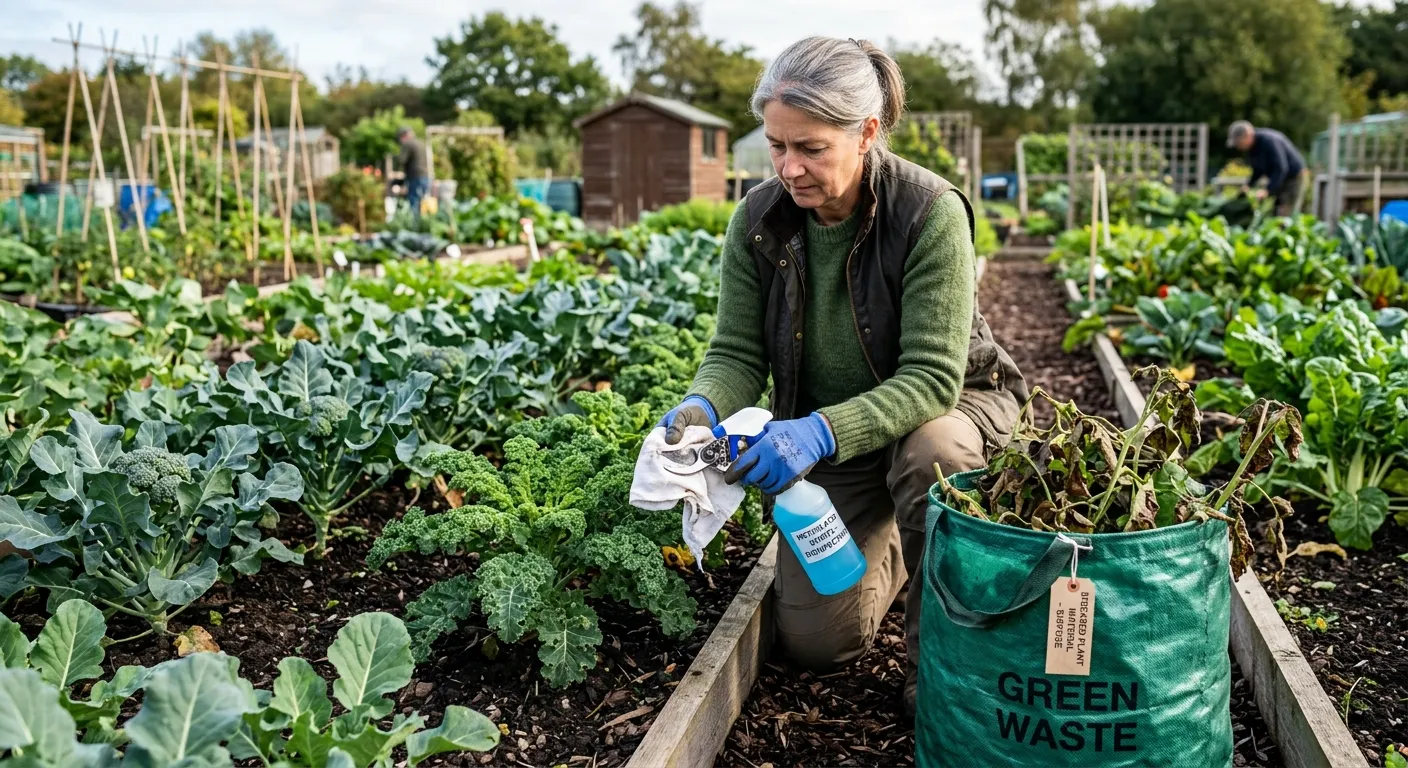 Effective disease prevention: autumn leaf clearance, tool hygiene, and proper plant spacing reduce infection rates by 60-70%.
Month-by-month disease calendar for UK gardens
This calendar shows when key diseases become active and which preventive actions to take each month. Timings are based on Midlands conditions. Northern gardens run 2-3 weeks later. Southern gardens run 1-2 weeks earlier.
| Month | Active diseases | Action to take |
|---|---|---|
| January | None (dormant) | Plan resistant variety orders for spring planting |
| February | Bacterial canker (stone fruit) | Apply copper spray to peaches, cherries at bud burst |
| March | Scab spore release begins | Spray fruit trees with copper at bud burst. Check for canker |
| April | Black spot, downy mildew activate | Begin fortnightly fungicide programme on roses. Monitor lettuce |
| May | Powdery mildew, rust appear | Check roses, peas, gooseberries weekly. Spray at first sign |
| June | Blight watch begins (Smith Periods) | Monitor Blightwatch alerts. Spray outdoor tomatoes and potatoes |
| July | Peak blight risk, grey mould on strawberries | Remove lower tomato leaves. Pick strawberries promptly. Ventilate greenhouses |
| August | All fungal diseases peak | Continue spray programmes. Remove severely infected plants. Water at base only |
| September | Grey mould on autumn crops, rust on leeks | Thin autumn lettuce. Check leeks for rust. Reduce greenhouse humidity |
| October | Honey fungus fruiting bodies appear | Identify and map affected areas. Remove dead stumps |
| November | Leaf fall: disease reservoir clearing | Rake ALL fallen leaves from under roses and fruit trees. Copper spray fruit trees |
| December | Dormant season | Clean and disinfect greenhouse glass, staging, and tools. Order copper fungicide for spring |
Common mistakes when dealing with plant diseases
These five errors account for most treatment failures. Avoiding them saves time, money, and plants.
Spraying after symptoms appear and expecting a cure
Most garden fungicides are preventive, not curative. Once you see black spot, blight, or scab symptoms, the fungus has already penetrated the leaf tissue. Spraying at this stage only protects new, uninfected growth. Preventive applications made before symptoms appear are 70-80% effective. Reactive sprays once symptoms are visible drop to 30-40%. Start spray programmes based on the calendar above, not on visible symptoms.
Composting diseased material in cold heaps
Many diseases survive cold composting. Black spot, clubroot, and blight spores persist at temperatures below 50C. Adding infected rose leaves to a cool garden compost heap distributes spores around the garden when you spread the compost. Hot composting (above 60C sustained for 72 hours) kills most pathogens. If your heap does not reach 60C, bag diseased material for council green waste collection instead.
Watering in the evening
Evening watering leaves foliage wet through the night. Dew formation adds further moisture. This creates 10-14 hours of continuous leaf wetness, well above the 7 hours needed for black spot germination and the 6 hours needed for downy mildew. Water in the morning so splash moisture evaporates within 2-3 hours as temperatures rise.
Ignoring resistant varieties
Modern plant breeding has produced vegetable varieties with genuine disease resistance. Potato ‘Sarpo Mira’ resists blight, rose ‘Chandos Beauty’ shrugs off black spot, and apple ‘Discovery’ tolerates scab. Planting susceptible heritage varieties without committing to a spray programme guarantees annual disease problems. Check the RHS Plant Finder database for resistance ratings before purchasing.
Failing to rotate crops
Growing brassicas in the same bed year after year allows clubroot to build up to devastating levels. Planting tomatoes in the same greenhouse border every season invites soil-borne Fusarium and Verticillium. Rotate vegetable families on a 4-year cycle minimum. In greenhouses, grow tomatoes in fresh grow bags annually or use ring culture systems to avoid contaminated soil.
Frequently asked questions
What is the most common plant disease in UK gardens?
Powdery mildew is the most common. It affects over 400 plant species and appears in every UK garden at some point. The white powdery coating on leaves develops when daytime temperatures reach 15-27C with humidity between 60-80%. Roses, courgettes, peas, and apple trees are the most frequently affected plants.
Can diseased plants infect other plants in the garden?
Yes, most fungal diseases spread between plants. Spores travel on wind, water splash, contaminated tools, and hands. Black spot spores splash up to 30cm in rain. Rust spores travel kilometres on wind. Always clean secateurs between plants with a 10% bleach solution or methylated spirit to prevent cross-contamination.
Should I remove diseased leaves from plants?
Remove diseased leaves immediately. Prompt removal slows spore production by 40-60% and limits spread to healthy tissue. Cut back to clean, healthy growth. Dispose of diseased material in council green waste or a hot compost heap above 60C. Never leave diseased foliage on the soil surface.
Are copper fungicides safe for organic gardening?
Copper fungicides are approved for organic use. Bordeaux mixture (copper sulphate and lime) has been used since the 1880s. Apply at the recommended dilution rate to avoid copper build-up in soil. The Soil Association permits copper-based products at a maximum of 6kg per hectare per year. Always follow label instructions.
Why do my tomatoes get blight every year?
Blight spores overwinter in infected potato tubers. If you grow potatoes nearby, volunteer plants from missed tubers release spores that infect tomatoes. Grow tomatoes under cover in a greenhouse or polytunnel, space plants 60cm apart for airflow, and remove lower leaves below the first truss to reduce splash infection.
What causes white powder on plant leaves?
White powder indicates powdery mildew infection. The fungus thrives at 15-27C in dry conditions with humid air. Unlike most fungal diseases, powdery mildew does not need leaf wetness to germinate. Improve air circulation, water at the base, and apply sulphur or potassium bicarbonate sprays at the first sign of infection.
When should I spray fruit trees to prevent disease?
Spray fruit trees at three key times. Apply copper fungicide at leaf fall in November to kill overwintering spores. Spray again at bud burst in late February or early March. Apply a third treatment at petal fall in April or May. These three applications prevent 70-80% of scab, canker, and brown rot infections.
Now you can identify and treat the most common garden plant diseases in UK gardens, read our vegetable pests and diseases guide for crop-specific protection strategies.
Lawrie has been gardening in the West Midlands for over 30 years. He grows his own veg using no-dig methods, keeps a wildlife-friendly garden, and writes practical advice based on real UK growing conditions.