Common Lawn Weeds: Identification and Control
How to identify and control common lawn weeds in UK gardens. Covers dandelions, clover, daisies, plantain, and buttercups with treatment options.
Key takeaways
- Dandelions, clover, daisies, and plantain are the four most common UK lawn weeds
- Mowing below 3cm weakens grass and creates gaps for weeds to colonise
- Autumn overseeding with quality grass seed is the single best organic prevention method
- Selective herbicides work best when weeds are actively growing, between April and September
- White clover fixes nitrogen and supports pollinators, so many gardeners now choose to keep it
- Most lawn weeds indicate an underlying problem such as compaction, poor drainage, or low fertility
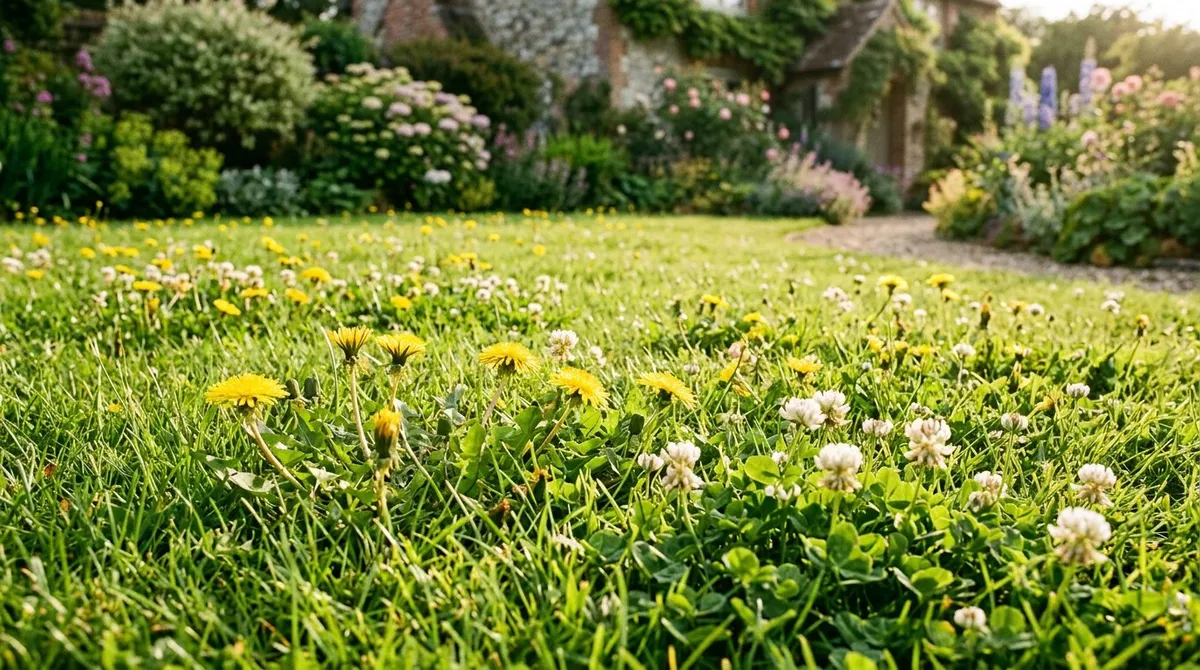
Every gardener who has tried to keep a pristine lawn knows the feeling. You mow on Saturday, stand back to admire the stripes, and by Wednesday there are dandelion rosettes, clover patches, and daisies dotting the surface like confetti. Lawn weeds are not a sign of neglect. They are plants that are better adapted to your conditions than the grass beneath them.
The UK’s temperate climate, with its mild winters and reliable rainfall, creates ideal conditions for broadleaf weeds. Over 200 species can colonise British lawns, though in practice, a dozen or so cause the vast majority of problems. Learning to identify the most common ones is the first step towards deciding what to do about them.
This guide covers the weeds you are most likely to encounter, explains what their presence tells you about your soil, and sets out both organic and chemical control methods. Browse our problems section for help with other garden challenges.
How to Identify Common UK Lawn Weeds
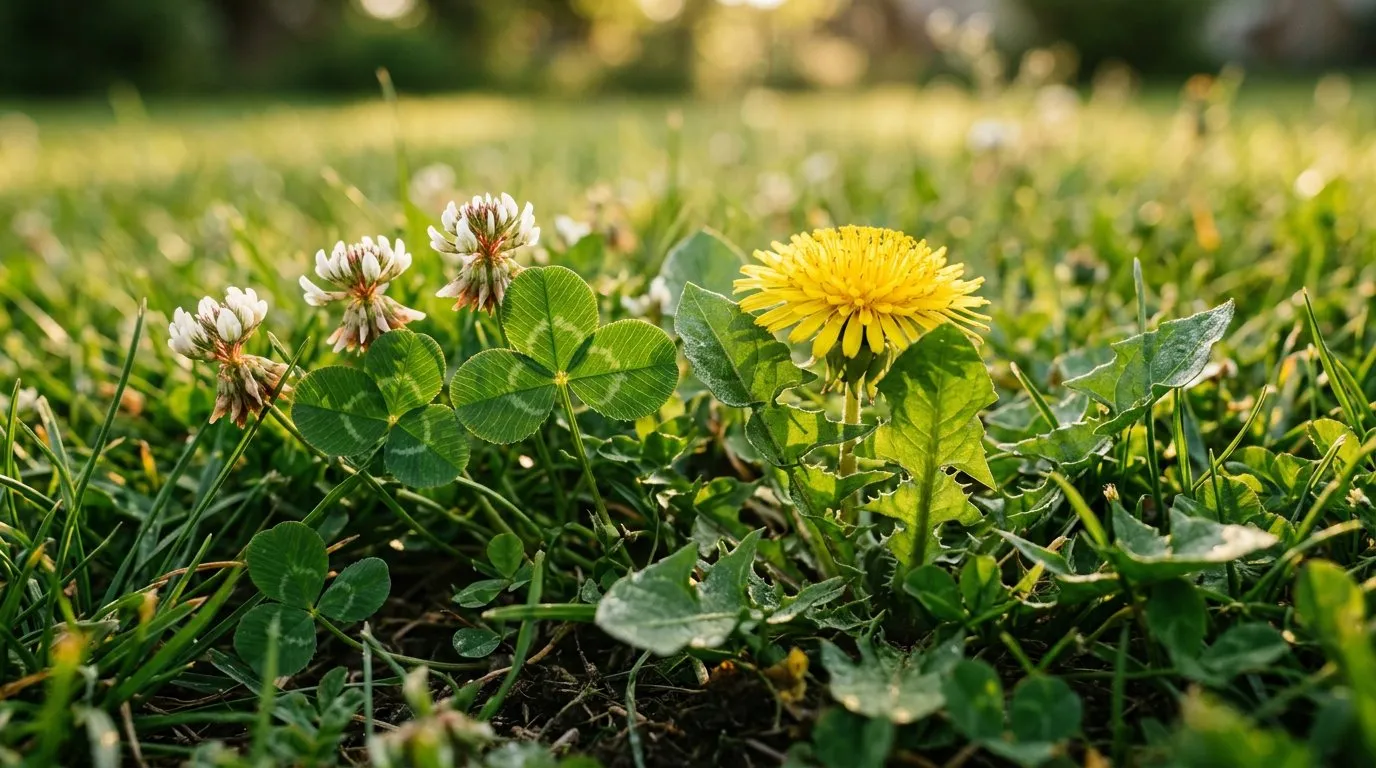
Before reaching for any product, it pays to know exactly what you are dealing with. Each weed has distinct leaf shapes, growth habits, and flowering patterns that make identification straightforward once you know what to look for.
The Top Ten
The table below covers the lawn weeds you will encounter most often in British gardens.
| Weed | Leaf shape | Growth habit | Flowers | What it tells you |
|---|---|---|---|---|
| Dandelion | Jagged, rosette | Deep taproot | Yellow, spring-autumn | Compacted or thin soil |
| White clover | Three rounded leaflets | Creeping runners | White, spherical | Low nitrogen levels |
| Daisy | Small, spoon-shaped, rosette | Low rosette | White with yellow centre | Close mowing |
| Broad-leaved plantain | Broad, oval, ribbed | Flat rosette | Green-brown spikes | Heavy foot traffic, compaction |
| Creeping buttercup | Three-lobed, glossy | Creeping runners | Bright yellow | Damp, heavy clay soil |
| Selfheal | Oval, in pairs | Low, spreading | Purple spikes | Moist, shady conditions |
| Common speedwell | Small, round, scalloped | Creeping stems | Tiny blue flowers | Short mowing, thin turf |
| Lesser celandine | Heart-shaped, glossy | Bulbils and tubers | Bright yellow, spring | Damp shade |
| Yarrow | Feathery, fern-like | Creeping mat | White clusters | Dry, poor soil |
| Moss | Tiny, dense carpet | Surface mat | Spore capsules | Shade, damp, acidic, compacted soil |
Weeds That Indicate Soil Problems
One of the most useful things about lawn weeds is that they act as diagnostic tools. Their presence reveals conditions beneath the surface that you might otherwise miss.
Dandelions and plantain push through compacted soil where grass roots struggle. If your lawn is dominated by these two, aeration is the priority. Clover thrives in nitrogen-poor soil because it manufactures its own nitrogen from the air. A well-fed lawn rarely has a clover problem. Creeping buttercup signals waterlogging or heavy clay. Moss points to some combination of shade, acidity, compaction, and poor drainage.
Addressing these underlying conditions is more effective than repeatedly killing weeds that keep returning. The RHS lawn weeds guide covers identification in further detail with photographs.
Organic and Cultural Control Methods

Chemical-free weed control relies on creating conditions that favour grass over weeds. A thick, healthy lawn is the best weed suppressor there is.
Mowing Height
This is the single most common mistake in UK lawn care. Cutting the grass too short weakens it, reduces root depth, and opens gaps for weed seeds to germinate. Never mow lower than 3cm for a utility lawn, or 2.5cm for a fine lawn. During dry spells in summer, raise the mower another notch.
Daisies and speedwell thrive in closely mown lawns because their rosette growth habit sits below the blade. Raising your mowing height by just 1cm can reduce these weeds significantly over a single growing season.
Tip: Mow regularly but take off no more than one third of the grass blade at each cut. This keeps the lawn dense without shocking the plants. If the grass has grown long while you were away, bring it down gradually over two or three cuts rather than scalping it in one pass.
Overseeding
Bare patches and thin areas are open invitations for weeds. Autumn overseeding (September to mid-October) is the most effective way to thicken a lawn organically. The soil is warm from summer, autumn rain provides moisture, and weed competition is lower than in spring.
- Mow the lawn short (2-3cm) and rake out any thatch or dead material
- Spike the surface with a garden fork every 10-15cm
- Scatter quality grass seed at 25-35g per square metre
- Top-dress with a thin layer of sieved compost or loam
- Water if rain does not arrive within 48 hours
- Avoid walking on the area for 4-6 weeks
Choose a seed mix suited to your conditions. Shade-tolerant mixes contain fine fescues, while hard-wearing mixes include perennial ryegrass. If you are building healthy soil more broadly, our guide to how to make compost covers producing your own top-dressing material.
Why we recommend autumn overseeding with perennial ryegrass for weed suppression: After 30 seasons of restoring weedy lawns, autumn overseeding at 25-35g per square metre in September consistently outperforms any other cultural control method. On lawns with 40-60% weed coverage, two consecutive autumns of scarification, overseeding, and autumn feeding reduced broadleaf weed coverage to under 10% without a single application of selective herbicide. Perennial ryegrass establishes in as little as 10 days in warm September soil and its dense tillering habit physically crowds out daisy, plantain, and speedwell within 8-12 weeks.
Hand Weeding
For tap-rooted weeds like dandelions and dock, a daisy grubber is genuinely effective. Push the forked blade down alongside the root and lever upwards, pulling the entire root out. This works best in spring when the soil is moist. Any fragment of taproot left behind will regenerate, so thoroughness matters.
Creeping weeds are harder to control by hand. Clover, speedwell, and creeping buttercup spread by runners (stolons), and small pieces left in the soil will regrow. For these, improving lawn health to outcompete the weed is a better long-term strategy.
Feeding and Aeration
A twice-yearly feeding programme keeps grass thick enough to resist most weed invasion. Apply a nitrogen-rich feed in April and an autumn feed (lower nitrogen, higher potassium and phosphorus) in September or October.
Aerate compacted areas each autumn using a hollow-tine aerator or garden fork. This breaks up compaction, improves drainage, and allows grass roots to penetrate deeper. Sweep sharp sand into the holes on clay soils to keep them open. If your lawn sits on heavy clay that drains poorly, the RHS soil improvement guide covers longer-term remedies.
Chemical Weed Control
Sometimes cultural methods alone are not enough, particularly in lawns that have become heavily weedy over several years. Selective herbicides kill broadleaf weeds without harming grass.
How Selective Weedkillers Work
Selective lawn weedkillers contain synthetic plant hormones (usually 2,4-D, mecoprop-P, or dicamba) that cause broadleaf weeds to grow uncontrollably until they exhaust themselves and die. Grasses are unaffected because their leaf structure does not absorb the chemical in the same way.
When to Apply
- Best period: Mid-April to late May, or September
- Temperature: Between 10C and 25C
- Weather: Calm, dry day. No rain forecast for 24 hours
- Soil: Moist but not waterlogged
- Avoid: Newly seeded or turfed lawns (wait 6 months), drought-stressed grass, windy days
Apply as a liquid spray for even coverage. Granular weed-and-feed products are convenient but less precise. Always follow the label rates exactly, as over-application damages grass.
Spot Treatment
For lawns with scattered weeds rather than widespread infestations, spot treatment is more targeted and uses far less chemical. Ready-to-use spray bottles let you treat individual dandelions and plantains without blanketing the whole lawn.
Wait 2-3 weeks after treatment before mowing, and do not compost the first few mowings after herbicide application.
Living With Lawn Weeds
Not every weed needs controlling. There is a growing movement towards relaxed lawns that include a mix of grasses and wildflowers, and for good reason.
The Case for Clover
White clover was deliberately included in lawn seed mixes until the 1950s. It fixes atmospheric nitrogen, feeding the grass around it. It stays green during summer droughts when grass turns brown. And its flowers are one of the best nectar sources for bees and other pollinators. If you are working to create a bee-friendly garden, keeping clover in your lawn is one of the easiest steps you can take.
Daisies and Self-heal
Both of these low-growing plants co-exist well with grass. Daisies provide early nectar for small pollinators. Self-heal was once valued as a medicinal herb. In a family lawn that does not need to look like a bowling green, these plants add interest without causing any real harm.
No-Mow May and Relaxed Lawns
The Plantlife “No Mow May” campaign has encouraged thousands of UK gardeners to let their lawns grow through May, allowing wildflowers to bloom and support pollinators. Research from the campaign found that unmown lawns produce ten times more nectar than regularly cut ones.
If a fully wild lawn feels like too much, consider leaving one area unmown while keeping a mown path through it. This gives you the best of both worlds and works particularly well in small garden designs where a wilder patch at the back adds depth and texture.
Stopping Weeds Long Term

Prevention is always easier than cure. These practices will keep a lawn thick and weed-resistant year after year.
A Simple Annual Lawn Care Calendar
- March: First mow on a high setting (4-5cm). Rake out moss and thatch
- April: Apply spring lawn feed. Treat existing weeds with selective herbicide if needed
- May-August: Mow weekly, never below 3cm. Water deeply during drought rather than little and often
- September: Aerate, overseed thin areas, apply autumn feed
- October: Continue mowing as growth allows. Final weed treatment if needed
- November-February: Stay off the lawn when frozen or waterlogged. Clean and service the mower
Building Strong Grass
The foundation of a weed-free lawn is strong, dense grass. That means the right seed mix for your conditions, regular feeding, correct mowing height, and addressing drainage or compaction issues promptly. It does not require chemicals, perfection, or spending every weekend on your knees with a daisy grubber.
For gardeners who prefer a low-maintenance approach, accepting some weeds and focusing on overall lawn health rather than eradication is a perfectly valid strategy. A lawn with a scattering of clover and daisies is still a lawn, and for many households it is a better one.
If you are converting part of your lawn to growing space, our guide to starting a vegetable garden covers how to clear turf and prepare the soil. And for persistent pest problems in the surrounding borders, our slug control guide covers every natural method worth trying.
Now you’ve mastered lawn weed identification and control, read our guide on lawn diseases: identification and treatment to understand the other major threat facing UK lawns.
Final Thoughts
Lawn weeds are not the enemy. They are opportunists that move into spaces where grass is struggling. Fix the underlying conditions, whether that is compaction, poor drainage, low fertility, or mowing too short, and most weeds lose their competitive advantage.
For the weeds that persist, you have options. Hand removal, selective herbicides, and improved lawn care all work. The approach you choose depends on your tolerance for weeds, your feelings about chemicals, and how much time you want to spend on your lawn. There is no single right answer, only the one that suits your garden and the way you use it.
Lawrie has been gardening in the West Midlands for over 30 years. He grows his own veg using no-dig methods, keeps a wildlife-friendly garden, and writes practical advice based on real UK growing conditions.