Elephant Ear
Alocasia × amazonica
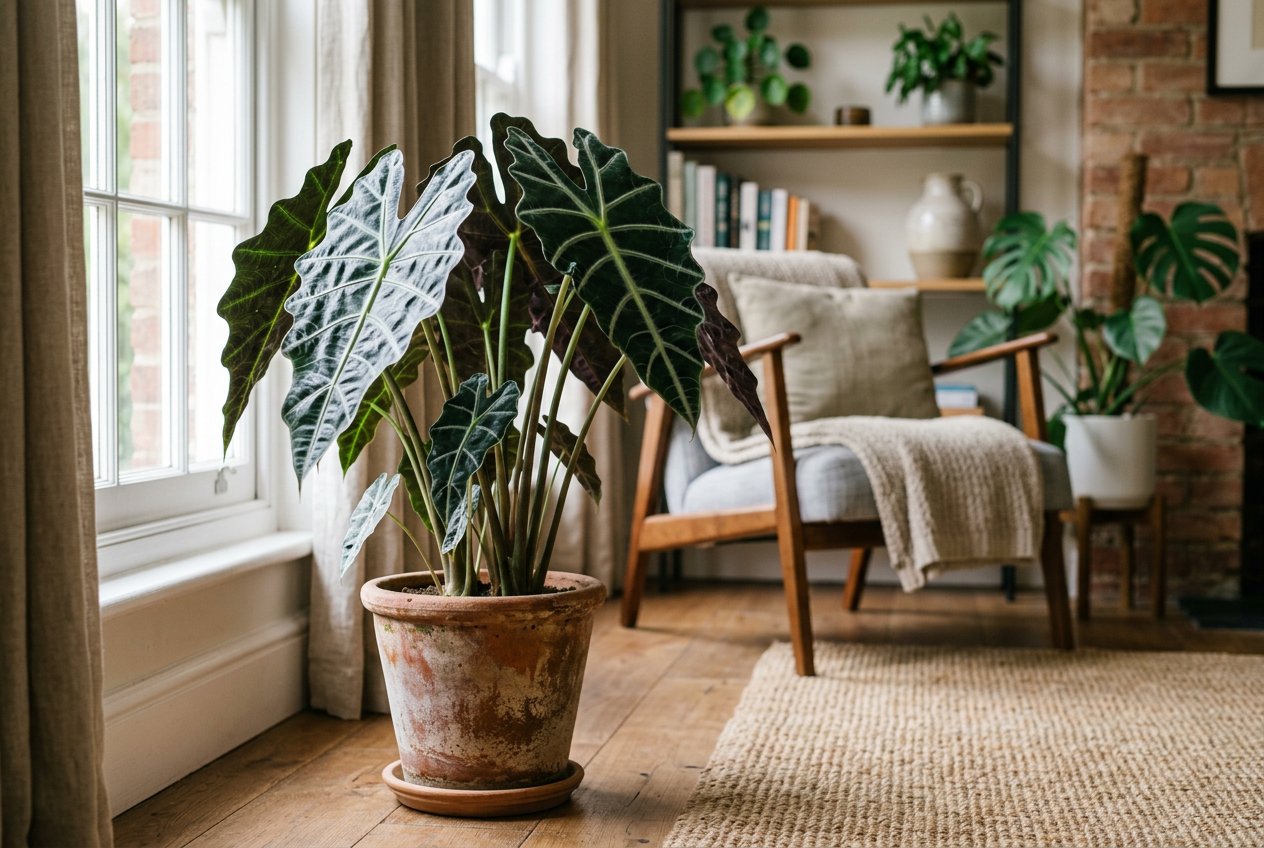
Dramatic tropical plant with large arrow-shaped dark-green leaves veined in silvery white. Makes an instant statement in any bright warm room. Also known as African mask plant for its bold, mask-like leaf shape.
Best rooms for elephant ear
Light requirements
Best near a window with filtered light — avoid harsh direct rays.
How to care for elephant ear
Bright indirect light is essential. Keep compost moist but never waterlogged — use a well-draining aroid mix. Loves high humidity; mist daily or use a pebble tray. May go dormant in winter, losing leaves — keep the corm barely moist and warm until spring. Feed fortnightly spring-summer. Minimum 16°C.
Watering
Water when the top 2–3cm of compost feels dry. Roughly weekly.
Propagation
- Division of rhizomes in spring
- Offset corms
Toxicity
Contains calcium oxalate crystals. All parts cause intense mouth and throat irritation if chewed by pets.
Common problems
- Dormancy and leaf loss in winter (normal)
- Spider mites in dry air
- Yellow leaves from overwatering
Similar houseplants
Related guides
Air-Purifying Houseplants UK
What the science really says about air-purifying houseplants, plus 10 best low-care UK varieties, pet-safe picks, and how to truly clean indoor air.
Best Hanging Houseplants UK
The best hanging houseplants for UK homes ranked by trail length, light needs, and care. Covers 10 trailing species with room-by-room placement advice.
Best Indoor Plants for UK Homes
The best indoor plants for UK homes ranked by light needs, care difficulty, and pet safety. Includes lux data for every room orientation.