Swiss Cheese Plant
Monstera deliciosa
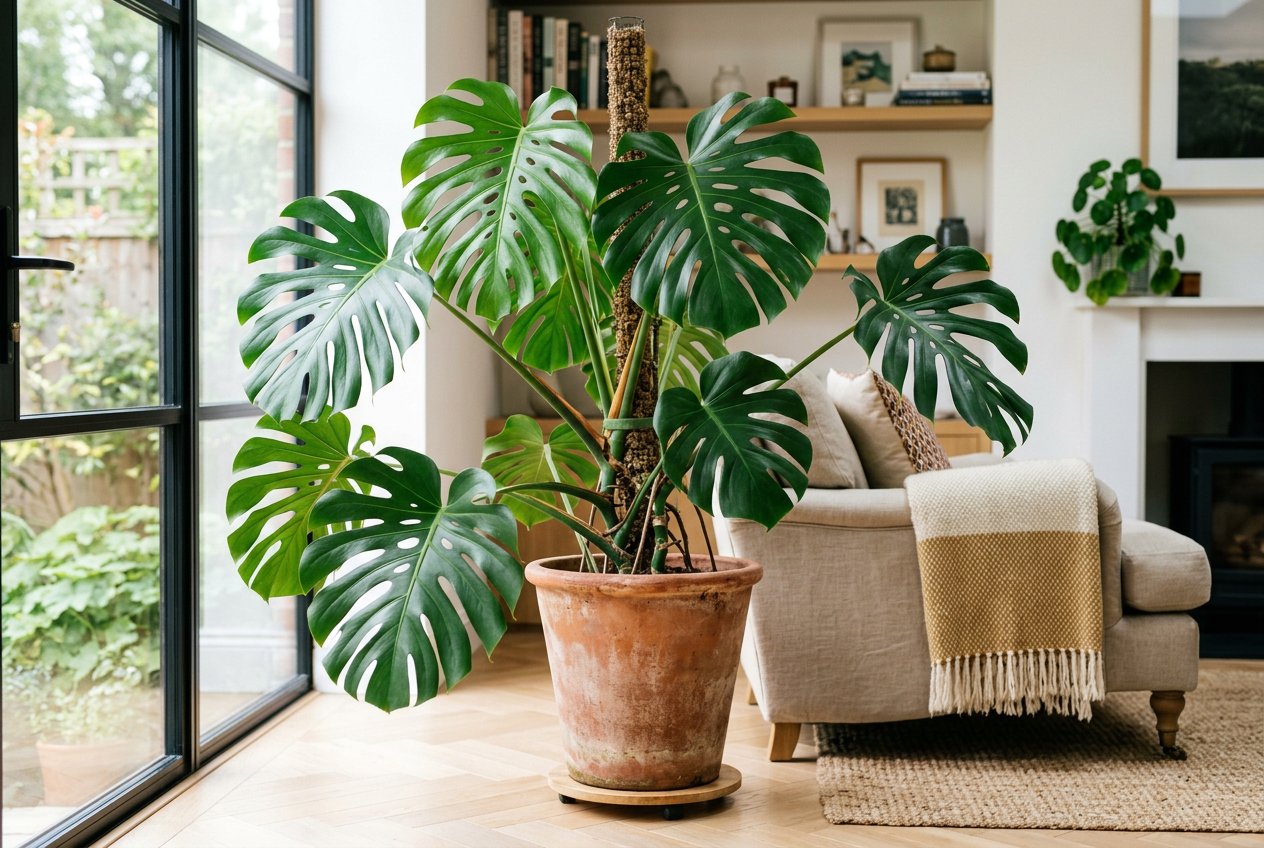
The iconic split-leaf houseplant with enormous glossy leaves developing dramatic holes and splits (fenestrations) as they mature. A climbing aroid that can reach 2-3m indoors when supported. The defining statement plant of modern interiors.
Best rooms for swiss cheese plant
Light requirements
Best near a window with filtered light — avoid harsh direct rays.
How to care for swiss cheese plant
Bright indirect light produces the most fenestrated leaves. Provide a moss pole or sturdy support for climbing. Water when the top 5cm of compost dries. Wipe the large leaves regularly. Feed monthly spring-summer. Aerial roots can be trained into the compost or a moss pole. Minimum 12°C.
Watering
Water when the top 2–3cm of compost feels dry. Roughly weekly.
Propagation
- Stem cuttings with a node and aerial root
- Air layering
Toxicity
Contains calcium oxalate crystals. Causes mouth and throat irritation, drooling, and vomiting if chewed by pets.
Common problems
- No splits or holes on young or low-light leaves
- Yellow leaves from overwatering
- Leggy growth without support
Similar houseplants
Related guides
Air-Purifying Houseplants UK
What the science really says about air-purifying houseplants, plus 10 best low-care UK varieties, pet-safe picks, and how to truly clean indoor air.
Best Hanging Houseplants UK
The best hanging houseplants for UK homes ranked by trail length, light needs, and care. Covers 10 trailing species with room-by-room placement advice.
Best Indoor Plants for UK Homes
The best indoor plants for UK homes ranked by light needs, care difficulty, and pet safety. Includes lux data for every room orientation.