Phlox
Phlox paniculata
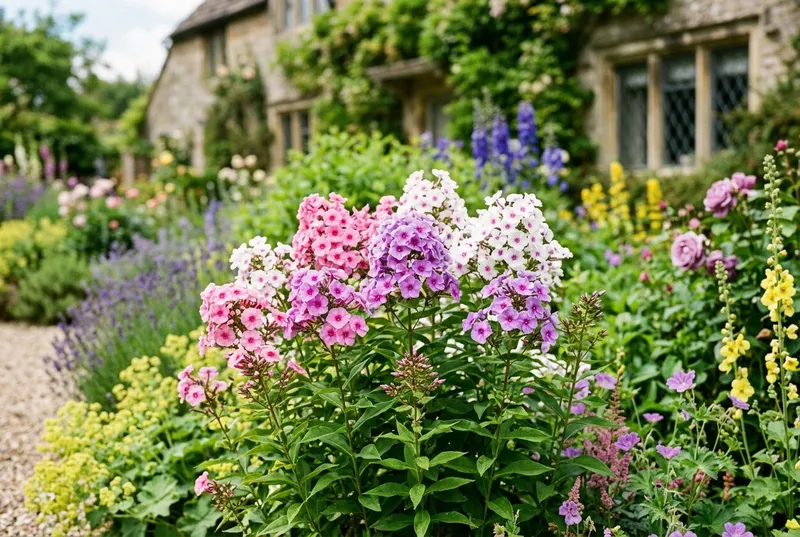
A tall, clump-forming perennial producing large, domed clusters of sweetly fragrant flowers from July to September. Border phlox comes in a wide palette of colours including white, pink, mauve, purple, and bicolours with contrasting eyes. The flowers fill the garden with a honeyed scent on warm evenings, making it a must for cottage-style borders across the UK.
How to grow phlox
Plant in autumn or spring in fertile, moisture-retentive soil in full sun or light shade. Phlox needs consistent moisture to thrive — water deeply during dry spells, aiming at the base to keep foliage dry. Mulch generously with garden compost in spring. Feed with a balanced fertiliser in April and a high-potash feed in June. Thin clumps in spring by removing a third of the stems when they reach 10 cm tall — this improves air circulation and reduces powdery mildew. Space new plants 45-60 cm apart. Divide every three to four years in autumn to maintain vigour and prevent the clump centre becoming woody.
Pruning
Deadhead individual flower clusters as they fade to encourage side shoots to flower. Cut all stems back to ground level in late autumn. In spring, thin emerging shoots to improve air circulation — remove weaker stems, leaving five to six of the strongest per clump.
Propagation
- Division in autumn
- Root cuttings in winter
- Basal cuttings in spring
Common problems
- Powdery mildew on foliage
- Eelworm causing distorted leaves
- Slugs on young spring growth
Good companions
Related guides
Cottage Garden Planting Plan for the UK
How to plan and plant a cottage garden in the UK. Covers classic plants, colour schemes, seasonal structure, and a ready-to-use planting plan.
Best Bee-Friendly Plants for UK Gardens
Attract bees and pollinators with plants that thrive in British conditions. Covers spring, summer, and autumn flowering for year-round forage.
Best Plants for Butterflies in the UK
Top nectar and caterpillar food plants for UK butterflies. Covers 59 species, seasonal planting, host plants, and garden design for butterflies.