Key takeaways
- The average UK allotment waiting list is 18 months, but varies from zero in rural areas to 5+ years in London
- Contact your local council's parks or allotments team to apply — most accept online or phone applications
- Annual rent ranges from 20 to 100 pounds for a full plot of 250 square metres
- Ask for a half plot if available — shorter waiting lists, lower rent, and more manageable for beginners
- While waiting, grow in containers, join a community garden, or ask local landowners about temporary plots
- Under the 1908 Act, councils must provide allotments if six or more residents on the electoral register request them
- Visit the plot before accepting — check water supply, sun exposure, soil condition, and access
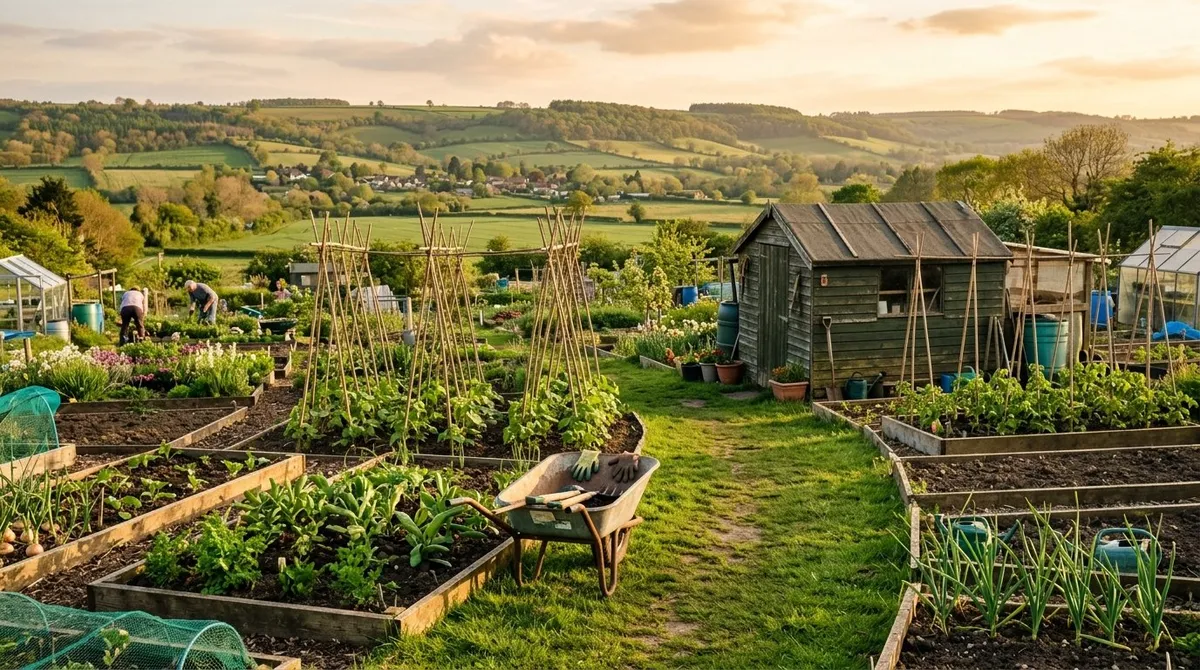
Getting an allotment in the UK is one of the most rewarding things you can do as a gardener, but the process is not always straightforward. Waiting lists, council bureaucracy, and plot availability vary wildly depending on where you live. This guide covers every step from application to first harvest, with practical advice on what to do while you wait.
The UK has over 330,000 allotment plots across England and Wales. An estimated 100,000 people are on waiting lists. The good news: most people who apply do eventually get a plot, and there are productive ways to grow food while you wait.
How long is the waiting list for an allotment?
The average UK allotment waiting list is 18 months, but that national figure hides enormous variation by region.
| Region | Typical wait | Notes |
|---|---|---|
| London boroughs | 3-5 years | Some inner-London sites have 10+ year lists |
| Major cities (Birmingham, Manchester, Bristol, Leeds) | 1-3 years | Demand remains high post-COVID |
| Suburban councils | 6-18 months | The sweet spot for most applicants |
| Market towns | 3-12 months | Often under-subscribed |
| Rural councils | 0-6 months | Many have plots available immediately |
These figures come from Freedom of Information requests and the National Allotment Society survey data. Demand surged during the COVID-19 pandemic in 2020-2021, with some councils reporting a 300% increase in applications. Waiting lists have shortened since then but remain longer than pre-2020 levels in most urban areas.
The single most effective way to shorten your wait is to ask for a half plot. Full plots (10 rods, 250 square metres) are in higher demand and tend to come up less frequently because tenants hold them longer. Half plots (5 rods, 125 square metres) turn over faster and are large enough to feed a family. Many councils now divide full plots in half specifically to reduce waiting lists.
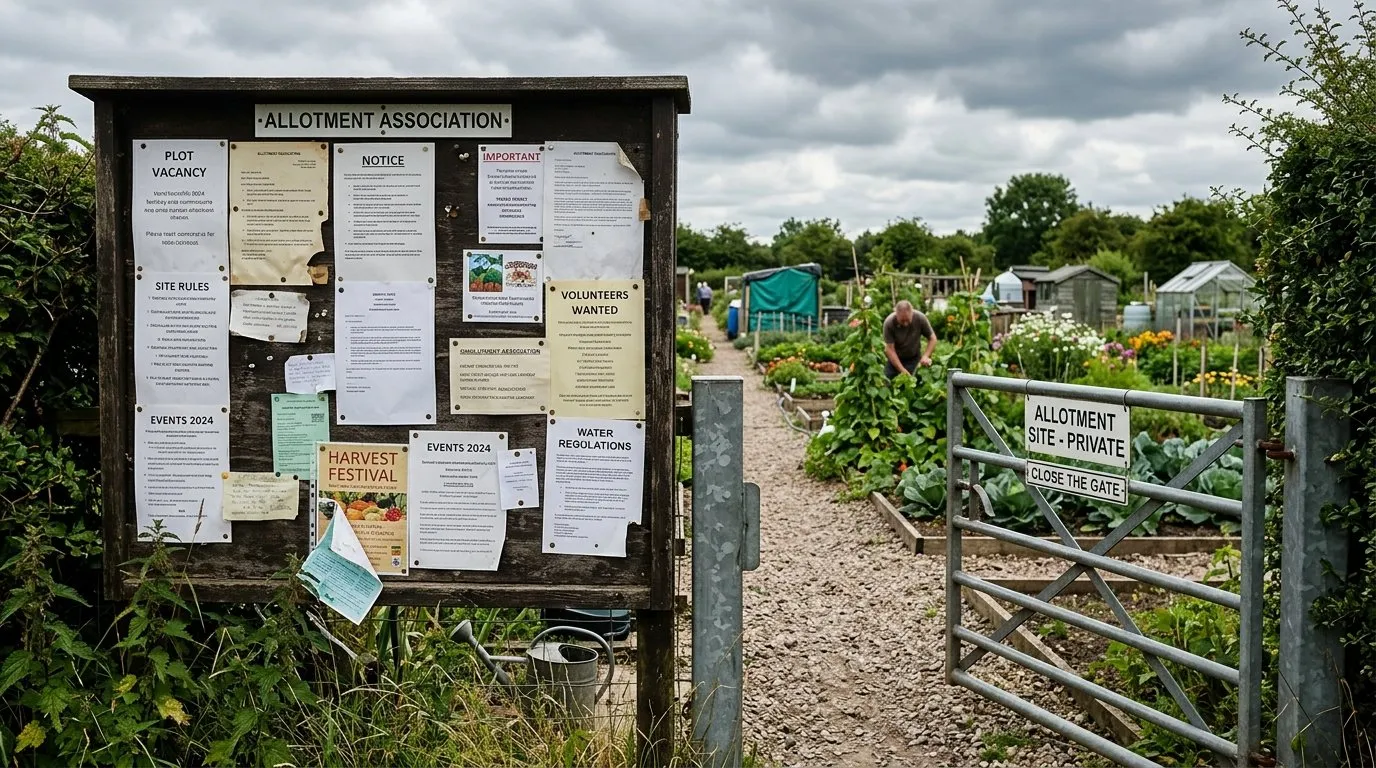 Allotment noticeboards are worth checking in person. Vacant plots and committee contacts are often posted here before they appear on council websites.
You should also apply to multiple sites if your council manages more than one. Unpopular sites, those further from housing, on slopes, or with limited parking, have shorter lists. The plot itself matters less than getting started. You can always transfer to a preferred site later.
How do I apply for an allotment?
The application process is simpler than most people expect. Here is the step-by-step:
Step 1: Find your council’s allotment service. Search “[your council name] allotments” online. Most council websites have a dedicated allotment page under parks, leisure, or environment services. If you cannot find it, phone the council switchboard and ask for the allotments officer.
Step 2: Submit an application. Most councils accept online forms, emails, or phone applications. You will need your name, address, contact number, and sometimes your preferred allotment site. Some councils charge a small registration fee (typically 5-10 pounds) which is refunded when you receive a plot.
Step 3: Join the waiting list. You will receive confirmation of your position. Some councils tell you your queue number; others say they will contact you. If you do not hear anything within three months, follow up. Council waiting lists are not always well maintained, and a polite chase can move things along.
Step 4: Accept the plot offer. When a plot becomes available, the council or allotment association will contact you. You usually have 7-14 days to view the plot and accept or decline. Declining does not always send you to the back of the queue, most councils offer you the next available plot instead.
Not all allotments are council-run. Some sites are managed by private allotment associations, parish councils, or landowners. The National Allotment Society maintains a directory of affiliated sites. Church land, railway land, and estates sometimes offer allotment plots outside the council system entirely. These private sites rarely appear on council waiting lists, so they are worth seeking out directly.
What does an allotment cost?
Allotments are one of the cheapest forms of gardening. Annual rent is set by the local council and varies across the country.
| Cost | Typical range | Notes |
|---|---|---|
| Annual rent (full plot) | 20-100 pounds | National average roughly 50 pounds |
| Annual rent (half plot) | 10-50 pounds | Proportional to full plot |
| Water charge | 0-25 pounds | Some councils include water in rent |
| Key/deposit | 0-20 pounds | Refundable on some sites |
| Concessions (over-60s, benefits) | 25-50% discount | Most councils offer reduced rates |
First-year setup costs on top of rent:
- Seeds and seed potatoes: 20-40 pounds
- Basic tools (fork, spade, rake, hoe): 50-80 pounds secondhand, 100-150 new
- Compost and soil improvers: 30-60 pounds
- Netting and plant supports: 20-40 pounds
- Water butt: 20-40 pounds (see our rainwater harvesting guide)
A realistic first-year budget is 150-300 pounds including rent. By year two, costs drop to rent plus seeds because you will have tools, a compost system producing free fertility, and the knowledge to save your own seeds.
The return is substantial. A well-managed half plot produces 100-200 kg of vegetables per year. At supermarket prices, that is 400-800 pounds worth of food from a 50 pound plot.
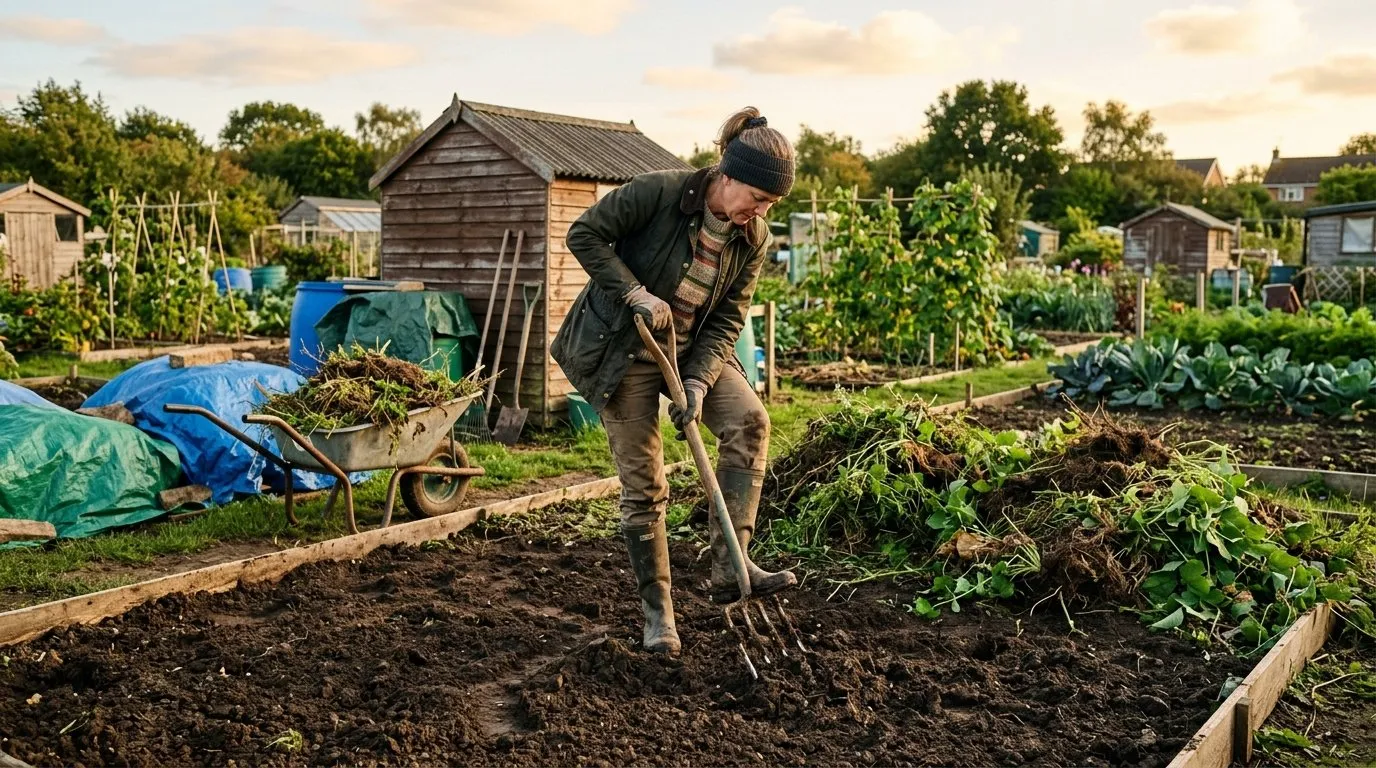 Most new plots need clearing first. Budget a full weekend for initial clearance, then tackle sections as you go. Do not try to clear the entire plot before planting, you will exhaust yourself and lose the growing season.
What to do while you wait for an allotment
A waiting list is not wasted time. Use it to build skills, collect tools, and start growing immediately.
Grow in containers at home
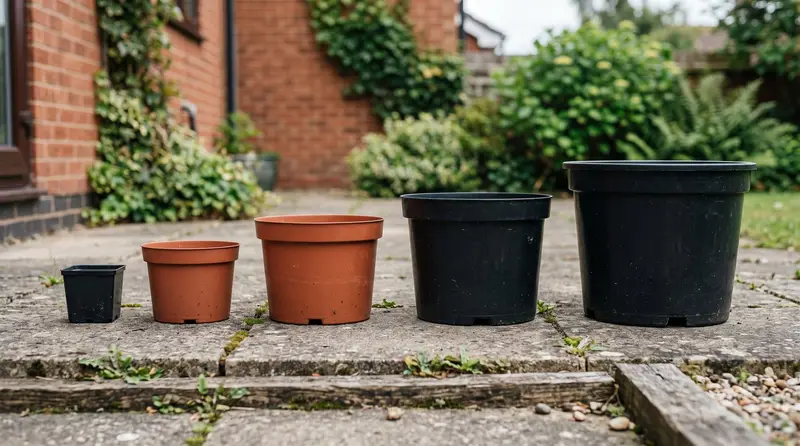
You do not need an allotment to grow food. A sunny patio, balcony, or even a doorstep produces surprising amounts. Tomatoes, chillies, salad leaves, herbs, runner beans, and strawberries all grow well in pots and grow bags. Our container vegetable gardening guide covers the best crops and containers for small spaces.
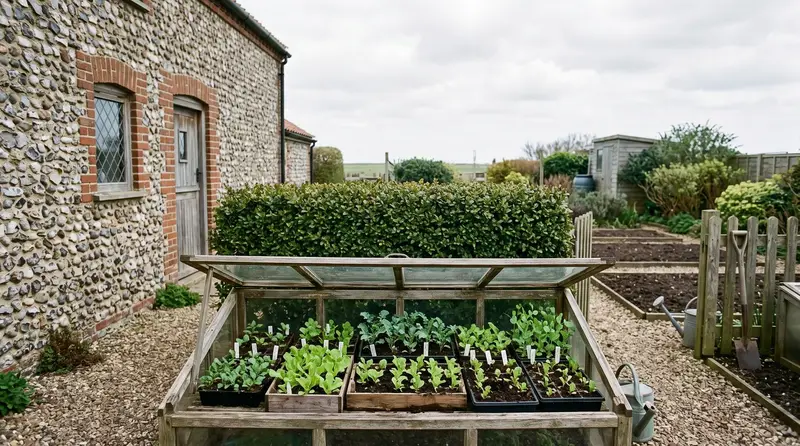
A 1m x 1m raised bed on a patio can produce 15-20 harvests per year if you practice succession planting. Start with cut-and-come-again salad leaves. They germinate in 7-10 days and give your first harvest within three weeks of sowing.
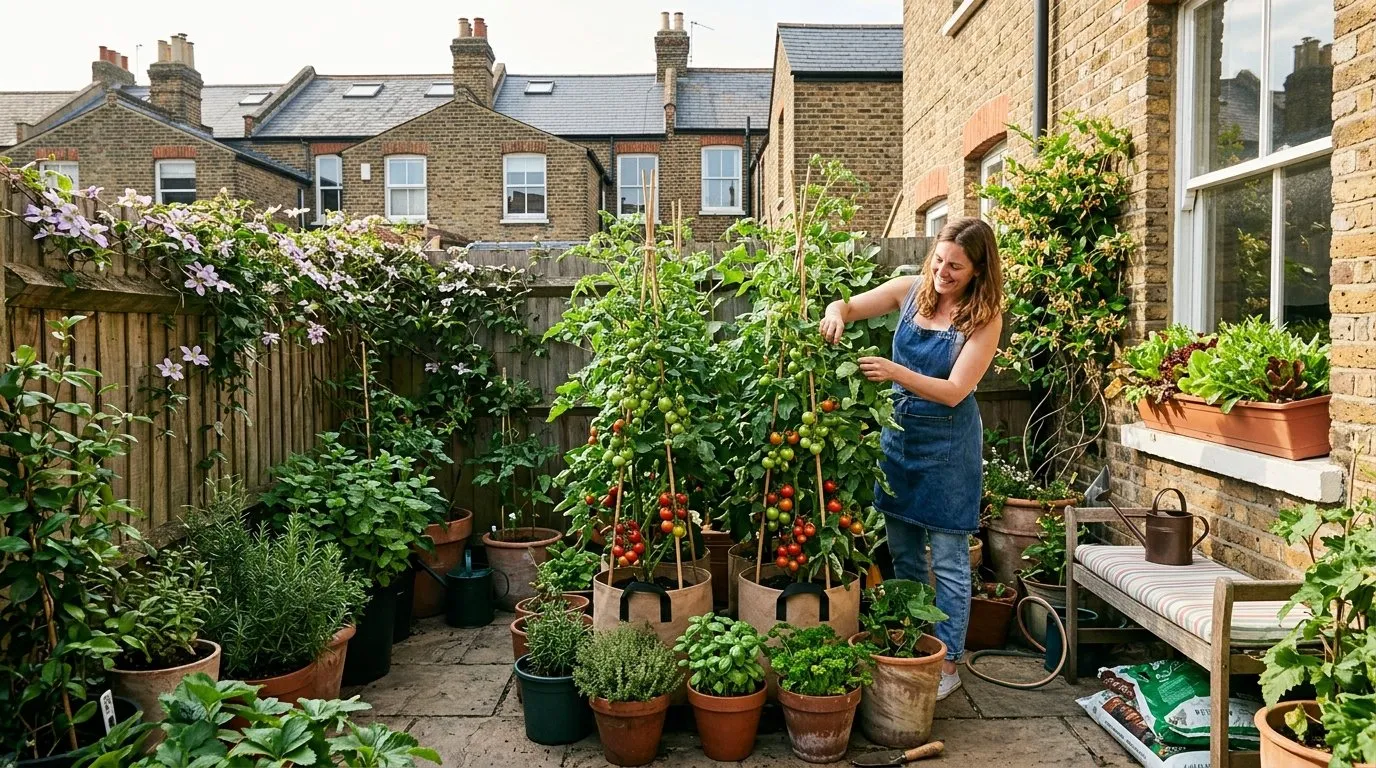 Container growing teaches seed sowing, watering, and pest management, all skills you will use on your allotment. This patio setup costs under 50 pounds and produces salads, herbs, and tomatoes from May to October.
Join a community garden
Community gardens are shared growing spaces run by volunteers, charities, or housing associations. They are an excellent way to learn from experienced growers and make contacts in your local gardening community. Many community gardens welcome new members immediately with no waiting list.
Search “community garden [your town]” or check Social Farms & Gardens for a directory of UK projects. Local Transition Network groups, churches, and schools also run growing projects.
Ask about temporary plots
Some councils offer temporary growing licences on land earmarked for future development. These plots can disappear at short notice, but they provide growing space for 1-3 years while you wait for a permanent allotment. The rent is often lower than standard allotment fees.
Volunteer on an existing allotment
Many allotment holders, particularly older or less mobile ones, welcome help with heavy digging, weeding, and harvesting. In return, you get hands-on experience, a share of the produce, and an inside track on plot availability. Word-of-mouth referrals from existing plot holders carry weight with allotment committees.
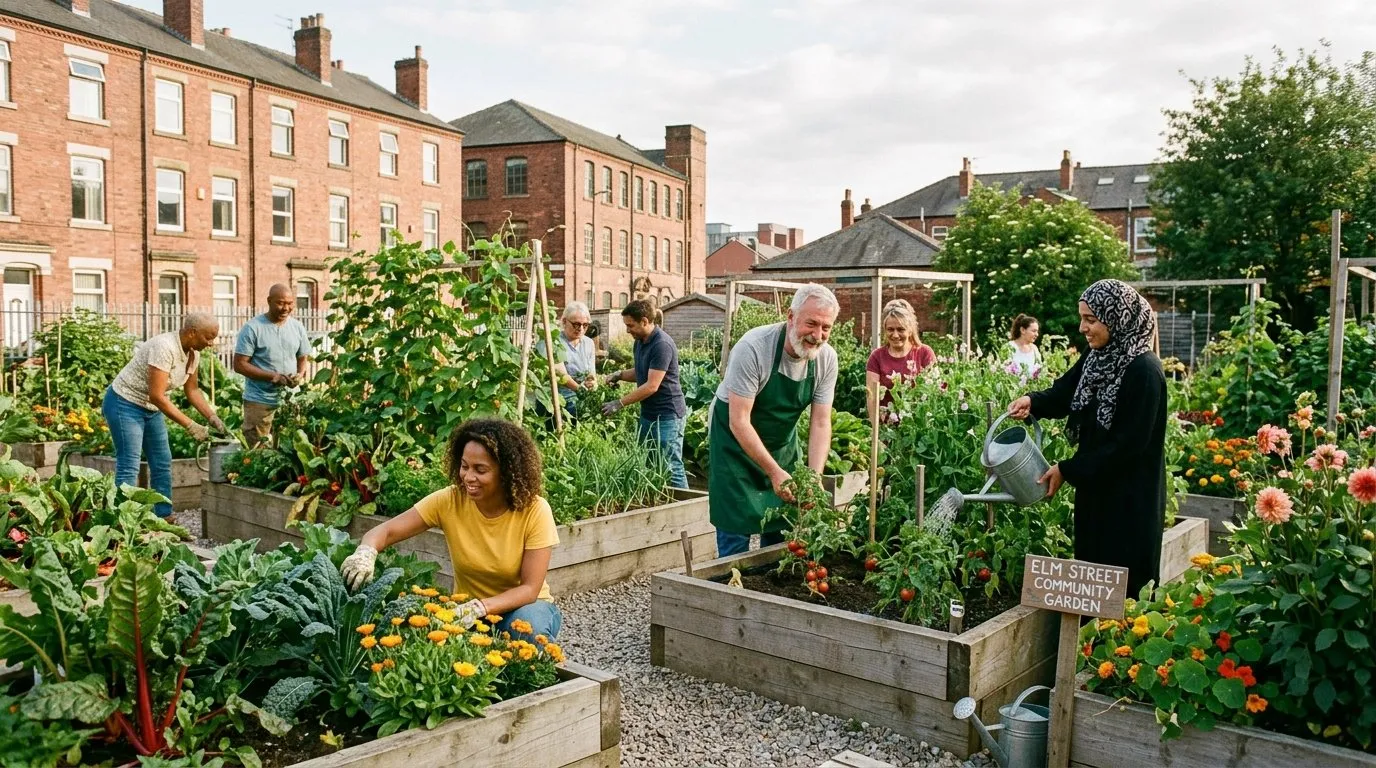 Community gardens offer immediate growing space with no waiting list. Many provide tools, seeds, and mentoring for new growers. Check Social Farms and Gardens for your nearest project.
Your legal right to an allotment
Most people do not know this, but UK law gives residents a legal right to demand allotment provision from their council.
The Small Holdings and Allotments Act 1908 places a duty on local authorities in England and Wales to provide allotments when there is demand. Specifically, if six or more residents on the electoral register in a parish or borough petition the council for allotments, the council has a legal obligation to provide them.
This legislation has been in force for over 100 years and was strengthened by the Allotments Act 1922 and the Allotments Act 1925. Under the 1925 Act, councils cannot sell or convert statutory allotment land without the consent of the Secretary of State.
In practice, this means:
- Councils cannot refuse to provide allotments. If demand exists, they must act.
- Statutory allotment land is protected. It cannot be sold for housing or commercial development without government approval.
- You can petition your council. If your area has no allotment provision and six residents request it, the council must respond.
The National Allotment Society campaigns to protect allotment land and can advise on legal rights. If your council is failing to meet its obligations, the NAS is the best first port of call.
What to look for when viewing a plot
When the council offers you a plot, ask to view it before accepting. Most councils allow 7-14 days for this. Here is what to check.
Sun exposure. Vegetables need 6-8 hours of direct sunlight in summer. Visit the plot at midday if possible and note any shadows from trees, buildings, or hedges. A south-facing plot is ideal. North-facing plots with tree shade on the south side are difficult.
Soil condition. Dig a small hole with a trowel. Heavy clay that sticks in a solid lump needs improvement but is fertile. Sandy soil that runs through your fingers drains well but needs organic matter. Dark, crumbly soil with visible worm activity is ideal. The best allotment soils have been worked and composted for decades.
Plot condition. An overgrown plot is not a bad thing. Brambles and nettles indicate fertile soil. Couch grass is harder to clear but manageable with cardboard mulching or no-dig methods. Concrete, rubble, or compacted ground is a bigger problem. Avoid plots with buried rubbish or signs of contamination (discoloured soil, chemical smells, or proximity to old industrial sites).
Neighbours. Well-maintained neighbouring plots are a good sign. Chatty neighbours are even better. The allotment community is one of the best things about having a plot. Experienced neighbours share seeds, surplus plants, advice, and sometimes tools.
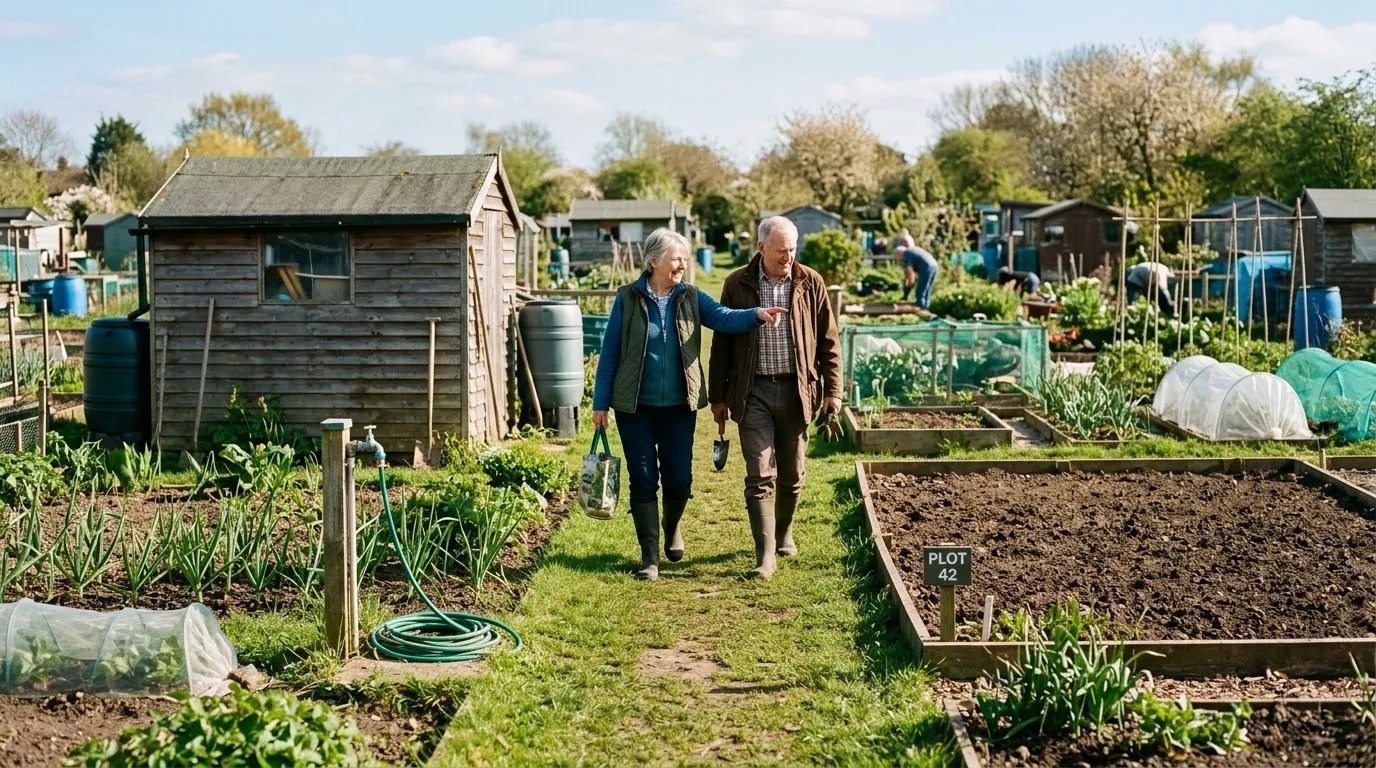 Always view a plot before accepting. Check the water supply, sun exposure, and soil condition. Talk to neighbouring plot holders, they know the site better than anyone.
Access and security. Can you drive to the site? Is there parking? Are there secure gates and fencing? Allotment theft is a real problem in some areas. A site with a locked gate, good visibility from the road, and active neighbours is more secure.
Your first day on the allotment
You have the keys. The plot is yours. Here is what to do on day one.
Do not try to clear the whole plot at once. This is the number one mistake new allotment holders make. A full plot of 250 square metres cannot be cleared in a weekend. Start with a quarter of the plot. Clear it, plant it, and expand as you gain confidence.
Lay cardboard over the areas you are not using. Flattened cardboard boxes (tape and labels removed) suppress weeds, break down over 6-12 months, and improve the soil beneath. Weight them down with bricks or a layer of compost. By the time you are ready to expand, the ground underneath will be softer and weed-free. This is the foundation of no-dig gardening.
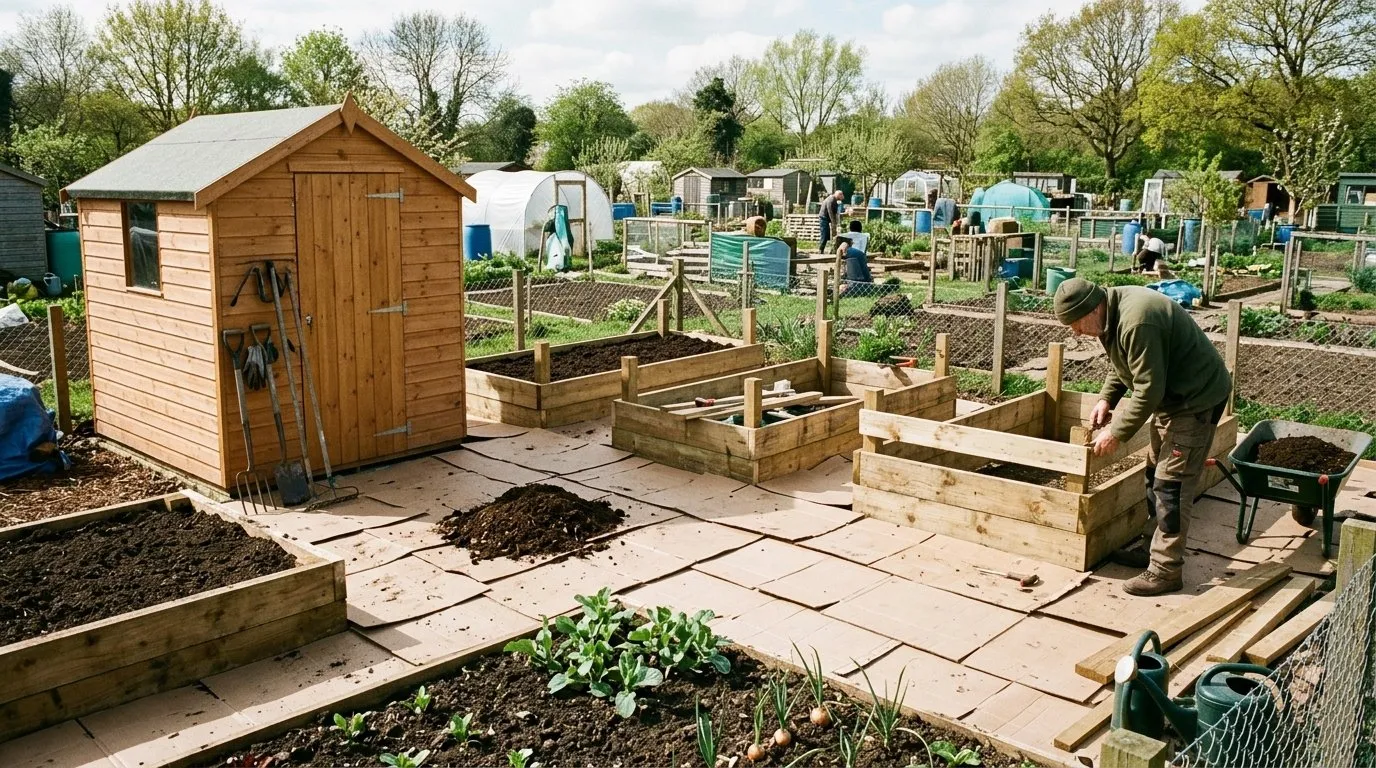 Cardboard mulching is the fastest way to suppress weeds on an overgrown plot. Lay it thick, weight it down, and focus your energy on a small growing area first.
Plant potatoes in your first cleared section. Potatoes are the ideal first allotment crop because they break up compacted soil with their root system, suppress weeds with their dense foliage, and produce a satisfying harvest 10-20 weeks after planting. Our potato growing guide covers varieties, planting depths, and harvest timing. First earlies like ‘Swift’ and ‘Rocket’ crop in just 10 weeks.
Set up a compost system immediately. Every allotment needs a compost bin from day one. Weeds, plant waste, and kitchen scraps go in. Free fertility comes out 6-12 months later. Even a simple pallet bin works. Our composting guide explains the fastest methods.
Get the water sorted. Fill a water butt from the site tap on your first visit. Carrying water in dry weather is the most time-consuming task on an allotment. A 200-litre water butt at the corner of your shed, filled from a hose or the tap, saves hundreds of trips over a season.
What to grow on a new allotment
Focus on reliable, fast crops in your first season. Build confidence before attempting difficult or slow-maturing vegetables.
Best first-year allotment crops
| Crop | Sow/plant | Harvest | Why it works |
|---|---|---|---|
| Potatoes | March-April | June-September | Breaks soil, suppresses weeds, big harvest |
| Courgettes | May (transplant) | July-October | Prolific, forgiving, one plant feeds a family |
| Runner beans | May | July-October | Vertical growing saves space, heavy cropper |
| Lettuce and salad | March-September | 4-6 weeks from sowing | Fast, repeat-sow for continuous harvest |
| Radishes | March-September | 4 weeks from sowing | The fastest vegetable from seed to plate |
| Beetroot | April-July | 8-12 weeks | Easy, stores well, leaves are edible too |
| Onion sets | March-April | August | Plant sets not seeds for easy first crop |
| Herbs (parsley, chives, mint) | April-May | Ongoing | Essential kitchen crops, low maintenance |
What to avoid in year one
- Asparagus, takes 3 years to produce a crop. Plant it, but do not expect to eat it soon.
- Cauliflower, fussy, slow, and takes up a lot of space for one head.
- Sweetcorn, needs a large block for wind pollination. Space is better used elsewhere in year one.
- Fruit trees, plant them, but the harvest is years away. Prioritise annual vegetables for immediate returns.
For fast results from fruit, try strawberries. They produce a crop in their first summer and multiply by runners every year.
Allotment rules and responsibilities
Every allotment site has rules. Most are common sense, but knowing them before you start avoids problems.
Structures. Sheds, greenhouses, polytunnels, and raised beds usually require permission from the allotment committee. Most sites allow a shed up to 6x4 feet and a small greenhouse. Check before you build.
Bonfires. Many sites prohibit bonfires entirely. Others allow them at specific times. Burning is rarely the best option, composting is better for the soil and the air. If bonfires are allowed, only burn dry woody material. Never burn plastics, treated timber, or household waste.
Livestock. Some sites allow chickens and beekeeping. Others do not. If you want poultry on your plot, check the tenancy agreement first.
Pesticides. An increasing number of sites encourage or require organic methods. Even where chemicals are not banned, be considerate of neighbouring plots. Spray drift affects other people’s crops. Our companion planting guide covers effective natural pest management alternatives.
Water conservation. Most sites have communal taps supplied by mains water. Use water efficiently. Water in the evening to reduce evaporation. Use mulch to retain moisture. Install a water butt to collect rain. See our rainwater harvesting guide for setup advice.
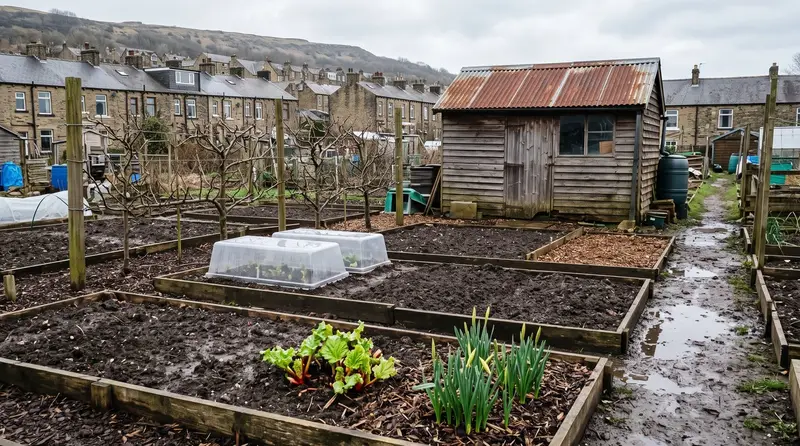
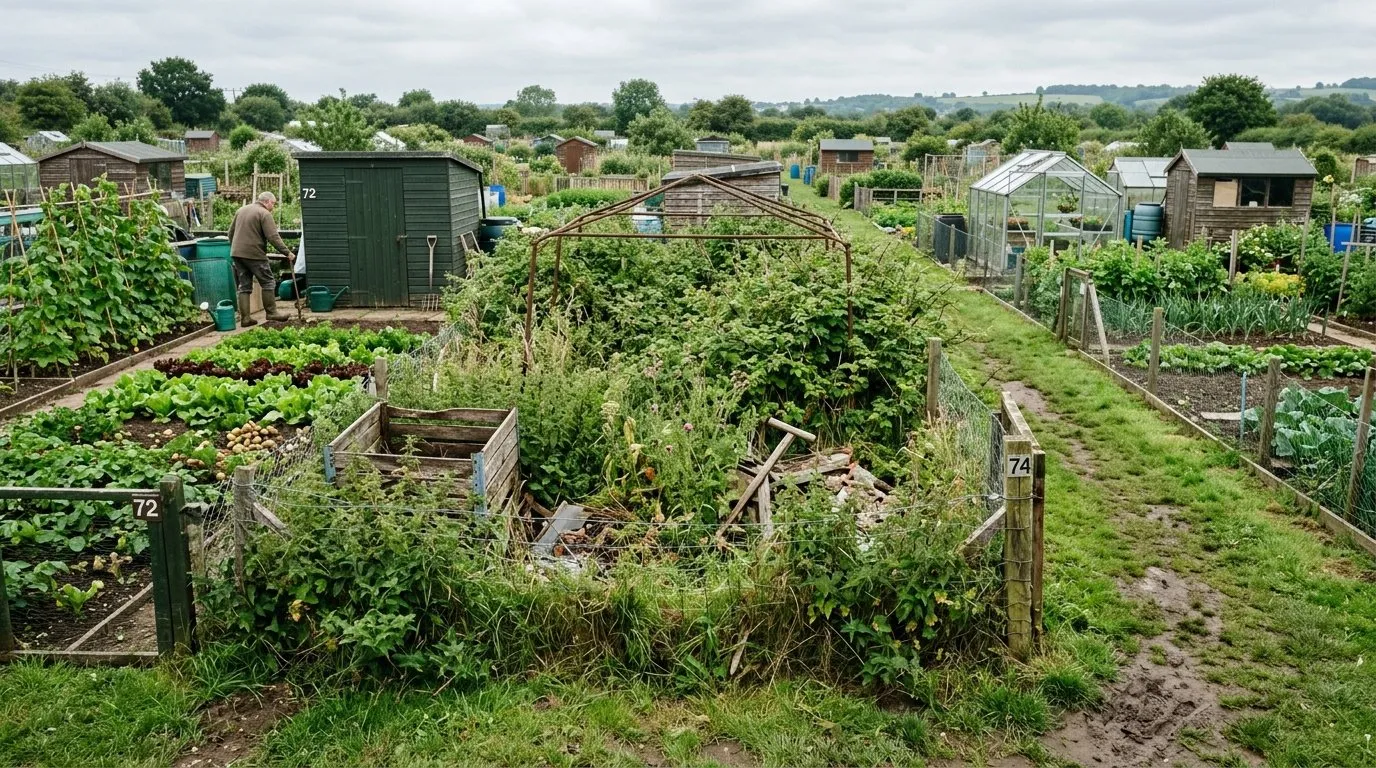 Do not be put off by an overgrown plot. Brambles and nettles indicate fertile soil. Most new tenants receive their plot in this condition. Clear a section at a time and let cardboard do the rest.
Making the most of your allotment
Once you have cleared and planted your first section, these techniques will maximise your harvest from the available space.
Crop rotation. Moving crop families to different beds each year prevents soil-borne diseases from building up. A four-bed rotation of potatoes, brassicas, legumes, and roots is the standard system. Our crop rotation planner shows you how to set this up.
Succession planting. Instead of sowing an entire row of lettuce at once (which gives you a glut followed by nothing), sow a short row every 2-3 weeks from March to September. This gives continuous harvests over six months. Our succession planting guide covers the timing for every major crop.
Green manures. Sow green manures on empty beds over winter. Crimson clover, field beans, and phacelia fix nitrogen, suppress weeds, and improve soil structure. Dig them in or chop and mulch them in spring before planting.
Square foot gardening. If space is tight or you want a highly organised layout, square foot gardening divides beds into 30cm squares, each planted with a specific number of plants. It eliminates wasted space and makes crop rotation simple.
Useful resources
These organisations and websites provide ongoing support for allotment holders.
| Resource | What they offer |
|---|---|
| National Allotment Society | Legal advice, insurance, seed scheme, National Allotments Week, regional contacts |
| Allotment Online | A-Z growing guides, monthly planner, community diaries, pest and disease ID |
| RHS | Plant finder, growing guides, pest and disease advice, garden opening events |
| Garden Organic | Organic growing methods, Heritage Seed Library, composting advice |
| Your local allotment association | Plot-specific advice, seed swaps, social events, bulk buying, communal tools |
| Your council’s allotment officer | Waiting list queries, tenancy issues, site maintenance, grant funding |
Frequently asked questions
How long is the waiting list for an allotment in the UK?
The average waiting list is 18 months across the UK. Rural councils often have no waiting list at all. Suburban councils average 6-12 months. Urban councils, particularly London boroughs, can have waiting lists of 3-5 years or longer. Demand surged during the COVID-19 pandemic and has not fully returned to pre-2020 levels. Asking for a half plot instead of a full plot often means a shorter wait.
How much does an allotment cost per year?
Annual rent for a full allotment plot ranges from 20 to 100 pounds depending on the council. The national average is around 50 pounds per year. Half plots cost roughly half. Some councils charge extra for water supply. Concessions of 25-50% are common for over-60s, students, and people receiving benefits. On top of rent, budget 50-100 pounds for seeds, compost, and basic tools in your first year.
How do I apply for an allotment?
Contact your local council’s parks department, allotments officer, or search the council website for allotment applications. Most councils accept online forms, email, or phone applications. You will need your name, address, and contact details. Some councils ask which site you prefer. You will be placed on a waiting list and contacted when a plot becomes available.
Can anyone get an allotment in the UK?
Any resident on the electoral register can apply for an allotment from their local council. You do not need to own property or pay council tax. Tenants, students, and people in rented accommodation all qualify. Some councils restrict applications to residents within their borough boundary. There is no age restriction, though under-18s may need a parent or guardian to co-sign the tenancy agreement.
What is the legal right to an allotment?
Under the Small Holdings and Allotments Act 1908, local councils in England and Wales have a legal duty to provide allotments if six or more residents on the electoral register request them. This obligation has been in force for over 100 years. However, the Act does not specify a timeframe, and councils can argue they have no suitable land. In practice, some councils have allowed allotment land to be sold for development despite this legal duty.
Should I take a full plot or a half plot?
Take a half plot if you are a beginner. A full plot is 250 square metres, which is a significant commitment of 8-12 hours per week during the growing season. A half plot of 125 square metres is large enough to grow all the vegetables a family of four needs. Half plots often have shorter waiting lists and lower rent. You can usually upgrade to a full plot later if you want more space.
What should I grow first on a new allotment?
Start with fast-growing, forgiving crops in your first season. Potatoes are ideal because they break up compacted soil while producing a harvest. Courgettes, runner beans, lettuce, and radishes all crop quickly with minimal experience. Avoid slow or fussy crops like asparagus, cauliflower, or artichokes in year one. Focus on clearing the plot and building soil fertility with compost and green manures.
An allotment is one of the best investments you can make as a gardener. The cost is minimal, the returns are huge, and the community is unlike anything else in British life. Apply today, grow in the meantime, and when the call comes to say your plot is ready, you will be prepared.
Our team produces practical UK gardening guidance from source research, contributor records and established horticultural practice. Editorial standards are overseen by Matt W.