Key takeaways
- Earwigs are omnivorous — they eat aphids and codling moth eggs (friend) but also damage dahlia petals and ripe fruit (foe)
- A mature earwig eats 30-50 aphids per night, making them important biological pest controllers
- Dahlia and chrysanthemum damage is the main garden problem — trap with upturned flowerpots stuffed with straw
- Female earwigs practise unusual maternal care — guarding eggs and young for up to 2 months underground
- Earwigs cannot fly meaningfully and do not enter human ears despite the name — the name comes from the ear-shaped hindwings
- Most UK gardens benefit from tolerating rather than eliminating earwig populations, with targeted trapping only on vulnerable crops
Few garden insects are as misunderstood as the earwig, and half of what people believe about them is wrong. They do not crawl into human ears while we sleep. The name comes from the shape of their hindwings, not any ear-burrowing behaviour. Nor are they mainly plant pests. They hunt aphids, mites, and moth eggs in quantities that rival commercial biocontrols. The females are also caring parents, guarding eggs and young for weeks after hatching.
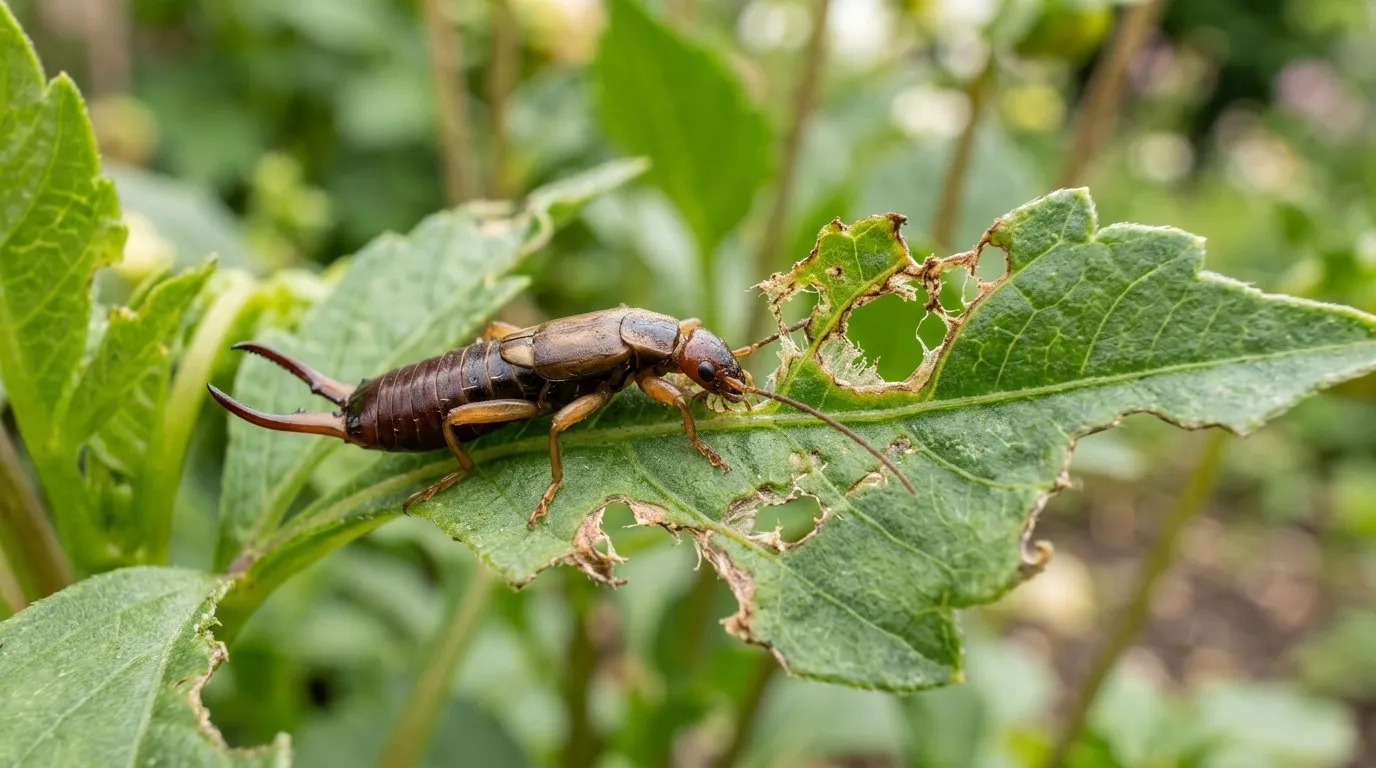
They are omnivores, and that is the whole story for gardeners. The same earwig that eats forty aphids off your broad beans will chew holes in your dahlia petals the next night. Friend or foe comes down to what you grow and how much damage you can live with.
This guide covers earwig biology, how to identify them, where they help and where they hurt, targeted trapping methods for dahlias and strawberries, and the integrated pest management approach that treats earwigs as valuable partners rather than enemies.
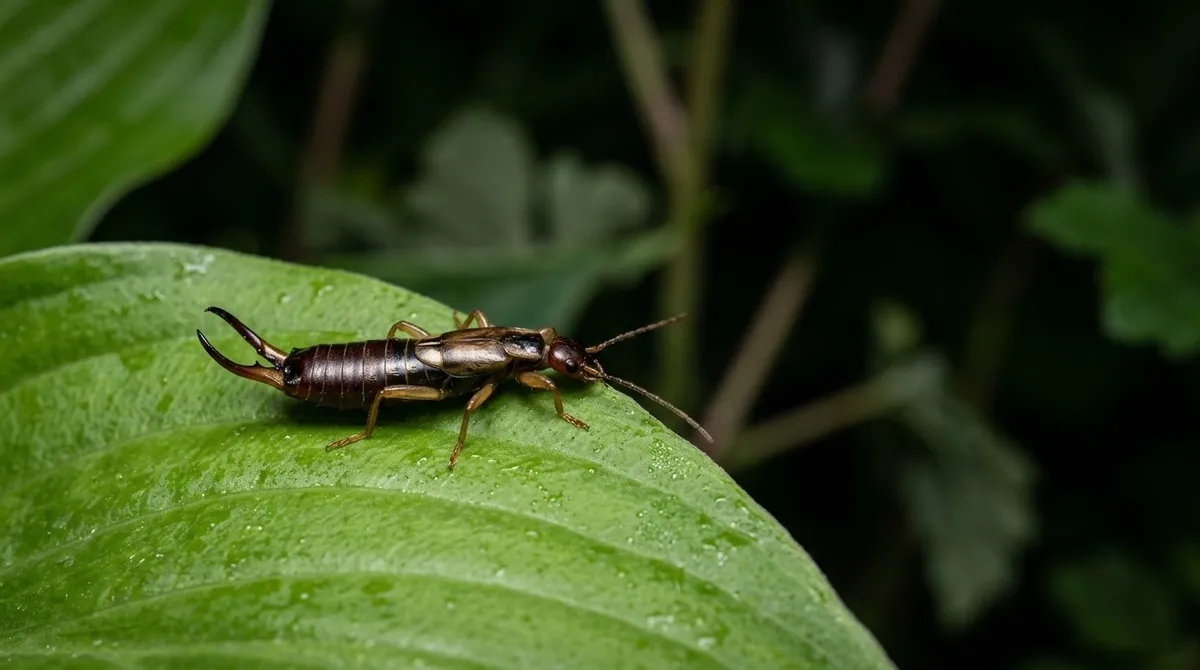
 The common earwig (Forficula auricularia). Curved male pincers are visible; female pincers are straighter. Active only at night.
What is an earwig?
The common earwig (Forficula auricularia) is a nocturnal insect in the order Dermaptera, which means “skin wings” — a reference to the delicate ear-shaped hindwings folded under short leathery forewings. Around 2,000 earwig species exist worldwide, but in the UK only the common earwig is numerous. Four other species occur but are rare or restricted to coastal or woodland habitats.
Adults reach 12-15mm long, dark brown with lighter brown legs. The defining feature is the pair of curved pincers (technically called cerci) at the tail end. Males have strongly curved asymmetrical pincers; females have straighter, shorter ones. The pincers are used for defence, for folding the hindwings into their storage position, and during mating rituals.
The name comes from the Old English earwicga, meaning “ear insect” or “ear wing”. Both readings fit. The ear refers to the shape of the hindwings, which really do look like human ears when unfolded. The idea that earwigs crawl into sleeping human ears is a myth, with no basis in observed behaviour.
Earwigs live in every UK garden, from Lands End to Shetland. In good habitat the density reaches 50-200 per square metre, but you rarely see them. By day they hide in crevices under bark, in stone walls, beneath flowerpots, and in dense foliage.
The earwig life cycle in UK gardens
Get the life cycle straight and managing earwig numbers makes sense. They run a single generation a year, with one feature that stands out among insects: genuine maternal care.
Autumn (September-November): Adult females mate, feed heavily, and dig a chamber 10-50cm deep in soil for overwintering. Males either die or overwinter separately in shallower hiding places. Most adult mortality occurs during autumn frost events.
Winter (December-February): Females remain underground in sealed chambers. In mild winters, some may emerge briefly on warm days. Egg-laying begins in late January in the south and late February-March in Scotland.
Late winter (February-March): Females lay 30-60 round white eggs in the chamber. Here is the remarkable part: the female guards the eggs actively, cleaning them to prevent mould growth and defending them from small predators. This continues for 50-70 days until hatching.
Spring (April-May): Eggs hatch into pale first-stage nymphs that look like tiny translucent earwigs. The mother keeps guarding them and feeds them regurgitated food for the first 7-14 days. By stage two they start foraging but still come back to her at night.
Late spring (May-June): Nymphs leave the chamber and disperse. They moult through stages two, three, and four over 30-50 days, becoming increasingly darkened and hard-bodied.
Summer (June-September): Adults emerge in late June. Population peaks July-September. Adults feed intensively on both plant material and invertebrate prey, building reserves for autumn mating and winter survival.
According to Buglife, the extent of maternal care in earwigs is unusual among insects and makes them one of the most interesting subjects of invertebrate behavioural research.
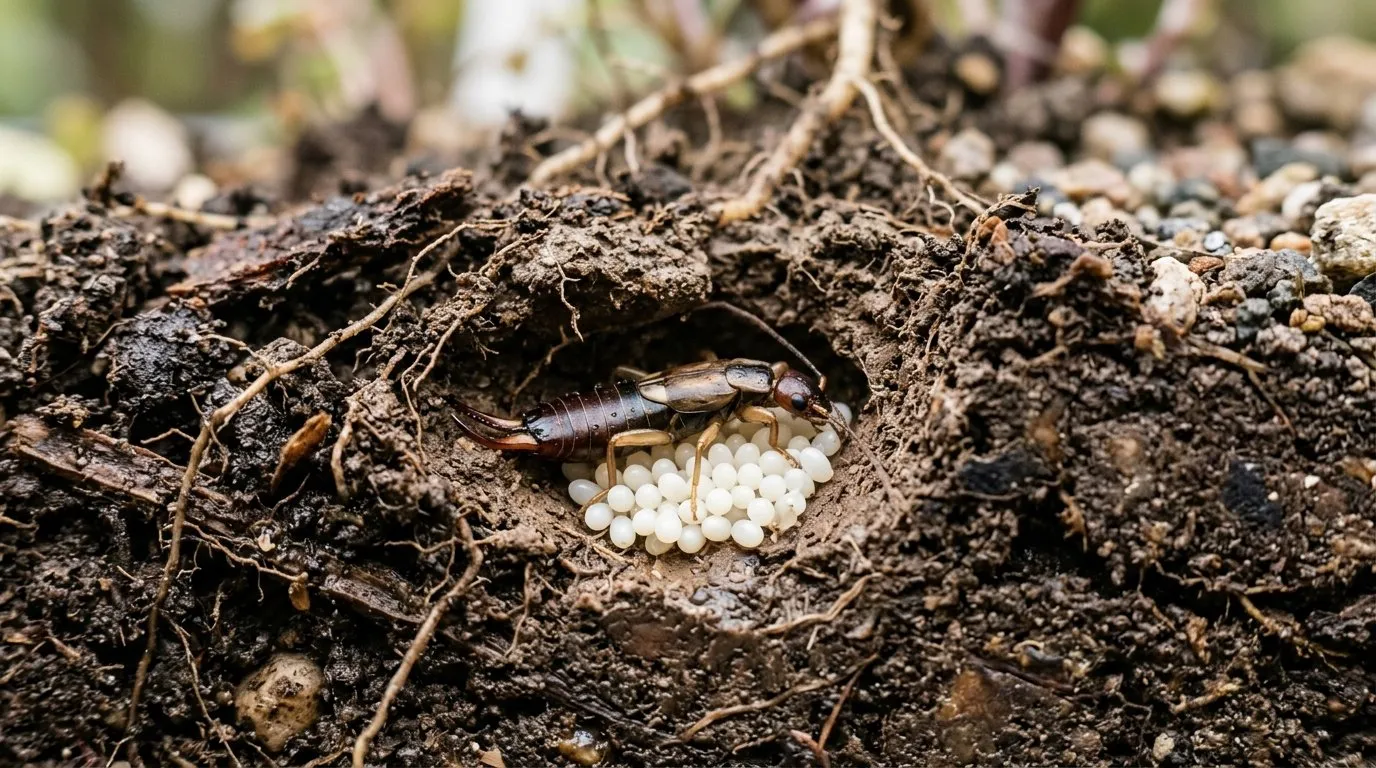 A female earwig guarding her eggs underground. Maternal care continues for 50-70 days from laying through early nymph development.
Friend: when earwigs help in UK gardens
Several European horticultural institutes have put numbers on the benefits. A mature earwig eats 30-50 aphids a night at the peak of summer. It also takes:
Aphid control. This is the big one. Earwigs climb plants after dark and work through aphid colonies. Orchards and vegetable gardens that keep their earwigs show 40-70% fewer aphids than those that wipe them out. See our guide on how to get rid of aphids for context on aphid control methods.
Codling moth control. Earwigs remove 60-80% of codling moth eggs from apple trees in Swiss and Dutch research trials. Apple growers in Switzerland now encourage earwig populations as part of integrated pest management. See codling moth protection for related context.
Small caterpillar predation. Earwigs consume young caterpillars of cabbage white, small ermine moth, and winter moth species. Effectiveness varies but can reduce brassica caterpillar populations by 20-30%.
Slug egg destruction. Earwigs hunt through moist soil and eat slug eggs. The effect is less well-documented than aphid control but appears significant in gardens where soil stays moist.
Decomposition. Earwigs accelerate the breakdown of fallen fruit, dead leaves, and plant debris, returning nutrients to soil. They are part of the broader detritivore food chain.
In vegetable plots, orchards, and mixed borders, leaving earwigs alone is the better trade. The aphid reduction on its own outweighs the odd nibbled soft fruit.
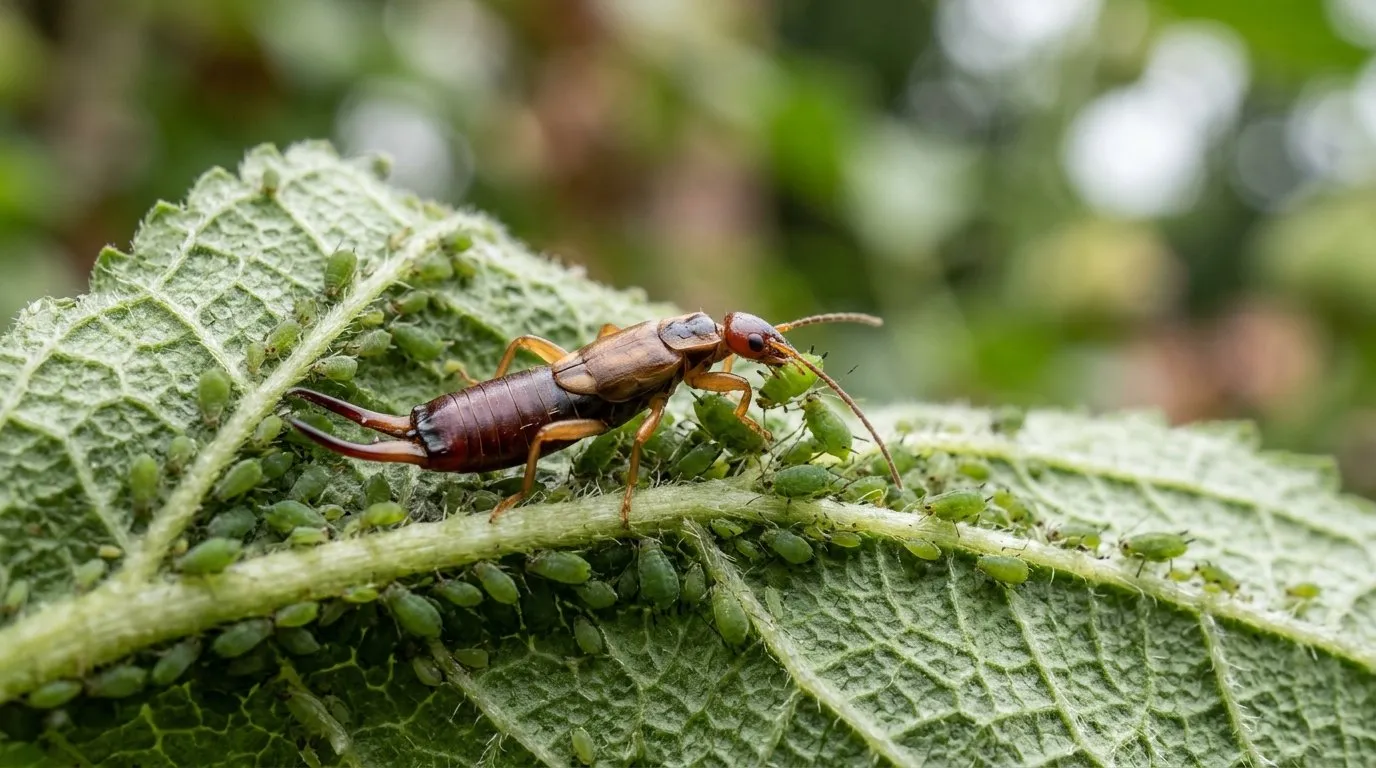 An earwig working through an aphid colony. A single adult eats 30-50 aphids per night — the kind of biocontrol that pyrethroid sprays would wipe out alongside the pests they target.
Foe: when earwigs damage UK gardens
Earwig damage tends to concentrate on specific vulnerable crops rather than being spread across the whole garden. The main problems are:
Dahlia damage. The single biggest complaint from UK gardeners. Earwigs chew holes in petals, especially on decorative and pom-pom dahlia varieties with tightly packed petals that provide hiding places. A heavily infested dahlia bed can see 30-50% of flowers unmarketable by mid-August. Single-flowered dahlias suffer less damage because earwigs cannot hide inside the flower easily.
Chrysanthemum damage. Similar to dahlias. Cupped and fully double chrysanthemum varieties suffer most. Earwigs particularly target the white and pale yellow varieties.
Ripe fruit damage. Strawberries, raspberries, and peaches show chewed or scooped-out areas. Earwigs usually only feed on damaged or overripe fruit, following birds or wasps that have already broken the skin.
Seedling damage. Small holes and irregular nibbles on cotyledons and first true leaves of seedlings, especially brassicas and beans. Usually transient and seedlings grow through the damage.
Clematis flower damage. Large-flowered clematis varieties can suffer petal damage in hot dry years when earwigs seek moisture from flower tissues.
The damage is nearly always cosmetic and does not kill plants. Even a badly chewed dahlia still throws plenty of flowers. The problem is showability, not plant health.
How to identify earwig damage
Distinguishing earwig damage from other pests prevents wasted control efforts aimed at the wrong culprit.
Earwig damage features:
- Irregular holes and nibbled edges on petals and soft leaves
- Damage peaks overnight (morning inspection shows fresh damage)
- No slime trails (rules out slugs and snails)
- Small black-brown dropping pellets near damaged areas
- Earwigs found hiding in rolled leaves, flower heads, or under surrounding objects by day
Compare with:
- Slugs: Similar holes but leave silvery slime trails; prefer moist low-growing foliage
- Caterpillars: Larger chewed areas, visible caterpillars on plants, green droppings
- Aphids: Sticky honeydew, curled leaves, visible insect colonies, no holes
- Wasps: Scooped wounds in fruit, primarily in late summer
If damage is on petals and peaks overnight with no slime trails, earwigs are the likely cause.
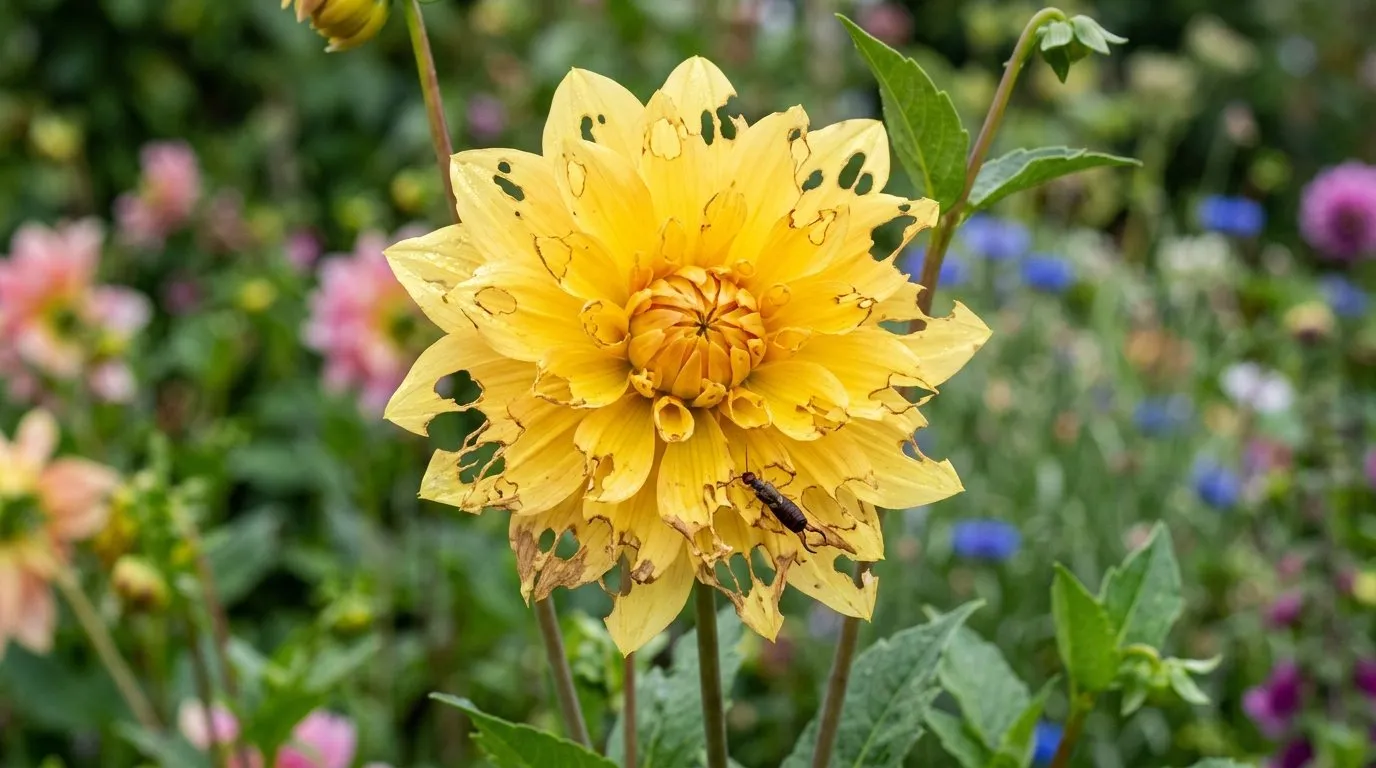 Typical earwig damage on a dahlia flower. Holes have irregular edges and no slime trails. Damage peaks overnight.
How to trap earwigs in vulnerable crops
Targeted trapping is the best way to cut earwig damage without harming anything else. The idea is simple: give them daytime shelters you can empty each morning.
The classic upturned flowerpot trap:
- Use small clay flowerpots (7-10cm diameter).
- Stuff each pot loosely with straw, dry moss, or shredded newspaper.
- Invert the pot and place on top of a 1m bamboo cane pushed into the ground among vulnerable plants.
- Empty each morning by sharply tapping the inverted pot over a bucket of soapy water.
- Replace the pot and repeat daily from early June until late September.
Alternative traps:
- Corrugated cardboard rolls. Strips of corrugated cardboard rolled and secured with string, placed at the base of plants. Earwigs shelter in the channels.
- Hollow bamboo canes. Short sections of 30-40mm diameter bamboo with the ends open, laid horizontally at soil level.
- Damp newspaper bundles. Rolled damp newspaper placed in shady spots. Burn or drown the trap contents next morning.
What not to do:
- Do not spray insecticides. They kill earwigs but also all other beneficial insects including pollinators, hoverflies, ladybirds, and pollinating bees.
- Do not use diatomaceous earth broadcast across beds. It damages all ground beetles and beneficial invertebrates.
- Do not attempt garden-wide earwig elimination. Even if possible, the aphid explosion that follows is far more damaging than earwig damage ever was.
Trap only in the beds where damage is unacceptable. Leave the rest of the garden alone.
Integrated management: living with earwigs
The modern approach to earwigs mirrors integrated pest management principles used in commercial horticulture.
Step 1 - Assess damage tolerance. Is this a show dahlia bed where perfect blooms matter? Or a mixed border where mild petal holes are acceptable? Trap only where damage is unacceptable.
Step 2 - Provide refuges for beneficials. Mulch paths, log piles, and dense ground cover give earwigs places to hunt and breed, increasing their aphid-control benefits.
Step 3 - Avoid broad-spectrum pesticides. Pyrethroid sprays kill earwigs and all beneficials equally. Aphid problems worsen after spraying because earwig populations take 2-3 months to recover while aphids bounce back in 2-3 weeks.
Step 4 - Support all night-active hunters. Ground beetles, hedgehogs, bats, and earwigs together keep pest populations down. Plant dense low-growing edging, leave leaf litter in corners, and provide bat roosting boxes.
Step 5 - Trap only vulnerable crops. Dahlias, chrysanthemums, and show produce can have targeted flowerpot traps. Vegetables, fruit trees, and mixed borders should be left to earwigs.
In practice you get 20-30% more clean, healthy plants for the price of 10-15% dahlia flower damage. Most gardeners who try it give up fighting earwigs within two seasons.
Earwigs in the house
Occasional indoor earwig appearances are normal but usually brief. They enter seeking shelter, not food or warmth, and most die within days without garden conditions.
Why they enter:
- Heavy summer rain floods outdoor shelters
- Autumn frost drives them to warmer cavities
- Drought dries out garden mulch and forces migration
- House lighting at night can attract a few
How to reduce indoor sightings:
- Seal gaps around doors, windows, and airbricks
- Keep garden mulch 30cm away from house walls
- Fix leaks and improve drainage around foundations
- Reduce outdoor lighting near doors at night
- Remove wet debris from gutters and eaves
If you find one indoors: Capture with a glass and card, release outside. Do not spray. They carry no diseases, do not bite, and cannot damage furniture or food stores. Household infestations in the sense of a breeding indoor population are essentially unknown - earwigs need outdoor conditions to reproduce.
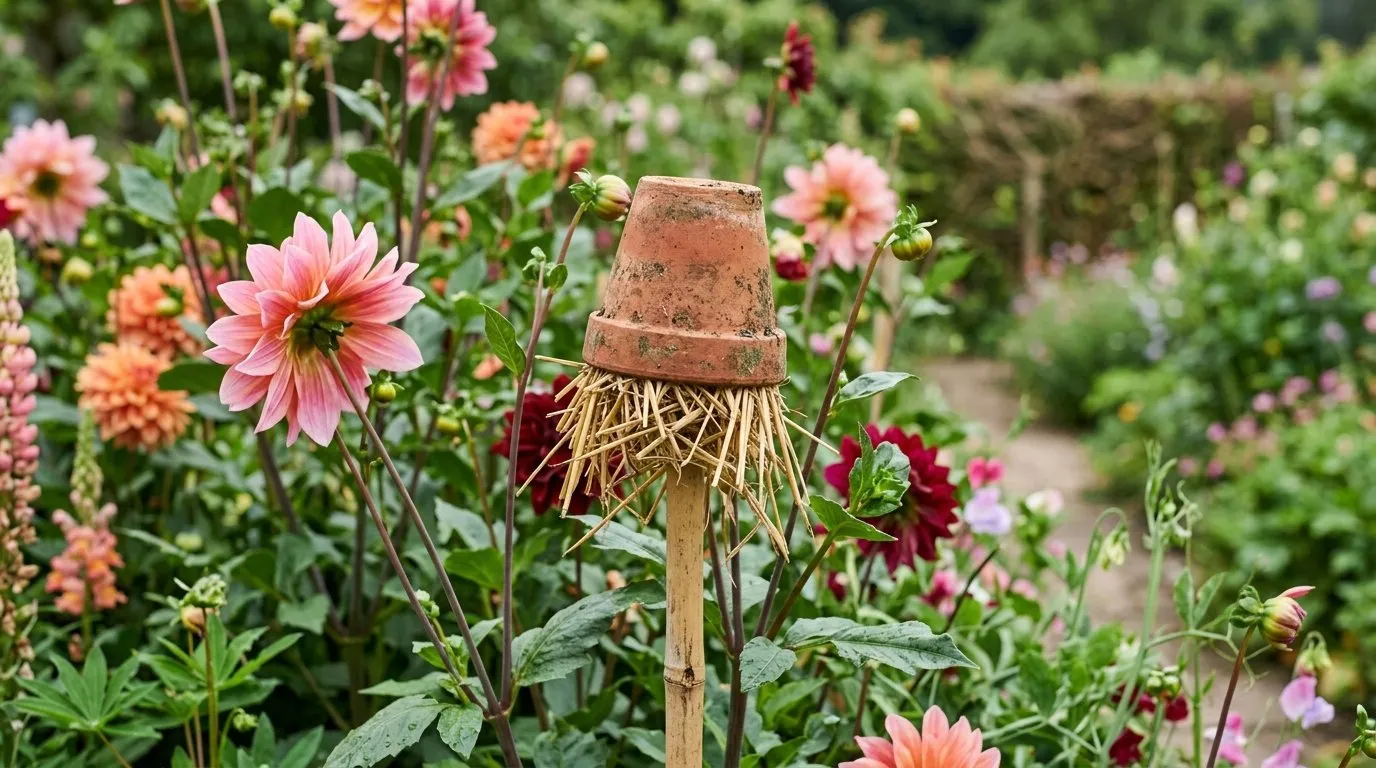 Upturned flowerpot trap stuffed with straw, placed among dahlia stems. Empty daily from June to September.
Common earwig-related questions and myths
“Earwigs cause serious garden damage.” Usually overstated. Damage is real but concentrated in specific crops; overall impact is typically outweighed by aphid control benefits.
“Earwigs multiply rapidly and take over.” One generation per year. Populations are naturally stable at 50-200 per square metre. No ‘population explosions’ occur.
“Earwigs burrow into human ears.” Myth. No documented cases. Earwigs avoid warm dry conditions, which includes human ears.
“Earwigs are a sign of poor garden hygiene.” Myth. Earwigs are present in every garden regardless of maintenance. They are a permanent part of the UK ecosystem.
“Biological controls kill earwigs.” Incorrect. The parasitoid wasps and nematodes used in gardens target aphids, slugs, and soil pests, not earwigs. There are no commercially available earwig controls for domestic gardens, which reflects the modern view that earwigs do not need controlling at population level.
Earwig identification quick reference
| Feature | Common Earwig | Similar Insects |
|---|---|---|
| Length | 12-15mm | Rove beetles 3-20mm, staphylinids |
| Body | Dark brown, elongated | Black/brown similar |
| Pincers | Curved (males) or straight (females) | Absent |
| Antennae | Long, threadlike | Short or clubbed |
| Wings | Short forewings, folded hindwings | Fully covered wings |
| Movement | Fast running, rarely flies | Variable |
| Habitat | Damp crevices, flower heads | Varied |
| Day activity | Hidden | Often active |
The combination of curved pincers, nocturnal habit, and pale-coloured legs makes common earwigs readily identifiable.
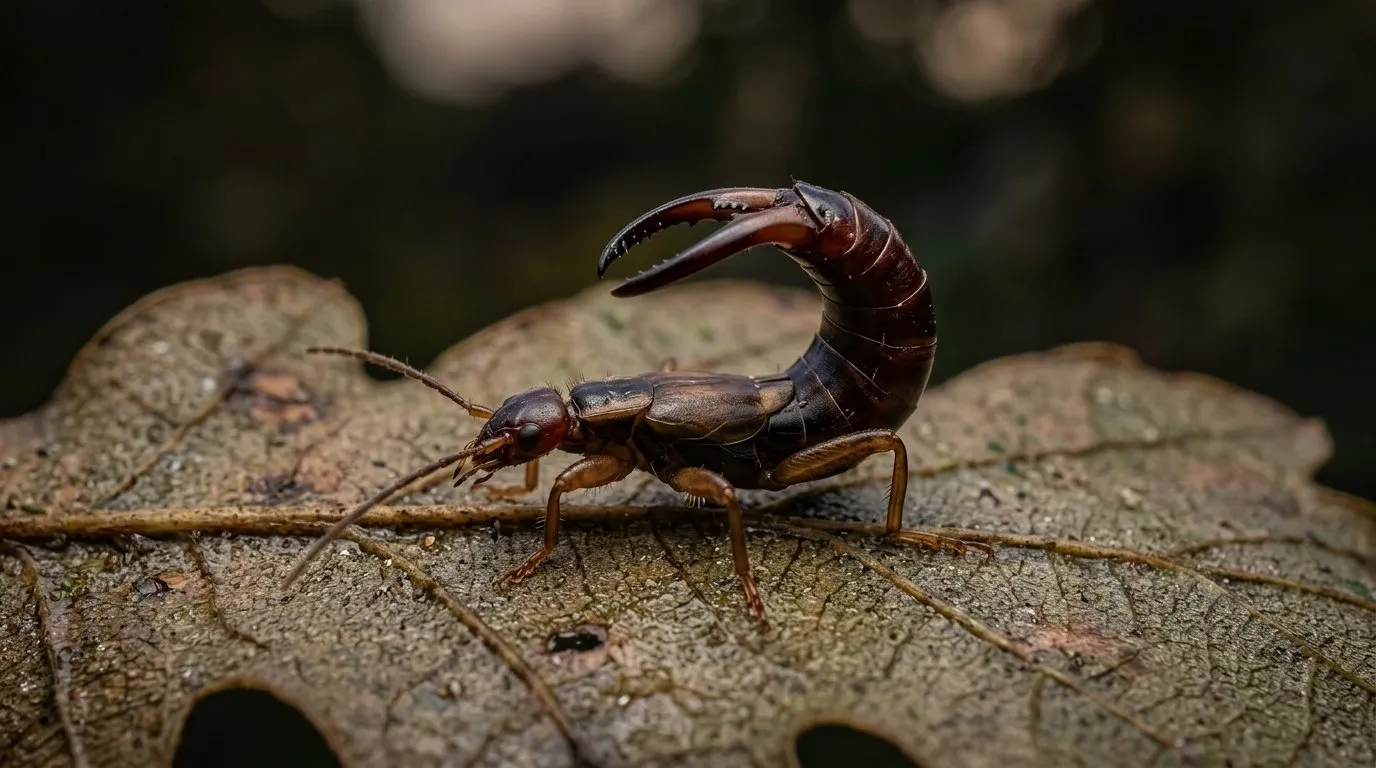 The curved cerci look threatening but cannot pierce human skin. They evolved for defence against ground beetles and for folding the hindwings — not for biting people or burrowing into ears.
Frequently asked questions
Are earwigs good or bad for gardens?
Earwigs are both good and bad for UK gardens. They eat aphids, mites, moth eggs, and small caterpillars, making them valuable biological pest controllers. A single adult earwig consumes 30-50 aphids per night. They also damage dahlia petals, chrysanthemums, strawberries, and emerging seedlings. The overall balance depends on what you grow: vegetable and orchard gardens benefit from earwigs, while cut-flower growers often find them pests.
How do I get rid of earwigs in dahlias?
Use upturned flowerpot traps on 1m bamboo canes placed among dahlia stems. Stuff each pot with straw or dry moss. Earwigs climb up at dawn seeking shelter and enter the pots. Empty traps every morning into a bucket of soapy water. Check and empty daily from June to September. Three pots per dahlia clump reduce petal damage by 70-80%. Trap only in dahlia beds — do not eliminate earwigs garden-wide.
Do earwigs really go in human ears?
No, earwigs do not enter human ears. The name comes from the Old English earwicga, meaning “ear-wing”, referring to the distinctive ear-shaped hindwings visible when rare flight occurs. The myth of earwigs burrowing into sleeping ears has no factual basis. Earwigs avoid warm dry environments and are not attracted to human body heat. Cases of any insect entering an ear are rare and usually involve flies or beetles, not earwigs.
What do earwigs eat in the garden?
Earwigs are true omnivores, eating both plant material and small invertebrates. Their diet includes aphids, mites, codling moth eggs, small caterpillars, slug eggs, fungal spores, pollen, decaying vegetation, soft plant tissue, ripe fruit, and flower petals. Hunting peaks at night. In field trials, earwigs remove 60-80% of codling moth eggs from apple trees, providing significant natural pest control in orchards.
How long do earwigs live?
Common earwigs live 12-14 months in UK gardens, completing one generation per year. Adults overwinter in soil chambers 10-50cm deep. Females lay eggs in January-March, guarding them until hatching in April-May. Nymphs mature through four stages over 50-70 days, reaching adulthood in late June. Peak adult populations occur July-September. Most adults die during autumn frosts, with a small percentage surviving another winter.
Are earwigs dangerous to humans?
Earwigs are harmless to humans. The pincers (cerci) look threatening but cannot pierce human skin and deliver only a very weak pinch. Earwigs do not bite, sting, carry disease, or transmit pathogens to people. Handling them requires no special precautions. The worst they do is release a mild defensive odour when threatened. Home invasion is rare — they seek cool damp shelter, not warm dry interiors.
Why are there so many earwigs in my house?
Earwigs enter houses when their outdoor habitat becomes unsuitable. This typically happens after heavy summer rain, during autumn frosts, or when garden mulch dries out in drought. Most household earwig appearances peak in August-September. Seal gaps around doors and windows, reduce garden mulch within 30cm of house walls, and improve drainage around foundations. Earwigs indoors rarely breed — most die within a week without garden conditions.
Sources: Buglife - Earwigs and other Dermaptera | RHS Earwig guidance
Our team produces practical UK gardening guidance from source research, contributor records and established horticultural practice. Editorial standards are overseen by Matt W.