Key takeaways
- Fungus gnats breed in damp compost, so the real fix is drier compost on top
- Yellow sticky traps just above the compost catch the flying adults
- A nematode drench (Steinernema feltiae) kills the grubs in the compost
- Water from below until they're gone, so the top layer stays dry
- Home-made drenches like hydrogen peroxide or cinnamon aren't legal pesticides in the UK
- Keep going for about four weeks to break the breeding cycle
Fungus gnats are the little dark flies that zip up out of the pot when you water. They won’t kill your plants, but they breed fast in damp compost and drift around your face in the evening. Good news: they’re easy to clear once you know what they want.
The plan is simple. Catch the adults on yellow sticky traps, kill the grubs with a nematode drench, and let the top of the compost dry out so they can’t lay eggs. Stick with it for about four weeks and you’ll break the cycle. For fruit flies, whitefly and other houseplant visitors, see our guide on how to get rid of houseplant flies.
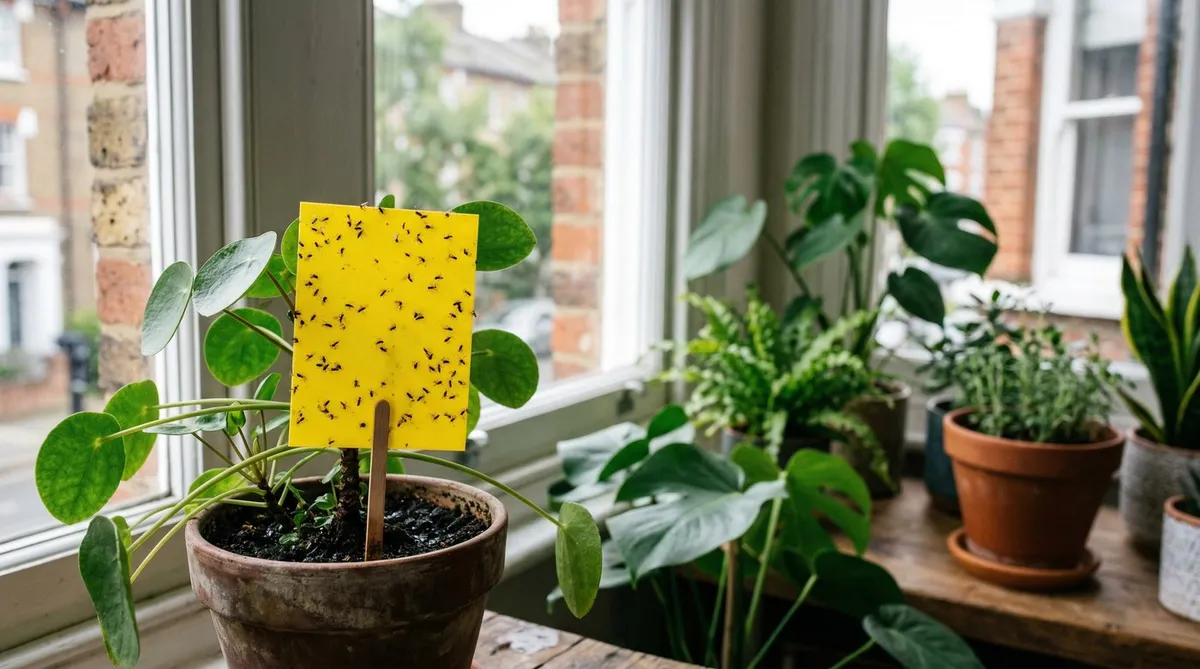
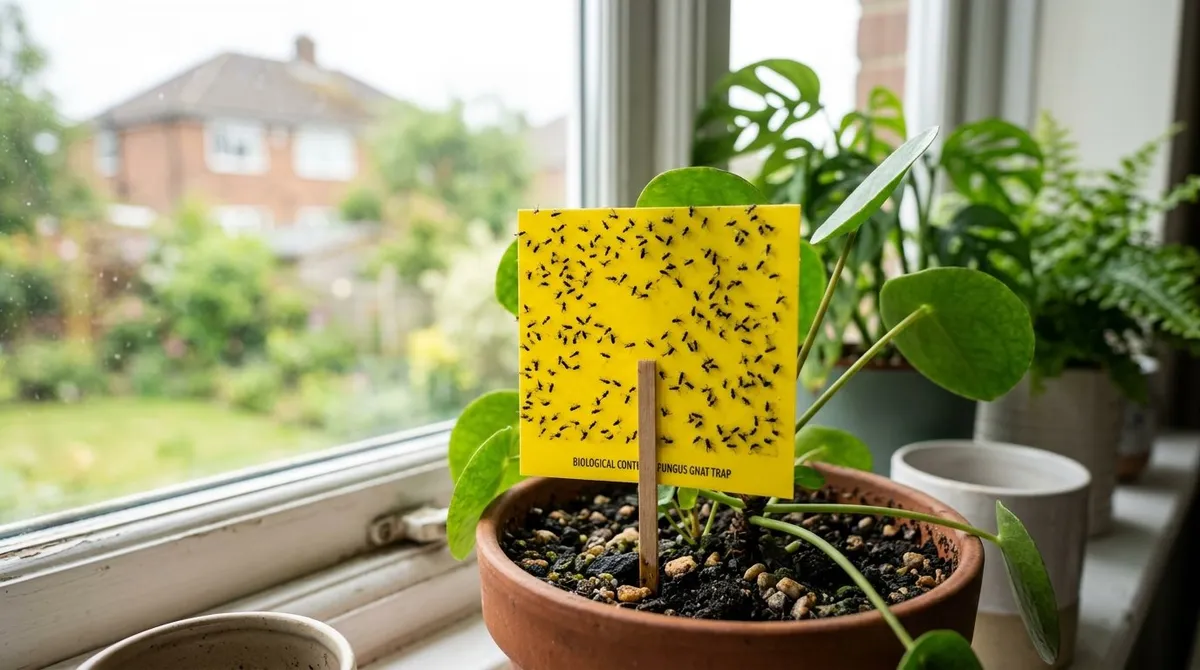
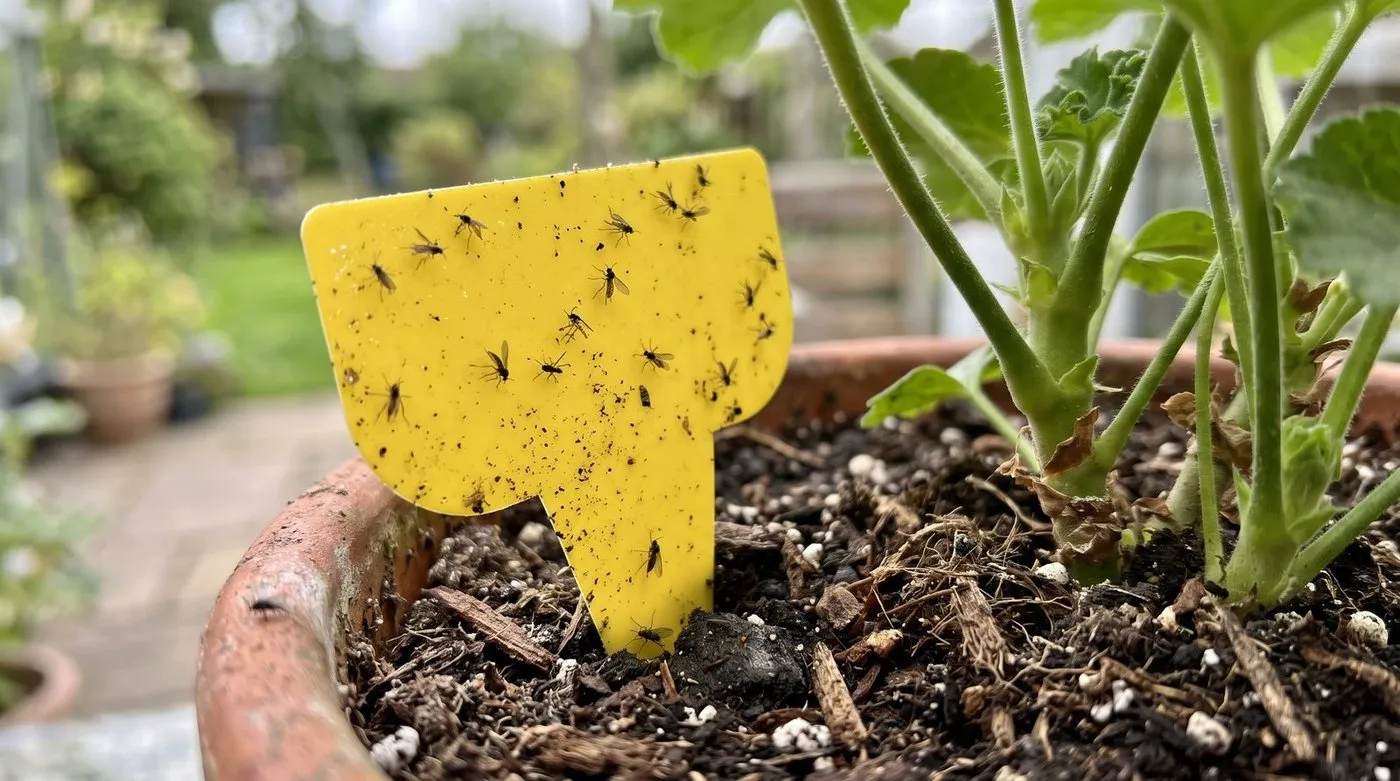 A yellow sticky trap full of adult fungus gnats. It’s the easiest way to see how many you’ve got.
What are fungus gnats?
Fungus gnats (also called sciarid flies) are small, dark grey flies about 2-4mm long. They look like tiny mosquitoes with long legs, but they don’t bite. They fly weakly and tend to walk over the compost or hover around the pot.
The real trouble is underground. The grubs are see-through white with a shiny black head. They live in the top few centimetres of damp compost, eating fungi, rotting bits and fine roots.
They go from egg to adult in a few weeks when the house is warm. The females lay their eggs in damp compost, which is why gnats and overwatering go hand in hand. Dry the top of the compost and you stop them in their tracks.
When fungus gnats are worst in UK homes
Autumn and winter are the busy season. The heating goes on, plants grow more slowly and drink less, and the compost stays wet for longer. Lots of people first notice gnats in November.
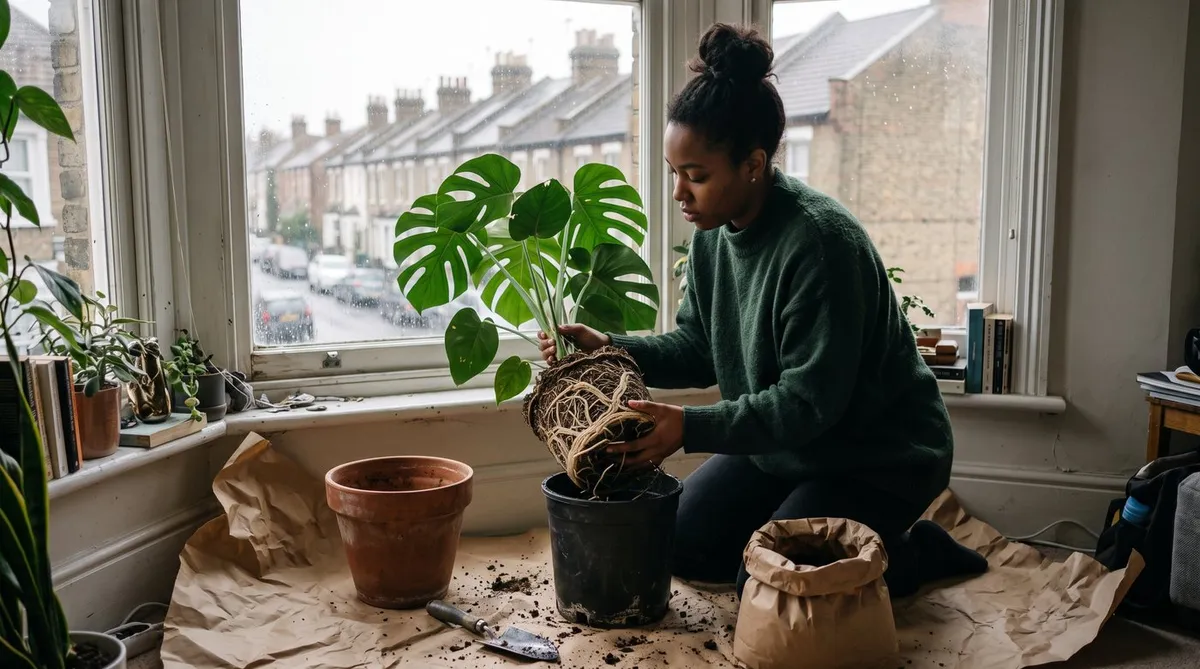
Spring brings new plants home from the garden centre, and some carry eggs or grubs in their compost. Repotting with compost from an open bag can bring them in too.
Summer is usually quieter. Windows are open and plants dry out faster. Bathrooms and dim rooms where compost stays damp can still have trouble.
When the heating comes back on in autumn, it’s a good time to pop sticky traps back in your pots.
Fungus gnats or another houseplant fly?
A few small flies turn up around houseplants. Here’s how to tell them apart.
| Fly | What it looks like | Where you’ll see it |
|---|---|---|
| Fungus gnat | Tiny, grey-black, long legs | Flying up from the compost when you water |
| Fruit fly | Tan with red eyes | Around the fruit bowl, not your plants |
| Whitefly | Tiny and white | Flutters up from under the leaves |
| Shore fly | Black and a bit stouter | Around green algae on soggy compost |
Not sure? Put a yellow sticky trap above the pot for a day. Small black flies with long legs are fungus gnats.
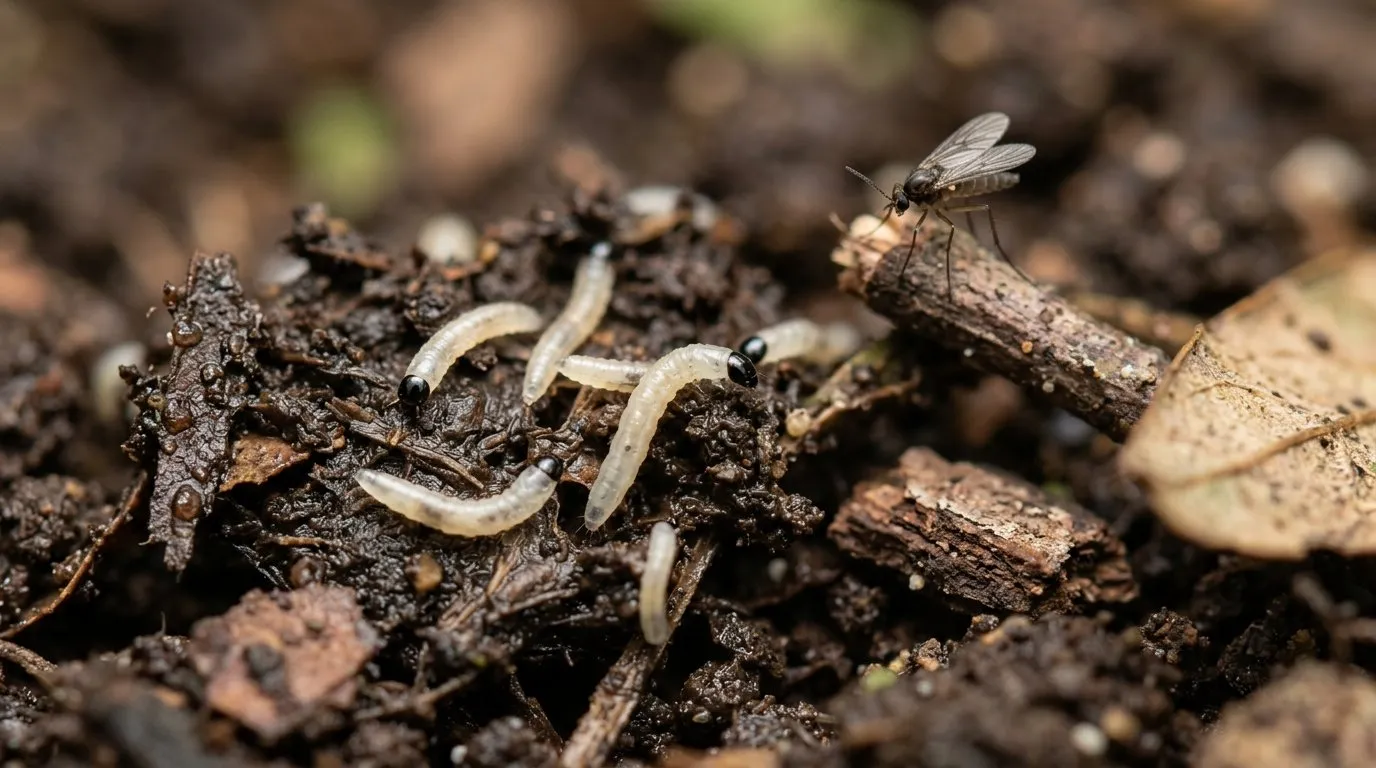 Fungus gnat grubs (white with black heads) and an adult. The grubs in the top of the compost do the damage.
How to kill fungus gnats fast
Tackle the adults and the grubs at the same time. Here’s the three-step plan.
Step 1: Yellow sticky traps for the adults
- Push a few sticky traps into each affected pot, just above the compost.
- Swap them when they’re full.
- Keep them in for about four weeks, even after you stop seeing flies.
Traps won’t fix things alone, but every adult caught is one less laying eggs.
Step 2: Nematode drench for the grubs
- Buy Steinernema feltiae nematodes from a garden centre or biological control supplier.
- Mix them with water as the pack says.
- Water them into every affected pot so the compost is well soaked.
- Only use them when the compost is above 10C.
- Keep the compost moist for about a week so the nematodes can move.
Nematodes are tiny worms that hunt down the grubs in the compost. They’re harmless to people, pets and plants.
Step 3: Let the top of the compost dry
Start watering from below straight away (see below). Once the top layer dries, the adults stop laying. Home-made drenches like hydrogen peroxide, and Bt products, aren’t authorised pesticides for home use in the UK, so leave them out.
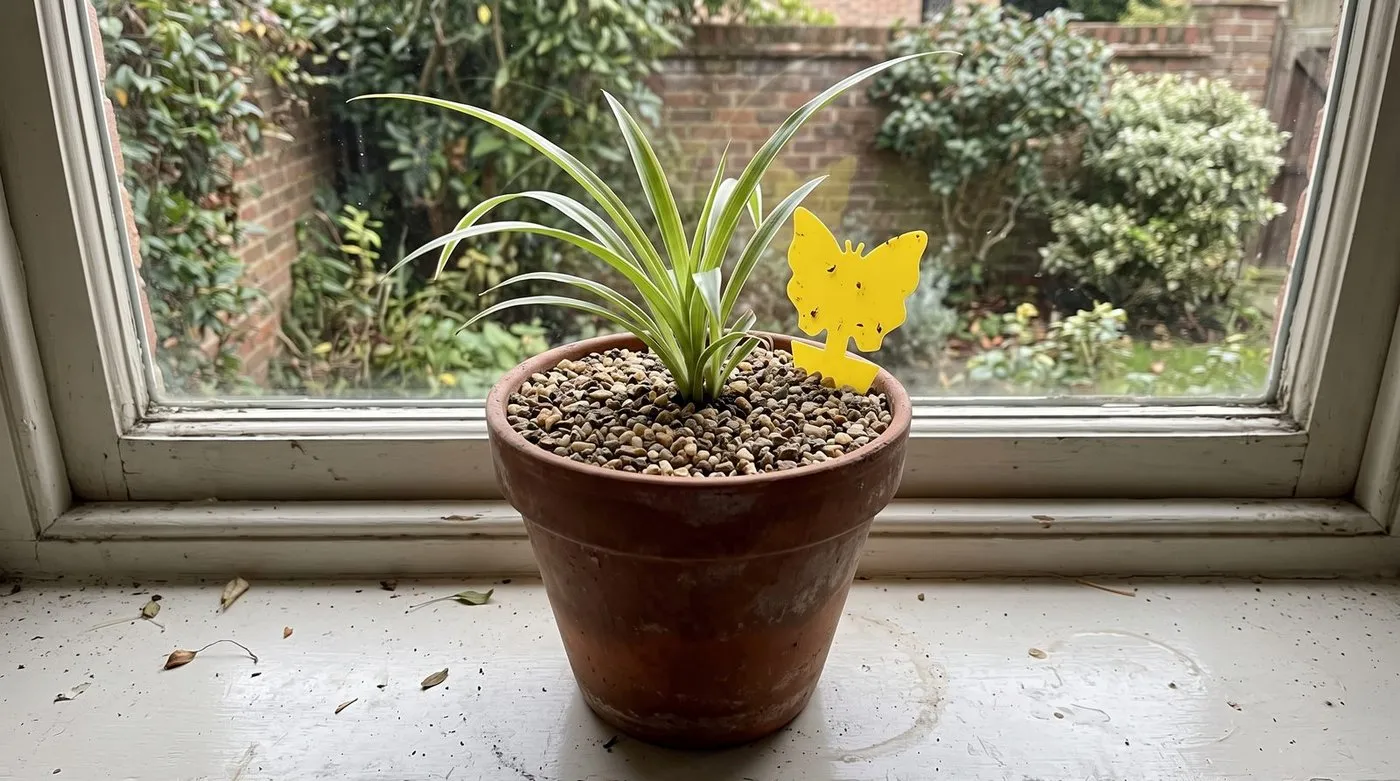 A layer of grit on top of the compost and a yellow sticky trap tackle the grubs and the adults together.
How to stop fungus gnats coming back
It all comes down to keeping the top of the compost dry.
Water from below
This is the biggest change you can make. Stand the pot in a tray of water for 15-30 minutes, let it soak up through the drainage holes, then tip away what’s left. The top of the compost stays dry and gnats can’t lay there.
If a plant really needs watering from the top, use a long-spouted can and pour at compost level. When you repot, our guide on how to repot houseplants has more watering tips.
Add a grit top dressing
Spread a 2cm layer of horticultural grit, fine sand or small pebbles over the compost. The adults can’t get through to the damp compost to lay eggs, and it looks tidy too. Dried moss looks nice but doesn’t work as well.
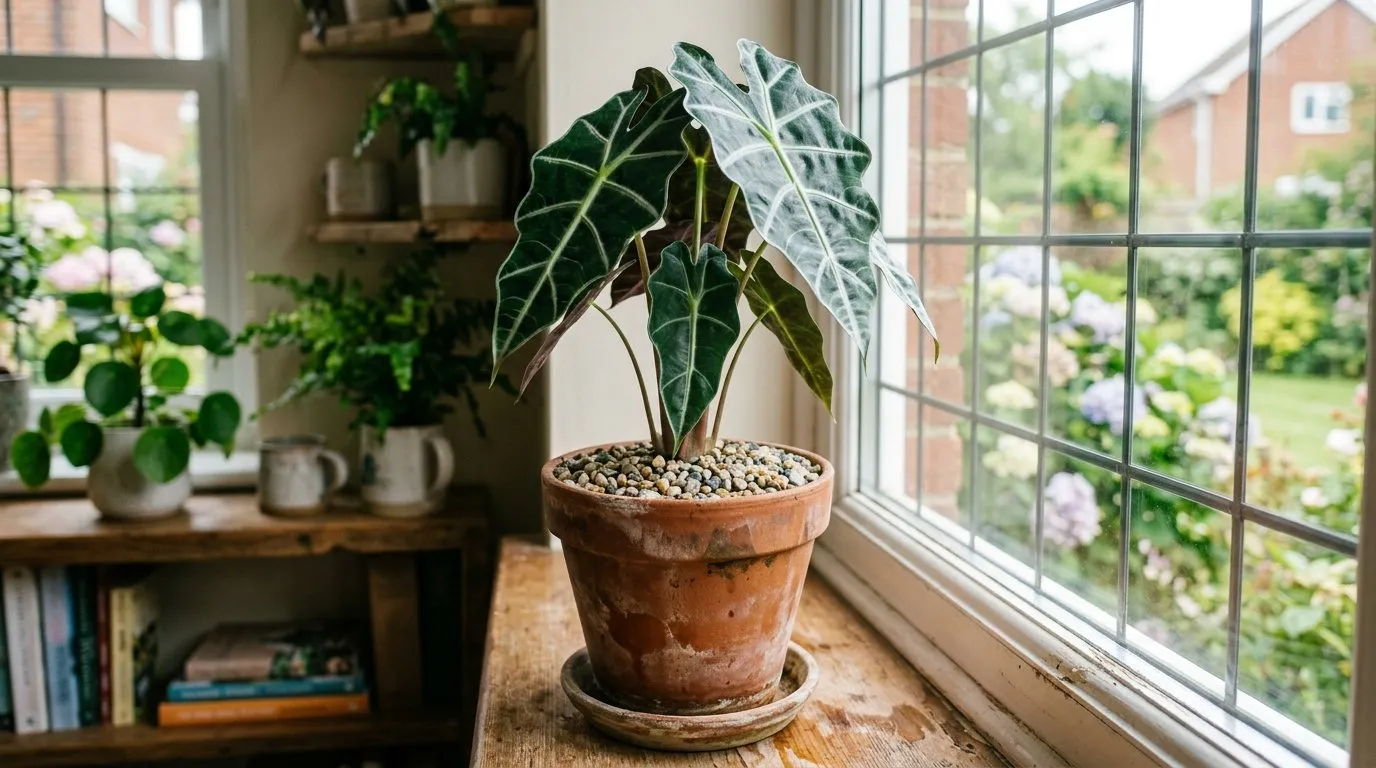 A 2cm layer of grit on top. The adults can’t reach the damp compost below to lay their eggs.
Think about your compost
Some peat-free composts hold a lot of water and stay damp for a long time. If gnats keep coming back, try a free-draining mix:
- Most houseplants: John Innes No. 2 or No. 3 with some perlite mixed in
- Orchids: Bark-based orchid compost
- Succulents: Cactus compost with extra sharp sand
Keep new plants apart
New plants can bring gnats home with them. Keep new arrivals in a separate room for a few weeks with a sticky trap in the pot. Only move them in with the others once the trap stays empty for a week.
Keep compost bags sealed
An open bag of compost in a warm room is a gnat nursery. Fold the top over tightly, store it in a shed or garage if you can, and use up older bags first.
Fungus gnats on seedlings and cuttings
Seedlings and cuttings have tiny roots, so a few grubs can do real harm. Give them a little extra care.
To keep gnats away:
- Use fresh seed compost from a sealed bag
- Water from below
- Check under propagator lids every day
- Put a yellow sticky trap in as soon as seedlings come up
- If you sow indoors in winter, a nematode drench before sowing helps
If gnats turn up:
- Nematodes are fine to use on seedlings
- Water from below so the surface stays dry
- Pot seedlings on once they have true leaves
Our guide on how to propagate houseplants has more on raising cuttings indoors.
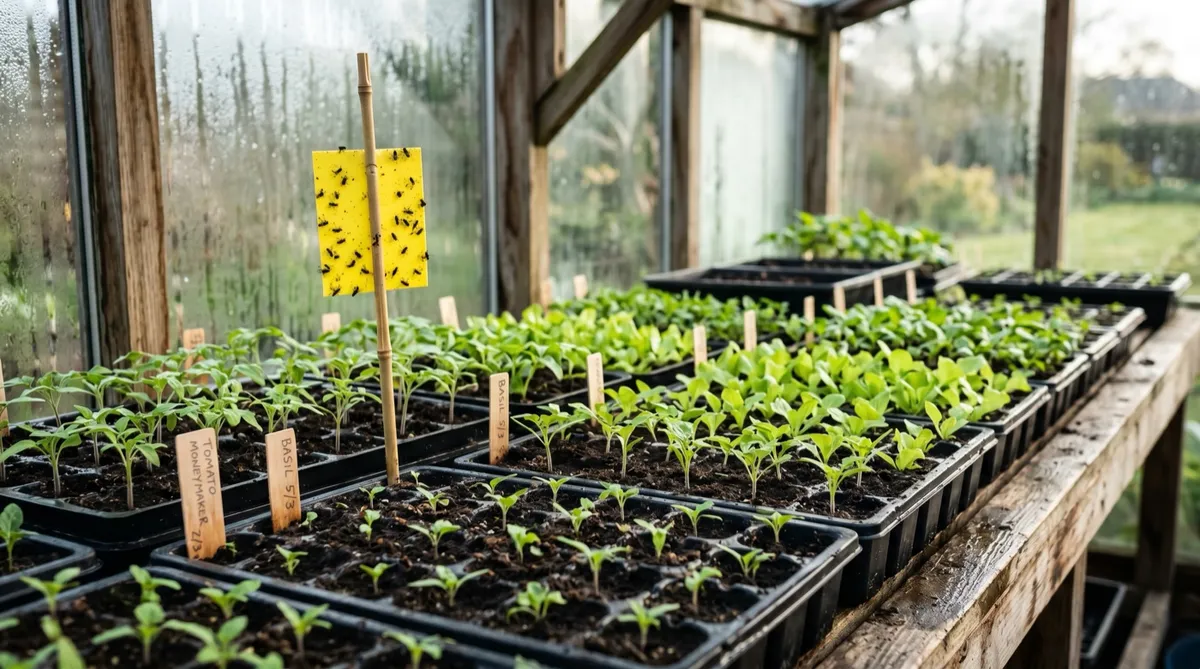
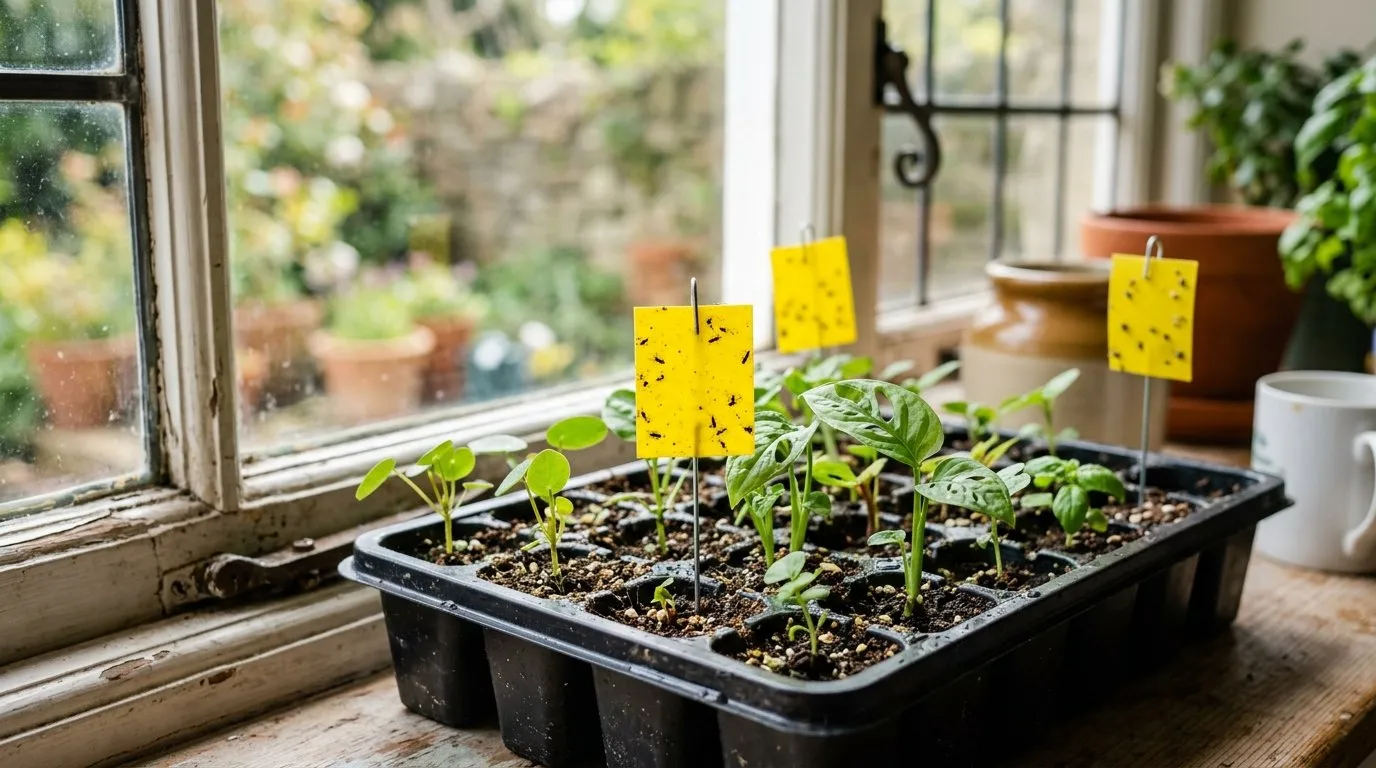 Sticky traps in a seed tray give you early warning if gnats move in.
Common fungus gnat mistakes
A few popular tricks don’t help much.
Vinegar traps. They catch fruit flies, not fungus gnats. Use yellow sticky traps instead.
Letting the plant dry out completely. It kills the grubs but can kill the plant too. Watering from below keeps the plant happy and the surface dry.
Soap or home-made sprays. They aren’t authorised pesticides in the UK, and the problem is the grubs in the compost, not the adults.
Insecticide sprays indoors. You don’t need them. Traps, nematodes and drier compost do the job.
Cinnamon or hydrogen peroxide. These aren’t legal treatments in the UK, so give them a miss.
Leaving sand on for ever. Sand can pack down over time and hold water. Refresh it every few months.
How to know they’ve gone
You’re clear when, for a whole week:
- The sticky traps catch nothing new
- You see no grubs when you gently scratch the compost
- Nothing flies up when you water or touch the pot
Keep watering from below and leave the grit on for another few weeks, just to be sure. After that, good watering habits should keep them away.
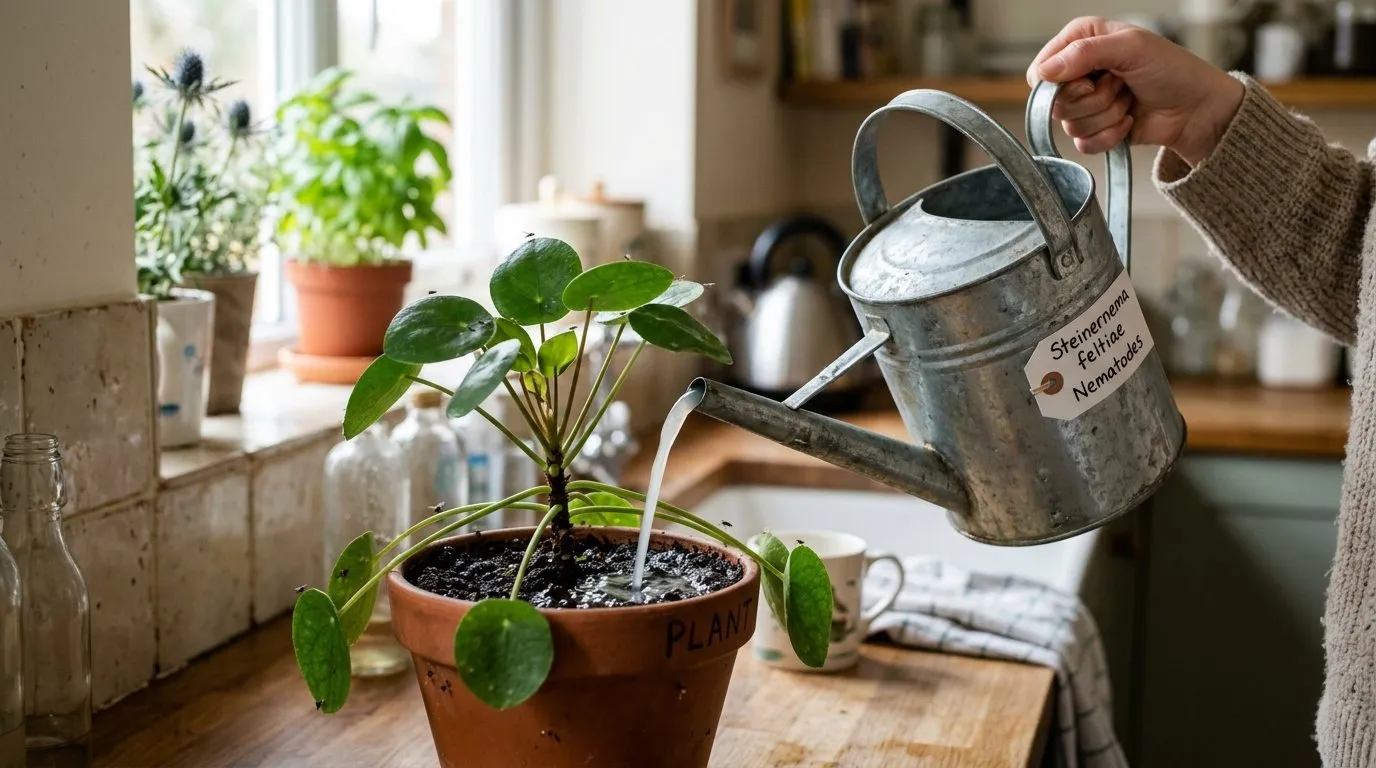 Watering in a Steinernema feltiae nematode drench to clear the grubs.
Houseplants that get fungus gnats most
Plants that like damp compost get gnats most often.
Spider plants: Rarely bothered. They cope with drier compost.
Peace lilies: Quite prone, as they like damp compost. Water them from below.
Orchids: Bark compost doesn’t suit gnats much. If they appear, let the bark dry a little more between waterings.
Succulents: Shouldn’t get them at all. If they do, you’re watering too much.
Monstera and philodendron: Often affected, as big pots stay damp deep down. Nematodes work well here.
Ferns: Very prone because they like moist compost. Use a grit top dressing and raise humidity with a pebble tray rather than soggy compost.
African violets: Prone because they like steady moisture. Water from below.
For rooms where damp compost is hard to avoid, our guide to best low-light houseplants can help you pick tougher plants.
Your four-week fungus gnat plan
| When | What to do | What you should see |
|---|---|---|
| Day 1 | Traps in every affected pot, start watering from below | Adults appear on traps |
| Day 3 | Nematode drench in all pots | Grubs start dying off |
| Week 1 | Swap traps, check numbers | Fewer adults than day 1 |
| Week 2 | Swap traps again | Traps nearly empty |
| Week 3 | Keep traps in | Very few adults |
| Week 4 | Remove traps once empty for a week | All clear |
| After that | Water from below, keep new plants apart | Gnat-free |
The RHS guide to sciarid flies is handy if you’d like to read more.
Frequently asked questions
What kills fungus gnat larvae quickly?
A nematode drench is the quickest legal way. Buy Steinernema feltiae nematodes, mix them with water as the pack says and drench the compost while it’s above 10C. Home-made drenches like hydrogen peroxide aren’t authorised pesticides in the UK, so skip them. Pair the nematodes with sticky traps and watering from below.
Do yellow sticky traps work for fungus gnats?
Yes, they catch the flying adults very well. Put a few just above the compost in each affected pot. They won’t clear the grubs in the compost on their own, but they cut down egg-laying and show you how bad things are. Swap them when they fill up and keep going until they stay empty for a week.
How do nematodes kill fungus gnats?
They’re tiny worms that hunt the grubs in the compost. You mix them with water and pour them on, and they find and kill the larvae. Use them when the compost is above 10C and keep it moist for about a week afterwards so they can move around.
Why do I keep getting fungus gnats?
Usually the compost is staying too wet. Other culprits are an open bag of compost in the house and new plants bringing gnats in with them. Water from below, keep compost bags sealed and somewhere cool, and keep new plants apart for a few weeks before they join the others.
Are fungus gnats harmful to houseplants?
Not much to healthy, grown-up plants. The grubs nibble fine roots, which a mature plant barely notices. Seedlings, cuttings and plants that are already struggling can suffer, though. The flying adults don’t harm plants, but they keep laying eggs, so deal with them anyway.
Can I use cinnamon on fungus gnats?
No, cinnamon isn’t a legal treatment. Home-made remedies aren’t authorised pesticides in the UK. Use nematodes for the grubs, yellow sticky traps for the adults, and water from below with a grit top dressing to stop egg-laying.
How do I stop fungus gnats coming back?
Keep the top of the compost dry. Water from below, add a 2cm layer of grit on top, keep new plants apart for a few weeks, and keep compost bags sealed, ideally in a shed. Gnats can’t breed in dry compost.
Our team produces practical UK gardening guidance from source research, contributor records and established horticultural practice. Editorial standards are overseen by Matt W.