How to Create a Herb Garden in the UK
Plan and build a herb garden that suits your space and budget. Covers raised beds, containers, formal designs, and the best herbs for every UK position.
Key takeaways
- Position your herb garden within five metres of the kitchen door for daily use
- Most culinary herbs need at least six hours of direct sunlight per day
- A 1.2m square raised bed holds eight herb varieties and costs under thirty pounds
- Group herbs by water needs: Mediterranean herbs together, leafy herbs separately
- Containers are ideal for mint, which spreads aggressively in open ground
- Even a north-facing spot supports parsley, chives, mint, and coriander
A herb garden is one of the most useful things you can add to any outdoor space. Thirty years of growing herbs has taught me that the best herb gardens are simple, close to the kitchen, and matched to the spot they grow in.
This guide covers where to put a herb garden, what layout works best, and which herbs suit every position. Whether you have a large plot or a few pots on a patio, the principles are the same. The RHS herb growing guide has additional reference material on individual species.
Where to put a herb garden
Position is the single most important decision. Get it right and your herbs thrive with minimal effort. Get it wrong and you spend the season fighting leggy growth and poor flavour.
Place your herb garden within five metres of the kitchen door. If you have to walk to the bottom of the garden in the rain, you will stop picking herbs by October. Convenience drives daily use. A bed or collection of pots right outside the back door means you grab a handful of thyme while the pan heats up.
Most culinary herbs need at least six hours of direct sun per day. South-facing or west-facing positions against a wall provide extra warmth and reflected heat. A sheltered spot also protects tender herbs like basil from cold spring winds.
If your only available space faces north or east, you can still grow herbs. Parsley, chives, mint, and coriander tolerate partial shade and produce well in three to four hours of direct light.
Herb garden layout ideas
The layout you choose depends on your space, budget, and how formal you want the result. Here are the four most practical options for UK gardens.
Kitchen door border
The simplest approach. A strip of soil 60cm to 90cm wide along the house wall, directly outside the kitchen. Plant Mediterranean herbs at the back where the wall gives warmth. Put leafy herbs at the front where they are easy to reach. Edge with low-growing thyme for a tidy finish.
Raised bed herb garden
A raised bed 30cm deep suits herbs perfectly. The improved drainage keeps Mediterranean herbs happy, and the extra height makes picking and maintenance easier on your back. Scaffold boards make cheap, durable sides. A 1.2m square bed holds eight herbs comfortably without crowding.
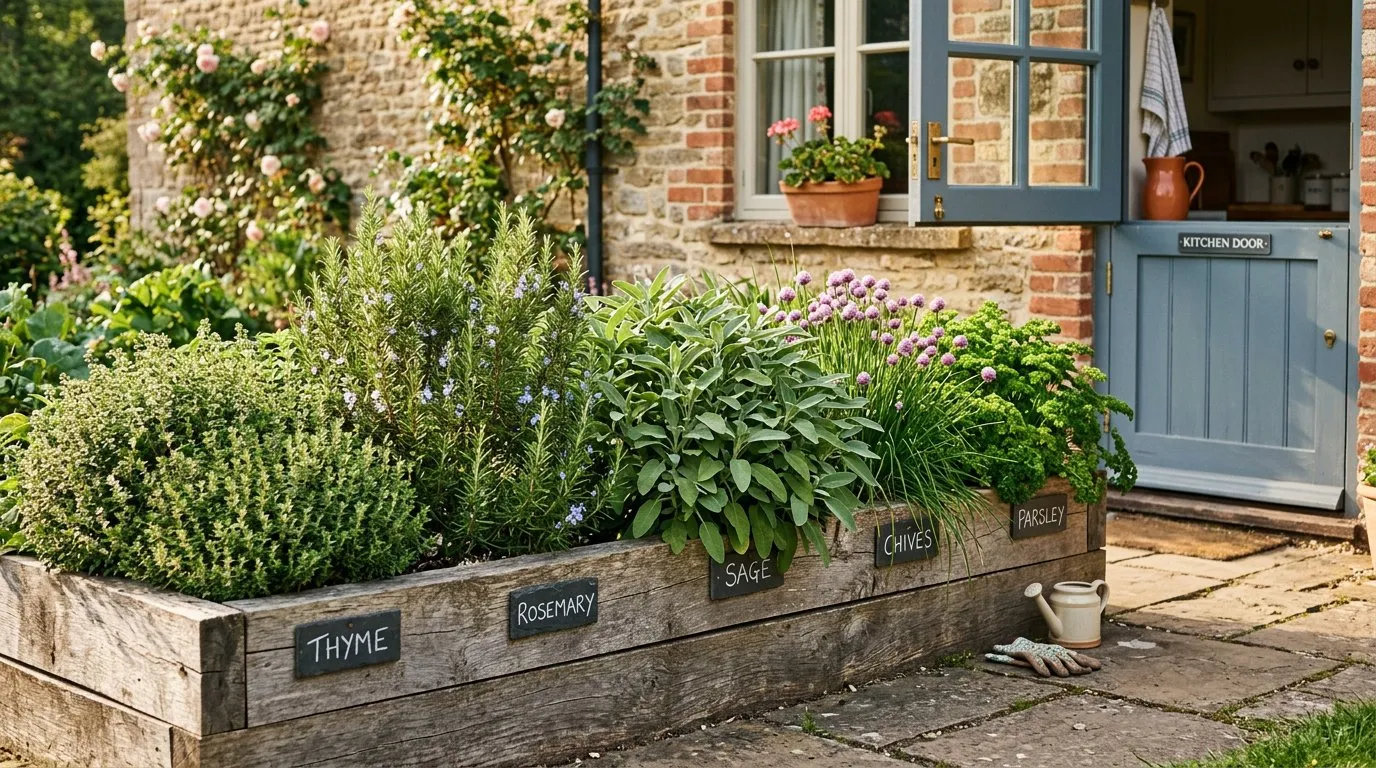
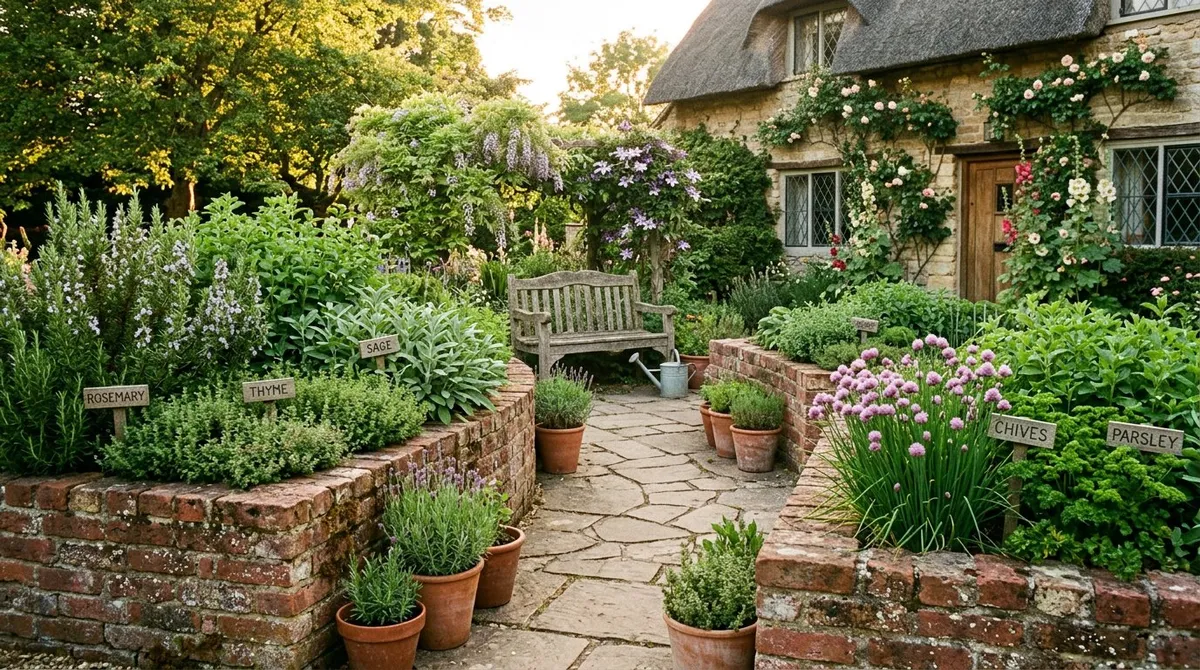
A raised bed herb garden positioned beside the kitchen door, with clearly labelled sections for thyme, rosemary, sage, chives, and parsley.
Formal herb wheel
A circular bed divided into segments like a wheel. Each segment holds a different herb, separated by brick or stone paths. Traditional in cottage gardens and physic gardens. The Garden Organic website has design templates. Formal wheels suit gardens where the herb bed is a feature, not just a functional patch.
Container collection
Group pots of different sizes on a sunny patio, steps, or beside the back door. This suits small gardens, rented properties, and balconies. Move frost-tender herbs like basil indoors when temperatures drop. Containers also keep invasive herbs like mint under control.
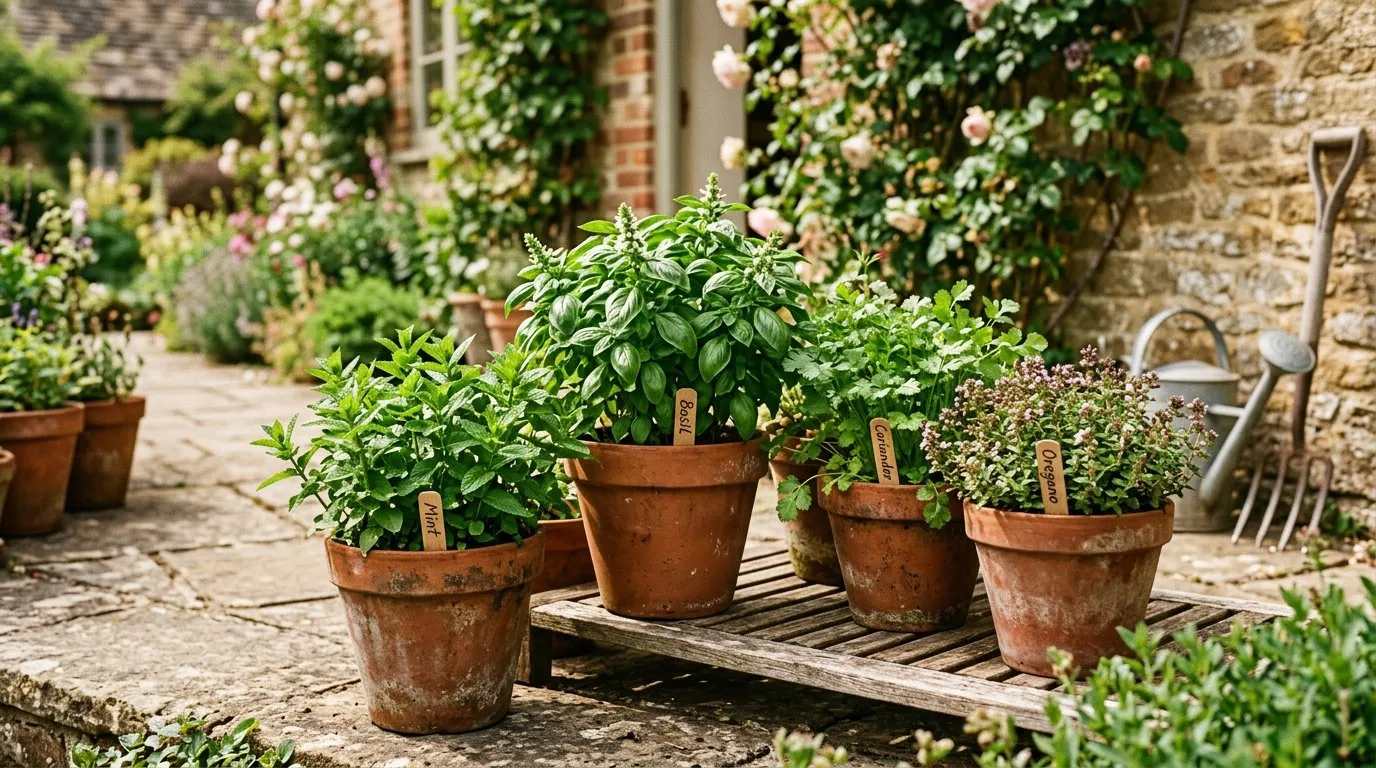
A collection of terracotta pots on a UK patio growing basil, mint, and oregano — ideal for small spaces and rented properties.
Best herbs for beginners
Not all herbs are equally easy. Start with the reliable ones and add the trickier species once you have a season under your belt.
| Herb | Position | Soil type | Hardy? | Best for |
|---|---|---|---|---|
| Rosemary | Full sun | Poor, gritty | Yes | Roasts, bread, marinades |
| Thyme | Full sun | Poor, gritty | Yes | Stews, stuffing, grilled meat |
| Sage | Full sun | Well-drained | Yes | Pork, pasta, butter sauces |
| Chives | Sun or part shade | Moist, fertile | Yes | Salads, eggs, potatoes |
| Mint | Part shade | Moist, fertile | Yes | Drinks, lamb, salads |
| Parsley | Sun or part shade | Moist, fertile | Hardy biennial | Sauces, garnish, tabbouleh |
| Basil | Full sun, sheltered | Rich, moist | No, annual | Pesto, tomato dishes, salads |
| Coriander | Part shade | Moist, fertile | No, annual | Curries, salsa, Asian dishes |
Mediterranean herbs (rosemary, thyme, sage, oregano) share the same requirements: full sun, sharp drainage, and poor to moderate soil. Group them together in one bed or pot. Leafy herbs (parsley, basil, coriander, chives) prefer richer, moister conditions and suit a separate container or bed section.
Raised bed herb garden
A raised bed is the most practical option for most UK gardens. It solves drainage problems on heavy clay, raises the planting level for easy access, and makes a defined space that looks intentional.
Building a simple raised bed
Use four scaffold boards (each 1.2m long and 225mm wide) screwed together at the corners with 75mm exterior wood screws. This gives a bed 1.2m square and 225mm deep. Line the inside with setting fabric to stop soil washing through gaps.
Fill with a mix of 70% multipurpose compost and 30% horticultural grit. This provides the sharp drainage Mediterranean herbs need while holding enough moisture for leafy herbs in one section.
Planting layout for a 1.2m square bed
Place the tallest herbs at the back or centre. Put low-growing and spreading herbs at the edges. Here is a planting plan that works well:
- Centre: One rosemary plant (grows to 90cm)
- Middle row: One sage, one oregano, one flat-leaf parsley
- Front edges: Three thyme plants along the front, one chive clump at each end
This arrangement gives height variation, keeps sun-loving herbs together, and puts the most-picked herbs within easy reach.
Container herb garden
Containers are well suited to anyone without a dedicated bed. They suit balconies, patios, doorsteps, and small spaces. They also solve the mint problem, because mint in open ground takes over within a single season.
Choosing containers
Terracotta pots are ideal because they are porous and prevent waterlogging. Use pots at least 25cm in diameter for single herbs, or a 45cm trough for a mixed planting of three herbs. Ensure every pot has drainage holes. Standing pots on feet or bricks improves airflow underneath.
Potting mix for herbs
Standard multipurpose compost is too moisture-retentive for Mediterranean herbs. Mix three parts multipurpose compost with one part perlite or horticultural grit. For leafy herbs like basil and parsley, use straight multipurpose compost with a handful of grit stirred through.
Feeding container herbs
Herbs in pots exhaust their nutrients faster than those in the ground. Feed leafy herbs with a balanced liquid fertiliser every two weeks from May to September. Mediterranean herbs need less feeding. One application of slow-release granules in April is enough for the season.
Herb garden month-by-month care
Herbs need different attention through the year. Follow this calendar to keep your herb garden productive from spring to winter.
March to April
Prune woody herbs like rosemary, thyme, and sage. Cut back last year’s growth by a third, but never cut into old bare wood. Sow parsley, coriander, and dill indoors or under cover. Divide established chive clumps and replant in fresh compost. For more spring tasks, see our spring gardening jobs guide.
May to June
Plant out basil after the last frost, typically mid-May in southern England and late May further north. Begin harvesting all herbs regularly. Pinch out basil flower buds as they appear to keep leaf production going. Water container herbs daily in warm weather.
July to August
Peak harvesting season. Cut herbs in the morning after the dew dries but before the midday heat. This is when the essential oils are strongest. Sow a second batch of coriander and dill to replace the first sowing, which bolts in summer heat. Watch for rosemary beetle on lavender and rosemary.
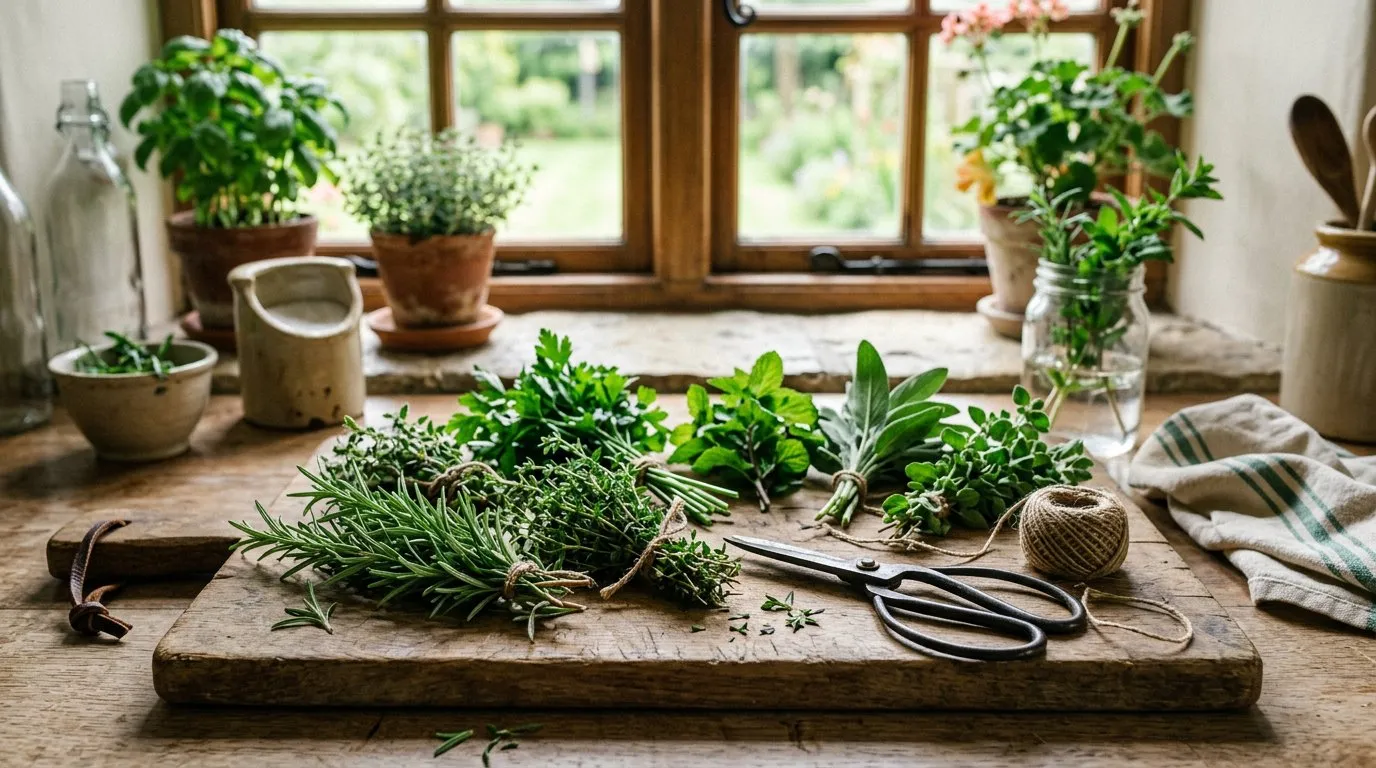
Freshly cut herbs from the garden arranged on a chopping board — harvest in the morning when essential oils are at their strongest.
September to October
Take semi-ripe cuttings of rosemary, sage, and thyme. Pot up tender herbs like basil to bring indoors before the first frost. Reduce watering as growth slows. Collect seed from coriander and dill for next year.
November to February
Hardy herbs like rosemary, thyme, sage, and bay stay in the ground. Protect container-grown herbs from waterlogging by raising pots onto feet. Add a thick mulch of grit around Mediterranean herbs to improve winter drainage. Plan next year’s herb garden using this guide and our companion planting guide.
Grouping herbs by water needs
One of the most common mistakes is planting all herbs together in the same soil. Mediterranean herbs and leafy herbs have opposite watering needs. Mixing them means one group always suffers.
| Group | Herbs | Watering | Soil | Feeding |
|---|---|---|---|---|
| Mediterranean | Rosemary, thyme, sage, oregano, bay | Infrequent, drought tolerant | Poor, gritty, free-draining | Minimal, one feed in spring |
| Leafy | Parsley, basil, coriander, chives, dill | Regular, keep moist | Fertile, moisture-retentive | Fortnightly liquid feed |
| Invasive | Mint, lemon balm, horseradish | Regular, tolerates damp | Any reasonable soil | Minimal |
Grow invasive herbs in their own containers. Mint spreads by underground runners and colonises a raised bed within one season. Lemon balm self-seeds aggressively. Horseradish is almost impossible to remove once established. A buried pot with the bottom cut out also works in open ground.
Designing for year-round interest
A herb garden does not have to look bare in winter. Include evergreen herbs like rosemary, bay, and winter savory for structure. Sage keeps its grey-green leaves through mild winters. Variegated thyme (‘Silver Queen’ or ‘Golden King’) adds colour even in January.
In spring, chive flowers provide purple globes. Summer brings the blue spikes of rosemary, the purple haze of flowering thyme, and the white umbels of coriander. Letting some herbs flower also supports pollinators and beneficial insects.
Underplant with low-growing chamomile or creeping thyme between stepping stones for scent when you walk across them. A bay tree clipped into a standard adds height and formal structure to an otherwise informal planting.
Why we recommend scaffold board raised beds for herb gardens: After 30 years of building and trialling every type of herb bed, scaffold board raised beds consistently outperform timber kits, brick beds, and containers for kitchen herb production. Four boards and a bag of gritty compost cost under thirty pounds and last a decade. In a comparison of twelve raised beds built over ten years, scaffold board beds produced higher yields per plant than any other construction, because the depth and drainage are right from the start.
Budget herb garden options
Starting a herb garden does not require a large budget. Here are three approaches at different price points.
Under ten pounds: Buy a packet of mixed herb seeds and sow in recycled yoghurt pots on a windowsill. Transplant outdoors in May. One packet of seeds produces dozens of plants.
Under thirty pounds: Build a scaffold board raised bed (four boards, screws, compost, and grit). Buy six herb plants from a garden centre at two to three pounds each. You have a productive herb garden by the weekend.
Under fifty pounds: Create a container collection with three terracotta pots, quality compost, slow-release feed, and eight to ten herb plants. Add a wall-mounted herb planter for vertical growing. This setup suits any space from a balcony to a large patio.
The real value of a herb garden is not the setup cost. A supermarket pack of fresh herbs costs one to two pounds and lasts a week. A single rosemary plant costs three pounds and produces herbs for fifteen years.
Now you’ve created your herb garden, read our guide on how to dry and store herbs so you can preserve your harvest and have home-grown flavour all winter.
Frequently asked questions
Where is the best place for a herb garden?
A sunny spot within five metres of the kitchen door is ideal. Most herbs need six hours of direct sunlight daily. South-facing or west-facing walls provide extra warmth and shelter. Convenience matters as much as conditions. If you cannot reach the herbs easily, you will stop using them by autumn.
Can I grow herbs in shade?
Yes, parsley, chives, mint, and coriander tolerate partial shade. They produce well in three to four hours of direct sun. Woodland herbs like sweet woodruff and sweet cicely prefer dappled conditions. Mediterranean herbs lose flavour and become leggy without full sun.
What herbs grow well together in one pot?
Rosemary, thyme, sage, and oregano share the same needs. They thrive together in gritty compost with infrequent watering. Keep mint separate because it overwhelms companions. Parsley, chives, and coriander suit a different pot with moister compost.
How big should a herb garden be?
A 1.2m square raised bed holds eight herbs and serves a household of four. Even a single 45cm pot on a doorstep grows three herbs. Start small with your favourite four or five herbs. Expand once you learn what you use most in the kitchen.
What herbs come back every year?
Rosemary, thyme, sage, oregano, chives, and bay are all perennial in UK gardens. They survive outdoors year-round without protection. Mint is perennial but invasive. Basil, coriander, and dill are annuals that need resowing each spring.
When should I plant a herb garden?
Plant hardy perennial herbs from March to October. Wait until mid-May to plant basil outdoors. Sow annual herbs like coriander and dill from April onwards. Autumn planting of perennial herbs gives roots time to establish before winter dormancy.
How do I keep herbs alive in winter?
Hardy herbs need no winter protection beyond sharp drainage. Raise container pots onto feet to prevent waterlogging. Mulch around Mediterranean herbs with gravel or grit. Bring tender herbs like basil indoors before the first frost. Harvest evergreen herbs lightly through winter to avoid weakening the plants.
Lawrie has been gardening in the West Midlands for over 30 years. He grows his own veg using no-dig methods, keeps a wildlife-friendly garden, and writes practical advice based on real UK growing conditions.