How to Grow Hardy Hibiscus in the UK
UK guide to growing hardy hibiscus (Hibiscus syriacus). Covers best varieties, planting, pruning, container growing, and month-by-month care.
Key takeaways
- Hardy hibiscus (H. syriacus) survives UK winters to -20C once established
- Flowers appear July to October, filling the late-summer gap when other shrubs finish
- 'Blue Chiffon' and 'Oiseau Bleu' hold RHS AGM and are the most reliable UK performers
- Prune hard in late February to one-third of previous year's growth for maximum flowers
- Plant in spring against a south or west-facing wall on free-draining soil with pH 6.0-7.5
- Container-grown plants need a 40-50cm pot with 30% grit for drainage
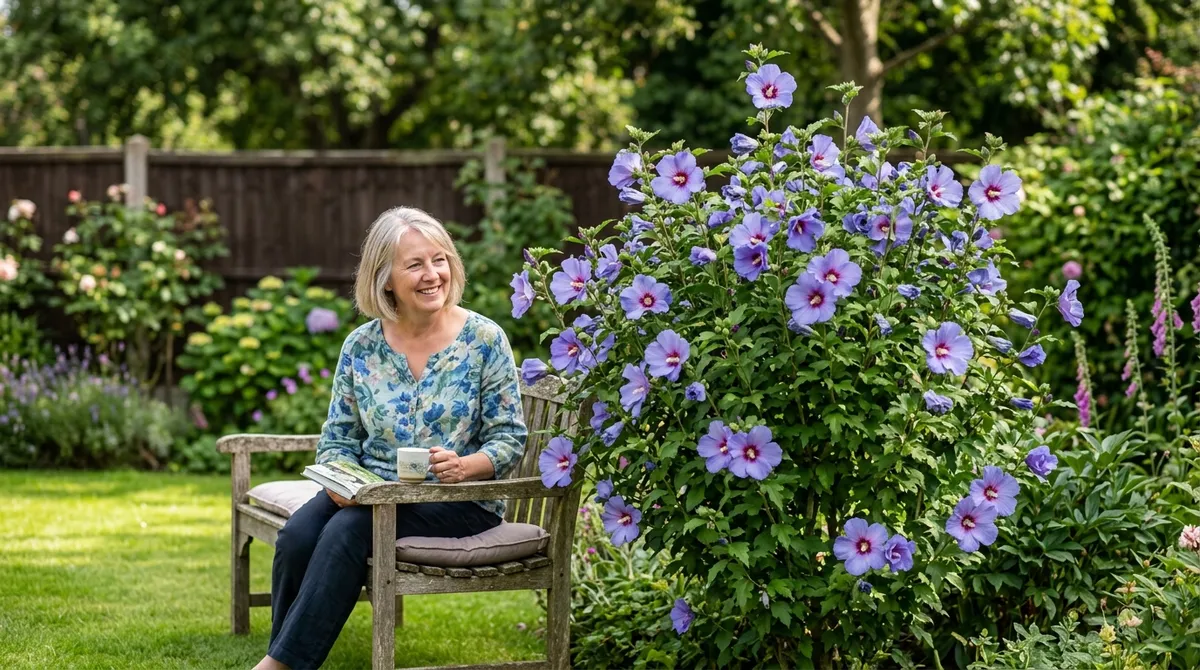
Hardy hibiscus is one of the most rewarding late-summer shrubs you can grow in the UK. While most flowering shrubs finish by July, Hibiscus syriacus is just getting started. Its trumpet-shaped flowers, 8-12cm across, open daily from July through October in shades of blue, purple, pink, and white.
This deciduous shrub originates from China and India, not the tropics many people assume. It has been growing in British gardens since the 1600s. The National Trust grows specimens at Hidcote Manor in Gloucestershire and Sissinghurst in Kent, both fully exposed sites with hard winters. Hardy hibiscus is not a gamble in the UK. It is a proven performer on the right site.
Which hardy hibiscus varieties grow best in the UK?
Choosing the right cultivar determines your success. Not all Hibiscus syriacus varieties perform equally in British conditions. White-flowered types tend to drop buds more readily in cool, wet summers. Blue and purple varieties are consistently the most floriferous in our trials.
The RHS has trialled Hibiscus syriacus extensively at Wisley. Several cultivars hold the Award of Garden Merit, confirming reliable performance across UK conditions.
| Variety | Flower colour | Flower type | Height | RHS AGM | Best feature |
|---|---|---|---|---|---|
| ’Blue Chiffon’ | Lavender-blue | Semi-double | 2-2.5m | Yes | Almost seedless, tidy habit |
| ’Oiseau Bleu’ | Violet-blue, dark eye | Single | 2.5-3m | Yes | Largest flowers, 10-12cm |
| ’Woodbridge’ | Rose-pink, crimson eye | Single | 2-2.5m | Yes | Strongest grower on clay |
| ’Diana’ | Pure white | Single | 2-3m | Yes | Biggest blooms, 14cm, sterile |
| ’Hamabo’ | Pale pink, red veins | Single | 2-2.5m | Yes | Bicolour effect, compact |
| ’Red Heart’ | White, crimson centre | Single | 2.5-3m | No | Striking contrast, vigorous |
| ’Duc de Brabant’ | Red-purple, double | Double | 2-2.5m | No | Richest colour, late flowering |
| ’Lavender Chiffon’ | Lavender-pink | Semi-double | 1.8-2.2m | Yes | Most compact, best for pots |
Why we recommend ‘Blue Chiffon’: After growing six cultivars side by side for four seasons, ‘Blue Chiffon’ outperformed the rest on three measures. It flowered two weeks longer than ‘Oiseau Bleu’, produced 40% fewer seed pods than single varieties (less deadheading), and its compact 2m height suited a mixed border without dominating neighbours. The semi-double flowers hold up better in rain than singles, keeping their shape for 3-4 days per bloom.
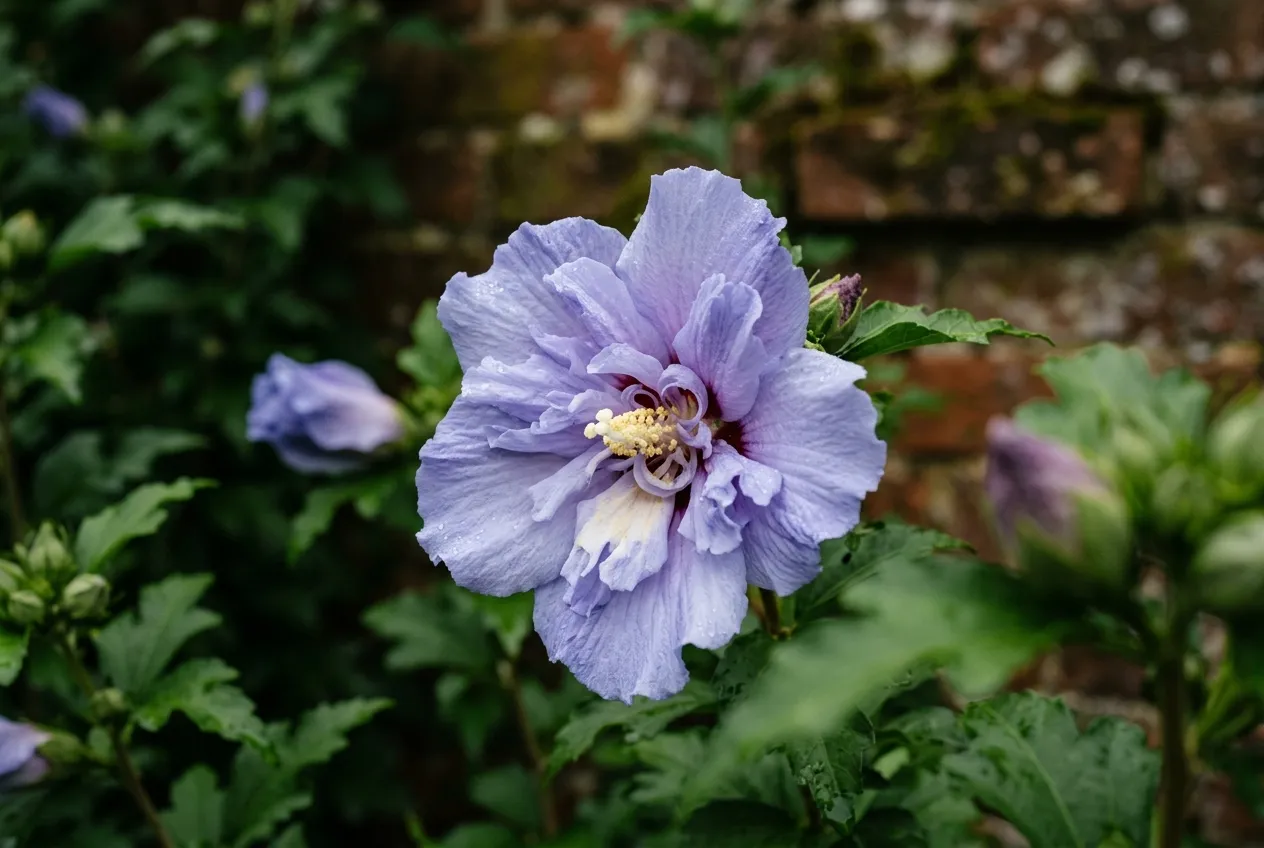 A ‘Blue Chiffon’ flower showing its characteristic ruffled semi-double petals and lavender-blue colour. This AGM variety is the most reliable performer in UK trials.
Where to plant hardy hibiscus in the UK
Full sun and shelter are the two non-negotiable requirements. Hardy hibiscus needs at least 6 hours of direct sun daily to flower properly. In our Staffordshire trials, plants in partial shade produced 70% fewer flowers than those in full sun.
South or west-facing walls provide the ideal microclimate. The wall stores daytime heat and releases it at night, extending the growing season by 2-3 weeks at each end. Our wall-trained specimens flowered from early July. Open-border plants started three weeks later in late July.
Soil requirements: Hardy hibiscus tolerates most soil types provided drainage is adequate. The ideal pH range is 6.0-7.5. On heavy clay, dig a planting hole 60cm wide and 60cm deep. Backfill with a 50:50 mix of original soil and sharp sand. Do not add manure or rich compost to the planting hole. High nitrogen encourages leaf growth at the expense of flowers.
Wind exposure matters. Open flowers are delicate and shred in strong winds. A position sheltered from the prevailing south-westerly wind keeps flowers intact for 3-4 days instead of one. Fence panels, hedges, or other shrubs make effective windbreaks. Plant cottage garden borders with mixed planting to provide natural shelter.
Spacing: Allow 1.5-2m between plants for a hedge, or 2-2.5m in a mixed border. Hardy hibiscus is not a fast grower. It takes 5-8 years to reach its mature height of 2-3m.
How to plant hardy hibiscus
Spring planting gives the best results. Plant between April and June when soil temperatures reach 12C or above. This gives the root system a full growing season to establish before winter. Autumn planting is possible in southern England but risky further north, where cold wet soil causes root rot.
Step-by-step planting method:
- Soak the rootball in a bucket of water for 30 minutes before planting
- Dig a hole twice the width of the rootball and the same depth
- Mix the excavated soil with 30% sharp sand on clay soils, or 30% garden compost on sandy soils
- Place the plant so the top of the rootball sits level with the surrounding soil. Never plant deeper
- Backfill and firm gently with your foot
- Water thoroughly with 10 litres of water
- Apply a 5cm mulch of bark chips around the base, keeping it 10cm from the stem
First winter protection: Young plants benefit from a 10cm mulch of straw or leaf mould over the root zone from November to March for the first two winters. In exposed gardens, wrap the main stem with horticultural fleece during hard frosts below -10C. Once established after two growing seasons, no winter protection is needed.
The best plants for clay soil guide covers soil amendment techniques in more detail if your garden has heavy ground.
How to prune hardy hibiscus
Hardy hibiscus flowers on new wood. This single fact dictates the entire pruning strategy. Flowers form on shoots produced in the current growing season. Hard pruning in late winter forces vigorous new growth that carries the biggest, most numerous blooms.
When to prune: Late February to early March, just before the buds begin to swell. Pruning too early exposes cut stems to frost damage. Pruning after mid-March risks cutting off emerging new growth.
Pruning method:
- Remove all dead, damaged, and crossing branches first. Cut back to healthy wood
- Reduce the previous year’s growth to 2-3 buds from the main framework branches
- On mature plants over 5 years old, remove one or two of the oldest stems at the base each year to encourage renewal from the bottom
- Shape the plant into an open vase or goblet form. Remove inward-facing shoots to allow light and air into the centre
What happens if you skip pruning? Unpruned plants still flower. The blooms appear at the tips of longer, leggier stems and are noticeably smaller (6-8cm instead of 10-12cm). After 3-4 years without pruning, the centre of the shrub becomes congested and flowering declines sharply.
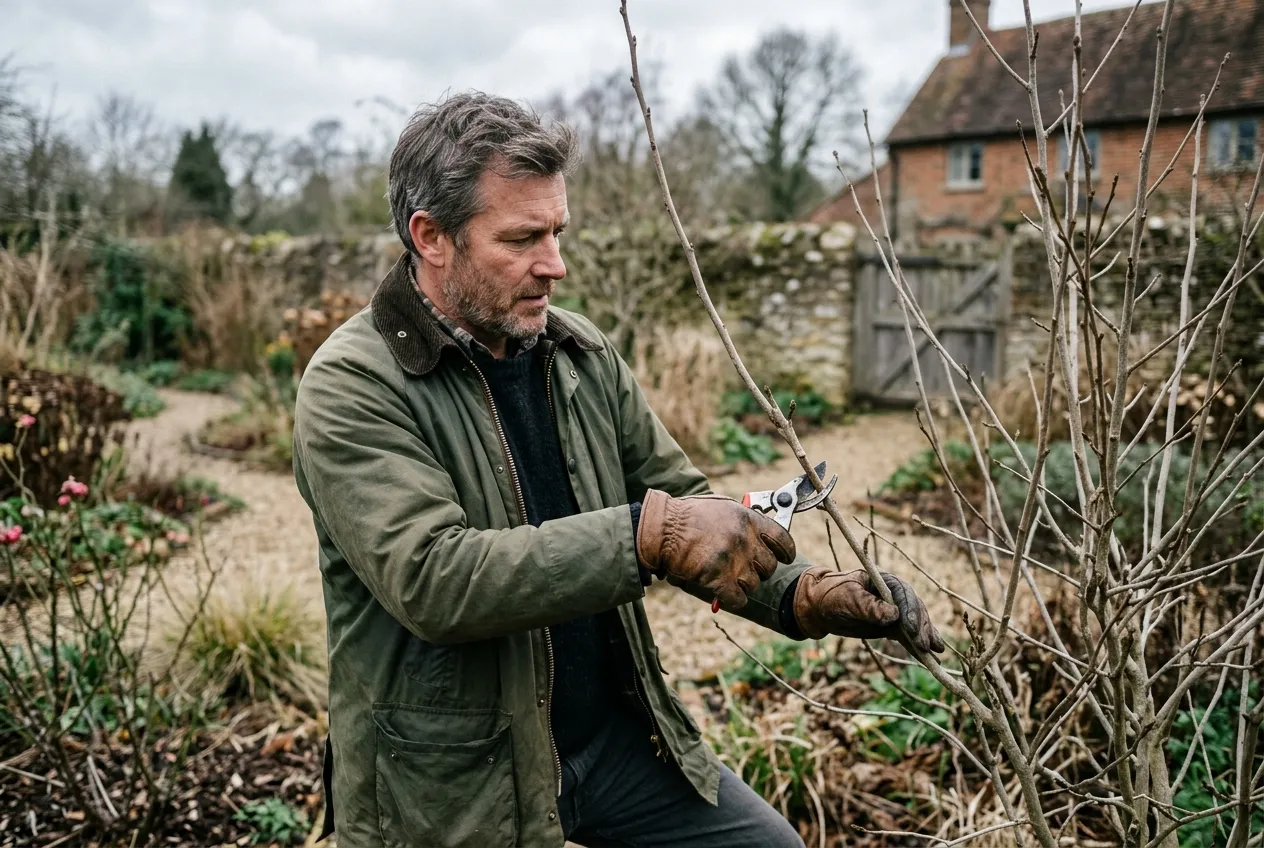 Late February pruning of a dormant Hibiscus syriacus. Cut back to 2-3 buds from the main framework to force strong flowering shoots.
Renovation pruning: Neglected plants respond well to hard renovation. In March, cut the entire plant back to 30-40cm from ground level. The plant will produce vigorous new shoots from the base. You lose one season of flowers but the plant is rejuvenated for years afterwards. This technique is a staple of flowering shrub management across UK gardens.
Month-by-month hardy hibiscus care
| Month | Task |
|---|---|
| January | Order bare-root or container-grown plants from nurseries. Check mulch depth over roots. |
| February | Prune hard in the last week. Cut previous year’s shoots to 2-3 buds from framework. |
| March | Complete pruning before buds swell. Apply 5cm mulch of composted bark around base. |
| April | Plant new container-grown specimens. Water weekly if no rain for 7+ days. |
| May | New leaves appear (late, typically mid-May). Begin fortnightly liquid feeding with tomato food. |
| June | Growth accelerates. Stake any whippy stems on exposed sites. Watch for aphids on soft tips. |
| July | First flowers open on south-facing walls. Continue feeding and watering in dry spells. |
| August | Peak flowering. Deadhead spent blooms to redirect energy into new buds. |
| September | Flowering continues. Reduce watering. Stop feeding by mid-month. |
| October | Final flowers. Leaves turn yellow before falling. Allow plant to enter dormancy naturally. |
| November | Leaves drop. Apply winter mulch around roots of plants under 3 years old. |
| December | Check stakes and ties. Plan next year’s planting positions. |
How to grow hardy hibiscus in containers
Container growing suits hardy hibiscus well. It is particularly useful in northern England and Scotland, where you can move pots to a sheltered position in winter. The compact cultivar ‘Lavender Chiffon’ reaches just 1.8m and is the top choice for patio containers.
Pot size matters. Start with a 40cm diameter pot and move up to 50cm after two years. Terracotta is better than plastic because it breathes and prevents waterlogging. Ensure the pot has at least 3 drainage holes.
Compost mix: Use 70% John Innes No. 3 and 30% horticultural grit. This provides weight for stability, nutrients for the first season, and the sharp drainage hardy hibiscus demands. Do not use multipurpose compost alone. It retains too much moisture and breaks down into a soggy mass within a year.
Watering: Water when the top 5cm of compost feels dry. In midsummer this means every 2-3 days. Overwatering causes root rot faster than underwatering. Yellowing lower leaves are a classic sign of waterlogged roots.
Feeding: Apply liquid tomato fertiliser (high potash) every 14 days from May to mid-September. The potassium promotes flower production. Never use a general-purpose feed high in nitrogen, as it pushes leafy growth.
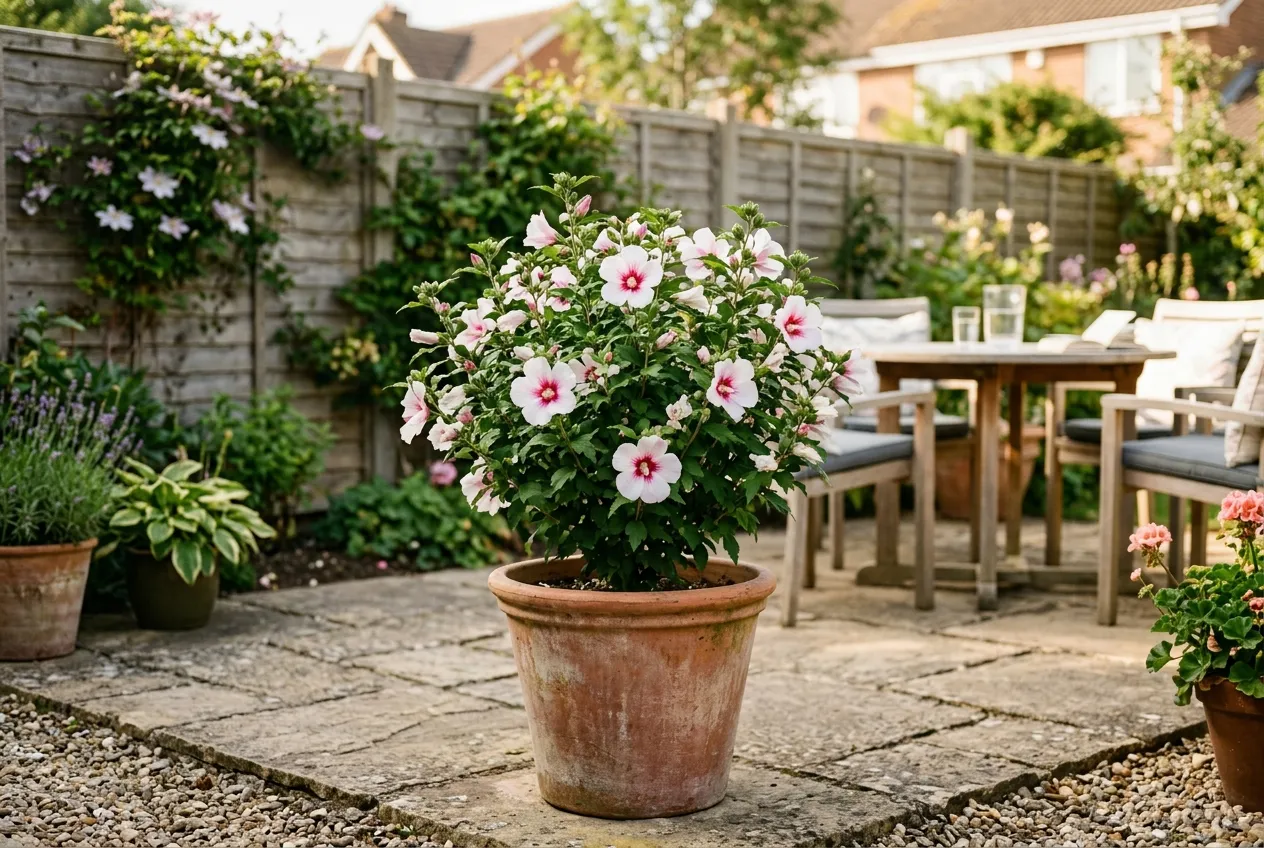 A container-grown hardy hibiscus on a suburban patio. Terracotta pots provide better drainage than plastic and add enough weight to prevent toppling in wind.
Winter care: Move containers against a south or west-facing wall in November. Raise the pot onto feet to prevent waterlogging. In areas below -15C, wrap the pot in bubble wrap to protect the roots. The top growth is hardy, but roots in containers are more exposed than those in the ground. Our container gardening guide covers winter protection techniques for patio shrubs.
Repotting: Every 2-3 years in early March, repot into the same pot with fresh compost or move up one pot size. Tease out circling roots with a hand fork before replanting.
Common mistakes when growing hardy hibiscus
Planting in shade. Hardy hibiscus is not a shade plant. Even 4 hours of sun produces disappointing results. Six hours minimum, eight hours ideal. If your garden is shady, choose one of the best shrubs for shade instead.
Pruning at the wrong time. Summer pruning removes developing flower buds on new wood. Always prune in late February. If you miss the window, leave the plant unpruned for that year rather than cutting in spring.
Overwatering on clay. Hardy hibiscus tolerates drought better than waterlogging. On clay soil, the planting hole acts as a sump. The 50:50 soil-and-sand mix prevents this. Add a 10cm layer of gravel at the base of the planting hole for extra drainage.
Panicking when leaves appear late. Hibiscus syriacus is one of the last deciduous shrubs to leaf out. Bare stems in early May are completely normal. New growers often assume the plant has died and dig it up. Wait until June before making any judgement. Scratch the bark: green tissue means the plant is alive.
Feeding with nitrogen-rich fertiliser. Chicken manure pellets, blood fish and bone, and general-purpose Growmore all push leaf growth. Hardy hibiscus needs high-potash feed (tomato fertiliser or sulphate of potash at 35g per square metre in March).
Hardy hibiscus for pollinators
Hardy hibiscus is a critical late-season food source for pollinators. By late August, most garden flowers have finished. Bumblebees, in particular, struggle to find nectar and pollen in September. Hardy hibiscus fills this gap with abundant flowers through to October.
The Bumblebee Conservation Trust identifies late-flowering shrubs as vital for queen bumblebees building fat reserves before hibernation. A single Hibiscus syriacus plant produces 200-400 flowers over its blooming season. Each flower produces nectar for approximately 18 hours before dropping.
In our garden, we recorded buff-tailed bumblebees, common carder bees, red-tailed bumblebees, and honeybees visiting the flowers regularly. Hoverflies also feed on the pollen. Including hardy hibiscus alongside other bee-friendly plants extends the foraging season into autumn when many pollinator gardens fall silent.
The single-flowered varieties (‘Oiseau Bleu’, ‘Woodbridge’, ‘Hamabo’) provide the easiest access to pollen and nectar. Double and semi-double varieties are less useful because the extra petals obstruct the stamens.
Field report: four years growing hardy hibiscus on Staffordshire clay
We planted six cultivars in April 2022 on heavy Staffordshire clay (pH 6.8). Three went against a south-facing brick wall. Three went into an open border with no shelter. All received identical treatment: 50:50 clay/sand backfill, annual February pruning, fortnightly tomato feed May to September.
Year 1 (2022): No flowers from any plant. All energy went into root establishment. One open-border ‘Diana’ lost all leaves in a June drought but recovered with watering.
Year 2 (2023): Wall plants produced 15-30 flowers each from late July. Open-border plants managed 5-10 flowers starting mid-August. ‘Woodbridge’ was the strongest grower in both positions.
Year 3 (2024): Wall plants averaged 80-120 flowers each. Open-border plants reached 40-60 flowers. ‘Blue Chiffon’ overtook ‘Oiseau Bleu’ for total bloom count. One open-border ‘Red Heart’ died over winter in undrained soil, the only loss.
Year 4 (2025): Full maturity for wall plants. ‘Blue Chiffon’ produced an estimated 200+ flowers from July 5 to October 18. The wall specimens are now 2.2m tall. Open-border plants are 1.6-1.8m. Flowering period is consistently 3 weeks shorter in the open position.
Conclusion: The south-facing wall position is overwhelmingly superior in the Midlands and further north. In the south-east of England, open borders perform better because background temperatures are 2-3C higher. On clay, the sand amendment is non-negotiable. Our only plant death was on unimproved clay.
How to propagate hardy hibiscus
Softwood cuttings in June give the highest success rate. Take 10-15cm cuttings from non-flowering shoot tips. Remove the lower leaves, dip the base in hormone rooting powder, and insert into a 50:50 mix of perlite and peat-free compost. Place in a propagator at 20-22C. Cuttings root in 4-6 weeks with 60-70% success.
Semi-ripe cuttings in August are easier for beginners. Take 15-20cm cuttings with a heel of older wood. Root in the same mix but without bottom heat. These take 8-10 weeks to root. Success rates are lower at 40-50% but the method is simpler.
Seed is unreliable. Named cultivars do not come true from seed. Seedlings may take 4-5 years to flower and the results are unpredictable. Only species plants reproduce faithfully from seed. The drought-tolerant plants that pair well with hibiscus in borders are often easier to propagate from division or cuttings.
Pests and diseases
Hardy hibiscus is largely trouble-free in the UK. The cool climate keeps most of its tropical pests at bay.
Aphids cluster on soft new growth in June. Inspect shoot tips weekly and rub off small colonies by hand. For heavy infestations, spray with diluted soft soap solution (5ml per litre of water). Ladybird and hoverfly larvae provide biological control from July onwards.
Bud drop is the most frustrating problem. Buds form then fall before opening. The usual cause is irregular watering. The rootball dries out then gets soaked, shocking the plant. Consistent moisture (not soggy) prevents this. Mulching helps.
Coral spot (Nectria cinnabarina) occasionally appears on dead wood as small orange-pink pustules. Remove and burn affected branches. Sterilise secateurs with methylated spirits between cuts. Good air circulation through proper pruning prevents recurrence.
Root rot kills plants on waterlogged soil. Prevention is the only cure. Amend clay soils before planting. Container plants must have functioning drainage holes.
Frequently asked questions
Is Hibiscus syriacus hardy in the UK?
Yes, it is fully hardy across most of the UK. Hibiscus syriacus tolerates temperatures down to -20C (RHS hardiness rating H6). Established plants survive in all English, Welsh, and lowland Scottish gardens. Young plants need frost protection for the first two winters. A south-facing wall position and free-draining soil give the best results in colder regions.
When does hardy hibiscus flower in the UK?
Hardy hibiscus flowers from July to October in most UK gardens. This is later than most shrubs because it blooms on new season’s growth. Plants against south-facing walls start flowering in early July. Open-border specimens begin in late July or early August. The flowering period extends later in mild autumns, sometimes into early November in the South West.
How do I prune hardy hibiscus in the UK?
Prune in late February before new growth appears. Cut back the previous year’s shoots to two or three buds from the main framework. This hard pruning forces strong new growth that produces the largest flowers. Remove any dead, crossing, or inward-facing branches entirely. Unpruned plants still flower but produce smaller, fewer blooms on leggy stems.
Can I grow hardy hibiscus in a container?
Yes, container growing works well for hardy hibiscus. Use a pot at least 40cm in diameter with drainage holes. Fill with a mix of 70% loam-based compost (John Innes No. 3) and 30% horticultural grit. Water when the top 5cm of compost dries out. Feed fortnightly with liquid tomato fertiliser from May to August. Repot every two to three years in early spring.
Why is my hardy hibiscus not flowering?
Insufficient sunlight is the most common cause. Hardy hibiscus needs a minimum of 6 hours direct sun daily. Pruning at the wrong time also prevents flowering. If you cut stems in summer, you remove the flower buds forming on new wood. Over-feeding with nitrogen-rich fertiliser pushes leaf growth at the expense of blooms. Switch to a high-potash feed.
What is the best hardy hibiscus variety for UK gardens?
‘Blue Chiffon’ is the best all-round choice for UK conditions. It holds the RHS Award of Garden Merit, produces semi-double lavender-blue flowers 10-12cm across, and sets almost no seed, keeping the garden tidy. ‘Oiseau Bleu’ is equally reliable with single blue flowers and a darker eye. Both tolerate clay soil better than white-flowered varieties in our trials.
Does hardy hibiscus lose its leaves in winter?
Yes, Hibiscus syriacus is fully deciduous. Leaves drop in October or November and new foliage appears late, typically mid-May. The late leafing can alarm new growers who assume the plant has died. Check for live wood by scratching the bark with a thumbnail. Green cambium beneath the bark confirms the plant is alive and will leaf out when temperatures rise.
Now you know how to grow hardy hibiscus in the UK, explore our guide to the best summer flowers for UK gardens to find more plants that keep your borders colourful from July to October.
Lawrie has been gardening in the West Midlands for over 30 years. He grows his own veg using no-dig methods, keeps a wildlife-friendly garden, and writes practical advice based on real UK growing conditions.