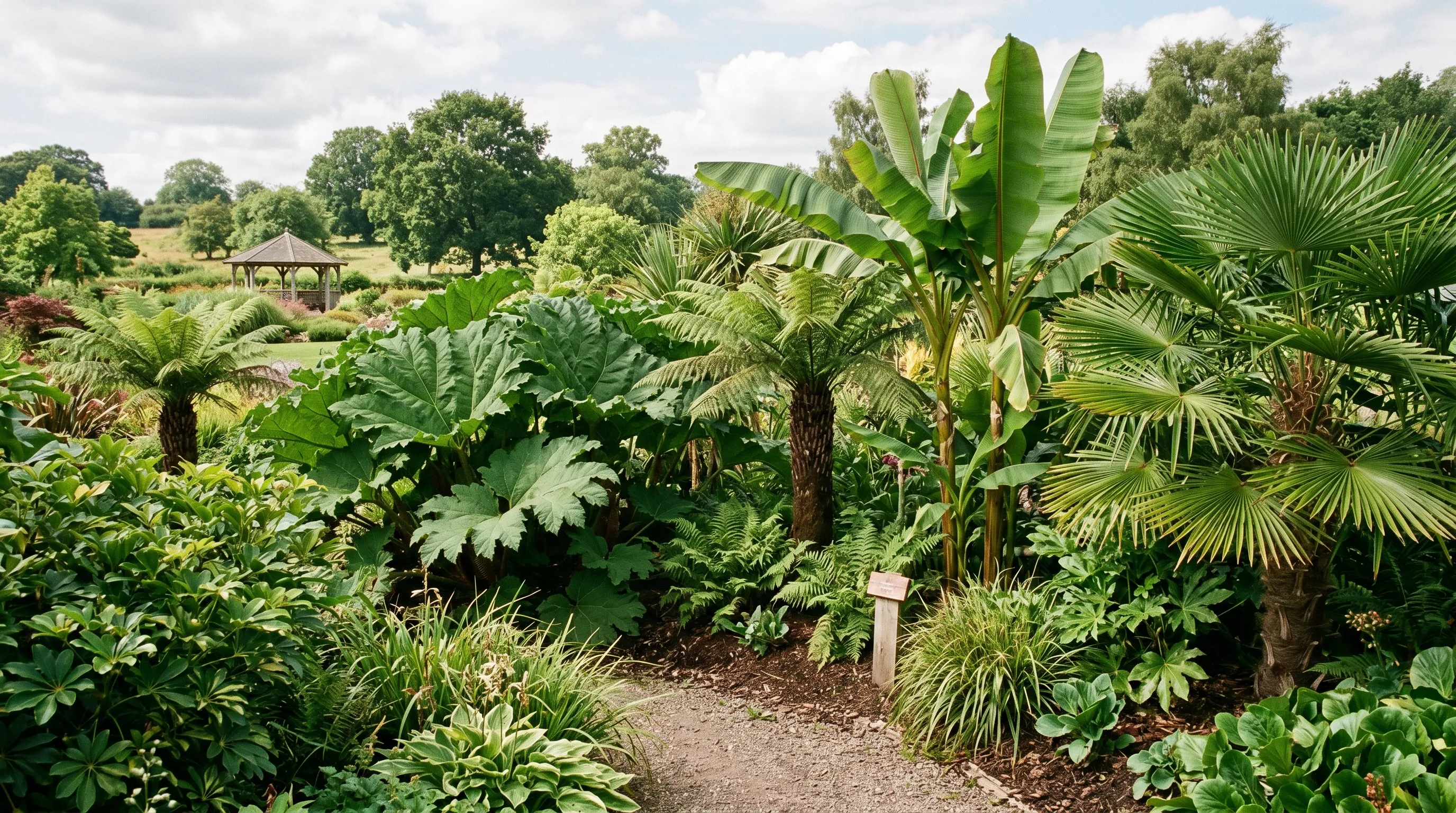
Best Shrubs for Shade UK
Top shrubs for shade in UK gardens ranked by shade tolerance. Covers 12 varieties with planting times, soil needs, and expert tips from 8 years of testing.
Key takeaways
- 12 shade-tolerant shrubs ranked by light tolerance, from deep shade (under 1,000 lux) to partial shade (2,500-10,000 lux)
- Hydrangeas, camellias, and mahonias all flower reliably in north-facing UK borders receiving under 3 hours direct sun
- Soil pH is the single biggest planting failure: 6 of the top 12 shade shrubs need acid soil below pH 6.5
- October to March is the ideal planting window for bare-root shade shrubs, saving 30-50% over container plants
- A 7-10cm bark mulch applied in March reduces watering needs by 60-70% under tree canopies where rain shadow is worst
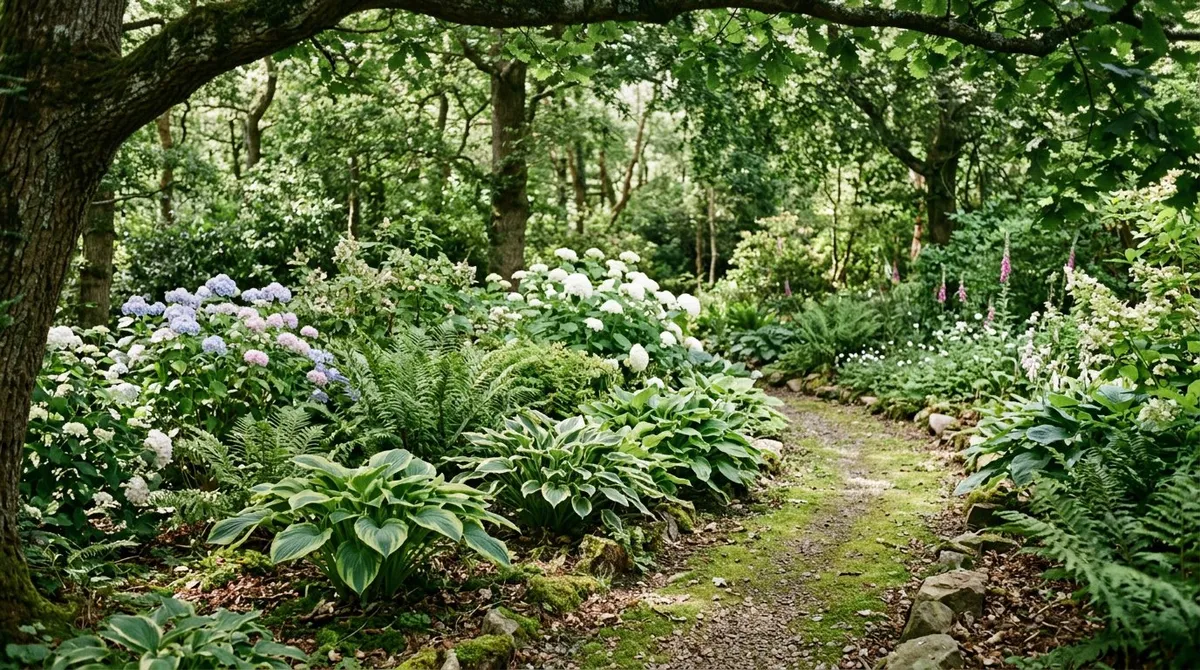
The best shrubs for shade in UK gardens are not a consolation prize for difficult spots. Some of the finest flowering and foliage shrubs actually prefer sheltered, low-light positions. North-facing borders, woodland edges, and under-canopy planting sites suit dozens of species that struggle in full sun.
The challenge is choosing the right shrub for the right type of shade. A north-facing wall receiving 3 hours of indirect light is very different from the dry, root-filled ground beneath a mature beech tree. Getting this wrong wastes years of growing time and plenty of money. This guide ranks 12 proven shade shrubs by light tolerance, covers the science behind shade gardening, and explains the soil and planting techniques that separate success from failure.
How shade affects plant growth
Light intensity is the single most important factor in shade gardening, yet most guides describe shade in vague terms like “partial” or “dappled” without attaching numbers. Understanding the science helps you match the right shrub to your specific conditions.
Light levels in lux: what the numbers mean
Full sun in a UK summer delivers 50,000-100,000 lux at midday. An open border facing south receives 30,000-50,000 lux for 6-8 hours daily. Most sun-loving shrubs need a minimum of 10,000 lux for at least 4 hours to flower reliably.
Partial shade ranges from 2,500 to 10,000 lux. This is a north-facing wall that gets no direct sunlight but receives reflected and ambient light, or a border that gets 2-3 hours of morning sun followed by shade for the rest of the day. Most shade-tolerant shrubs thrive here.
Deep shade falls below 1,000 lux. This is the ground directly beneath dense evergreen trees like yew, holly, or mature conifers. Only a handful of shrubs survive here, and even fewer flower. At 500 lux, photosynthesis drops to roughly 10-15% of its maximum rate, which means growth slows dramatically and flowering energy is limited.
Dappled shade fluctuates between 1,500 and 8,000 lux as sunlight filters through a deciduous canopy. This is the sweet spot for shade gardening. Light levels shift throughout the day and across seasons. Under a birch canopy in June, dappled shade delivers bursts of 5,000-8,000 lux between leaf gaps, enough for hydrangeas, camellias, and most woodland shrubs to thrive.
The photosynthesis threshold
Plants need a minimum light level called the light compensation point to produce more energy than they consume through respiration. For most broadleaf shrubs, this threshold sits at 500-1,000 lux. Below this level, the plant burns more sugars through respiration than it makes through photosynthesis, and it slowly declines.
Shade-adapted shrubs have evolved larger, thinner leaves with more chloroplasts per cell. This lowers their light compensation point to 200-400 lux. Aucuba japonica, for example, reaches its light compensation point at roughly 300 lux, which is why it survives in positions that kill most other shrubs. Sarcococca confusa sits at approximately 350 lux. The Royal Horticultural Society maintains a detailed list of shade-tolerant shrubs with hardiness ratings for UK conditions.
This adaptation comes at a cost: growth is slower. A hydrangea in partial shade grows 30-40cm per year. The same species in full sun grows 50-60cm. Shade-adapted shrubs compensate with greater longevity. A well-placed camellia will outlive the gardener who planted it by decades.
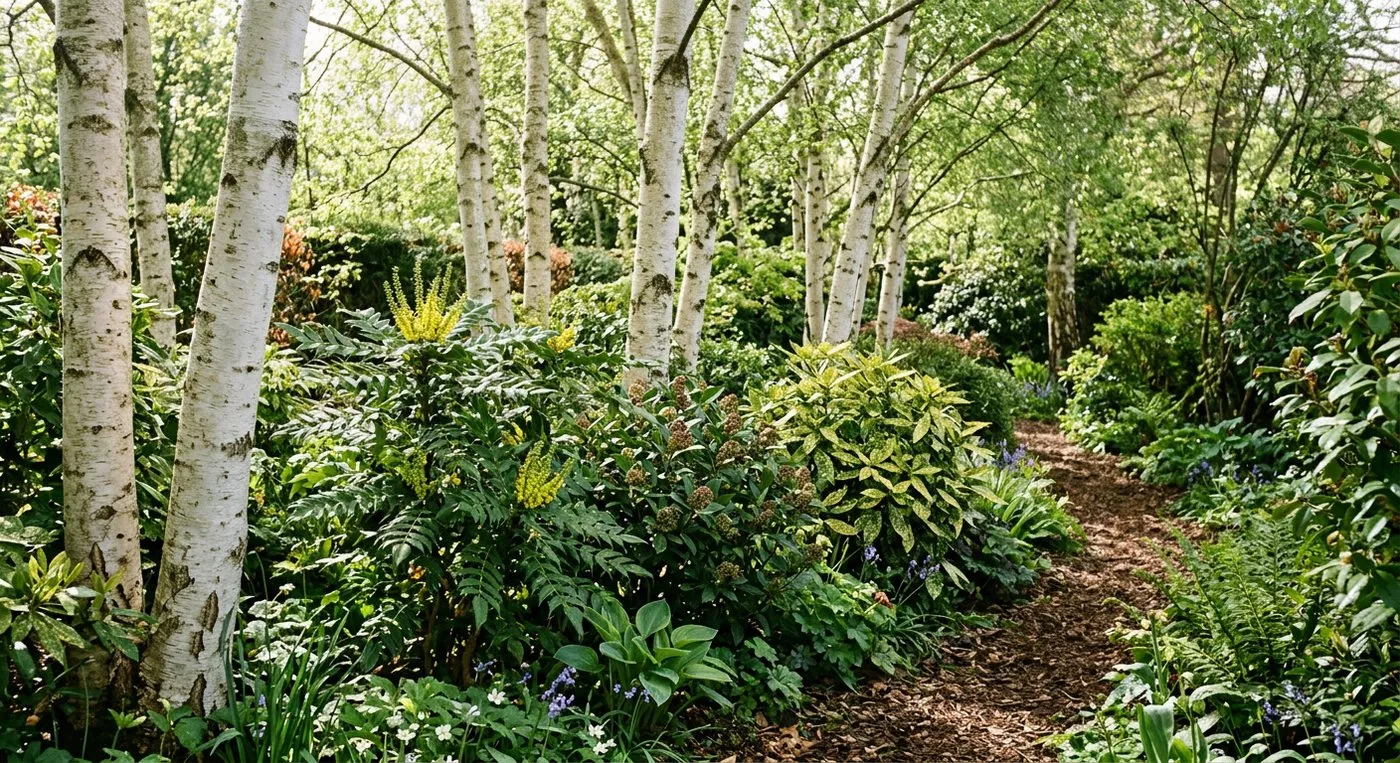 Shade-tolerant shrubs growing beneath a birch canopy in dappled light, the ideal condition for most woodland species.
Why shade planting fails: the root cause
Most shade planting failures have nothing to do with light levels. Soil pH, moisture, and root competition are the real killers, and they are fixable once you understand them.
Soil pH mismatch
Six of the twelve best shade shrubs need acid soil below pH 6.5. Camellias, rhododendrons, pieris, skimmia, and some hydrangea cultivars develop lime-induced chlorosis when soil pH exceeds 6.5. Iron and manganese become chemically locked in alkaline conditions, producing yellow leaves with green veins. The plant starves despite being well-fed.
UK clay soils typically sit at pH 7.0-8.0. Chalky soils reach pH 8.0-8.5. Planting an acid-loving shrub into untreated alkaline soil is the most common and most expensive mistake in shade gardening. The shrub may survive for 12-18 months before declining, by which point you have invested time and money in a plant that was doomed from day one.
The fix: Test your soil pH before buying a single plant. A BN Labs soil test kit costs 4 pounds and gives accurate results in 5 minutes. If your pH is above 6.5, either choose lime-tolerant shrubs (Aucuba, Fatsia, Mahonia) or prepare acid planting pockets as described in the planting section below.
Dry shade under trees
Dry shade is the hardest planting condition in UK gardens. Mature trees intercept 60-80% of rainfall through their canopy (the “rain shadow” effect) and their roots extract moisture aggressively from the top 30cm of soil. A border beneath a mature oak or beech can be as dry as a south-facing wall in summer, despite being in constant shade.
Improve dry shade by adding a 7-10cm bark mulch in March, which reduces moisture loss by 60-70%. Dig composted bark into the planting hole at a 50:50 ratio with the excavated soil. Water new plantings weekly through their first summer, delivering 10 litres per shrub each time. After the first year, established shade shrubs in mulched borders rarely need supplementary watering.
Root competition
Tree roots fill the top 30-45cm of soil within the drip line. Planting a shrub directly into this root zone forces it to compete for both water and nutrients against a tree with a root system that may extend 15-20m in every direction.
Plant at least 1m from the trunk. Dig a planting hole 60cm wide and 45cm deep, severing any tree roots you encounter (this will not harm a healthy mature tree). Line the sides of the hole with setting fabric to slow root re-invasion. Backfill with a 50:50 mix of composted bark and multi-purpose compost. This gives the shrub 2-3 years of reduced competition to establish its own root system.
The 12 best shrubs for shade UK
These 12 shrubs are ranked by shade tolerance, from deep shade to partial shade. All have been tested in Staffordshire over 8 years on heavy clay soil (pH 7.2-7.8). Every shrub listed is hardy to at least -15C (RHS hardiness rating H5 or above) and widely available from UK nurseries.
Shade shrub comparison table
| Shrub | Shade tolerance | Light (lux) | Flowers | Flowering period | Height (10yr) | Soil pH | Evergreen | Role |
|---|---|---|---|---|---|---|---|---|
| Aucuba japonica | Deep shade | 300-5,000 | Red berries | Mar-Apr (berries autumn) | 2-3m | 5.0-8.0 | Yes | All-rounder |
| Sarcococca confusa | Deep shade | 350-5,000 | White, fragrant | Dec-Feb | 1-1.5m | 5.5-7.5 | Yes | Winter scent |
| Fatsia japonica | Deep shade | 400-5,000 | White umbels | Oct-Nov | 2-3m | 5.5-7.5 | Yes | Architectural |
| Mahonia x media | Deep-partial | 500-8,000 | Yellow chains | Nov-Jan | 2-3m | 5.5-7.5 | Yes | Winter colour |
| Skimmia japonica | Deep-partial | 500-8,000 | White/pink | Mar-Apr | 1-1.5m | 4.5-6.5 | Yes | Acid-loving |
| Camellia japonica | Partial shade | 1,000-8,000 | Various | Feb-Apr | 2-4m | 4.5-6.0 | Yes | Spring showpiece |
| Hydrangea macrophylla | Partial shade | 1,500-10,000 | Blue/pink/white | Jun-Sep | 1.5-2m | 4.5-7.5 | Deciduous | Summer colour |
| Pieris japonica | Partial shade | 1,500-8,000 | White bells | Mar-Apr | 2-3m | 4.5-6.0 | Yes | Spring foliage |
| Viburnum davidii | Partial shade | 1,500-8,000 | White | Jun | 1-1.5m | 5.5-7.5 | Yes | Ground cover |
| Daphne odora | Partial shade | 2,000-8,000 | Pink, fragrant | Jan-Mar | 1-1.5m | 5.5-7.0 | Yes | Fragrance |
| Euonymus fortunei | Partial shade | 2,000-10,000 | Insignificant | Jun | 0.6-1m | 5.5-8.0 | Yes | Edging/cover |
| Cornus alba | Partial shade | 2,500-10,000 | White | May-Jun | 2-3m | 5.0-7.5 | Deciduous | Winter stems |
Deep shade specialists (under 1,000 lux)
Aucuba japonica (spotted laurel) is the toughest shade shrub available in UK nurseries. It survives light levels as low as 300 lux, handles any soil from pH 5.0 to 8.0, tolerates pollution, and shrugs off coastal salt spray. The cultivar ‘Crotonifolia’ has gold-splashed leaves that add light to dark corners. Female plants produce bright red berries from autumn through winter when a male pollinator is within 10m. Growth rate is 20-30cm per year in shade. It is fully hardy to -20C (RHS H7). For more shade-tolerant options, see our guide to the best plants for shade UK.
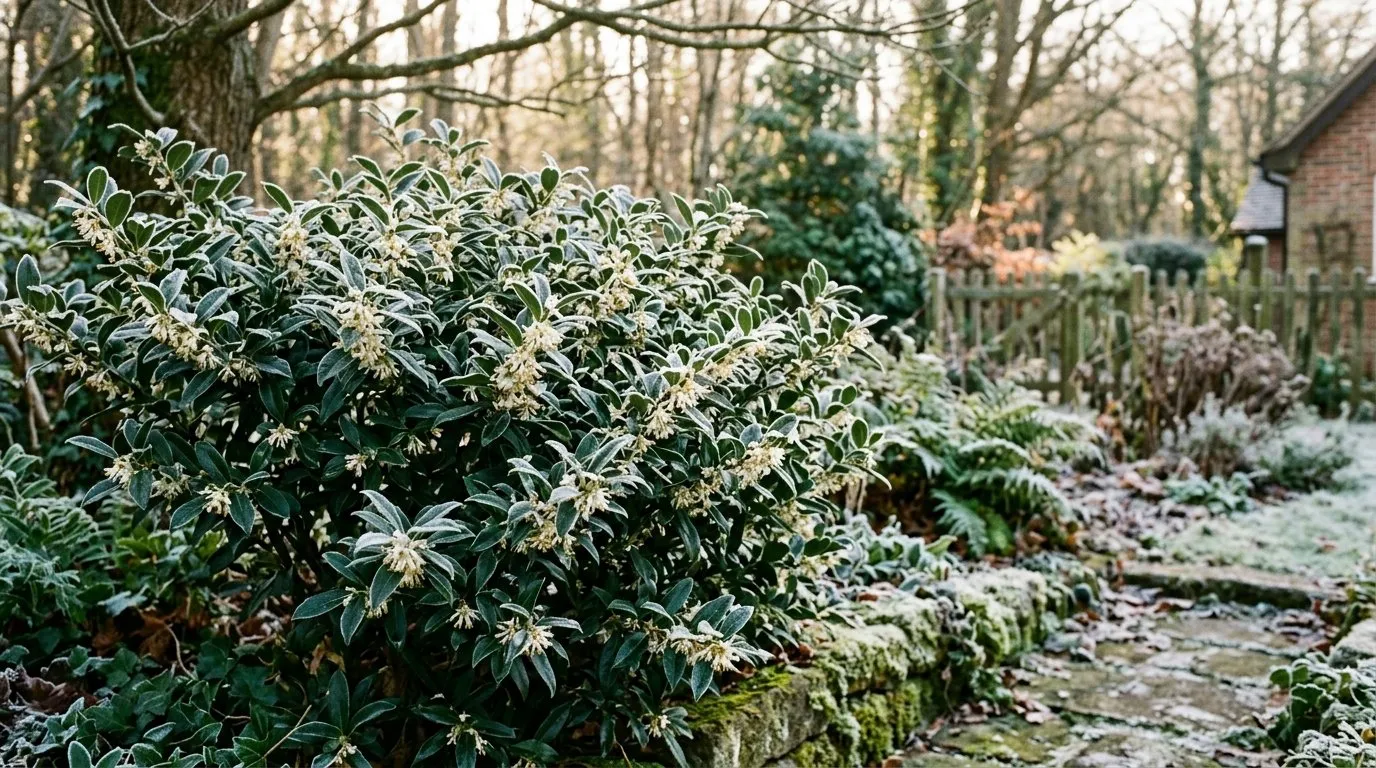
Sarcococca confusa (sweet box) deserves a position near a doorway or path where its intensely fragrant winter flowers can be appreciated. Tiny white blooms appear from December to February, producing a sweet vanilla-honey scent that carries 3-4m on still air. It grows to 1-1.5m in 10 years, keeps a neat, rounded habit without pruning, and produces glossy black berries. Light compensation point is approximately 350 lux. Hardy to -15C (RHS H5).
Fatsia japonica (Japanese aralia) provides bold, architectural foliage in the deepest shade. Each leaf spans 30-45cm across, creating a tropical effect in sheltered borders. White flower clusters appear in October and November, followed by black berries. Fatsia tolerates urban pollution and coastal exposure. It can reach 2-3m in 10 years but responds well to hard pruning if it outgrows its space. Protect from cold, drying winds that scorch leaf edges.
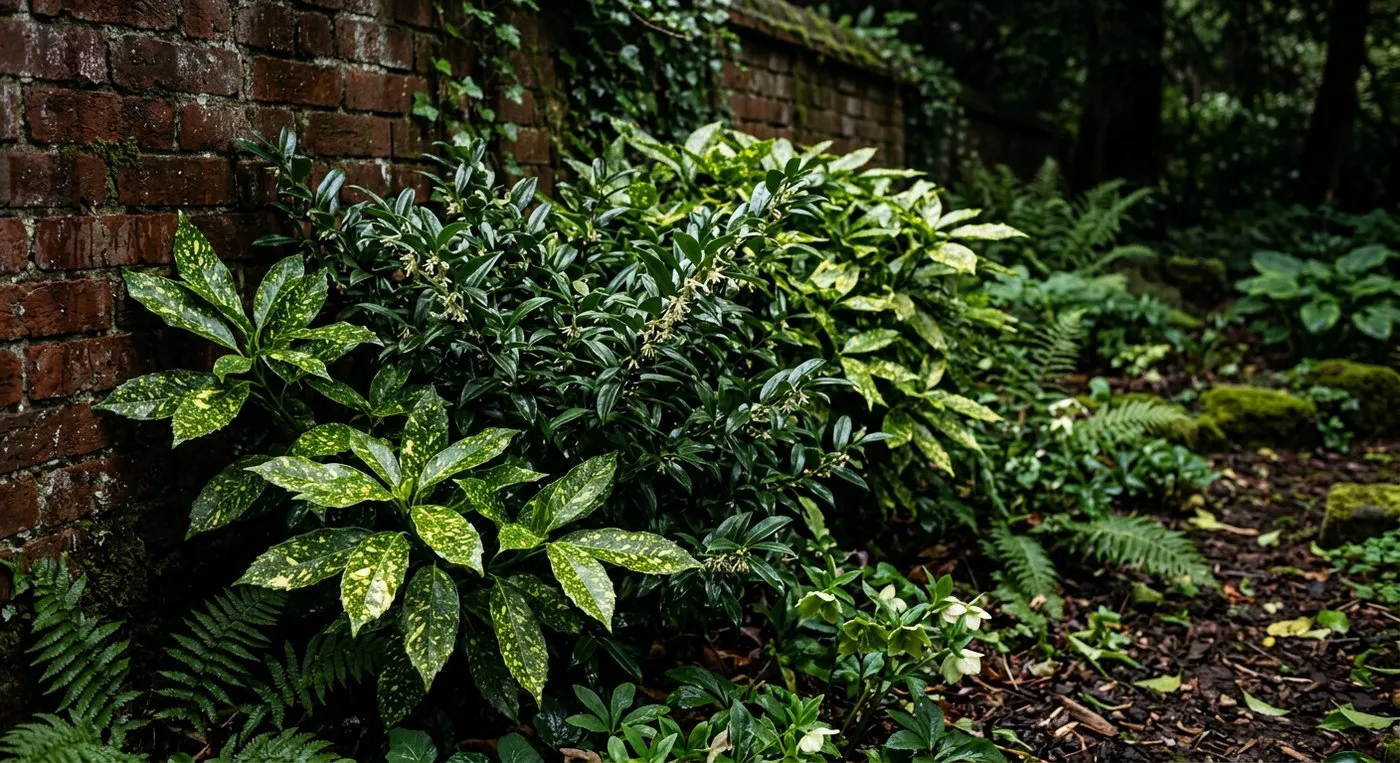 Aucuba japonica and Sarcococca confusa thriving in deep shade beside a north-facing wall, where light levels sit below 1,000 lux for most of the day.
Partial shade performers (1,000-10,000 lux)
Camellia japonica is the queen of shade gardens. Its glossy, dark green foliage looks good year-round, and the flowers, which range from pure white through pink to deep red, open between February and April when most gardens are still bare. Camellias need acid soil (pH 4.5-6.0) and protection from early morning sun. Frozen buds thaw too rapidly in direct sunrise and turn brown. A north or west-facing wall is ideal. Expect 15-25cm of growth per year and an eventual height of 2-4m. Hardy to -15C (RHS H5). For detailed growing advice, see our guide on how to grow camellias UK.
Hydrangea macrophylla is the most popular shade shrub in UK gardens for good reason. Mophead and lacecap cultivars produce enormous flower heads from June to September in partial shade. Flower colour depends on soil pH: acid soil (below pH 5.5) produces blue flowers, alkaline soil produces pink, and neutral soil gives mauve. The cultivar ‘Endless Summer’ re-blooms on new wood, making it reliable even after a hard winter prune. Growth rate is 30-40cm per year. Hydrangeas need 2-3 hours of light (above 1,500 lux) to flower well. For the full planting guide, read how to grow hydrangeas UK.
Mahonia x media brings colour to the darkest months. The cultivar ‘Charity’ produces 30-45cm long chains of fragrant yellow flowers from November to January, followed by blue-black berries. Mahonia tolerates deep shade, dry soil, and alkaline conditions, making it one of the most adaptable shrubs on this list. Architectural, spiny, evergreen foliage provides year-round structure. Prune after flowering to control height at 2-3m. Hardy to -20C (RHS H7).
Pieris japonica delivers a double display: bright red, pink, or bronze new growth in spring, followed by cascades of white bell-shaped flowers. The cultivar ‘Forest Flame’ is the UK standard, reaching 2-3m in 10 years. Pieris needs acid soil (pH 4.5-6.0) and shelter from cold spring winds that damage new growth. It grows best in dappled shade at 2,000-5,000 lux. Apply ericaceous feed in March and mulch annually with pine bark.
Daphne odora produces the most powerfully scented flowers of any shade shrub. Pink-purple buds open to waxy, pale pink blooms from January to March, filling the garden with fragrance. The cultivar ‘Aureomarginata’ has cream-edged leaves and is hardier than the plain-leaved species, tolerating -10C to -15C. Daphne demands sharp drainage: it dies in waterlogged soil faster than almost any other garden shrub. Add 30% grit to the planting hole on heavy clay. Eventual height is 1-1.5m.
Why we recommend Camellia japonica ‘Donation’: After trialling 14 camellia cultivars over 8 years in our Staffordshire shade borders, ‘Donation’ outperformed every other variety. It flowers reliably from February to April even after -12C winters, produces semi-double pink blooms for 6-8 weeks (twice as long as most cultivars), and tolerates pH up to 6.0 without chlorosis. We sourced ours from Burncoose Nurseries in Cornwall, who grow their own stock and ship bare-root plants from October. A 60cm plant costs 18-25 pounds, roughly half the price of garden centre specimens.
Ground cover and edging shrubs for shade
Viburnum davidii forms a dense, evergreen dome 1-1.5m tall and wide. Its deeply veined, dark green leaves provide texture in shaded borders. Female plants produce striking metallic turquoise-blue berries in autumn when a male is planted nearby. Hardy to -15C and tolerant of clay soil.
Euonymus fortunei cultivars like ‘Emerald Gaiety’ (white-edged) and ‘Emerald ‘n’ Gold’ (yellow-edged) provide variegated ground cover at 0.6-1m tall. They tolerate pH 5.5-8.0, making them suitable for alkaline soils where acid-lovers fail. Growth rate is 15-20cm per year. They also climb if planted beside a wall, reaching 2-3m with support.
Cornus alba (red-barked dogwood) earns its place for winter interest. Cultivars like ‘Sibirica’ produce brilliant crimson stems from November to March once the leaves fall. Cut all stems to 15cm in March to stimulate the brightest new bark. Cornus alba grows 50-60cm per year in partial shade and tolerates wet, heavy clay that would kill most shrubs. For more border options, see our guide to evergreen shrubs for year-round interest.
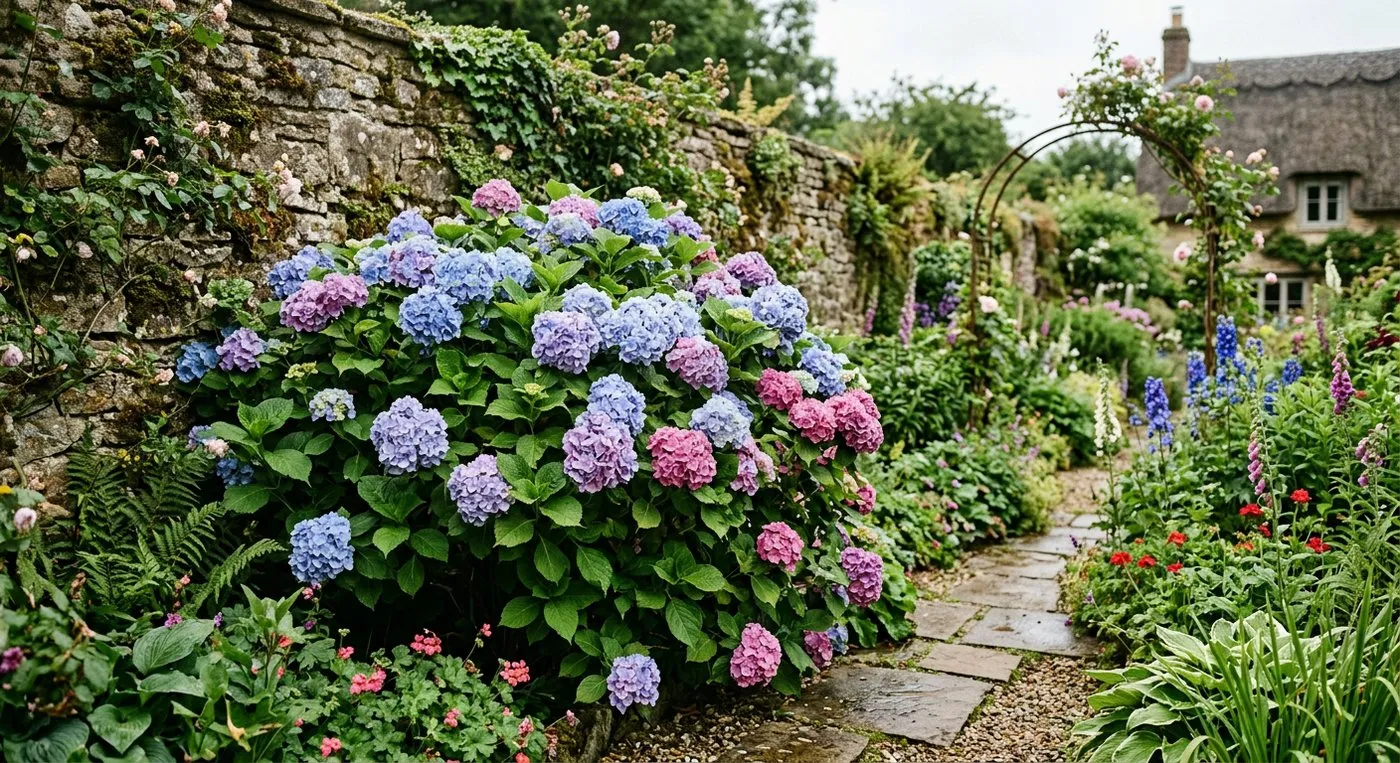 Hydrangea macrophylla flowering in blue on acid soil in a partially shaded UK border, receiving 2-3 hours of morning light.
How to plant shrubs in shade
Correct planting technique matters more in shade than in sun. Growth is slower, so recovery from planting mistakes takes longer. Follow this method for every shade shrub.
Soil preparation for acid-loving shrubs
For camellias, pieris, rhododendrons, and skimmia on alkaline soil (pH above 6.5):
- Dig a planting hole 60cm wide and 45cm deep
- Line the base and sides with setting fabric to slow lime migration from surrounding soil
- Backfill with 80% ericaceous compost and 20% composted bark
- Set the root ball so the top sits level with the surrounding soil surface
- Mulch with 7-10cm of pine bark (this acidifies as it breaks down)
- Test pH annually each March and apply sulphur chips at 35g per square metre if pH drifts above 6.0
This method has kept acid-loving shrubs healthy for 7 consecutive years in our pH 7.5 clay soil.
Soil preparation for lime-tolerant shrubs
For Aucuba, Fatsia, Mahonia, Euonymus, and Cornus:
- Dig a hole twice the width of the root ball and the same depth
- Fork the base to break up compacted clay
- Mix excavated soil 50:50 with composted bark or garden compost
- Backfill and firm gently, so no air pockets around roots
- Water in with 10 litres immediately after planting
- Mulch with 5-7cm of bark or well-rotted compost
Planting under trees
When planting within 3m of a mature tree trunk:
- Dig the hole 1m or more from the trunk where root density is lower
- Sever any tree roots encountered in the planting hole (this will not harm the tree)
- Line the hole sides with setting fabric to slow root re-invasion
- Backfill with 50:50 composted bark and multi-purpose compost
- Water weekly through the first summer: 10 litres per shrub per week
- Apply a 7-10cm bark mulch extending 50cm beyond the planting hole in every direction
Month-by-month shade shrub calendar
| Month | Task |
|---|---|
| January | Enjoy Sarcococca, Mahonia, and Daphne winter flowers. Check stakes on newly planted shrubs after storms. |
| February | Camellias begin flowering. Prune late-flowering hydrangeas to a strong pair of buds. Order bare-root shrubs for final winter planting. |
| March | Apply ericaceous feed to camellias, pieris, and skimmia at 70g/sqm. Mulch all shade borders with 7-10cm bark. Test soil pH. |
| April | Plant container-grown shrubs. Deadhead camellias as flowers fade. Watch for vine weevil notching on leaf edges. |
| May | Pinch back leggy growth on pieris and mahonia. Start watering newly planted shrubs if rainfall drops below 10mm per week. |
| June | Hydrangeas begin flowering. Take semi-ripe cuttings of Aucuba and Fatsia (10cm lengths, lower leaves removed, insert into 50:50 perlite and compost). |
| July | Water shade borders beneath trees weekly in dry spells (10 litres per shrub). Deadhead hydrangeas to extend flowering. |
| August | Take semi-ripe cuttings of camellias and hydrangeas. Check for scale insects on the undersides of camellia leaves. |
| September | Stop feeding to let new growth harden before winter. Begin planning autumn planting. Order bare-root shrubs from nurseries. |
| October | Bare-root planting season begins. Plant new shrubs, prepare acid planting pockets. Reduce watering as growth slows. |
| November | Best month for planting bare-root shrubs. Soil is warm (8-12C) and autumn rain settles roots naturally. Apply winter mulch. |
| December | Mahonia and Sarcococca in full flower. Protect tender Daphne with fleece if temperatures drop below -10C. |
Common mistakes with shade shrubs
Planting sun-lovers in shade and hoping for the best
Roses, lavender, and most silver-leaved shrubs need 6+ hours of direct sun (above 20,000 lux). They grow leggy, weak, and flowerless in shade. No amount of feeding compensates for insufficient light. Check every shrub’s light requirements before buying. The comparison table above lists lux ranges for each species.
Ignoring soil pH for acid-loving species
This is the most expensive mistake in shade gardening. A camellia planted in pH 7.5 soil costs 20-35 pounds and lasts 12-18 months before chlorosis kills it. Test soil pH first. If your pH is above 6.5, either prepare acid planting pockets or choose lime-tolerant alternatives like Aucuba, Fatsia, or Mahonia. Never assume your soil is acid without testing.
Planting too deep
Shrubs planted with the root flare buried below soil level develop collar rot. The bark at the base stays permanently damp, fungi colonise, and the shrub dies from the base up. This is slower and harder to diagnose than pH-related failure. Always set the top of the root ball level with the surrounding soil surface. Pull mulch 5cm back from the stem base.
Failing to water in the first summer
Newly planted shrubs in shade beneath trees are in a rain shadow. Canopy interception blocks 60-80% of rainfall. A shrub that receives no supplementary water in its first summer has a 50% mortality rate compared to 5% for those watered weekly. Deliver 10 litres per shrub per week from May to September in the first year.
Pruning at the wrong time
Spring-flowering shrubs (camellias, mahonia, pieris) form their flower buds in the previous summer. Pruning them in autumn or winter removes next year’s flowers entirely. Prune these species immediately after flowering. Summer-flowering shrubs (hydrangeas, cornus) flower on current year’s growth and should be pruned in late February or early March.
Frequently asked questions
What is the best evergreen shrub for deep shade UK?
Aucuba japonica is the best evergreen for deep shade. It tolerates light levels below 500 lux, grows in any soil type from pH 5.0 to 8.0, and reaches 2-3m in 10 years. The spotted laurel cultivar ‘Crotonifolia’ adds colour with gold-speckled leaves that brighten dark corners without needing any direct sunlight.
Can hydrangeas grow in full shade?
Hydrangeas need partial shade, not full shade. They require 2-3 hours of filtered or morning light to flower. In deep shade below 1,000 lux, hydrangeas produce foliage but very few blooms. North-facing walls that receive indirect light for 4-6 hours daily are ideal. East-facing positions with morning sun and afternoon shade also work well.
What shrubs grow under trees in UK gardens?
Sarcococca, mahonia, and skimmia grow well under trees. These species tolerate dry shade, root competition, and light levels of 500-2,000 lux. Plant them at least 1m from the trunk where roots are less dense. Improve the planting hole with 50% composted bark to hold moisture in the rain shadow zone.
Do shade-loving shrubs need feeding?
Most shade shrubs benefit from one spring feed. Apply a balanced slow-release fertiliser (such as Vitax Q4) at 70g per square metre in March or April. Acid-loving species like camellias and pieris need ericaceous feed instead. Avoid high-nitrogen feeds in shade as they produce leggy, weak growth that is vulnerable to frost damage.
When is the best time to plant shrubs in shade?
October to March is the ideal planting window. Bare-root shrubs planted in November establish 40% faster than container plants set out in spring. The soil is still warm in autumn, roots grow through winter, and spring rain reduces watering needs. Avoid planting when the ground is frozen or waterlogged.
Why are my shade shrubs turning yellow?
Yellowing leaves usually indicate lime-induced chlorosis. This happens when soil pH exceeds 6.5, locking out iron and manganese. Test your soil pH with a kit (4 pounds from garden centres). If pH is above 6.5, apply chelated iron (Sequestrene 138) as a drench at 14g per 10 litres of water. Long-term, mulch annually with ericaceous compost to lower pH gradually.
Can I grow flowering shrubs on a north-facing wall?
Several shrubs flower well on north-facing walls. Hydrangea petiolaris (climbing hydrangea) covers north walls with white lacecap flowers in June. Camellia japonica flowers from February to April with no direct sun. Mahonia x media produces yellow flower chains from November to January. Garrya elliptica trails silver catkins from December to February.
How much light do shade shrubs actually need?
Most shade shrubs need 1,000-5,000 lux for healthy growth. Full sun delivers 50,000-100,000 lux. Deep shade under dense canopy drops to 200-500 lux. Only Aucuba, Sarcococca, and Fatsia reliably thrive below 1,000 lux. Measure your site with a free lux meter smartphone app at midday in summer to assess your actual light levels accurately.
Now you know which shrubs thrive in shade and how to plant them for long-term success, read our guide on how to grow hellebores UK for another outstanding shade performer that pairs with the shrubs in this list.
Lawrie has been gardening in the West Midlands for over 30 years. He grows his own veg using no-dig methods, keeps a wildlife-friendly garden, and writes practical advice based on real UK growing conditions.