How to Prune Clematis by Group UK
Learn how to prune clematis by pruning group with our UK guide. Groups 1, 2 and 3 explained with timing, cuts and common mistakes from 12 years of trials.
Key takeaways
- Group 1 clematis (montana, alpina) need almost no pruning - just tidy after flowering in late spring
- Group 2 clematis (large-flowered hybrids) get a light prune in February to strong buds
- Group 3 clematis (viticella, texensis) are hard pruned to 15-30cm above ground in February
- Wrong pruning group is the number one reason clematis fail to flower in UK gardens
- New clematis plants should all be hard pruned in their first spring regardless of group
Clematis pruning confuses more UK gardeners than almost any other task. The reason is simple: there are three pruning groups, and each one needs a different approach at a different time of year.
Get it right and you will have walls, fences and pergolas covered in flowers from April through to October. Get it wrong and you cut off next season’s blooms without realising it.
This guide covers all three groups with exact timing, cuts and the mistakes I see most often after 12 years of growing clematis in Staffordshire clay.
Understanding the three clematis pruning groups
Every clematis belongs to one of three pruning groups based on when it flowers and whether those flowers appear on old wood, new wood, or both. The group determines everything about how and when you prune.
Group 1 flowers on wood produced the previous year. These are the early bloomers: montana, alpina, macropetala and armandii. They flower between April and May on stems that grew last summer and autumn. Pruning in winter removes those stems and the flower buds with them.
Group 2 flowers on both old and new wood. These are the large-flowered hybrids like Nelly Moser, The President and Niobe. They produce an early flush in May to June on old wood, then a second lighter flush in late summer on new growth. This dual habit makes them the trickiest group to prune.
Group 3 flowers entirely on new growth produced in the current season. Viticella types, texensis hybrids and late large-flowered varieties like Jackmanii and Comtesse de Bouchaud all belong here. They bloom from July to September on stems that grew that same spring and summer.
| Feature | Group 1 | Group 2 | Group 3 |
|---|---|---|---|
| Flowers on | Old wood | Old and new wood | New wood only |
| Bloom time | April to May | May to June, then August | July to September |
| Prune when | After flowering | February (light) | February to March (hard) |
| Cut severity | Minimal tidy | Remove dead, shorten to buds | Cut to 15-30cm |
| Common types | Montana, alpina, armandii | Nelly Moser, The President | Jackmanii, viticella |
| Vigour | Very vigorous | Moderate | Moderate to vigorous |
How to prune Group 1 clematis
Group 1 clematis are the easiest to manage because they need the least intervention. These vigorous climbers (montana can reach 12m) flower prolifically on last year’s growth and need only a light tidy after flowering finishes.
When to prune: Immediately after flowering, typically late May to June.
What to cut: Remove dead or damaged stems. Shorten any growth that has outgrown its allotted space. If the plant is young and still filling its support, skip pruning entirely.
How much: Never remove more than one third of the plant in a single season. Montana types are vigorous enough to recover from harder pruning, but it takes two seasons to return to full flowering.
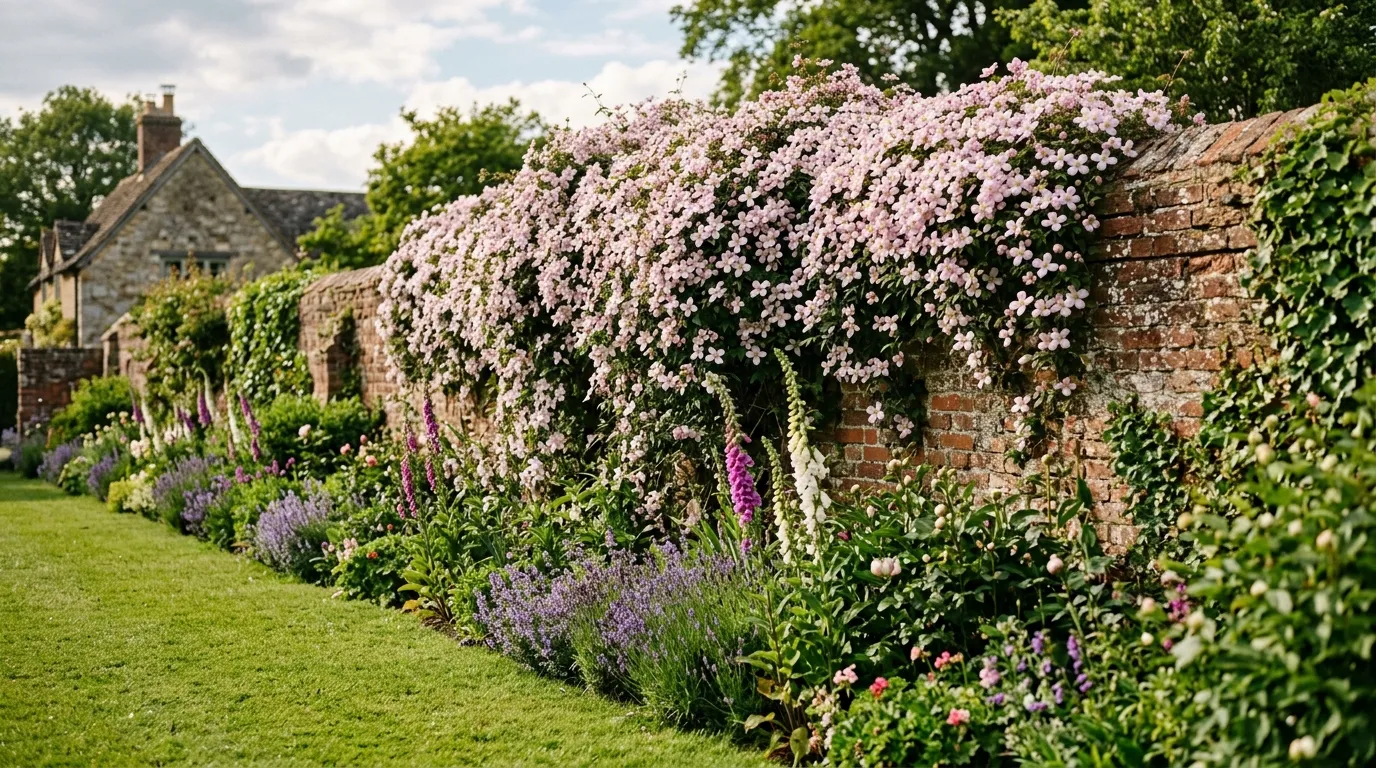
Clematis montana flowers on old wood from the previous year. Pruning after flowering gives new stems time to ripen before winter.
One common question is whether you can renovate an overgrown Group 1 clematis. Yes, but spread the work over two to three years. Cut back one third of the oldest stems to 60cm each year. The plant fills in from the base while maintaining some flowering on the remaining stems.
How to prune Group 2 clematis
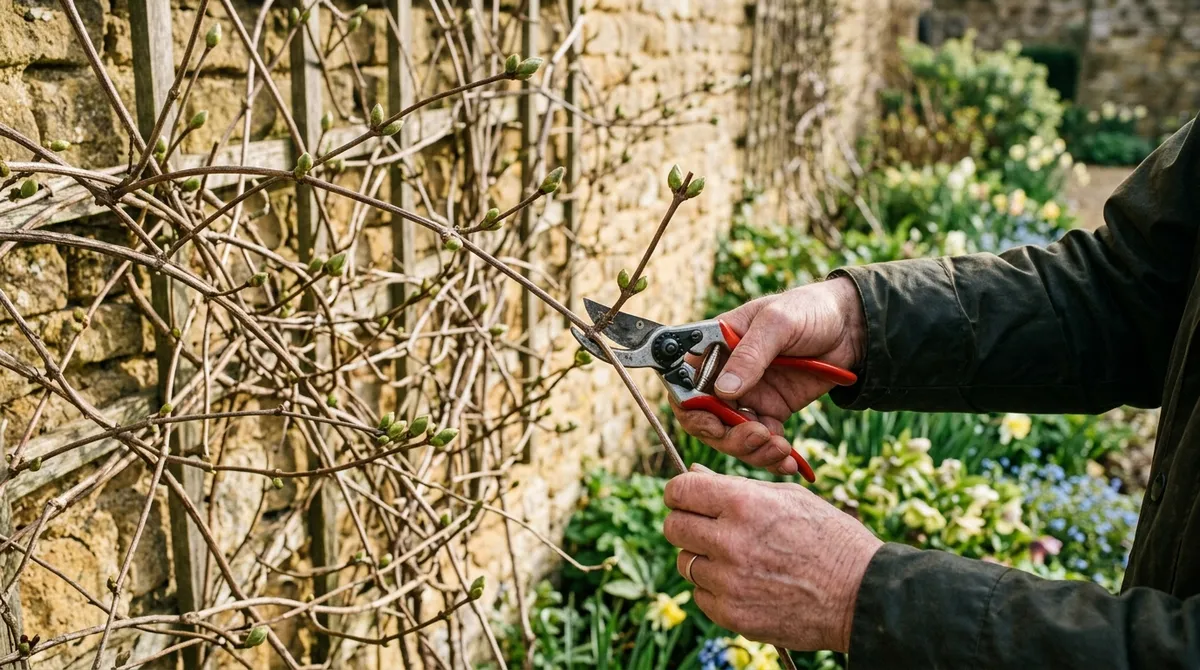
Group 2 clematis are the ones people get wrong most often. Hard pruning in winter removes the old wood that carries the early summer flowers. The result is a single late flush instead of the two flushes these plants are capable of producing.
When to prune: February, before new growth starts. In mild winters you may see buds swelling by late January. Aim to prune before those buds extend.
What to cut:
- Start by removing all dead and damaged stems entirely
- Cut remaining stems back to the highest pair of strong, healthy buds
- This is typically just 15-30cm below the previous year’s growth
- Remove any thin, weak stems that will not support heavy flowers
The key principle: you are shortening, not removing. Each stem keeps most of its length, losing only the soft tip growth from last autumn.
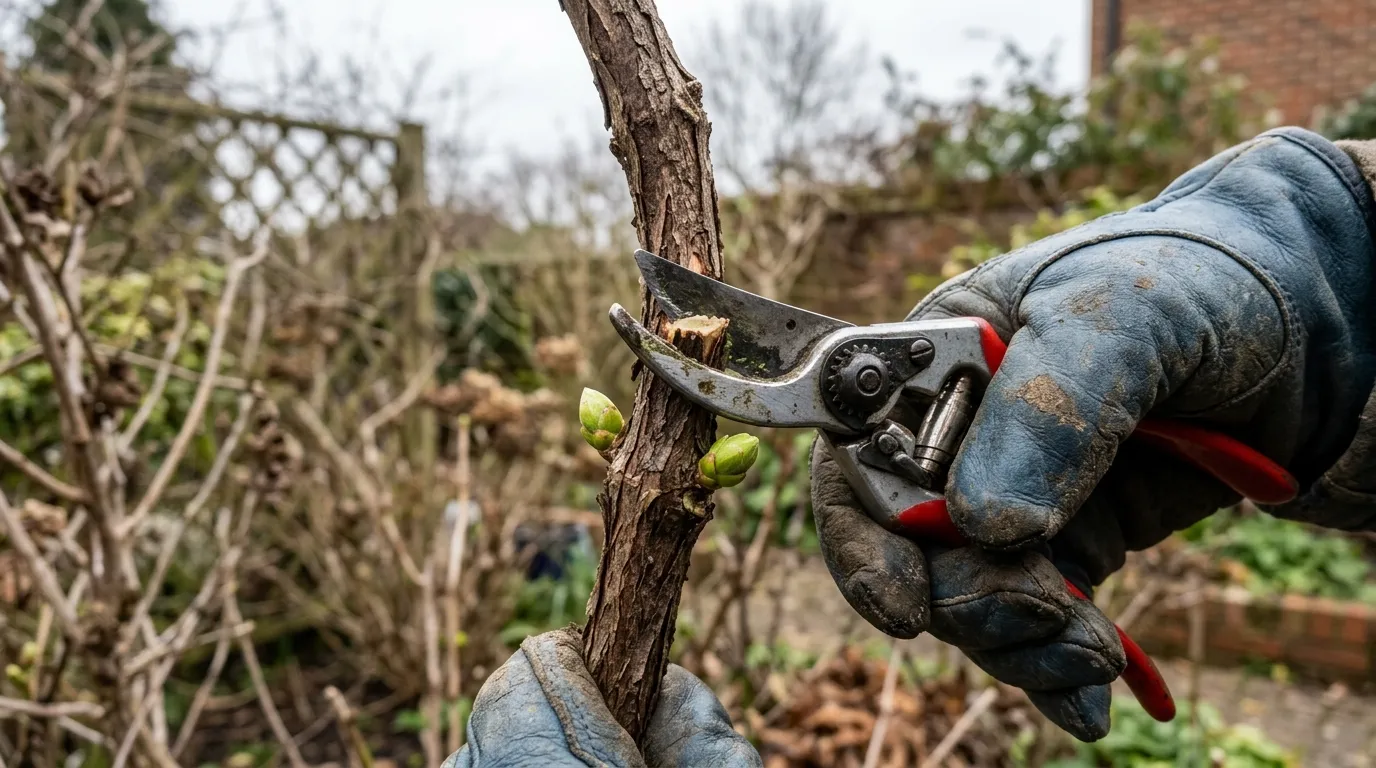
Group 2 clematis stems pruned back to strong buds in February. The remaining old wood carries the early summer flower buds.
In my experience, the early flush on Group 2 varieties like Nelly Moser and The President produces the largest individual flowers. Losing this flush to over-pruning means missing the best display. If your Group 2 clematis has become bare at the base, layer one or two stems by pegging them to the ground in spring. They root within a season and fill the gap.
How to prune Group 3 clematis
Group 3 is the most straightforward pruning job. These clematis flower on new growth, so you cut everything back hard in late winter and the plant produces fresh flowering stems from the base.
When to prune: February to early March, before new growth starts. In the West Midlands, I aim for the third week of February. Further north, early March works better.
What to cut:
- Cut every stem down to 15-30cm above ground level
- Make each cut just above a pair of strong buds
- Remove all the old top growth completely
- Clear the debris from the base of the plant
What happens if you skip pruning: the plant flowers, but only at the very top of last year’s growth. You end up with bare legs and a tangle of flowers 3m up that nobody can see. Hard annual pruning keeps the flowers at eye level.
After pruning, I apply a 5cm mulch of garden compost around the base (keeping it 10cm clear of the stems) and a handful of blood, fish and bone. Group 3 clematis put on 2-3m of new growth each season and need the nutrition to sustain that.
Pruning newly planted clematis (all groups)
Regardless of which group your clematis belongs to, every newly planted clematis should be hard pruned in its first February or March after planting. Cut all stems back to approximately 30cm above soil level, just above a pair of strong buds.
This feels brutal, especially if the plant arrived with 1m of growth from the nursery. But the reason is important: clematis naturally want to grow upward from a single stem. Hard pruning in year one forces multiple stems to break from the base, creating a fuller plant with far more flowering potential.
I have trialled this against unpruned controls. The pruned plants consistently outperform within two seasons, producing three to four times more flowering stems and better coverage of their support.
After the first-year hard prune, switch to the pruning method for your plant’s group from year two onwards.
Month-by-month clematis pruning calendar
| Month | Task | Groups affected |
|---|---|---|
| January | Check ties and supports before pruning season | All |
| February | Prune Groups 2 and 3. Hard prune all first-year plants | 2, 3 |
| March | Complete Group 3 pruning if not done. Mulch and feed | 3 |
| April | Train new growth onto supports. No pruning | All |
| May | Prune Group 1 after flowering finishes | 1 |
| June | Complete Group 1 pruning. Deadhead Group 2 early flush | 1, 2 |
| July | Tie in new growth. Deadhead spent flowers | 2, 3 |
| August | Continue deadheading. No pruning | 2, 3 |
| September | Reduce wind-rock on tall growth | All |
| October | Leave seed heads for winter interest | All |
| November | Avoid pruning. Plants entering dormancy | All |
| December | Plan next year. Order new varieties | All |
Common clematis pruning mistakes
Mistake 1: Hard pruning Group 2 in winter. This removes the old wood that carries the early large-flowered flush. You get one late flush instead of two. The fix: prune lightly to strong buds only.
Mistake 2: Never pruning Group 3. Without annual hard pruning, Group 3 clematis become a tangled mess with flowers only at the top. The base goes bare and woody. Cut back hard every February.
Mistake 3: Pruning Group 1 in winter. Montana and alpina flower on last year’s wood. Winter pruning removes next spring’s entire flower display. Wait until immediately after flowering.
Mistake 4: Forgetting the first-year hard prune. All new clematis need one hard prune to 30cm in their first spring. Skipping this gives you a single-stemmed plant instead of a bushy, multi-stemmed one.
Mistake 5: Cutting above single buds instead of bud pairs. Clematis have opposite leaves and buds grow in pairs. Always cut above a pair of buds to get two new stems rather than one.
Which clematis group is best for UK gardens?
From my trials, Group 3 varieties give the most reliable results for less experienced gardeners. They are forgiving of mistakes, impossible to over-prune, and flower reliably every year from July onwards. Viticella types are particularly tough in exposed UK gardens, tolerating poor soil and cold winds better than the large-flowered hybrids.
For cottage garden planting schemes, I combine all three groups on the same wall or fence. An alpina flowers in April, a Group 2 hybrid takes over in June, and a viticella carries the display through to September. This layered approach gives six months of continuous colour from one support structure.
If you are dealing with clay soil, all three groups tolerate it well provided drainage is reasonable. Add grit to the planting hole and plant the crown 10cm deeper than the pot level. This protects against clematis wilt and encourages basal shoots.
Related reading
Lawrie has been gardening in the West Midlands for over 30 years. He grows his own veg using no-dig methods, keeps a wildlife-friendly garden, and writes practical advice based on real UK growing conditions.