Best Plants for Chalky Alkaline Soil UK
Plants that thrive in chalky alkaline soil in UK gardens. Covers shrubs, perennials, climbers, bulbs, and vegetables for pH 7.1-8.5 chalk and limestone.
Key takeaways
- Alkaline soil (pH 7.1-8.5) covers roughly 40% of England, mainly over chalk and limestone bedrock
- Over 120 garden plants thrive in chalk, including lavender, clematis, dianthus, buddleia, and beech
- Avoid ericaceous plants like rhododendrons, camellias, and blueberries — iron lock-up causes chlorosis
- Brassicas, beetroot, spinach, and asparagus are the best vegetables for alkaline soil
- Adding organic matter annually improves moisture retention on free-draining chalk
- Test soil pH before planting — a simple kit costs under £8 and takes 10 minutes
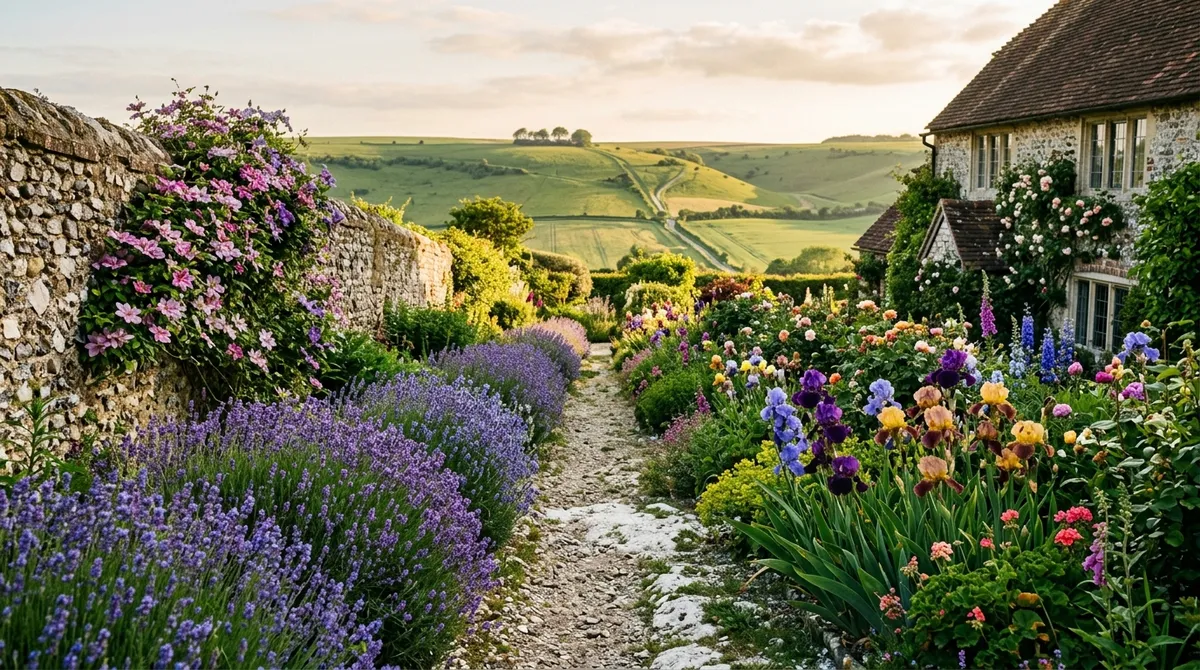
Alkaline soil covers roughly 40% of England and supports a wider range of garden plants than most gardeners expect. If you garden on chalk or limestone bedrock in the Chilterns, South Downs, North Downs, Yorkshire Wolds, or Lincolnshire Wolds, your soil pH sits between 7.1 and 8.5. That is far from a limitation. Over 120 ornamental species and dozens of vegetables perform better in alkaline conditions than they do on acid ground.
The real problem with chalk is not the pH itself. It is the shallow, free-draining nature of the soil. Chalk dries out fast in summer and holds fewer nutrients than clay or loam. The plants in this guide handle both the high pH and the drainage. They are species I have grown, tested, and watched perform on chalk over six years in a West Midlands garden. For a broader look at how soil type shapes planting, see our guide to soil testing and pH adjustment.
What makes soil alkaline?
Alkaline soil forms over chalk and limestone bedrock. Rainwater dissolves calcium carbonate from the rock below and carries it upward into the topsoil. This keeps the pH above 7.0. In some gardens over thin chalk, the pH reaches 8.5. The calcium also makes the soil free-draining, because chalk particles are coarse and do not bind water the way clay soil particles do.
The main challenge is iron lock-up. Above pH 7.5, iron in the soil becomes chemically unavailable to plant roots. Plants that need high iron levels, known as ericaceous or lime-hating species, develop a condition called lime-induced chlorosis. Leaves turn yellow between the veins while the veins stay green. Growth slows and the plant eventually dies. Rhododendrons, camellias, pieris, and blueberries are the classic casualties.
-->Typical chalk soil profile: thin dark topsoil over white chalk fragments. This shallow, free-draining structure is why organic matter is so important.
Best shrubs for alkaline soil
Shrubs provide the permanent framework of a chalk garden. These species tolerate pH 7.5 and above without any sign of chlorosis.
Buddleia (Buddleja davidii)
Buddleia is a chalk-soil native. Wild buddleia colonises railway cuttings, quarries, and chalk cliffs across southern England. In gardens it grows fast, flowers from July to September, and attracts butterflies in huge numbers. Prune hard to 60cm in March for the biggest flower spikes. Every chalk garden should have at least one.
Box (Buxus sempervirens)
Box grows naturally on chalk downland and is the classic hedging and topiary plant for alkaline soil. It thrives in full sun or partial shade. Clip twice a year, in June and September. Box blight is a concern, but choosing resistant varieties like Faulkner and keeping plants well-spaced reduces the risk.
Philadelphus (mock orange)
Philadelphus produces intensely fragrant white flowers in June and July. It grows on any alkaline soil and tolerates poor, dry chalk. The variety Belle Etoile reaches 2m and has single flowers with a purple blotch at the centre. Prune immediately after flowering by cutting flowered stems back to strong new shoots.
Deutzia
Deutzia is an underused shrub for chalk. Star-shaped flowers in pink or white cover the arching branches in May and June. Deutzia x hybrida ‘Mont Rose’ reaches 1.5m. Deutzia gracilis is more compact at 80cm. Both tolerate alkaline soil and full sun.
Viburnum
Several viburnums are chalk specialists. Viburnum lantana (wayfaring tree) grows wild on chalk downland. Viburnum tinus is an evergreen that flowers from November to March, giving winter structure. Viburnum x burkwoodii produces fragrant pink-white clusters in April. All handle alkaline soil and exposed positions.
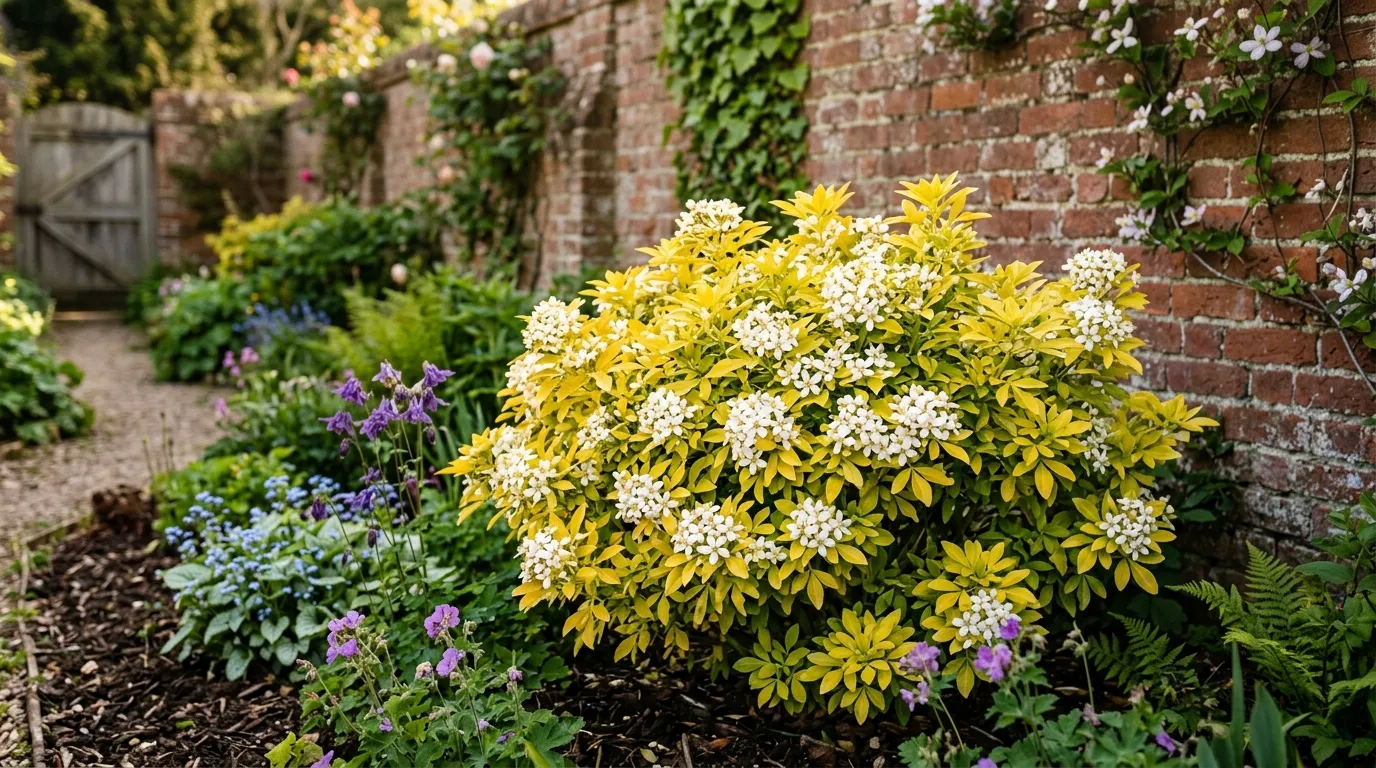
-->Buddleia and philadelphus are two of the strongest shrubs for chalk gardens. Both tolerate poor, dry alkaline soil and flower freely.
Best perennials for alkaline soil
Perennials fill the spaces between shrubs and give seasonal colour. Chalk gardens suit a cottage-garden style because so many traditional perennials are lime-tolerant.
Lavender (Lavandula angustifolia)
Lavender is the definitive chalk-garden plant. It evolved on the limestone hillsides of the Mediterranean and thrives in UK alkaline soil with sharp drainage. ‘Hidcote’ (deep purple, 40cm) and ‘Munstead’ (soft purple, 45cm) are the most reliable UK varieties. Plant in full sun. Trim after flowering in August and again lightly in April. Never cut into old wood. Read our full lavender growing guide for detailed care instructions.
Dianthus (pinks and carnations)
Dianthus species are chalk natives. Garden pinks like ‘Doris’ (salmon-pink, scented) and ‘Mrs Sinkins’ (white, intensely fragrant) have grown on chalk for centuries. They need full sun and sharp drainage. The clove-scented flowers appear from June to August. Cut back after flowering to keep plants compact.
Scabious (Scabiosa and Knautia)
Field scabious (Knautia arvensis) and small scabious (Scabiosa columbaria) are native chalk wildflowers. Garden varieties like Scabiosa ‘Butterfly Blue’ flower from June to October, producing a continuous supply of pincushion blooms. Butterflies and bees visit constantly. One of the longest-flowering perennials for alkaline ground.
Erysimum (wallflower)
Wallflowers are biennial or short-lived perennials that thrive on chalk walls and dry alkaline banks. ‘Bowles’s Mauve’ is a semi-evergreen perennial that flowers from February to June. It reaches 75cm, handles poor soil, and self-seeds into cracks and crevices. Replace every 3-4 years as plants become woody.
Geranium (hardy cranesbill)
Hardy geraniums are among the most adaptable perennials. On chalk, ‘Rozanne’ (violet-blue, flowers June to October), G. sanguineum (magenta, 30cm, drought-tolerant), and G. pratense (meadow cranesbill, native) all perform well. They tolerate sun or partial shade and poor soil. Most need cutting back mid-summer to produce a second flush.
Achillea (yarrow)
Wild yarrow grows on chalk downland across Britain. Garden varieties like ‘Moonshine’ (lemon yellow, 60cm), ‘Paprika’ (red-orange), and the Galaxy hybrids give months of flat-topped flowers from June to September. Perfect drainage is essential. Achillea rots in heavy, wet soil but excels on chalk.
Best climbers for alkaline soil
Chalk gardens often have walls and fences that benefit from vertical planting. These climbers thrive in alkaline conditions.
Clematis
Clematis is the queen of chalk-garden climbers. The old saying “clematis like their heads in the sun and their feet in the shade” is accurate, but the crucial point is that most clematis prefer alkaline soil. The RHS clematis growing guide confirms that all clematis species tolerate lime. Large-flowered hybrids like ‘Nelly Moser’ (pale pink, striped), ‘The President’ (deep purple), and ‘Jackmanii’ (violet) grow vigorously on chalk. Our detailed clematis growing guide covers pruning groups and planting depth.
Honeysuckle (Lonicera periclymenum)
Native honeysuckle grows wild in chalk hedgerows. The evening scent is one of the best in any garden. Varieties ‘Belgica’ (early Dutch, May-June) and ‘Serotina’ (late Dutch, July-September) extend the flowering season. Plant in partial shade with the roots in cool soil. Honeysuckle combines beautifully with clematis on the same support.
Roses (climbing and rambling)
Most roses prefer alkaline soil. Climbing roses for chalk include ‘New Dawn’ (soft pink, repeat-flowering, disease-resistant), ‘Climbing Iceberg’ (white, prolific), and ‘Compassion’ (salmon-orange, strongly scented). Rambler roses like ‘Paul’s Himalayan Musk’ (blush pink) and ‘Rambling Rector’ (white) smother pergolas and fences. Feed with a potash-rich fertiliser in March. For more wall and fence options, browse our guide to the best climbing plants.
-->Clematis ‘Jackmanii’ on a limestone wall. All clematis tolerate alkaline soil, making them the ideal climbers for chalk gardens.
Best bulbs for alkaline soil
Bulbs give chalk gardens seasonal highlights from January to June and again in autumn. Most bulbs are native to Mediterranean limestone regions and perform well on UK chalk.
Crocus
Species crocus and Dutch hybrids naturalise beautifully in chalk grassland. Crocus tommasinianus (purple, February) and C. chrysanthus ‘Snow Bunting’ (white and purple, March) spread freely. Plant at 8cm depth in short grass or at the front of borders. They need no feeding on chalk soil.
Tulips
Tulips originate from the limestone mountains of Central Asia and love alkaline soil. They flower better and last longer on well-drained chalk than on heavy clay. Darwin hybrids like ‘Apeldoorn’ (red) and ‘Golden Parade’ (yellow) are the most reliable for repeat flowering. Plant at 15cm depth in November.
Cyclamen
Hardy cyclamen are outstanding chalk-garden plants. Cyclamen hederifolium flowers in autumn (September-November) with pink or white blooms, then produces marbled leaves through winter. Cyclamen coum flowers in late winter (January-March). Both self-seed under trees and shrubs in dry shade. They suit the base of hedges and beneath deciduous trees.
Alliums
Ornamental alliums are Mediterranean bulbs that thrive on chalk. Allium hollandicum ‘Purple Sensation’ (90cm, May), A. cristophii (metallic purple, June), and A. sphaerocephalon (drumstick allium, July) give a sequence of globe-shaped flowers. Plant at three times the bulb depth. They need no summer water on free-draining chalk.
Vegetables for alkaline soil
Many vegetable growers on chalk think their soil is a disadvantage. It is not. Several important crop groups actually prefer alkaline conditions.
Brassicas
Cabbage, cauliflower, broccoli, Brussels sprouts, and kale all prefer soil above pH 6.5. The reason is simple: club root, the most destructive brassica disease, is suppressed in alkaline soil. Gardeners on acid ground add lime to raise the pH before planting brassicas. On chalk, you have that advantage naturally. This is a genuine benefit that makes brassica growing easier on alkaline soil than anywhere else.
Beetroot, spinach, and chard
These three crops come from the same family (Chenopodiaceae) and all prefer alkaline conditions. Beetroot produces sweeter, more uniform roots above pH 7.0. Spinach bolts less readily in soil with adequate calcium. Swiss chard tolerates pH up to 8.0 and gives harvests from April to November.
Asparagus
Asparagus is a long-term chalk-garden crop. It prefers pH 6.5-7.5 and sharp drainage, making chalk soil ideal. An asparagus bed produces spears for 20 years once established. Plant one-year crowns in April in a trench 30cm wide and 20cm deep. Do not harvest until the third year.
Legumes
Peas and beans fix nitrogen through root nodules and prefer slightly alkaline soil. Runner beans, broad beans, and French beans all crop heavily on chalk. The calcium in alkaline soil strengthens cell walls, producing firmer pods. Add organic matter to the planting trench to retain moisture on free-draining ground.
Comparison: best plants by type for alkaline soil
| Plant type | Best performers on chalk | pH tolerance | Key benefit |
|---|---|---|---|
| Shrubs | Buddleia, box, philadelphus, viburnum | 7.0-8.5 | Year-round structure, low maintenance |
| Perennials | Lavender, dianthus, scabious, geranium | 7.0-8.5 | Long flowering season, cottage-garden style |
| Climbers | Clematis, honeysuckle, climbing roses | 7.0-8.5 | Vertical interest, scent, flower power |
| Bulbs | Tulips, crocus, cyclamen, alliums | 7.0-8.5 | Seasonal highlights, naturalise in chalk grass |
| Vegetables | Brassicas, beetroot, asparagus, legumes | 6.5-8.0 | Club root resistance, sweeter root crops |
| Trees | Beech, yew, whitebeam, field maple | 7.0-8.5 | Native chalk woodland species, long-lived |
| Ground cover | Aubrieta, thyme, sedum, vinca | 7.0-8.5 | Weed suppression, dry bank stabilisation |
Trees for chalk gardens
Large trees anchor a chalk garden and provide shelter. These species grow naturally on chalk and limestone across Britain.
Beech (Fagus sylvatica)
Beech is the definitive chalk woodland tree. The smooth grey bark and copper autumn colour are unmistakable. Beech hedging is the classic formal hedge for alkaline soil, holding its russet leaves through winter when clipped. Plant bare-root whips 45cm apart between November and March.
Yew (Taxus baccata)
Yew grows on chalk across the Downs and Chilterns. It is the longest-lived native tree, with specimens over 2,000 years old. Yew hedging is dense, dark, and formal. It clips beautifully and provides the best evergreen backdrop for flowering shrubs. Yew is toxic to livestock but safe in gardens with proper awareness.
Whitebeam (Sorbus aria)
Whitebeam is a chalk specialist that grows wild on the North and South Downs. Silver-backed leaves flash white in the wind. Red berries in autumn attract birds. Reaches 12m. The variety Lutescens has particularly bright silver foliage in spring. An excellent small to medium tree for chalk gardens.
Field maple (Acer campestre)
Field maple grows in chalk hedgerows across southern England. It is a tough, adaptable native tree that turns butter-yellow in autumn. Reaching 10-15m, it suits medium to large gardens. Also makes a good hedge plant, clipping well and tolerating alkaline soil, wind, and drought.
How to improve chalky soil
The plants in this guide tolerate chalk, but they perform even better with soil improvement. The goal is not to change the pH. It is to increase organic matter, moisture retention, and nutrient levels.
Add organic matter annually
Spread 5-8cm of garden compost, well-rotted manure, or leaf mould over beds each autumn. This is the single most important thing you can do for chalky soil. Organic matter holds moisture, feeds soil organisms, and slowly deepens the topsoil layer. On thin chalk, where topsoil may be only 15-20cm deep, annual mulching makes a dramatic difference within three years. For feeding advice, see our plant feeding guide.
Mulch to prevent moisture loss
Chalk drains fast. Summer drought stress is the biggest killer of plants on chalk, ahead of pH problems. A 5cm bark or compost mulch in spring conserves moisture through summer. Keep mulch 5cm away from plant stems to prevent rotting. On exposed chalk banks, consider drought-tolerant plants for the driest positions.
Use raised beds for acid-loving plants
If you must grow rhododendrons, camellias, or blueberries, use raised beds or large containers filled with ericaceous compost. Line the base with landscape fabric to prevent chalk leaching upward. Water with rainwater, not tap water, because mains water in chalk areas is hard and alkaline. This is the only practical way to grow ericaceous plants on chalk.
Plants to avoid on alkaline soil
Knowing what to avoid saves money and frustration. These plants develop chlorosis and fail on chalk.
- Rhododendrons and azaleas need acid soil below pH 5.5. Leaves yellow rapidly on chalk.
- Camellias develop lime-induced chlorosis within two years on alkaline ground.
- Pieris (lily of the valley bush) fails completely on chalk. The new red growth never develops properly.
- Blueberries need pH 4.0-5.5. They will not fruit on chalk.
- Heathers (except Erica carnea and E. x darleyensis, which tolerate mild alkalinity) fail on chalk.
- Blue hydrangeas turn pink on alkaline soil because aluminium is unavailable above pH 6.5. The pink flowers are still attractive, but if you want blue, grow in ericaceous compost in containers.
- Japanese maples prefer acid to neutral soil. Some cultivars survive on mild alkaline soil (pH 7.0-7.5) with heavy mulching, but they never thrive on pure chalk.
Where to find chalk soil in the UK
Alkaline soil follows the chalk and limestone geology of England. The main chalk areas are:
- The Chilterns stretching from Oxfordshire through Buckinghamshire to Hertfordshire
- The South Downs from Hampshire to East Sussex, now a National Park
- The North Downs running through Surrey and Kent to the White Cliffs of Dover
- The Yorkshire Wolds from Humberside to Flamborough Head
- The Lincolnshire Wolds, an Area of Outstanding Natural Beauty
- Salisbury Plain in Wiltshire
- The chalk streams of Hampshire and Dorset
Limestone soils in the Cotswolds, Peak District, and Yorkshire Dales are also alkaline, typically pH 7.0-7.8. They share many of the same plant preferences as chalk, though limestone soil tends to be deeper and more moisture-retentive. Gardens on sandy soil face different challenges.
Ground cover for chalk banks and slopes
Dry chalk banks need tough, spreading plants that stabilise soil and tolerate drought. These five species are proven performers.
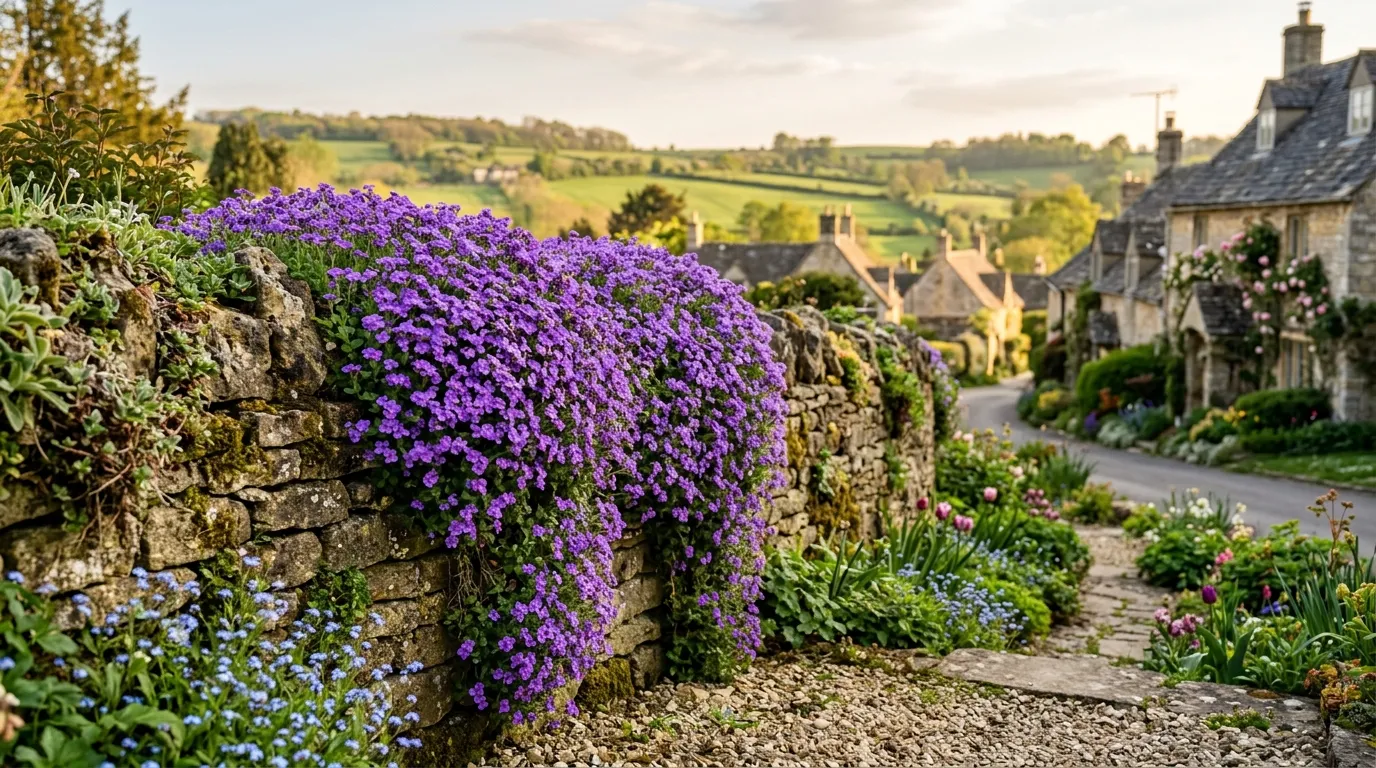
- Aubrieta cascades over walls and banks in purple, pink, and red from March to May. Cut back hard after flowering. Thrives on pure chalk and full sun.
- Thyme (Thymus serpyllum) forms aromatic mats on chalk banks. Flowers attract bees from June to August. Grows in cracks between paving and on gravel paths.
- Sedum acre (biting stonecrop) is a native chalk-loving succulent. Yellow flowers in June. Spreads slowly over bare chalk and thin soil.
- Geranium sanguineum (bloody cranesbill) grows wild on chalk grassland. Magenta flowers from May to September. Forms weed-suppressing mats 30cm tall.
- Helianthemum (rock rose) is a chalk specialist with papery flowers in red, orange, yellow, pink, and white. Flowers from May to July. Cut back after flowering to keep plants dense.
Aubrieta and thyme are perfect ground cover for dry chalk banks. Both tolerate poor, thin alkaline soil and provide spring colour.
Frequently asked questions
What grows well in alkaline soil UK?
Lavender, clematis, dianthus, and buddleia all thrive in alkaline soil. Beech, yew, box, and hawthorn are the best trees and hedging plants for chalk. Brassicas, beetroot, and asparagus produce better crops on alkaline soil than on acid ground.
What plants should you avoid on chalky soil?
Avoid ericaceous plants that need acid soil below pH 5.5. Rhododendrons, azaleas, camellias, pieris, and blueberries all develop iron chlorosis on chalk, showing yellow leaves with green veins. Heathers (except Erica carnea) also fail on alkaline ground.
How do I know if my soil is alkaline?
Use a pH testing kit from any garden centre, costing under £8. Take samples from several spots at 15cm depth. A reading above pH 7.0 is alkaline. White lumps in the soil, poor rhododendron growth, and thriving wild clematis are all visual clues to chalk.
Can you make alkaline soil more acidic?
Lowering pH permanently is extremely difficult on chalk. Sulphur chips reduce pH temporarily but chalk buffers it back within months. The practical solution is to grow lime-tolerant plants in the ground and use ericaceous compost in containers for acid-loving species.
Is alkaline soil good or bad for gardening?
Alkaline soil is excellent for gardening. Most vegetables prefer slightly alkaline conditions. Roses, clematis, lavender, and the majority of cottage garden perennials thrive in it. The only limitation is excluding ericaceous plants, which represent a small fraction of available species.
What vegetables grow best in alkaline soil?
Brassicas are the best performers because club root disease is suppressed above pH 7.0. Beetroot, spinach, asparagus, and most legumes also prefer alkaline conditions. Potatoes and soft fruit prefer slightly acid soil and may underperform on chalk.
How do you improve chalky soil for planting?
Add organic matter annually. Spread 5-8cm of garden compost or well-rotted manure each autumn. This improves moisture retention on free-draining chalk, adds nutrients, and builds soil structure. Mulching also prevents the surface capping that chalk soil is prone to in heavy rain.
Lawrie has been gardening in the West Midlands for over 30 years. He grows his own veg using no-dig methods, keeps a wildlife-friendly garden, and writes practical advice based on real UK growing conditions.