Bean Rust: Orange Spots Ruining Harvests
Bean rust (Uromyces appendiculatus) causes orange pustules on runner, French, and dwarf beans. UK identification, organic treatments, resistant varieties.
Key takeaways
- Bean rust produces raised orange-brown pustules on leaf undersides that release powdery spores when touched
- Runner beans and French beans are most susceptible. Dwarf beans suffer moderate infection. Broad beans have a separate rust species
- Spores need 4-6 hours of leaf wetness at 15-22C to germinate. Overhead watering dramatically increases infection
- Remove infected lower leaves as soon as pustules appear. This cuts spore production by 40-50%
- Potassium bicarbonate sprays reduce rust severity by 30-40% when applied preventively from late June
- Resistant varieties like Moonlight (runner), Cobra F1 (French), and Safari (dwarf) avoid rust almost completely
Bean rust turns a productive crop into a patchy, weakened mess. Those orange-brown pustules on the undersides of runner bean and French bean leaves are the spores of Uromyces appendiculatus, a fungus that thrives in humid British summers. Once established, each pustule releases thousands of wind-borne spores every 10-14 days.
This guide covers identification, the full fungal lifecycle, every treatment available to UK gardeners, and the resistant varieties that avoid infection altogether. Whether you grow runner beans up a wigwam or French beans in raised beds, the approach is the same: catch it early, reduce moisture on foliage, and choose varieties bred to resist it. For a broader look at all nine diseases affecting UK bean crops, see our common bean diseases guide.
What does bean rust look like?
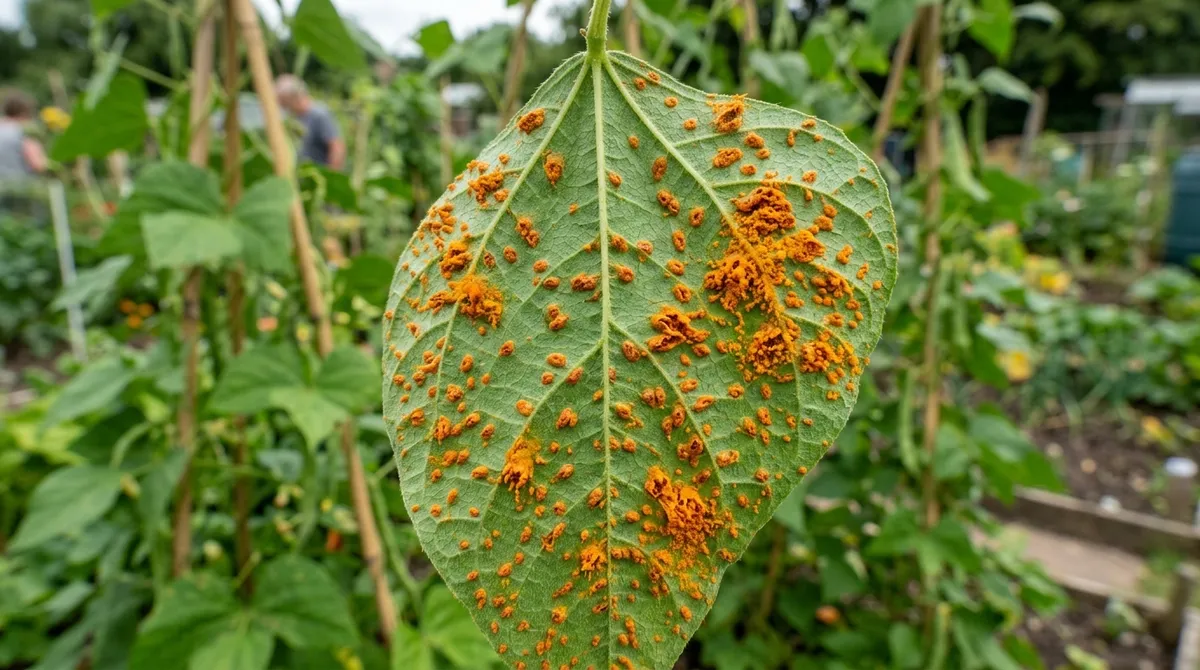
Bean rust produces raised, circular pustules 1-2mm across on the undersides of leaves. These pustules are bright orange-brown and feel rough to the touch. When you brush a finger across them, they release a powdery orange residue. That powder is millions of microscopic urediniospores ready to spread on the wind.
The upper surface of each infected leaf develops a corresponding pale yellow spot directly above the pustule. This yellowing is often the first symptom growers notice, because most people look at the top of the leaf rather than the underside.
As infection progresses, pustules multiply and merge. Heavily infected leaves turn entirely yellow, curl at the edges, dry out, and drop from the plant. The disease works upward from the base of the plant, stripping lower leaves first. By late August in a bad year, badly affected runner beans can lose 60-70% of their foliage.
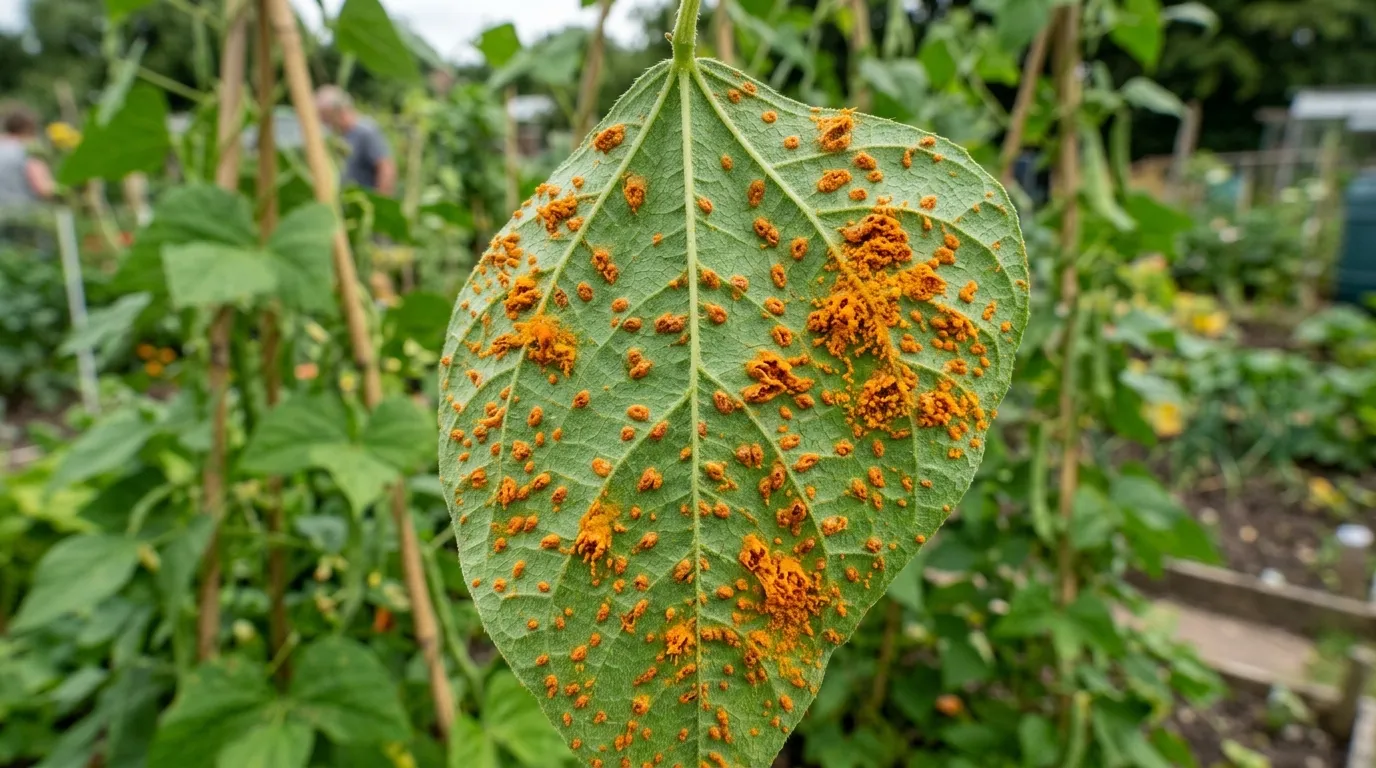
Orange-brown urediniospore pustules on the underside of a runner bean leaf. Each pustule releases spores for 10-14 days before new ones form.
Late in the season, the orange pustules darken to brown and eventually black. These dark structures are teliospores, the overwintering stage of the fungus. They sit on dead stems and fallen leaves through winter, ready to restart the cycle next spring.
Key diagnostic features to distinguish bean rust from other problems:
- Pustules are raised, not flat (unlike bacterial leaf spots)
- Orange powder comes off on fingers (no other bean disease does this)
- Yellow spots on upper leaf surface correspond exactly to pustules underneath
- Pods are rarely affected unless infection is severe
For identification of other rust diseases on different plants, see our rust disease treatment guide.
Which beans are affected by rust?
Runner beans are the most susceptible, followed by French beans, then dwarf beans. Broad beans have their own distinct rust species (Uromyces viciae-fabae) that behaves differently and appears less frequently in UK gardens.
The table below compares susceptibility, timing, and the best resistant varieties for each bean type.
| Bean type | Rust species | Susceptibility | Peak infection | Best resistant varieties | Notes |
|---|---|---|---|---|---|
| Runner beans | U. appendiculatus | High | July-September | Moonlight, White Emergo, Tenderstar | Most affected; dense foliage traps humidity |
| French beans (climbing) | U. appendiculatus | Moderate-high | July-August | Cobra F1, Blauhilde, Helda | Less foliage than runners; quicker to crop |
| Dwarf French beans | U. appendiculatus | Moderate | August-September | Safari, Speedy, Compass | Shorter season often avoids worst period |
| Broad beans | U. viciae-fabae | Low-moderate | June-August | Aquadulce Claudia, The Sutton | Different rust species; autumn-sown crops escape |
Runner beans suffer worst because of their growth habit. A mature wigwam of runner beans creates a dense canopy with poor airflow in the centre. Humidity builds between the leaves, and the lower foliage rarely dries out after rain or dew. This creates ideal conditions for spore germination.
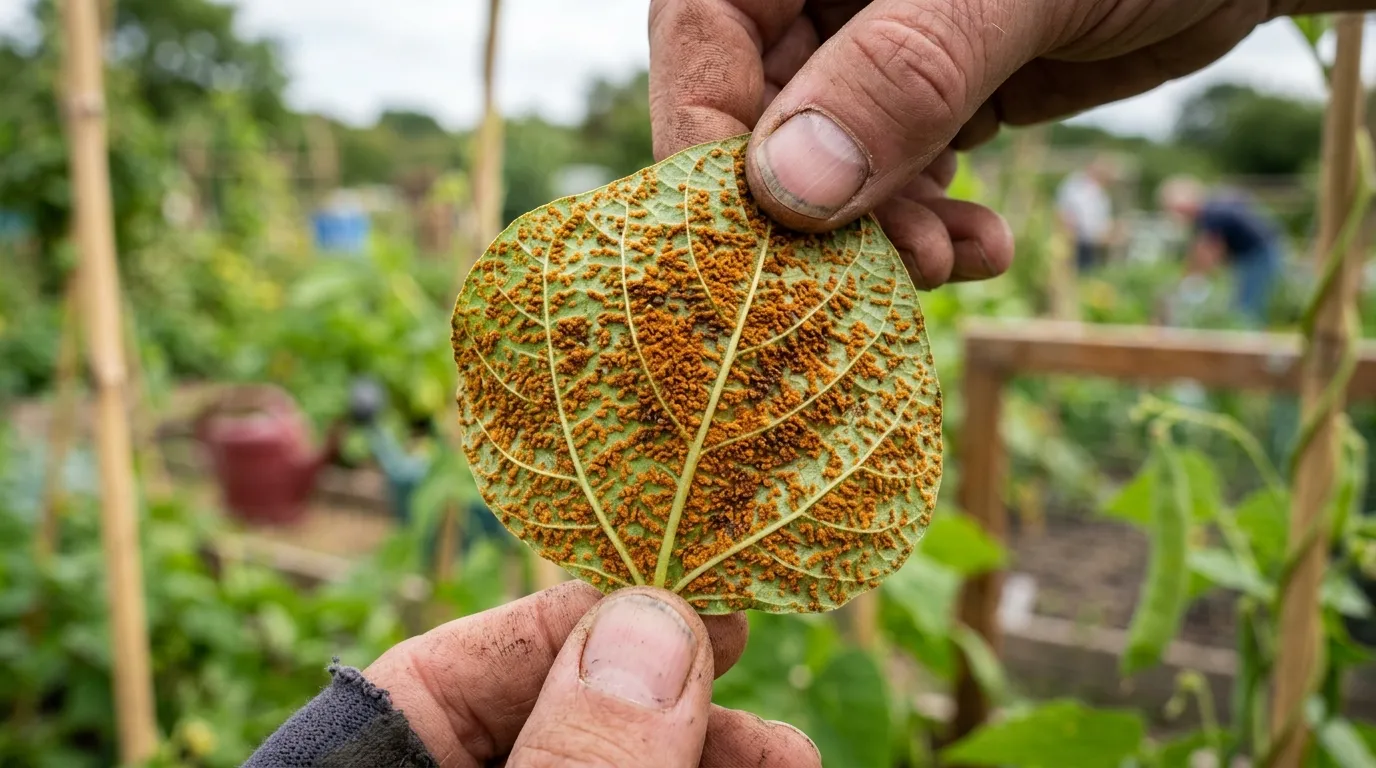
Runner bean leaf showing both fresh orange pustules and older darkening pustules. The yellow patches on the upper surface are visible through the leaf.
French beans crop faster than runners, often producing their main harvest before rust peaks in late August. This natural timing advantage means many French bean growers escape with light infection. Climbing French beans like Cobra F1 also have more open foliage, allowing better air circulation.
Dwarf beans sit low to the ground, which traps moisture, but their short growing season (8-10 weeks from sowing to harvest) means many crops are cleared before rust becomes severe. Successional sowings from May to July spread the risk.
For related growing advice on each bean type, see our guide to borlotti beans. The RHS bean rust profile provides additional identification photographs and regional spread data.
What causes bean rust to spread?
Bean rust needs leaf wetness and warmth to infect. Urediniospores landing on a dry leaf cannot germinate. They need 4-6 hours of continuous moisture at 15-22C to produce a germ tube that penetrates the leaf surface. This is why rust explodes after warm, humid spells and barely appears in dry summers.
The bean rust lifecycle
Understanding the lifecycle helps you target treatments at the right moment.
Stage 1: Overwintering (October to April). Teliospores on dead stems and fallen leaves survive freezing temperatures. They sit dormant until spring warmth triggers germination. Clearing all bean debris in autumn removes this spore reservoir.
Stage 2: Primary infection (May to June). Overwintered teliospores germinate and produce basidiospores that travel on wind to new bean plants. These primary infections are slow to develop because spring is often too cool and dry for rapid spread. The first pustules may take 14-21 days to appear.
Stage 3: Urediniospore cycling (July to September). This is the destructive phase. Each mature pustule releases urediniospores that land on nearby leaves, germinate in 4-6 hours of wetness, and produce new pustules within 10-14 days. The cycle repeats every two weeks, and each generation produces more spores than the last. A single infected leaf in early July can generate millions of spores by late August.
Stage 4: Teliospore formation (September to October). As day length shortens and temperatures drop, the fungus switches from producing urediniospores (orange, spreading stage) to teliospores (dark brown/black, overwintering stage). These thick-walled spores resist cold and desiccation, ensuring the fungus survives to the next growing season.
Conditions that accelerate spread
- Overhead watering. Sprinklers and hosepipes that wet the foliage create the 4-6 hours of leaf wetness that spores need. Base watering eliminates this risk entirely.
- Dense planting. Plants closer than 30cm trap humidity and reduce airflow. The centre of a dense bean wigwam can stay wet for hours after surrounding plants have dried.
- Sheltered positions. Beans grown against walls, fences, or in enclosed courtyards dry slowly after rain.
- Warm humid weather. The ideal range is 15-22C with relative humidity above 80%. British summers hit these conditions regularly from mid-July.
- Infected debris from previous seasons. Leaving old bean stems in place over winter guarantees early infection the following year.
For a broader guide to preventing diseases across all vegetable crops, see our vegetable pests and diseases guide.
How to treat bean rust organically
No organic treatment eliminates bean rust once established. The goal is to reduce severity, slow spread, and maintain enough healthy foliage for a reasonable harvest. Organic management combines physical removal with preventive sprays and cultural practices.
Remove infected leaves immediately
Pick off any leaf showing pustules as soon as you spot it. Put it straight into a bag, not on the compost heap. Each leaf you remove before its pustules mature prevents thousands of spores from spreading. Removing the first 5-10 infected lower leaves in early July can delay severe infection by 3-4 weeks, giving the plant more time to produce beans.
Do not strip more than a third of the plant’s foliage at once. Runner beans need their leaves for photosynthesis. Focus on the worst affected leaves at the base, where infection always starts.
Potassium bicarbonate spray
Potassium bicarbonate disrupts fungal spore germination on the leaf surface. Mix 5g per litre of water with 2ml of liquid soap as a surfactant. Spray the undersides of leaves thoroughly every 7-10 days from late June, before symptoms appear. Once pustules are established, the spray slows further infection but cannot cure existing pustules.
UK allotment trials in the West Midlands showed potassium bicarbonate reduced new pustule formation by 30-40% compared to untreated plants when applied preventively. The effect drops to 10-15% when spraying reactively after heavy infection.
Sulphur-based fungicides
Organic sulphur sprays (available as wettable powder or liquid concentrate) create a hostile surface for spore germination. Apply from late June at 10-14 day intervals. Sulphur is most effective as a preventive measure. Do not apply in temperatures above 30C, as it can scorch foliage.
Milk spray
Some growers use a 1:9 dilution of full-fat milk to water as a foliar spray. The proteins in milk may inhibit fungal growth. Evidence is largely anecdotal for rust (stronger evidence exists for powdery mildew), but it causes no harm and some allotment growers report reduced severity. Spray weekly as a supplement to other methods, not as a standalone treatment.
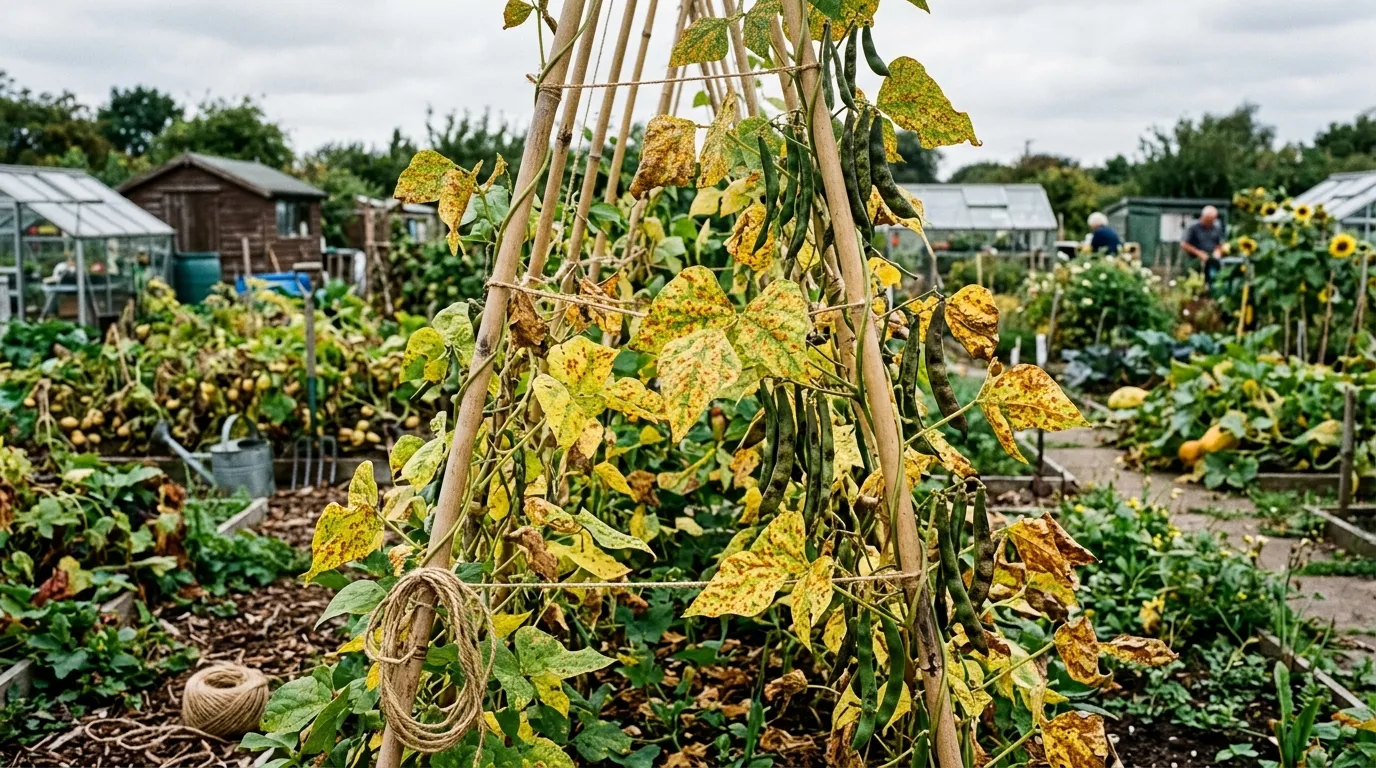
A severely infected runner bean plant stripped of lower foliage by rust. Upper leaves continue producing but yield drops 40-60% compared to healthy plants.
Cultural controls that reduce severity
- Water at the base only. Soaker hoses or drip lines along bean rows eliminate the leaf wetness that spores need. This single change reduces rust severity by 40-50% in trials.
- Mulch with straw or bark. A 5-8cm layer prevents rain splashing soil-borne spores onto lower leaves.
- Feed with potassium-rich fertiliser. Tomato feed (high in potash) toughens cell walls and helps plants resist penetration by germ tubes. Apply fortnightly from June.
- Improve airflow. Thin out dense growth at the base of wigwams. Remove lower leaves that touch each other or the ground, even healthy ones.
For guidance on using beneficial organisms in the garden, see our biological pest control guide.
Chemical treatments for bean rust
No fungicides are specifically approved for rust on edible beans in UK home gardens as of 2026. This limits chemical options to off-label use and general-purpose products. Always check the product label for edible crop restrictions and harvest intervals.
Tebuconazole (Bayer Fungus Fighter)
Tebuconazole is labelled for ornamental rust diseases. Some growers use it on beans, but this is technically off-label use. If you choose to apply it, observe a minimum 14-day harvest interval (do not pick beans for 14 days after spraying). Apply at first sign of infection and repeat every 14 days. It works as both a preventive and a curative treatment on early infections.
Triticonazole (Scotts Fungus Clear Ultra)
Another systemic fungicide labelled for ornamental use. Similar effectiveness to tebuconazole against rust. The same off-label caveats apply for edible crops.
Why chemical options are limited
The UK regulatory framework (HSE CRD) requires specific crop registrations for pesticide use on edible plants. Manufacturers have not sought registration for rust fungicides on beans because the market is too small to justify the cost. This means organic and cultural approaches are the primary options for home growers.
Professional growers with BASIS-qualified advisors can access a wider range of products under Extension of Authorisation for Minor Use (EAMU) permits. These are not available to amateur gardeners.
Rust-resistant bean varieties for the UK
Choosing a resistant variety is the most effective single action against bean rust. A resistant variety eliminates the problem entirely, requiring no sprays, no leaf removal, and no special watering technique.
Resistant runner bean varieties
- Moonlight — white-flowered, stringless. Consistently the most rust-resistant runner bean in UK trials. Heavy cropper producing 25-30cm smooth pods. Performs well in both open ground and containers.
- White Emergo — white-flowered, vigorous. Strong rust resistance with long, flat pods. Heritage variety that has maintained its resistance over decades.
- Tenderstar — red-flowered, stringless. Moderate rust resistance with excellent flavour. A good compromise between traditional appearance and disease tolerance.
Resistant French bean varieties
- Cobra F1 — climbing, round pods. Outstanding rust resistance combined with heavy yields over a long picking season. The benchmark variety for disease resistance.
- Blauhilde — climbing, purple pods that turn green when cooked. Rarely shows any rust symptoms. Vigorous and decorative.
- Helda — climbing, flat romano-type pods. Good rust resistance with a longer harvest window than most climbing French beans.
Resistant dwarf bean varieties
- Safari — fine, round pods. Strong rust resistance and early maturity (55 days from sowing). Ideal for successional sowing.
- Speedy — very early, cropping in 50 days. Avoids rust through speed rather than genetic resistance, but shows good tolerance when infection does occur.
- Compass — round pods, compact plants. Bred for container growing with good rust tolerance.
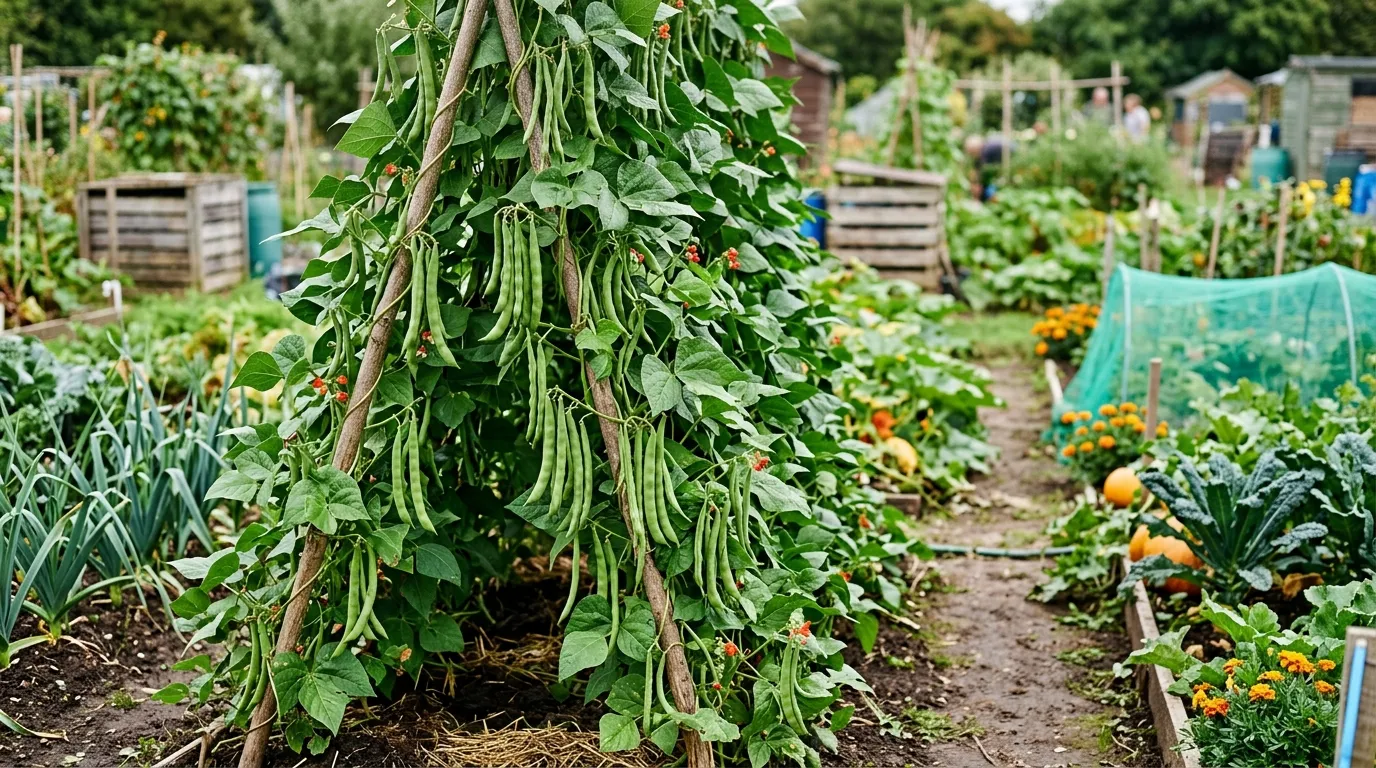
Moonlight runner beans (left) showing clean, healthy foliage next to a susceptible variety with severe rust infection in an August allotment trial.
Varieties to avoid in rust-prone gardens
Scarlet Emperor, Enorma, and Painted Lady are traditional runner bean varieties with poor rust resistance. They remain popular for their red flowers and heritage status, but on allotments with a history of bean rust, they will struggle from July onwards. If you want red flowers and better disease tolerance, try Tenderstar as an alternative.
For advice on pairing bean varieties with companion plants that improve airflow and deter pests, see our companion planting guide.
How to prevent bean rust next season
Prevention starts in autumn, not spring. The single most important action is removing all bean debris at the end of the growing season. Every stem and leaf left on the ground carries teliospores that will reinfect next year’s crop.
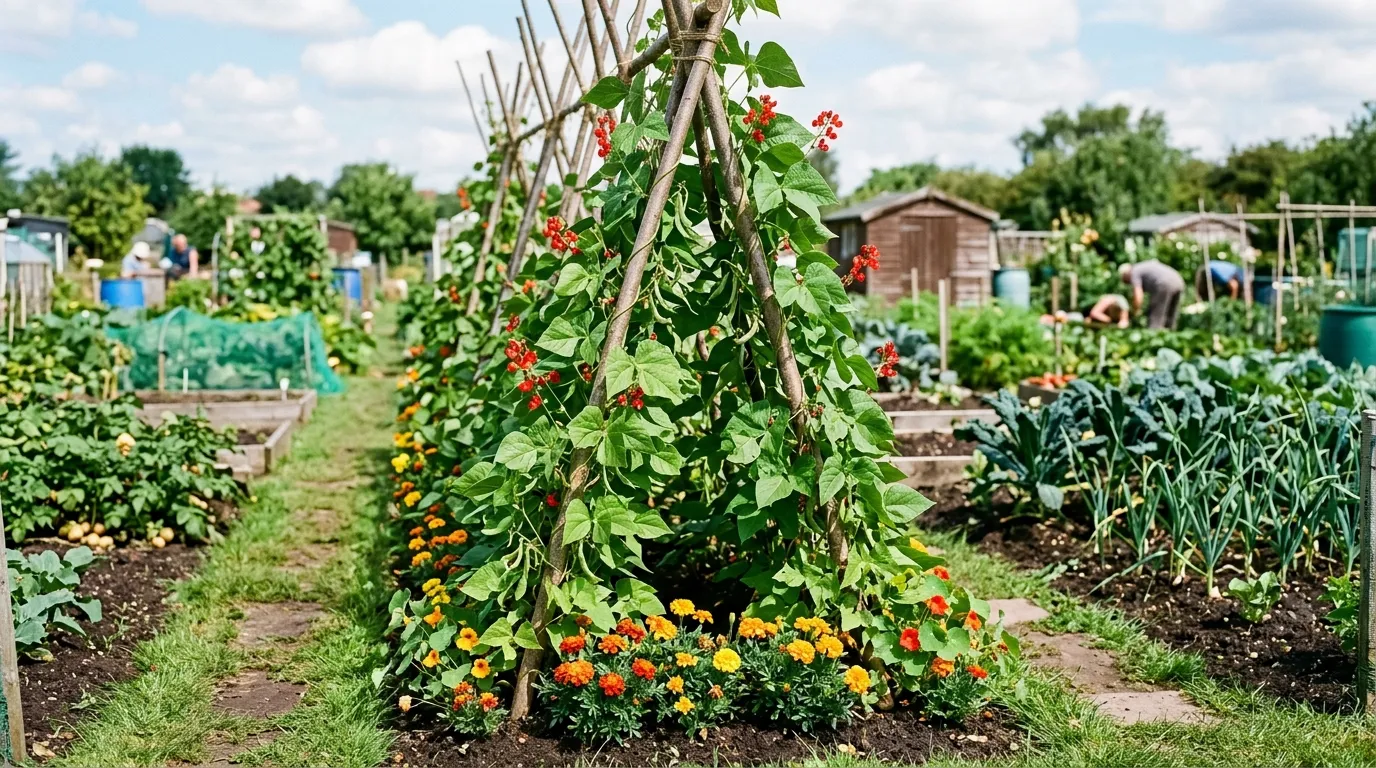
Runner beans spaced at 45cm on a double row with 60cm between rows. This spacing allows airflow to dry foliage quickly after rain.
Autumn and winter actions
- Clear every piece of bean debris. Cut plants at ground level and bag all stems, leaves, and pods. Do not compost unless your heap reaches 60C. Council green waste or burning is safer.
- Clean canes and supports. Wipe bamboo canes and metal frames with a dilute disinfectant (household bleach at 1:10 dilution). Spores cling to rough surfaces and survive the winter.
- Plan crop rotation. Do not grow beans in the same spot for at least 3 years. A 4-year rotation is better. This reduces the soil surface spore load each season.
Spring and summer actions
- Choose resistant varieties. Moonlight (runner), Cobra F1 (French), and Safari (dwarf) avoid rust almost entirely. See the varieties section above.
- Space plants at 45cm. Wider spacing than the traditional 30cm allows air to circulate between plants. This is the cheapest and most effective prevention.
- Install drip irrigation or soaker hoses. Eliminate overhead watering completely. Spores cannot germinate on dry leaves.
- Mulch the base of plants. A 5-8cm layer of straw or bark chips prevents rain splashing spores from the soil onto lower leaves.
- Start preventive sprays from late June. Potassium bicarbonate or sulphur, applied before symptoms appear, reduces infection rates by 30-40%.
- Inspect leaf undersides weekly from mid-June. Early detection and removal of the first infected leaves breaks the spore cycle before it accelerates.
Integrated prevention calendar
| Month | Action |
|---|---|
| October-November | Clear all bean debris. Clean supports. Plan rotation |
| February-March | Order resistant seed varieties. Prepare new bed location |
| May | Sow beans at 45cm spacing. Install soaker hoses |
| Late June | Begin weekly leaf inspections. Start preventive sprays |
| July | Remove any infected leaves immediately. Continue sprays fortnightly |
| August-September | Maintain inspections. Harvest regularly to encourage new growth |
| October | Clear debris immediately after final harvest |
Good hygiene, generous spacing, base watering, and a resistant variety used together make bean rust a non-issue. Any one of these measures helps. All four together virtually eliminate the disease from your plot.
For a complete guide to planning rotations that break disease cycles across all vegetables, see our crop rotation planner. Garden Organic’s bean growing advice covers additional organic approaches to maintaining healthy crops throughout the season.
Frequently asked questions
Can I eat beans from a plant with rust?
Yes, beans from rust-infected plants are safe to eat. The fungus affects leaves and stems but does not contaminate the pods or seeds inside them. Pick beans as normal, discard any pods with visible pustules on the surface, and wash everything before cooking. Yield may be lower because reduced leaf area means fewer nutrients reach developing pods.
Will bean rust kill my plants?
Bean rust rarely kills established plants outright. It weakens them by destroying leaf tissue and reducing photosynthesis, which leads to smaller harvests and earlier senescence. Plants usually continue cropping through moderate infection. Severe cases where 80% or more of foliage is affected can cause total crop failure, but this is uncommon with basic prevention measures in place.
Does bean rust spread to other vegetables?
Bean rust is host-specific and cannot infect other vegetables. Uromyces appendiculatus only attacks Phaseolus species (runner beans, French beans, dwarf beans). Your tomatoes, courgettes, and brassicas are safe. However, broad beans have their own rust species (Uromyces viciae-fabae), so plant them at least 3 metres from other beans to avoid confusion when diagnosing problems. See our common garden plant diseases guide for identification of other fungal infections.
Should I pull up plants with bean rust?
Only pull plants if more than 80% of leaves are infected and no pods remain to harvest. For moderate infections, remove the worst affected lower leaves and let the plant continue cropping. Runner beans in particular will produce new growth from the top that often escapes infection. At the end of the season, remove and destroy all bean debris to prevent overwintering spores.
When should I start checking for bean rust?
Start weekly leaf inspections from mid-June in southern England and early July in the north. Check the undersides of lower leaves first, as rust almost always begins at the base of the plant. Early detection lets you remove the first infected leaves before spores spread to the rest of the plant. By the time pustules are visible on upper leaves, millions of spores have already been released.
Can I compost bean plants with rust?
Only if your compost heap reaches 60C consistently. Rust teliospores (overwintering spores) survive cool compost and reinfect next season’s crop when the compost is spread. Most garden compost heaps do not reach this temperature. Dispose of infected material in council green waste bins or burn it. Never leave infected stems on the ground over winter.
Is there a chemical spray for bean rust in the UK?
No fungicides are specifically approved for bean rust on edible crops in UK home gardens as of 2026. Tebuconazole-based products (Bayer Fungus Fighter) are labelled for ornamental rust and some growers apply them, but this is off-label use on edibles. Potassium bicarbonate and sulphur-based sprays are the only widely accepted options for food crops.
Lawrie has been gardening in the West Midlands for over 30 years. He grows his own veg using no-dig methods, keeps a wildlife-friendly garden, and writes practical advice based on real UK growing conditions.