Key takeaways
- Dual-purpose crop: eat fresh as shell beans in summer or dry on the plant for winter storage
- Sow indoors in May or direct outdoors in early June after the last frost date
- Climbing varieties reach 2 metres and need bamboo canes, wigwams, or trellis supports
- Lingua di Fuoco is the most reliable variety, yielding 400-500g of dried beans per plant
- Fresh shell beans are ready from late July, dried beans from mid-September onwards
- Store fully dried beans in airtight glass jars for 2 or more years at room temperature
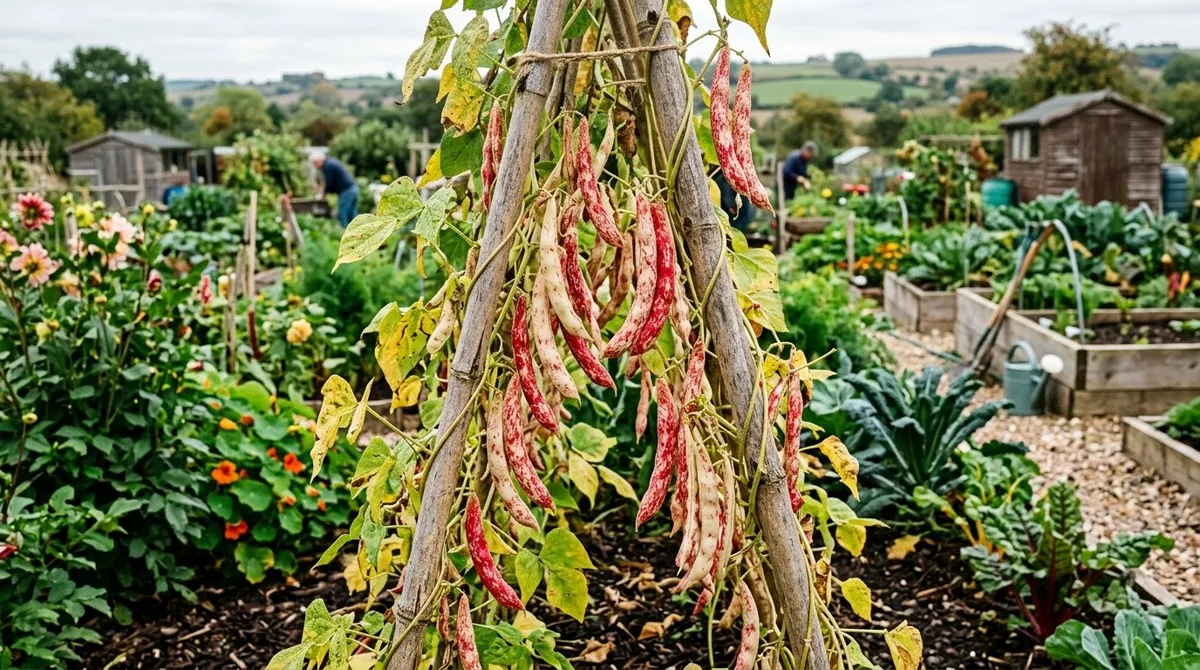
Borlotti beans are the most beautiful thing you can grow on a cane wigwam. The pods are streaked crimson and cream. The beans inside are speckled like quail eggs. And unlike runner beans, which demand eating within hours of picking, borlotti beans give you a choice. Eat them fresh in summer as creamy shell beans, or leave them on the plant until autumn and store dried beans in glass jars for soups and stews all winter.
This dual-purpose nature makes borlotti beans uniquely valuable in a UK kitchen garden. One sowing in May provides fresh meals in July and August, then a larder full of dried protein from September onwards. Italian cooks have known this for centuries. British gardeners are only just catching on. If you already grow runner beans and French beans, borlotti beans are the natural next step.
Which borlotti bean varieties grow best in the UK?
Three varieties dominate UK seed catalogues, each with slightly different growth habits and culinary qualities.
Lingua di Fuoco (Tongue of Fire) is the classic climbing borlotti and the one to start with. Vigorous plants reach 2 metres. Pods are spectacular: cream streaked with vivid red flames. Each plant produces 15-25 pods containing 4-6 beans each. Dried yield averages 400-500g per plant. The flavour is rich, nutty, and earthy when dried. It holds its shape in slow-cooked dishes. Available from most UK seed suppliers including Franchi, Seeds of Italy, and Real Seeds.
Borlotto di Vigevano is an Italian heirloom with slightly rounder beans and a creamier texture when cooked. The pods are less dramatically coloured than Lingua di Fuoco but the eating quality is arguably superior. It produces a similar yield and grows to the same height. Harder to find in UK catalogues but worth sourcing from specialist Italian seed suppliers.
Taylor’s Horticultural is the dwarf bush alternative, growing to just 50cm tall without supports. Pods are pink-speckled and smaller than the climbing types. Yield per plant is lower, roughly 200-250g of dried beans. The advantage is simplicity. No canes, no training, and a more compact footprint. Ideal for container growing and smaller gardens.
| Variety | Type | Height | Dried Yield Per Plant | Pod Colour | Best For |
|---|---|---|---|---|---|
| Lingua di Fuoco | Climbing | 2m | 400-500g | Red and cream flames | Main crop, drying |
| Borlotto di Vigevano | Climbing | 2m | 400-500g | Pink speckled | Italian dishes, cream texture |
| Taylor’s Horticultural | Dwarf bush | 50cm | 200-250g | Pink speckled | Small gardens, containers |
When and how to sow borlotti beans
Borlotti beans are tender. Frost kills them instantly. Timing the sowing correctly is the single most important factor in getting a good crop in the UK.
Indoor sowing in May
Sow one seed per 8cm pot filled with multipurpose compost. Push the bean 4-5cm deep and water well. Place on a bright windowsill or in a greenhouse at 15-20C. Seeds germinate in 7-10 days. Grow on until plants have two pairs of true leaves, then harden off for a week before planting out after the last frost. In the Midlands, this means late May at the earliest. Northern gardeners should wait until the first week of June.
Direct outdoor sowing in June
Once soil temperature reaches 12C and all frost risk has passed, sow seeds 5cm deep and 15cm apart at the base of pre-erected supports. Thin to 20cm spacing once seedlings establish. Direct sowing avoids root disturbance but gives a later start. In shorter-season areas, indoor sowing is the safer option.
Soil and position
Borlotti beans need full sun and reasonably fertile, well-drained soil. Dig in garden compost or well-rotted manure the previous autumn. Avoid freshly manured ground, which promotes leaf growth at the expense of pods. A sheltered spot out of strong wind protects the tall climbing plants and their supports. Follow crop rotation principles and do not plant beans where legumes grew the previous year.
Supporting climbing borlotti beans
Climbing borlotti beans need sturdy supports from planting day. The plants twine anticlockwise around anything they can grip and pull hard when laden with heavy pods.
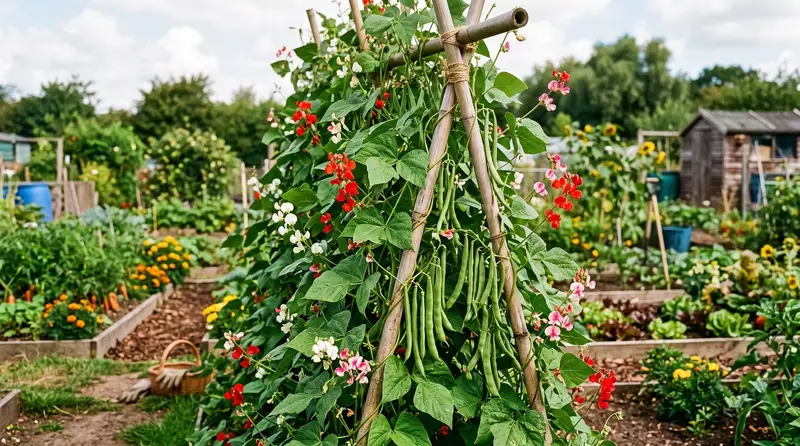
Bamboo cane wigwams are the simplest option. Push 7-8 canes in a circle 60cm across, angled inward, and tie firmly at the top. Plant one bean at the base of each cane. The wigwam shape gives excellent stability in wind. Our guide to runner bean supports covers wigwam construction in detail.
Row supports use two parallel rows of canes crossed at the top with a horizontal pole along the ridge. This works better for larger plantings. Space rows 60cm apart with canes every 20cm. Tie every joint firmly with garden string.
Trellis and netting fixed to a sunny wall or fence works in smaller gardens. The beans climb the mesh and the wall provides warmth and shelter. Ensure the trellis is at least 2 metres tall.
Young plants sometimes need guidance to find the supports. Twist the leading shoot gently around the cane base when it reaches 15cm tall. After that, the tendrils grip on their own.
Growing borlotti beans through the season
Once established and climbing, borlotti beans need little intervention. The plants are vigorous and largely self-sufficient.
Watering
Water well during flowering and pod development, roughly July and August. Drought at flowering stage causes poor pod set and empty shells. A good soaking twice a week during dry spells is better than daily sprinkling. Mulch the base of plants with garden compost to retain soil moisture and suppress weeds.
Feeding
Pinching out
Once climbing plants reach the top of their supports, pinch out the growing tips. This directs energy into pod production rather than more leafy growth. It also prevents plants becoming top-heavy and pulling over their canes.
Harvesting borlotti beans fresh and dried
The dual harvest is what makes borlotti beans special. You get two crops from one sowing.
Fresh shell beans (July to August)
Pick pods when they are plump, filled out, and showing red streaks. The pods should still be slightly flexible. Shell by splitting the pod along the seam and pushing out the beans with your thumb. Fresh borlotti beans are cream-coloured with pink speckles. They cook in 20-30 minutes without soaking. The texture is creamy and the flavour is mild, almost chestnut-like. Use in pasta, risotto, salads, and the classic Tuscan soup ribollita.
Fresh shell beans do not keep. Use within 2-3 days of picking. They freeze well: blanch for 2 minutes, cool in iced water, and freeze flat on a tray before bagging.
Dried beans (September to October)
Leave remaining pods on the plant past maturity. Stop watering. The pods dry and turn papery brown. The beans inside harden and the speckled markings deepen. Harvest when pods rattle when shaken. If wet autumn weather arrives before pods dry fully, cut entire plants at the base and hang upside down in a dry, ventilated shed or garage.
Shell dried pods by hand. Spread beans on a tray indoors for 7-10 days to ensure complete dryness. Test by biting one. It should be rock hard and crack, not dent. Fully dried beans store in airtight glass jars at room temperature for 2 or more years. Label with the variety and year. Garden Organic has additional guidance on growing and preserving beans in UK conditions.
Cooking with borlotti beans
Borlotti beans are one of the great staples of Italian cooking. Dried beans need overnight soaking (8-12 hours in cold water), then a 60-90 minute simmer until tender. Never add salt to the cooking water. Salt toughens the skins. Season after cooking.
Classic dishes include pasta e fagioli (pasta and bean soup), ribollita (Tuscan bread and vegetable soup), and simple bean salads dressed with olive oil, lemon, and fresh herbs. Borlotti beans hold their shape in slow-cooked casseroles and stews better than most other dried beans.
For a quick meal, drain a jar of your home-dried beans after soaking and simmer with tinned tomatoes, garlic, rosemary, and a splash of olive oil. Season with salt, pepper, and chilli flakes. Serve on toasted sourdough. The flavour of home-grown, home-dried borlotti beans is noticeably richer and nuttier than anything from a supermarket tin.
The beans are high in protein (21g per 100g dried), fibre, iron, and folate. They are a genuine staple food, not just a garden novelty. Growing enough to fill six or eight jars gives you a meaningful contribution to the winter larder. Combined with stored root vegetables, you have the basis for dozens of satisfying meals.
Common problems growing borlotti beans
Borlotti beans share the same pest and disease issues as French beans and other Phaseolus vulgaris types.
Slugs and snails attack seedlings at ground level, especially in wet springs. Protect transplants with slug control for the first 2-3 weeks until stems toughen. Once plants are climbing, slugs are rarely a problem.
Black bean aphid clusters on shoot tips and young pods. Pinch out badly infested tips and wash off with a strong water jet. Encourage ladybirds and hoverflies which eat aphids in large numbers.
Bean rust causes small, orange-brown pustules on leaves. Remove affected foliage promptly. Avoid overhead watering. Space plants properly for air circulation. Severe outbreaks shorten the season but rarely kill established plants.
Late frost kills young plants outright. Always wait until after the last frost before planting out. A fleece jacket on hand for unexpected late frosts in early June is cheap insurance.
Poor pod set results from drought during flowering or cold nights below 12C. Water well through July and plant in a sheltered spot where night temperatures stay above 12C.
Frequently asked questions
When should I sow borlotti beans in the UK?
Sow borlotti beans indoors in May or direct outdoors in early June. They are tender and die at the first touch of frost. Indoor sowing in 8cm pots on a warm windowsill gives a 3-4 week head start. Transplant outside after the last frost date for your area, typically late May in southern England or early June in the Midlands and North.
Can I grow borlotti beans in the UK climate?
Yes, borlotti beans grow well across most of the UK. They need the same conditions as runner beans and French beans. A warm, sheltered spot in full sun is ideal. Southern and Midlands gardens produce the most reliable dried harvests. Northern gardeners may need to finish drying pods indoors if autumn arrives early.
What is the difference between fresh and dried borlotti beans?
Fresh shell beans are creamy and tender with a 20-minute cooking time. Pick them when pods are plump and pink-speckled but still slightly flexible. Dried beans are harder, nuttier, and need overnight soaking before a 60-90 minute simmer. Fresh beans taste like a different vegetable entirely. Both are superb in Italian cooking.
How do I dry borlotti beans for storage?
Leave pods on the plant until they turn brown, papery, and rattle when shaken. This typically happens in September or October. If wet weather threatens, cut entire plants at the base and hang upside down in a dry, airy shed to finish. Shell dried pods by hand. Spread beans on a tray for a week indoors to ensure they are bone dry before jarring.
How long do dried borlotti beans store?
Properly dried borlotti beans store for 2 or more years in airtight glass jars. Keep jars in a cool, dark cupboard at room temperature. Beans that are not fully dry when stored will develop mould within weeks. Test by biting a bean: it should be rock hard and crack rather than dent.
What is the best borlotti bean variety for the UK?
Lingua di Fuoco (Tongue of Fire) is the most widely grown and reliable UK variety. It produces heavy crops of red-speckled pods on vigorous climbing plants. Borlotto di Vigevano has a slightly milder flavour and cooks to a creamier texture. Taylor’s Horticultural is the best dwarf bush option at 50cm tall.
Do borlotti beans need supports?
Climbing varieties need 2-metre supports of bamboo canes, wigwams, or trellis. Push canes firmly into the soil and tie at the top. Young plants need training to find the canes initially. Dwarf bush varieties like Taylor’s Horticultural need no support but produce smaller yields. Climbing types yield roughly double per plant.
Our team produces practical UK gardening guidance from source research, contributor records and established horticultural practice. Editorial standards are overseen by Matt W.