Key takeaways
- Ben Sarek stays under 1.2m tall and yields 4.5kg per bush, the top pick for small UK gardens
- Ben Hope carries the Ce gene for gall mite resistance, the only Ben variety bred specifically against the pest
- Ben Lomond delivers the heaviest crop at 5.5kg per established bush, ripening late July
- Big Ben produces the largest berries at up to 16mm diameter, double the size of older varieties
- Plant bare-root bushes from October to March at 1.5m spacing in moisture-retentive soil with full sun
- Pick from mid-July (Ben Connan) through to mid-August (Ben Tirran), giving a 5-week harvest window
Ben Hope is the best all-round blackcurrant for many UK gardens because it combines gall-mite resistance with reliable cropping. Ben Sarek suits smaller spaces, Ben Tirran extends the season and Big Ben offers larger dessert fruit. The right choice depends on available space, ripening time and local pest pressure.
This guide compares eight widely sold UK blackcurrant cultivars using breeder information, published resistance data, plant size and ripening dates. You will find a full variety comparison table, per-variety reviews and a clear recommendation for the best all-round Ben. For step-by-step planting and pruning, pair it with our guide to growing redcurrants and blackcurrants.
What makes a good blackcurrant variety for UK gardens?
Four traits separate a top blackcurrant from a poor one: yield, gall mite resistance, plant size, and ripening date. Flavour matters too, but every Ben variety tastes good. The differences in pest tolerance and crop weight are far larger than any flavour gap.
Yield sits between 3kg and 5.5kg per established bush across the named varieties. Ben Lomond and Ben Alder hit the top of that range on rich, deep soil. Older varieties like Baldwin manage only 2.5-3kg.
Gall mite resistance is the single most important trait for long-term success. The pest Cecidophyopsis ribis causes swollen big buds, kills shoots, and spreads reversion virus, which permanently destroys cropping. Ben Hope, Ben Gairn, Big Ben and Ebony all carry the Ce gene bred from a wild gooseberry relative at the James Hutton Institute in Dundee.
Plant size determines how many bushes fit your space. Ben Sarek stays under 1.2m tall and 1.2m wide. Ben Lomond reaches 1.8m in both directions. The compact varieties suit cages and small gardens; the larger ones repay an open kitchen garden with bigger total crops.
Ripening date spans five weeks from mid-July (Ben Connan, Ben Gairn) to mid-August (Ben Tirran). Planting one early, one mid, and one late variety gives a steady picking run rather than a single overwhelming week.
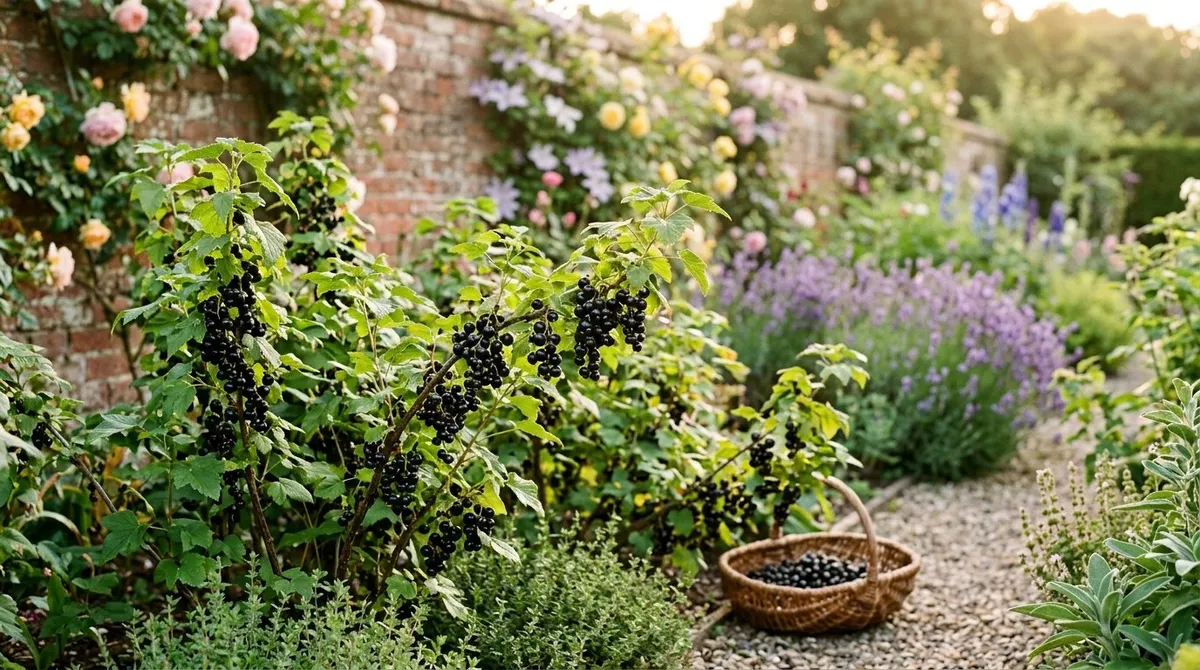
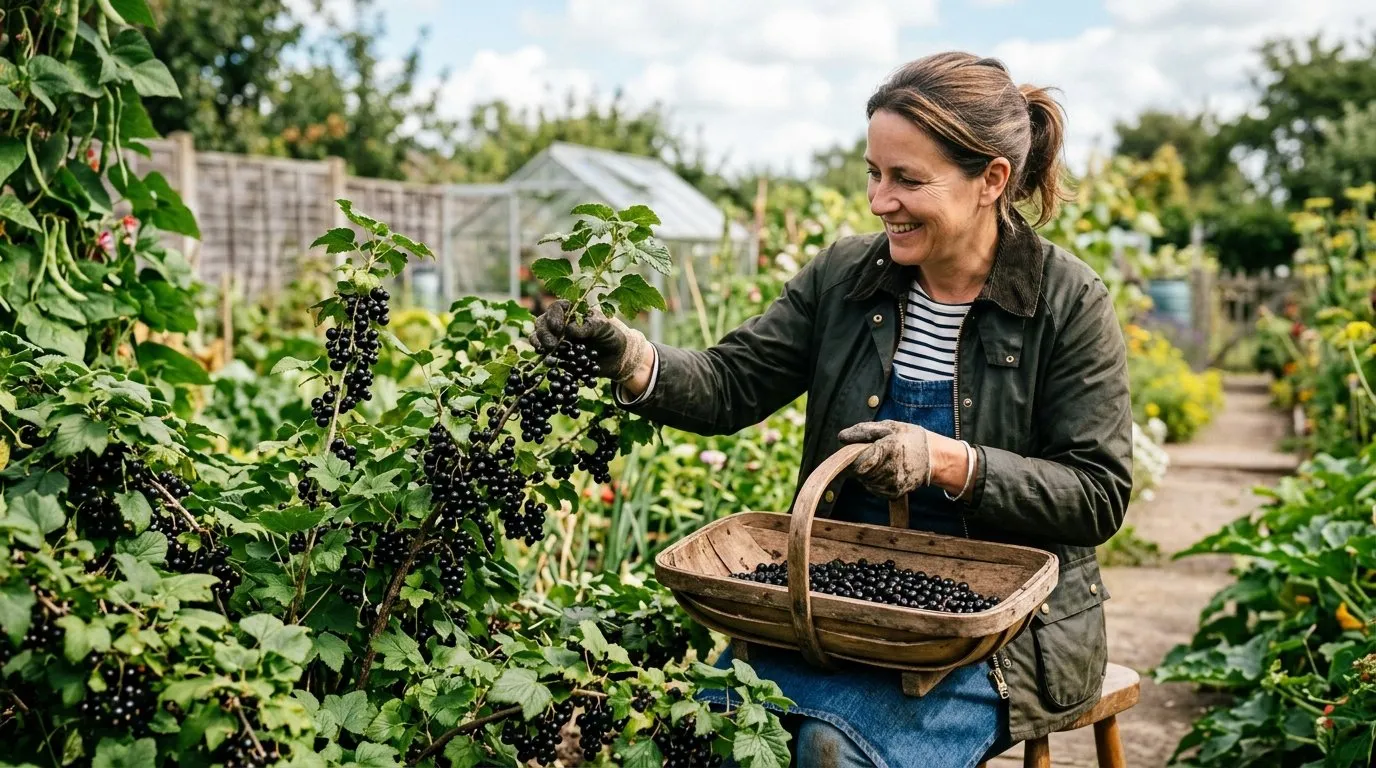 Mature blackcurrant bushes ready for picking in late July, the peak harvest window for most named UK varieties
Blackcurrant variety comparison table
| Variety | Type | Ripening | Yield/bush | Plant size | Gall mite resistance | Mildew resistance | Best for |
|---|---|---|---|---|---|---|---|
| Ben Sarek | Modern, James Hutton | Late Jul | 4.5kg | 1.2m | Moderate | Good | Small gardens, cages |
| Ben Lomond | Modern, James Hutton | Late Jul | 5.5kg | 1.8m | Low | Moderate | Heavy yields, jam |
| Ben Hope | Modern, James Hutton | Mid Jul | 4.5kg | 1.7m | High (Ce gene) | Good | Pest-prone sites |
| Ben Connan | Modern, James Hutton | Mid Jul | 4.0kg | 1.4m | Moderate | Good | Flavour, fresh eating |
| Ben Tirran | Modern, James Hutton | Mid Aug | 4.0kg | 1.7m | Moderate | Good | Late season, frost areas |
| Big Ben | Modern, James Hutton | Mid Jul | 4.0kg | 1.7m | High (Ce gene) | Very good | Largest berries, dessert |
| Ebony | Modern, East Malling | Late Jul | 3.5kg | 1.5m | Moderate (partial Ce) | Good | Sweet, fresh eating |
| Titania | Modern, Swedish | Late Jul | 4.5kg | 1.8m | Moderate | Very good | Mildew-prone sites |
Per-variety reviews of the eight best blackcurrants
Ben Sarek
Bred at the James Hutton Institute (then Scottish Crop Research Institute) and released in 1986, Ben Sarek is the gold standard compact blackcurrant. The bush stays at 1.2m tall and 1.2m wide, half the volume of Ben Lomond, yet still yields 4.5kg of berries per season. The fruit is medium-sized at 11-12mm with a balanced sweet-sharp flavour.
Ben Sarek tolerates frost pockets better than most modern Bens because it flowers a few days later. The branches are short and stout, so the crop rarely needs propping. Mildew resistance is good. Gall mite resistance is moderate, not high.
Pros: small bush, heavy crop for size, tolerant of late frost, reliable across the UK. Cons: not gall mite resistant, fruit ripens unevenly so several pickings needed. Where to buy: Blackmoor Nurseries, Ken Muir, Pomona Fruits.
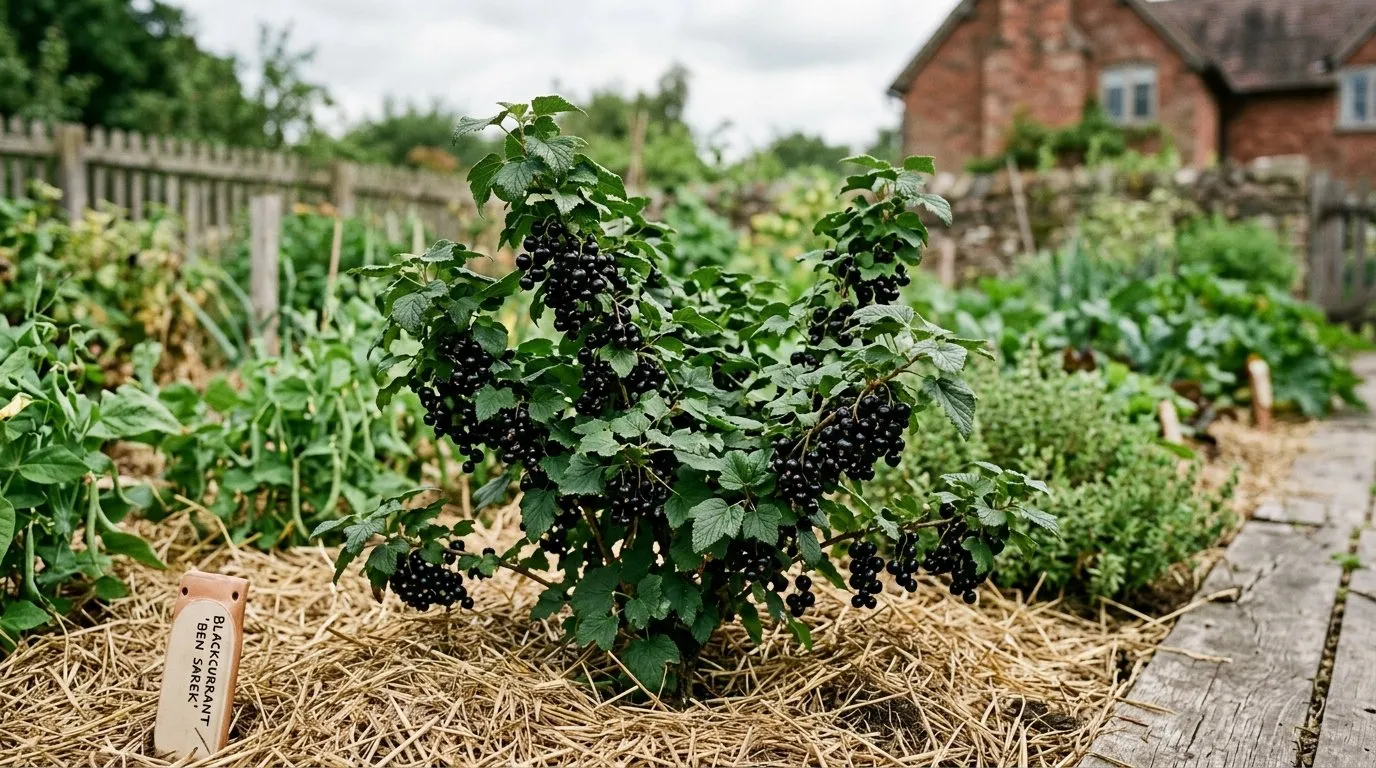 Ben Sarek stays compact at 1.2m, fitting four bushes into a 4m stretch of fruit cage
Ben Lomond
Released in 1972 from the Scottish breeding programme, Ben Lomond is the classic high-yield variety. Its large berries have a strong, sharp blackcurrant flavour suited to jam and cordial. Ben Lomond was the first Ben.
The downside is gall mite susceptibility. On sites where big bud or reversion has occurred, choose resistant certified stock instead. On a clean site with no local infestation, Ben Lomond remains a strong choice for heavy crops.
Pros: highest yield, large berries, classic flavour, good drought tolerance once established. Cons: susceptible to gall mite and reversion, late spring frost can damage early flowers. Where to buy: Pomona Fruits, RV Roger, Marshalls Garden.
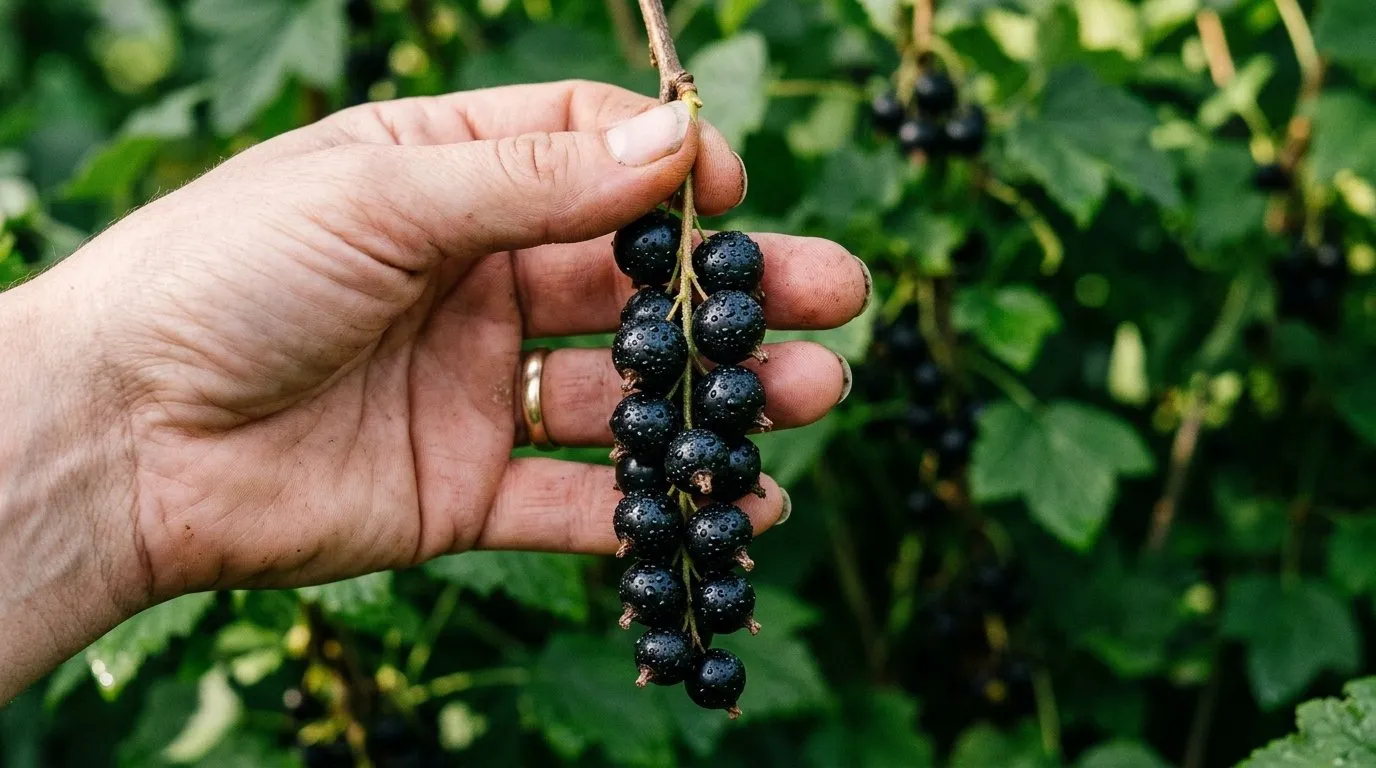 Ben Lomond’s large berries hang in heavy strigs and suit jam, cordial and freezing
Ben Hope
Ben Hope is the safest all-round choice where gall mite is a concern. Released in 1998, it carries the Ce gene for gall mite resistance. The James Hutton Institute’s Ben Hope profile describes high resistance and consistent yields, while its gall mite guidance reports substantially lower susceptibility than standard cultivars.
Yield sits at 4.5kg per bush of 11-12mm berries with good flavour for both fresh eating and processing. The bush is upright and vigorous, reaching 1.7m. Mildew resistance is good. Ben Hope ripens mid-July, a few days earlier than Ben Lomond.
Pros: strong gall mite resistance, reliable cropper, good across all UK regions. Cons: vigorous so needs annual pruning, slightly tarter than Ben Connan or Big Ben. Where to buy: Blackmoor Nurseries, Pomona Fruits, Suttons Seeds.
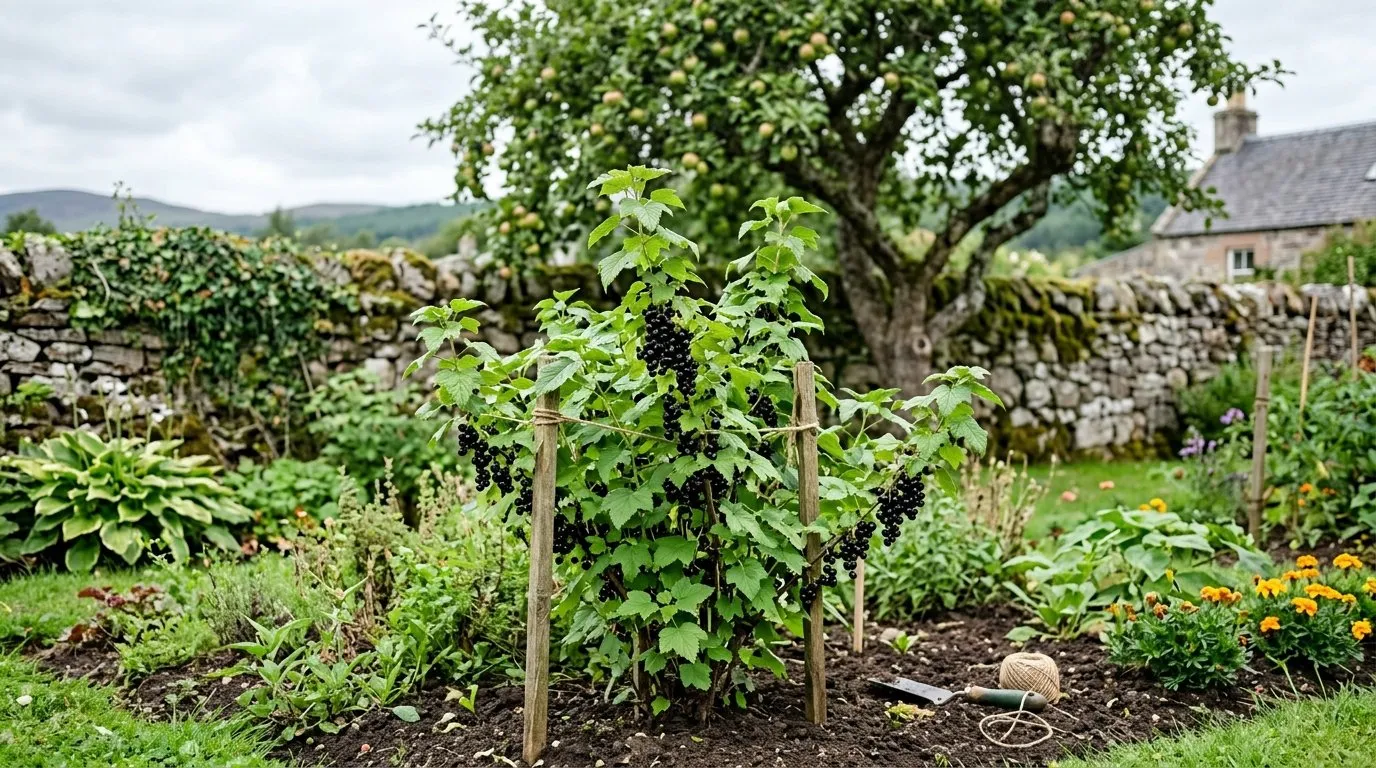 Ben Hope’s clean foliage in late August, with no powdery mildew despite a wet summer
Ben Connan
Ben Connan is the best-flavoured Ben and the early-season pick of the Hutton range. Released in 1990, it ripens from the third week of July, a week before Ben Lomond. The berries are large at 12-14mm with the highest sugar content of any Ben at around 13.5 Brix, sweet enough to eat off the bush.
Yield is 4kg per established bush, slightly behind Ben Lomond but well ahead of older varieties. The bush is compact at 1.4m and good for medium gardens. Gall mite resistance is moderate; mildew resistance is good.
Pros: sweetest flavour of any Ben, large early berries, compact bush, good disease tolerance. Cons: slightly lower yield than Ben Lomond, less gall mite resistance than Ben Hope. Where to buy: Blackmoor Nurseries, Ken Muir, Chris Bowers.
Ben Tirran
Ben Tirran is the latest-ripening Ben and the right pick for frost-prone gardens or northern UK sites. It flowers two weeks after Ben Sarek, dodging the late April frosts that wipe out earlier varieties. The fruit ripens from mid to late August, extending the picking season by 3-4 weeks.
Yield is 4kg per bush of medium 11mm berries with a sharp, traditional flavour. The bush reaches 1.7m. Gall mite and mildew resistance are both moderate. Ben Tirran handles wet, cool summers better than any other Ben because of its later flowering and slower ripening.
Pros: latest ripening, frost-tolerant, good for Scotland and northern England. Cons: sharper flavour, less suited to fresh eating, mid-grade pest resistance. Where to buy: Pomona Fruits, RV Roger, Blackmoor Nurseries.
Big Ben
Big Ben produces the largest blackcurrants of any UK variety, up to 16mm across. Released in 2005, it crosses Ben Lomond with a Hutton selection carrying the Ce gene. The result is a dessert blackcurrant: sweet, mild, and large enough to eat fresh from the bowl.
Yield is 4kg per bush. Each strig holds 8-10 berries instead of the 12-15 of smaller Bens. The bush reaches 1.7m. Big Ben carries strong gall mite resistance and very good mildew resistance, making it one of the cleanest-growing Bens.
Pros: largest fruit, sweet enough for dessert, strong disease resistance. Cons: total crop weight similar to Ben Connan despite larger berries, fewer suppliers stock it. Where to buy: Blackmoor Nurseries, Marshalls Garden, Thompson and Morgan.
Ebony
Ebony is a sweet, fresh-eating blackcurrant bred at East Malling Research in Kent and released in 2003. It is one of the few non-Hutton modern varieties worth growing. The fruit is medium at 12mm with a sugar level around 14 Brix, the sweetest of any UK blackcurrant.
Yield is 3.5kg per established bush, lower than the Bens but the flavour rewards a smaller crop. The bush is moderate at 1.5m. Gall mite resistance is partial. Mildew resistance is good.
Pros: sweetest blackcurrant for fresh eating, attractive glossy fruit. Cons: lower total yield, partial pest resistance only. Where to buy: Blackmoor Nurseries, Pomona Fruits, Chris Bowers.
Titania
Titania is a Swedish-bred blackcurrant introduced to the UK in the late 1990s. It produces sharp, traditional-flavoured berries and was selected for cold-climate hardiness and strong mildew resistance.
The bush is large and vigorous at 1.8m, similar to Ben Lomond. Gall mite resistance is moderate. Titania performs best on rich, moist soils. It is the right pick for high-rainfall western gardens where mildew strikes hardest.
Pros: very strong mildew resistance, hardy, good crop weight. Cons: large bush, only moderate gall mite resistance. Where to buy: Pomona Fruits, Suttons Seeds, RV Roger.
Why Ben Hope is the best all-round choice
Ben Hope combines strong gall mite resistance with consistent yields and good mildew resistance. That balance matters more than chasing the maximum theoretical crop from a susceptible variety. Buy certified stock and pair Ben Hope with Ben Sarek where space is tight, or Big Ben where larger dessert berries are the priority.
Ben Hope is not the highest-cropping (Ben Lomond holds that title on a clean site) and not the sweetest (Ben Connan and Ebony win on flavour). But for any garden with a history of soft fruit, or any allotment where neighbouring plots may carry gall mite, Ben Hope is the only safe long-term choice. Pair it with Ben Sarek for a small garden or with Big Ben if you want the largest berries.
How to grow blackcurrants for the heaviest crop
This guide focuses on variety choice. For the full planting and pruning method, read our companion guide on growing redcurrants and blackcurrants. The short version follows.
Plant bare-root bushes from October to March at 1.5m spacing in moisture-retentive soil with full sun. Bury the stems 5cm deeper than the nursery mark to encourage new shoots from below ground. Mulch with 8cm of well-rotted manure each spring.
Prune from year two onwards in late winter. Remove a third of the oldest stems at ground level each year. Blackcurrants fruit on one and two-year-old wood, so the goal is constant renewal. A bush should hold 8-12 stems split roughly equally between the three age classes.
Feed with potassium sulphate at 35g per square metre in February. Top up with 70g per square metre of fish, blood and bone in March. Water deeply during dry spells in May and June when the fruitlets swell, applying 20 litres per bush per week.
Net the bushes from late June with 15mm mesh. Bullfinches strip flower buds in winter and blackbirds take ripe fruit in July. A permanent fruit cage solves both problems for several bushes at once.
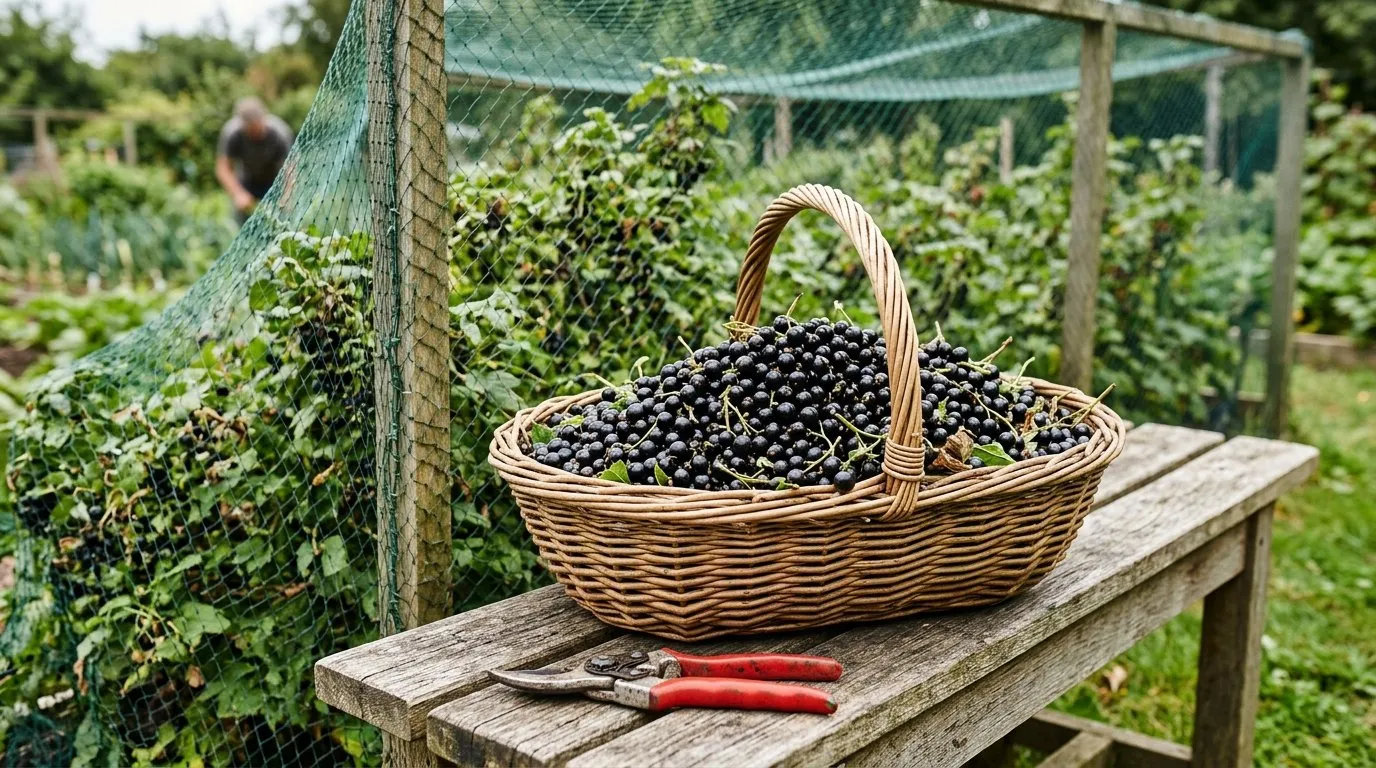 Freshly picked blackcurrants ready for sorting after a mid-summer harvest
Gall mite and reversion virus, the variety-killer
The gall mite Cecidophyopsis ribis is the worst pest of blackcurrants in the UK. It feeds inside dormant buds, causing them to swell into rounded “big buds” instead of opening into shoots. Each infested bud produces no fruit and releases thousands of mites in spring that travel on wind to fresh buds.
Worse, gall mite spreads blackcurrant reversion virus (BRV), which permanently reduces yields. Infected bushes lose flower trusses, leaves narrow and become deeply lobed, and the plant declines over 2-3 seasons. There is no cure for reversion. The only response is to dig up infected bushes, burn them, and replant on a fresh site with certified stock.
The Ce gene resistance in Ben Hope, Ben Gairn, Big Ben and Ebony does not stop the mite from landing. It prevents the mite from establishing successfully inside the bud. The James Hutton Institute’s Ben Hope profile identifies resistance to gall mite and reversion disease as key breeding traits.
Inspect bushes every February and pick off any swollen rounded buds by hand. Bag and burn them; do not compost. Replace any bush showing more than 20% infested buds. Buy only from suppliers with the Defra Plant Health certified stock scheme.
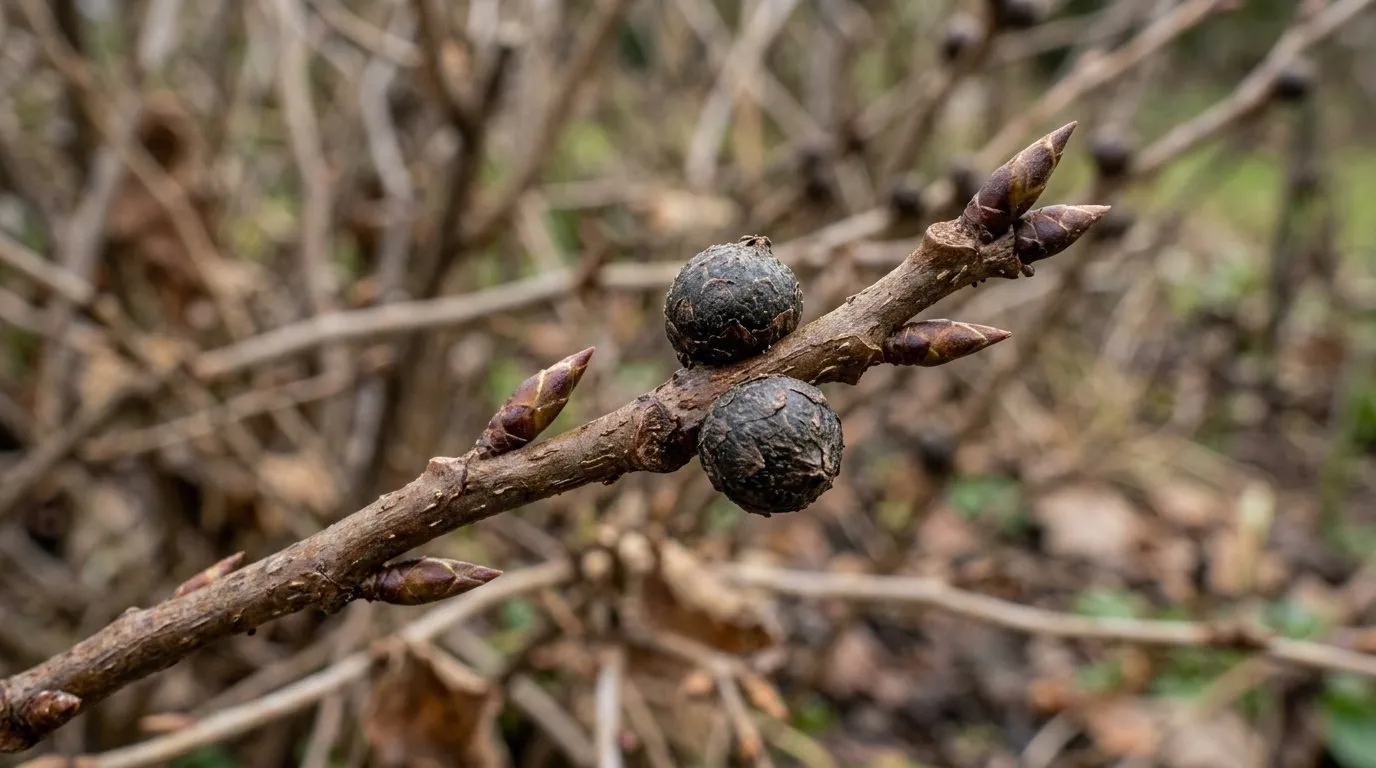 Swollen “big buds” caused by gall mite, alongside the slim pointed buds of a healthy stem
Common mistakes when picking blackcurrant varieties
Planting on the same site as old blackcurrants. Gall mite, sawfly larvae, and replant fungi build up in soil. New bushes on the old site fail to establish. Move at least 5m away or replant after a 4-year break with a different fruit type.
Choosing only one variety. A single cultivar gives a single one-week harvest window. Three varieties (early, mid, late) spread the crop over five weeks and reduce reliance on a single ripening date that the weather may ruin.
Buying uncertified stock. Garden centre bushes from unknown sources may already carry reversion virus. Always buy from specialists running the Defra certified scheme: Blackmoor Nurseries, Ken Muir, Pomona Fruits, RV Roger, Chris Bowers.
Ignoring local gall mite history. If a neighbour grows blackcurrants and reports big bud, plant Ben Hope only. The Ce gene is the only reliable defence. Ben Lomond on the same site will fail within five years.
Underplanting the area. Blackcurrants need full sun and rich, moist soil to crop heavily. Squeezing them between trees or against shaded fences cuts yields by 30-40%. Give each bush a 2m diameter clear circle of sunny ground.
Gardener’s tip: Test soil pH before planting. Blackcurrants prefer slightly acidic soil at pH 6.0-6.5. On chalky alkaline soils above pH 7.5, leaves yellow and yields drop by half. Apply elemental sulphur at 70g per square metre to drop pH gradually over a season.
Month-by-month blackcurrant care calendar
| Month | Task |
|---|---|
| January | Inspect bare stems for gall mite swollen buds. Pick off and burn any rounded buds |
| February | Continue gall mite inspection. Apply potassium sulphate at 35g/m2. Order new bushes |
| March | Plant bare-root bushes before bud break. Mulch with 8cm well-rotted manure |
| April | Watch for late frost during flowering. Cover small bushes with fleece on cold nights |
| May | Apply 20 litres water per bush per week if dry. Watch for sawfly larvae on leaves |
| June | Net bushes with 15mm mesh from mid-month. Continue weekly watering |
| July | Begin picking Ben Connan and Ben Gairn from third week. Pick whole strigs at once |
| August | Pick Ben Sarek, Ben Lomond, Ben Hope mid-month. Pick Ben Tirran late month |
| September | Remove netting after final pick. Take hardwood cuttings of 25cm stems for new bushes |
| October | Plant new bare-root bushes. Mulch heavily before frost. Test soil pH |
| November | Continue planting. Carry out renewal pruning, removing one third of oldest stems |
| December | Order certified stock for spring. Plan placements at 1.5m spacing |
Where to buy certified blackcurrant bushes
Buy only from suppliers running the Defra certified plant health scheme. These four UK specialists stock the full Ben range as bare-root and container-grown plants:
- Blackmoor Nurseries (Hampshire). Stocks Ben Hope, Ben Sarek, Ben Connan, Ben Lomond, Big Ben, Ben Tirran, Ebony.
- Ken Muir (Essex). Strong on the Hutton range, certified Elite stock.
- Pomona Fruits (Essex). Wide soft fruit catalogue including Titania and rarer Bens.
- Chris Bowers and Sons (Norfolk). Large rare variety list, Ebony usually in stock.
Bare-root bushes cost around £9-14 each and outperform container-grown stock at twice the price. Order in October for November or January delivery. The RHS soft fruit listings cover broader cultivation advice and include several blackcurrants holding an Award of Garden Merit.
Frequently asked questions
What is the best blackcurrant variety for UK gardens?
Ben Hope is the best all-round blackcurrant for UK gardens. It resists gall mite, the worst pest of the crop, and yields 4.5kg per established bush. Ben Sarek is the better pick for small plots under 3m wide. Ben Lomond gives the heaviest single-season crop on rich, deep soil where space is not a limit.
Which blackcurrant variety has the largest fruit?
Big Ben produces the largest berries, up to 16mm across. Each berry weighs around 2g, double the size of older cultivars like Baldwin. The strigs hold 8-10 large berries each. Big Ben ripens in mid to late July and is sweet enough to eat fresh straight off the bush.
Are Ben Sarek blackcurrants self-fertile?
Yes, all blackcurrant varieties are self-fertile. A single bush sets a full crop without a pollination partner. Planting two or more compatible varieties extends the picking season but is not required for fruit set. Ben Sarek pollinates itself reliably even in cool, wet UK summers.
Which blackcurrant is most resistant to gall mite?
Ben Hope carries the Ce gene for gall mite resistance. The James Hutton Institute bred it for resistance to the pest and its reversion-virus vector. Ben Gairn, Big Ben and Ebony also have useful resistance. Older varieties such as Ben Lomond and Wellington XXX are more susceptible.
When do blackcurrants ripen in the UK?
Blackcurrants ripen from mid-July to mid-August in most of the UK. Ben Connan and Ben Gairn lead in the third week of July. Ben Sarek and Ben Lomond follow in late July. Ben Tirran is the latest at mid to late August, useful for extending the season in northern gardens.
How many blackcurrant bushes do I need?
Three to four bushes feed a family of four. Each established bush yields 4-5kg per season, so four bushes give 16-20kg of fruit. Spread the picking window by planting one early (Ben Connan), two midseason (Ben Sarek or Ben Lomond), and one late (Ben Tirran).
Can blackcurrants grow in shade?
Blackcurrants tolerate light shade but yield 30-40% less fruit. Plant against a north-facing wall only as a last resort. Six hours of direct sun per day from May to August is the minimum for a heavy crop. Redcurrants handle shade better and are the right choice for shaded sites.
How long do blackcurrant bushes live?
Well-pruned blackcurrant bushes crop for 12-15 years. Reversion virus, spread by gall mite, ends most bushes earlier than that. Replace bushes once yields drop below 2kg or leaves show stunted, narrow growth. Plant new stock at least 5m from the old site to avoid carry-over of pest and virus.
Our team produces practical UK gardening guidance from source research, contributor records and established horticultural practice. Editorial standards are overseen by Matt W.