Best Vegetables to Grow at Home UK
The most productive vegetables to grow at home in the UK. Covers yield per square metre, beginner crops, containers, and a seasonal sowing plan.
Key takeaways
- Courgettes, runner beans, and potatoes give the highest yield per square metre for UK gardens
- Five beginner crops — potatoes, courgettes, lettuce, runner beans, and radishes — need minimal experience
- A single raised bed of 3m x 4m feeds two people through the summer months
- Container growing suits tomatoes, chillies, herbs, and salad leaves for gardens of any size
- Succession sowing lettuce and radish every 2-3 weeks provides continuous harvests from May to October
Growing vegetables at home is one of the fastest-growing trends in UK gardening. Allotment searches have risen 91% year on year, and 28% of UK households now have some form of vegetable patch. The appeal is simple: fresher food, lower bills, and the satisfaction of eating something you grew yourself.
This guide ranks the best vegetables for UK home growing by yield, ease, and value. Whether you have an allotment, a back garden, or just a few pots on a balcony, there is a crop list here that works for your space. New to food growing? Start with our beginner guide to growing your own vegetables. For maximising harvests, companion planting pairs crops to reduce pests and boost yields.
The best vegetables ranked by yield
Not all vegetables give the same return for your effort. Some produce kilograms of food from a small area. Others take months and deliver a handful.
| Vegetable | Yield per sq m | Weeks to harvest | Effort | Best for |
|---|---|---|---|---|
| Courgettes | 5-8 kg | 8-10 | Low | Gardens, large pots |
| Runner beans | 4-6 kg | 10-14 | Low | Gardens, wigwams |
| Potatoes (maincrop) | 3-5 kg | 16-22 | Low | Beds, bags, ground |
| Beetroot | 2-4 kg | 8-12 | Very low | Beds, pots |
| French beans | 2-3 kg | 8-10 | Low | Beds, pots |
| Onions (from sets) | 3-4 kg | 20-24 | Very low | Beds, ground |
| Lettuce (cut-and-come-again) | 1-2 kg | 4-8 | Very low | Anywhere |
| Tomatoes | 3-6 kg per plant | 16-20 | Medium | Greenhouse, pots |
| Radishes | 1-2 kg | 4-6 | Very low | Anywhere |
| Spring onions | 1 kg | 8-12 | Very low | Beds, pots |
Courgettes top the list. Two plants produce more than most families can eat. Runner beans on a wigwam of canes produce kilograms of pods from a footprint of less than one square metre. Both are ideal for beginners.
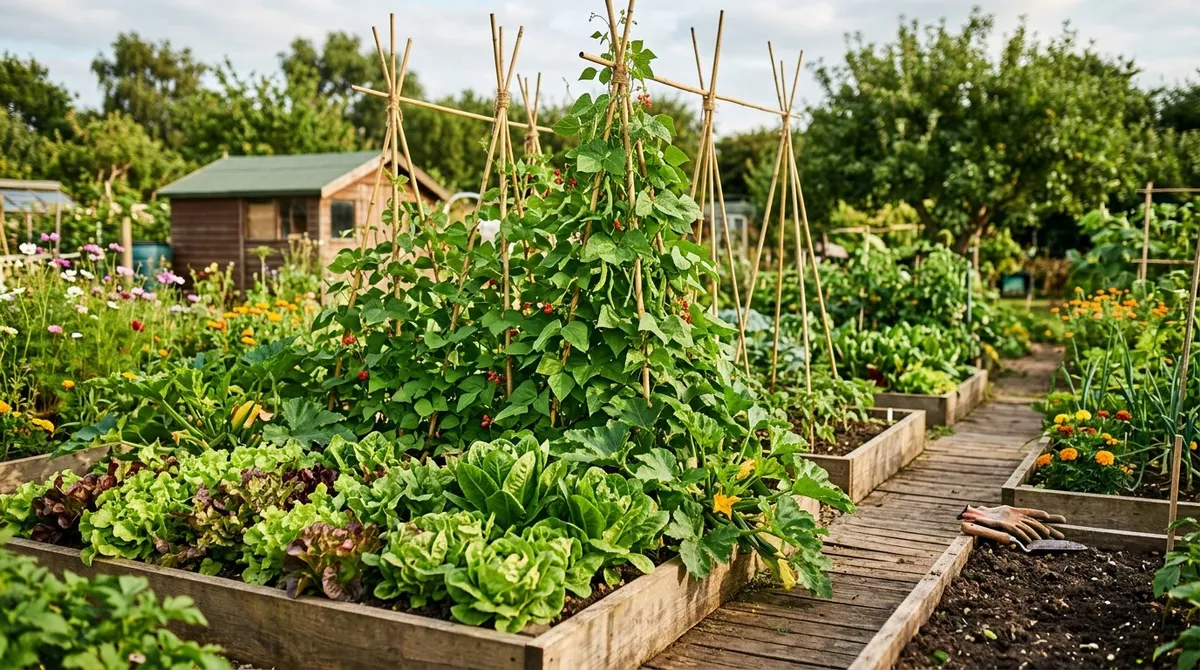
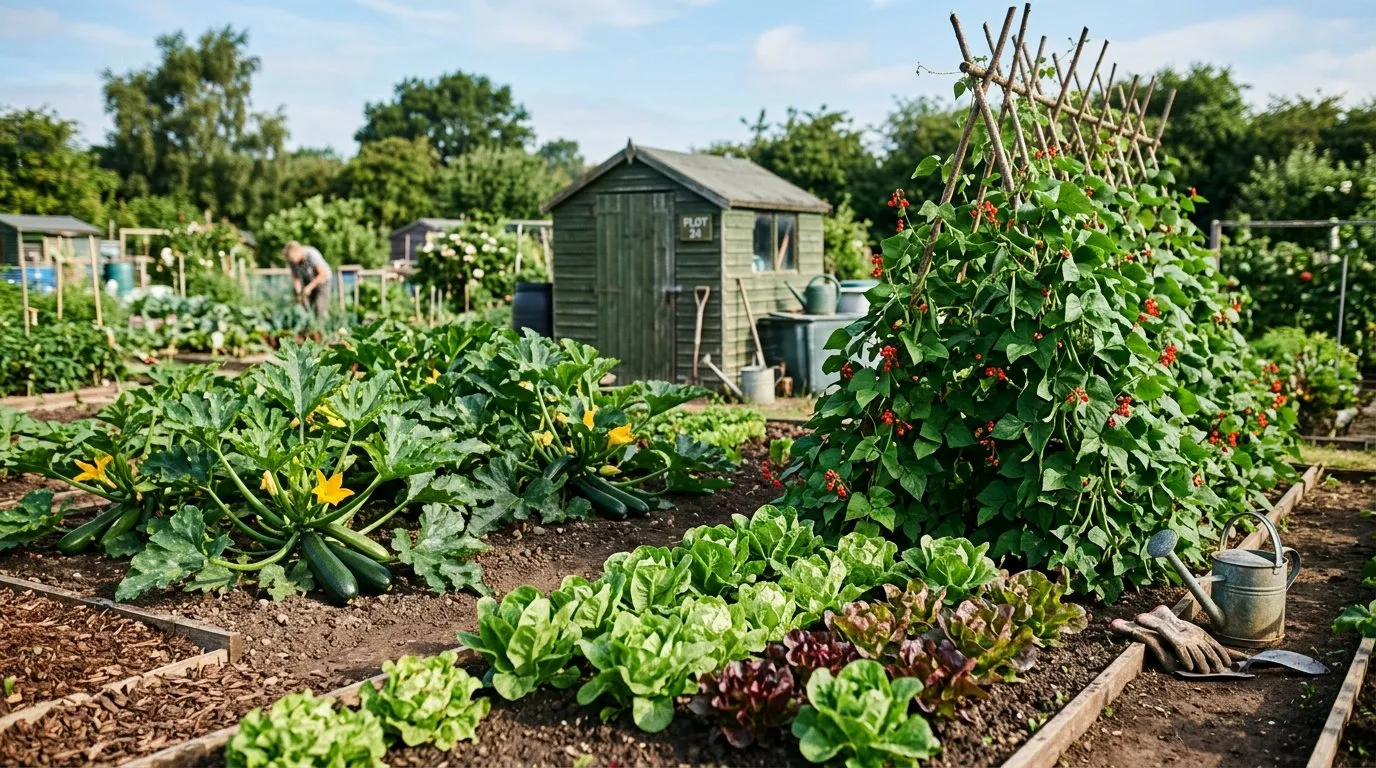 A productive summer plot with lettuce, runner beans, and courgettes, three of the highest-yielding home crops.
Five vegetables every beginner should start with
If you have never grown food before, start with these five crops. They tolerate mistakes, produce generously, and teach you the fundamentals of vegetable growing.
1. Potatoes
The perfect first crop. Potatoes break up compacted soil as they grow, suppress weeds with their dense canopy, and produce a satisfying harvest that tastes incomparably better than shop-bought. Plant seed potatoes in March, earth up the shoots as they grow, and harvest from June onward. Our full guide to growing potatoes covers varieties, chitting, and storage.
2. Courgettes
One of the most productive vegetables in a British garden. Sow seeds indoors in April, plant out after the last frost in late May, and pick fruits at 15-20cm for the best flavour. Two plants feed a family of four through summer.
3. Salad leaves
The fastest results in vegetable growing. Sow lettuce seed directly into soil or a container from March. Cut-and-come-again varieties regrow after harvesting, giving you multiple pickings from one sowing. A 1-metre row produces enough salad for two people for three weeks.
4. Runner beans
Sow directly outdoors in late May beside a wigwam of 2.4-metre canes. The plants climb, flower, and produce pods within ten weeks. Pick every 2-3 days to keep them cropping. A single wigwam produces 4-6 kg of beans over the season and freezes well.
5. Radishes
The quickest crop in the garden. Sow outdoors from March, harvest in 4-6 weeks. Children love them because results come so fast. Sow short rows every 2-3 weeks for a continuous supply. They also work as gap fillers between slower crops.
Best vegetables for containers
You do not need a garden to grow food. A sunny patio, balcony, or even a doorstep produces fresh vegetables in pots and growing bags. See our full guide to container vegetable gardening for detailed techniques.
| Crop | Minimum pot size | Notes |
|---|---|---|
| Tomatoes | 30cm / 10L | One plant per pot, stake or cage |
| Chilli peppers | 25cm / 7L | Windowsill to patio, compact plants |
| Lettuce | 20cm / 5L | Any container, succession sow |
| Spring onions | 20cm / 5L | Tight spacing, fast crop |
| Herbs (basil, parsley, coriander) | 15cm / 3L | Windowsill or patio |
| Beetroot | 25cm / 7L | 3-4 plants per pot |
| Dwarf French beans | 30cm / 10L | Compact bush types, no supports |
| Radishes | 15cm / 3L | Any shallow container |
Use peat-free compost for all container growing. Feed tomatoes and peppers with a high-potash liquid feed once fruits start forming.
Tip: Dark-coloured pots absorb heat and dry out faster. Line the inside with bubble wrap in spring to insulate roots, and water containers daily in hot weather.
Vegetables that save you the most money
The crops worth growing are the ones that cost the most in shops or taste dramatically better fresh picked.
Salad leaves cost two to three pounds per bag in supermarkets. A single packet of mixed leaf seed costs one to two pounds and produces dozens of harvests over six months. The saving per season is thirty to fifty pounds from a single container.
Herbs cost one pound fifty per supermarket packet and wilt within days. A single basil, parsley, or coriander plant costs two pounds and crops for months. Perennial herbs like rosemary, thyme, and sage last for years.
Runner beans produce 4-6 kg per plant. At three to four pounds per kilogram retail, a single wigwam saves fifteen to twenty-five pounds over a season, and homegrown beans have far better flavour and texture.
Cherry tomatoes cost three pounds per punnet. A single tomato plant in a sunny spot produces 2-4 kg of fruit, saving ten to fifteen pounds. Grow a sweet variety like Sungold or Gardener’s Delight for flavour no supermarket can match.
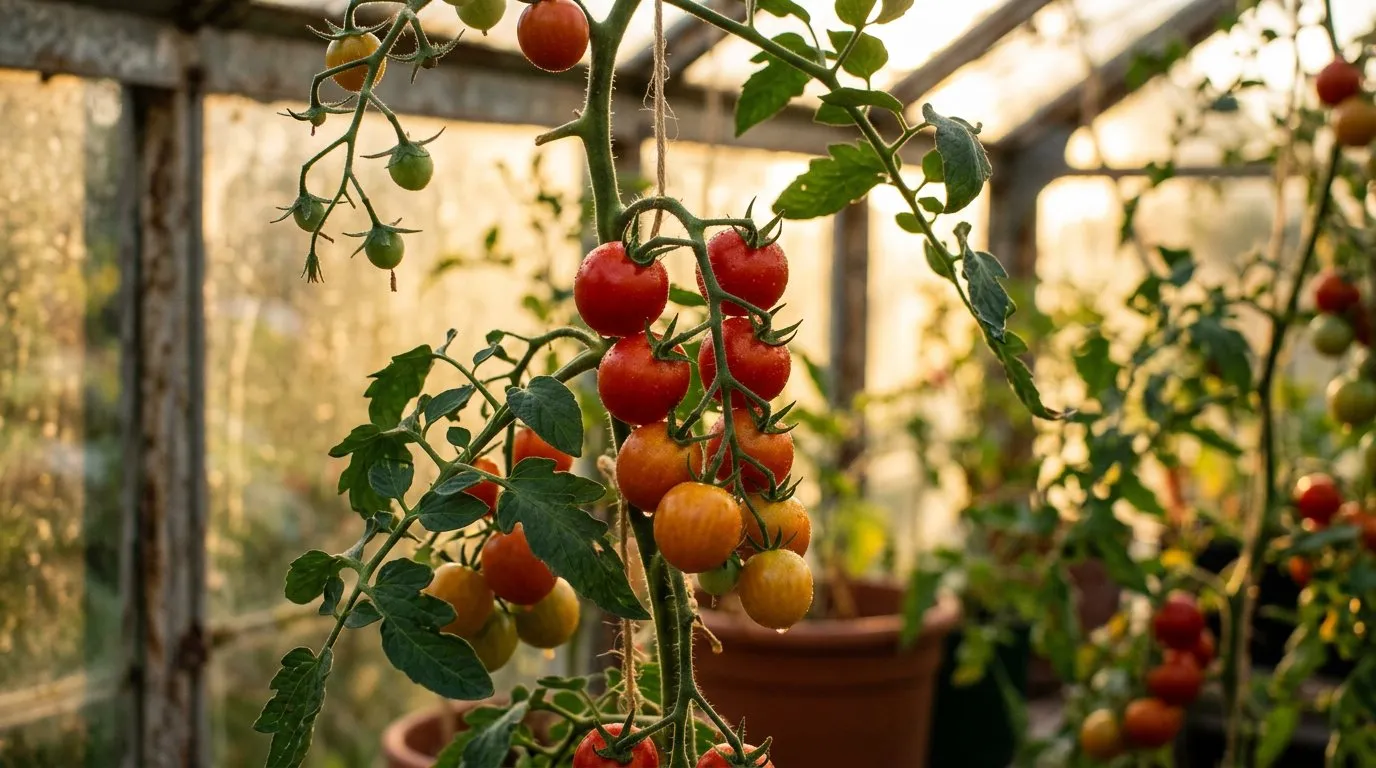 Homegrown cherry tomatoes ripening on the vine. One plant produces 2-4 kg of fruit from July to October.
New potatoes taste completely different dug fresh from your garden. The floury, earthy flavour of a just-harvested first early is one of the great pleasures of home growing.
Why we recommend courgettes as the first crop for new home growers: After 30 seasons of kitchen garden growing, courgettes are the single crop that consistently wins over new vegetable growers. Two plants in a sunny spot produce 5-8kg of courgettes through summer, enough to share with neighbours. In my own 3m x 4m raised bed, courgettes and runner beans together covered 60% of the family’s summer vegetable needs from just a quarter of the bed space.
Succession sowing for continuous harvests
The biggest mistake new growers make is sowing everything at once. A single March sowing of lettuce gives you a two-week glut in June and nothing after. Succession sowing spreads your harvest across the entire season. Our month-by-month harvest calendar shows exactly when each crop reaches picking stage.
| Crop | Sow every | Period | Result |
|---|---|---|---|
| Lettuce | 2 weeks | Mar-Aug | Fresh salad May-Oct |
| Radish | 2-3 weeks | Mar-Aug | Roots in 4-6 weeks |
| Spring onions | 3 weeks | Mar-Jul | Mild onions all summer |
| Beetroot | 3-4 weeks | Apr-Jul | Fresh roots Jun-Oct |
| French beans | 3 weeks | May-Jul | Pods Jul-Sep |
Mark sowing dates in a diary or set phone reminders. Our vegetable planting calendar shows the full schedule for 26 common crops.
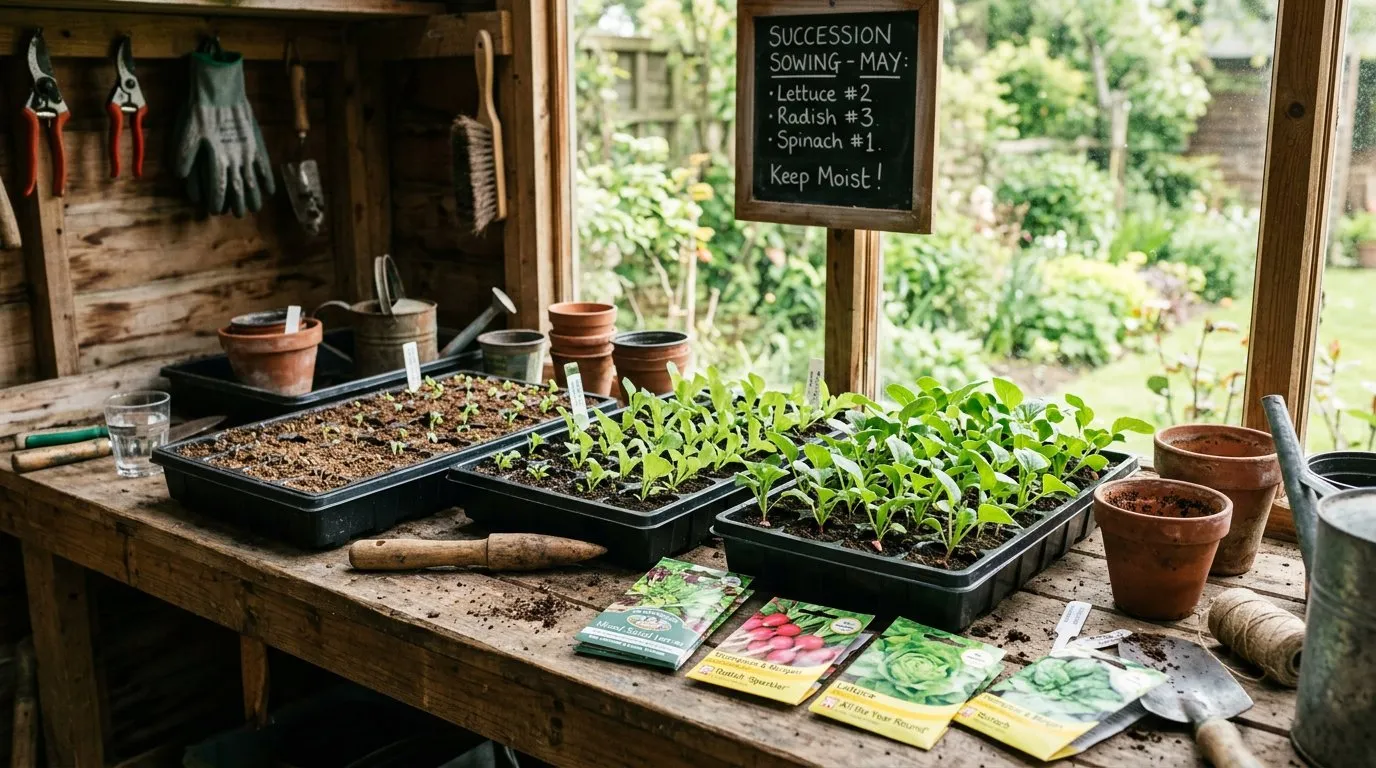 A succession sowing station. Staggering sowings every 2-3 weeks spreads your harvest across the entire season.
Getting started: your first season plan
| Month | Tasks |
|---|---|
| February | Order seeds. Set up raised beds or prepare containers. Start chitting potatoes. |
| March | Sow lettuce, radish, and beetroot outdoors. Plant potato tubers. Sow tomatoes and chillies indoors. |
| April | Sow courgettes indoors. Continue succession sowing salads. Plant onion sets. |
| May | Plant out courgettes, tomatoes, and beans after last frost. Direct sow runner and French beans. |
| June-August | Harvest, water, weed, and keep succession sowing. Feed tomatoes weekly. |
| September | Clear spent crops. Sow green manures. Plant garlic for next year. |
For a complete guide to setting up your growing space, see our guide on how to start a vegetable garden.
Tip: Start small. A single raised bed and two or three containers are enough for your first year. Learn what grows well in your garden before expanding. Success with five crops beats failure with twenty.
Now you’ve chosen your crops, read our guide on companion planting for the next step in boosting your yields.
Frequently asked questions
What is the easiest vegetable to grow in the UK?
Radishes are the easiest vegetable to grow. They germinate in 3-5 days and produce edible roots in 4-6 weeks. Sow directly outdoors from March to August with no special equipment or preparation. Lettuce, courgettes, and runner beans are also excellent beginner crops that tolerate imperfect conditions.
What vegetables can I grow in pots?
Tomatoes, chillies, lettuce, spring onions, herbs, beetroot, and dwarf French beans all grow well in containers. Use pots at least 30cm deep with drainage holes. Peat-free multipurpose compost works for most crops. Water daily in hot weather and feed fruiting crops with liquid tomato feed.
When should I start growing vegetables in the UK?
Start sowing indoors from February for slow-growing crops like tomatoes and peppers. Sow hardy crops outdoors from March when soil temperature reaches 7C. The main outdoor sowing season runs from March to July. Our seed sowing calendar provides exact timing for every crop.
How much space do I need to grow vegetables?
A single raised bed of 1.2m x 2.4m produces a useful amount of salad and herbs. A plot of 3m x 4m grows enough vegetables for two people through summer. Even a few large pots on a sunny patio produce fresh tomatoes, herbs, and salad leaves.
What vegetables grow all year round in the UK?
No single vegetable grows outdoors all twelve months in the UK climate. With planning you can harvest year-round by growing lettuce and spring onions from March to October, then winter crops like kale, leeks, and Brussels sprouts from November to March.
Is it cheaper to grow your own vegetables?
Growing your own saves the most money on salad leaves, herbs, soft fruit, and runner beans, crops with the highest retail markup. A packet of lettuce seed costing two pounds produces thirty to fifty pounds worth of salad over a season. Potatoes and onions are cheaper in shops but taste incomparably better homegrown.
Lawrie has been gardening in the West Midlands for over 30 years. He grows his own veg using no-dig methods, keeps a wildlife-friendly garden, and writes practical advice based on real UK growing conditions.