Chutney Recipes from the Garden
Six UK garden chutney recipes with exact measurements. Green tomato, apple, runner bean, courgette, plum, and beetroot chutneys from home-grown produce.
Key takeaways
- The basic chutney ratio is 1kg fruit or veg, 500g sugar, and 500ml vinegar for every batch
- All chutneys need 4-6 weeks maturation in sealed jars before the flavour develops fully
- Green tomato chutney is the classic UK recipe for using unripened end-of-season tomatoes
- Cook chutney for 60-90 minutes until thick enough that a spoon drawn across the pan leaves a clear trail
- Properly sealed jars keep for 12 months in a cool, dark cupboard below 15C
- Use malt vinegar at 5% acidity minimum for safe long-term preservation
Chutney turns the inevitable glut of late-season garden produce into something worth keeping. Every UK gardener who grows tomatoes, courgettes, or runner beans reaches a point in August or September where there is too much to eat fresh. Chutney solves that problem and gives you jars of something genuinely better than anything you can buy in a supermarket.
This guide covers six tested recipes using common UK garden crops. Each uses the same basic ratio and method, so once you master one, the rest follow naturally. For other preserving methods, see our guides to pickling and fermenting and making jam from garden fruit.
The basic chutney ratio and method
Every chutney recipe follows the same core formula. Learn this ratio and you can create chutney from almost any garden produce without needing a specific recipe.
The ratio:
- 1kg prepared fruit or vegetables (chopped)
- 500g sugar (white granulated, demerara, or light brown)
- 500ml vinegar (malt, cider, or white wine, minimum 5% acidity)
- Spices to taste
The method:
- Chop all fruit and vegetables into roughly 1cm pieces. Smaller pieces cook faster and give a smoother texture.
- Combine everything in a heavy-based stainless steel pan. Never use aluminium.
- Bring to a gentle simmer over medium heat, stirring until the sugar dissolves.
- Reduce heat to low and cook uncovered for 60-90 minutes.
- Stir every 10 minutes to prevent sticking on the base.
- The chutney is ready when a wooden spoon drawn across the bottom leaves a clear trail for 2-3 seconds.
- Pot into sterilised jars immediately while still hot. Fill to within 5mm of the rim.
- Seal with new, vinegar-proof lids. Wax discs and cellophane are not airtight enough.
Warning: Chutney spits during cooking. Use a deep pan and keep the heat low. Protect your hands with oven gloves when stirring. Keep children away from the hob.
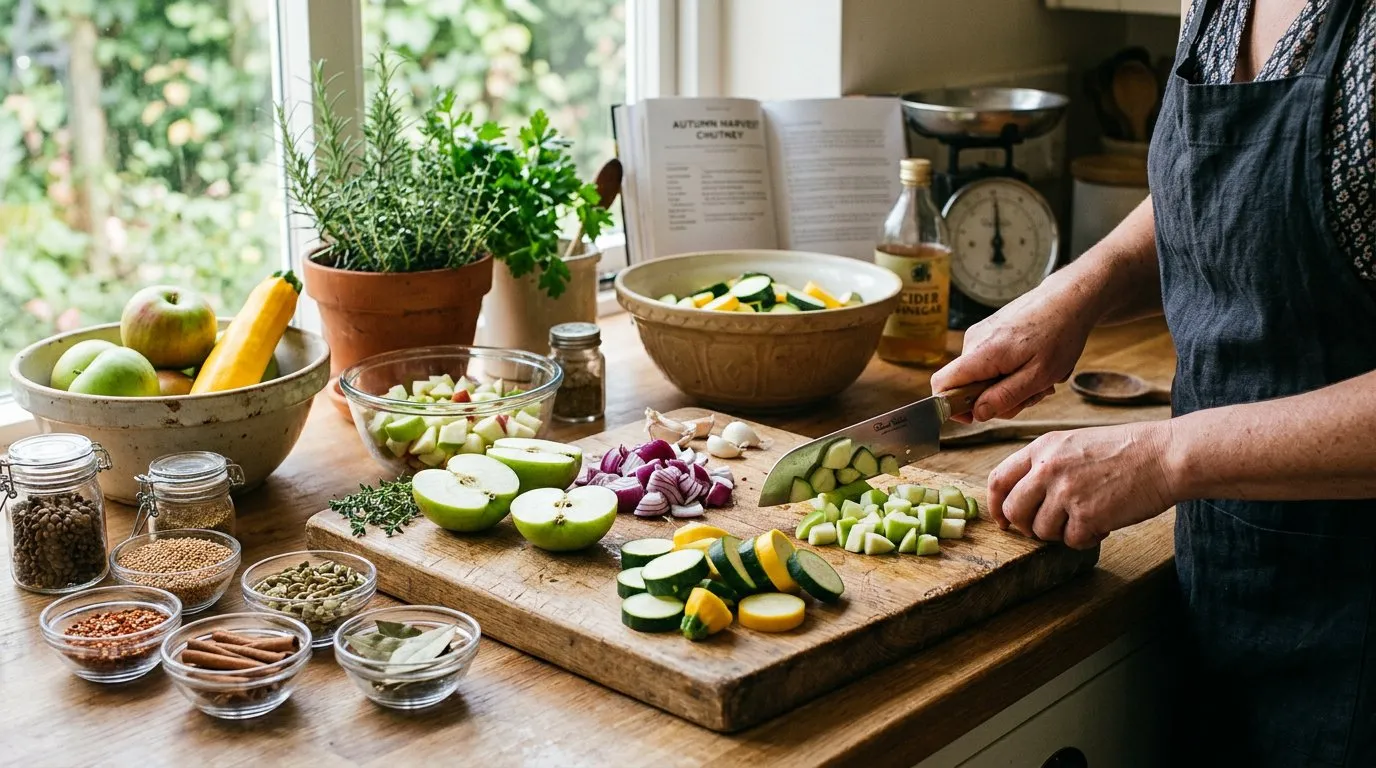
Preparing a chutney batch starts with chopping garden produce into roughly 1cm pieces for even cooking.
Sugar types and their effect
| Sugar type | Colour effect | Flavour | Best with |
|---|---|---|---|
| White granulated | Lighter chutney | Clean, lets produce flavour shine | Delicate fruits, pale chutneys |
| Demerara | Amber, golden | Toffee, caramel notes | Apple, pear, plum |
| Light brown soft | Dark, rich | Treacle, molasses depth | Green tomato, beetroot |
| Dark muscovado | Very dark | Intense, complex | Small quantities only, blends |
Green tomato chutney
The most iconic UK garden chutney. Every tomato grower ends the season with green fruit that will never ripen. This recipe turns them into something genuinely worth the effort.
Ingredients:
- 1kg green tomatoes, chopped into 1cm pieces
- 2 medium onions (about 300g), finely chopped
- 2 cooking apples (about 300g), peeled, cored, and chopped
- 500g demerara sugar
- 500ml malt vinegar
- 100g sultanas
- 1 teaspoon ground ginger
- 1 teaspoon mustard seeds
- Half teaspoon ground allspice
- Half teaspoon salt
Method: Combine all ingredients in the pan. Bring to a simmer, stirring until the sugar dissolves. Cook on low for 75-90 minutes until thick and glossy. The tomatoes will break down completely. Pot into sterilised jars and seal. Makes approximately 4-5 jars (roughly 2kg total).
Maturation: Minimum 6 weeks. Best at 3-4 months. Pairs brilliantly with mature cheddar and crusty bread.
Gardener’s tip: Pick green tomatoes before the first frost, usually mid to late October in most of England. Frost-damaged tomatoes turn mushy and produce a watery chutney. Check our monthly harvest guide for regional timing.
Why we recommend malt vinegar at 5% acidity: After 30 years of making chutneys from garden produce, malt vinegar at 5% acidity consistently produces the clearest set and the longest shelf life. Batches made with cheaper 4% vinegar have spoiled within eight months, while properly acidified jars stored at 12C regularly last the full 12 months with no quality loss.
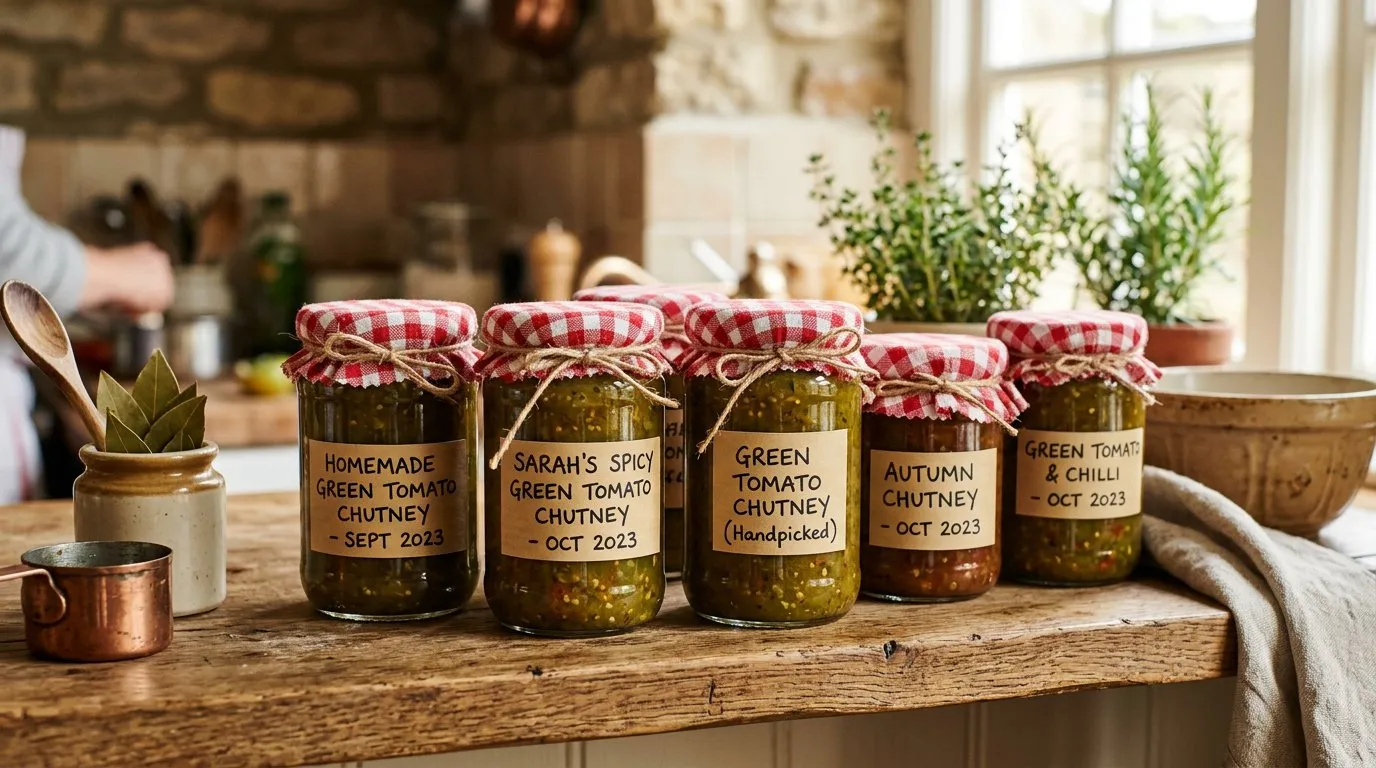
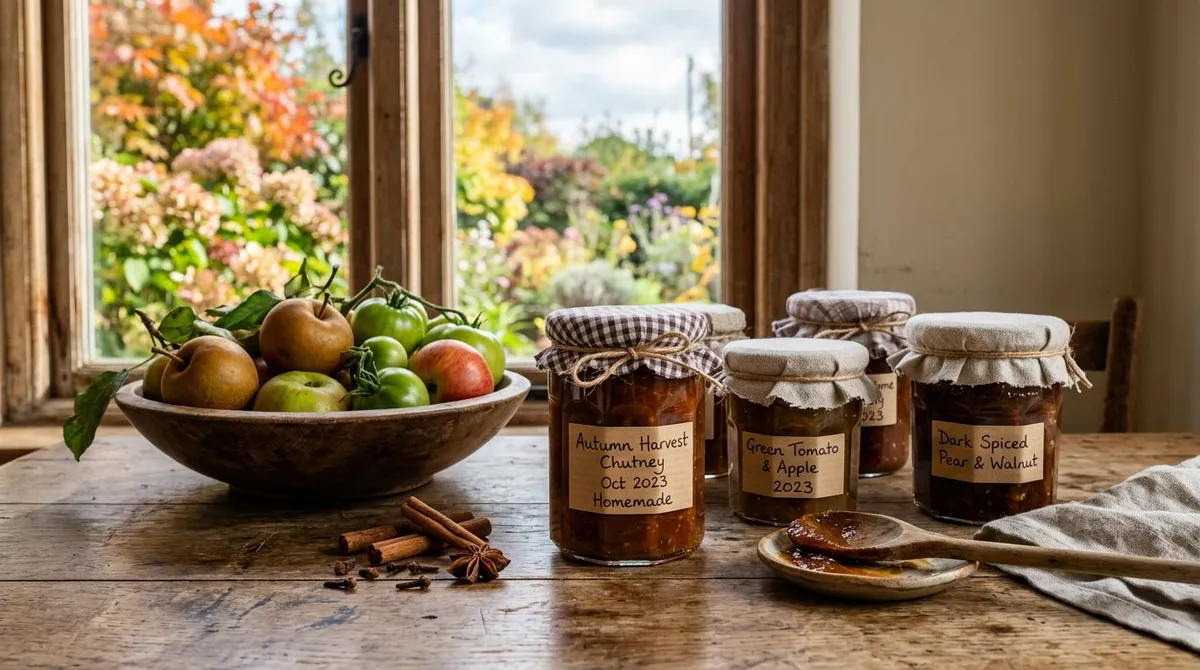
Homemade green tomato chutney sealed in jars and ready for 6 weeks of maturation before eating.
Apple chutney
A versatile chutney that uses cooking apples, windfalls, and any slightly bruised fruit that is not worth eating fresh. Bramley apples produce the best results because of their high acidity and soft cooking texture.
Ingredients:
- 1kg cooking apples (Bramley or similar), peeled, cored, and chopped
- 2 medium onions (about 300g), finely diced
- 500g light brown sugar
- 500ml cider vinegar
- 150g raisins
- 1 teaspoon ground cinnamon
- 1 teaspoon ground ginger
- Half teaspoon ground cloves
- Half teaspoon salt
- Zest of 1 lemon
Method: Combine all ingredients. Simmer for 60-75 minutes. Bramleys break down quickly, so the chutney thickens faster than tomato versions. Stir frequently in the last 15 minutes to prevent catching. Pot and seal. Makes approximately 1.8kg.
Maturation: 4 weeks minimum. Excellent with roast pork, baked ham, and strong cheeses.
Runner bean chutney
This is the recipe that saves you from the August runner bean mountain. It works best with mature beans that are too stringy to eat as a vegetable. Nothing is wasted.
Ingredients:
- 1kg runner beans, de-stringed and sliced into 1cm pieces
- 2 medium onions (about 300g), finely chopped
- 500g granulated sugar
- 500ml malt vinegar
- 1 tablespoon cornflour (mixed with 2 tablespoons vinegar to make a paste)
- 1 tablespoon mustard powder
- 1 teaspoon ground turmeric
- Half teaspoon salt
Method: Boil the runner beans in unsalted water for 5 minutes. Drain thoroughly. Combine with onions, sugar, vinegar, and dry spices. Simmer for 45 minutes. Stir in the cornflour paste and cook for a further 15 minutes until thick. The cornflour gives this chutney its characteristic glossy texture. Pot and seal. Makes approximately 1.8kg.
Maturation: 4 weeks. Goes well with cold meats and a ploughman’s lunch.
Courgette chutney
Courgettes produce prolifically from July onwards. Two plants can yield 20-30 fruits over a season. This chutney uses large courgettes that have grown past their best for eating fresh.
Ingredients:
- 1kg courgettes, chopped into 1cm cubes (no need to peel)
- 2 medium onions (about 300g), finely chopped
- 3 garlic cloves, crushed
- 500g granulated sugar
- 500ml white wine vinegar
- 1 teaspoon ground cumin
- 1 teaspoon ground coriander
- Half teaspoon chilli flakes (or 1 fresh chilli, finely chopped)
- Half teaspoon salt
Method: Salt the courgette cubes lightly and leave in a colander for 30 minutes to draw out moisture. Rinse and pat dry. This step prevents a watery chutney. Combine all ingredients. Simmer for 60-75 minutes. Courgettes hold their shape better than tomatoes, giving a chunkier result. Pot and seal. Makes approximately 1.8kg.
Maturation: 4 weeks. Excellent with grilled halloumi, in sandwiches, or alongside a curry.
Plum chutney
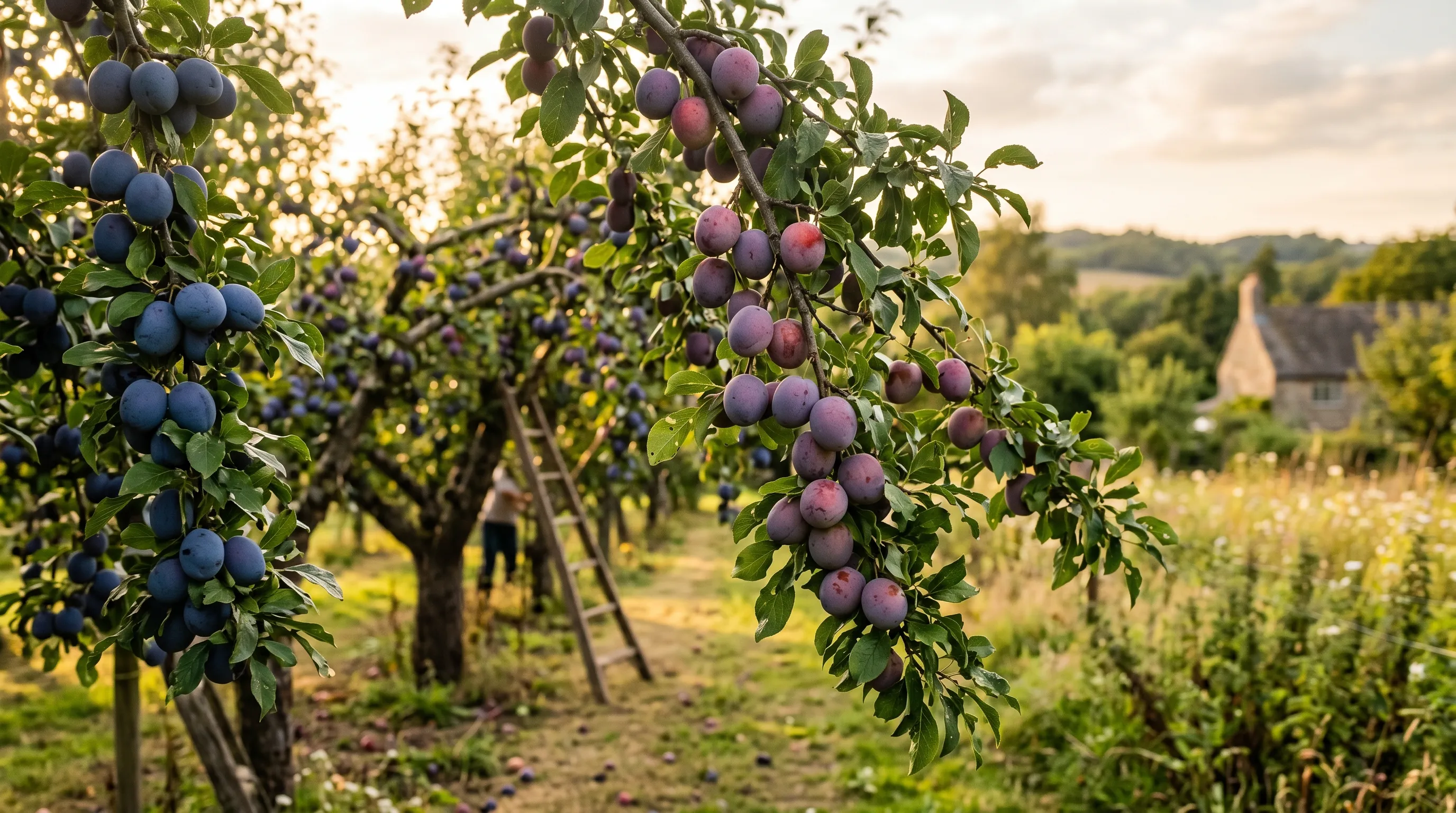
British plum trees produce heavily in August and September. Victoria plums are the classic choice, but any variety works. This recipe is slightly less sweet than standard chutney because plums bring their own natural sugars.
Ingredients:
- 1kg plums, stoned and quartered
- 1 medium onion (about 150g), finely chopped
- 400g demerara sugar (reduced from standard 500g due to fruit sweetness)
- 500ml cider vinegar
- 100g raisins
- 1 teaspoon ground mixed spice
- 1 cinnamon stick
- 4 cloves
- Half teaspoon salt
- 2cm piece fresh ginger, grated
Method: Combine all ingredients. Bring to a simmer. Cook for 60-75 minutes. Plums break down quickly and the skins soften. Remove the cinnamon stick before potting. The colour deepens to a rich ruby during maturation. Makes approximately 1.8kg.
Maturation: 6 weeks minimum. Outstanding with cold turkey, Boxing Day leftovers, or a cheeseboard.
Gardener’s tip: Freeze stoned plums in August and make the chutney in October when you have more time. Frozen plums thaw soft and break down even faster during cooking. This works for all stone fruits.
Beetroot chutney
Beetroot chutney is deeply coloured, earthy, and pairs brilliantly with goat’s cheese and smoked fish. Pre-cook the beetroot before adding to the chutney base.
Ingredients:
- 1kg beetroot, pre-cooked, peeled, and chopped into 1cm cubes
- 2 medium onions (about 300g), finely chopped
- 500g light brown sugar
- 500ml red wine vinegar
- 1 cooking apple (about 150g), peeled and grated
- 1 teaspoon ground cumin
- 1 teaspoon caraway seeds
- Half teaspoon salt
- Juice of 1 orange
Method: Cook the beetroot whole in boiling water for 30-40 minutes until tender. Cool, peel, and chop. Combine with all other ingredients. Simmer for 45-60 minutes. Because the beetroot is pre-cooked, this chutney needs less time on the hob. The colour will stain everything it touches. Wear gloves. Pot and seal. Makes approximately 2kg.
Maturation: 6 weeks. The National Trust reports that beetroot chutney is among the most popular preserves at its farm shops across England.
Recipe comparison table
| Chutney | Main crop | Cook time | Jars (approx.) | Maturation | Best pairing |
|---|---|---|---|---|---|
| Green tomato | 1kg green tomatoes | 75-90 mins | 4-5 | 6 weeks | Mature cheddar |
| Apple | 1kg Bramley apples | 60-75 mins | 4 | 4 weeks | Roast pork |
| Runner bean | 1kg runner beans | 60 mins | 4 | 4 weeks | Cold meats |
| Courgette | 1kg courgettes | 60-75 mins | 4 | 4 weeks | Grilled halloumi |
| Plum | 1kg plums | 60-75 mins | 4 | 6 weeks | Cheeseboard |
| Beetroot | 1kg beetroot | 45-60 mins | 4-5 | 6 weeks | Goat’s cheese |
Spice blends for chutney
Building a small collection of whole and ground spices makes chutney making easier. These four blends cover most combinations.
Warm winter blend: 1 teaspoon cinnamon, half teaspoon ground cloves, half teaspoon ground ginger, quarter teaspoon nutmeg. Use with apple, plum, and pear chutneys.
Indian-style blend: 1 teaspoon ground cumin, 1 teaspoon ground coriander, half teaspoon turmeric, half teaspoon chilli flakes, quarter teaspoon fenugreek. Use with courgette, marrow, and broad bean chutneys.
Mustard blend: 1 tablespoon mustard powder, 1 teaspoon mustard seeds, half teaspoon turmeric. Use with runner bean and green tomato chutneys.
Simple classic: 1 teaspoon ground ginger, half teaspoon allspice, half teaspoon black pepper. Works with almost anything. The safest option if you are experimenting with a new main ingredient.
Gardener’s tip: Buy spices whole and grind them yourself for stronger flavour. A basic electric coffee grinder dedicated to spices costs under ten pounds and makes a noticeable difference.
Seasonal chutney calendar
| Month | Crop ready | Suggested chutney |
|---|---|---|
| July | Courgettes, early beetroot | Courgette chutney, beetroot chutney |
| August | Runner beans, plums, onions, courgettes | Runner bean, plum, courgette |
| September | Apples, plums, beetroot, green tomatoes | Apple, plum, beetroot, green tomato |
| October | Green tomatoes, late apples, pumpkins | Green tomato, apple, pumpkin |
| November | Stored produce, windfalls | Apple (from stored fruit), mixed |
The busiest chutney-making months are September and October. Plan your jar supplies and sugar stocks in advance. A single productive garden can fill 30-40 jars across a season.
Common mistakes when making chutney
1. Not cooking long enough
The most frequent error. Under-cooked chutney is too liquid, overly acidic, and does not set properly in the jar. Cook until the wooden spoon test works: a clear trail across the pan base that holds for 2-3 seconds. This typically takes 60-90 minutes. Do not rush it.
2. Using old or damaged lids
Metal lids that have been used before may not seal properly. The rubber coating inside degrades after one use. Always buy new lids for preserving. Twist-top lids from commercial jam jars work if undamaged, but check the rubber ring carefully.
3. Filling jars when cold
Hot chutney must go into hot jars. Cold glass cracks when filled with hot liquid. Sterilise jars at 120C for 15 minutes and fill them straight from the oven. Work quickly. A jam funnel prevents spills and burns.
4. Skipping the maturation period
Freshly made chutney tastes harsh, vinegary, and one-dimensional. The flavour only develops during the maturation period as the vinegar mellows and the spices integrate. Four weeks is the absolute minimum. Six to twelve weeks is better. Label every jar with the date it was made.
5. Storing in a warm or bright place
Heat and light degrade chutney. Store in a cool, dark cupboard, pantry, or cellar at 10-15C. A garage works in winter but may be too warm in summer. Never store on a sunny windowsill or near a radiator. The Food Standards Agency recommends storing all home-preserved foods below 15C.
Jar sterilisation and sealing
Proper sterilisation prevents spoilage and extends shelf life. This process takes 20 minutes and is the single most important step in successful preserving.
- Wash jars and lids in hot soapy water. Rinse thoroughly.
- Place jars upright on a baking tray. Heat in the oven at 120C for 15 minutes.
- Sterilise lids separately by pouring boiling water over them. Metal lids warp in dry oven heat.
- Remove jars from the oven and fill immediately with hot chutney.
- Leave 5mm headspace at the top.
- Wipe any drips from the rim with a clean, damp cloth.
- Seal tightly. The lid should pop inwards as the jar cools, indicating a vacuum seal.
Test the seal after 24 hours by pressing the centre of the lid. If it does not flex, the seal is good. If it pops up and down, refrigerate that jar and use it first.
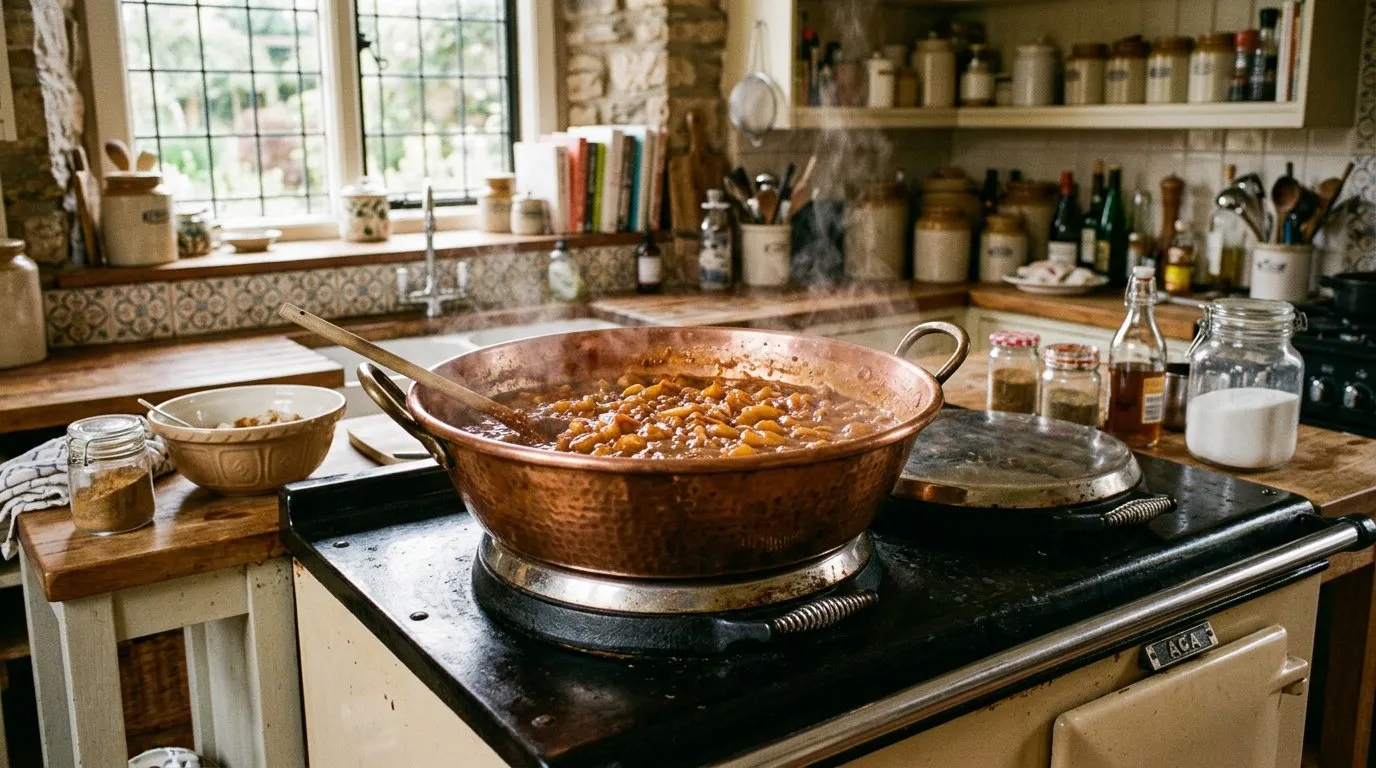
A large preserving pan of chutney simmering gently on the hob until the wooden spoon test shows it is ready.
For information on other preserving techniques that complement chutney making, see our guide to preserving fruit and vegetables and freezing garden produce.
Gift presentation for homemade chutney
Homemade chutney makes an excellent gift, particularly at Christmas. The maturation timing works well. Chutneys made in September reach peak flavour by December.
- Use matching jars for a set of 3-4 varieties
- Cut fabric circles 5cm wider than the lid and secure with string or twine
- Write clear labels with the chutney name, date made, and “best after” date (6 weeks from making)
- Store gift sets in a cool place until giving
- Include a card with suggested pairings for each variety
A set of four chutneys (green tomato, apple, plum, and beetroot) made from your own garden produce costs under five pounds in ingredients and is genuinely more appreciated than many shop-bought gifts. If you also make jam from garden fruit or pickled vegetables, a mixed hamper of preserves makes an outstanding present.
Now you’ve mastered chutney recipes from the garden, read our guide on preserving fruit and vegetables for the next step in making the most of your harvest.
Frequently asked questions
How long does homemade chutney need to mature?
Chutney needs at least 4-6 weeks to mature. Freshly made chutney tastes sharp and one-dimensional. During maturation, the vinegar mellows, the sugar integrates, and the spice flavours deepen. Most chutneys reach their best flavour at 3-4 months. Store sealed jars in a cool, dark place during this time.
What is the basic ratio for making chutney?
Use equal weight fruit or veg to half weight sugar and vinegar. For example, 1kg of tomatoes needs 500g sugar and 500ml vinegar. This ratio works across almost all chutney recipes. Adjust sugar slightly for very sweet fruits like plums, reducing to 400g per kilo.
How do I know when chutney is cooked enough?
Draw a wooden spoon across the bottom of the pan. If the trail stays clear for 2-3 seconds, the chutney is ready. It should look thick, glossy, and jam-like. Under-cooked chutney is runny and too acidic. The cooking time is typically 60-90 minutes at a gentle simmer.
Can I use any vinegar for making chutney?
Use vinegar with at least 5% acidity for safe preservation. Malt vinegar gives the strongest traditional flavour. Cider vinegar produces a milder, fruitier result. White wine vinegar keeps the chutney lighter in colour. Avoid balsamic or flavoured vinegars, which can overpower the main ingredients.
How long does homemade chutney last?
Sealed jars keep for up to 12 months at 10-15C. Once opened, refrigerate and use within 6-8 weeks. Always use a clean spoon. If mould appears on the surface after opening, discard the entire jar rather than scraping it off.
What can I do with a glut of green tomatoes?
Green tomato chutney is the best option. It uses 1kg of green tomatoes per batch and converts unripened fruit into a tangy preserve that pairs well with cheese and cold meats. Other options include green tomato pickle, fried green tomatoes, and green tomato salsa.
Do I need special equipment to make chutney?
You need a heavy-based stainless steel pan, a wooden spoon, glass jars with new lids, and a jam funnel. Avoid aluminium pans, which react with vinegar. A digital kitchen scale ensures accurate measurements. Most kitchens already have everything needed.
Can I reduce the sugar in chutney recipes?
Reducing sugar below 400g per kilo of produce shortens shelf life. Sugar is a preservative as well as a sweetener. Low-sugar chutneys must be refrigerated and used within 3 months. For a less sweet result, use light brown sugar instead of white, which adds depth without extra sweetness.
Lawrie has been gardening in the West Midlands for over 30 years. He grows his own veg using no-dig methods, keeps a wildlife-friendly garden, and writes practical advice based on real UK growing conditions.