Cloches and Low Tunnels: UK Guide
How to use cloches and low tunnels to extend your UK growing season by 6-8 weeks. Materials, sizing, crops and month-by-month planting from field trials.
Key takeaways
- A simple low tunnel extends the UK growing season by 6-8 weeks (3-4 weeks earlier start, 3-4 weeks later finish)
- Soil temperature under cloches runs 4-6C warmer than open ground from February onwards
- Polythene low tunnels cost under 20 pounds for a 3m run and last 2-3 seasons
- Ventilate when air temperature exceeds 15C or risk fungal disease
- Best early crops under cover: lettuce, radish, spinach, broad beans, peas, carrots
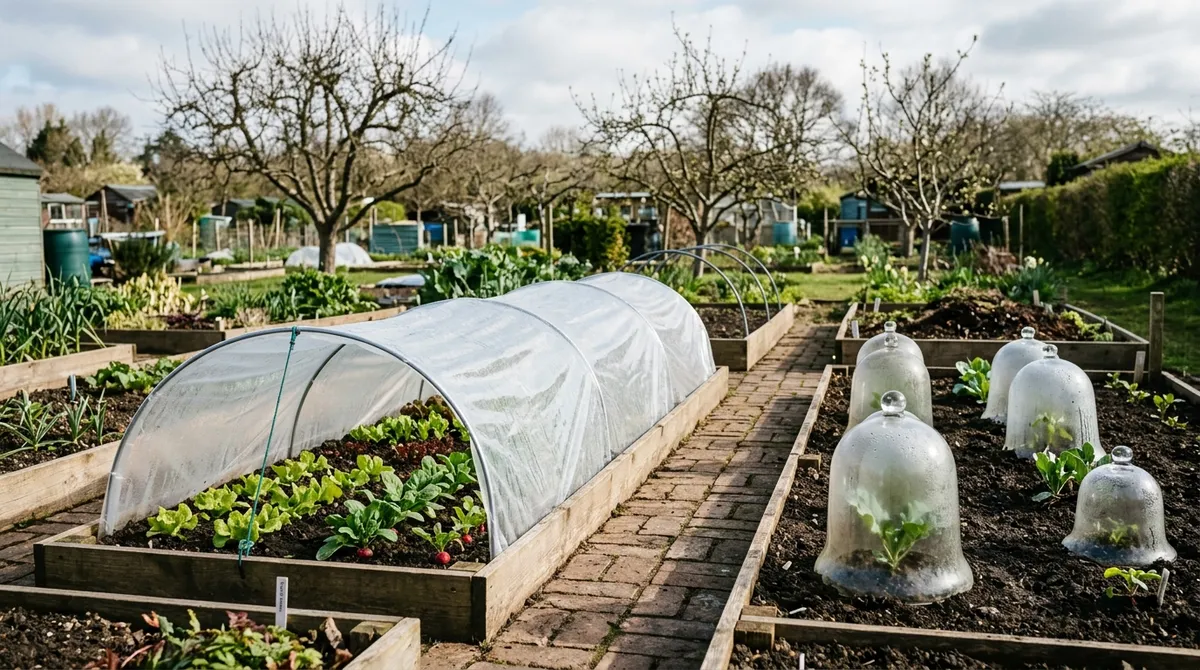
Cloches and low tunnels are the cheapest way to extend your growing season in the UK. A 20-pound setup adds six to eight weeks to your year, letting you sow earlier in spring and harvest later in autumn.
The principle is simple. A clear covering traps solar heat, raises soil temperature and cuts wind speed. Seeds germinate faster, seedlings establish sooner and crops mature weeks ahead of open ground.
After 8 years of running side-by-side trials in Staffordshire, I can quantify the difference precisely. This guide covers materials, construction, crop selection and the month-by-month timeline that works in the Midlands and across most of the UK.
Types of cloche and low tunnel
There are four main options, each suited to different situations and budgets.
Traditional glass bell cloches are the classic Victorian design. They suit individual plants or small groups and look beautiful in a kitchen garden. The downsides are weight, breakage risk and cost (15-30 pounds each). I use glass cloches for overwintering tender herbs and protecting newly planted perennials.
Polythene low tunnels are the workhorse of UK vegetable growing. Galvanised wire hoops pushed into the soil at 60cm intervals, covered with clear polythene sheeting, create an effective growing environment at minimal cost. A 3m tunnel costs under 20 pounds in materials and covers a standard raised bed.
Fleece tunnels use the same hoop structure but substitute horticultural fleece for polythene. Fleece admits rain and some air movement, reducing the ventilation burden. It protects plants to minus 5C but transmits less light than polythene (typically 70-80% versus 90%).
Rigid plastic cloches are barn-shaped or tent-shaped panels that clip together. They are durable, easy to move and do not need hoops. The main drawback is cost: 30-50 pounds for a 1.5m section.
| Type | Cost per metre | Light transmission | Protection | Ventilation needed | Lifespan |
|---|---|---|---|---|---|
| Glass bell cloche | 15-30 pounds each | 95% | To minus 3C | Prop open daily | Indefinite |
| Polythene tunnel | 3-5 pounds | 90% | To minus 3C | Open ends daily | 2-3 years |
| Fleece tunnel | 2-3 pounds | 70-80% | To minus 5C | Minimal | 1-2 years |
| Rigid plastic | 20-30 pounds | 85% | To minus 3C | Slide panels | 5+ years |
How to build a polythene low tunnel
The most practical setup for UK vegetable beds is a polythene tunnel on wire hoops. Here is the method I use for a standard 1.2m wide raised bed.
Materials for a 3m tunnel:
- 6 galvanised wire hoops (available from garden centres or bend your own from 3mm galvanised wire)
- 4m x 1.5m clear polythene, 500 gauge (50 micron) or heavier
- String or clips to secure the sheeting
- Bricks or timber to weight the edges
Construction:
- Push hoops into the soil at 60cm intervals along both sides of the bed
- Hoops should stand 45-60cm above soil level at the peak
- Drape polythene over the hoops, leaving 30cm excess on each side
- Weight the sides with bricks, timber or bury the edges in soil
- Gather and tie the ends, or weight with bricks for easy access
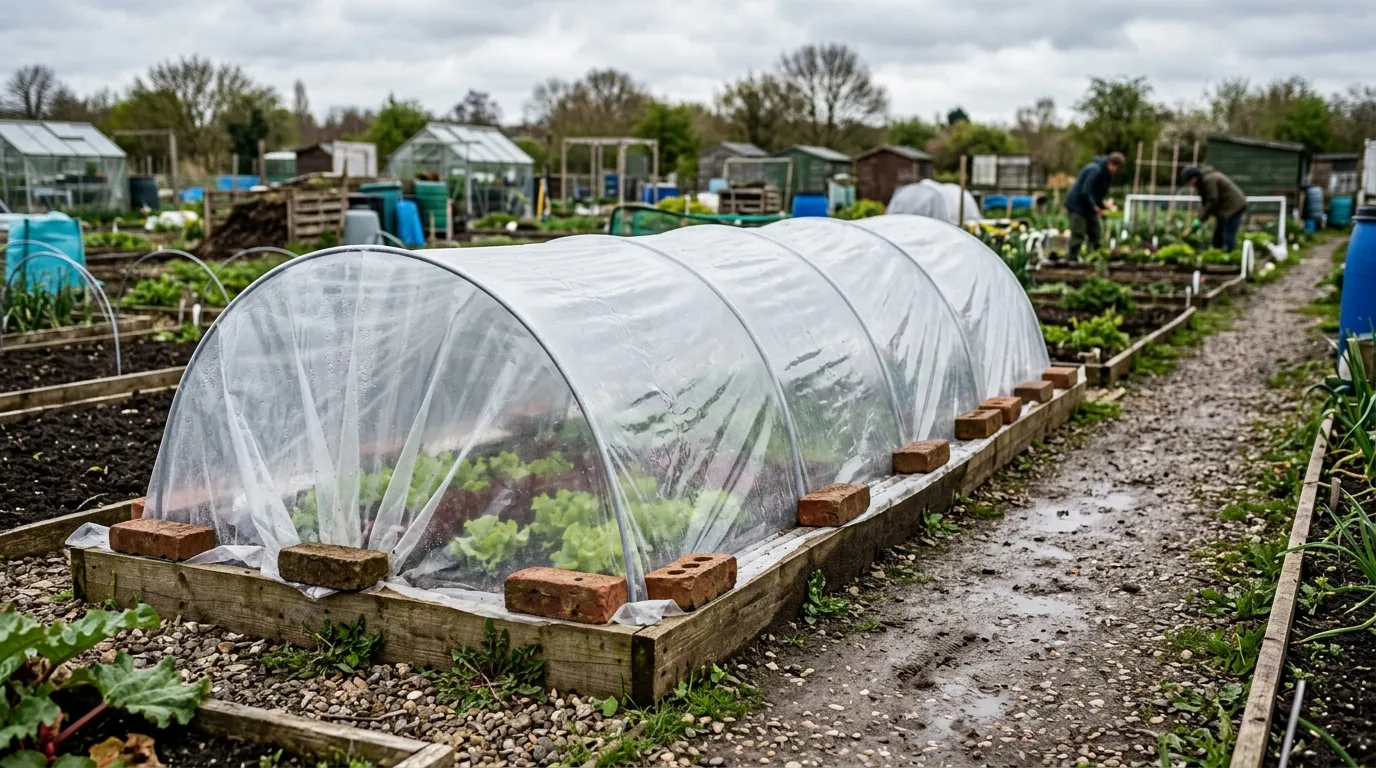
A polythene low tunnel on galvanised hoops covering a 1.2m raised bed. The sides are weighted with bricks for quick access.
The tunnel should be taut enough to shed rain but not drum-tight. A slight sag allows condensation to run to the edges rather than dripping onto plants.
Best crops for early sowing under cover
Not every vegetable benefits equally from cloche protection. The biggest gains come from crops that germinate at relatively low temperatures but grow slowly in cold, windy conditions.
From my trial data, these crops show the greatest improvement under cloches compared with open ground sowing on the same date:
| Crop | Sow under cover | Open ground sow | Days gained | Notes |
|---|---|---|---|---|
| Lettuce | Late February | Late March | 24-28 days | Best performer under cover |
| Radish | Late February | Mid-March | 18-22 days | Fast crop, harvest in 4 weeks |
| Spinach | Early March | Early April | 21-25 days | Succession sow every 3 weeks |
| Carrots | Early March | Mid-April | 28-35 days | Cover also deters carrot fly |
| Broad beans | Late January | Late February | 21-28 days | Start in modules if soil is wet |
| Peas | Late February | Mid-March | 18-24 days | Use dwarf varieties under tunnels |
| Spring onions | Late February | Late March | 21-26 days | Multi-sow in modules |
| Strawberries | Cover from March | Uncovered | 14-21 days | Earlier crop by 2-3 weeks |
Lettuce is the standout performer. My cloche-grown lettuce from a late February sowing is ready to cut by late April. Open ground lettuce sown on the same date is not ready until late May.
Ventilation: the most common mistake
The single biggest mistake with cloches and tunnels is inadequate ventilation. On a sunny March day, air temperature inside a closed polythene tunnel can exceed 30C by mid-morning. This causes bolting in lettuce, scorching on seedling leaves and creates the humid conditions that encourage damping off and botrytis.
The rule: ventilate whenever daytime air temperature exceeds 15C. Open both ends of the tunnel and push the sheeting halfway up the hoops on the leeward side.
Close up again by 4pm to trap heat for the night. The temperature differential between day and night under a closed tunnel is the mechanism that drives early growth. Warm soil at night keeps root zone activity going even when air temperature drops.
In practice, this means daily attention from March onwards. If you cannot visit the plot during the day, use fleece instead of polythene. Fleece breathes naturally and rarely overheats, though it provides less warmth.
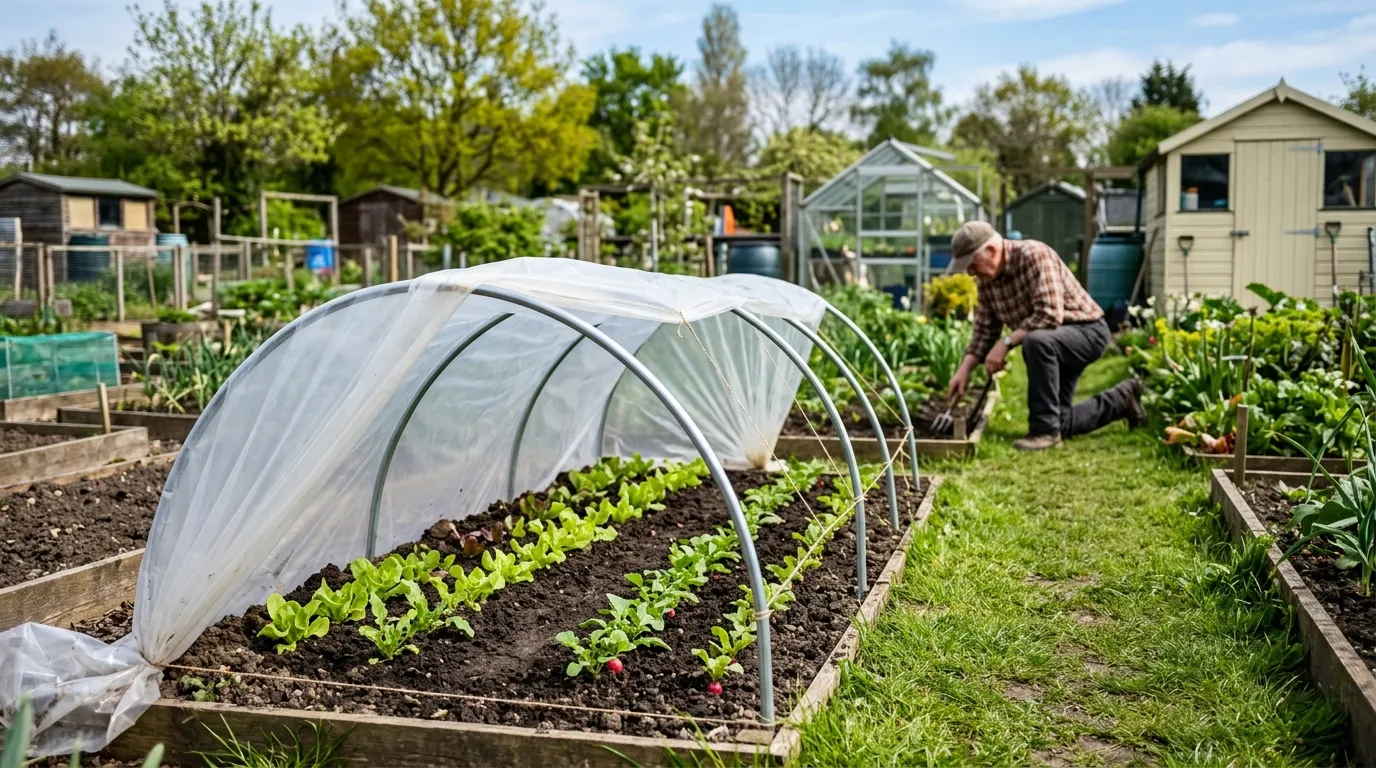
Ventilating a low tunnel on a warm March day. Push the polythene halfway up the hoops on one side and open both ends to prevent overheating.
Month-by-month growing calendar under cover
| Month | Action | Crops |
|---|---|---|
| January | Place cloches on empty beds to warm soil | None yet |
| February | Sow first crops under cover | Lettuce, radish, broad beans, spinach |
| March | Main sowing period, ventilate daily | Carrots, peas, spring onions, beetroot |
| April | Harden off and remove covers from hardy crops | All above, plus French beans under fleece |
| May | Remove covers from most crops | Runner beans, courgettes (late May, fleece only) |
| June to August | Use covers for pest protection (carrot fly, cabbage white) | Summer crops |
| September | Replace covers for autumn extension | Lettuce, spinach, radish, rocket |
| October | Cover overwintering crops | Broad beans, garlic, winter lettuce |
| November to December | Protect with fleece over hoops | Overwintering salads, spring cabbage |
Cloches versus other growing structures
Cloches and low tunnels sit at the affordable end of the protected growing spectrum. Here is how they compare with the alternatives.
A cold frame provides similar protection in a more permanent structure. Cold frames are better for raising seedlings and hardening off, but cover less ground area per pound spent.
A polytunnel gives walk-in access and grows tall crops like tomatoes and cucumbers. The cost jumps to 200-500 pounds for a small domestic tunnel.
A greenhouse gives the best environmental control but at the highest cost. For pure vegetable growing on a budget, cloches and low tunnels give more return per pound than any other structure.
The practical answer for most UK vegetable gardeners is to use all of them. Cloches for the main beds, a cold frame for seedling raising, and a greenhouse or polytunnel for heat-loving crops. Each fills a different niche.
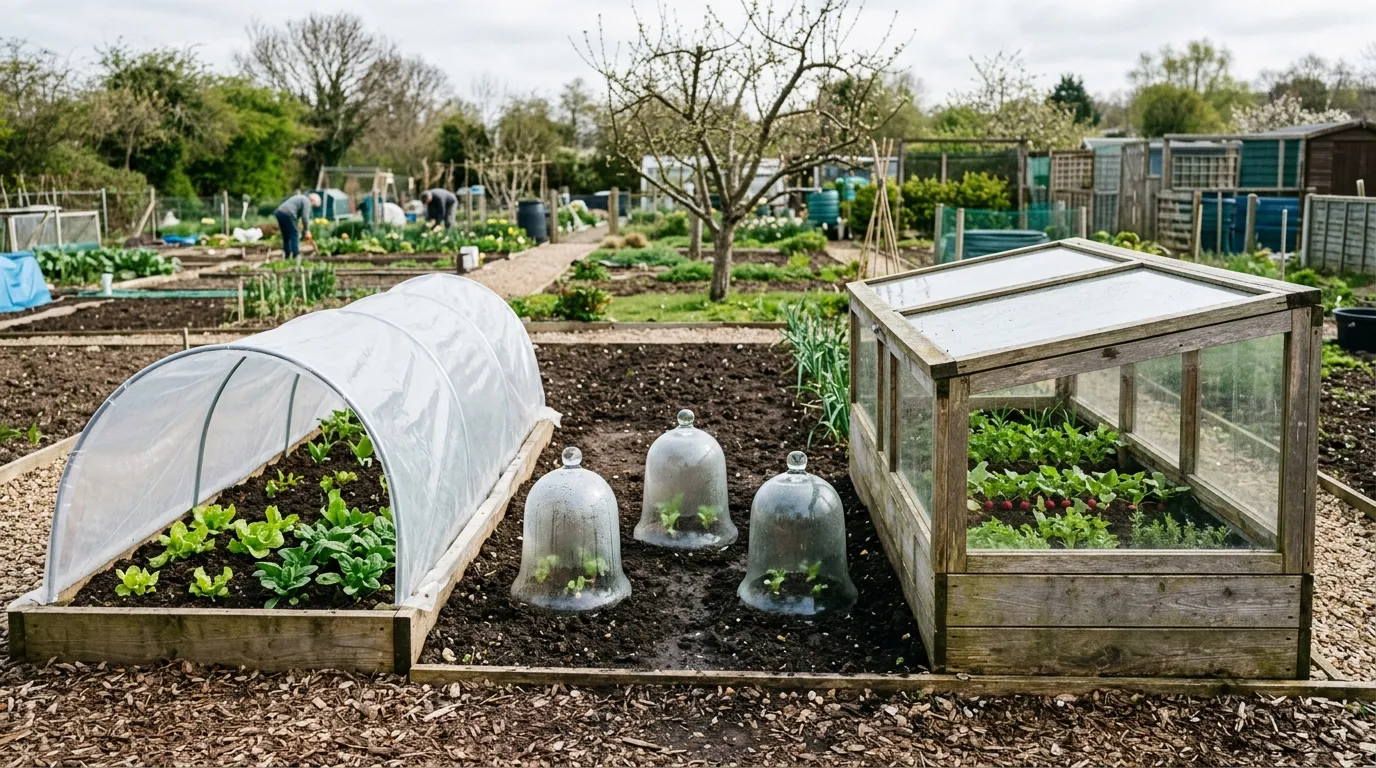
From left: a polythene low tunnel, glass cloches and a cold frame in an allotment setting. Each structure serves a different purpose in extending the growing season.
Troubleshooting common problems
Condensation dripping on plants: Angle the hoops so condensation runs to the edges, not the centre. Alternatively, use anti-fog polythene which has a surfactant coating that prevents droplet formation.
Wind lifting the covers: Weight edges with timber or half-filled water bottles rather than bricks, which can tear polythene. Alternatively, bury the edges 10cm into the soil.
Slugs thriving in the warm, damp environment: Set beer traps or use ferric phosphate pellets inside the tunnel. Check under the polythene edges at dusk as slugs congregate where the cover meets the soil.
Seedlings leggy and pale: Insufficient light. Clean polythene regularly and ensure the material is not too thick (over 600 gauge reduces light transmission). Replace cloudy or yellowed sheeting.
Related reading
Lawrie has been gardening in the West Midlands for over 30 years. He grows his own veg using no-dig methods, keeps a wildlife-friendly garden, and writes practical advice based on real UK growing conditions.