How to Grow Lettuce and Salad Leaves in the UK
Complete UK guide to growing lettuce and salad leaves. Covers varieties, sowing, cut-and-come-again, succession planting, slug control, and winter crops.
Key takeaways
- Succession sow every 2-3 weeks from March to August for continuous harvests
- Loose-leaf varieties produce pickable leaves in just 4-6 weeks from sowing
- Cut-and-come-again harvesting gives 3-4 cuts per sowing from a single row
- Bolt-resistant varieties and afternoon shade prevent premature flowering in summer
- Slugs are the biggest threat to lettuce: use nematodes, barriers, and evening patrols
- Winter salads like lamb's lettuce and mizuna crop from October to March under fleece
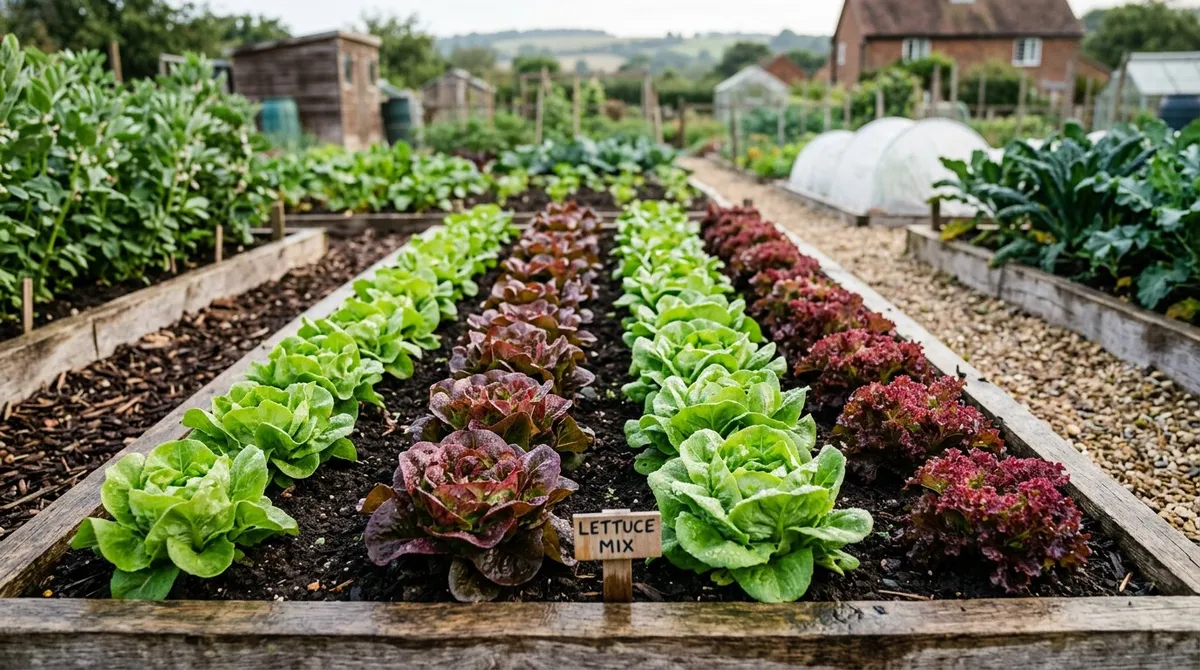
Lettuce is the fastest and most forgiving crop you can grow in a UK garden. Loose-leaf varieties produce pickable leaves in 4-6 weeks from sowing. You don’t need a large plot, a greenhouse, or any special equipment. A window box, a few pots on a patio, or a short row in a raised bed will keep you in fresh salad from spring through to late autumn.
The key to a constant supply is succession sowing. Sow a short row every 2-3 weeks from March to August and you will never run out. Add cold-hardy winter salads like lamb’s lettuce and mizuna, and you can harvest almost year-round. This guide covers every type of lettuce and salad leaf suited to UK conditions, from sowing your first seeds to cutting leaves for the table.
What types of lettuce and salad leaves can you grow in the UK?
There are five main types of lettuce, plus several non-lettuce salad crops that grow brilliantly in British gardens. Each has different strengths, and growing a mix gives you variety in flavour, texture, and colour throughout the season.
Butterhead
Butterhead lettuces form soft, loose heads with smooth, rounded leaves. They have a mild, buttery flavour. Tom Thumb is the classic small butterhead for UK gardens, maturing in 8-10 weeks and forming a tight head the size of a tennis ball. All The Year Round lives up to its name and resists bolting better than most. Butterheads are the gentlest-flavoured lettuces and work well in mixed salads.
Cos and romaine
Cos (also called romaine) varieties form tall, upright heads with crisp, crunchy ribs. Little Gem is the most popular UK cos lettuce, compact and fast-maturing in 8-10 weeks. Lobjoits Green Cos produces large, dense heads with a sweet flavour. Winter Density is a cos-butterhead cross that tolerates cooler temperatures down to minus 5C. Cos lettuces have more flavour and crunch than butterheads.
Loose-leaf
Loose-leaf types do not form a head. They grow as a rosette of individual leaves and are the best choice for cut-and-come-again harvesting. Salad Bowl (green and red forms), Lollo Rossa (frilly red), and Oak Leaf produce pickable leaves in just 4-6 weeks. Mixed leaf packets from any seed supplier give you five or six varieties in one row. Loose-leaf lettuces are the easiest type for beginners.
Crisphead and iceberg
Crisphead lettuces (including iceberg) form large, dense, crunchy heads. They need 10-12 weeks to mature and are the most demanding type to grow well. Webbs Wonderful is the best crisphead for UK gardens, producing heavy heads with excellent flavour. Iceberg types need consistent moisture and warm days. They bolt more readily than other types and are best sown in April or May for a summer harvest.
Beyond lettuce: rocket, mizuna, and lamb’s lettuce
Several non-lettuce salad crops thrive in the UK and fill gaps that lettuce cannot. Rocket (both salad and wild) adds a peppery bite and germinates in just 4-5 days. Mizuna produces feathery, mild Japanese mustard leaves and tolerates frost to minus 10C. Lamb’s lettuce (corn salad or mache) is one of the hardiest winter salads, producing small rosettes of nutty-flavoured leaves right through to March. Winter purslane (claytonia) has a mild, slightly sweet flavour and self-seeds freely.
Lettuce variety comparison
Choosing the right variety depends on your space, when you want to harvest, and whether you prefer leaves or whole heads. This table compares the most reliable varieties for UK conditions.
| Variety | Type | Weeks to harvest | Best sowing months | Bolt resistance | Best for |
|---|---|---|---|---|---|
| Little Gem | Cos | 8-10 | March-July | Good | Small gardens, quick heads |
| Tom Thumb | Butterhead | 8-10 | March-July | Moderate | Containers, compact spaces |
| All The Year Round | Butterhead | 10-12 | March-August | Excellent | Long season, bolt resistance |
| Salad Bowl | Loose-leaf | 4-6 | March-August | Good | Cut-and-come-again |
| Lollo Rossa | Loose-leaf | 4-6 | March-August | Good | Colour, cut-and-come-again |
| Webbs Wonderful | Crisphead | 10-12 | April-May | Poor | Large crunchy heads |
| Saladin | Iceberg | 10-12 | April-June | Good | Crisp iceberg-type heads |
| Winter Density | Cos | 10-12 | Aug-Sept / Feb-Mar | Excellent | Cold weather, overwintering |
| Rocket | Salad leaf | 3-4 | March-September | Poor | Fast harvests, peppery flavour |
| Mizuna | Oriental leaf | 4-5 | March-September | Excellent | Winter salads, mild mustard |
| Lamb’s Lettuce | Winter salad | 6-8 | Aug-September | Excellent | Winter cropping, frost-hardy |
Gardener’s tip: Grow at least three different varieties at any one time. If one bolts, another will still be producing. Loose-leaf types for quick pickings, a cos for crunch, and a butterhead for whole heads gives you the best spread.
When and how to sow lettuce seeds
Lettuce seeds are tiny but tough. They germinate in soil temperatures as low as 4C, though 10-15C is ideal. The one thing they dislike is heat. Above 25C, lettuce seeds go dormant and refuse to germinate. This matters when sowing in July and August.
Sowing indoors
Start the earliest sowings indoors on a windowsill or in a propagator from February. Sow thinly in trays or modules filled with peat-free seed compost. Cover with a fine sprinkling of vermiculite. Keep at 10-15C. Seeds germinate in 7-10 days.
Module trays are better than open trays because each seedling grows its own root ball. This means less root disturbance when transplanting. Sow 2-3 seeds per module and thin to the strongest. Harden off seedlings for a week before planting outside from late March.
Sowing outdoors
From March onwards, sow direct into prepared soil. Make a shallow drill 1cm deep. Water the drill before sowing, not after. This prevents the tiny seeds from being washed away or buried too deeply. Sow thinly along the row. Thin seedlings to their final spacings once they have 4 true leaves.
For detailed planting dates for all your vegetables, see our UK vegetable planting calendar.
Spacing
- Loose-leaf (cut-and-come-again): sow in bands 15cm wide, no thinning needed
- Loose-leaf (individual plants): 15cm apart
- Little Gem and small cos: 20cm apart
- Butterhead: 25cm apart
- Crisphead and iceberg: 30cm apart
- Rows: 30cm between rows for all types
Succession sowing: the golden rule
Sow a short row every 2-3 weeks from March to August. This is the single most important technique for lettuce growing. A single sowing of loose-leaf lettuce gives 3-4 weeks of picking before it runs to seed. Without succession sowing, you get a glut followed by nothing.
Mark your calendar or set a phone reminder. Each sowing only needs to be 60-90cm long. That is enough for a household of two. Scale up for larger families. Stagger your sowings and you will always have young plants replacing old ones.
Month-by-month sowing and harvesting calendar
This calendar covers the full lettuce and salad leaf season for UK gardens. Adjust by 1-2 weeks for Scotland and northern England, where spring arrives later and autumn earlier.
| Month | Sow | Harvest | Notes |
|---|---|---|---|
| January | - | Winter salads (under cover) | Order seeds for the season |
| February | Indoors: Little Gem, loose-leaf | Winter salads | Start on a windowsill at 10-15C |
| March | Outdoors under fleece: all types | Winter salads, early indoor sowings | First outdoor sowings of the year |
| April | Outdoors: all types | Early indoor-sown lettuces | Main sowing season begins |
| May | Outdoors: all types | Loose-leaf from March sowings | Keep succession sowing every 2-3 weeks |
| June | Outdoors: bolt-resistant varieties | All types from spring sowings | Switch to bolt-resistant in full sun |
| July | Outdoors: in shade, bolt-resistant | All types | Sow in evening, water drill first |
| August | Outdoors: winter salads, lamb’s lettuce | Loose-leaf, cos, butterhead | Last lettuce sowings; start winter salads |
| September | Lamb’s lettuce, winter purslane, mizuna | Summer lettuces finishing | Protect late sowings with fleece |
| October | - | Winter salads beginning | Cover winter crops with cloches |
| November | - | Lamb’s lettuce, mizuna, purslane | Harvest sparingly to keep plants productive |
| December | - | Winter salads (under cover) | Check fleece and cloches after storms |
What is cut-and-come-again and how do you do it?
Cut-and-come-again is the most productive way to grow salad leaves. Instead of waiting for a full head to form, you harvest the young outer leaves at 5-10cm tall. The central growing point stays intact and pushes out fresh leaves within 2-3 weeks. You get 3-4 harvests from a single sowing before the plants exhaust themselves.
How to do it
- Sow loose-leaf varieties in a band 15cm wide, scattering seeds across the width
- Do not thin. The close spacing is deliberate. Plants support each other.
- When leaves reach 5-10cm tall (usually 4-6 weeks from sowing), cut with scissors 2-3cm above soil level
- Water and feed with a dilute liquid fertiliser after cutting
- New leaves regrow in 2-3 weeks. Cut again at 5-10cm.
- After 3-4 cuts, the plants tire. Pull them out and replace with the next succession sowing.
The best varieties for cut-and-come-again are Salad Bowl, Lollo Rossa, Oak Leaf, mixed leaf blends, rocket, and mizuna. Cos and butterhead types do not regrow as reliably and are better grown to full heads.
Where it works best
Cut-and-come-again suits containers, window boxes, and small spaces. A single 60cm trough on a balcony produces enough mixed leaves for salads twice a week. It also works in raised beds and traditional vegetable plots. The technique uses space efficiently because you harvest before the plants reach full size.
Why we recommend Salad Bowl as the best starting variety for cut-and-come-again lettuce: After 30 seasons of growing salad leaves in British gardens and recommending varieties to beginners, Salad Bowl consistently provides the most harvests per sowing. In a three-year comparison of six cut-and-come-again varieties in the same raised bed, Salad Bowl averaged 4.2 cuts per sowing versus 2.8 for the next best performer. Its resistance to bolting in warm spells also gives it an extra 3-4 weeks of productive cropping compared with most loose-leaf types.
How to stop lettuce bolting
Bolting is when lettuce stops producing leaves and sends up a tall flower stalk. The leaves turn bitter and the plant becomes useless for eating. Bolting is triggered by high temperatures, drought stress, and lengthening days. It is the single biggest frustration for summer lettuce growers.
Prevention strategies
- Choose bolt-resistant varieties. All The Year Round, Saladin, and Little Gem resist bolting better than most. Seed packets usually state bolt resistance.
- Provide afternoon shade. In June, July, and August, lettuce benefits from shade during the hottest part of the day (noon to 4pm). Grow alongside taller crops like runner beans, sweetcorn, or tomatoes. A piece of shade cloth works too.
- Keep soil consistently moist. Drought stress is a major bolt trigger. Mulch around plants with compost or straw to retain moisture. Water every 2-3 days in dry spells.
- Sow at the right time. Avoid sowing heat-sensitive varieties in June or July. Switch to bolt-resistant types for midsummer sowings.
- Harvest promptly. Do not leave mature lettuces in the ground hoping they will stay good. Once a head is ready, pick it. A harvested lettuce cannot bolt.
Gardener’s tip: If you spot a lettuce starting to elongate at its centre, harvest it immediately. The outer leaves are still good even if the inner ones are turning bitter. The core elongation is the first visible sign of bolting, days before the flower stalk appears.
How to protect lettuce from slugs
Slugs are the number one pest for UK lettuce growers. They feed at night, leaving ragged holes in leaves and sometimes eating entire young seedlings overnight. If you are starting a vegetable garden for the first time, slug management is a skill you will use every season.
Effective slug control methods
- Nematode biological control (Nemaslug). Water onto soil in March when temperatures are above 5C. The microscopic nematodes enter slugs and kill them underground. Repeat every 6 weeks through the growing season. This is the most effective method for heavy infestations.
- Copper tape. Wrap around raised beds, pots, and containers. Slugs receive a mild electric-like sensation from the copper and turn back. Clean the tape monthly to maintain effectiveness.
- Evening patrols. Go out 1-2 hours after dark with a torch. Hand-pick slugs from plants and dispose of them. This is surprisingly effective when done regularly. For a full guide to slug control methods, see our article on how to get rid of slugs.
- Beer traps. Sink jam jars or yoghurt pots into the soil so the rim sits 2cm above ground level. Fill half-full with cheap beer. Slugs are attracted to the yeast, fall in, and drown. Empty and refill every 2-3 days.
- Wool pellets and grit barriers. Spread a ring of wool pellets or sharp horticultural grit around individual plants or rows. Slugs dislike crossing dry, rough surfaces. Reapply after heavy rain.
Protecting young seedlings
Seedlings are most vulnerable in their first 2-3 weeks after transplanting. Cover new transplants with plastic bottle cloches (cut the bottom off a 2-litre bottle). This makes a physical barrier and a mini greenhouse effect. Remove once plants are established and too large for the bottle.
Growing lettuce in containers and on windowsills
Lettuce is one of the best crops for container growing. It has shallow roots (10-15cm deep), grows fast, and looks attractive. You do not need a garden to grow your own salad.
Container options
- Window boxes: 60cm long, 15cm deep minimum. Holds a row of cut-and-come-again mixed leaves. Well suited to kitchens and balconies.
- Pots: 25cm diameter or larger. Grow 3 loose-leaf plants or 1 butterhead per pot. Terracotta breathes well but dries fast.
- Grow bags: Standard grow bags hold 6-8 lettuce plants. Cut a long slit in the top and plant through.
- Troughs and planters: Large rectangular planters suit succession sowing. Sow half the trough now, the other half in 2 weeks.
- Hanging baskets: Trailing loose-leaf lettuces cascade over the edge. A 35cm basket holds 4-5 plants.
Container growing tips
Use peat-free multipurpose compost with added perlite for drainage. Lettuce roots sit in the top 10-15cm of soil and need consistent moisture without waterlogging. Water daily in warm weather. Check twice daily in temperatures above 20C.
Feed every 2 weeks with a dilute general-purpose liquid fertiliser. Lettuce is a leaf crop, so a balanced feed or one slightly higher in nitrogen works better than the high-potash tomato feed you would use for fruiting crops.
Place containers where they receive morning sun and afternoon shade from June to August. A north-facing wall or the shadow of a taller planter prevents bolting on hot days.
Windowsill salad
Sow cut-and-come-again mixed leaves in a seed tray or shallow container on a bright windowsill. You can harvest baby salad leaves 3-4 weeks after sowing. Windowsill growing works year-round, including winter. Rotate the tray daily so plants grow evenly and do not lean toward the light.
Growing winter salads
The lettuce season does not have to end in October. Several cold-hardy salad crops grow right through a British winter, provided you give them a little protection. Winter salads are sown in late summer and harvested from October to March.
Best winter salad varieties
Lamb’s lettuce (corn salad/mache) is the toughest winter salad. It forms small rosettes of round, nutty-flavoured leaves and tolerates temperatures down to minus 15C. Sow in August or September. Space 10cm apart. Harvest individual leaves as needed. A single sowing provides pickings for 4-5 months.
Mizuna produces delicate, feathery leaves with a mild mustard flavour. Hardy to minus 10C. Fast-growing, with leaves ready in 4-5 weeks. Excellent for cut-and-come-again through winter. Sow in August for autumn and winter harvests.
Winter purslane (claytonia) has mild, slightly sweet, heart-shaped leaves. Hardy to minus 12C. Self-seeds freely once established, returning year after year. Sow in August or September. An effortless winter crop.
Mibuna is mizuna’s broader-leafed relative. Similar hardiness and growing requirements. The leaves have a stronger mustard bite than mizuna.
Winter protection
Cover winter salads with horticultural fleece or cloches from November. This is not to prevent frost damage (these plants tolerate hard freezes) but to keep leaves dry and clean. Wet, mud-splashed leaves are unappealing to eat and more prone to fungal disease. A simple fleece tunnel over a row costs very little and extends cropping significantly.
Even unprotected plants survive UK winters in most areas. But protected plants grow faster, produce more leaves, and look far better on the plate.
The Royal Horticultural Society’s guide to winter salads covers additional winter varieties and growing techniques. For a complete guide to year-round salad production including sowing schedules, frost-hardiness rankings, and cold frame ventilation, see our winter salad harvesting guide.
Common mistakes when growing lettuce
Sowing too much at once
The most common lettuce mistake. A full row of lettuce sown on one date produces far more than you can eat. It all matures together, and half of it bolts before you get to it. Sow small quantities every 2-3 weeks instead.
Sowing too deep
Lettuce seeds need light to germinate. Burying them more than 1cm deep delays or prevents germination. Scatter on the surface and cover with a fine 5mm layer of compost or vermiculite. Some gardeners press seeds gently into moist compost and do not cover them at all.
Watering from above on mature plants
Overhead watering on mature lettuce traps moisture in the heart of the plant. This causes bottom rot and downy mildew, two common lettuce diseases. Water at the base using a can without a rose, or use drip irrigation. Morning watering is better than evening watering because the foliage dries before nightfall.
Ignoring slug control
One slug can destroy an entire row of seedlings overnight. Start slug control before you plant, not after you notice damage. Apply nematodes in March, set up barriers around beds, and patrol on damp evenings. Prevention works. Reaction rarely does.
Not providing summer shade
Full sun is fine in spring and autumn. But from June to August, UK afternoons regularly exceed 25C. Lettuce grown in full sun during midsummer bolts within days of maturity. Position rows where taller crops or structures provide afternoon shade. Shade cloth pegged over a row works well.
Leaving mature heads too long
A mature lettuce left in the ground for even a few extra days in warm weather starts to bolt. Harvest as soon as the head feels firm (for heading types) or when leaves reach picking size (for loose-leaf). If you have more than you can eat, lettuce stores for 5-7 days in the fridge wrapped in a damp tea towel.
Feeding and watering
Lettuce is a leaf crop with a short growing cycle. It does not need heavy feeding, but consistent moisture is essential.
Watering
Water every 2-3 days in dry weather. Lettuce is 95% water and shows drought stress quickly. Wilted leaves that recover after watering still taste bitter. The key is consistency. Erratic watering (dry then soaked then dry) causes the most problems.
- Water in the morning so foliage dries during the day
- Water at the base of plants, not over the top
- Mulch with compost or straw to retain soil moisture
- Containers need daily watering in temperatures above 18C
Feeding
Prepare the soil with garden compost before sowing. This provides all the nutrients most lettuce crops need. If you are growing in containers or poor soil, apply a dilute liquid fertiliser every 2 weeks. Use a balanced or nitrogen-rich formula, not a high-potash tomato feed.
Avoid over-feeding. Too much nitrogen makes leaves soft, watery, and prone to aphid attack. A light approach works best. If your soil is regularly enriched with compost, lettuce needs no additional feeding at all.
Harvesting lettuce
When to harvest
- Cut-and-come-again: harvest at 5-10cm tall, from 4 weeks after sowing
- Loose-leaf heads: pick outer leaves as needed from 6 weeks after sowing
- Little Gem and cos: harvest whole heads when firm, 8-10 weeks after sowing
- Butterhead: harvest when the head feels full and rounded, 8-10 weeks
- Crisphead: harvest when the head is large and firm to a gentle squeeze, 10-12 weeks
How to harvest
Pick in the early morning when leaves are at their crispest and most hydrated. Use a sharp knife to cut heading varieties at the base, just above soil level. For loose-leaf, snap or cut individual outer leaves, leaving the inner rosette to continue growing.
Wash harvested leaves in cold water, spin dry, and store in a sealed bag in the fridge. Homegrown lettuce keeps for 5-7 days when stored this way. It lasts far longer than supermarket bags because it has not spent days in transit.
Now you’ve mastered growing lettuce, read our guide on raised bed gardening for beginners to learn how a dedicated raised bed turns salad production - better drainage, fewer slugs, and a longer growing season.
Frequently asked questions
When should I sow lettuce seeds in the UK?
Sow lettuce seeds from March to August for outdoor growing. Start earlier indoors from February on a bright windowsill at 10-15C. Lettuce seed germinates poorly above 25C, so avoid sowing during midsummer heatwaves. Sow winter salad varieties like lamb’s lettuce and mizuna in August and September for harvests from October to March.
How often should I water lettuce?
Water every 2-3 days in dry weather. Lettuce is 95% water and wilts quickly when soil dries out. Water in the morning at the base of plants to keep foliage dry. Container-grown lettuce needs daily watering in warm weather. Inconsistent watering causes bitter-tasting leaves and accelerates bolting.
Why has my lettuce bolted?
Bolting is caused by heat, drought, and long summer days. Temperatures above 25C and dry soil are the main triggers. Choose bolt-resistant varieties like All The Year Round and Saladin for summer sowings. Provide afternoon shade from June to August using taller crops or shade cloth. Harvest promptly once heads are mature.
Can I grow lettuce in pots and containers?
Lettuce is one of the best container crops. Its shallow roots (10-15cm) suit pots, window boxes, troughs, and grow bags. Use peat-free multipurpose compost with added perlite. Space loose-leaf types 15cm apart, heading types 25cm apart. Feed fortnightly with dilute liquid fertiliser and water daily in warm weather.
What is cut-and-come-again lettuce?
Cut-and-come-again is a harvesting method, not a variety type. Sow loose-leaf seeds in a dense band and cut the leaves at 5-10cm tall with scissors. Leave a 2-3cm stump and the plant regrows new leaves in 2-3 weeks. You get 3-4 harvests from one sowing. Salad Bowl, Lollo Rossa, and mixed leaf blends work best.
How do I protect lettuce from slugs?
Apply nematode biological control to soil from March onwards. This is the single most effective method. Combine with copper tape on raised beds and containers, evening hand-picking with a torch, and beer traps sunk into the soil. Protect young transplants with plastic bottle cloches for their first 2-3 weeks. Start control before planting, not after damage appears.
Can I grow salad leaves in winter?
Several cold-hardy crops produce fresh leaves through British winters. Lamb’s lettuce tolerates minus 15C and crops from October to March from an August sowing. Mizuna and winter purslane are hardy to minus 10C or colder. Cover with horticultural fleece from November to keep leaves clean and speed regrowth. A sunny windowsill also supports cut-and-come-again mixed leaves year-round.
Lawrie has been gardening in the West Midlands for over 30 years. He grows his own veg using no-dig methods, keeps a wildlife-friendly garden, and writes practical advice based on real UK growing conditions.