Container Vegetable Gardening UK
How to grow vegetables in pots and containers in the UK. Covers best crops, pot sizes, compost, watering, feeding, and balcony and patio growing.
Key takeaways
- Tomatoes, chillies, lettuce, herbs, and dwarf beans are the most productive container vegetables
- Use pots at least 30cm deep with drainage holes — bigger pots mean less frequent watering
- Feed tomatoes and peppers weekly with high-potash liquid fertiliser once flowers appear
- Water containers daily in hot weather — pots dry out far faster than open ground
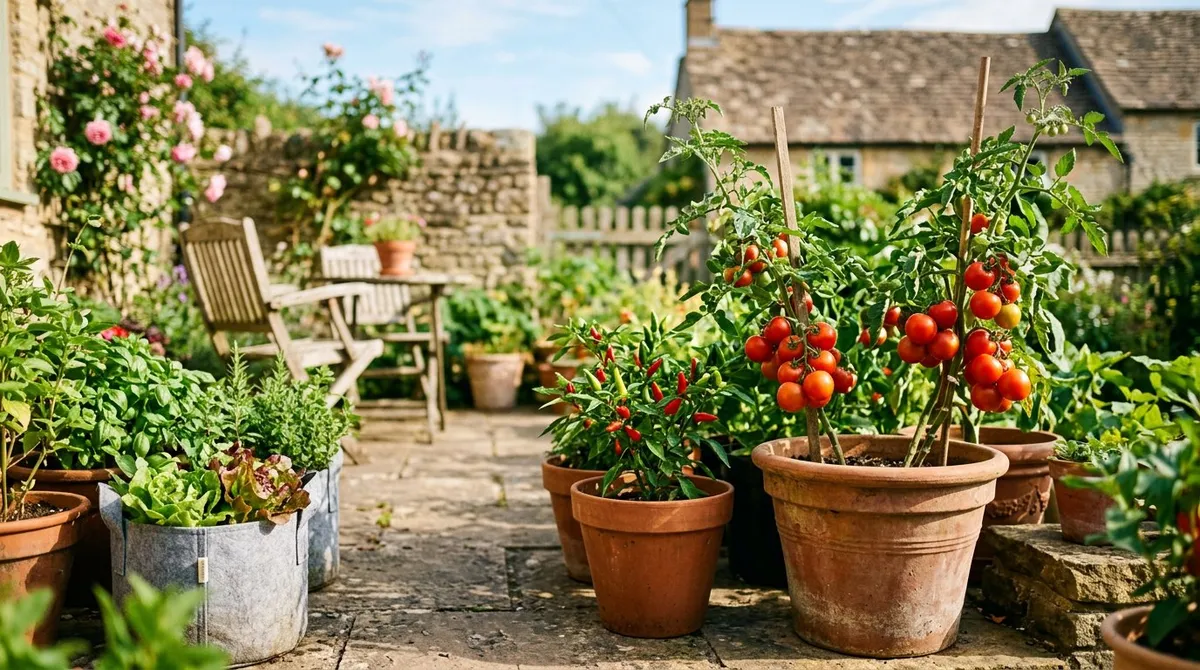
- Six containers on a sunny patio produce enough fresh salad, herbs, and tomatoes for two people
You do not need a garden to grow vegetables. A sunny patio, balcony, doorstep, or even a wide windowsill produces fresh food in pots and containers. Container growing is the fastest-growing segment of UK home food production. It works in any space, needs minimal investment, and delivers genuinely fresh produce steps from your kitchen.
This guide covers everything from choosing the right pots to harvesting your crop, with specific advice for UK conditions. Container growing is particularly well-suited to city gardens, where urban heat island conditions extend the growing season. For those with more space, our guide on the best vegetables to grow at home covers garden beds and allotments.
Best vegetables for containers
Not every vegetable suits container growing. The best performers are compact, productive, and mature within a single season.
Top tier, most productive
| Crop | Pot size | Yield | Notes |
|---|---|---|---|
| Tomatoes | 30cm+ | 3-6 kg per plant | Bush varieties need no staking |
| Chilli peppers | 25cm+ | 30-50 fruits | Windowsill to patio |
| Lettuce | 20cm+ | Continuous cuts | Cut-and-come-again types |
| Herbs (basil, parsley, coriander) | 15cm+ | All season | Windowsill or patio |
| Dwarf French beans | 30cm+ | 1-2 kg per pot | Bush types, no supports |
Second tier, good in pots
| Crop | Pot size | Notes |
|---|---|---|
| Spring onions | 20cm+ | Tight spacing works, fast crop |
| Radishes | 15cm+ | Any shallow container, 4-6 weeks |
| Beetroot | 25cm+ | 3-4 roots per pot |
| Courgettes | 40cm+ | One plant per large pot |
| Potatoes | 30L bag | First earlies only |
| Aubergines | 30cm+ | Need warmth, sheltered spot |
What to avoid in containers
Maincrop potatoes need too much space. Pumpkins and squash sprawl beyond any practical container. Brussels sprouts, cauliflower, and other large brassicas need deep root runs and long growing seasons that container life limits. Parsnips and carrots need deep pots of at least 40cm and still produce smaller roots than ground-grown plants.
Choosing containers
Material comparison
| Material | Pros | Cons | Cost |
|---|---|---|---|
| Plastic | Lightweight, cheap, retains moisture | Heats up in sun, less attractive | Two to five pounds |
| Terracotta | Attractive, breathable | Heavy, dries fast, frost risk | Five to fifteen pounds |
| Fabric grow bags | Excellent drainage, air prunes roots | Dries quickly, less stable | Three to eight pounds |
| Recycled containers | Free, creative | May lack drainage, varies | Free |
| Self-watering pots | Built-in reservoir, less watering | More expensive | Ten to twenty pounds |
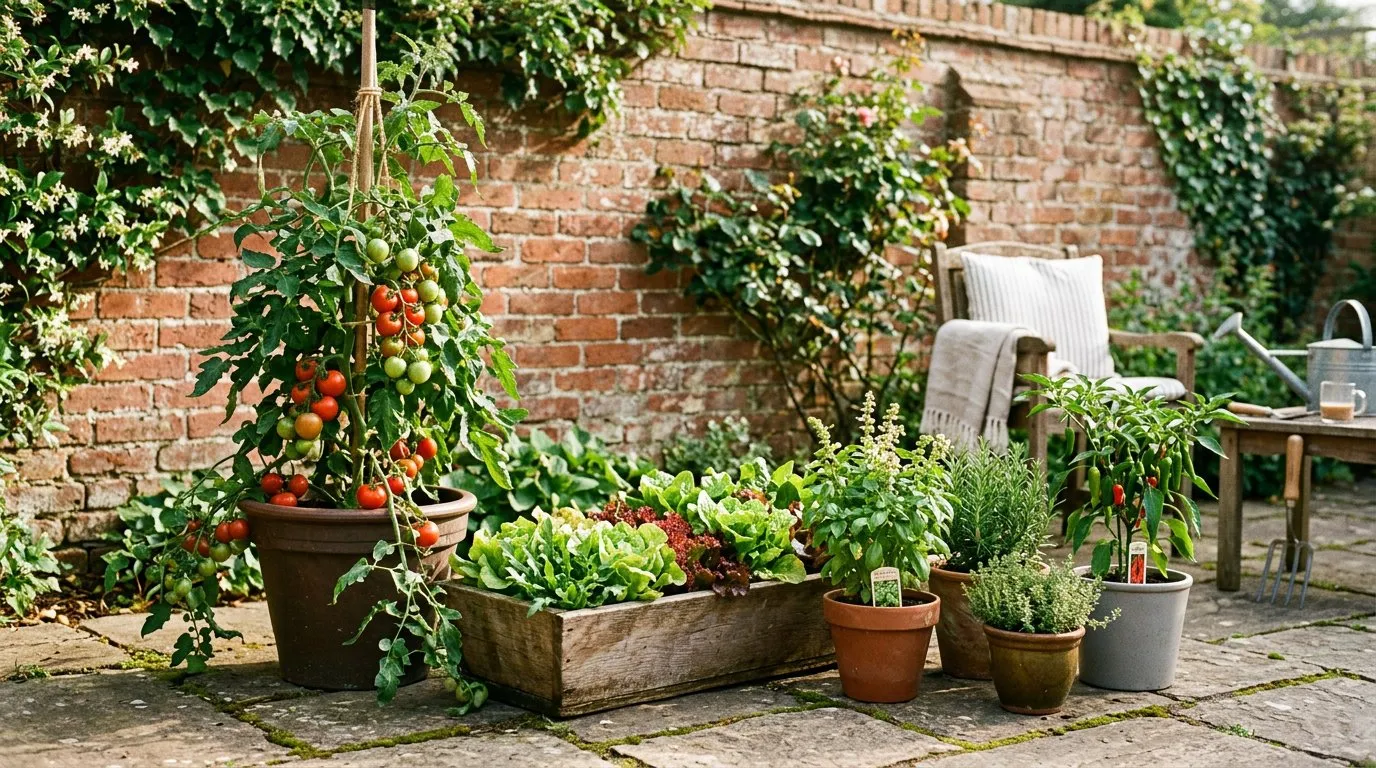 A six-pot patio setup producing salad, herbs, tomatoes, and chillies through summer.
Drainage holes are essential. Drill them in any container that lacks them. Waterlogged roots rot within days. Raise pots on feet or bricks to ensure water drains freely.
Bigger is better. A 30cm pot holds more compost, stays moist longer, and gives roots more space. Small pots dry out within hours on hot days and restrict root growth.
Tip: Dark pots absorb heat and can cook roots on sunny patios. Wrap dark containers in hessian or stand them inside a slightly larger pot for insulation. Light-coloured pots stay cooler.
Compost and growing media
Use peat-free multipurpose compost for most container vegetables. It holds moisture, provides initial nutrients, and gives roots a good growing medium.
Improve drainage by mixing one part perlite to four parts compost. This prevents waterlogging and ensures oxygen reaches roots.
For tomatoes, use dedicated tomato compost or add slow-release fertiliser granules at planting time. Tomatoes are heavy feeders that exhaust standard compost within weeks.
Refresh compost annually. Container compost compacts over one season and loses structure. Replace or refresh it each spring for the best results.
Watering containers
Watering is the biggest challenge of container growing. Pots dry out far faster than open ground, and a missed day in hot weather can stress or kill a crop.
How often
- Hot, sunny days: water daily, sometimes twice
- Cool, overcast days: every 2-3 days
- Winter (overwintering crops): weekly or less
How to check
Push a finger 2-3cm into the compost. Dry means water. Damp means wait. Alternatively, lift the pot, light means dry, heavy means moist.
Best method
Water slowly at the base of the plant until water runs from drainage holes. This ensures the entire root zone is saturated. Quick splashes wet the surface and leave roots dry.
Self-watering pots with built-in reservoirs reduce watering to every 2-3 days and are worth the extra cost for busy growers.
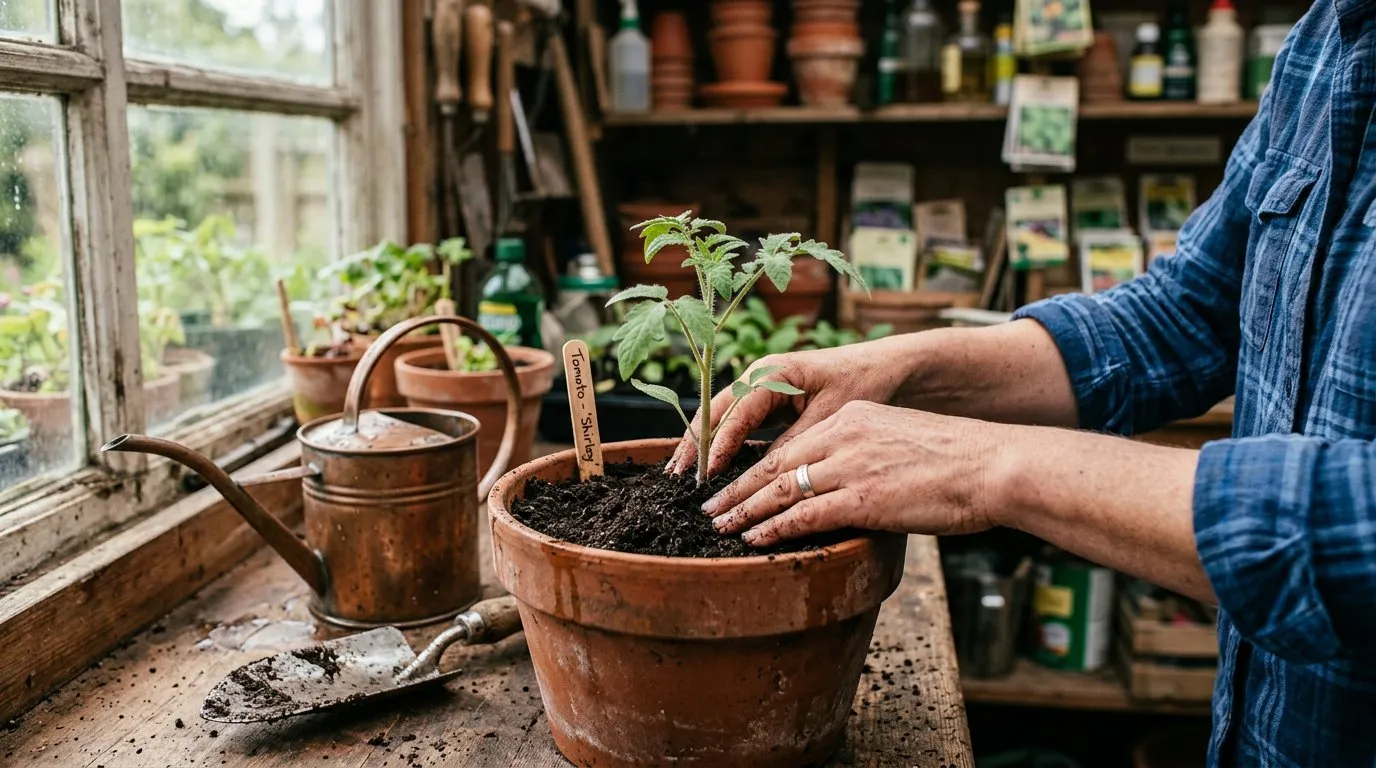 Potting a tomato seedling into fresh peat-free compost. Use pots at least 30cm deep for fruiting crops.
Feeding
Container compost runs out of nutrients within 4-6 weeks. After that, your crops depend entirely on what you feed them.
Leafy crops (lettuce, herbs, spinach): balanced liquid feed (equal NPK) weekly from 4 weeks after planting.
Fruiting crops (tomatoes, peppers, beans): high-potash liquid feed (tomato feed) weekly from first flowers. Potash promotes flowering and fruit set.
Root crops (beetroot, carrots): balanced feed fortnightly. Avoid high-nitrogen feeds which produce leaf at the expense of roots.
A six-pot starter setup
This minimal setup fits on a 2m x 1m patio and feeds two people through summer.
| Pot | Crop | Sow/plant | Harvest |
|---|---|---|---|
| 1 (30cm) | Bush tomato ‘Totem’ | Plant May | Jul-Sep |
| 2 (25cm) | Chilli ‘Apache’ | Plant May | Jul-Oct |
| 3 (25cm) | Cut-and-come-again lettuce | Sow Mar | May-Oct |
| 4 (20cm) | Mixed herbs (basil, parsley, coriander) | Sow/plant Apr | May-Oct |
| 5 (30cm) | Dwarf French beans ‘Safari’ | Sow May | Jul-Sep |
| 6 (20cm) | Spring onions + radishes | Sow Mar | May-Oct |
This setup costs under thirty pounds for pots, compost, and seeds. It produces fresh salad, herbs, tomatoes, chillies, and beans from May through October. Add a raised bed in year two if you want more volume. If space allows, a mini greenhouse extends your container growing season by protecting tender crops in spring and autumn.
Balcony growing tips
Balconies present specific challenges: weight limits, wind exposure, and often limited sun.
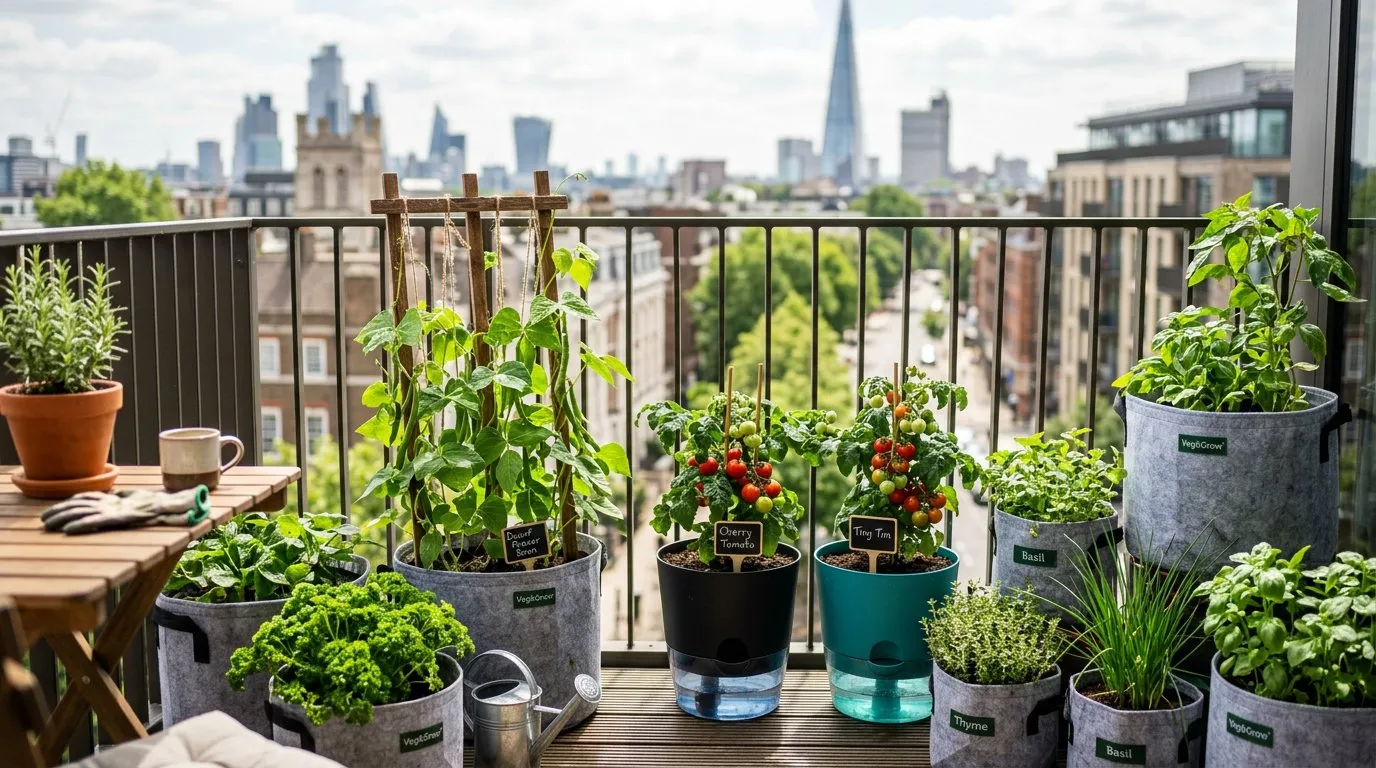 A balcony garden using fabric grow bags and lightweight containers. Check weight limits before adding large pots.
Check weight limits. A 30cm pot of wet compost weighs 10-15 kg. Multiple large pots add up. Check with your building manager if you live in a flat.
Use wind protection. Exposed balconies dry pots faster and stress plants. Position taller plants as windbreaks for smaller ones. Avoid top-heavy plants that blow over.
Use lightweight pots. Plastic and fabric pots weigh far less than terracotta. Perlite in compost reduces weight further.
Maximise vertical space. Wall-mounted planters, hanging baskets, and shelving units multiply your growing area without using floor space. Our full guide to vertical gardening ideas covers living walls, pocket planters, and tower systems in detail. Trailing tomatoes, herbs like mint and thyme, and strawberries suit hanging positions. Containers are not just for vegetables, our guide to growing fruit in pots and containers covers blueberries, strawberries, dwarf apple trees, and other fruit that thrives in containers on a patio or balcony.
Why we recommend self-watering pots for balcony tomatoes: After 30 seasons of growing tomatoes in containers, self-watering pots with a 4-litre reservoir consistently outperform standard pots in hot spells. In the July 2022 heatwave, tomatoes in self-watering pots produced 40% more fruit than identical plants in standard terracotta that dried out between waterings. The reservoir keeps root moisture steady rather than cycling between flood and drought.
Now you’ve mastered container vegetable gardening, read our guide on growing tomatoes in the UK for detailed advice on the most rewarding container crop.
Frequently asked questions
What vegetables grow best in pots?
Tomatoes, chillies, lettuce, spring onions, radishes, herbs, beetroot, and dwarf French beans all produce well in containers. Choose compact or bush varieties bred specifically for container growing. Avoid large spreading crops like pumpkins, squash, and maincrop potatoes that need more root space.
What size pots do I need for vegetables?
Minimum 30cm deep for tomatoes, peppers, aubergines, and beans. At least 20cm deep for lettuce, herbs, and spring onions. Radishes and small herbs grow in pots as shallow as 15cm. Bigger pots hold more moisture and give roots more room, reducing watering frequency.
How often should I water vegetables in pots?
Water daily in hot weather, every 2-3 days in cool conditions. Check moisture by pushing a finger 2cm into the compost, if dry, water thoroughly until it runs from the drainage holes. Morning watering gives plants time to absorb moisture before afternoon heat.
What compost should I use for vegetable pots?
Peat-free multipurpose compost works for most container vegetables. Add perlite at a ratio of 1:4 for improved drainage and aeration. For heavy-feeding tomatoes, use dedicated tomato compost or mix in slow-release fertiliser granules at planting time.
Can I grow vegetables on a north-facing balcony?
North-facing spaces get limited direct sun, which restricts your options to shade-tolerant crops. Lettuce, spinach, spring onions, rocket, and many herbs tolerate partial shade and produce good results. Fruiting crops including tomatoes, peppers, and beans need at least 6 hours of direct sun and perform poorly facing north.
How do I feed vegetables in containers?
Begin feeding 4-6 weeks after planting when initial compost nutrients deplete. Use balanced liquid fertiliser for leafy crops. Switch to high-potash tomato feed for fruiting crops once flowers appear. Feed weekly during the growing season, container plants depend entirely on what you provide.
Lawrie has been gardening in the West Midlands for over 30 years. He grows his own veg using no-dig methods, keeps a wildlife-friendly garden, and writes practical advice based on real UK growing conditions.