Easy Recipes with Home-Grown Vegetables
Simple seasonal recipes using UK-grown vegetables. Courgette fritters, runner bean chutney, beetroot soup and tomato sauce from your garden.
Key takeaways
- Most home-grown vegetable recipes need under 30 minutes of active preparation time
- Summer courgette gluts can be turned into fritters, soup, or chutney in batches of 20+ portions
- Runner bean chutney keeps for 12 months in sterilised jars stored in a cool, dark cupboard
- Roasted root vegetables need 35-40 minutes at 200C for caramelised edges
- Blanching vegetables for 2-3 minutes before freezing preserves colour, texture, and nutrients for 12 months
- A single tomato plant produces enough fruit for 8-10 jars of passata
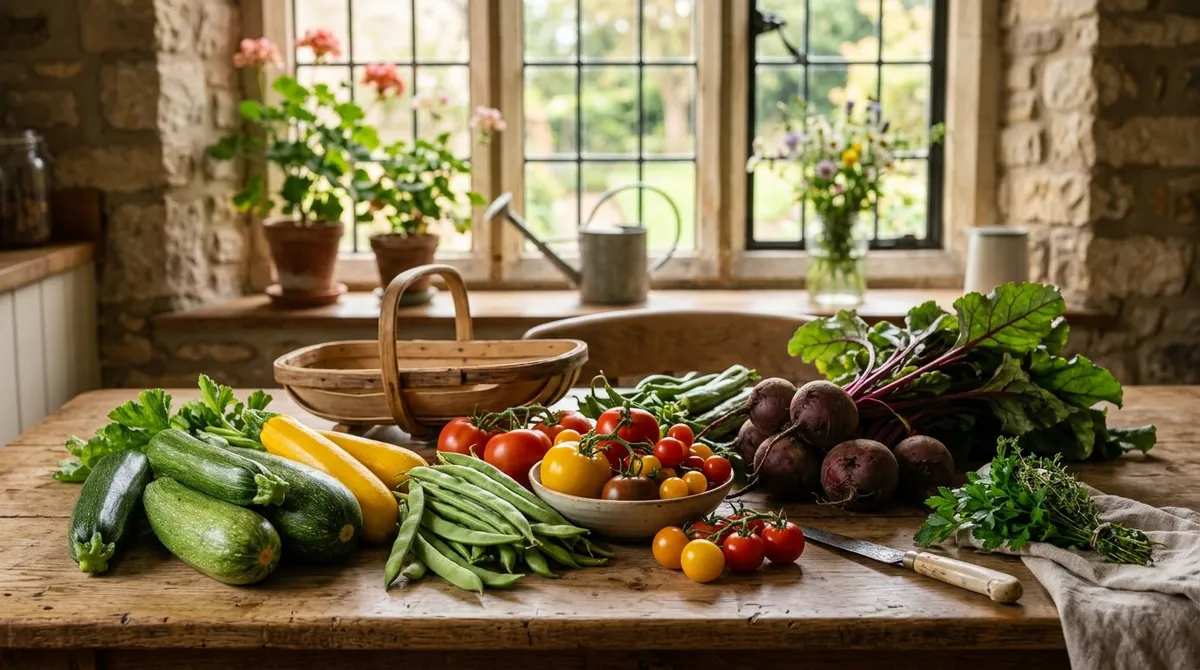
Home-grown vegetables taste better than anything from a supermarket. The flavour difference between a tomato picked ripe from the vine and one shipped from a warehouse is enormous. If you grow your own food following our UK vegetable planting calendar, you already know this. The challenge is using everything before it spoils.
This guide covers simple, seasonal recipes that make the most of common UK-grown vegetables. Every recipe uses straightforward techniques and store-cupboard ingredients. We have organised them by season so you can cook what is ready in the garden right now. None of these dishes need specialist equipment or advanced skills. A sharp knife, a decent pan, and fresh produce are all you need.
Spring recipes: peas, broad beans, and new potatoes
Spring marks the start of the fresh harvest season. By April and May, the first pickings of peas, broad beans, and new potatoes are ready. These young vegetables need very little done to them. Simplicity is the key to spring cooking.
Pea and mint soup is one of the fastest dishes you can make. Soften a diced onion in 30g of butter for 5 minutes. Add 500g of freshly podded peas and 600ml of vegetable stock. Simmer for 8 minutes, then blend with a handful of fresh mint leaves. Season with salt and white pepper. This soup works hot or chilled. It freezes well in 500ml portions for up to 6 months.
Broad bean bruschetta makes a perfect light lunch. Pod and blanch 400g of broad beans for 3 minutes, then slip off the grey outer skins. Mash roughly with 2 tablespoons of olive oil, a squeeze of lemon juice, and a crushed garlic clove. Pile onto toasted sourdough. The bright green colour and fresh, nutty flavour are nothing like the grey, floury beans most people remember from school dinners.
Crushed new potatoes with herbs need only 20 minutes. Boil 750g of small new potatoes for 15 minutes until tender. Drain, crush lightly with a fork, and toss with olive oil, flaky sea salt, and chopped fresh parsley. Roast at 200C for 15 minutes until the edges crisp. These work as a side dish with grilled meat or fish.
Gardener’s tip: Pick peas in the morning when sugar levels are highest. The longer they sit after picking, the more sugar converts to starch. Cook within 2 hours for the sweetest flavour.
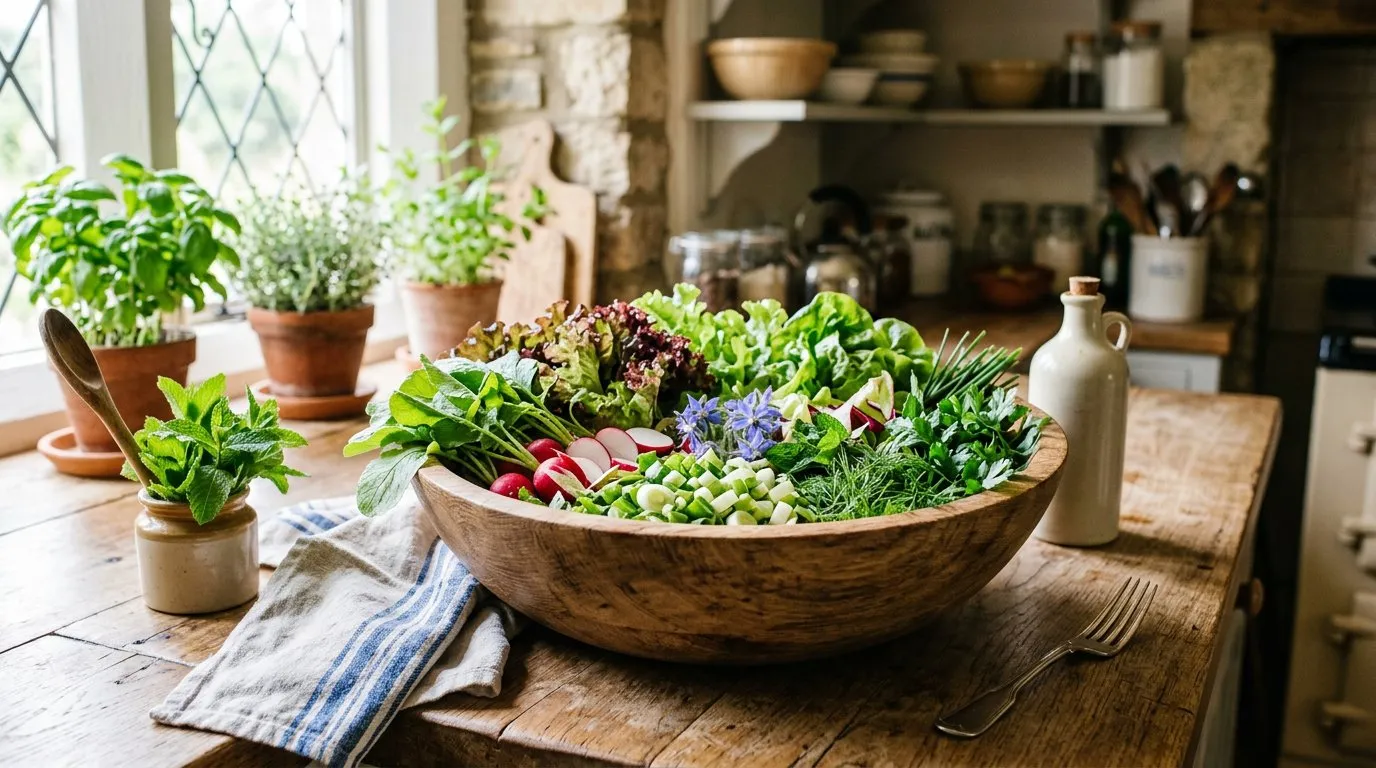
A wooden salad bowl loaded with freshly picked garden lettuce, radishes, spring onions, and herbs — the simplest way to enjoy home-grown vegetables.
Summer recipes: courgettes, tomatoes, and runner beans
Summer brings the biggest harvests and the biggest gluts. Courgettes are the worst offenders. A single plant can produce 20-30 fruits over the season. Keeping up with the supply requires a plan. These recipes use large quantities and freeze well.
Courgette fritters
This is the single best recipe for a courgette glut. It works every time and takes 15 minutes.
Grate 2 medium courgettes (roughly 400g) on the coarse side of a box grater. Squeeze out as much moisture as possible using a clean tea towel. This step is critical. Wet courgette makes soggy fritters.
Mix the grated courgette with 1 beaten egg, 50g of plain flour, 30g of grated Parmesan, and a pinch of salt. Drop tablespoon-sized portions into a frying pan with 1cm of hot vegetable oil. Fry for 30 seconds per side until golden. Drain on kitchen paper. Serve with yoghurt and a squeeze of lemon.
One batch makes roughly 12 fritters. Double or triple the quantities for a glut. Cooked fritters freeze well. Reheat from frozen in the oven at 180C for 12 minutes.
Fresh tomato sauce (passata)
A single tomato plant produces 3-5kg of fruit. This recipe turns 1.5kg of ripe tomatoes into 3-4 jars of passata that stores for 12 months.
Roughly chop 1.5kg of ripe tomatoes. Place in a heavy-bottomed pan with 2 crushed garlic cloves, a glug of olive oil, and a handful of fresh basil leaves. Simmer on a low heat for 30 minutes, stirring occasionally. Pass through a fine sieve or food mill to remove skins and seeds. Season with salt, black pepper, and a pinch of sugar if the tomatoes are acidic.
Pour into hot sterilised jars and seal immediately. Keeps for 12 months in a cool, dark cupboard. See our guide to preserving fruit and vegetables for full sterilisation instructions.
Runner bean chutney
Runner beans crop heavily from July to September. Chutney is the best way to preserve a glut. This recipe makes 6-8 jars.
| Ingredient | Quantity |
|---|---|
| Runner beans, sliced | 1kg |
| Onions, diced | 500g |
| Malt vinegar | 600ml |
| Demerara sugar | 350g |
| Mustard powder | 2 tbsp |
| Turmeric | 1 tsp |
| Cornflour | 2 tbsp (mixed with 3 tbsp vinegar) |
Boil the sliced beans for 5 minutes. Drain. Simmer the onions in the vinegar for 20 minutes until soft. Add the sugar, mustard, and turmeric. Stir until the sugar dissolves. Add the drained beans and simmer for 15 minutes. Stir in the cornflour paste and cook for a further 5 minutes until thickened. Pot into sterilised jars and seal. Let the chutney mature for 4 weeks before eating.
Warning: Always use vinegar-proof lids for chutney. Metal lids without a plastic coating corrode within weeks. Kilner-style clip jars with rubber seals work well. Check the Food Standards Agency guidance on safe home preserving.
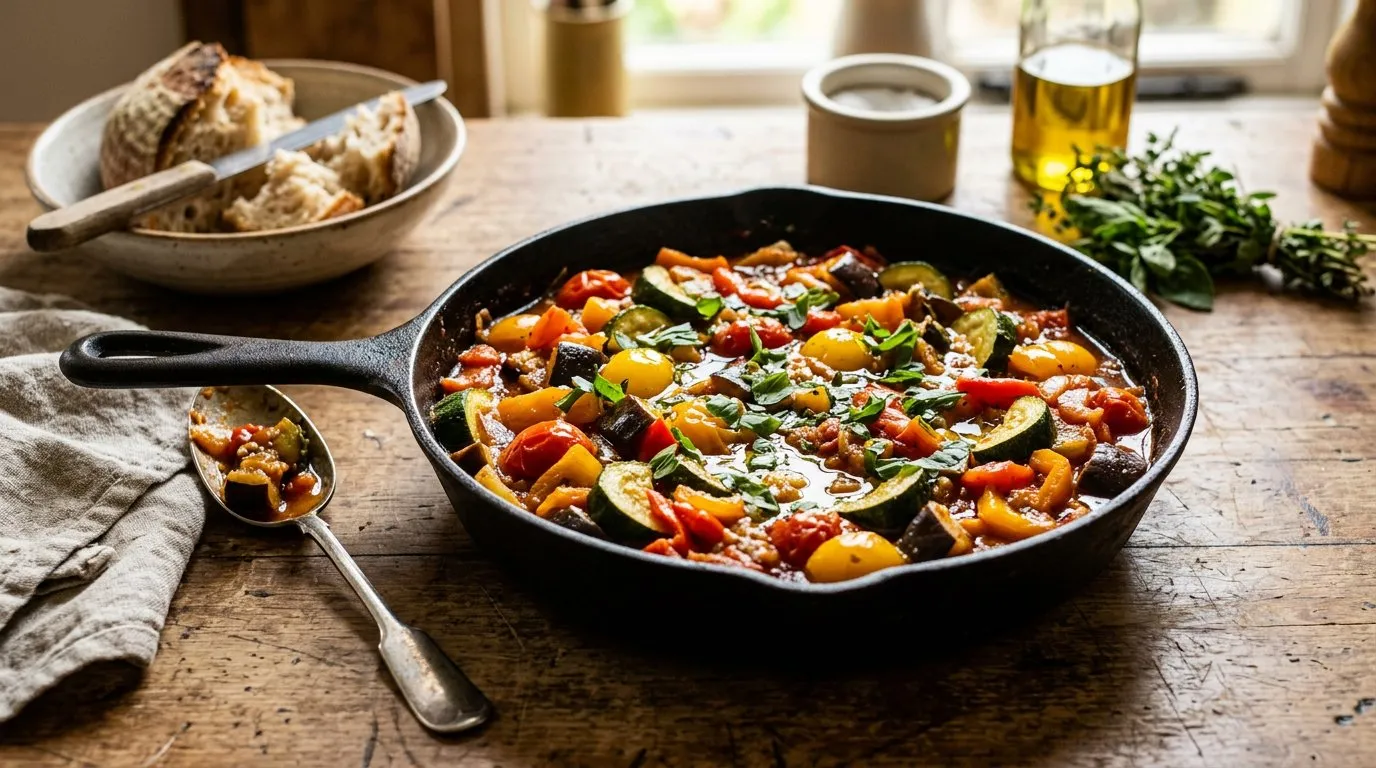
Rustic ratatouille packed with home-grown courgettes, tomatoes, peppers, and aubergines — a one-pan dish that uses up a summer glut.
Autumn recipes: beetroot, squash, and root vegetables
Autumn produces dense, flavourful vegetables that suit long, slow cooking. Beetroot, squash, parsnips, and carrots all store well in a cool shed, giving you weeks of cooking from a single harvest. Check what to harvest this month for picking dates by region.
Roasted beetroot soup
This is a simple, rich soup with an intense earthy sweetness. Roasting the beetroot before making the soup concentrates the flavour far better than boiling.
Wrap 6 medium beetroot (roughly 600g) individually in foil. Roast at 200C for 45-50 minutes until a knife slides in easily. Cool, peel, and roughly chop. Soften a diced onion in butter for 5 minutes, add the chopped beetroot and 800ml of vegetable stock, and simmer for 10 minutes. Blend until smooth. Finish with a swirl of soured cream and a few fresh dill fronds.
This recipe makes 4 generous portions. It freezes well for up to 6 months. Leave out the soured cream before freezing.
Roasted root vegetable medley
The simplest autumn side dish. Use whatever roots you have: parsnips, carrots, beetroot, turnips, and onions. Peel and cut everything into similar-sized chunks, roughly 3cm pieces. Toss in olive oil with salt, pepper, and a few sprigs of fresh rosemary or thyme. Spread in a single layer on a baking tray. Roast at 200C for 35-40 minutes, turning once halfway through. The edges should be caramelised and slightly charred.
A 200C oven is the key temperature. Lower and the vegetables steam rather than roast. Higher and they burn before the centres soften.
Butternut squash risotto
Peel and dice 1 medium butternut squash (roughly 500g of flesh). Roast at 200C for 25 minutes. Meanwhile, soften a diced onion in butter, add 300g of arborio rice, and stir for 2 minutes. Add 150ml of dry white wine and stir until absorbed. Add 1 litre of hot vegetable stock, one ladleful at a time, stirring frequently. After 18-20 minutes, the rice should be creamy and al dente. Fold in the roasted squash, 50g of grated Parmesan, and a knob of butter. Season well. Serves 4.
Winter recipes: stored roots and preserved vegetables
Winter cooking relies on stored roots, frozen vegetables, and preserved sauces from the summer. A well-stocked freezer and a shelf of chutneys and passata keep you eating home-grown food through January and February.
Leek and potato soup is a winter staple. Slice 3 large leeks and dice 400g of potatoes. Soften the leeks in butter for 10 minutes without browning. Add the potatoes and 1 litre of stock. Simmer for 20 minutes until the potatoes break apart. Blend for a smooth soup or leave chunky. Season with white pepper and a grating of nutmeg. Serve with crusty bread.
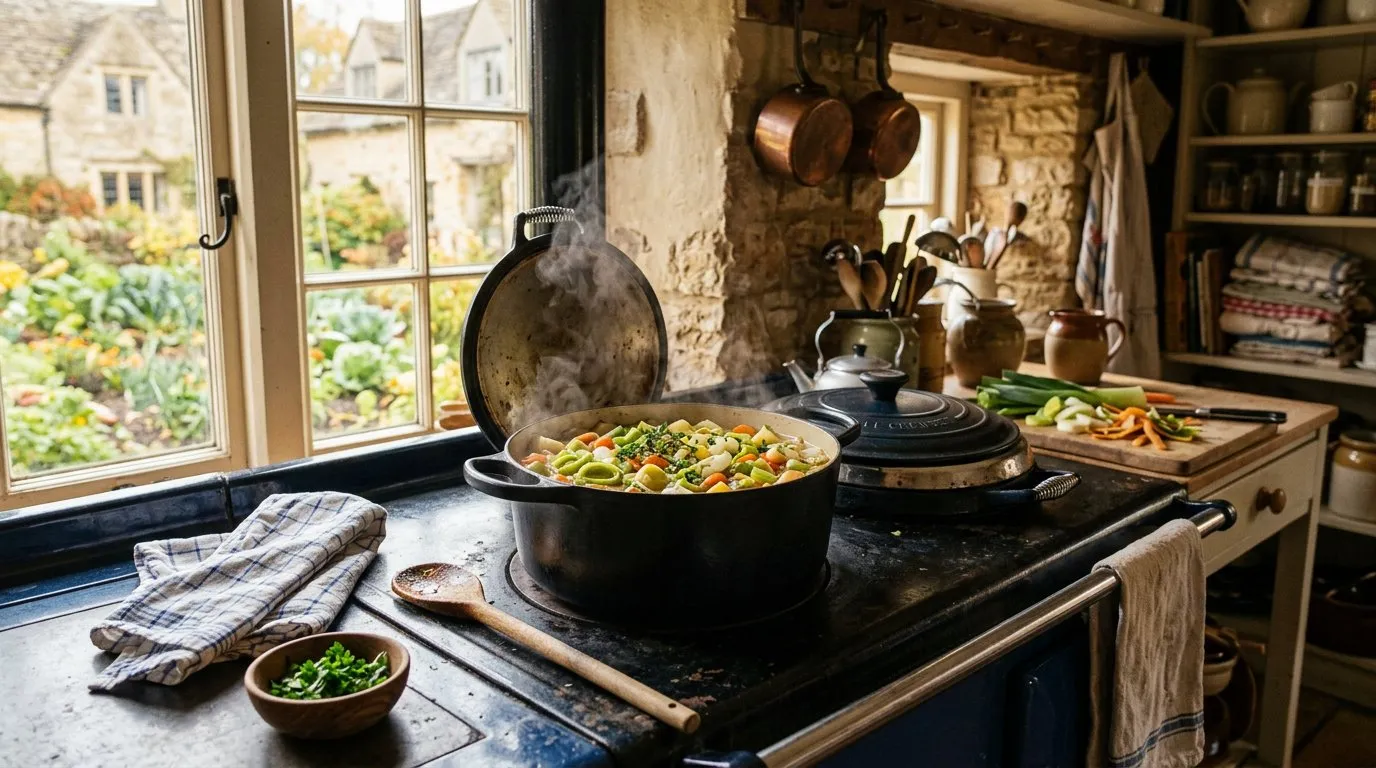
A steaming pot of home-grown vegetable soup on an AGA range — leeks, carrots, and potatoes straight from the plot to the pan.
Parsnip crisps make an excellent snack. Peel 4 large parsnips and use a vegetable peeler to cut thin ribbons. Toss in 1 tablespoon of vegetable oil and a pinch of salt. Spread on a baking tray and bake at 180C for 10-12 minutes, checking every 3 minutes. They burn quickly. Remove when golden and let them crisp as they cool.
Frozen vegetable stir-fry is the fastest weeknight meal. Take 400g of frozen broad beans, peas, and runner beans from the freezer. Heat a wok over high heat with a tablespoon of sesame oil. Add 2 crushed garlic cloves and a thumb of grated ginger. Toss in the frozen vegetables and stir-fry for 4-5 minutes. Add 2 tablespoons of soy sauce and a teaspoon of honey. Serve with rice or noodles. Total time: 10 minutes.
Best vegetables for cooking vs eating raw
Not every vegetable suits every method. Some taste best raw. Others need heat to reach their potential. This table shows which approach works best for common UK-grown crops.
| Vegetable | Best raw | Best cooked | Cooking method | Notes |
|---|---|---|---|---|
| Tomatoes | Yes (salads) | Yes (sauces) | Simmer, roast | Cooking releases lycopene, a beneficial antioxidant |
| Courgettes | Yes (ribbons) | Yes (fritters) | Fry, roast, grill | Salt and drain before cooking to remove moisture |
| Runner beans | No | Yes | Boil, stir-fry | Must be cooked. Raw runner beans contain lectins |
| Beetroot | Yes (grated) | Yes (roasted) | Roast, boil | Roasting concentrates sweetness |
| Carrots | Yes (sticks) | Yes (roasted) | Roast, boil, steam | Cooking increases beta-carotene availability |
| Peas | Yes (fresh) | Yes (soup) | Boil, steam | Best eaten raw within hours of picking |
| Broad beans | No (unless very young) | Yes | Boil, blanch | Double-pod for the best texture and colour |
| Radishes | Yes | Rarely | Raw in salads | Cooking softens the peppery bite |
| Lettuce | Yes | Rarely | Raw in salads | Braised Little Gem is an underrated side dish |
| Spinach | Yes (baby leaves) | Yes (wilted) | Wilt, steam | 500g raw spinach cooks down to roughly 100g |
The NHS Eat Well guide recommends at least 5 portions of fruit and vegetables daily. Home-grown produce makes this straightforward during the growing season.
Seasonal recipe calendar
Plan your cooking around what the garden produces each month. This calendar shows peak harvest times and matching recipes for common UK vegetables.
| Month | Vegetables in season | Suggested recipe |
|---|---|---|
| March-April | Purple sprouting broccoli, spring onions | Broccoli with garlic and chilli |
| May | New potatoes, radishes, lettuce | Crushed new potatoes with herbs |
| June | Peas, broad beans, early courgettes | Pea and mint soup, broad bean bruschetta |
| July | Courgettes, runner beans, tomatoes | Courgette fritters, fresh tomato sauce |
| August | Beetroot, sweetcorn, French beans | Roasted beetroot soup, sweetcorn on the cob |
| September | Squash, onions, late tomatoes | Butternut squash risotto, runner bean chutney |
| October | Parsnips, carrots, leeks | Roasted root vegetable medley |
| November-February | Stored roots, frozen produce, preserves | Leek and potato soup, parsnip crisps |
For detailed month-by-month picking guidance, see what to harvest this month.
Batch cooking and freezing tips
The gap between a glut and a wasted crop is a freezer. Batch cooking is the most practical way to preserve a surplus harvest. A few hours of cooking in August can stock the freezer for 6 months.
Blanching before freezing is essential for most vegetables. Bring a large pan of water to a rolling boil. Prepare a bowl of ice water. Drop the vegetables into the boiling water for the times listed below, then transfer immediately to the ice water. Drain thoroughly and freeze in labelled bags or containers.
| Vegetable | Blanching time | Freezer life |
|---|---|---|
| Peas (podded) | 1 minute | 12 months |
| Broad beans (podded) | 2 minutes | 12 months |
| Runner beans (sliced) | 2 minutes | 12 months |
| French beans (whole) | 3 minutes | 12 months |
| Sweetcorn (kernels) | 4 minutes | 12 months |
| Courgettes (sliced) | 1 minute | 6 months |
| Spinach | 2 minutes | 12 months |
Cooked dishes freeze better than raw vegetables in many cases. Tomato sauce, beetroot soup, courgette soup, and ratatouille all freeze in 500ml portions. Defrost overnight in the fridge and reheat thoroughly. Do not refreeze thawed cooked food.
For longer-term preserving methods including jam making, pickling and fermenting, and freezing techniques, see our full range of preserving guides.
Why we recommend Kilner clip-top jars for home preserving: After 30 years of bottling chutneys, sauces, and pickles from the garden, Kilner clip-top jars with rubber seals consistently outperform screw-top lids for airtight storage. The rubber seal holds firm against vinegar fumes that corrode metal lids within weeks. A batch of runner bean chutney sealed in Kilner jars reliably reaches the 12-month mark without spoilage.
Gardener’s tip: Label every container with the contents and the date. After 3 months, frozen vegetables look identical. A permanent marker on masking tape works better than fancy labels.
Common mistakes when cooking home-grown vegetables
Even experienced gardeners make these errors in the kitchen. Avoid them for better results.
Overcooking fresh vegetables
This is the most common mistake. Home-grown vegetables need less cooking time than supermarket produce. They are fresher and have a higher water content. Boil peas for 2 minutes, not 10. Steam broccoli for 4 minutes, not 8. Runner beans need 5-6 minutes in boiling water, no more. Overcooked vegetables lose colour, texture, and nutrients.
Not removing moisture from courgettes
Courgettes are 95% water. Failing to remove this moisture before cooking produces a soggy, watery dish. Always salt grated or sliced courgettes and leave them in a colander for 15 minutes. Squeeze out the liquid with a clean tea towel before frying or baking. This single step turns the result.
Using unripe tomatoes for sauce
Green or pale tomatoes make acidic, flavourless sauce. Wait until the fruit is fully ripe, deeply coloured, and slightly soft to the touch. If a late-season frost threatens, pick green tomatoes and ripen them on a sunny windowsill for 7-10 days. A ripe banana placed alongside speeds the process.
Skipping the sterilisation step for preserves
Jars that are not properly sterilised harbour bacteria. The contents go mouldy within weeks. Wash jars in hot soapy water, rinse, and place upside down in an oven at 140C for 15 minutes. Fill jars while they are still hot. Skipping this step wastes both the produce and the effort. See our chutney recipes guide for more preserving techniques.
Not scaling recipes for a glut
A single courgette plant produces 20-30 fruits. A recipe for 2 courgettes barely makes a dent. Scale up from the start. Make 5 batches of fritters and freeze them. Simmer a huge pan of tomato sauce and fill 10 jars. The effort per portion drops dramatically when you batch cook.
Now you’ve mastered cooking with home-grown vegetables, read our guide on how to preserve fruit and vegetables for the next step.
Frequently asked questions
What is the easiest recipe for home-grown courgettes?
Courgette fritters are the simplest option. Grate 2 medium courgettes, squeeze out moisture, mix with 1 egg, 50g flour, and seasoning. Fry spoonfuls in oil for 30 seconds per side. The entire recipe takes 15 minutes from start to finish.
Can you freeze home-grown vegetables for cooking later?
Yes, most garden vegetables freeze well for 6-12 months. Blanch in boiling water for 2-3 minutes, plunge into ice water, drain thoroughly, and freeze in portions. Runner beans, peas, broad beans, and sweetcorn all freeze excellently.
How long does home-made runner bean chutney keep?
Properly sealed chutney keeps for 12 months. Store in sterilised jars with vinegar-proof lids in a cool, dark cupboard. Let chutney mature for at least 4 weeks before opening for the best flavour.
What vegetables are best for batch cooking and freezing?
Tomatoes, courgettes, runner beans, and beetroot freeze best as cooked dishes. Make tomato passata, courgette soup, or beetroot soup in large batches. Freeze in 500ml portions for easy defrosting. Label each container with the date.
How do I make tomato sauce from garden tomatoes?
Use 1.5kg ripe tomatoes per batch. Roughly chop, simmer for 30 minutes with garlic and basil, then pass through a sieve. Season with salt, pepper, and a pinch of sugar. One batch fills 3-4 jars of passata.
Which home-grown vegetables taste better cooked than raw?
Beetroot, runner beans, broad beans, and parsnips all improve with cooking. Roasting intensifies sweetness in root vegetables. Beetroot develops a deeper, earthier flavour when roasted at 200C for 45-50 minutes wrapped in foil.
What is the quickest recipe using garden peas?
Pea and mint soup takes 15 minutes total. Soften an onion in butter for 5 minutes, add 500g peas and 600ml stock, simmer for 8 minutes, then blend with fresh mint. Serve hot or cold.
Lawrie has been gardening in the West Midlands for over 30 years. He grows his own veg using no-dig methods, keeps a wildlife-friendly garden, and writes practical advice based on real UK growing conditions.