Garden to Table: Growing Food at Home
Grow food at home in the UK from garden to table. Covers easy crops, small-space growing, seasonal planning, cooking what you harvest, and saving money.
Key takeaways
- A 3m x 4m growing area produces enough fresh food for two people through the summer months
- Salad leaves, herbs, and soft fruit save the most money compared to supermarket prices
- Seasonal eating from your garden turns cooking — you eat what is ready, not what is on the shelf
- Preserving gluts through freezing, pickling, and drying extends your harvest through winter
- Starting with five easy crops — lettuce, herbs, tomatoes, courgettes, and runner beans — builds confidence
The distance from garden to table is about ten metres. That short walk changes everything about how food tastes, how you cook, and how much you spend. A tomato picked warm from the vine, a handful of basil cut seconds before it hits the pasta, runner beans snapped and in the pan within minutes. No supermarket can compete.
Growing food at home is the fastest-growing UK gardening trend, with allotment searches up 91% year on year and 28% of households now growing some of their own food. This guide covers what to grow, how to start, and how to bring it all together in the kitchen.
Where to start
You do not need an allotment or a large garden. Any sunny space produces food worth eating.
| Space | What it grows | Investment |
|---|---|---|
| Windowsill | Herbs, chilli seedlings, microgreens | Under ten pounds |
| Balcony/patio | Container vegetables, tomatoes, salad | Twenty to fifty pounds |
| Raised bed (1.2m x 2.4m) | Mixed vegetables, herbs | Seventy to one hundred and thirty pounds |
| Garden plot (3m x 4m) | Full seasonal vegetable supply | Fifty to one hundred pounds |
| Allotment (half plot) | Year-round food production | Twenty-five to one hundred pounds rent |
Start small. A windowsill herb garden and a container of lettuce cost under ten pounds and deliver results within weeks. For more detail, see our beginner guide to growing your own vegetables. Build from there as your confidence grows.
The five crops that change how you eat
These five crops have the biggest impact on your cooking and food budget because they are expensive to buy, taste dramatically better fresh, or produce in such quantity that they change your kitchen habits.
1. Salad leaves
A bag of mixed salad costs two to three pounds in the supermarket and lasts 2-3 days before wilting. A single sowing of cut-and-come-again lettuce costs pennies and produces fresh leaves for 6-8 weeks. Sow every two weeks from March to August for unbroken supply.
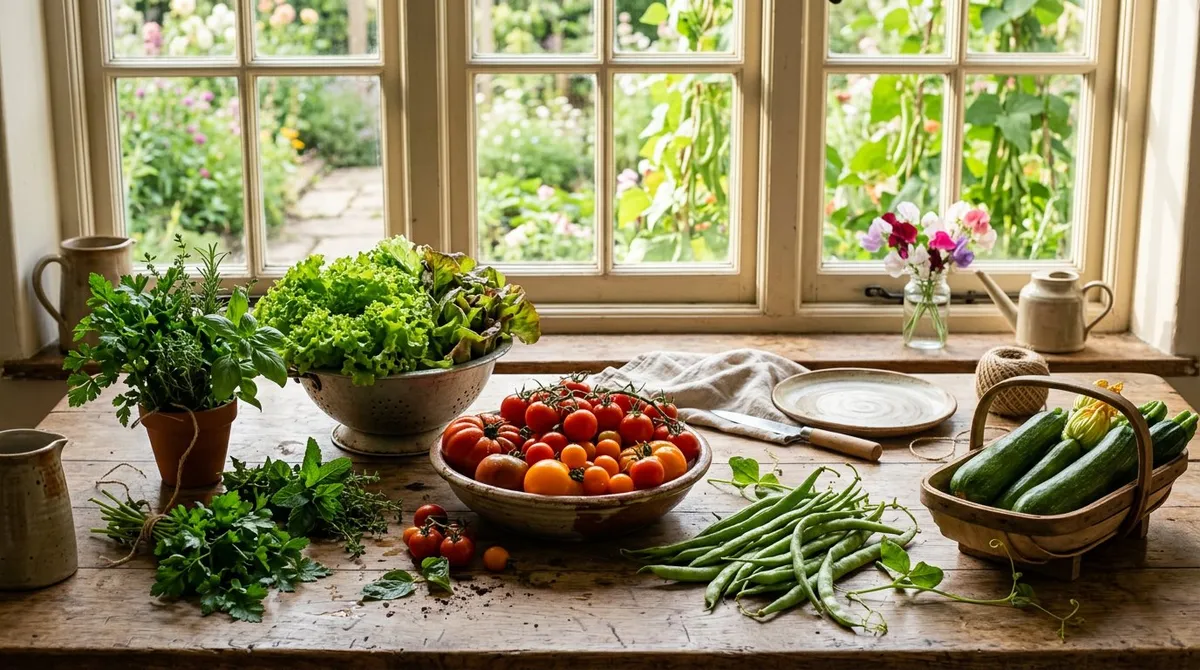
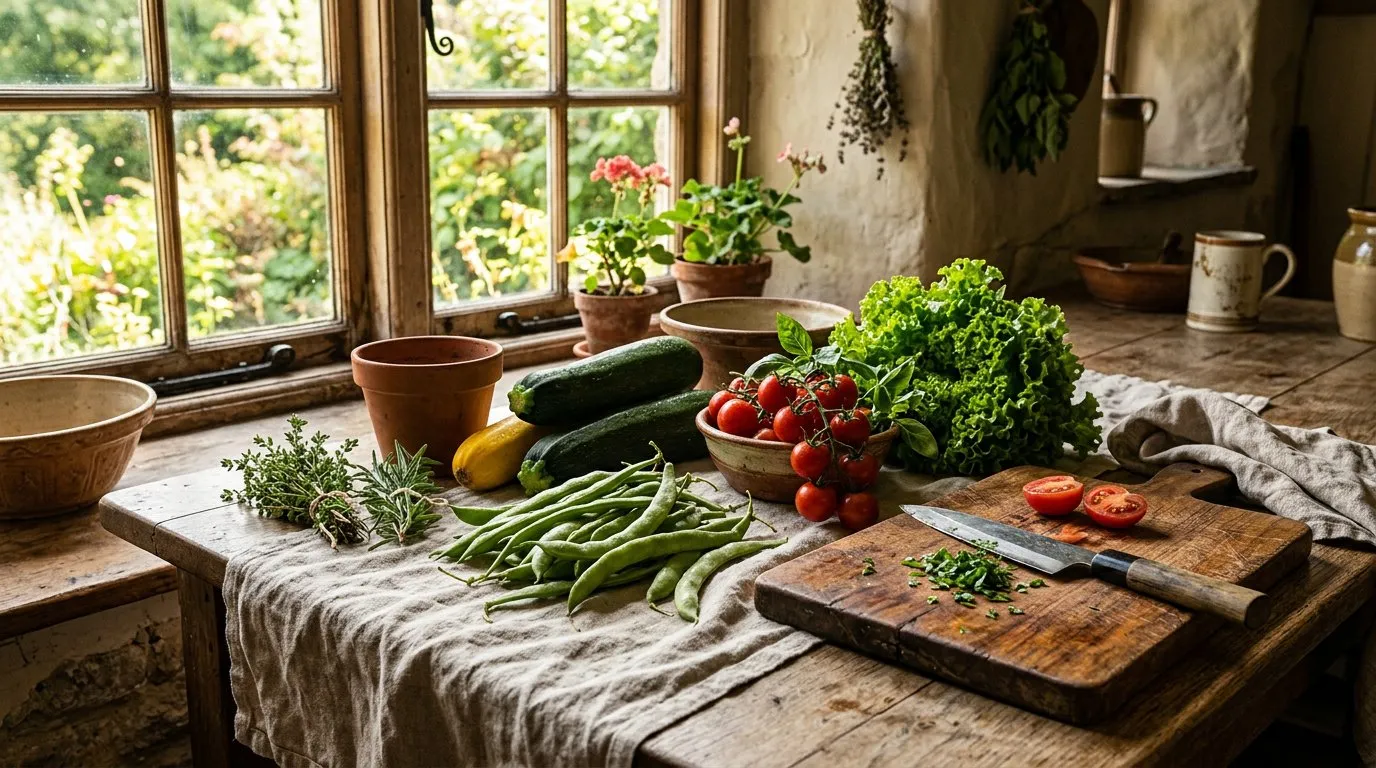 From garden to table in ten metres. Runner beans, courgettes, tomatoes, and fresh herbs ready for the kitchen.
Fresh-picked salad is crisper, more flavourful, and more varied than anything in a bag. Grow rocket, mizuna, mustard, and lamb’s lettuce alongside butterhead and cos for a mix no supermarket offers.
2. Herbs
Fresh herbs change cooking overnight. A supermarket packet of basil costs one pound fifty and wilts within days. A single basil plant costs two pounds and crops for four months. Perennial herbs, rosemary, thyme, sage, chives, last years and need almost no attention.
Grow basil and coriander indoors on a sunny windowsill. Plant rosemary, thyme, sage, mint, and chives outdoors where they survive year after year. Cut herbs just before cooking for the strongest flavour.
3. Tomatoes
Shop tomatoes are bred for shelf life, not taste. Homegrown varieties like Sungold, Gardener’s Delight, and Black Cherry produce fruit so sweet you eat it straight from the vine. A single tomato plant in a pot on a sunny patio produces 3-6 kg of fruit from July to October.
Make fresh pasta sauce from your harvest. Slow-roast cherry tomatoes with garlic and olive oil. Bottle surplus as passata for winter.
Why we recommend Sungold as the one tomato variety every UK garden should grow: After 30 seasons of trialling homegrown tomatoes in British conditions, Sungold consistently outperforms everything else for flavour, yield, and reliability. It produces clusters of orange-gold cherry tomatoes from July to October with almost no blossom drop, even in a poor summer. In a single season one Sungold plant in a 30-litre pot yields 4-5 kg of fruit, at supermarket prices that is twelve to fifteen pounds of produce from a two-pound plant.
4. Courgettes
The most generous crop in a British garden. Two courgette plants produce 10-16 kg between them over a season. That quantity forces you to get creative: courgette fritters, pasta, soup, bread, chocolate courgette cake, and spiralised courgette noodles all become regular features.
Harvest at 15-20cm for the best flavour. Leave one too long and it becomes a marrow, still edible but better for stuffing with rice and mince.
5. Runner beans
A wigwam of runner beans produces 4-6 kg of pods from July to October. Pick every 2-3 days while pods are young and tender. Steam, stir-fry, or blanch and freeze for winter use. Runner bean chutney turns August gluts into Christmas gifts.
Seasonal eating from your garden
Growing your own food changes how you think about meals. Instead of deciding what to cook and buying ingredients, you walk to the garden, see what is ready, and cook that. This is seasonal eating at its most natural.
Spring (March-May)
The hungry gap. Last year’s stores are running low and this year’s crops are still growing. Our month-by-month harvest calendar shows exactly what you can pick in every season. Fill the gap with:
- First radishes and spring onions from March sowings
- Overwintered spinach and chard
- Asparagus spears (if you have an established bed)
- Rhubarb for crumbles and fools
- Fresh herbs from the windowsill
Summer (June-August)
Abundance. Everything ripens at once and the challenge shifts from growing to using.
- Daily salads from the garden
- Tomatoes in everything, raw, cooked, roasted, sauced
- Courgettes every way you can imagine
- Runner beans and French beans
- Beetroot, new potatoes, broad beans
- Soft fruit: strawberries, raspberries, gooseberries
Autumn (September-November)
The harvest deepens. Root vegetables, squash, and late crops dominate.
- Maincrop potatoes, carrots, parsnips for roasts and stews
- Pumpkins and squash for soup and baking
- Kale and chard for hearty greens
- Onions and garlic from summer’s harvest
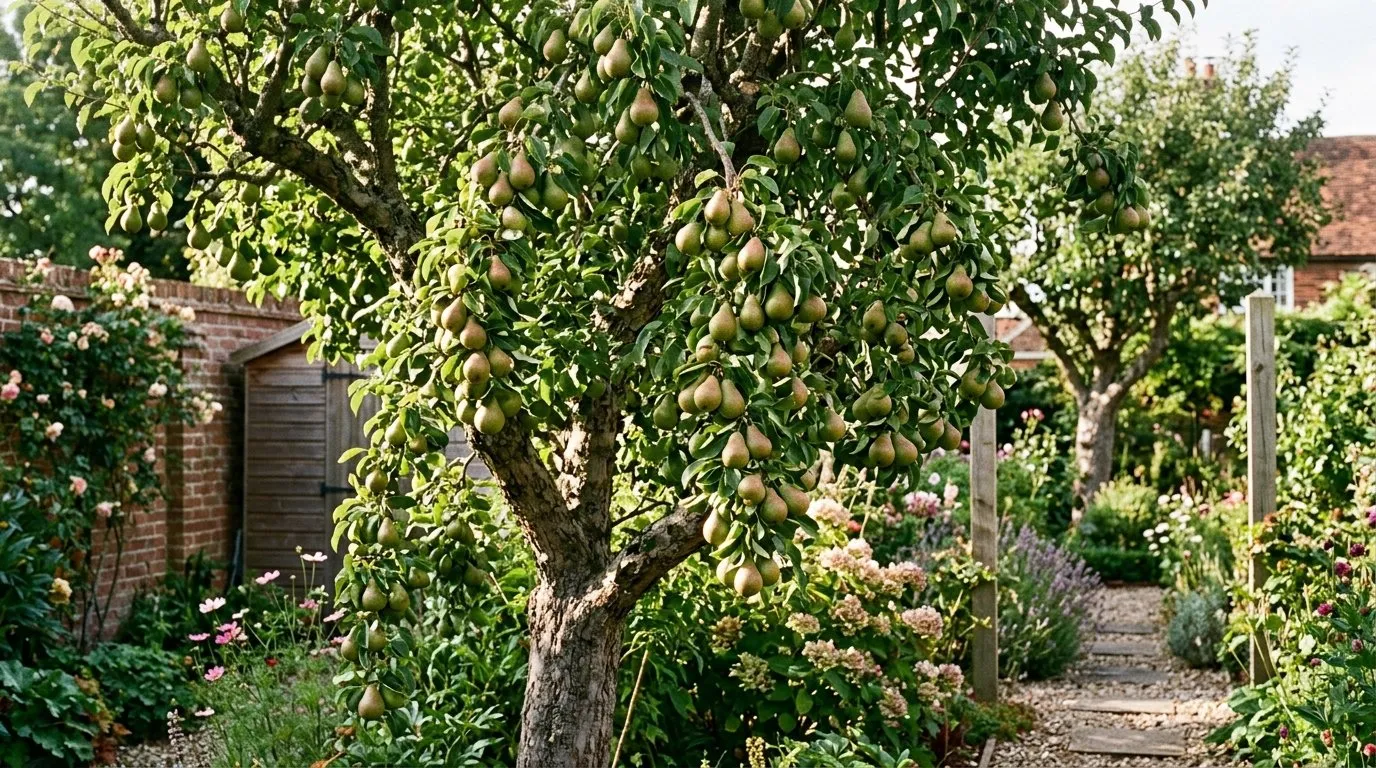
- Apples and pears (if you have trees)
Winter (December-February)
Stored food and hardy crops sustain you.
- Leeks, Brussels sprouts, kale from the garden
- Stored potatoes, onions, garlic, and root vegetables
- Frozen beans, tomato sauce, and fruit from summer
- Pickles, chutneys, and preserves
Preserving the harvest
Growing food is half the equation. Preserving surplus extends your harvest through the lean months.
Freezing is the simplest method. Blanch runner beans and broad beans for two minutes, cool in ice water, and freeze on trays before bagging. Grate courgettes and freeze in portions for soup. Make tomato sauce in bulk and freeze in containers.
Pickling turns gluts into storecupboard staples. Beetroot in vinegar, pickled onions, and gherkins keep for 12 months. Chutneys from green tomatoes, runner beans, or courgettes make useful gifts.
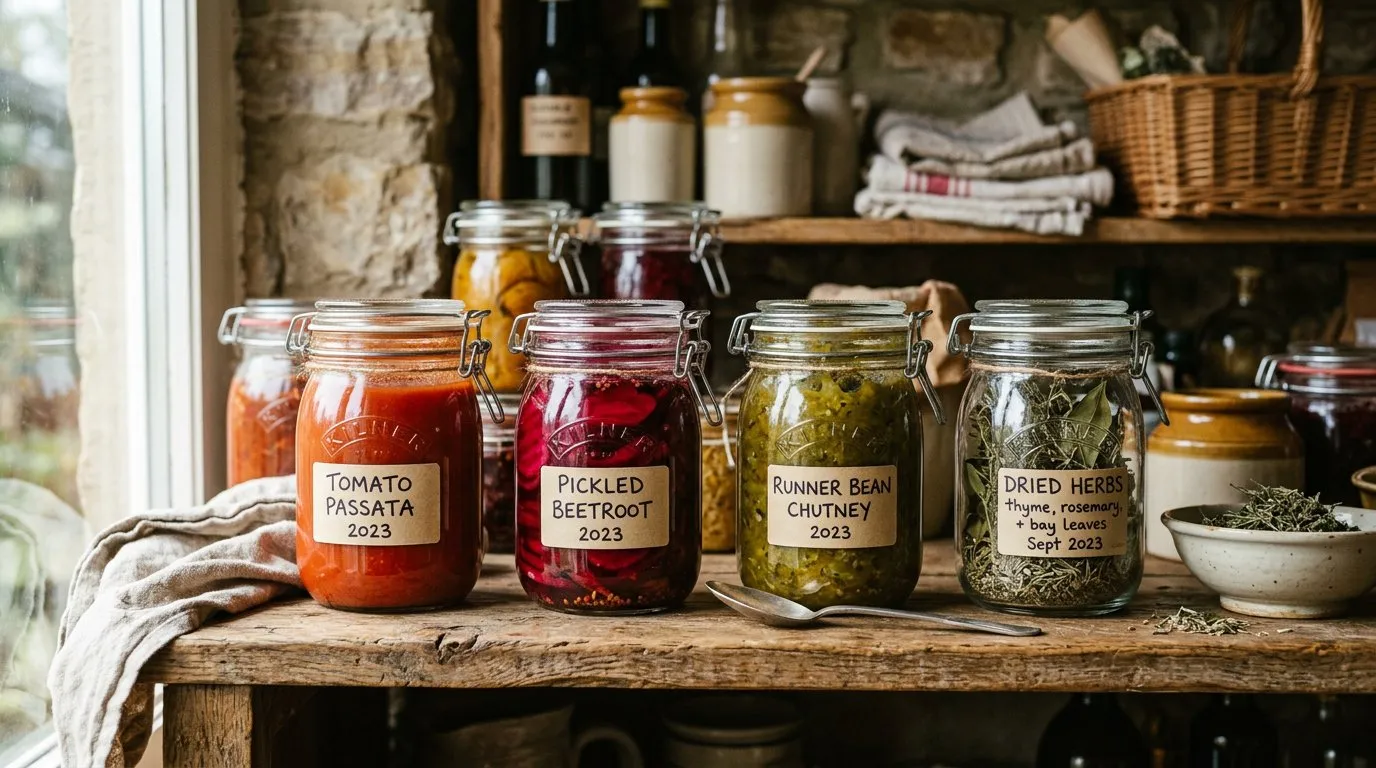 Preserved harvest: tomato passata, pickled beetroot, runner bean chutney, and dried herbs last through winter.
Drying concentrates flavour. Dry herbs in bunches hung in a warm room. Slow-dry tomatoes in the oven at 90C for 4-6 hours. String and dry chillies for year-round heat.
Money saved
| Crop | Supermarket cost | Growing cost | Annual saving |
|---|---|---|---|
| Salad leaves | Two to three pounds per bag x 40 weeks | Seeds: two to three pounds | Eighty to one hundred pounds |
| Herbs | One pound fifty per packet x weekly | Plants: ten pounds once | Sixty to seventy pounds |
| Tomatoes | Three pounds per kg x 5 kg | Plants/seeds: five pounds | Ten to fifteen pounds |
| Runner beans | Three to four pounds per kg x 5 kg | Seeds: two pounds | Twelve to eighteen pounds |
| Courgettes | One pound fifty each x 20 | Seeds: two pounds | Twenty-five to thirty pounds |
| Potatoes | One pound per kg x 10 kg | Tubers: five pounds | Five to ten pounds |
These six crops alone save one hundred and ninety to three hundred and twenty pounds per year from a modest growing area. Add soft fruit, stored root vegetables, and preserved surplus, and savings climb toward five hundred to a thousand pounds.
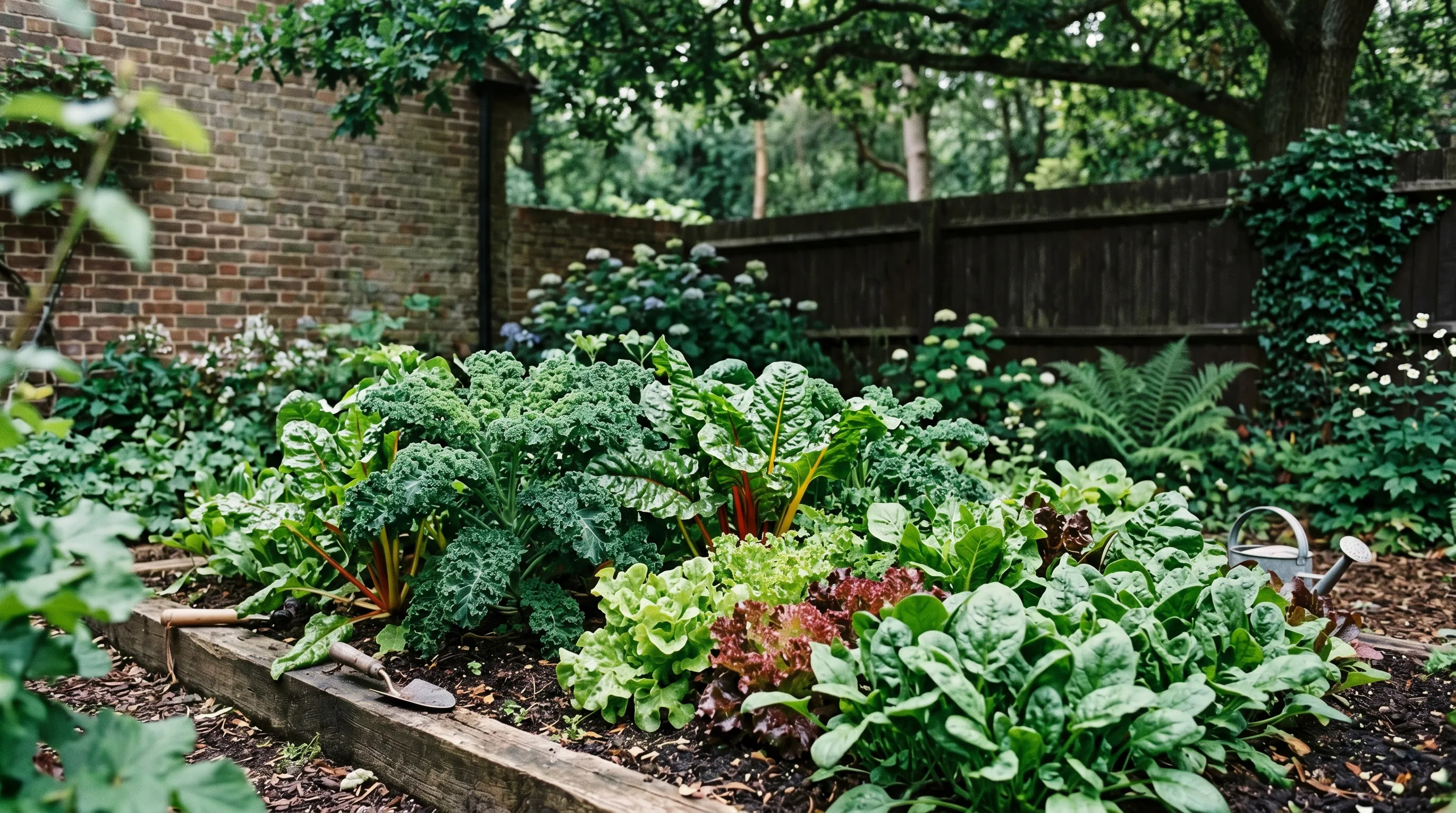
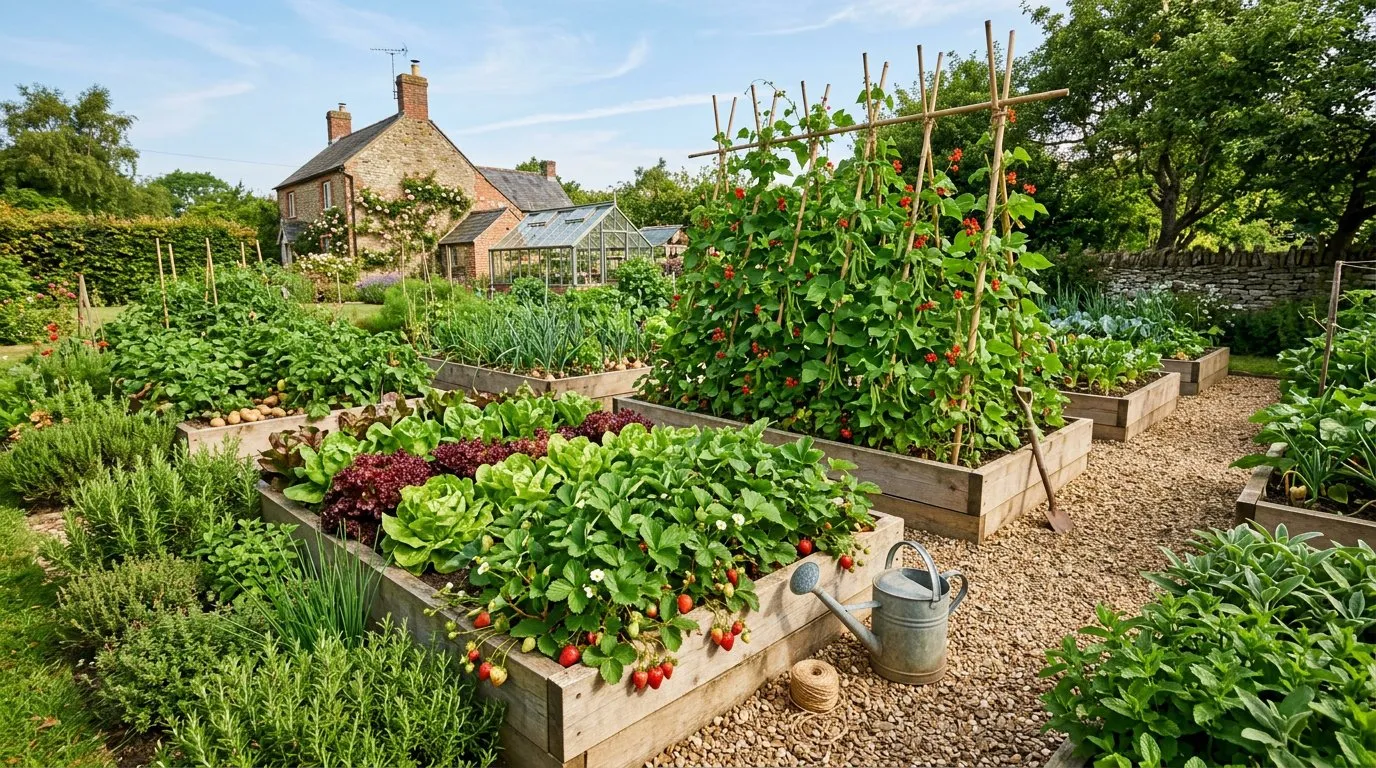 A productive raised bed garden in late June. A 3m x 4m plot feeds two people through summer.
Use our vegetable planting calendar to plan the full year.
Tip: Grow what you eat most. A garden full of exotic vegetables you never cook with is a waste of space. If you eat salad every day, grow salad. If you love curry, grow chillies and coriander. Match the garden to your kitchen.
Now you’ve mastered growing food from garden to table, read our guide on raised bed gardening for beginners for the next step.
Frequently asked questions
What is the easiest food to grow at home?
Salad leaves are the easiest food to grow at home. Sow seeds in a pot or bed from March, water regularly, and harvest in 4-6 weeks. Cut-and-come-again lettuce regrows after each picking, providing multiple harvests. Herbs, radishes, and spring onions are equally straightforward for beginners.
How much money can I save growing my own food?
A well-managed growing area saves five hundred to fifteen hundred pounds per year depending on space and crops grown. The biggest savings come from salad leaves, herbs, soft fruit, and runner beans, crops that carry the highest supermarket markup relative to their growing cost.
Can I grow food in a small garden?
Any sunny space produces food. A single raised bed of 1.2m x 2.4m grows enough salad and herbs for regular meals. A few containers on a patio produce tomatoes, chillies, and herbs. Even a windowsill grows herbs and microgreens. See our container growing guide for small-space techniques.
What should I grow to be self-sufficient?
Full self-sufficiency requires significant land, at least 250 square metres for a family of four. For maximum impact from a small space, grow crops you eat daily (salad, herbs, tomatoes) plus high-value items (soft fruit, runner beans) that save the most money and taste the best fresh.
How do I cook what I grow?
Let the garden dictate the menu. Toss freshly picked salad leaves with homegrown herbs. Make courgette fritters from the summer glut. Roast cherry tomatoes with garlic for pasta sauce. Blend surplus herbs into pesto. Freeze, pickle, and dry the harvest to extend it through winter.
What food can I grow all year round?
With planning you can harvest most months. Salad leaves and herbs from March to October through succession sowing. Kale, leeks, and Brussels sprouts survive winter outdoors. Store potatoes, onions, garlic, and root vegetables in cool, dark conditions. Frozen and preserved produce fills any remaining gaps.
Lawrie has been gardening in the West Midlands for over 30 years. He grows his own veg using no-dig methods, keeps a wildlife-friendly garden, and writes practical advice based on real UK growing conditions.