Greenhouse Growing Calendar UK
Month-by-month greenhouse growing calendar for UK gardeners. What to sow, grow, and harvest under glass every month from January to December.
Key takeaways
- A greenhouse adds 6-8 weeks to the UK growing season at each end
- Start tomatoes, peppers, and aubergines indoors from February at 18-21C
- Ventilation is critical from June to August: open vents above 25C
- Clean and insulate in October and November to protect overwintering crops
- A 2kW heater keeps a greenhouse frost-free for early and late sowings
- Use staging to double your growing space for seed trays and young plants
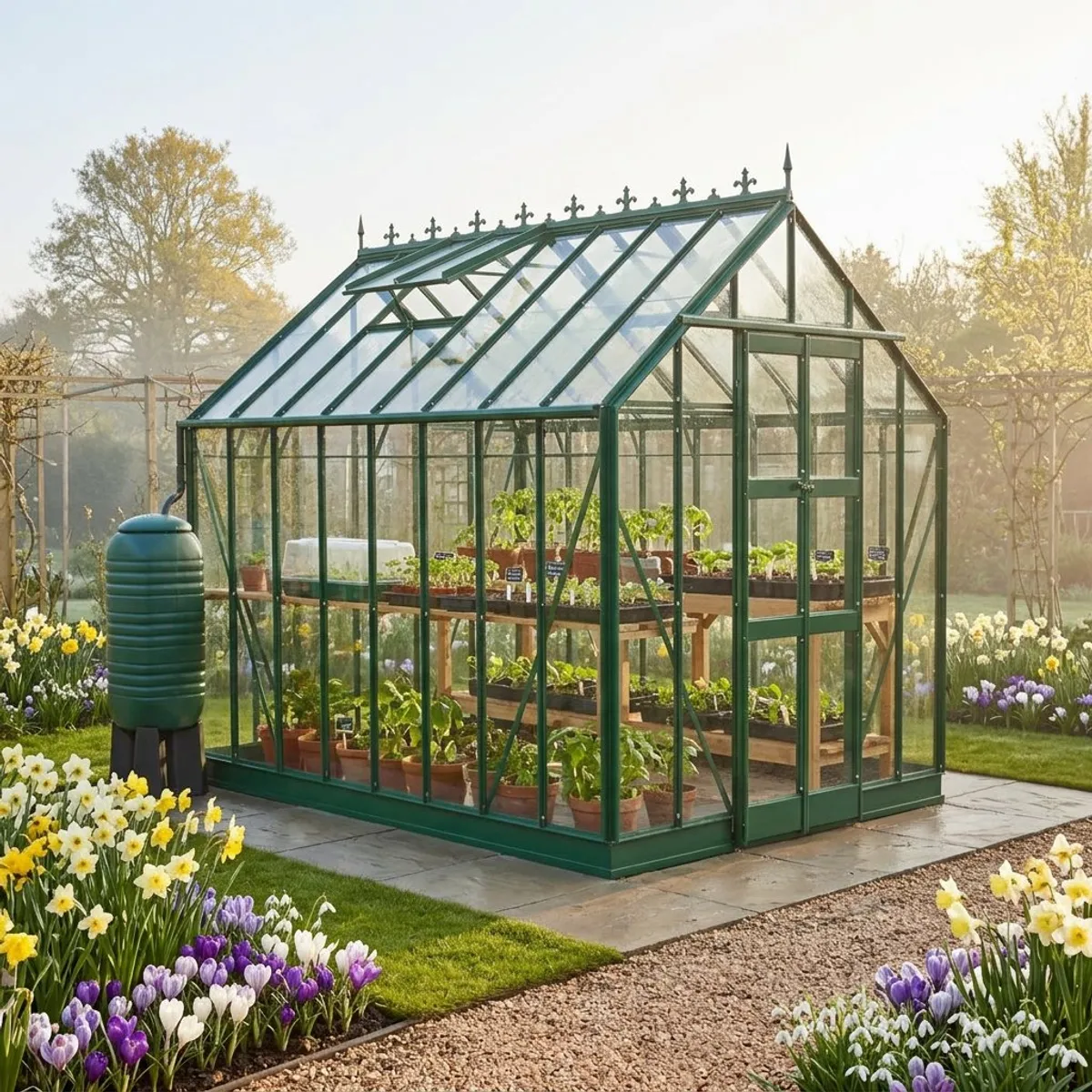
A greenhouse is the single most useful tool for a UK gardener. It stretches the growing season from roughly 20 weeks outdoors to over 40 weeks under glass. Crops that struggle in British weather thrive behind glazing. But knowing what to do each month is the difference between a productive greenhouse and an expensive storage shed.
This month-by-month calendar tells you exactly what to sow, grow, maintain, and harvest in a UK greenhouse from January to December. For a crop-focused companion guide, see our best greenhouse plants month by month. For outdoor sowing times, see our seed sowing calendar and vegetable planting calendar.
The complete month-by-month greenhouse calendar
This table gives a quick reference for the full year. Detailed guidance for each month follows below.
| Month | Sow under glass | Maintain | Harvest |
|---|---|---|---|
| January | Chillies, aubergines | Clean glass, check heater, order seeds | Forced rhubarb |
| February | Tomatoes, peppers, onions, broad beans | Set up staging, check propagator | Winter salads |
| March | Cucumbers, lettuce, French beans, courgettes | Start ventilating on warm days | Overwintered spinach |
| April | Sweetcorn, squash, basil | Prick out seedlings, pot on | Spring onions, radish |
| May | Runner beans, late cucumbers | Harden off tender crops for outdoors | Lettuce, early strawberries |
| June | Autumn calabrese, kale | Ventilate daily, feed tomatoes, damp down | Tomatoes begin ripening |
| July | Winter lettuce, pak choi | Water twice daily in heatwaves | Tomatoes, cucumbers, peppers |
| August | Overwintering onions, spring cabbage | Continue feeding, remove spent crops | Tomatoes, aubergines, chillies |
| September | Winter salads, spinach | Reduce watering, close vents earlier | Green tomatoes, last peppers |
| October | Broad beans (overwintering) | Clean glass, insulate with bubble wrap | Autumn lettuce, late chillies |
| November | Nothing (rest period) | Remove shading, repair damage, oil hinges | Winter salads |
| December | Nothing (planning month) | Check insulation, plan next year | Forced chicory |
Gardener’s tip: Pin this table inside your greenhouse door. Checking it on the first day of each month keeps you ahead of every sowing window.
January and February: the quiet start
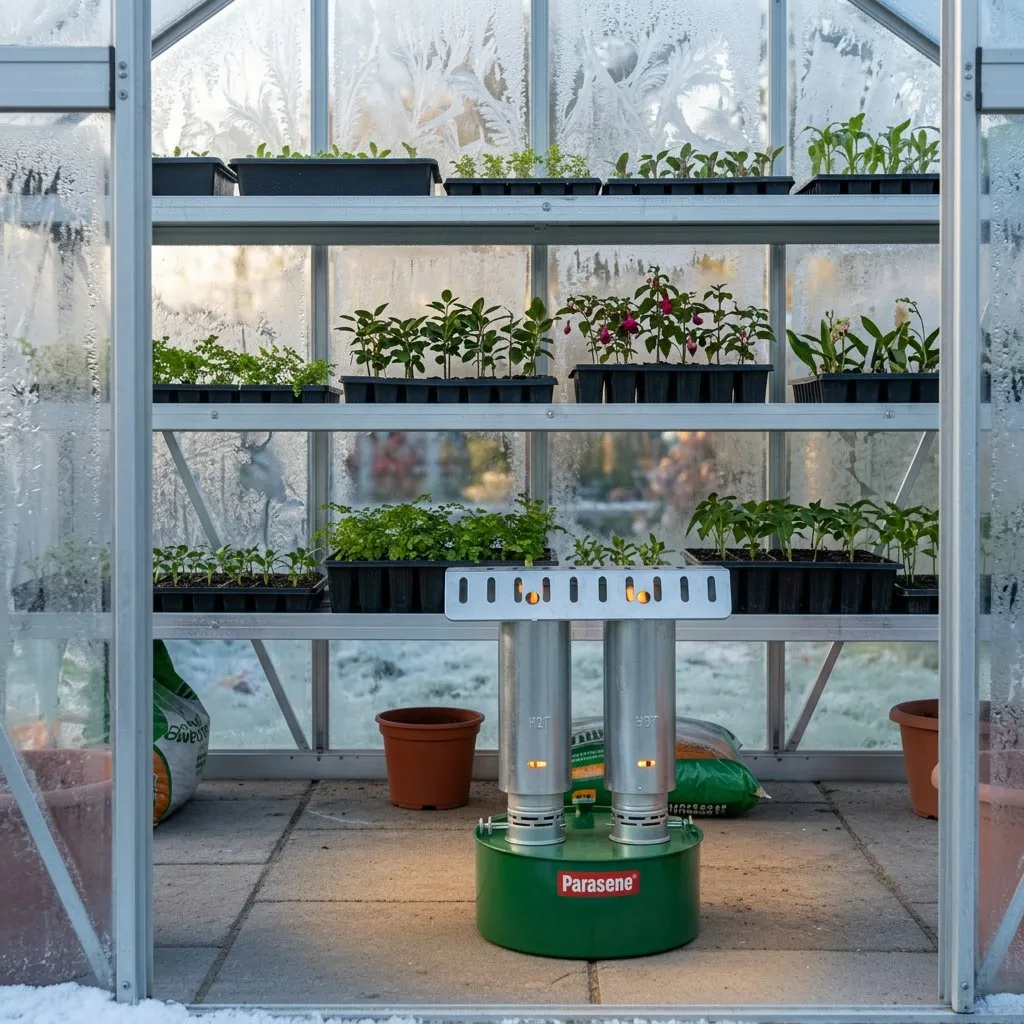
January is for preparation, not planting. Clean every pane of glass inside and out. Dirty glass blocks up to 30% of available light, and winter light levels in the UK are already low. Scrub algae from the frame, wash staging, and disinfect seed trays from last year. Check your heater works before you need it. A 2kW greenhouse heater keeps temperatures above freezing for early sowings and costs around £140. Our greenhouse heating guide compares electric, gas, and paraffin options with running costs.
Order seeds in January. Popular varieties sell out by March. Make your list, check quantities, and order early.
February is when the season starts in earnest. Sow tomatoes and peppers in a heated propagator at 18-21C. If you plan to grow tomatoes in the greenhouse, a mid-February sowing gives plants 12-14 weeks of growth before they reach their final positions. For the best varieties suited to UK greenhouses, see our guide to greenhouse tomato varieties. Sow aubergines and chillies too. These slow growers need every week you can give them. Our guide to growing chilli peppers covers variety selection and heat levels.
Set up staging to make the most of your space. A two-tier staging unit at around £109 doubles your bench area for seed trays. Place it along the north-facing wall where it won’t shade other plants.
Gardener’s tip: Stand seed trays on capillary matting over the staging surface. It keeps compost evenly moist and cuts watering from twice daily to once.
March and April: peak sowing season
March is the busiest month in the greenhouse. Sow cucumbers, courgettes, French beans, and lettuce under glass. Start sweetcorn in modules from late March. Sow basil at 15-18C for summer harvests. The RHS sowing guide has variety-specific temperatures if you are unsure.
Check all your earlier sowings. Prick out tomato and pepper seedlings when the first true leaves appear. Pot on into 9cm pots using multipurpose compost. If you are new to this process, our guide on how to sow seeds indoors covers pricking out step by step.
April is for potting on and hardening off. Move hardy crops like broad beans and peas to a cold frame outside. Keep tender crops under glass. Night temperatures in April still drop below 5C across most of the UK, which kills tomatoes and peppers.
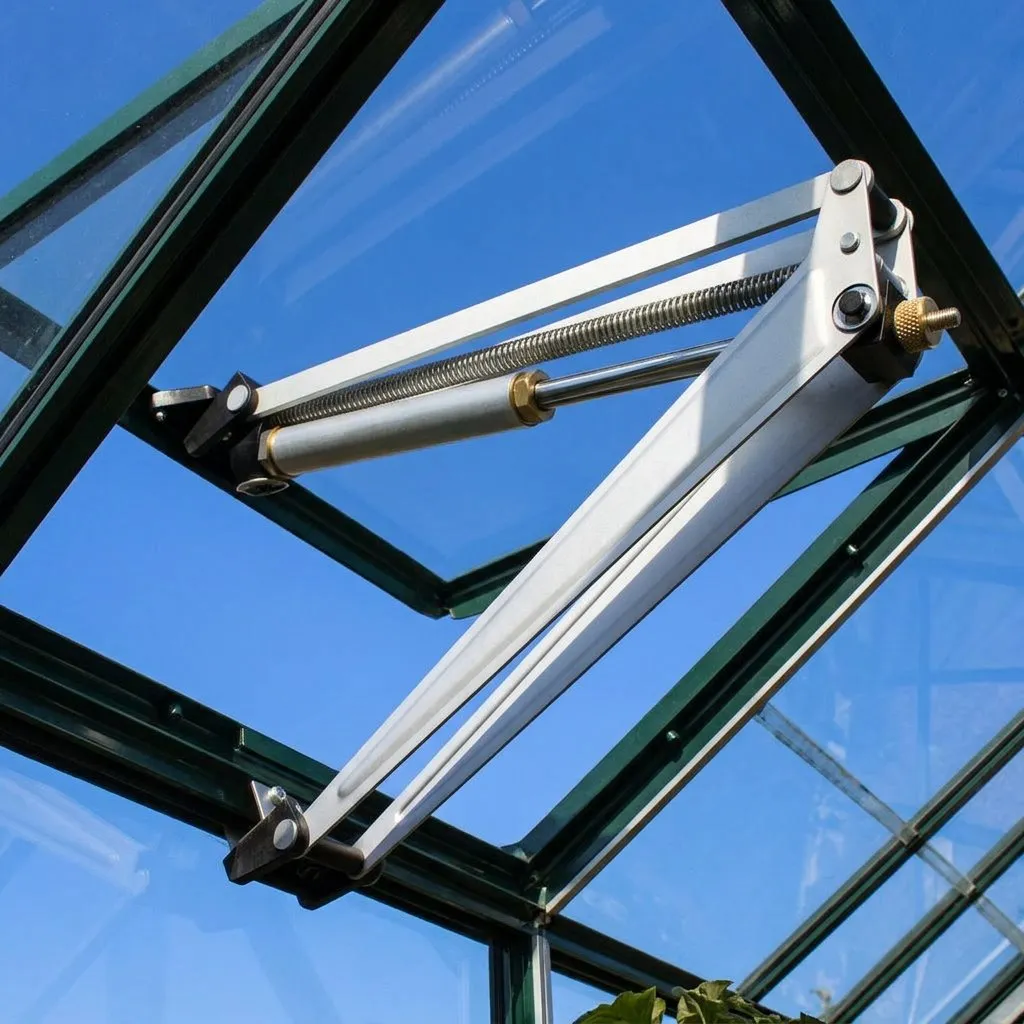
Ventilation becomes important from mid-April. Open the greenhouse door and roof vents on sunny mornings. Close them by mid-afternoon. An automatic vent opener at around £55 reacts to temperature without needing electricity, opening and closing the vent for you.
{/* IMAGE: greenhouse-calendar-uk-april-seedlings.jpg, A greenhouse bench covered with seed trays and young plants during April /} {/ CAPTION: April brings the busiest benches of the year. Every surface holds trays of seedlings ready for potting on or hardening off. */}
 An Elite Thyme 6x8 greenhouse in full summer production, with tomatoes, cucumbers, and peppers cropping together.
Shop the Elite Thyme 6x8 at Greenhouse Stores →
May: the transition month
May is when greenhouse plants start moving outdoors. Harden off seedlings over 10-14 days before planting out after your last frost date. Southern England gardeners can begin in mid-May. Northern growers and those in Scotland should wait until early June.
Plant tomatoes, cucumbers, and peppers into their final growing positions inside the greenhouse. Use grow bags or 30cm pots filled with multipurpose compost. Tomatoes need support from day one. Tie cordon varieties to canes or string attached to the greenhouse frame.
Sow a late batch of runner beans and cucumbers to extend your harvest. Start basil successionally every three weeks for a constant supply. Our cucumber growing guide covers greenhouse cultivation in detail.
Gardener’s tip: Place a max-min thermometer at plant height. It records overnight lows, which tells you whether tender crops are safe or need fleece protection on cold nights.
June to August: peak growing and harvest
These three months demand the most attention. Greenhouse temperatures can exceed 40C on sunny days without proper management. Ventilation is critical. Open every vent and the door by mid-morning. Close down by late afternoon to retain warmth for the night.
Damping down helps on hot days. Splash water on the greenhouse floor in the afternoon. The evaporating water cools the air and raises humidity, which tomatoes and cucumbers prefer. Aim for 60-70% humidity inside.
Feeding starts when the first truss of tomatoes sets fruit. Use a high-potash liquid feed twice a week. Peppers, cucumbers, and aubergines need the same regime. Underfed plants produce smaller, fewer fruit.
Watering increases to once or twice daily in summer. Water at the base of each plant in the morning. Wet foliage in a warm greenhouse encourages fungal diseases. Check the compost each afternoon. If it is dry 2cm below the surface, water again.
In August, remove lower leaves from tomato plants to improve airflow and light penetration. Pinch out the growing tip of cordon tomatoes after five or six trusses have set. This directs energy into ripening existing fruit rather than producing new growth.
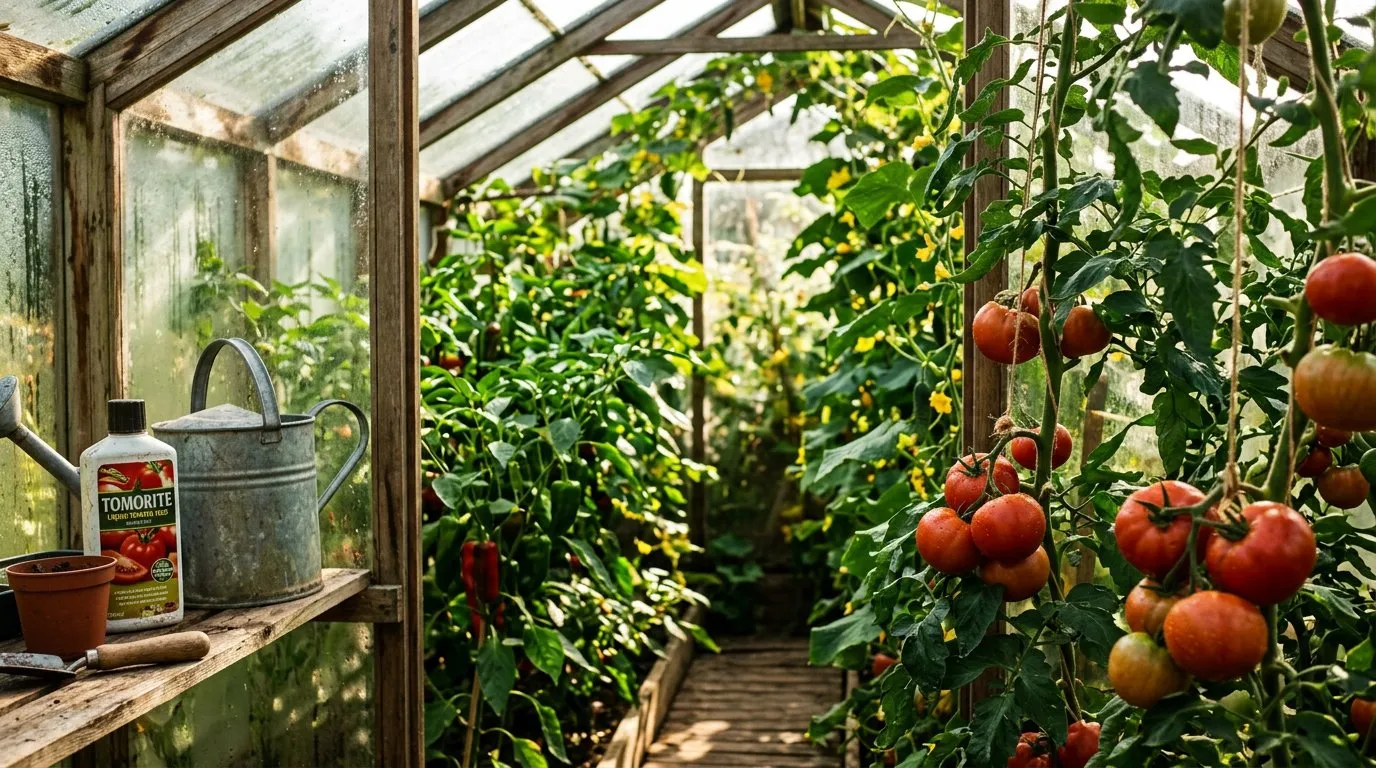 Peak greenhouse growing season: tomatoes ripen on the vine while liquid feed and a watering can stand ready for twice-weekly feeding.
September and October: winding down
September marks the turn. Days shorten and temperatures drop. Pick remaining tomatoes. Green fruit ripens indoors on a windowsill or in a paper bag with a banana. Our guide on what to harvest this month covers all September crops.
Sow winter lettuce, rocket, lamb’s lettuce, and spinach directly into greenhouse borders or containers. These crops grow slowly through winter and provide fresh salad from November to March. Our winter salad harvesting guide covers variety selection, frost-hardiness rankings, and the cut-and-come-again technique for maximum harvests.
Remove spent tomato plants, cucumber vines, and any crops that have finished. Compost healthy material. Burn or bin anything showing disease.
October is deep-clean month. Wash all glass inside and out. Scrub the frame, staging, and floor with a mild disinfectant. Remove debris where pests could overwinter. Repair cracked panes and replace worn seals.
Insulate the greenhouse with horticultural bubble wrap pinned to the inside of the frame. This reduces heat loss by up to 50% and cuts heating costs significantly. Clear bubble wrap lets light through while trapping an insulating layer of air. Our guide on how to insulate a greenhouse for winter covers fitting techniques and draught-proofing step by step.
Sow overwintering broad beans in pots under glass in late October. They germinate slowly over winter and give an early crop the following May.
 A Palram Hybrid greenhouse insulated with bubble wrap provides frost protection for overwintering crops and winter salads.
Shop the Palram Hybrid 6x8 at Greenhouse Stores →
November and December: rest and plan
November is for final maintenance. Remove summer shading. Oil door and vent hinges. Check that the heater and thermostat work before the first hard frost. Ensure drainage is clear so rainwater does not pool inside.
Harvest winter salads sown in September. Cut-and-come-again lettuce produces several harvests from a single sowing. Protect crops with fleece on the coldest nights.
December is planning month. Review what worked and what failed. Order seeds and supplies for next year. A full twelve-month sowing programme helps you hit every window.
No sowing in December. Let the greenhouse rest. The UK averages just 7-8 hours of daylight in December, which is not enough for seedling growth. Any sowings made now produce weak, leggy plants that never recover.
{/* IMAGE: greenhouse-calendar-uk-winter-insulated.jpg, A clean greenhouse in winter with bubble wrap insulation and winter salads growing /} {/ CAPTION: A well-insulated greenhouse in winter. Bubble wrap and a frost-free heater protect overwintering crops and winter salads. */}
Common greenhouse mistakes to avoid
These are the errors that cost UK greenhouse gardeners the most crops each year.
Overheating in summer. A closed greenhouse on a sunny June day can reach 45C inside. Most crops suffer permanent damage above 35C. Open vents by 9am and close them at 5pm. Automatic vent openers are the best insurance against forgetting.
Overwatering in winter. Cold, wet compost kills roots. In winter, water only when the top 3cm of compost is dry. Most greenhouse plants need water once a week at most between November and February.
Skipping the autumn clean. Pests and diseases overwinter in greenhouse debris. Red spider mite eggs, whitefly pupae, and botrytis spores survive in cracks and plant remains. A thorough October clean breaks the cycle. Our greenhouse pest control guide covers prevention, biological controls, and a monthly pest calendar. For spider mite specifically, see our spider mite control guide.
Sowing too early without heat. An unheated greenhouse in February is barely warmer than outdoors at night. Seeds sown at 5C rot instead of germinating. Either use a heater to maintain 12-15C minimum or wait until March when daytime temperatures rise.
Ignoring ventilation. Stale, humid air breeds fungal diseases. Even in winter, open the door for an hour on dry, mild days to let fresh air circulate.
Essential greenhouse equipment
Three items make the biggest difference to a productive UK greenhouse year-round.
| Equipment | Purpose | Approximate cost |
|---|---|---|
| Eden 2kW Heater | Frost protection and early season warmth | £140 |
| Palram Auto Vent Opener | Temperature-activated ventilation | £55 |
| Vitavia 2-Tier Staging | Double your bench space for seed trays | £109 |
A heater pays for itself in extended growing season. Starting tomatoes six weeks earlier means six extra weeks of harvest. An auto vent protects crops on days you are not home. Staging turns floor space into usable growing area.
Why we recommend heated propagators over unheated windowsill germination: After 30 seasons of starting greenhouse crops in the UK, a thermostat-controlled heated propagator at 21C produces germination rates of 85-90% for tomatoes and peppers compared to 50-60% on a typical south-facing windowsill in February. The difference in germination speed is typically 3-5 days, which compounds into noticeably larger, more vigorous transplants by planting-out time in May.
Gardener’s tip: Buy a min-max thermometer for under £10. Place it at bench height. Check the overnight minimum each morning. It tells you whether your heating is working and whether tender crops are safe. This single piece of data prevents more losses than any other tool.
Now you’ve mastered the growing calendar, read our guide on greenhouse heating for the next step in getting the most from your greenhouse through winter.
Frequently asked questions
What can I grow in a greenhouse in winter UK?
Winter salads, spinach, and overwintering broad beans grow well. A frost-free greenhouse at 5-7C supports lettuce, rocket, pak choi, and spring onions from October sowings. Forced rhubarb and chicory also thrive in winter darkness. The key is keeping the greenhouse above freezing and so good light by cleaning the glass in October.
When should I start sowing in a greenhouse UK?
Start in January with slow growers like chillies and aubergines. Most greenhouse sowing begins in February and March when light levels improve. A heated propagator at 18-21C gives reliable germination for tomatoes, peppers, and cucumbers. Without heat, wait until mid-March when daytime temperatures regularly exceed 12C.
Do I need to heat my greenhouse in winter?
Not for all crops. Hardy salads survive unheated. For frost-tender plants or early seed starting, a 2kW electric heater keeps temperatures above 5C. Heating a small 6x8ft greenhouse costs roughly £1-2 per night in winter. Bubble wrap insulation halves this cost by reducing heat loss through the glass. The Garden Organic winter growing guide has more on unheated greenhouse options.
How do I stop my greenhouse overheating in summer?
Open roof vents and the door from mid-morning. Automatic vent openers react to temperature without electricity. Apply shading wash or use shade netting when temperatures regularly exceed 25C. Damp down the floor on hot afternoons to raise humidity and cool the air. A combination of ventilation, shading, and damping down keeps most greenhouses below 30C.
What is the best greenhouse temperature for growing?
Most crops grow best at 18-25C during the day. Night temperatures above 12C suit tomatoes and peppers. Above 30C causes heat stress and blossom drop. Below 5C damages tender crops. A min-max thermometer at plant height helps you track the daily range and adjust heating or ventilation accordingly.
Can I grow tomatoes in an unheated greenhouse UK?
Yes, from late April onwards. Plant out after the last frost risk has passed in your area. Unheated greenhouse tomatoes crop from July to September, giving roughly 12-14 weeks of harvest. A heated greenhouse lets you start 6-8 weeks earlier and extend harvests into October, adding significantly to your total yield per plant.
Lawrie has been gardening in the West Midlands for over 30 years. He grows his own veg using no-dig methods, keeps a wildlife-friendly garden, and writes practical advice based on real UK growing conditions.