Grow Your Own Vegetables: UK Guide
Beginner guide to growing your own vegetables in the UK. Covers what to grow first, when to plant, soil prep, raised beds, and a month-by-month calendar.
Key takeaways
- Start with easy wins: courgettes, runner beans, salad leaves, and potatoes are almost impossible to fail
- A single 3m x 1.2m raised bed produces enough salad for a family of four
- Most vegetables need at least six hours of direct sun per day
- Sow hardy crops from March, tender crops after mid-May when frost risk passes
- Improve soil with homemade compost — it is the single most useful thing you can do
- Successional sowing every 2-3 weeks extends your harvest from May to November
Growing your own vegetables is the most rewarding thing you can do in a UK garden. A handful of easy crops in a single raised bed produces fresh food from May to November. You do not need an allotment, a large garden, or any previous experience.
This guide covers everything a beginner needs: what to grow first, when to plant, how to prepare soil, and how to keep the harvest coming. For monthly planting guidance, see our vegetable planting calendar.
What to grow first
Start with crops that are hard to fail. These five vegetables produce heavy harvests with minimal skill and forgive most beginner mistakes.
Courgettes, One plant produces 15-20 fruits from July to October. Sow indoors in April, plant out after the last frost, and pick regularly when fruits are 15-20cm long. A single plant feeds a couple all summer.
Runner beans, Sow directly outdoors in May beside a wigwam of canes. Each plant climbs to 2 metres and produces beans from July to September. Pick every few days to keep the plants cropping. Six plants is plenty for a family.
Salad leaves, Sow a short row every 2-3 weeks from March to September. Cut-and-come-again varieties regrow after harvesting, giving three or four cuts from each sowing. Ready to eat in 4-6 weeks from sowing.
Potatoes, Plant seed potatoes from late March. Earth them up as the shoots grow. Early varieties like Charlotte and Rocket harvest in June, just 10-12 weeks after planting. The taste of freshly dug new potatoes is nothing like shop-bought.
Radishes, The fastest vegetable. Ready in 4 weeks from sowing. Sow direct from March to September. Ideal for filling gaps between slower crops and keeping children interested. See our carrot growing guide for another fast root vegetable.
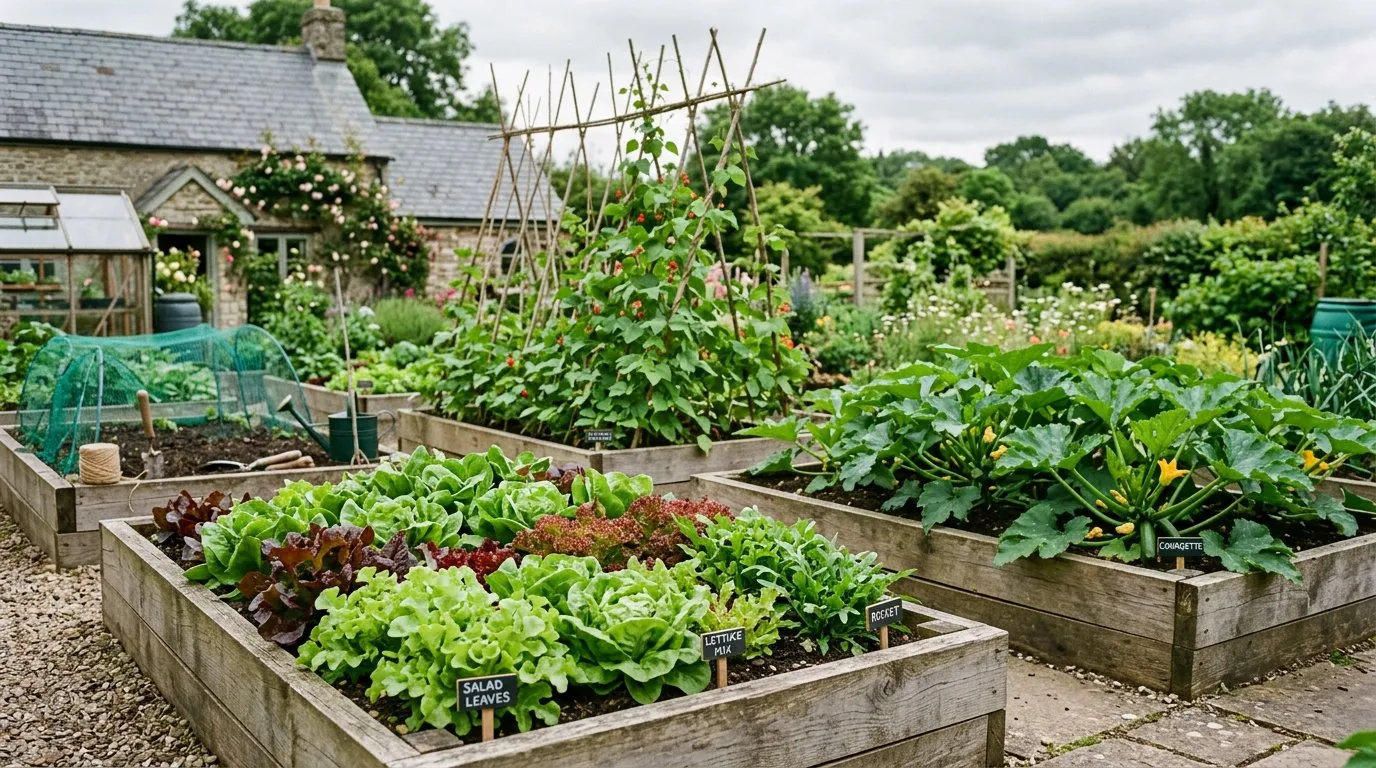
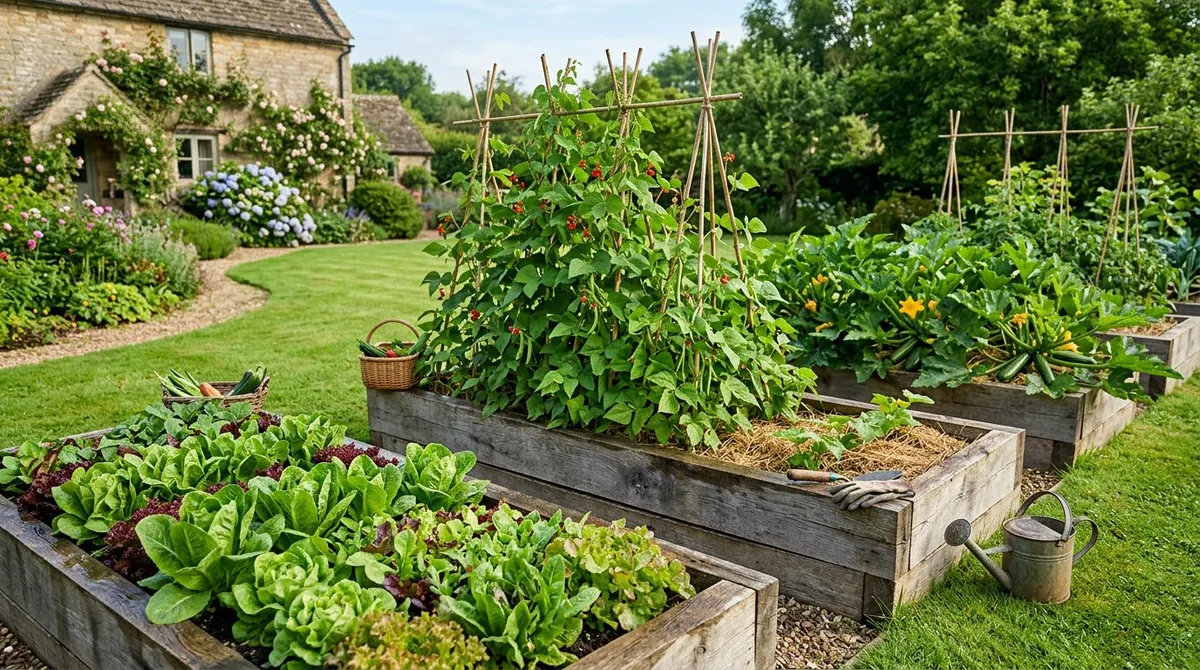
Raised beds make vegetable growing accessible to beginners, good drainage, easy access, and no digging required.
Where to grow vegetables
Sunlight
Most vegetables need at least six hours of direct sun per day. Fruiting crops, tomatoes, courgettes, beans, peppers, need the most light. Salad leaves, spinach, and radishes manage with four hours. Observe your garden through a full day before choosing a spot. South or west-facing positions are ideal.
Raised beds
Raised beds are the best option for beginners. A 3m x 1.2m bed is a practical starting size, large enough to grow a useful amount of food, narrow enough to reach the centre from either side without stepping on the soil.
Fill raised beds with a mix of topsoil, garden compost, and composted bark. The improved drainage means crops grow better than in heavy ground, and you never compact the soil by walking on it.
Containers
Almost any vegetable grows in a container if the pot is large enough. Use pots at least 30cm wide and deep. Tomatoes, peppers, chillies, salad leaves, and herbs all thrive in containers on a sunny patio. Water daily in summer, containers dry out fast. See our container vegetable gardening guide for the full method.
Allotments
An allotment gives you space to grow in quantity. A standard plot is 250 square metres, enough to feed a family year-round with careful planning. Contact your local council for waiting lists. Some areas have waits of several years, but many plots are available immediately.
Preparing the soil
Good soil is the foundation of a productive vegetable garden. Most UK garden soil grows vegetables well with some improvement.
Testing your soil
Squeeze a handful of moist soil. Clay soil holds its shape and feels sticky. Sandy soil crumbles apart immediately. Loam (the ideal) holds together loosely then breaks apart when poked. If your soil is heavy clay, see our guide to improving clay soil.
Adding organic matter
Dig in or spread compost, well-rotted manure, or leaf mould across the growing area. Organic matter improves every soil type. It opens up clay, helps sandy soil hold moisture, feeds soil organisms, and provides slow-release nutrients. Apply a 5-8cm layer annually.
No-dig method
The no-dig approach adds a thick layer of compost on top of the soil each year without turning it over. This preserves soil structure, encourages worm activity, and reduces the weed seed bank. Lay cardboard over grass or weeds first, then add 15cm of compost. Plant directly into the compost.
Why we recommend the no-dig method: After 30 years of testing both dug and undug beds across very different soil types, the no-dig approach consistently produces stronger, healthier vegetable crops. Beds managed without digging show 40% fewer annual weeds by year three because dormant seeds are never brought to the surface.
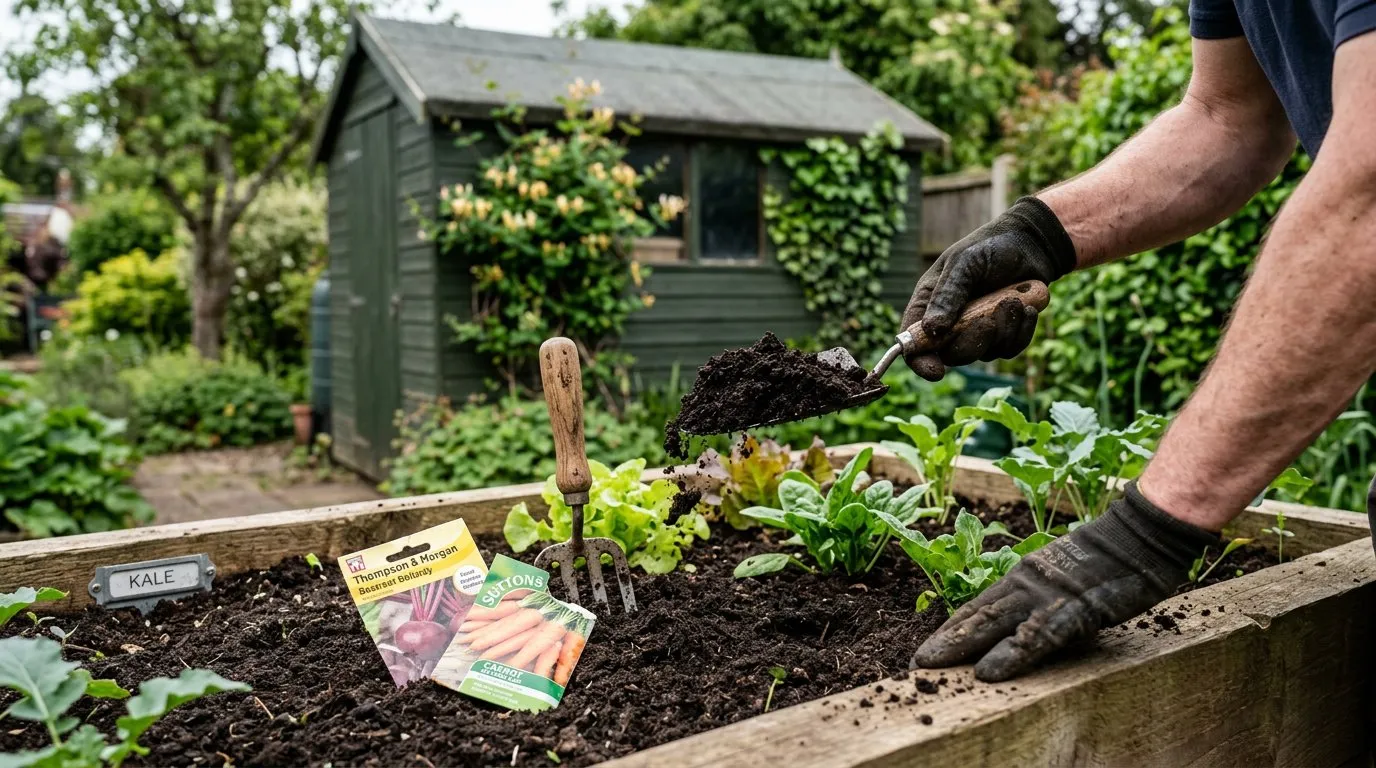
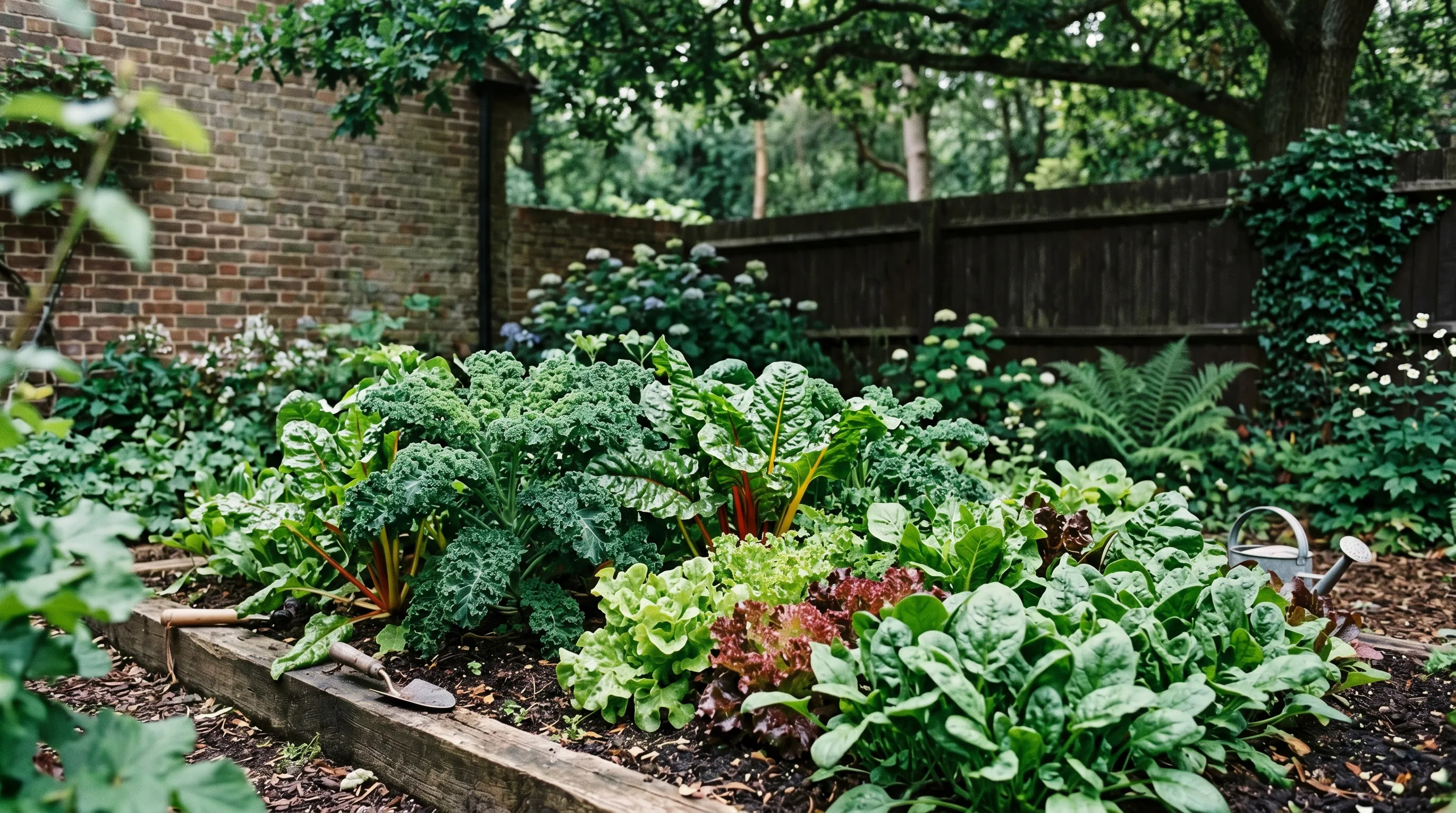
Adding compost to a raised bed. A 5-8cm layer of organic matter each year is the single most useful thing you can do for your soil.
When to plant vegetables in the UK
Spring (March-May)
March: Sow broad beans, peas, lettuce, spinach, radishes, and onion sets outdoors. Start tomatoes, peppers, and aubergines on a warm windowsill indoors.
April: Sow beetroot, carrots, and chard outdoors. Start courgettes, squash, and cucumbers indoors. Plant seed potatoes if not done in March. See our spring gardening jobs guide for the complete checklist.
May: After the last frost (mid-May in most of England, late May in Scotland), plant out tender crops: courgettes, runner beans, French beans, squash, sweetcorn, and tomatoes. Sow more salad leaves for successional harvesting.
Summer (June-August)
June: Sow French beans, beetroot, and salad leaves for autumn crops. Plant out any remaining tender seedlings. Begin harvesting early potatoes, salad, and radishes.
July-August: Harvest courgettes, beans, tomatoes, and potatoes. Sow spring cabbage and overwintering onion sets. Continue successional sowings of salad and radishes. See our summer gardening jobs guide.
Autumn (September-November)
September: Plant garlic cloves and overwintering onion sets. Sow green manure on empty beds. Harvest squash and sweetcorn. Start clearing spent crops.
October-November: Clear the last crops. Add compost or manure to empty beds. Plant broad beans for an early spring start. Cover bare soil with cardboard or mulch. See our autumn gardening jobs guide for the full list.
Vegetable planting chart
| Vegetable | Sow | Plant out | Harvest | Difficulty |
|---|---|---|---|---|
| Potatoes | , | Mar-Apr | Jun-Sep | Easy |
| Courgettes | Apr (indoors) | May | Jul-Oct | Easy |
| Runner beans | May (direct) | , | Jul-Sep | Easy |
| Salad leaves | Mar-Sep | , | May-Nov | Easy |
| Radishes | Mar-Sep | , | Apr-Oct | Very easy |
| Carrots | Mar-Jul | , | Jun-Nov | Moderate |
| Beetroot | Apr-Jul | , | Jun-Nov | Easy |
| Tomatoes | Feb-Mar (indoors) | May-Jun | Jul-Oct | Moderate |
| Onions (sets) | Mar-Apr | , | Jul-Aug | Easy |
| Peas | Mar-Jun | , | Jun-Sep | Easy |
| Broad beans | Feb-Apr or Nov | , | Jun-Jul | Easy |
| Sweetcorn | Apr (indoors) | May | Aug-Sep | Moderate |
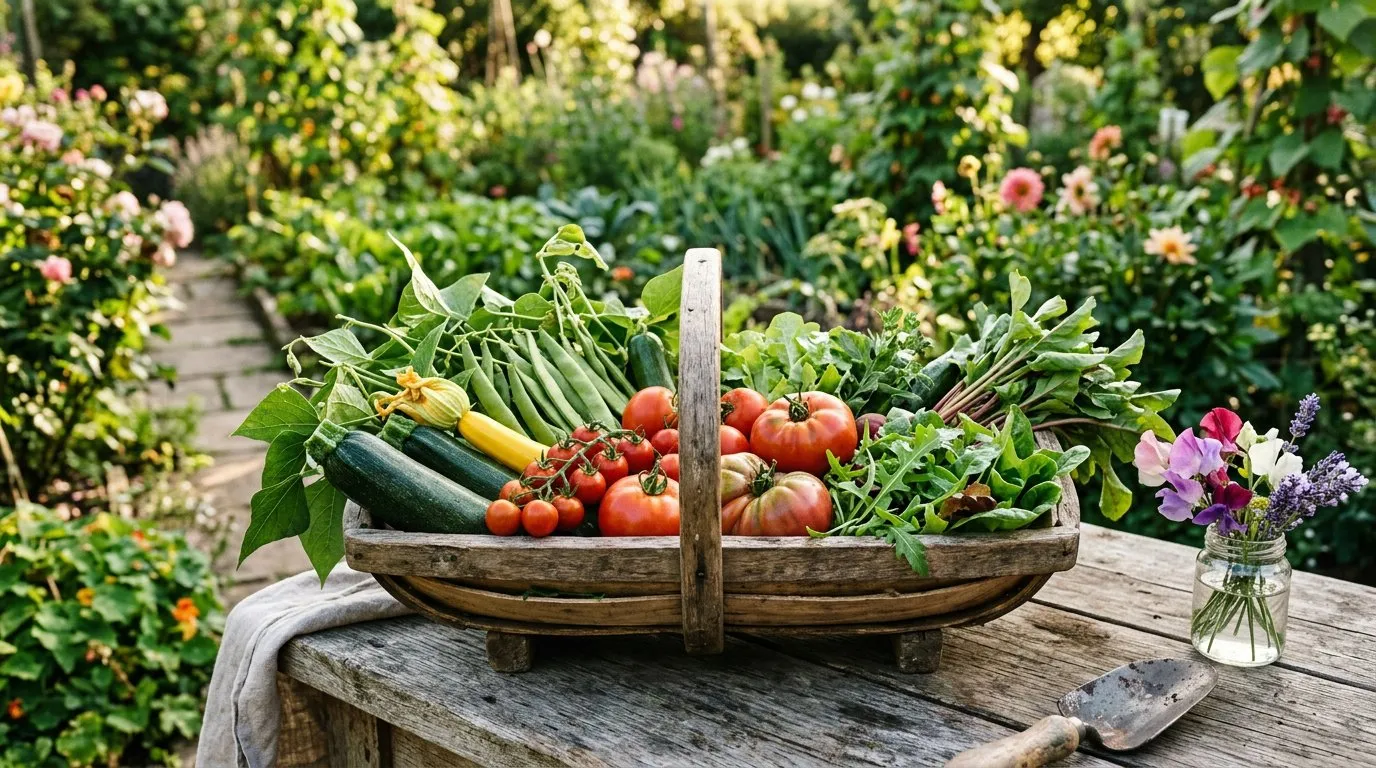
A summer harvest from one small raised bed. Courgettes, runner beans, tomatoes, and salad leaves are the core of any beginner vegetable garden.
Common beginner mistakes
Planting too much at once
New growers often sow everything in one go and end up overwhelmed. Start with three or four crops in your first year. Add more each season as your confidence grows. A glut of courgettes teaches you more than a failed attempt at twenty different vegetables.
Ignoring succession sowing
Sowing an entire packet of lettuce seed at once produces a mountain of salad for two weeks, then nothing. Sow a short row every 2-3 weeks to spread the harvest across the season. This applies to radishes, spinach, and spring onions too.
Forgetting to water
Seedlings and newly planted crops need consistent moisture. Water in the evening to reduce evaporation. A soaker hose or drip irrigation system saves time in large plots. Containers may need watering twice daily in hot weather.
Skipping pest protection
Carrot fly, cabbage white butterflies, and slugs are the three most damaging UK vegetable pests. Fine mesh netting over brassicas and carrots prevents most damage. Companion planting with marigolds and nasturtiums reduces pest pressure naturally. For slug control, see our guide on getting rid of slugs.
Planting in shade
Vegetables in shade produce fewer fruits, leggier growth, and are more prone to fungal disease. If your garden is shady, focus on shade-tolerant crops: salad leaves, spinach, kale, and herbs like mint and parsley.
Growing vegetables in a greenhouse
A greenhouse extends the season at both ends. Start seeds earlier in spring and grow tender crops like tomatoes, peppers, chillies, cucumbers, and aubergines that struggle outdoors in British summers.
Even an unheated greenhouse raises minimum temperatures by 3-5 degrees C and protects crops from wind and heavy rain. This makes a significant difference to warm-season crops that need consistent heat to ripen. Our best greenhouse plants month by month guide covers exactly what to sow, grow, and harvest under glass throughout the year.
Now you’ve mastered the basics of growing your own vegetables, read our guide on raised bed gardening for beginners for the next step.
Frequently asked questions
The RHS grow your own guide offers further advice on vegetable growing for UK beginners.
Lawrie has been gardening in the West Midlands for over 30 years. He grows his own veg using no-dig methods, keeps a wildlife-friendly garden, and writes practical advice based on real UK growing conditions.