How to Grow Agapanthus in the UK
Grow agapanthus in the UK: hardy varieties survive -15°C, tender types need frost cover. Full sun, well-drained soil and pot-bound roots boost flowering.
Key takeaways
- Hardy deciduous agapanthus (Headbourne Hybrids, Midnight Star) survive to -15°C — no winter protection needed in most of the UK
- Evergreen tender agapanthus (africanus, Peter Pan) must be moved under cover before the first frost — they die below -5°C
- Full sun and well-drained soil are essential — agapanthus in shade or waterlogged ground rarely flowers
- Container-grown plants flower better when pot-bound — resist the urge to repot until roots fill the pot
- Feed with a high-potash tomato fertiliser from May to August to encourage flowering rather than leaf growth
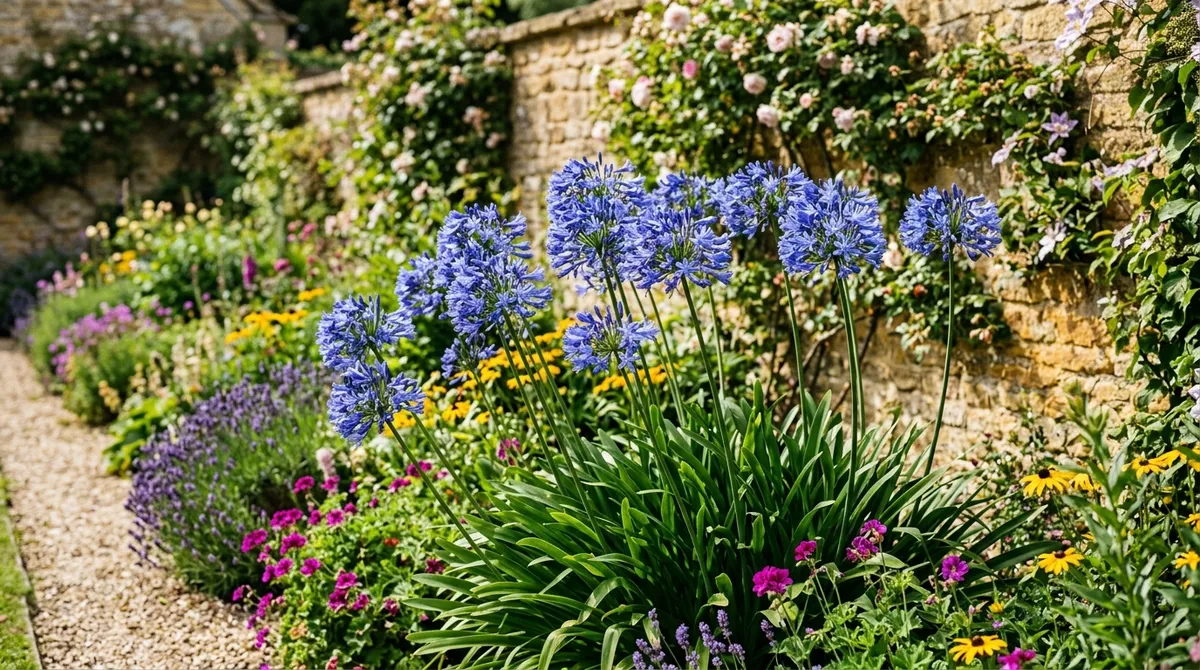
Agapanthus is one of the most dramatic summer-flowering perennials you can grow in a UK garden, producing bold globes of blue or white trumpet flowers on tall stems from July through to September. The single most important question for UK gardeners — one that defines your entire approach to growing agapanthus — is whether your variety is hardy or tender. Get that right, and agapanthus is surprisingly straightforward. Get it wrong and you will lose plants to frost every winter.
This guide covers everything you need: how to identify hardy versus tender varieties, planting position, feeding, growing in containers, overwintering methods for both types, why agapanthus fails to flower, and the best varieties for UK conditions. Whether you are planting in a sunny border, a courtyard pot, or a south-facing garden, agapanthus will deliver exceptional value from midsummer onwards.
Hardy vs tender agapanthus: the key difference
Hardy deciduous agapanthus loses its leaves in winter and survives to -15°C. Tender evergreen agapanthus keeps its leaves year-round and is damaged or killed below -5°C. This single characteristic determines your entire approach to growing and overwintering.
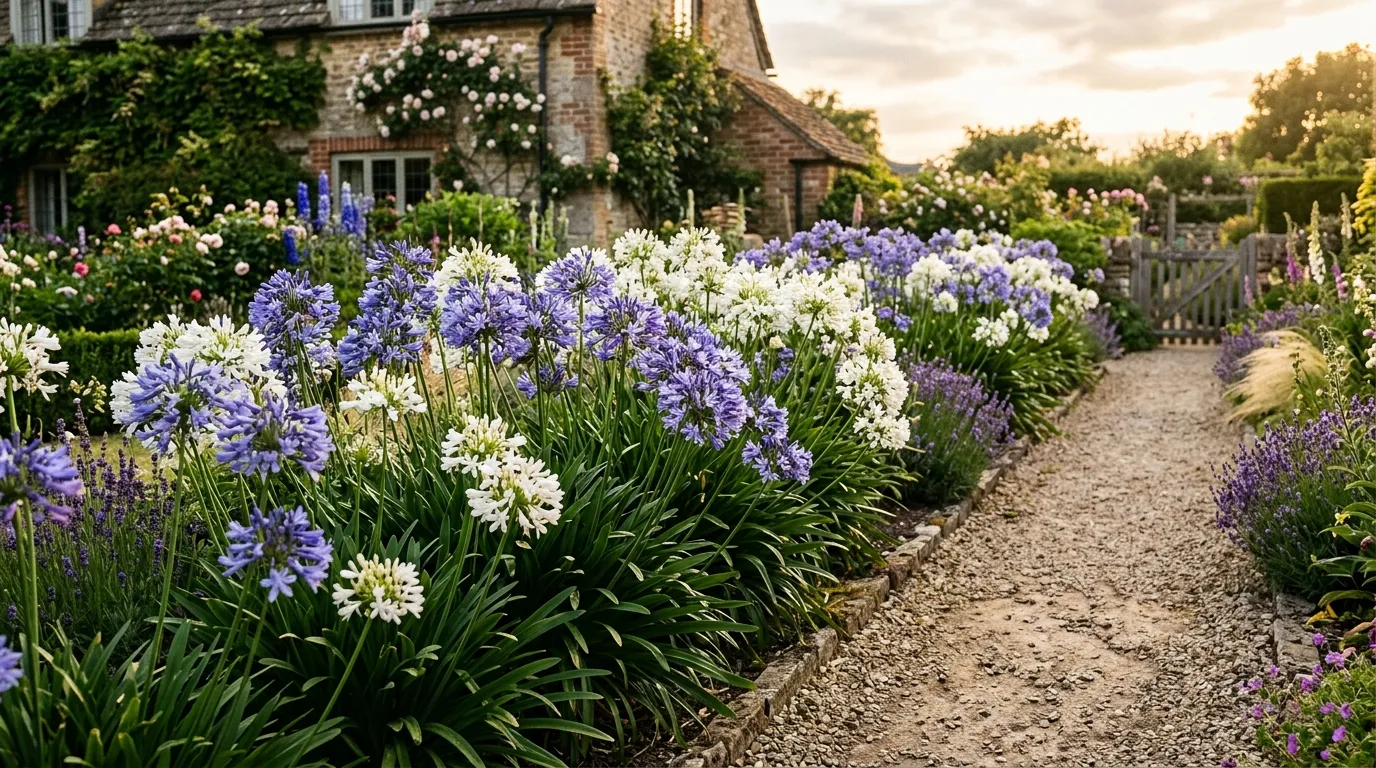
Hardy deciduous agapanthus like Headbourne Hybrids survive to -15C in well-drained soil without protection.
The confusion arises because agapanthus sold in UK garden centres often lacks clear labelling. A plant may simply be sold as “blue agapanthus” without indicating whether it is deciduous-hardy or evergreen-tender. As a rule: if you buy a pot in spring or summer and the plant already has leaves, it is likely evergreen and therefore tender. Hardy deciduous types often show no growth at all early in the season.
Hardy vs tender agapanthus: full comparison
| Characteristic | Hardy deciduous | Tender evergreen |
|---|---|---|
| Hardiness | To -15°C | To -5°C only |
| Winter behaviour | Loses leaves, roots dormant | Keeps leaves year-round |
| UK winter | Safe in ground, no cover needed | Must be under cover by October |
| Examples | Headbourne Hybrids, Midnight Star, Northern Star, Blue Storm | Africanus, Peter Pan (tender forms), Brilliant Blue |
| Pot care in winter | Leave outside in pot with insulation | Move under cover, keep barely moist |
| Leaf shape | Strap-like, mid-green | Strap-like, often darker and glossier |
| Flowering reliability | Very reliable once established | Good if frost-free winters are guaranteed |
| Best for | Open borders, exposed UK gardens | Sheltered city gardens, conservatory pots |
The safest hardy varieties for UK gardens
Headbourne Hybrids are the benchmark for UK hardiness. Bred in Hampshire in the 1950s by Lewis Palmer from seed collected in South Africa’s coldest upland regions, these deciduous hybrids regularly survive UK winters without any protection. They flower mid-blue to pale blue on 70-90cm stems in July and August. The seed-raised nature means some variation in colour, which is part of their charm.
Northern Star is one of the hardiest named varieties available, with rich deep blue flowers on 80cm stems in July. It is reliably deciduous and has survived temperatures below -12°C in documented UK trials.
Midnight Star produces deep violet-blue flowers on 60-70cm stems. Hardy and deciduous. A strong performer in northern England and Scotland.
Blue Storm is a compact variety at 50-60cm, with mid-blue flowers in dense globes. Excellent for containers and smaller gardens. One of the most reliable flowerers among the hardy types.
Twister is bicoloured — white petals with a vivid blue stripe — making it the most visually distinctive hardy variety. Grows to 60cm. Deciduous and fully hardy.
White Heaven is the finest white-flowered hardy agapanthus. Pure white globes on 70cm stems, June to August. Deciduous and hardy to -12°C.
Agapanthus in pots on a south-facing patio — container-grown plants flower more reliably when root-bound.
Where and how to plant agapanthus
Full sun is not optional for agapanthus. Plants in partial shade produce lush green leaves and few or no flowers. A minimum of six hours of direct sun per day is needed for reliable flowering. South-facing borders and walls are ideal — the additional warmth and shelter also benefits the tender varieties. See our guide to south-facing garden plants for companion planting ideas that work well alongside agapanthus.
Well-drained soil is equally critical. Agapanthus roots rot in waterlogged conditions. On heavy clay, improve drainage by mixing in horticultural grit at a ratio of 1:4 before planting, or plant in raised beds. My own garden has heavy West Midlands clay, and I grow the hardy varieties in a raised border with 15cm of grit-amended soil over the clay. In nine seasons, I have not lost a single plant to root rot.
Planting depth: Set the crown of the plant 5cm below soil level. Deeper planting can delay flowering by one season. Space plants 40-60cm apart for border plantings — agapanthus looks most impressive in groups of three, five, or seven rather than as isolated specimens.
Planting time: Plant container-grown agapanthus from late May to early September. This gives roots time to establish before winter without exposing newly planted specimens to late frost during the vulnerable establishment period. Bare-root agapanthus divisions are best planted in April or early May.
Agapanthus works naturally alongside other late-summer perennials. They complement drought-tolerant border plants and perform well in the same conditions as Mediterranean species — full sun, lean soil, and excellent drainage. They also look exceptional in sandy soil gardens, where their drainage requirements are naturally met.
Growing agapanthus in containers
Container growing suits agapanthus exceptionally well, for one counterintuitive reason: they flower better when root-bound. A plant with roots visibly escaping the drainage holes and circling the inside of the pot is a plant preparing to flower. A plant in a generously sized pot with room to grow will produce more leaves and fewer flowers.
Choose the right pot: Use a pot 30-40cm in diameter for an established clump. Terracotta pots are ideal because they allow some air exchange through the walls, which prevents waterlogging. Avoid very large pots — they hold too much compost, which stays wet between waterings and encourages root rot.
Compost mix: Use a loam-based compost (John Innes No. 2 or 3) mixed with approximately 20% horticultural grit by volume. Avoid peat-based multipurpose compost alone — it stays wet and compacts over time. The grit improves drainage without reducing fertility. Our guide to container gardening ideas covers pot selection and drainage setup in detail.
Watering in containers: Water regularly from May to September when the compost is dry in the top 5cm. In hot summers, established pots in full sun may need watering every two to three days. Reduce watering significantly from October. For hardy varieties overwintering outside, stop watering altogether from November to March unless the weather is exceptionally dry.
When to repot: Only repot when absolutely necessary — when the pot is visibly splitting, or roots are so congested that the plant dries out within 24 hours of watering. Move up one pot size only, not two. Expect one season with reduced flowering after repotting as roots re-establish to the new space.
How to feed agapanthus for maximum flowers
Feeding is where most gardeners go wrong with agapanthus. The instinct is to apply a general balanced fertiliser — but this produces lush foliage at the direct expense of flowers. Agapanthus needs potassium, not nitrogen.
Feed with a high-potash tomato fertiliser from May to August. Apply a liquid feed at the manufacturer’s recommended rate every two weeks during the growing season. Tomato fertiliser (such as Tomorite or equivalent) has a higher potassium-to-nitrogen ratio that encourages flower bud formation. Stop feeding in September to allow the plant to harden off before winter.
On established border plants: A single application of a granular potassium-rich fertiliser (such as sulphate of potash) in April is sufficient for most established clumps. Work it lightly into the soil surface and water in. Over-fertilising agapanthus in borders is less common than in containers, but still avoid high-nitrogen feeds such as lawn feed or general-purpose fertilisers high in nitrogen.
See our full guide to feeding garden plants for the principles behind potassium, nitrogen, and phosphorus and when to use each. The same high-potash principle that applies to agapanthus also applies to dahlias, roses, and other summer flowering plants.
Overwintering agapanthus in the ground
The overwintering method depends entirely on whether your variety is hardy or tender.
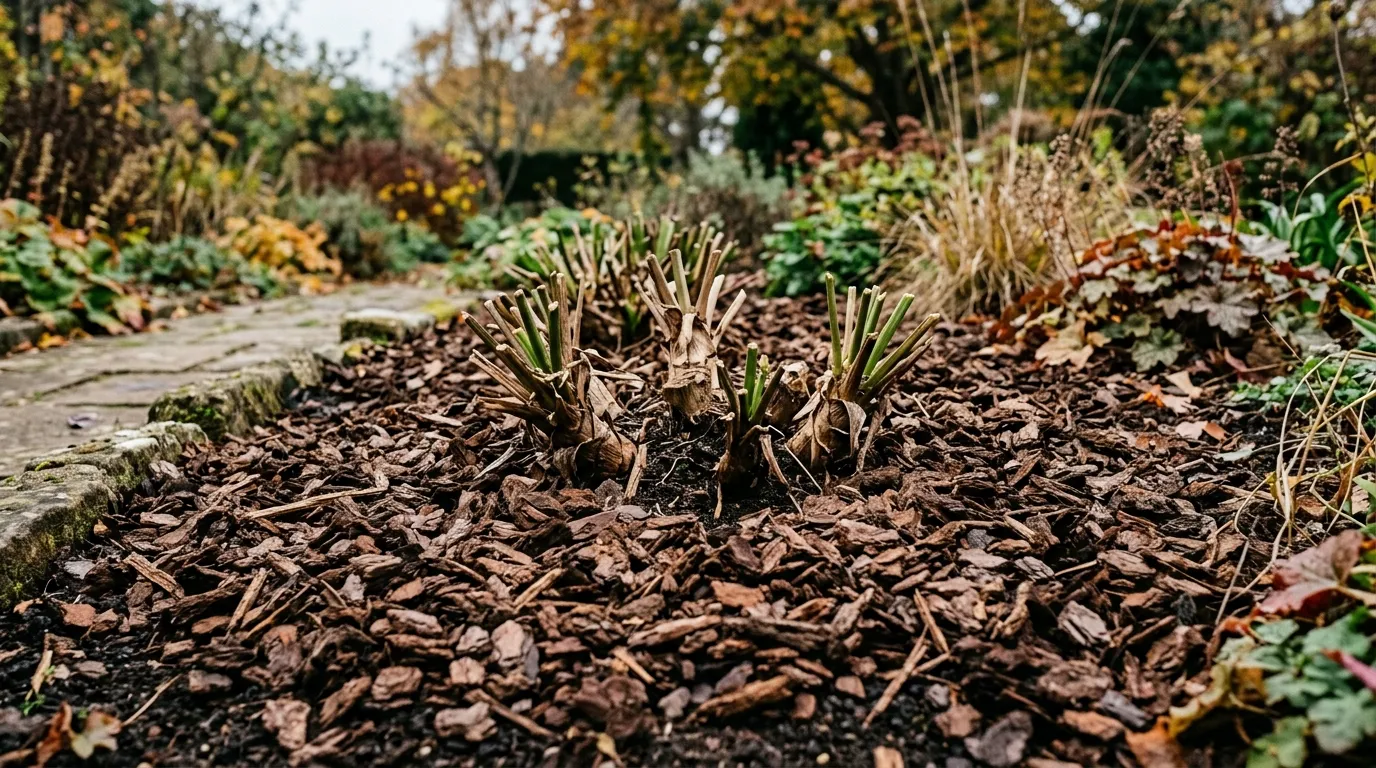
Mulch the crown 10cm deep with bark chips or straw in November. Remove the mulch in March as new growth appears.
Hardy deciduous varieties in the ground: These need no protection in most of the UK. The leaves die back naturally in autumn, leaving the crown dormant underground through winter. In areas that regularly experience temperatures below -10°C, apply a 10cm mulch of bark chippings or straw over the crown in November. Remove the mulch in March before new growth begins. I have grown Headbourne Hybrids in an unprotected West Midlands border through nine winters including the -12°C snap of February 2021 without losses.
Tender evergreen varieties in the ground: These should not be planted in the ground in most UK gardens unless you are in a sheltered urban microclimate in the south-west of England. If you have planted tender types in the ground, lift the entire clump in late September before the first frost, pot up into a suitable container, and move to a frost-free location. Replant outdoors the following May. Our guide to protecting plants from frost covers lifting, potting, and storage for tender perennials in detail.
Hardy deciduous agapanthus in a mixed summer border — the crown mulched to 10cm for winter protection in exposed positions.
Overwintering agapanthus in pots
Pot management in winter differs by variety.
Hardy deciduous varieties in pots: These can remain outside through UK winters, but the roots are more vulnerable to frost damage in a pot than in the ground because the entire root ball can freeze solid. Insulate the pot by wrapping it in several layers of horticultural fleece, bubble wrap, or hessian from November to March. Move to a sheltered spot against a south-facing wall. Avoid bringing hardy varieties into a heated space — they need the cold dormancy period to flower reliably the following year.
Tender evergreen varieties in pots: Move inside before the first frost — typically October in the Midlands and north, November in southern England. A frost-free greenhouse, conservatory, or cool garage (above 5°C) is ideal. Keep the compost barely moist through winter — waterlogged roots in cold conditions are the leading cause of overwintering failure. Do not feed. Bring back outside after the last frost risk, typically mid-May.
Hardening off: When moving overwintered tender pots back outside in spring, harden them off over two weeks by placing them in a sheltered spot during the day and bringing them under cover at night. Sudden exposure to cold winds after months indoors stresses the plant.
A 10cm straw mulch over agapanthus crowns in November — the simplest protection for hardy varieties in colder UK regions.
Why isn’t my agapanthus flowering?
Non-flowering is the most common complaint about agapanthus. There are four main causes.
1. Not enough sun. This is the most frequent cause. Agapanthus in dappled shade or north-facing positions reliably produces leaves and nothing else. If your plant has been in the same spot for two or three years without flowering, move it. Even shifting a pot from a shaded patio into direct sun can trigger flowering the following season.
2. Too much nitrogen. Feeding with balanced or high-nitrogen fertiliser pushes the plant into vegetative growth. Switch to a high-potash tomato feed and avoid any fertiliser with a nitrogen-first ratio (the first number on an NPK label).
3. Recently divided or repotted. Agapanthus that has been divided or moved to a larger pot typically skips one growing season — sometimes two — while it re-establishes. This is normal. Do not divide unless the clump is genuinely overcrowded and flowering has already declined.
4. Roots not pot-bound enough. In a container, agapanthus flowers best when roots are congested. If the pot feels light when you water or the plant dries out very slowly, the roots have not yet filled the container. Patience is required.
Agapanthus is one of the best perennial plants for UK gardens precisely because it is so long-lived once established. A clump that flowers consistently will continue to do so for decades without intervention, provided sun and drainage remain adequate.
Dividing agapanthus
Divide agapanthus every four to five years in April or May. Lift the clump with a fork, shake off excess soil, and use a sharp spade or two garden forks back-to-back to split it into sections. Each division needs several healthy growing points (the points where leaves emerge) and a good mass of fleshy roots.
Replant divisions at the same depth as the original clump — 5cm crown depth. If replanting in the same spot, refresh the soil with grit and a light application of potassium-rich fertiliser before replanting. In pots, use fresh John Innes No. 2 with grit added.
Expect reduced or no flowering in the first season after division. By the second season, flowering resumes fully as roots establish. Division is also the most reliable method of propagating perennial plants — far quicker than seed, which can take three or more years to reach flowering size.
Best agapanthus varieties for UK gardens
The following varieties are the most reliable performers for UK conditions based on documented hardiness trials and widespread UK garden use. The RHS agapanthus growing guide lists Award of Garden Merit varieties that have been formally trialled at Wisley.
| Variety | Height | Flower colour | Hardy to | Deciduous | Best use |
|---|---|---|---|---|---|
| Headbourne Hybrids | 70-90cm | Mid to pale blue | -15°C | Yes | Borders, naturalising |
| Northern Star | 80cm | Deep blue | -12°C | Yes | Exposed borders, northern gardens |
| Midnight Star | 60-70cm | Violet-blue | -10°C | Yes | Borders, containers |
| Blue Storm | 50-60cm | Rich mid-blue | -10°C | Yes | Containers, small gardens |
| Twister | 60cm | White + blue stripe | -8°C | Yes | Containers, focal point |
| White Heaven | 70cm | Pure white | -12°C | Yes | Mixed borders, contrast |
| Peter Pan | 40-50cm | Pale blue | -5°C | No (evergreen) | Sheltered city gardens only |
| Africanus | 50-70cm | Mid-blue | -5°C | No (evergreen) | Pots with winter protection |
For coastal gardens, agapanthus is a particularly strong performer. Its tolerance of salty air, exposure, and sandy soils makes it a natural fit for the conditions described in our guide to coastal gardening and salt-tolerant plants.
Frequently asked questions
Are agapanthus hardy in the UK?
Deciduous agapanthus varieties are fully hardy in the UK, surviving to -15°C. Headbourne Hybrids, Northern Star, and Midnight Star all come through UK winters in the ground without protection. Evergreen varieties — including africanus and most tender cultivars — are not hardy below -5°C and need winter cover. Always check the label: ‘deciduous’ means hardy, ‘evergreen’ usually means tender.
When do agapanthus flower in the UK?
Agapanthus flowers July to September in UK gardens. Peak flowering is mid-July to August depending on variety and position. Plants in full sun and south-facing spots flower most reliably. Newly divided plants often skip one flowering season while roots re-establish.
Why is my agapanthus not flowering?
The four most common reasons agapanthus fails to flower are: insufficient sun, too much nitrogen in the feed, divided or repotted too recently, or not pot-bound enough. Switch to a high-potash tomato feed, move to a sunnier spot, and do not repot until roots are visibly escaping the drainage holes. A newly divided clump may skip one season before flowering resumes.
How do I overwinter agapanthus in the UK?
Hardy deciduous varieties need no overwintering — leave them in the ground with an optional 10cm mulch over the crown in severe winters. Tender evergreen varieties in pots must be moved to a frost-free greenhouse, shed, or conservatory before October, keeping them just barely moist. Tender varieties planted in open ground need lifting in late September, potting up, and storing frost-free until May.
Can I grow agapanthus in pots?
Agapanthus thrives in pots and often flowers more reliably than in the ground because the roots become pot-bound. Use a 30-40cm diameter pot with good drainage. Pot-bound roots signal the plant to flower rather than produce more foliage. Do not repot unless absolutely necessary — splitting or moving to a larger container can stop flowering for one to two seasons.
How do I divide agapanthus?
Divide agapanthus in spring (April to May) every four to five years, or when the clump becomes overcrowded and flowering declines. Lift the whole clump and use a sharp spade to split it into sections, each with several growing points and a good root system. Replant immediately at the same depth in well-drained soil. Pot divisions individually and keep them in a warm spot for the first season.
What is the best agapanthus for a small UK garden?
Agapanthus ‘Blue Storm’ and ‘Northern Star’ are the best choices for smaller UK gardens. Blue Storm is compact at 50-60cm with rich blue flowers and reliable hardiness. Northern Star reaches 80cm and is one of the hardiest varieties available, thriving in exposed UK positions. Both perform well in pots on a sunny patio without requiring winter protection.
Related reading:
- Best perennial plants for UK gardens
- How to grow alliums in the UK
- How to protect plants from frost in the UK
- Container gardening ideas for UK gardens
- South-facing garden plants for full sun
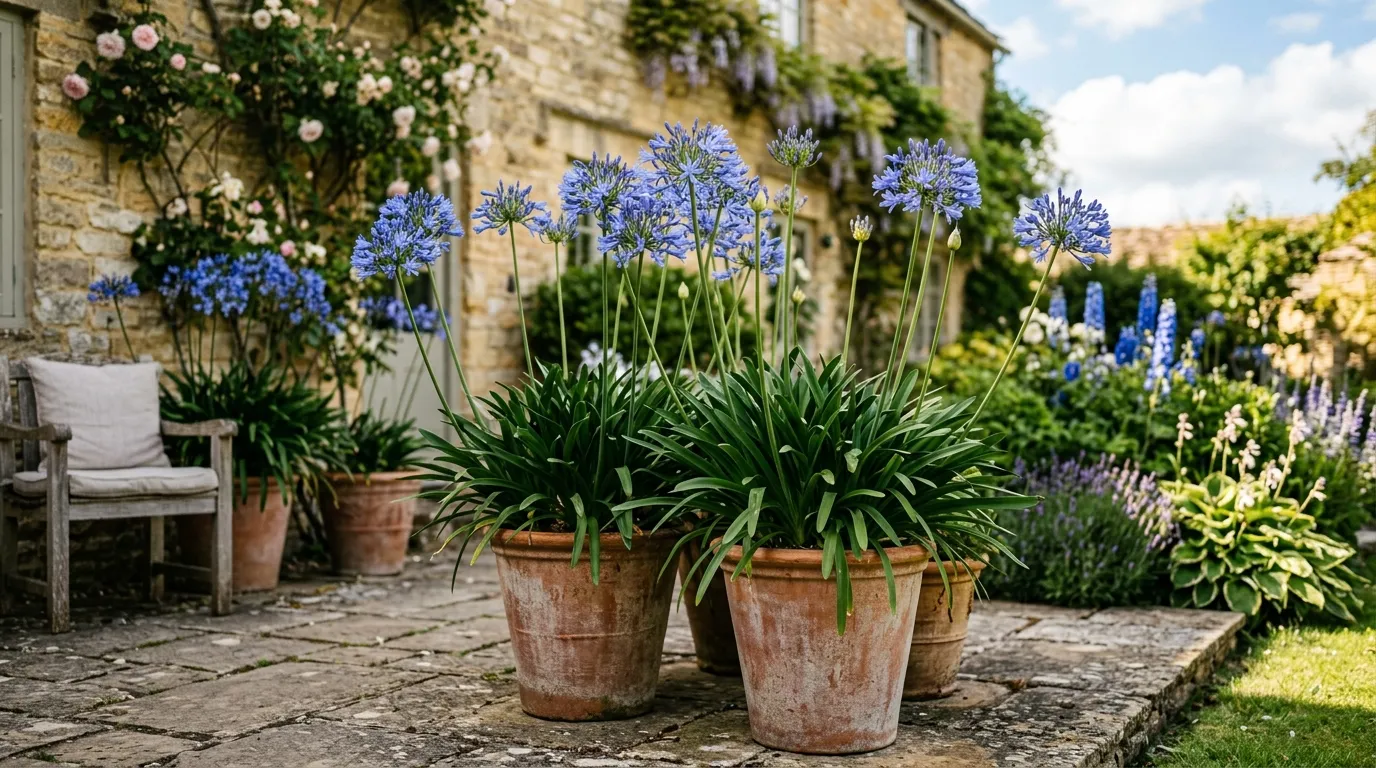
Agapanthus flower better when slightly pot-bound. A 30-40cm container is ideal for most varieties.
Lawrie has been gardening in the West Midlands for over 30 years. He grows his own veg using no-dig methods, keeps a wildlife-friendly garden, and writes practical advice based on real UK growing conditions.