How to Grow Aubergines in the UK
Complete UK guide to growing aubergines from seed. Covers varieties, sowing with heat, greenhouse and container growing, feeding, and harvesting.
Key takeaways
- Sow aubergine seeds indoors from February to March at 20-25C for germination in 14-21 days
- Pinch out the growing tip when the plant reaches 30cm tall to encourage side shoots and more fruit
- Limit each plant to 5-6 fruits for the best size, flavour, and ripening speed
- Feed weekly with high-potash liquid fertiliser once the first flowers open
- Harvest aubergines when the skin is glossy and taut, as dull skin means overripe and seedy flesh
- Grow in a greenhouse, polytunnel, or containers of 30cm diameter or larger for reliable UK crops
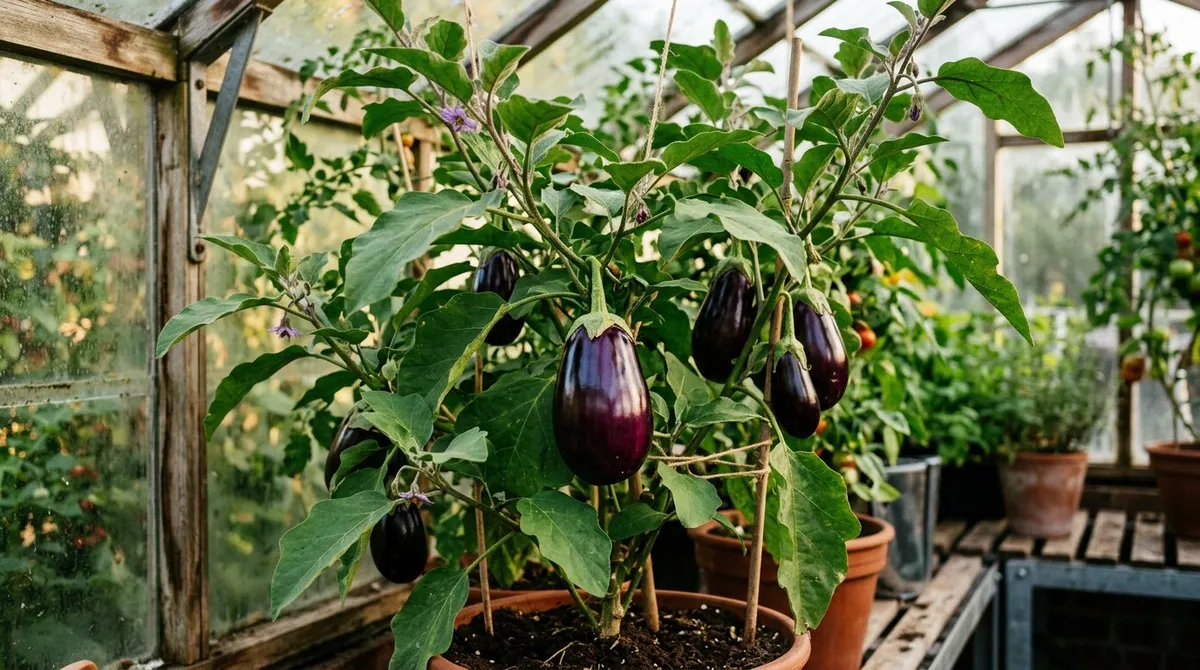
Aubergines are one of the most rewarding warm-season crops for UK gardeners. They belong to the same family as tomatoes and peppers, thriving in the same greenhouse conditions. A single plant produces 5-6 glossy, purple fruits when given enough warmth and the right care.
Growing aubergines in the UK is entirely achievable with the right variety and a warm growing space. This guide covers everything from sowing seeds with heat through to harvesting perfectly ripe fruit. You will find specific variety recommendations, a month-by-month calendar, feeding schedules, and solutions to common problems. If you are new to growing your own food, start with our guide on how to start a vegetable garden.
Do aubergines grow well in the UK?
Aubergines need warmth above all else. They originate from tropical Asia and demand consistent temperatures above 20C during the day and 15C at night to flower and set fruit. The UK climate does not provide this naturally for long enough, which is why a greenhouse, polytunnel, or conservatory is essential for most growers.
In southern England, sheltered gardens with a south-facing wall can support outdoor aubergine growing in warm summers. However, results are unpredictable. A cold, wet July wipes out an outdoor crop entirely. Indoor growing removes this risk and extends the harvest window from August into October.
Aubergines share growing requirements with tomatoes and chilli peppers. If you already grow either of these crops successfully, you have the right conditions for aubergines. They make excellent greenhouse companions, occupying the same warm, sheltered space without competing for light when positioned properly.
Which aubergine varieties grow best in the UK?
Choosing a variety bred for cooler climates is critical for UK success. Traditional Mediterranean and Asian varieties need sustained heat that British summers rarely deliver. Modern F1 hybrids and compact cultivars set fruit at lower temperatures and ripen faster.
Large-fruited varieties
- Black Beauty - the classic dark purple aubergine. Large, oval fruit weighing 400-600g. Deep purple-black skin with dense, creamy flesh. Needs a warm greenhouse and a long season. Best in heated greenhouses or in the south.
- Moneymaker F1 - bred specifically for UK conditions. Sets fruit at lower temperatures than most varieties. Reliable cropper in unheated greenhouses. Medium-sized, dark purple fruit. The best all-round choice for British growers.
- Bonica F1 - early-maturing F1 hybrid. Produces classic, large purple fruit. Excellent disease resistance. Sets fruit well in cooler conditions. Good for beginners and northern growers alike.
Compact and ornamental varieties
- Slim Jim - slender, finger-shaped purple fruit 12-15cm long. Compact plant reaching 45-60cm. Ideal for containers and windowsills. Produces 10-15 fruits per plant. The best choice for small spaces.
- Pinstripe F1 - striking white and purple striped fruit. Medium-sized, round to oval shape. Compact plant suits containers. Good flavour with a slightly milder taste. Crops well in an unheated greenhouse.
- Rosa Bianca - beautiful Italian heirloom. Round, lavender and white fruit with exceptionally creamy, mild flesh. Needs a warm greenhouse. Slower to mature than F1 hybrids. Worth the effort for its outstanding flavour.
Gardener’s tip: Start with Moneymaker F1 or Bonica F1 if this is your first attempt. Both varieties are bred for cooler conditions and forgive the occasional temperature drop that would stop other aubergines dead.
Aubergine variety comparison table
This table compares the six best aubergine varieties for UK growing. Days to harvest is measured from transplanting, not sowing.
| Variety | Fruit type | Weight per fruit | Days to harvest | Best growing position | Difficulty |
|---|---|---|---|---|---|
| Black Beauty | Large, oval, deep purple | 400-600g | 80-90 | Heated greenhouse | Intermediate |
| Moneymaker F1 | Medium, dark purple | 250-400g | 65-75 | Unheated greenhouse | Easy |
| Bonica F1 | Large, classic purple | 300-500g | 65-75 | Unheated greenhouse | Easy |
| Slim Jim | Slim, finger-shaped, purple | 50-80g | 60-70 | Container / windowsill | Easy |
| Pinstripe F1 | Medium, purple-white striped | 200-350g | 70-80 | Unheated greenhouse | Easy |
| Rosa Bianca | Round, lavender-white | 350-500g | 85-95 | Warm greenhouse | Intermediate |
Gardener’s tip: If space is tight, grow Slim Jim in a 30cm pot on a sunny patio. You sacrifice individual fruit size but gain a higher total count per plant.
How to sow aubergine seeds
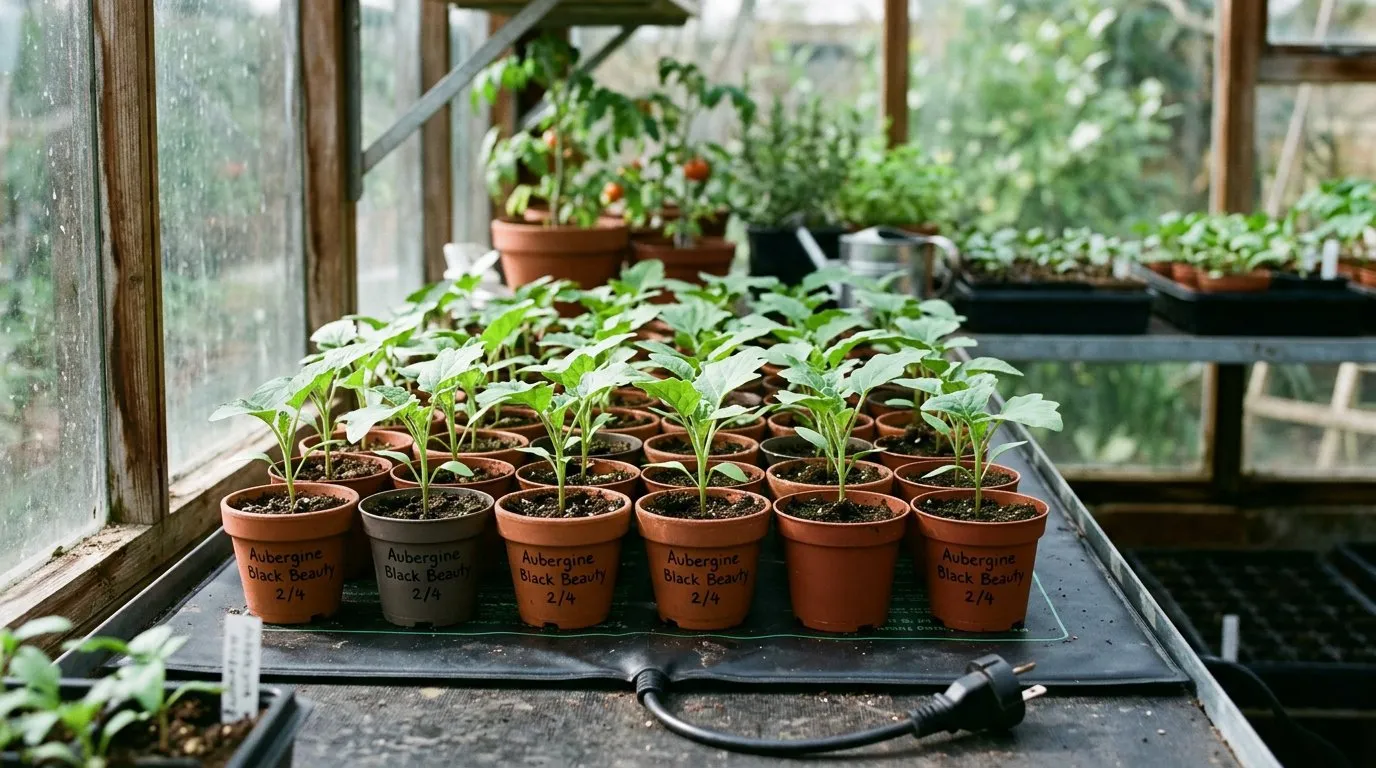
Aubergines need an early start because they have one of the longest growing seasons of any UK vegetable crop. Sowing in February or March gives plants 16-20 weeks to grow, flower, and ripen fruit before autumn.
When to sow
Sow seeds indoors from mid-February to late March. Earlier sowing (February) suits heated greenhouses where transplants go into warm conditions by April. Later sowing (March) works for unheated greenhouses where plants cannot go in until late May. If you are unsure about indoor sowing techniques, our guide to sowing seeds indoors covers everything you need.
Sowing step by step
- Fill 7.5cm pots with moist, peat-free seed compost. Firm gently.
- Sow two seeds per pot on the surface, then cover with 1cm of fine compost.
- Place in a heated propagator set to 20-25C. Aubergine seeds will not germinate below 15C.
- Keep the compost moist but not waterlogged. Mist with warm water rather than pouring.
- Expect germination in 14-21 days. Remove the weaker seedling from each pot once both have two true leaves.
- Grow on at 18-20C in bright light once seedlings emerge. A south-facing windowsill or heated greenhouse bench works well.
Potting on
When seedlings have 4-5 true leaves and roots are visible at the drainage holes, pot on into 12cm pots filled with multipurpose compost. Handle seedlings by the leaves, never the stem. Keep the temperature above 15C at all times. Cold checks set aubergine seedlings back badly, and they may never fully recover.
How to plant and grow aubergines in a greenhouse
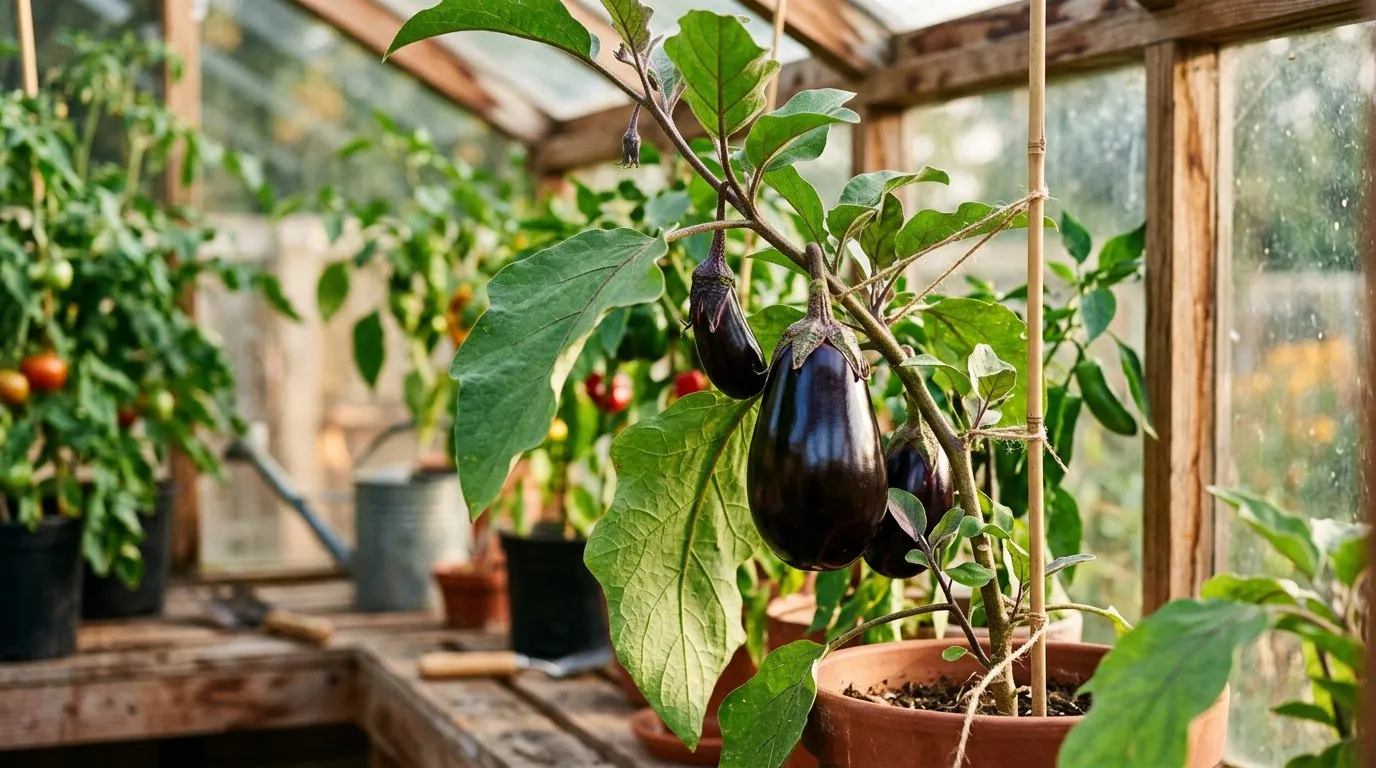
A greenhouse or polytunnel provides the consistent warmth that aubergines demand. They grow alongside tomatoes and peppers without problems, sharing the same temperature, watering, and feeding requirements. If you already grow tomatoes in the UK, you know the conditions aubergines need.
Transplanting
Plant out into the greenhouse border soil or into 30cm+ pots when the first flowers appear, usually in May or early June. Harden off gradually if plants have been on a windowsill. Space plants 60cm apart in the border or give each plant its own large pot. Aubergine roots are extensive and resent being cramped.
Pinching out the growing tip
Pinch out the main growing tip when the plant reaches 30cm tall. This is the single most important thing you can do for your aubergine plant. Removing the top growth forces the plant to produce side shoots, creating a bushier shape with more flowering points. An unpinched plant grows tall and lanky, producing fewer, smaller fruit.
Supporting the plant
Aubergine fruit is heavy. A single fruit can weigh 400-600g, and branches snap under the load without support. Insert a sturdy cane next to each plant at planting time and tie the main stem loosely. As fruit develops, support individual branches with string tied to the greenhouse frame above.
Limiting fruit numbers
Allow only 5-6 fruits per plant on large-fruited varieties. Once you have this number of developing fruit, remove all new flowers. This directs the plant’s energy into swelling and ripening existing fruit rather than setting more fruit it cannot support. Slim Jim and other small-fruited types can carry 10-15 fruits because each one is lighter.
Temperature and humidity
Maintain daytime temperatures of 20-28C and night temperatures above 15C. Open greenhouse vents and doors during the hottest part of the day to prevent overheating. Aubergines need higher humidity than tomatoes. Mist the foliage daily and damp down the greenhouse floor in hot weather. Dry air causes flower drop and poor fruit set.
Why we recommend Moneymaker F1 for first-time UK aubergine growers: After 30 years of growing warm-season crops in an unheated West Midlands greenhouse, Moneymaker F1 is the only aubergine variety I can rely on to produce a full crop in a cold summer. In 2023, when July night temperatures dropped to 11C on three occasions, every Moneymaker plant continued setting fruit while the Black Beauty plants alongside them dropped all their flowers. A single plant of Moneymaker grown in a 30cm pot produced six fruits averaging 320g each.
How to feed and water aubergines
Aubergines are hungry, thirsty plants that need consistent moisture and regular feeding from flowering onward. Getting the watering and feeding right makes the difference between 2-3 small fruit and a full crop of 5-6 large, glossy aubergines.
Watering
Water at the base of the plant, never over the leaves. Keep the compost consistently moist but not waterlogged. In a greenhouse during summer, this means watering daily or even twice daily in hot spells. Inconsistent watering causes flower drop, blossom end rot, and bitter fruit.
Container-grown aubergines dry out faster than border-grown plants. Check pots twice daily during hot weather. A drip tray beneath each pot helps maintain moisture, but empty it after an hour to prevent waterlogging.
Feeding schedule
- Before flowering: Feed every two weeks with a balanced liquid fertiliser (equal NPK ratio).
- From first flower opening: Switch to a high-potash liquid feed such as tomato fertiliser. Feed every week.
- During heavy fruiting: Increase to twice weekly high-potash feeds. The potassium drives fruit development, flavour, and skin glossiness.
High-potash feed is the same fertiliser you use for tomatoes. If you make your own compost, it provides an excellent base for the growing medium but is not a substitute for liquid feeding during the fruiting period.
Pollination
Aubergine flowers are self-pollinating, but they benefit from help in a greenhouse where there is no wind. Tap each flower cluster gently with your finger or a pencil every day. This releases pollen and improves fruit set. Some growers use a small paintbrush to transfer pollen between flowers, but tapping is usually enough.
Aubergine month-by-month growing calendar
This calendar covers the full growing season from sowing to the final harvest. Adjust timings by 2-3 weeks for northern England and Scotland.
| Month | Task |
|---|---|
| February | Sow seeds in a heated propagator at 20-25C. Keep compost moist. Germination takes 14-21 days |
| March | Pot on seedlings into 12cm pots when they have 4-5 true leaves. Maintain 18-20C minimum |
| April | Grow on in bright conditions. Begin hardening off if plants will go into an unheated greenhouse in May |
| May | Plant out into greenhouse border or 30cm+ pots. Pinch out the growing tip at 30cm tall |
| June | First flowers appear. Switch to high-potash feed. Mist daily for humidity. Tap flowers for pollination |
| July | Fruits developing. Support heavy branches. Remove flowers once 5-6 fruits have set |
| August | Main harvest begins. Pick when skin is glossy. Continue feeding twice weekly |
| September | Final harvest from greenhouse plants. Pick all remaining fruit before temperatures drop |
| October | Clear spent plants. Clean the greenhouse for winter. Save lessons for next year |
Growing aubergines in containers
Container growing is ideal for aubergines because you control the compost quality, drainage, and can move pots to chase the sun throughout the day. It is also the best option if you lack a greenhouse, as a large pot on a warm, sheltered patio can produce a respectable crop in a good summer.
Choosing the right pot
Use pots at least 30cm in diameter (12 inches). Larger is better. A 40cm pot gives roots more room and holds more moisture, reducing the risk of drying out. Ensure every pot has drainage holes. Place pots on feet or gravel to prevent the base sitting in standing water.
Dark-coloured pots absorb more heat, which aubergines appreciate. Black plastic pots in a sunny position can raise root temperature by 3-5C compared to light-coloured containers.
Compost and planting
Fill pots with rich, peat-free multipurpose compost. Mix in 20% perlite for drainage and a handful of slow-release fertiliser granules at planting time. Plant one aubergine per pot. Water in thoroughly after planting.
Container care through the season
- Water daily in warm weather, twice daily during hot spells.
- Feed with high-potash liquid fertiliser every week from flowering.
- Pinch out the growing tip at 30cm. Support the main stem with a cane.
- Limit to 4-5 fruits per pot because root space is restricted.
- Move pots to the sunniest position available. Group containers together to create a warmer microclimate.
How to deal with aubergine pests and diseases
Red spider mite and whitefly are the main threats under glass. Both thrive in the warm, dry conditions that aubergines prefer, making them almost inevitable in a greenhouse without prevention.
Red spider mite
These tiny mites feed on the undersides of leaves, causing a fine, stippled yellow pattern on the upper surface. In heavy infestations, you will see fine webbing between the leaves. Red spider mite thrives in dry, warm air.
Prevention and control:
- Mist plants daily to raise humidity. Red spider mite dislikes damp conditions.
- Introduce Phytoseiulus persimilis, a predatory mite, as a biological control from June.
- Damp down the greenhouse floor in hot weather.
- Remove heavily infested leaves and dispose of them in household waste, not the compost heap.
Whitefly
Small, white, moth-like insects that fly up in clouds when you disturb the leaves. They feed on sap and excrete sticky honeydew, which attracts sooty mould. Whitefly populations explode quickly in a warm greenhouse.
Prevention and control:
- Hang yellow sticky traps near plants to monitor and reduce populations.
- Introduce Encarsia formosa, a parasitic wasp, as biological control from May onward.
- Avoid bringing in plants from garden centres without checking for whitefly first.
- Good ventilation helps, but avoid creating cold draughts.
Aphids
Green or blackfly cluster on growing tips and flower buds. Squash small colonies by hand. Introduce ladybirds or lacewing larvae as biological control. A strong water spray dislodges aphids from established plants without damaging the foliage.
Verticillium wilt
A soil-borne fungal disease that causes wilting and yellowing from the base of the plant upward. There is no chemical cure. Prevent it by growing in fresh compost each year, rotating crops in the greenhouse border, and removing affected plants immediately.
Blossom end rot
A dark, sunken patch at the base of the fruit. Caused by calcium deficiency due to irregular watering. Prevent it by maintaining consistent soil moisture. Water at the same time each day and never let the compost dry out completely between waterings.
How to harvest aubergines
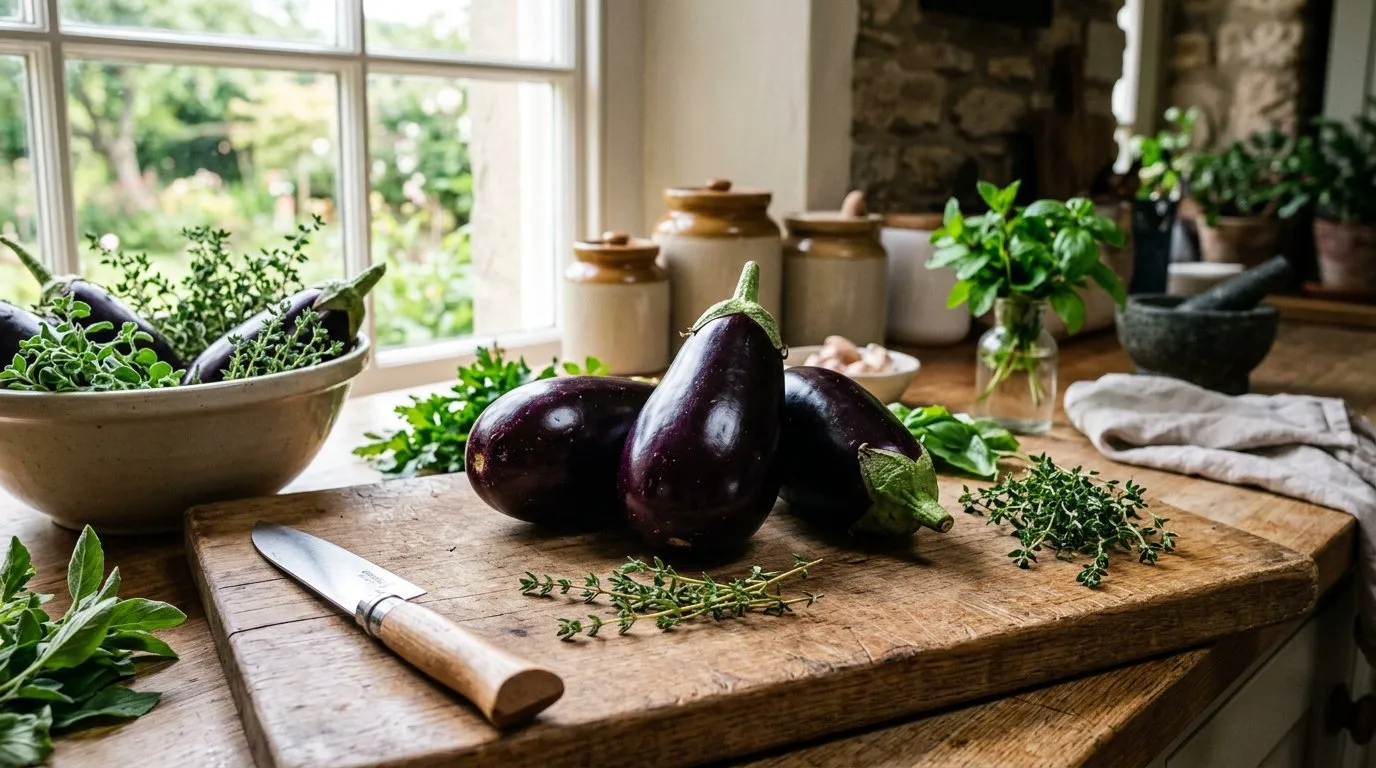
The key to perfect aubergines is harvesting at exactly the right moment. Pick too early and the flesh is spongy and tasteless. Pick too late and the fruit is full of brown, bitter seeds.
Signs of readiness
- Glossy, taut skin is the main indicator. The surface should shine.
- Press gently with your thumb. If the skin springs back, the fruit is ready. If your thumb leaves a dent, the fruit is overripe.
- Dull, matte skin means the fruit has gone past its best. The seeds inside will be brown and hard, making the flesh bitter.
- Check the calyx. The green cap should still be tight against the fruit. A calyx pulling away from the skin suggests overripeness.
How to pick
Use sharp secateurs or a knife to cut the stem 2-3cm above the fruit. Never twist or pull the fruit from the plant. Aubergine stems are woody and pulling damages the branch, which can invite disease. Wear gloves if your variety has spines on the calyx.
Timing the harvest
Most greenhouse-grown aubergines are ready from late July through September. Early varieties like Moneymaker F1 can produce ripe fruit by mid-July in a heated greenhouse. Harvest regularly to encourage the plant to continue setting new fruit.
Storage
Aubergines do not store well. Use within 3-5 days of picking. Keep them at room temperature rather than in the fridge. Refrigeration below 10C damages the flesh and causes brown spots. If you have a glut, slice and freeze for use in cooked dishes like moussaka, ratatouille, and baba ganoush.
Five common mistakes when growing aubergines
1. Sowing too late
Aubergines need 16-20 weeks from sowing to harvest. Sowing in April means fruit will not develop until late September, by which time temperatures have dropped too low. Sow in February or March for a summer harvest. The RHS aubergine growing guide confirms this early sowing window for UK growers.
2. Not providing enough heat
Aubergines stop growing below 15C and refuse to set fruit in cool conditions. An unheated greenhouse in a cold spring leaves plants stunted. Use a heated propagator for germination and ensure greenhouse temperatures stay above 15C at night throughout the growing season. A greenhouse heater set to 15C as a minimum prevents cold damage during spring nights.
3. Forgetting to pinch out
An unpinched aubergine grows as a single tall stem with fruit only at the top. Pinching out the growing tip at 30cm triggers side shoots, each of which produces flowers and fruit. This one action can double your harvest. It is the most commonly missed step by first-time growers.
4. Allowing too many fruit to set
Enthusiastic growers leave every flower to develop, hoping for a massive harvest. The result is 10-12 small, poorly developed fruit instead of 5-6 large, flavourful ones. Remove flowers once 5-6 fruits have set on large varieties. The remaining fruit grow bigger, ripen faster, and taste better.
5. Harvesting too late
Aubergines left on the plant past the glossy stage develop hard, brown seeds that make the flesh bitter. Many growers wait for the fruit to reach supermarket size and miss the window. Pick when the skin is still shining. A slightly smaller, glossy aubergine tastes far better than an oversized, dull one full of seeds.
Now you’ve mastered aubergines, read our guide on growing tomatoes in the UK for beginners for the companion crop that shares the same greenhouse conditions and extends your season.
Frequently asked questions
When should I sow aubergine seeds in the UK?
Sow indoors from mid-February to late March. Aubergines need a long, warm growing season of around 16-20 weeks from sowing to harvest. Starting early gives plants enough time to flower and set fruit before autumn temperatures drop. Use a heated propagator at 20-25C for fastest germination.
Can I grow aubergines outdoors in the UK?
Only in very sheltered, sunny spots in southern England. Aubergines need consistent warmth above 15C at night to set fruit. A south-facing wall with wind protection can work in warm summers. Most UK growers get far better results in a greenhouse, polytunnel, or conservatory.
How many aubergines will one plant produce?
A well-grown plant produces 5-6 large aubergines. Limiting the number of fruits per plant improves size and flavour. Allow more fruit on compact, small-fruited varieties like Slim Jim, which can produce 10-15 smaller aubergines per plant.
Why are my aubergine flowers dropping off?
Flower drop is usually caused by cold nights or dry air. Aubergines need night temperatures above 15C to set fruit. Low humidity causes poor pollination. Mist plants daily in the greenhouse and tap the flowers gently to help release pollen.
What is the best aubergine variety for beginners?
Moneymaker F1 is the best choice for UK beginners. It is bred specifically for British conditions, sets fruit at lower temperatures than most varieties, and produces reliably in an unheated greenhouse. Bonica F1 is another excellent, forgiving option.
How do I know when aubergines are ready to pick?
Harvest when the skin is glossy and firm. Press gently with your thumb. If the skin springs back, the fruit is ready. Dull, matte skin means the fruit is overripe and will contain brown, bitter seeds. Cut the stem with secateurs rather than pulling.
Do aubergines grow well in containers?
Yes, aubergines are excellent container plants. Use pots at least 30cm in diameter filled with rich, peat-free compost. Water daily in warm weather and feed twice weekly with high-potash liquid fertiliser. A sunny patio, balcony, or greenhouse bench provides enough warmth in most UK summers.
Related growing guides
Lawrie has been gardening in the West Midlands for over 30 years. He grows his own veg using no-dig methods, keeps a wildlife-friendly garden, and writes practical advice based on real UK growing conditions.