How to Grow Beetroot in the UK: A Complete Guide
Practical guide to growing beetroot in UK gardens. Covers varieties, sowing, spacing, succession planting, harvesting, storing, and eating the leaves.
Key takeaways
- Sow beetroot directly outdoors from April to July for continuous harvests through to October
- Each seed cluster produces 2-4 seedlings, so thin to the strongest plant at 10cm spacing
- Boltardy is the most reliable bolt-resistant variety for UK conditions
- Harvest at golf-ball size (5-6cm diameter) for the sweetest, most tender roots
- Beetroot leaves are edible and work as a spinach substitute with 40% more iron
- Store unwashed roots in boxes of damp sand for up to 4 months over winter
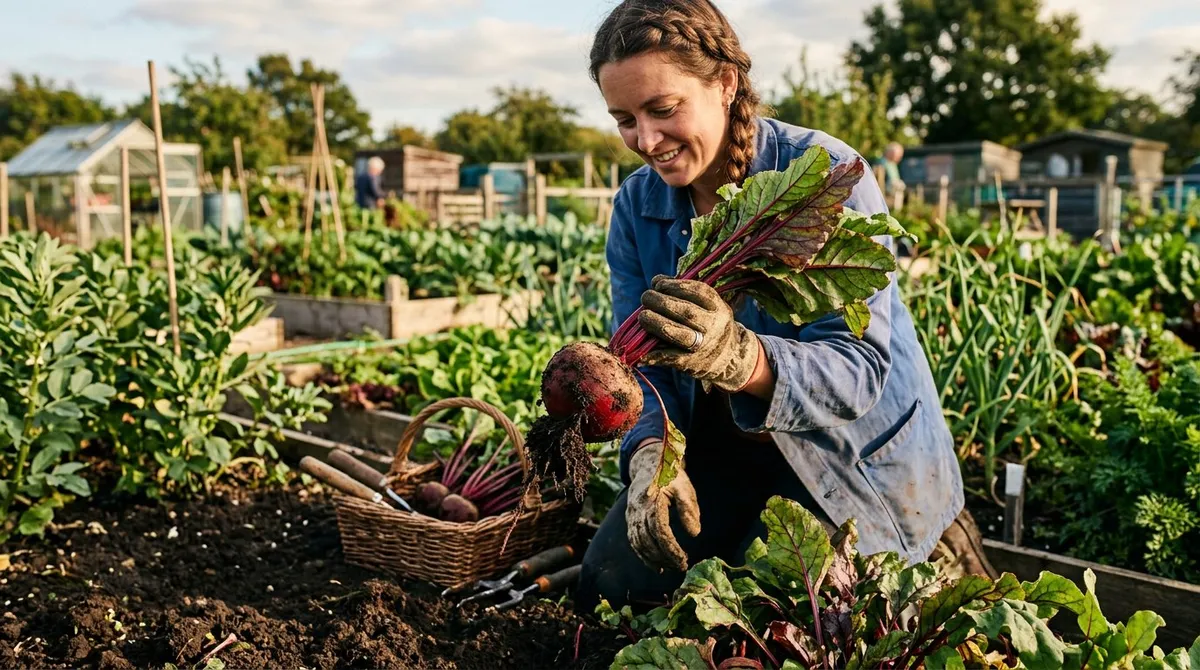
Beetroot is one of the simplest and most satisfying root vegetables for UK gardeners. It grows quickly, tolerates most soils, and produces harvestable roots within two months of sowing. The entire plant is edible. Roots go into salads, soups, and pickles. Leaves substitute for spinach with even better nutritional value.
This guide covers everything from variety selection through to long-term storage, written for British growing conditions and seasons. If you are new to growing vegetables, our guide to starting a vegetable garden covers the broader essentials of soil preparation, tools, and planning your first plot.
Which beetroot varieties grow best in the UK?
Choosing the right variety makes a real difference to your results. Some resist bolting in cool springs. Others store well into winter. A few produce roots in unusual colours that look striking on the plate. All of the varieties below are widely available from UK seed suppliers and perform reliably in British conditions.
Boltardy is the default choice for most UK growers and the one to start with if you have never grown beetroot. It has genuine bolt resistance, meaning it will not run to seed if hit by a cold snap in April or May. The roots are smooth, round, and deeply coloured with the classic dark red flesh. Boltardy is ready in 7-8 weeks and tastes excellent roasted, pickled, or in salads.
Detroit Dark Red is another strong all-rounder. It produces uniform, globe-shaped roots with intense colour and smooth skin. Slightly slower than Boltardy at 9-10 weeks, but with a sweeter flavour. It stores well over winter.
Cylindra grows long, cylindrical roots rather than round ones. This shape means every slice is the same diameter, making it the best choice for pickling and for cutting uniform rounds. Roots reach 15-20cm long. It takes 12-13 weeks to mature.
Chioggia is an Italian heirloom with striking concentric rings of pink and white when sliced. The colour fades slightly when cooked, so it is best raw or very lightly roasted. Ready in 8-9 weeks. It adds genuine visual interest to salads and is a good talking point at the table.
Golden produces bright yellow-orange roots that do not bleed or stain like red varieties. The flavour is milder and slightly sweeter. It takes 9-10 weeks and is less vigorous than red types, so sow a few extra seeds to compensate for slightly lower germination rates.
Variety comparison
| Variety | Shape | Colour | Weeks to harvest | Bolt resistant | Best for |
|---|---|---|---|---|---|
| Boltardy | Round | Deep red | 7-8 | Yes | Early sowings, beginners |
| Detroit Dark Red | Round | Dark red | 9-10 | Moderate | Storing, all-round use |
| Cylindra | Cylindrical | Dark red | 12-13 | No | Pickling, uniform slices |
| Chioggia | Round | Pink and white rings | 8-9 | Moderate | Salads, visual appeal |
| Golden | Round | Yellow-orange | 9-10 | Moderate | Non-staining, mild flavour |
Gardener’s tip: Grow at least two varieties. Boltardy for reliability and an early start, plus one unusual type like Chioggia or Golden for variety on the plate. Seed packets cost under two pounds each and contain enough for a full season.
When and how to sow beetroot
Beetroot is sown directly where it will grow. It dislikes root disturbance, so transplanting is not recommended. The key to a steady supply is succession sowing: putting in a short row every three weeks rather than one large sowing all at once.
Sowing timetable
| Month | Action | Notes |
|---|---|---|
| March | Sow under cloches or fleece | Only bolt-resistant varieties (Boltardy). Soil must be 7C+ |
| April | First outdoor sowing | Main season begins. Soil warming up reliably |
| May | Second succession sowing | Peak germination conditions. Warm soil, longer days |
| June | Third succession sowing | Last sowing for autumn harvest |
| July (early) | Final sowing | Late crops for October harvest and winter storage |
Wait until soil temperature reaches at least 7C before sowing. Cold, wet soil causes poor germination and increases the risk of bolting. In most of southern England, this is reliable from early April. In northern England and Scotland, mid to late April is safer. Check our UK vegetable planting calendar for regional timing guidance.
Sowing method
- Rake the soil to a fine tilth and remove stones from the top few centimetres
- Draw a drill (shallow groove) 2-3cm deep using a cane or the edge of a hoe
- Water the base of the drill if the soil is dry
- Place seed clusters 10cm apart along the drill
- Cover with fine soil and firm gently
- Space rows 30cm apart
Each beetroot “seed” is actually a corky cluster containing 2-4 true seeds. This means multiple seedlings emerge from each point. When the seedlings reach 5cm tall, thin each cluster to the single strongest plant. The thinnings are edible and make excellent microgreens in salads.
Gardener’s tip: Soak seed clusters in warm water for 30 minutes before sowing. This softens the corky outer shell and speeds up germination by 3-5 days. It also helps separate multi-germ clusters, making thinning easier.
Preparing the soil for beetroot
Beetroot is not fussy about soil but performs best in light, well-drained ground with plenty of organic matter. Heavy clay soil causes forked and misshapen roots. If your soil is heavy, consider growing beetroot in raised beds where you can control the soil mix.
Dig the bed over in autumn or early spring, incorporating well-rotted compost or composted bark. Do not add fresh manure before planting. Fresh manure causes forked roots and excessive leaf growth at the expense of the root.
Beetroot prefers a soil pH of 6.0-7.5. Most UK garden soils fall within this range. Very acidic soil can be limed in autumn, but test first with a simple pH kit from any garden centre.
Remove large stones from the top 10-15cm. Stones deflect growing roots and cause forking. For the smoothest, most uniform roots, aim for a fine, crumbly surface tilth at sowing time.
Growing beetroot in containers
Beetroot is one of the best root vegetables for container growing. Round varieties produce compact roots that do not need deep soil, making them ideal for patios, balconies, and small gardens.
Choose a container at least 20cm deep and as wide as you can manage. A standard window box works for a small crop. A 40cm-diameter pot holds 6-8 plants comfortably. Use multipurpose compost mixed with a handful of perlite or vermiculite for drainage.
Sow seeds directly into the container at 10cm spacing. Thin to one seedling per station when they reach 5cm. Water regularly, as containers dry out far faster than open ground. In warm weather, daily watering may be necessary. Feed every two weeks with a balanced liquid fertiliser once the seedlings are established.
Round varieties like Boltardy, Detroit Dark Red, and Chioggia are the best choices for pots. Avoid Cylindra and other long-rooted types, which need deeper soil than most containers provide.
Beetroot also grows well in growing bags. Cut a growing bag open across the top, punch drainage holes in the base, and sow two rows of seeds across the surface. A standard growing bag holds 10-12 plants.
Why we recommend Boltardy as the essential beetroot variety for UK gardens: After 30 years of growing root vegetables on a range of soil types, Boltardy is the only beetroot variety I trust for early April sowings in unpredictable British springs. Its bolt resistance is genuine, in the cold spring of 2021, when temperatures dropped to 5C for six consecutive nights in late April, every Boltardy plant in my allotment formed good roots while the Chioggia variety alongside it bolted completely. At golf-ball size, the flavour is consistently sweet and the colour intense.
Caring for beetroot through the season
Watering
Consistent moisture is the single most important factor for sweet, tender roots. Irregular watering causes woody texture, pale rings inside the root, and splitting. Water steadily rather than in heavy bursts. In dry periods, aim for a thorough soaking twice a week. Mulching around the plants with straw or compost reduces water loss from the soil surface.
Feeding
Beetroot does not need heavy feeding. If you prepared the soil well with compost, additional fertiliser is unnecessary for ground-grown crops. On poor or sandy soil, apply a general-purpose granular fertiliser at sowing time. Avoid high-nitrogen feeds, which push leafy growth at the expense of root development.
Container-grown beetroot benefits from a fortnightly liquid feed (tomato fertiliser works well) from four weeks after germination.
Weeding
Keep the bed weed-free, especially in the first four weeks when beetroot seedlings are small and easily overwhelmed by faster-growing weeds. Hand-weed carefully to avoid disturbing the shallow beetroot roots. A mulch of grass clippings or straw between the rows suppresses weeds and retains moisture.
Common pests and problems
Beetroot is generally trouble-free compared to many vegetables. The main issues are:
- Bolting - running to seed before forming a usable root. Caused by cold stress, usually from sowing too early. Use Boltardy for April sowings and avoid sowing before soil reaches 7C.
- Leaf miner - small flies whose larvae tunnel inside the leaves, creating pale blister-like trails. Pick off affected leaves and destroy them. The roots are unaffected.
- Sparrows - pull up seedlings for no obvious reason. Cover newly sown rows with fleece or netting until plants are 10cm tall.
- Slugs - graze on young seedlings at night. Our guide to getting rid of slugs covers effective controls for vegetable beds.
Month-by-month beetroot growing calendar
This calendar covers the full beetroot season from planning through to storage. Adjust timings by two weeks later for northern England and Scotland.
| Month | Task |
|---|---|
| February | Order seeds. Prepare beds by adding compost. Plan succession sowing schedule |
| March | Sow under cloches in mild areas (Boltardy only). Warm soil with fleece |
| April | First main outdoor sowing. Thin March sowings when seedlings reach 5cm |
| May | Second succession sowing. Thin April sowings. Begin watering in dry spells |
| June | Third succession sowing. Harvest first roots from March/April sowings |
| July | Final sowing for autumn harvest. Continue harvesting. Water regularly |
| August | Main harvest month. Pull roots at golf-ball size. Eat leaves as a side vegetable |
| September | Continue harvesting. Lift late-season roots before first hard frost |
| October | Harvest final roots. Prepare for storage. Pickle surplus |
| November | Store roots in damp sand in a cool, frost-free place |
How to harvest beetroot at the right time
Timing the harvest is straightforward. Pull or twist roots when the top of the beetroot is visible above the soil surface and measures 5-6cm across. This is roughly golf-ball size. At this stage, the flesh is sweet, tender, and has the best texture.
Leaving roots in the ground too long is the most common mistake. Beetroot larger than a tennis ball (8cm+) becomes woody, fibrous, and loses its sweetness. The RHS beetroot growing guide recommends harvesting regularly rather than waiting for maximum size.
To harvest, grasp the foliage close to the root and pull firmly with a slight twisting motion. In heavy soil, loosen the ground with a fork first to avoid snapping the root.
Baby beetroot can be pulled even earlier at 3-4cm diameter. These tiny roots are exceptionally sweet and tender. They are the best way to use thinnings and early-season surplus.
Do not cut the leaves off at the root. Twist them off 2-3cm above the crown instead. Cutting causes the root to “bleed”, losing colour and nutrients into the cooking water. Always twist, never cut.
How to store beetroot for winter
Beetroot stores well for several months if handled correctly. There are three main methods.
Storing in sand
This is the traditional method and keeps roots in the best condition for the longest period.
- Twist off leaves 3cm above the crown (do not cut)
- Do not wash the roots, leave the soil on
- Fill a wooden box or sturdy cardboard box with damp (not wet) sand
- Layer roots in the sand so they are not touching each other
- Store in a cool, dark, frost-free place at 1-4C
- A garage, unheated shed, or cellar works well
Roots stored this way keep for 3-4 months. Check monthly and remove any that show signs of softening or mould.
Pickling
Pickling is the classic way to preserve beetroot and extends the shelf life to 12 months or more.
- Cook whole roots in boiling water for 30-40 minutes until tender
- Cool, then slip off the skins by hand
- Slice into rounds or dice into cubes
- Pack into sterilised jars
- Cover with spiced vinegar (malt vinegar with peppercorns, bay, and a pinch of sugar)
- Seal and store in a cool, dark cupboard
Freezing
Cook beetroot until tender, cool, slice or dice, and freeze in portions. Frozen beetroot keeps for 6 months and works well in soups and stews. It loses some texture on thawing, so freezing is best for cooked dishes rather than salads.
Eating beetroot leaves as a spinach substitute
The leaves are one of the best reasons to grow your own beetroot. Supermarket beetroot arrives with the leaves removed, but home growers get a two-for-one crop.
Young leaves (under 10cm) are tender enough to eat raw in salads. They have a mild, slightly earthy flavour similar to baby spinach. Mix them with other salad leaves for colour and variety.
Older leaves cook exactly like spinach. Wash, remove the thick central stem, and wilt in a pan with a little butter for 2-3 minutes. They reduce in volume just as spinach does. Season with salt, pepper, and a squeeze of lemon.
Nutritionally, beetroot leaves outperform spinach in several areas. They contain around 40% more iron, more vitamin C, and more calcium per serving. They are also rich in vitamin K and folate.
Harvest outer leaves regularly throughout the growing season without pulling the whole plant. The plant continues to produce new leaves from the centre while the root develops underground. Take no more than a third of the leaves at any time to avoid slowing root growth.
Common mistakes when growing beetroot
Even experienced growers make these errors. Avoiding them is the difference between sweet, tender roots and woody, bolted disappointments.
Sowing too early
Beetroot seed germinates poorly in cold soil and the seedlings bolt if exposed to prolonged cold (below 10C for several days). Do not rush spring sowings. Wait until mid-April in most areas, or use cloches and Boltardy if you want a March start. If you are sowing seeds indoors, note that beetroot does not transplant well and is best sown directly.
Not thinning
Because each seed cluster produces multiple seedlings, unthinned beetroot produces a tangle of small, misshapen roots. Thin ruthlessly to 10cm apart when seedlings are 5cm tall. Use the thinnings in salads.
Sowing everything at once
A single large sowing gives a glut of roots that all mature at the same time. Many become overgrown and woody before you can use them. Succession sowing every three weeks from April to July gives a continuous supply of roots at the perfect size.
Harvesting too late
The temptation to leave roots to grow larger almost always produces a worse result. Roots over 8cm diameter become fibrous and lose sweetness. Pull at golf-ball size. If you want larger roots for storage, Detroit Dark Red and Cylindra hold their texture better at larger sizes than most varieties.
Irregular watering
Dry spells followed by heavy watering cause roots to crack and develop pale, woody rings inside. Water steadily and mulch to retain moisture. This is especially important for container-grown beetroot.
Companion planting with beetroot
Beetroot grows well alongside many common garden vegetables. Good companions include lettuce, onions, garlic, brassicas, and bush beans. Lettuce provides a living mulch that shades the soil and retains moisture. Onions and garlic deter aphids.
Avoid planting beetroot near runner beans or tall climbing beans, which cast shade and compete for nutrients. Spinach and chard are close relatives and can share pests and diseases, so space them apart in your rotation.
In a four-year rotation, follow beetroot with legumes (peas and beans) in the next season. Beetroot leaves soil in reasonable condition and benefits from nitrogen left by a previous legume crop.
Now you’ve mastered beetroot, read our guide on the UK vegetable planting calendar to plan your succession sowings alongside carrots, parsnips, and other root vegetables for harvests right through to November.
Frequently asked questions
When should I sow beetroot in the UK?
Sow beetroot directly outdoors from April to July. Earlier sowings in March are possible under cloches or fleece, but cold soil below 7C causes bolting. For the longest harvest window, sow a short row every three weeks from April through to early July. This gives fresh roots from June right through to October.
Why has my beetroot bolted instead of forming roots?
Bolting is caused by cold stress during early growth. Temperatures below 10C for extended periods trigger the plant to flower rather than produce a root. Avoid sowing too early, and use bolt-resistant varieties like Boltardy for April sowings. Cold snaps in late April and May are the most common cause in UK gardens. Once a plant has bolted, the root becomes woody and is not worth eating.
Do I need to thin beetroot seedlings?
Yes, thinning is essential for good-sized roots. Each beetroot seed is actually a cluster containing 2-4 true seeds, so multiple seedlings emerge from each point. When seedlings reach 5cm tall, remove the weakest and leave one plant every 10cm. Use the pulled thinnings in salads. Without thinning, roots stay small and misshapen.
Can I grow beetroot in pots and containers?
Beetroot grows well in containers at least 20cm deep. Use a pot 30cm wide for 4-5 plants. Round varieties like Boltardy and Detroit Dark Red suit containers better than long types like Cylindra. Fill with multipurpose compost, sow seeds 10cm apart, and water regularly. Container beetroot dries out faster than ground-grown crops, so check daily in warm weather.
How do I know when beetroot is ready to harvest?
Harvest when the root tops are visible above the soil at 5-6cm diameter. This is roughly golf-ball size and gives the sweetest flavour. Gently pull back the soil to check. Most varieties are ready 7-13 weeks after sowing. Leaving roots too long makes them woody and bland. Baby beetroot can be pulled even earlier at 3-4cm for exceptionally tender, sweet roots.
Can you eat beetroot leaves?
Yes, beetroot leaves are highly nutritious and edible. Young leaves work raw in salads, while older leaves cook like spinach in 2-3 minutes. They contain more iron, vitamin C, and calcium than spinach. Harvest outer leaves regularly without pulling the whole plant. The leaves are one of the best reasons to grow your own beetroot rather than buying it from a shop.
How should I store beetroot over winter?
Twist off the leaves 3cm above the root, leaving the soil on. Layer unwashed roots in boxes of damp sand so they do not touch each other. Store in a cool, frost-free place at 1-4C, such as a garage or unheated shed. Roots keep for 3-4 months this way. Alternatively, pickle in spiced vinegar for 12 months of storage, or freeze cooked slices for soups and stews.
Lawrie has been gardening in the West Midlands for over 30 years. He grows his own veg using no-dig methods, keeps a wildlife-friendly garden, and writes practical advice based on real UK growing conditions.