How to Grow Blackberries in the UK
Learn how to grow blackberries in UK gardens. Covers thornless and thorned varieties, fan training, pruning fruited canes, and harvesting 5-10kg per plant.
Key takeaways
- Each blackberry plant produces 5-10kg of fruit per season, more than any other soft fruit
- Plant bare-root canes November to March, spacing 3-4m apart against a fence or wall
- Blackberries fruit on previous year's canes, so tie in new growth each summer for next year's harvest
- Thornless varieties like Loch Ness and Apache are easier to manage and crop just as heavily
- Blackberries tolerate partial shade better than any other fruiting plant in UK gardens
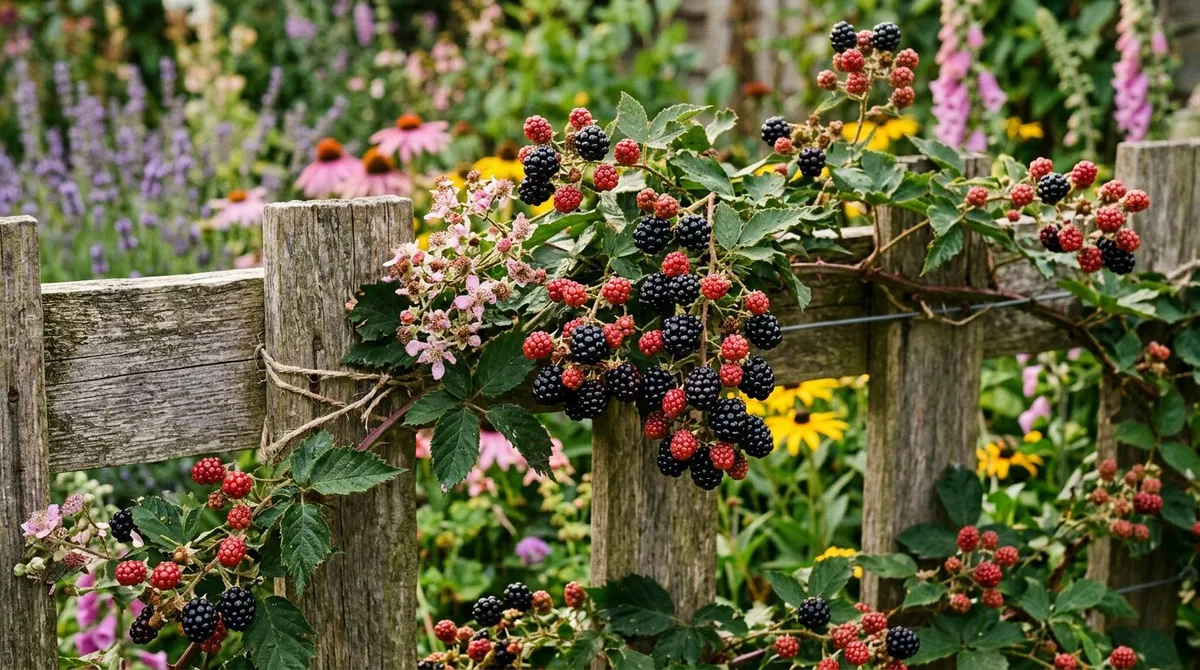
Blackberries are the closest thing to an indestructible fruit crop. They grow in almost any soil and tolerate shade that would defeat most soft fruit. The harvests are enormous for minimal effort. A single well-managed plant yields 5-10kg of berries per season. That is enough for eating fresh, freezing, jam-making, and crumbles from August through to October.
Wild blackberries (brambles) grow in every hedgerow and wasteland in Britain. Cultivated garden varieties channel that same vigour into larger, sweeter fruit. The plants are far easier to manage than wild brambles. Modern thornless varieties mean no scratched arms or torn clothing. This guide covers variety selection, planting, fan training, pruning, propagation, and harvesting through the season. Whether you have a sunny wall or a shady fence, there is a blackberry for your garden.
Which blackberry varieties grow best in the UK?
Blackberry varieties split into two groups: thornless and thorned. Thornless types are easier to prune, train, and pick from. Thorned varieties tend to be more vigorous and sometimes produce slightly larger fruit. Both groups crop heavily in UK conditions.
Thornless varieties
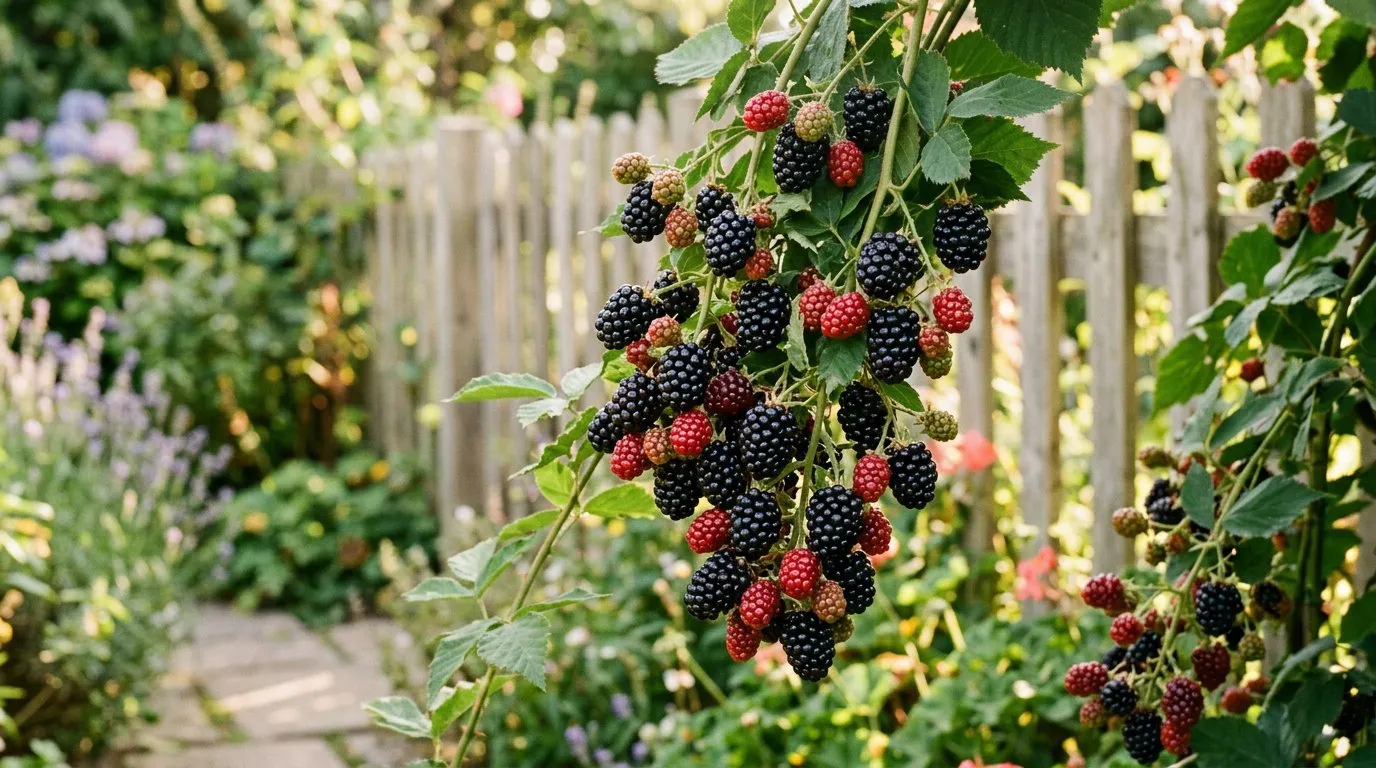 Ripe blackberries on thornless canes. Pick when fully black and soft.
- Loch Ness - the best all-round thornless blackberry for UK gardens. Upright, semi-erect canes that are easy to train. Large, firm berries with good flavour. Heavy cropper from mid-August to late September. Bred in Scotland, so perfectly suited to cooler northern climates.
- Apache - very large fruit, some of the biggest of any thornless variety. Sweet flavour. Upright growth habit. Crops from late July to September. Disease resistant and vigorous.
- Chester - a late-season variety that extends the harvest into October. Medium-large fruit with a mild, sweet taste. Very cold-hardy. Good disease resistance. Useful for filling the gap after earlier varieties finish.
- Triple Crown - outstanding flavour, often considered the tastiest thornless blackberry. Large, glossy fruit from August to September. Semi-erect canes. Vigorous but manageable.
Thorned varieties
- Karaka Black - enormous elongated fruit, the largest of any UK-grown blackberry. Sweet flavour when fully ripe. Thorned and trailing, requiring strong support. Early cropper from late July.
- Himalayan Giant - the wild type found across British hedgerows. Extremely vigorous. Produces masses of medium-sized, well-flavoured fruit. Thorns are sharp and plentiful. Only plant this if you have plenty of space and do not mind an aggressive grower.
Variety comparison
| Variety | Thorns | Fruit size | Flavour | Harvest period | Yield per plant | Best for |
|---|---|---|---|---|---|---|
| Loch Ness | Thornless | Large | Very good | Aug-Sep | 7-10kg | All-round best choice |
| Apache | Thornless | Very large | Sweet | Jul-Sep | 6-8kg | Big fruit, disease resistance |
| Chester | Thornless | Medium-large | Mild, sweet | Sep-Oct | 5-8kg | Late season, cold sites |
| Triple Crown | Thornless | Large | Excellent | Aug-Sep | 6-9kg | Best flavour |
| Karaka Black | Thorned | Very large | Sweet | Jul-Sep | 8-12kg | Biggest fruit |
| Himalayan Giant | Thorned | Medium | Good | Aug-Oct | 10-15kg | Maximum yield, wild hedgerow style |
Gardener’s tip: Plant one early variety (Apache or Karaka Black) alongside one late variety (Chester) for a harvest window stretching from late July to mid-October. Two plants against a 6m fence will supply a family of four with more blackberries than they can eat.
When and how to plant blackberries
Planting time
Plant bare-root blackberry canes from November to March while the plants are dormant. November and December are ideal because autumn rain keeps the soil moist. Roots establish through winter before spring growth begins. This is the same dormant planting window used for raspberries and other cane fruit.
Container-grown plants can go in at any time of year, but bare-root canes cost less and establish faster. Expect to pay 6 to 10 pounds for a bare-root plant from a specialist fruit nursery.
Choosing a position
Blackberries grow in full sun or partial shade. They are more shade-tolerant than any other soft fruit. A north-facing fence or wall still produces a worthwhile crop, though full sun gives the sweetest berries and heaviest yields. Avoid deep shade beneath dense tree canopies where air circulation is poor.
The ideal position is against a fence, wall, or post-and-wire support where the canes can be fan-trained horizontally. A 3-4m stretch of fence per plant provides enough space. The soil should be reasonably fertile and well-drained. Blackberries tolerate most soil types, including heavy clay, but they dislike waterlogged ground.
Dig in plenty of garden compost before planting. This improves both clay and sandy soils.
Planting method
- Install horizontal support wires on the fence or wall at 30cm intervals, starting 90cm from the ground and finishing at around 1.8m
- Dig a hole 30cm wide and 20cm deep at the base of the support
- Spread the roots out in the hole without bunching
- Plant at the same depth as the nursery soil mark on the stem
- Backfill with soil mixed with compost and firm gently
- Cut all canes back to 25cm above ground after planting
- Water well and apply a 5-8cm mulch of compost or bark
- Space plants 3-4m apart along the fence
How to fan-train blackberries on wires
Fan training is the best method for managing blackberries in a garden setting. It keeps the vigorous canes organised, makes picking easy, and simplifies autumn pruning. The RHS soft fruit training guide covers the principles in detail.
The one-way system
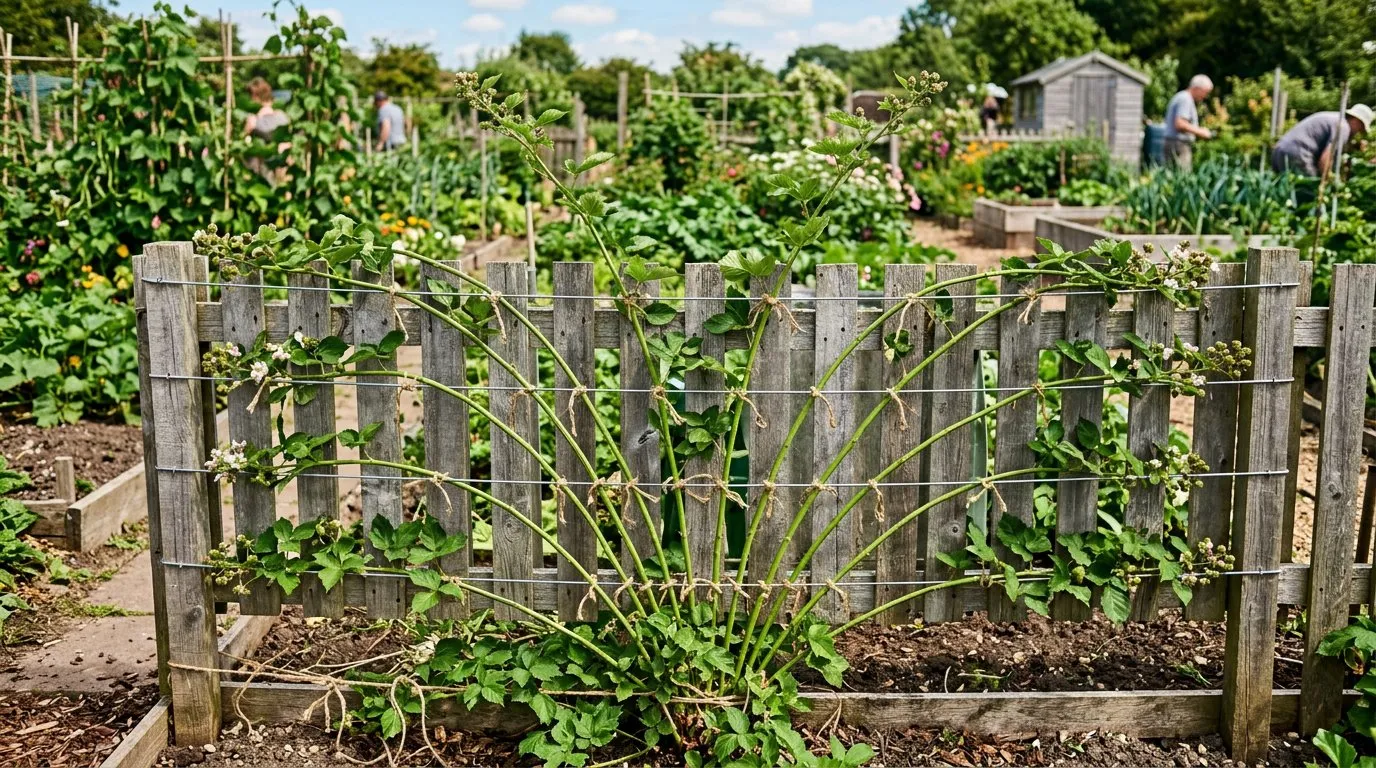 Fan-trained blackberry canes on horizontal wires. New and fruiting canes are kept separate.
The simplest training method separates fruiting canes from new canes growing at the same time.
- In the first spring after planting, new canes grow from the base. Tie these to the wires, fanning them out to one side (left or right).
- In the second summer, these canes flower and fruit. While they fruit, new canes emerge from the base. Tie the new canes to the opposite side.
- After harvest, cut all fruited canes to ground level. The new canes on the other side are already in position for next year.
- Repeat each year, alternating sides.
This system keeps fruiting wood and new growth separate. You always know which canes to cut and which to keep. The principle is similar to training fruit trees on espalier wires, but blackberries are far more forgiving of mistakes.
Tying in canes
Use soft garden twine or flexible plant ties to secure canes to the wires. Tie every 30-40cm along each cane. Spread the canes evenly across the wires so sunlight and air reach all parts. Overcrowded canes produce smaller fruit and are more prone to fungal disease.
Aim for 6-8 strong canes per plant. Remove any thin, weak shoots at the base to direct the plant’s energy into the strongest growth.
Why we recommend Loch Ness as the first thornless blackberry for any UK garden: After 30 years of growing cane fruit, Loch Ness is the only thornless variety I have seen consistently crop as heavily as the thorned types it replaced. On a 3m north-facing fence, a single Loch Ness plant has produced an average of 8kg of berries each season for the past seven years without any reduction in yield. Its upright, semi-erect canes tie in easily and require no special tools to manage at harvest time.
How to care for blackberry plants through the year
Feeding
Blackberries are not heavy feeders, but annual feeding improves fruit size and yield. In early spring (March), scatter a general-purpose fertiliser around the base of each plant. Growmore at 70g per square metre works well. Water it in if the soil is dry.
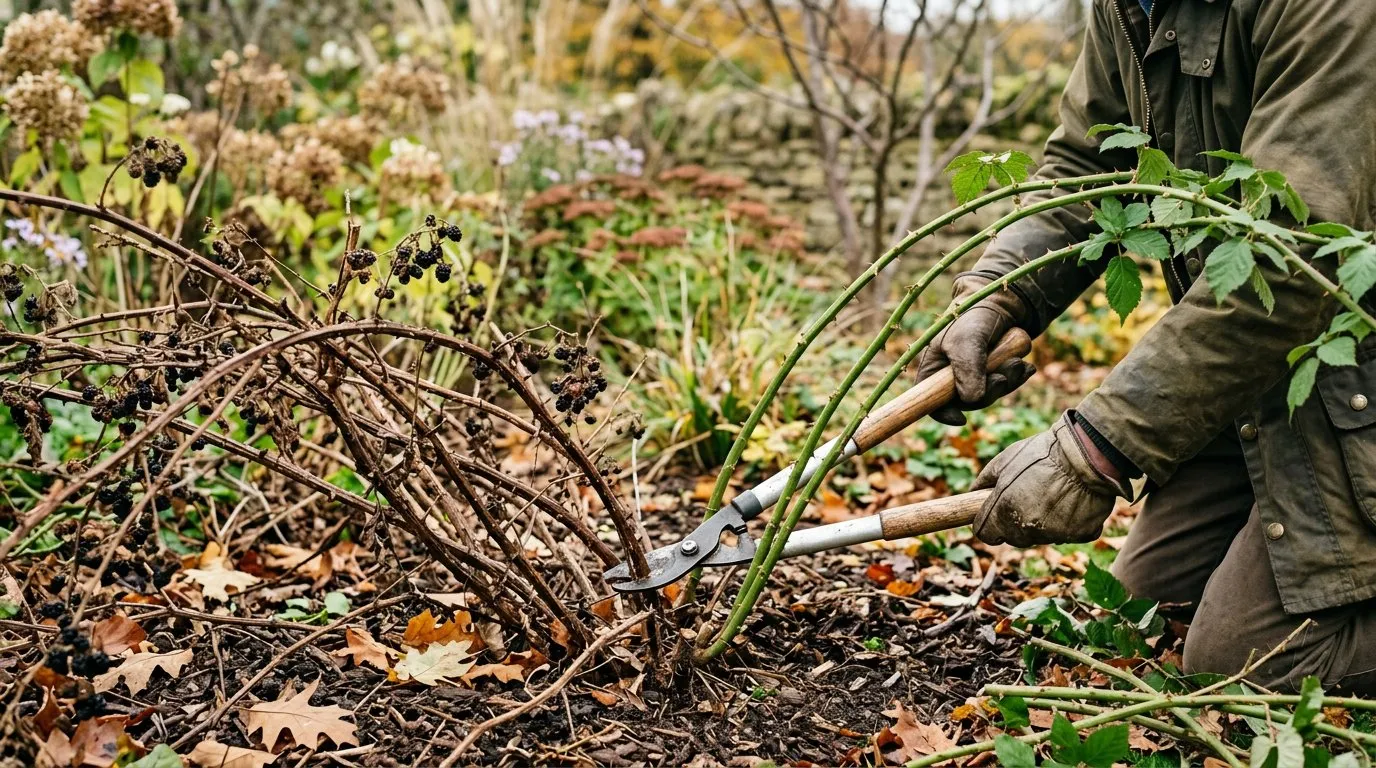 Cutting spent canes to ground level after harvest. New canes replace them for next year.
Follow this with a thick mulch of well-rotted compost or manure in April. This feeds the soil, retains moisture, and suppresses weeds. Keep the mulch 5cm away from the stems to prevent rotting. Making your own compost is the cheapest way to keep blackberries fed. If you grow other fruit, the same feeding approach works for strawberries and gooseberries.
Watering
Established blackberries rarely need watering in normal UK weather. However, water deeply during dry spells in June and July when the fruit is swelling. Drought stress at this stage produces small, dry berries. Give each plant 10-15 litres per watering session, twice a week in prolonged dry weather.
Container-grown blackberries need watering daily in summer.
Pruning after harvest
This is the single most important maintenance task. Blackberries fruit on the previous year’s canes. Once a cane has fruited, it will never fruit again.
- Immediately after the last harvest (usually September or October), cut all fruited canes to ground level
- Untie them from the wires and remove them
- Tie in the new season’s canes that grew during summer
- Remove any weak or damaged canes, keeping 6-8 strong ones per plant
- Space canes evenly across the support wires
Leaving old fruited canes in place makes a tangled mess and harbours disease. Clean pruning each autumn is what keeps blackberries productive year after year.
How to propagate blackberries by tip layering
Blackberries are one of the easiest plants to propagate. Tip layering works naturally. In the wild, bramble cane tips touch the ground and root, creating new plants.
Tip layering method
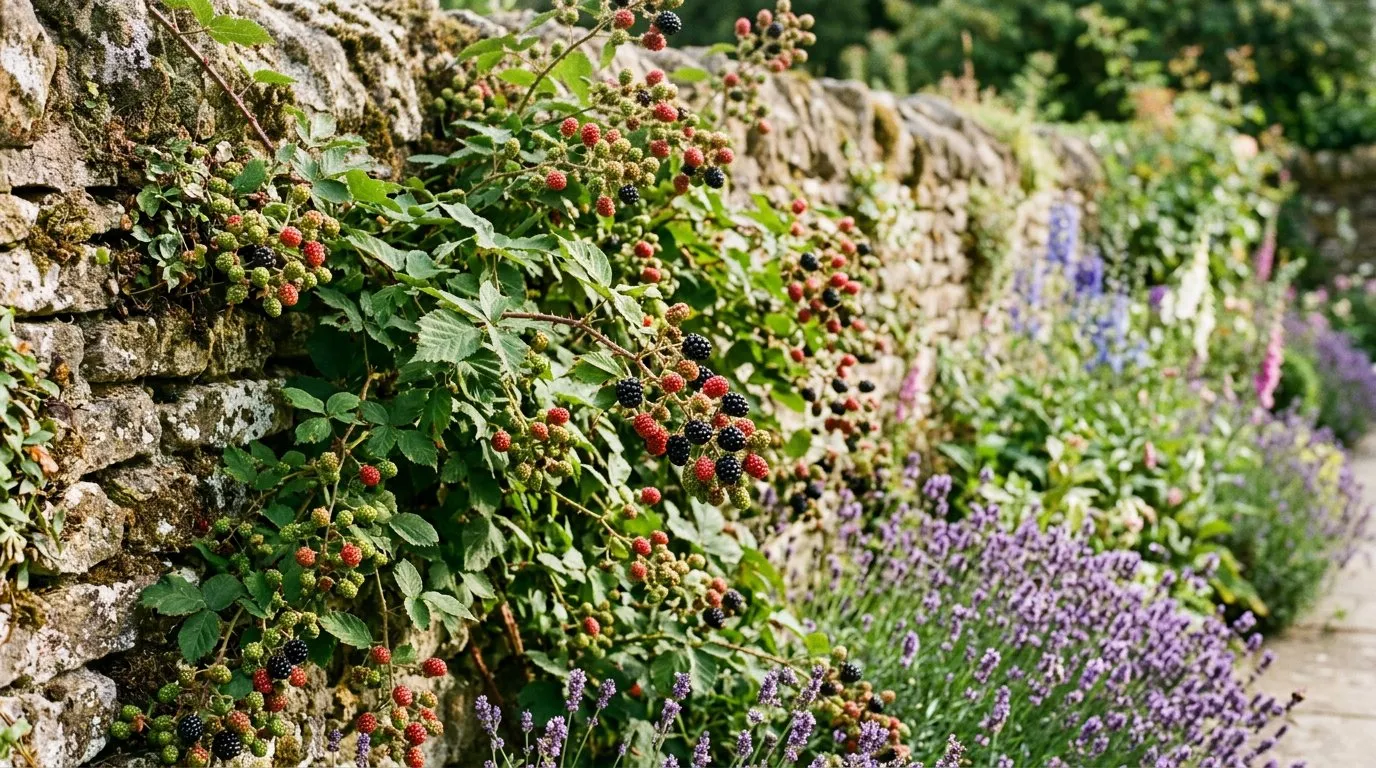 Blackberries thriving along a sunny wall. They tolerate partial shade but fruit best in sun.
- In late July or August, select a healthy new cane that has not fruited
- Bend the tip of the cane down to the ground
- Bury the tip 10-15cm deep in a small hole filled with compost
- Peg it in place with a bent wire or weigh it down with a stone
- Water the buried tip and keep the soil moist
- By the following spring, the tip will have rooted and produced a new shoot
- Sever the new plant from the parent cane and transplant it to its final position
Each new plant is genetically identical to the parent. One established blackberry can produce 4-6 new plants per year through tip layering. This is the fastest and most reliable propagation method for sharing plants with neighbours or extending your own fruit patch. Raised beds work well for growing on young blackberry plants before transplanting them to their permanent positions.
Gardener’s tip: If you do not want blackberries spreading, keep cane tips off the ground at all times. Tie them firmly to the top wire. Any tip that touches soil will attempt to root.
Month-by-month blackberry growing calendar
| Month | Task |
|---|---|
| January | Order bare-root canes from fruit nurseries. Plan support wire positions |
| February | Plant bare-root canes if ground is not frozen. Finish installing wires |
| March | Final month for bare-root planting. Apply general fertiliser around established plants |
| April | Mulch with compost. New canes begin to grow from the base. Tie in as they extend |
| May | Continue tying in new growth. Water newly planted canes in dry spells |
| June | Flowers appear on last year’s canes. Water deeply if dry during fruit swell |
| July | Early varieties begin to ripen. Start tip layering for propagation. Check for pests |
| August | Main harvest month. Pick every 2-3 days as fruit ripens. Continue tying new canes |
| September | Harvest continues. Late varieties peak. Begin cutting fruited canes after picking finishes |
| October | Final pickings from late varieties. Complete autumn pruning. Tie in new canes |
| November | Plant new bare-root canes. Clear fallen leaves around the base. Mulch if needed |
| December | Plants are fully dormant. No action required. Check wire tension on supports |
Blackberry pests, diseases, and problems
Blackberries are tough plants with few serious problems. Three issues are worth watching for.
Spotted wing drosophila
Spotted wing drosophila (SWD) is a small fruit fly that lays eggs inside ripening berries. Unlike common fruit flies, SWD attacks undamaged fruit before it is fully ripe. Affected berries become soft and collapse. The pest is spreading across the UK and is now the most significant threat to blackberry crops.
Prevention is the main defence. Pick fruit promptly and do not leave ripe berries on the plant. Refrigerate picked fruit immediately. Fine mesh netting (1mm or smaller) keeps the flies out but must cover the plant completely. Garden Organic has further guidance on organic pest control.
Grey mould (botrytis)
Grey mould appears as a fuzzy grey coating on ripe or overripe fruit, especially in wet weather. It thrives in crowded, poorly ventilated canes. Good pruning and spacing are the best prevention. Remove and dispose of any mouldy fruit promptly. Do not leave it on the ground beneath the plant.
Blackberry gall mite
Blackberry gall mite causes individual drupelets on the berry to stay red and hard when the rest of the fruit turns black. The berries look patchy and unappealing. The mites are microscopic and there is no approved chemical treatment for garden use. Affected fruit is still edible but looks poor. Burning or composting pruned canes in autumn helps reduce the population for the following year.
Five common mistakes when growing blackberries
Avoiding these errors turns a vigorous weed into a productive fruit garden feature.
Not installing support wires before planting. Blackberry canes grow 3-5m in a single season. Without wires, they flop onto the ground, root at the tips, and create an impenetrable thicket. Install horizontal wires first, then plant.
Leaving fruited canes on the plant. Canes that have fruited will never produce again. Leaving them makes a tangled mass of dead and living wood that harbours disease and makes picking difficult. Cut fruited canes to ground level every autumn without exception.
Planting too close together. Blackberries need 3-4m between plants. Gardeners used to growing blueberries or raspberries often underestimate how far blackberry canes reach. Overcrowded plants compete for light and produce smaller fruit.
Ignoring new cane management. New canes growing during summer need tying in regularly. Left unmanaged, they grow in all directions, tangle with fruiting canes, and make the autumn prune far harder. Tie them in every two weeks during the growing season.
Letting cane tips reach the ground. Any blackberry cane tip that touches soil will root and produce a new plant. In a small garden, this is how blackberries escape their allocated space and become a problem. Keep all cane tips tied to the top support wire.
Wild blackberries and foraging folklore
Wild blackberries (Rubus fruticosus) grow in every county in Britain. They fruit prolifically in hedgerows, woodland edges, and waste ground from August onwards. Foraging for wild food is a long British tradition, and blackberries are the most commonly gathered wild fruit.
English folklore holds that blackberries should not be picked after Michaelmas (29 September). The story says the devil spits or stamps on them after this date. The practical truth behind the superstition is simpler. Late-season berries are often affected by grey mould, gall mite, or frost damage.
Cultivated garden varieties produce larger, sweeter, and cleaner fruit than their wild cousins. But there is something satisfying about a hedgerow bramble. Growing a tame thornless blackberry against your fence and picking wild ones from the local hedgerow covers both bases nicely.
Warning: When foraging wild blackberries, avoid picking from roadsides where traffic pollution settles on the fruit. Choose hedgerows in fields, footpaths, and woodland edges instead.
Now you’ve mastered blackberries, read our guide on how to grow blueberries in the UK for another high-yielding soft fruit that thrives alongside blackberries in a productive picking garden.
Frequently asked questions
When is the best time to plant blackberries in the UK?
Plant bare-root canes from November to March. November and December plantings establish best because winter rainfall keeps the soil moist. Container-grown plants can go in at any time of year, but bare-root canes are cheaper and establish faster. Avoid planting when the ground is frozen or waterlogged.
Do blackberries need a sunny spot?
No, blackberries tolerate partial shade well. They fruit reliably with as little as four hours of direct sun per day. Full sun produces the sweetest fruit and heaviest crops, but a north-facing fence still yields a good harvest. No other soft fruit matches their shade tolerance.
How far apart should I plant blackberry canes?
Space plants 3-4m apart. Blackberries are vigorous growers that send out long canes reaching 3-5m in a single season. Compact thornless varieties like Loch Ness can be planted 2.5-3m apart. Give them the full 4m if growing vigorous thorned types like Himalayan Giant.
What is the best thornless blackberry variety?
Loch Ness is the best all-round thornless variety. It produces heavy crops of large, sweet berries from August to September on upright, manageable canes. Apache and Triple Crown are strong alternatives with excellent flavour. All three crop as heavily as thorned varieties.
Do I need two blackberry plants for pollination?
No, all blackberry varieties are self-fertile. A single plant produces a full crop without a pollination partner. Bees visit the flowers readily and transfer pollen between blooms on the same plant. One well-managed plant gives 5-10kg of fruit per season.
Why are my blackberries small and sour?
Small fruit usually means overcrowded canes or lack of water. Thin the canes to 6-8 per plant and water deeply during fruiting. Sour berries are often picked too early. Wait until fruit is fully black and pulls away with the lightest touch. Feeding with a potash-rich fertiliser in spring also improves fruit size.
Can I grow blackberries in a pot?
Yes, compact varieties like Loch Ness grow in large containers. Use a pot at least 45cm diameter and 40cm deep. Fill with loam-based compost. Support the canes on a small obelisk or trellis. Water daily in summer and feed fortnightly with tomato feed from flowering onwards. Expect a smaller crop than plants in open ground.
When should I prune blackberry canes?
Prune immediately after harvest in autumn. Cut all fruited canes to ground level. These canes will not fruit again. Tie in the current year’s new canes to the support wires. These become next year’s fruiting canes. Remove any weak or damaged growth at the same time.
Lawrie has been gardening in the West Midlands for over 30 years. He grows his own veg using no-dig methods, keeps a wildlife-friendly garden, and writes practical advice based on real UK growing conditions.