How to Grow Broad Beans in the UK
Practical guide to growing broad beans in UK gardens. Covers autumn and spring sowing, varieties, pinching out tips, blackfly control, and harvesting.
Key takeaways
- Sow Aquadulce Claudia in October or November for the earliest harvest in June, three weeks ahead of spring sowings
- Spring sowings from February to April give reliable crops from July, with less risk of winter losses
- Plant in double rows 23cm apart with 60cm between each pair of rows for easy picking and good airflow
- Pinch out growing tips when the lowest four trusses have set to control blackfly and speed up ripening
- Harvest pods when the beans are the size of a thumbnail for the sweetest, most tender flavour
- Leave roots in the ground after harvest to release fixed nitrogen, benefiting the next crop in your rotation
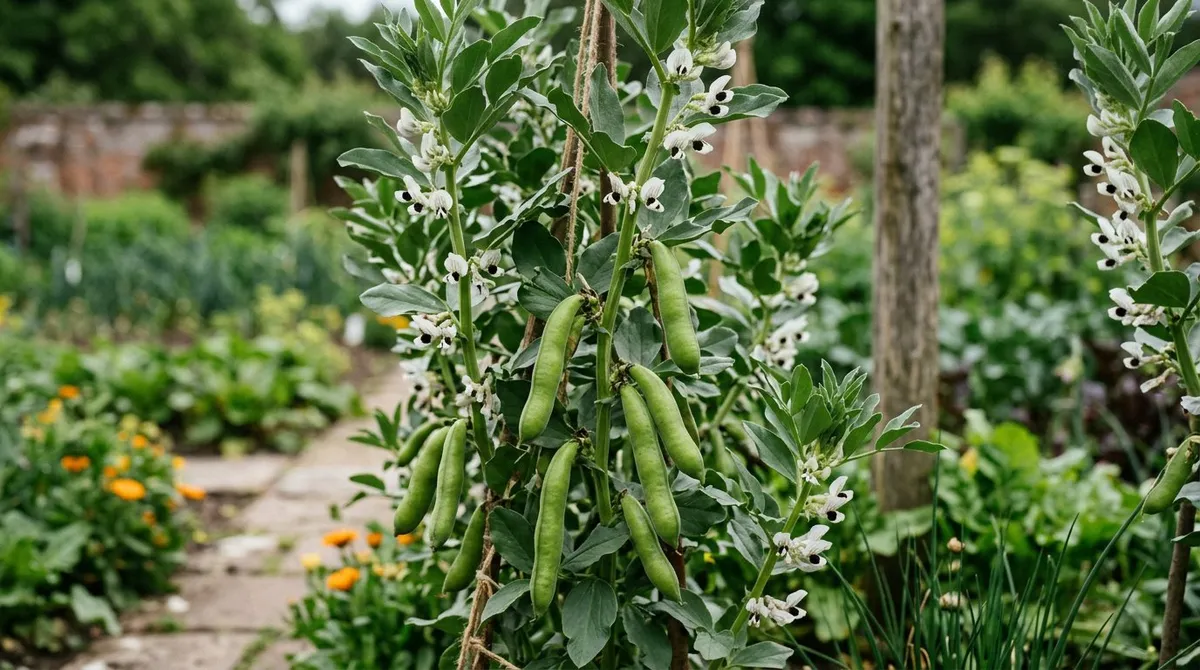
Broad beans are one of the oldest cultivated crops in Britain. They have been grown here since the Iron Age. They are also one of the easiest vegetables for beginners, tolerating poor soil, cold weather, and a fair amount of neglect. A short double row produces enough beans for a family throughout summer, with plenty left over for the freezer.
What makes broad beans particularly valuable is their timing. Autumn sowings go into the ground in October or November, long after most other crops have finished. Spring sowings start as early as February, making them one of the first seeds of the new growing season. If you are planning your first food-growing space, our guide to starting a vegetable garden covers the broader essentials.
Which broad bean varieties should I grow?
Choosing the right variety depends on when you want to sow and how much space you have. Tall varieties reach 120-150cm and need support. Dwarf varieties stay compact at 30-45cm and suit containers and smaller plots.
Best varieties for UK gardens
- Aquadulce Claudia - the standard autumn-sowing variety. Hardy to minus 10C. Long pods with 5-7 large, white beans. Sow October to November for a June harvest. The most reliable overwinterer for UK conditions.
- Super Aquadulce - an improved selection of Aquadulce Claudia with slightly better cold tolerance and heavier yields. Excellent for autumn sowing in exposed or northern sites.
- Jubilee Hysor - a high-yielding spring variety producing clusters of short, well-filled pods. Compact habit at around 75cm. Good disease resistance. Ideal for smaller gardens.
- The Sutton - the best dwarf variety at just 30-40cm tall. No staking required. Well suited to containers, raised beds, and windy sites. Sow February to April.
- Masterpiece Green Longpod - long pods with 7-9 beans that stay green when cooked, unlike white-seeded varieties. Excellent flavour. Sow in spring for an August harvest.
- Karmazyn - a heritage variety from Poland with striking crimson beans. Nutty flavour. Attractive in the garden. Spring sowing only.
- Witkiem Manita - fast-maturing spring variety, ready in about 12 weeks. Useful for filling gaps in the growing calendar.
Variety comparison table
| Variety | Sowing time | Height | Pods per plant | Beans per pod | Weeks to harvest | Best for |
|---|---|---|---|---|---|---|
| Aquadulce Claudia | Oct-Nov | 120cm | 15-20 | 5-7 | 26-30 (from autumn) | Earliest harvest |
| Super Aquadulce | Oct-Nov | 120cm | 18-22 | 5-7 | 26-30 (from autumn) | Cold/exposed sites |
| Jubilee Hysor | Feb-Apr | 75cm | 20-25 | 4-5 | 14-16 | High yield, small gardens |
| The Sutton | Feb-Apr | 35cm | 10-15 | 3-4 | 12-14 | Containers, windy sites |
| Masterpiece Green Longpod | Feb-Apr | 100cm | 15-18 | 7-9 | 14-16 | Flavour, green beans |
| Witkiem Manita | Feb-Apr | 90cm | 15-18 | 5-6 | 12-14 | Quick crop |
| Karmazyn | Mar-Apr | 100cm | 12-15 | 4-5 | 14-16 | Heritage, unusual colour |
Gardener’s tip: Grow Aquadulce Claudia in autumn AND a spring variety like Jubilee Hysor in February. This gives you a continuous harvest from June right through to September without a gap in supply.
When to sow broad beans
Broad beans offer two distinct sowing windows, making them one of the most flexible UK crops. Our guide on when to plant broad beans breaks down the best timing by region. The UK vegetable planting calendar shows where broad beans fit alongside other crops throughout the year.
Autumn sowing (October to November)
Sow hardy varieties like Aquadulce Claudia or Super Aquadulce directly into the ground from mid-October to mid-November. The seeds germinate before winter, producing short, stocky plants that sit through the cold months. Growth resumes in early spring, and these plants crop three weeks earlier than spring-sown ones.
Autumn sowing works best in southern and central England, where winters are less severe. In northern England and Scotland, success depends on the site. Sheltered, well-drained positions with some protection from the worst weather give reasonable results. Waterlogged soil kills overwintering beans more reliably than frost does.
The main risk is mice. They find freshly sown broad bean seeds irresistible. Soak seeds overnight before sowing, as some growers believe this makes them less attractive. Alternatively, start autumn-sown beans in deep pots or root trainers in a cold frame, then transplant in March once the mice have lost interest.
Spring sowing (February to April)
Spring sowing is the more reliable option across the whole UK. Begin in February under cloches or in a greenhouse, or wait until March and April for direct outdoor sowing. Broad bean seeds germinate in soil as cool as 5C, so they tolerate early sowing better than most vegetables. If you are new to starting seeds, our guide to sowing seeds indoors covers the basics.
February sowings in pots under cover produce transplants ready for planting out in March, giving a head start of around three weeks. Use deep pots or root trainers, as broad beans develop long taproots quickly.
March and April sowings go directly into prepared ground. This is the simplest method and works well in all regions. Later sowings (after mid-April) tend to suffer more from blackfly, as the peak aphid season coincides with the plants’ most vulnerable stage.
How to sow and plant broad beans
Preparing the ground
Broad beans grow in almost any soil but prefer a reasonably fertile, well-drained site. They do not need the rich, heavily composted ground that hungry crops like potatoes demand. A bed that was manured for a previous crop is ideal. If the soil is poor, dig in garden compost or well-rotted manure a few weeks before sowing. Read our composting guide for making your own soil improver.
Avoid waterlogged or heavy clay sites for autumn sowings. Standing water around the roots over winter causes rot. Raised beds solve this problem neatly by providing the drainage that broad beans need during the wet months.
Sowing method
- Mark out your double row with a line or cane
- Make holes 5cm deep and 23cm apart along each row
- Space the two rows 23cm apart
- Drop one seed into each hole
- Cover with soil and water gently
- Leave 60cm before the next double row
Double row planting is the standard method for broad beans. The two rows grow together and support each other, reducing the need for staking. The 60cm gap between each pair of rows allows access for weeding, watering, and picking.
For a family of four, sow 20-30 seeds. This typically yields 8-10kg of beans through the season. Sow a few extras at each end of the row as spares. Germination rates are usually 85-95% with fresh seed.
Sowing in pots
Start beans in 8cm pots or root trainers filled with multipurpose compost. Sow one seed per pot, 5cm deep. Keep in an unheated greenhouse, cold frame, or sheltered porch. Seeds germinate in 7-14 days at 5-10C.
Transplant when the seedlings are 10-15cm tall with a good root system, usually after 4-6 weeks. Harden off for a week before planting out by leaving the pots outside during the day and bringing them in at night.
Supporting tall varieties
Dwarf varieties like The Sutton stand perfectly well on their own. Tall varieties reaching 90cm or more need support, especially on exposed or windy sites. Without it, heavy pods and summer storms will flatten the plants.
The simplest support method uses canes and string. Push a sturdy cane or stake at each corner of the double row and at 1.5m intervals along the sides. Run garden string along both sides at 30cm intervals as the plants grow, creating a cradle that holds them upright.
An alternative is to push hazel twigs or pea sticks along both sides of the row. The branching twigs give the plants something to lean against and look far more natural than string. This traditional method works particularly well in cottage gardens and allotments.
Pinching out tips and managing blackfly
Why pinch out?
Pinching out the growing tips is the single most important task in broad bean growing. Once the lowest four trusses of flowers have set pods, nip off the top 10-15cm of each stem with your thumb and forefinger.
This achieves two things. First, it removes the soft, succulent growing tips that blackfly (black bean aphids) find irresistible. The tips are their primary feeding site. Remove the tips, and you remove the main attraction. Second, it redirects the plant’s energy away from upward growth and into swelling the existing pods. Beans ripen more evenly and more quickly because of this.
The pinched-out tips are edible. They taste like a mild, tender version of the beans themselves. Steam them for two minutes or toss them into a stir-fry. They are considered a delicacy by many allotment growers.
Dealing with blackfly
Blackfly are the most common pest of broad beans in the UK. They cluster on the growing tips and youngest leaves, sucking sap and weakening the plant. Heavy infestations reduce pod set and distort new growth. The RHS broad bean growing guide lists blackfly as the primary pest to manage.
If blackfly arrive before you have pinched out:
- Jet of water - blast them off with a strong spray from the hose. This knocks off most aphids and is the quickest fix.
- Washing-up liquid spray - mix one teaspoon of liquid soap in one litre of water. Spray directly onto the aphids. The soap disrupts their waxy coating.
- Encourage ladybirds - a single ladybird larva eats 200-300 aphids before pupating. Avoid broad-spectrum pesticides that kill these allies.
- Companion planting - summer savory planted alongside broad beans is traditionally believed to deter blackfly. The evidence is anecdotal but the herb is useful in the kitchen regardless.
Gardener’s tip: Autumn-sown broad beans often escape the worst blackfly. They flower and set pods earlier, before aphid populations peak in late May and June. This is one of the strongest arguments for autumn sowing.
Other pests and diseases
Chocolate spot
A fungal disease caused by Botrytis fabae. It produces small brown spots on the leaves that can merge into larger patches in severe cases. It is worse in damp, overcrowded conditions and during mild, wet winters.
Prevent it by spacing plants correctly, avoiding overhead watering, and removing badly affected foliage. Well-drained soil and good airflow between rows are the best defences. Autumn-sown plants are more susceptible because they spend months in damp winter weather.
Pea and bean weevil
Small, greyish-brown beetles that cut U-shaped notches in the leaf margins. The damage looks alarming but is rarely serious enough to affect the crop. Established plants outgrow the damage easily. Seedlings are more vulnerable, so protect young plants with fleece if weevils are a problem in your garden.
Mice
Freshly sown seeds are a magnet for mice, particularly autumn sowings. Starting seeds in pots under cover avoids the problem entirely. For direct sowings, some gardeners lay spiny holly leaves along the drill after covering the seeds. Trapping is the most effective control if mice are persistent.
Month-by-month broad bean calendar
| Month | Task |
|---|---|
| January | Order seed. Start Aquadulce Claudia in pots under cover if autumn sowing was missed |
| February | Sow spring varieties in pots indoors or under cloches outdoors |
| March | Direct sow outdoors. Transplant pot-raised seedlings. Weed autumn sowings |
| April | Final outdoor sowings. Begin supporting tall varieties with string |
| May | Water in dry weather. Watch for blackfly. Pinch out tips once four trusses set |
| June | Harvest autumn-sown beans. Continue pinching out spring-sown plants. Pick regularly |
| July | Main harvest for spring sowings. Pick pods while young for best flavour |
| August | Final pickings. Clear spent plants but leave roots in the ground |
| September | Prepare beds for autumn sowing. Dig compost into next year’s legume bed |
| October | Sow Aquadulce Claudia for overwintering. Protect from mice |
| November | Final autumn sowings. Mulch around established autumn-sown plants |
| December | Check autumn sowings. No action needed; plants are dormant |
How to harvest broad beans
Timing the harvest is the difference between sweet, tender beans and starchy, tough ones. Pick pods when the beans inside are the size of a thumbnail and the scar where the bean attaches to the pod is still white or pale green. Once the scar turns black, the bean has started to mature and the texture becomes mealy.
The lowest pods on the plant are ready first. Work your way upward over several weeks. Snap or cut the pods from the stem rather than pulling, which can uproot the plant.
Picking regularly encourages more pods to develop. A plant that carries mature pods slows its production. Harvest every three or four days during the main cropping period. A 20-plant double row typically yields 8-10kg of beans over a 4-6 week period.
Harvesting for different uses
| Harvest stage | Bean size | Skin colour | Best use |
|---|---|---|---|
| Very young | 1cm | Bright green | Eat whole pod, like mangetout |
| Young | 1.5-2cm | Pale green | Eat fresh, salads, risotto |
| Medium | 2-3cm | Pale green | Steaming, general cooking |
| Mature | 3cm+ | Grey-green | Stews, soups, drying |
Gardener’s tip: Very young broad beans, picked when the pods are only 7-8cm long, can be eaten whole like mangetout. Slice them diagonally and stir-fry for 2 minutes. This is the best-kept secret in the allotment.
Storing and freezing broad beans
Fresh broad beans keep for only 2-3 days in the fridge. For longer storage, freezing is by far the best method.
How to freeze broad beans
- Shell the beans from their pods
- Blanch in boiling water for 2 minutes
- Plunge immediately into ice water for 2 minutes
- Drain thoroughly
- Spread on a baking tray in a single layer and freeze for 1 hour
- Transfer to labelled freezer bags
Frozen broad beans keep their flavour and bright green colour for up to 12 months. The initial tray-freezing step prevents the beans from clumping into a solid block, so you can pour out exactly the quantity you need.
Double podding
For the best frozen (and fresh) broad beans, double pod them. After removing the beans from the outer pod, blanch briefly, then slip off the pale grey-green inner skin to reveal the vivid emerald bean inside. Double-podded beans are sweeter, more tender, and far more attractive on the plate. It takes time, but the result is worth it for salads and summer dishes.
Common mistakes when growing broad beans
Experienced growers and beginners alike make these errors. Avoiding them improves your harvest significantly.
Sowing too late. Broad beans sown after mid-April coincide with peak blackfly season and hot weather. The plants suffer from both. Get seeds in by early April at the latest for spring sowings.
Not pinching out tips. Leaving the soft growing tips intact is an open invitation to blackfly. It also means the plant wastes energy growing taller rather than filling its existing pods.
Harvesting too late. Broad beans left until the pods are fat and bulging look impressive, but the flavour and texture have gone downhill. Pick at the thumbnail stage. If you miss some and they grow large, use them in soups or stews where texture matters less.
Overcrowding. Cramming plants too closely together reduces airflow and promotes chocolate spot. Stick to 23cm spacing within rows and 60cm between double rows.
Ignoring crop rotation. Growing broad beans in the same spot year after year builds up soil-borne diseases. Follow a three or four-year rotation. The nitrogen-fixing benefit is wasted if you grow legumes in the same bed repeatedly.
Removing roots after harvest. When clearing spent plants, cut the stems at ground level and leave the roots in the soil. The nitrogen-fixing nodules on the roots release their stored nitrogen as they decompose, feeding the next crop. Pulling the roots out throws away free fertiliser.
Why we recommend Aquadulce Claudia for autumn sowing: After 30 years of growing broad beans in UK gardens, Aquadulce Claudia consistently outperforms every other autumn variety for cold hardiness and early harvest. In a typical season, our autumn-sown rows crop a full three weeks ahead of spring sowings, delivering fresh beans before anything else in the kitchen garden is ready. Plants have survived ground temperatures of minus 8C without any cloche protection.
Broad beans and soil fertility
Broad beans belong to the legume family, along with peas, runner beans, and clover. Like all legumes, they form a partnership with Rhizobium bacteria that colonise their roots in small nodules. These bacteria convert atmospheric nitrogen into a form the plant can use. When the roots decompose after harvest, this nitrogen is released into the soil for the following crop.
This makes broad beans one of the most valuable crops in a rotation. Plant hungry feeders like brassicas (cabbage, broccoli, kale) in the same bed the following year. They benefit directly from the nitrogen the beans have fixed.
To see the nodules, carefully lift one plant at the end of the season and examine the roots. The nodules are small, round, pinkish lumps attached to the root system. If you cut one open, the pink interior confirms active nitrogen fixation. White or green nodules are inactive.
Growing broad beans in containers
The Sutton is the best variety for containers. At 30-40cm tall, it needs no staking and produces a respectable crop in a relatively small space. Use a container at least 30cm deep and 40cm wide. A standard grow bag will hold 4-6 plants.
Fill with multipurpose compost and sow seeds 5cm deep and 15cm apart. Water regularly but do not let the compost become waterlogged. Feed with a general-purpose liquid fertiliser every two weeks once the plants are flowering.
Container-grown broad beans work well on patios, balconies, and in small courtyard gardens. They also make an attractive addition to raised beds, where the improved drainage suits the plants perfectly.
Companion planting with broad beans
Broad beans pair well with several other crops. Their nitrogen-fixing ability benefits nearby plants, and their upright habit provides shelter for lower-growing companions.
Good companions include potatoes, spinach, lettuce, sweetcorn, and summer savory. The traditional combination of beans and summer savory is centuries old, with the herb believed to repel blackfly.
Avoid planting broad beans near onions, garlic, or other alliums. The two families are thought to inhibit each other’s growth, though the evidence is largely based on gardening tradition rather than controlled trials.
After clearing the beans in late summer, use the bed for a follow-on crop. Fast-maturing salads, autumn-sown green manures, or overwintering brassicas all make excellent use of the nitrogen-enriched soil. Check our planting calendar for timing.
Now you’ve mastered broad beans, read our guide on growing peas in the UK for the next step in legume growing.
Growing broad beans is straightforward and rewarding
Broad beans ask very little of the gardener. They tolerate cold, improve your soil, and produce a generous harvest of one of the finest-tasting vegetables you can grow. An autumn sowing in October followed by a spring sowing in February gives you fresh beans from June to September. The surplus freezes. The roots leave the soil richer than they found it. There are very few crops that give so much back for so little effort.
Lawrie has been gardening in the West Midlands for over 30 years. He grows his own veg using no-dig methods, keeps a wildlife-friendly garden, and writes practical advice based on real UK growing conditions.