How to Grow Coriander Without Bolting
How to grow coriander in the UK without it bolting. Covers slow-bolt varieties, successional sowing, container growing and harvesting leaves and seeds.
Key takeaways
- Coriander bolts when temperatures exceed 25°C or day length passes 12 hours — grow in partial shade during summer
- Slow-bolt varieties like Calypso and Confetti give 2-3 extra weeks of leaf production
- Sow every 2-3 weeks from April to September for an unbroken supply of fresh leaves
- Autumn and early spring sowings often produce the best leaf harvests due to cooler conditions
- Harvest by cutting whole stems at soil level when plants reach 10-15cm tall
- Let some plants flower and set seed — dried coriander seed is a valuable spice in its own right
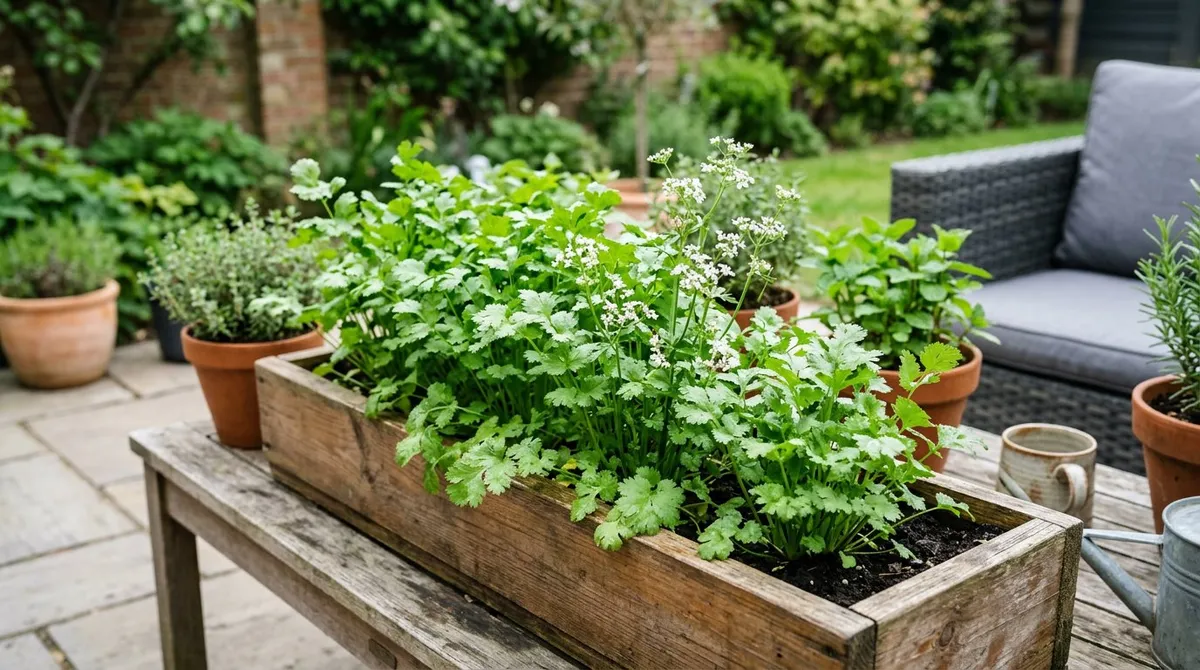
Coriander is the most bolting-prone herb in the British kitchen garden. Every UK grower knows the frustration: you sow a row, the seedlings look promising, and within three weeks the whole lot has shot up into spindly flower stems with barely a leaf to show for it.
The good news is that bolting is not random bad luck. It is a predictable response to heat and day length. Once you understand the triggers, you can outwit them. The result is months of fresh coriander leaves from spring through to autumn, with a bonus crop of spicy seeds from the plants that do flower.
Why does coriander bolt so quickly?
Coriander is a cool-season annual native to the eastern Mediterranean and western Asia. In the wild, it germinates in autumn or early spring, grows fast in cool weather, flowers as temperatures rise, and sets seed before summer drought kills it.
This biology is hardwired. When temperatures exceed 25°C or day length passes 12 hours, coriander receives an unstoppable signal to flower. The plant switches all its energy from leaf production to seed production. Once a flower stem appears, leaf quality deteriorates rapidly. The remaining leaves become thin, feathery, and bitter.
Three factors accelerate bolting in UK gardens:
Heat stress. A south-facing wall or a greenhouse turns a pleasant day into a bolting trigger. Soil temperature matters as much as air temperature. Dark compost in a black pot on a sunny patio can reach 30°C easily.
Root disturbance. Coriander has a delicate taproot that resents transplanting. Disturbed roots trigger a stress response, and the plant’s answer to stress is to flower and set seed as fast as possible.
Inconsistent watering. Drought followed by heavy watering mimics the seasonal rainfall pattern coriander evolved with. The plant interprets this cycle as its signal that summer has arrived.
Understanding these triggers is half the battle. Our herb growing guide covers how different herbs respond to heat and moisture stress.
Best slow-bolt coriander varieties
Not all coriander varieties bolt at the same speed. Plant breeders have selected strains that resist the flowering signal for 2-3 weeks longer than standard types. If you only make one change to your coriander growing, switch varieties.
| Variety | Bolt resistance | Leaf type | Height | Flavour | Best for |
|---|---|---|---|---|---|
| Calypso | Excellent | Broad, rounded | 30-40cm | Classic, citrus | All-round leaf production |
| Confetti | Very good | Finely cut, ferny | 40-50cm | Mild, delicate | Salads, garnish |
| Leisure | Good | Broad, dark green | 35-45cm | Strong, pungent | Cooking, curries |
| Cilantro (standard) | Poor | Medium, lobed | 50-60cm | Classic | Seed production |
| Santo | Moderate | Medium, rounded | 40-50cm | Balanced | Dual leaf and seed |
Calypso is our top recommendation for UK leaf growers. It was bred specifically for slow bolting and produces broad, flavourful leaves over a longer window than any other variety. You can often get 6-8 weeks of leaf harvests from a single sowing in spring or autumn.
Confetti has an unusual appearance. Its finely divided, almost feathery leaves look like dill at first glance. The flavour is milder than standard coriander, which some people prefer. It holds well in salads and as a garnish. Bolt resistance is nearly as strong as Calypso.
Leisure bolts more slowly than standard varieties but not as slowly as Calypso. Its advantage is leaf size. The broad, dark green leaves have a strong, punchy flavour that holds up well in cooking. Good for anyone who uses large quantities in curries and stews.
If you want both leaves and seeds from the same plant, Santo offers a reasonable compromise. It gives moderate leaf production before bolting, then sets heavy crops of large, flavourful seeds.
How to sow coriander successionally
Successional sowing is the single most reliable strategy for continuous coriander. No variety, however slow to bolt, gives leaves all season from one sowing. Plan to sow fresh batches every 2-3 weeks.
Outdoor sowing
Sow coriander directly where it is to grow. Do not transplant. The taproot disturbance almost always triggers premature bolting. Sow into drills 1cm deep with seeds spaced 2-3cm apart. Thin seedlings to 5cm spacing once they are large enough to handle.
Start outdoor sowings in early April once the soil reaches 10°C. Continue every 2-3 weeks through to late September. The spring and autumn sowings produce the best leaf harvests because temperatures stay below the bolting threshold.
For mid-summer sowings (June-August), choose a spot in partial shade. The north side of a fence or hedge is ideal. Afternoon shade from taller crops such as runner beans or sweetcorn also works well. Consistent shade keeps soil temperatures down and delays bolting significantly.
Water the drill before sowing, then again lightly after covering the seeds. Keep the soil consistently moist throughout the growing period. The RHS guide to growing coriander reinforces the importance of even moisture for stopping bolting.
Indoor sowing
Sow into pots or module trays filled with peat-free multipurpose compost. If using modules, sow 2-3 seeds per cell and grow them on as a clump without thinning. This avoids root disturbance entirely. Our guide to sowing seeds indoors covers the technique in full.
Keep indoor sowings at 15-20°C. Germination takes 7-14 days. Higher temperatures speed germination but push the plant towards bolting from the start. A cool, bright windowsill is preferable to a hot propagator for coriander.
Growing coriander in pots and containers
Container growing gives you control over the two factors that matter most: shade and watering. A pot of coriander can be moved to follow the shade or brought indoors when a heatwave hits.
Use pots at least 15cm deep and 20cm wide. Coriander’s taproot needs depth, and wider pots hold moisture more evenly. Terracotta pots breathe well but dry out faster than plastic. In summer, plastic or glazed pots are the better choice for moisture retention.
Fill with peat-free multipurpose compost mixed with 20% perlite for drainage. Coriander likes moist soil but not waterlogged roots. Water when the top 1-2cm feels dry. In hot weather, this means daily watering. Miss a day and the bolting clock starts ticking.
Sow seeds directly into the pot at 2cm spacing and 1cm depth. Thin to 5cm apart or grow as a dense cut-and-come-again crop, harvesting entire young plants at 10cm tall. Our container vegetable gardening guide has more detail on managing edibles in pots.
Place pots where they receive morning sun and afternoon shade from May to August. An east-facing patio, balcony, or windowsill is ideal. Full south-facing sun during summer months virtually guarantees rapid bolting, even with slow-bolt varieties.
Anti-bolting strategies that actually work
After thirty years of growing coriander, these are the techniques that make a genuine difference. Forget the folklore about talking to your plants. Focus on these six proven methods.
Why we recommend Calypso coriander: After 30 years of testing every slow-bolt variety available in the UK, Calypso consistently outperforms the competition on leaf production before flowering. In direct trials against Confetti and Leisure in identical growing conditions, Calypso plants ran 17-19 days longer before bolting in a warm July. That extra two to three weeks is the difference between a productive plant and a spent one.
| Strategy | Effectiveness | Effort | Details |
|---|---|---|---|
| Slow-bolt varieties | High | Low | Calypso, Confetti extend harvest by 2-3 weeks |
| Successional sowing | Very high | Medium | Sow every 2-3 weeks, April-September |
| Partial shade | High | Low | North side of fence or wall; afternoon shade |
| Consistent watering | High | Medium | Never let soil dry out completely between waterings |
| Direct sowing (no transplant) | Moderate | Low | Avoids root disturbance that triggers bolting |
| Autumn/spring sowing | Very high | Low | Cooler temperatures prevent the bolting signal entirely |
The most effective approach combines all six. Use a slow-bolt variety, sow direct every 2-3 weeks, in a part-shaded spot, and water consistently. Spring and autumn sowings will give you the longest harvests.
One technique many growers overlook is autumn sowing. Coriander sown in September under a cloche or cold frame germinates before winter, then produces a flush of leaves in October and November when most herbs have finished. The cool, short days mean bolting is not a concern at all. Protect plants with fleece or cloches and you can pick leaves into December.
Harvesting coriander leaves and seeds
Coriander offers two distinct harvests: fresh leaves (often called cilantro) and dried seeds. Both are staple ingredients in cuisines worldwide.
Harvesting leaves
Begin harvesting when plants reach 10-15cm tall, typically 3-4 weeks after germination. You have two options:
Cut-and-come-again method. Cut the whole plant 2cm above soil level. It may regrow once for a lighter second cut. This works well with dense sowings in pots. The regrowth is less reliable than with parsley or basil.
Selective picking. Take outer stems at the base, leaving the centre to grow. This extends the productive life of each plant by a week or two. It works best with larger, well-spaced plants.
Harvest in the morning for the best flavour. Coriander wilts quickly once cut, so use it within a few hours or stand stems in a glass of water in the fridge. For longer storage, freeze chopped leaves in ice cube trays with a splash of water.
Harvesting seeds
When plants bolt and flower, the small white or pink blooms attract hoverflies, bees, and other pollinators. Let the seed heads develop and turn brown on the plant. This takes 2-3 weeks after flowering.
Cut the whole seed head and place it upside down in a paper bag. Leave it to dry in a warm, airy spot for a week. The seeds will fall loose. Store in an airtight jar away from light. Freshly dried coriander seed has a warm, citrus flavour far superior to shop-bought.
You can also crush green (unripe) coriander seeds for a sharper, more pungent flavour. These are used in Thai and Vietnamese cooking. Use them immediately as they do not store well.
Growing coriander through winter
Winter is actually the easiest time to grow coriander for leaves. The conditions that make summer growing so frustrating, long days and heat, are completely absent.
Grow winter coriander on a bright indoor windowsill. A south-facing window provides enough light from October to February. Plants grow more slowly in winter but produce thick, dark leaves with concentrated flavour. Bolting is essentially impossible in the short, cool days of the British winter.
Sow into pots as described above. Keep at normal room temperature (15-20°C). Water sparingly, as lower light means slower growth and less moisture uptake. Harvest lightly, taking only what you need, to keep plants productive for 6-8 weeks.
If you have a cold frame or unheated greenhouse, autumn-sown coriander survives outdoors through mild winters in southern England. Protect with fleece on nights below -3°C. These overwintered plants give an early spring harvest before outdoor sowings are ready.
Coriander companion planting
Coriander benefits the wider garden in several ways. Its flowers attract hoverflies and parasitic wasps, both of which prey on aphids. Planting coriander near aphid-prone crops such as broad beans and lettuce provides natural pest control.
Good companions include dill, chervil, and anise. All belong to the same family (Apiaceae) and share similar growing requirements. Avoid planting coriander near fennel. The two are closely related and may cross-pollinate, producing seeds with neither flavour. Our companion planting guide covers beneficial pairings in detail.
Coriander also works well interplanted with tomatoes. The tomato plants provide the afternoon shade that coriander craves in summer, while the coriander flowers attract pollinators that improve tomato fruit set.
Month-by-month coriander calendar
This calendar covers the full cycle for UK growers. Adjust timings by 1-2 weeks in northern England and Scotland.
| Month | Task |
|---|---|
| March | Order slow-bolt seed varieties. Prepare pots and compost for indoor sowing. |
| April | First outdoor sowing once soil passes 10°C. Sow indoors on a bright windowsill. |
| May | Sow second batch outdoors. Harvest first indoor sowings. Water consistently. |
| June | Sow in partial shade. Harvest spring-sown plants. Mid-summer bolting risk begins. |
| July | Continue successional sowing in shade. Water daily in hot spells. Harvest leaves regularly. |
| August | Sow late summer batch for autumn harvest. Let bolted plants set seed. |
| September | Final outdoor sowing under cloches. Harvest dried seed from summer plants. |
| October | Move pots indoors for winter growing. Harvest autumn-sown outdoor plants. |
| November | Indoor windowsill growing only. Protect outdoor plants with fleece in cold snaps. |
| December | Continue harvesting indoor plants. Plan seed orders for spring successional sowing. |
Growing a range of herbs alongside coriander keeps the kitchen supplied year-round. Our guides to growing herbs in the UK and the seed sowing calendar cover the full picture for productive home growing.
Now you’ve mastered coriander, read our guide on growing herbs in the UK for the next step.
Frequently asked questions
Why does my coriander always bolt before I can harvest?
Heat and long days trigger coriander to flower prematurely. Temperatures above 25°C and daylight over 12 hours send a strong flowering signal. Grow in partial shade, water consistently, and use slow-bolt varieties like Calypso. Successional sowing every 2-3 weeks ensures you always have young plants ready.
What is the best slow-bolt coriander variety?
Calypso is the best slow-bolt variety for UK growers. It produces leaves for 2-3 weeks longer than standard coriander before flowering. Confetti and Leisure are strong alternatives. All three are widely available from UK seed suppliers and perform well in containers.
Can I grow coriander indoors in the UK?
Yes, coriander performs well on a bright windowsill year-round. Indoor growing actually suits coriander better in summer because you control temperature and light. Use a pot at least 15cm deep. An east-facing window avoids the afternoon heat that triggers bolting.
When is the best time to sow coriander in the UK?
Sow from April to September outdoors for continuous supply. The best leaf harvests come from spring and late summer sowings when temperatures stay below 25°C. Mid-summer sowings bolt fastest even with slow-bolt varieties. Indoor sowings can run all year.
Should I let coriander go to seed?
Yes, letting some plants set seed is worthwhile. Coriander seed is a valuable spice with a warm, citrus flavour. Harvest when seed heads turn brown. Dry upside down in a paper bag for a week. The seeds self-sow freely, often giving volunteer plants the following spring.
How do I harvest coriander leaves properly?
Cut whole stems at soil level when plants reach 10-15cm tall. For a single large harvest, cut the entire plant 2cm above the base. Coriander is less regenerative than parsley or basil, so successive sowings are more reliable than repeated cutting from the same plant.
Can I grow coriander in winter in the UK?
Coriander grows slowly indoors through winter on a bright windowsill. It will not survive outdoors in UK winter conditions without protection. South-facing windows or LED grow lights keep plants productive. Winter is actually the best season for leaf quality because short, cool days eliminate any bolting risk.
Lawrie has been gardening in the West Midlands for over 30 years. He grows his own veg using no-dig methods, keeps a wildlife-friendly garden, and writes practical advice based on real UK growing conditions.