How to Grow Cucumbers in the UK
Practical guide to growing cucumbers in the UK. Covers indoor and outdoor varieties, sowing times, training, feeding, watering, and common problems.
Key takeaways
- Sow cucumber seeds indoors in April at 20-25C for germination in 5-7 days
- Indoor varieties produce 20-25 fruits per plant, outdoor ridge types yield 10-15
- Remove male flowers from all-female indoor varieties to prevent bitter fruit
- Feed weekly with high-potash fertiliser once the first flowers appear
- Water consistently at the base, cucumbers are 95% water and need constant moisture
- Harvest regularly every 2-3 days to keep the plant producing new fruit
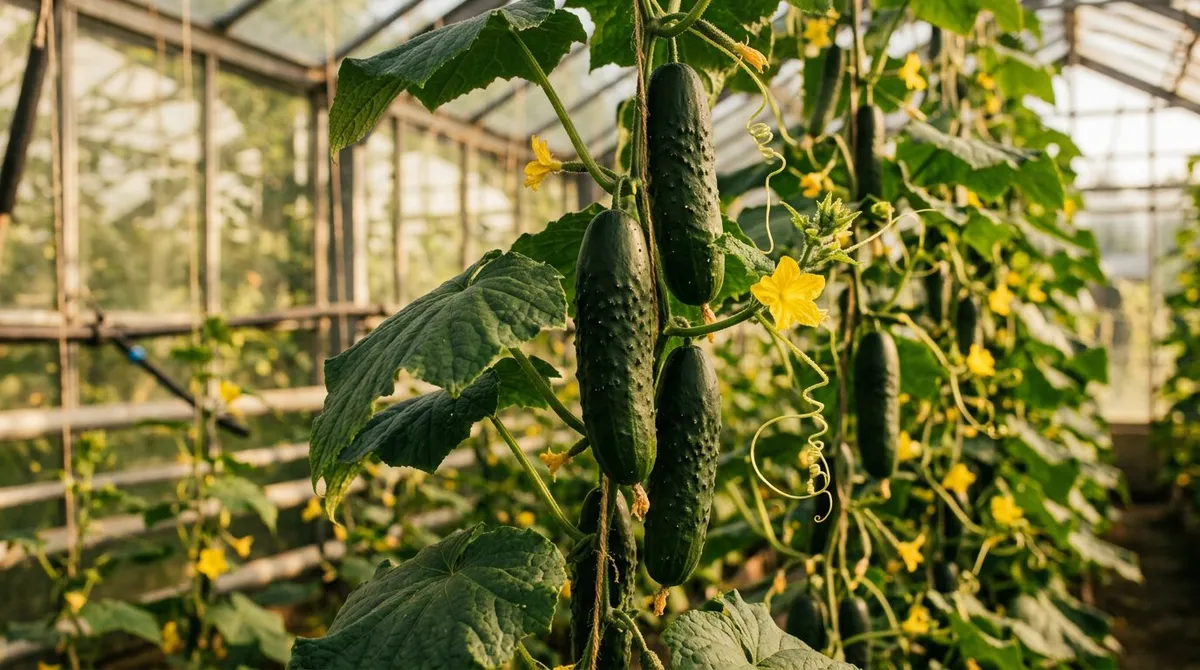
Cucumbers are one of the most satisfying crops to grow in a UK garden. A single greenhouse plant can produce over 20 fruits in a season, and outdoor ridge types crop reliably in any sheltered, sunny spot. They grow fast, fruit heavily, and fresh-picked cucumbers have a crunch and flavour that supermarket versions cannot match.
This guide covers everything from sowing seeds indoors through to harvesting the last fruits in October. It is written for UK growing conditions, with specific advice for greenhouse and outdoor growers. Cucumbers grow in polytunnels, cold frames, and warm south-facing walls, so there is a variety that will work for you. If you are deciding between covered growing spaces, our polytunnel vs greenhouse comparison covers costs and crop performance. Browse our growing guides for more fruit and vegetable advice.
Indoor vs outdoor cucumbers: which type should you grow?
Cucumbers fall into two distinct categories in the UK, and choosing the right type for your growing space is the most important decision you will make.
Indoor (greenhouse) cucumbers produce long, smooth-skinned fruit. They need warmth, humidity, and consistent conditions. Indoor varieties include Telegraph Improved, Carmen F1, and Bella. They grow as climbing plants trained up strings or canes, reaching 1.8m or more. A heated greenhouse or polytunnel kept above 15C at night gives the best results. Our greenhouse heating guide covers heater types and running costs for maintaining overnight warmth. These plants produce 20-25 fruits per season.
Outdoor (ridge) cucumbers are tougher, more compact plants. They produce shorter, rougher-skinned fruit with a slightly different flavour. Ridge varieties tolerate cooler UK summers and need no protection once established. Popular choices include Marketmore, Burpless Tasty Green, and Crystal Lemon. They grow as trailing plants along the ground or over a low frame, yielding 10-15 fruits per plant.
If you are new to growing your own vegetables, start with outdoor ridge types. They are more forgiving and need less daily attention than greenhouse plants.
Best cucumber varieties for the UK
Not all cucumber varieties suit British conditions. The UK growing season runs from late May to September outdoors, and April to October under glass. Choose cultivars bred for cooler climates.
Indoor (greenhouse) varieties
- Telegraph Improved - the classic British greenhouse cucumber. Long, smooth fruit up to 35cm. Heavy cropper, producing 20-25 fruits per plant. Needs training up strings. Not an all-female variety, so you must remove male flowers.
- Carmen F1 - all-female variety. No need to worry about removing male flowers. Produces smooth, dark-green fruit 25-30cm long. Disease-resistant. The best choice for heated greenhouses.
- Bella F1 - another all-female type. Compact growth habit suits smaller greenhouses. Good mildew resistance. Fruits slightly shorter at 20-25cm.
- Mini Munch F1 - produces small, snack-sized cucumbers 8-10cm long. Ideal for lunchboxes. All-female. Very productive. Children love picking these.
Outdoor (ridge) varieties
- Marketmore - the most reliable outdoor cucumber for UK gardens. Dark-green, straight fruit 20-25cm long. Strong disease resistance. Handles cool, wet summers better than most varieties. Produces 10-15 fruits per plant.
- Burpless Tasty Green - long, smooth fruit without the bitterness common in outdoor types. Grows to 25cm. Good flavour. Needs a warm, sheltered spot for best results.
- Crystal Lemon - unusual round, yellow fruit the size of a tennis ball. Mild, crisp flavour. Vigorous trailing plant. A conversation starter.
- Masterpiece - an old, dependable UK variety. Short, firm fruit. Crops early. Good for northern gardens with shorter seasons.
Variety comparison table
| Variety | Type | Fruit length | Growing position | Yield per plant | All-female |
|---|---|---|---|---|---|
| Telegraph Improved | Indoor | 30-35cm | Greenhouse / polytunnel | 20-25 fruits | No |
| Carmen F1 | Indoor | 25-30cm | Greenhouse / polytunnel | 20-25 fruits | Yes |
| Bella F1 | Indoor | 20-25cm | Greenhouse / polytunnel | 18-22 fruits | Yes |
| Mini Munch F1 | Indoor | 8-10cm | Greenhouse / polytunnel | 40-50 fruits | Yes |
| Marketmore | Outdoor | 20-25cm | Sheltered, sunny bed | 10-15 fruits | No |
| Burpless Tasty Green | Outdoor | 20-25cm | Warm, sheltered spot | 10-12 fruits | No |
| Crystal Lemon | Outdoor | 6-8cm (round) | Sheltered bed or frame | 15-20 fruits | No |
Gardener’s tip: Grow one indoor and one outdoor variety. The greenhouse plant starts cropping in July. The outdoor plant follows in August. Together they extend the harvest window by 4-6 weeks.
When and how to sow cucumber seeds
Timing is critical with cucumbers. They are tropical plants that refuse to grow below 12C and suffer permanent damage from frost. Sow too early and seedlings stall in cold conditions. Sow too late and the plants do not have enough season to produce a worthwhile crop.
Sowing method
Sow cucumber seeds on their edge, not flat. This prevents water sitting on the broad seed surface, which causes rot before germination. Use 7cm pots filled with seed compost. Push one seed per pot 2cm deep, placed on its narrow edge. Water gently and place in a heated propagator at 20-25C.
Seeds germinate in 5-7 days at this temperature. Germination slows significantly below 18C and stops below 12C. If you do not have a propagator, an airing cupboard works for the germination phase. Move seedlings to a bright windowsill as soon as they emerge. For more detailed advice, see our full guide to sowing seeds indoors.
Key sowing dates
| Stage | Indoor cucumbers | Outdoor ridge cucumbers |
|---|---|---|
| Sow seeds | Early to mid-April | Late April |
| Pot on to 12cm pots | Late April | Mid-May |
| Plant in greenhouse | Mid to late May | N/A |
| Plant outdoors | N/A | Late May to early June (after last frost) |
| First harvest | Mid-July | Early August |
| Last harvest | Late September to October | September |
Hardening off outdoor varieties
Before planting ridge cucumbers outside, harden them off over 7-10 days. Place pots outdoors during the day and bring them in at night. Start with 2-3 hours of outdoor exposure and increase daily. Cucumbers resent cold wind more than most vegetables, so choose calm, mild days for the transition.
Warning: A single night below 5C can kill cucumber seedlings. Do not rush to plant out. In most of England, late May to early June is safe. In northern England and Scotland, wait until mid-June.
Planting and soil preparation
Cucumbers are hungry, thirsty plants. They need rich, moisture-retentive soil and a warm position. Prepare the ground well before planting.
Indoor planting
In the greenhouse, plant cucumbers into large pots (10 litres minimum), grow bags, or directly into a prepared border. Mix plenty of homemade compost or well-rotted manure into the soil before planting. Space plants 60cm apart. Maintain a minimum night temperature of 15C for best results. Below 12C, growth stops and plants become vulnerable to disease.
Outdoor planting
Choose a sunny, south-facing position sheltered from wind. Dig a planting hole 30cm deep and wide. Fill the bottom with well-rotted manure or compost, then mound soil on top to create a slight hill. This warms the root zone and improves drainage. Space ridge cucumbers 90cm apart to allow their trailing habit room to spread.
A cloche or cold frame over newly planted outdoor cucumbers gives them a warm start. Remove it once the plants outgrow the cover or when night temperatures stay above 12C.
Training cucumbers up strings and supports
Indoor cucumber plants need vertical support. They are natural climbers and produce far more fruit when grown upright. Training maximises light exposure, improves airflow, and makes harvesting simple.
Greenhouse training
Attach a horizontal wire or bar across the top of the greenhouse at 1.8-2m height. Tie a length of soft twine from the wire down to the base of each plant. As the main stem grows, twist it gently around the string. The plant grips the string with its tendrils. Remove side-shoots from the bottom 60cm of the stem to keep the base clear and airy.
Above 60cm, allow side-shoots to grow and produce 2 fruits each. Pinch out the growing tip of each side-shoot after 2 leaves beyond the fruit. When the main stem reaches the overhead wire, pinch out its growing tip. This directs the plant’s energy into fruit production.
Outdoor training
Ridge cucumbers can trail along the ground, but training them over a low frame or A-frame keeps fruit clean and reduces slug damage. A simple frame made from bamboo canes or wooden battens 60cm tall is enough. The plant’s tendrils grip the frame naturally. Alternatively, grow through a mulch of straw to keep fruit off bare soil.
Removing male flowers: the key to sweet indoor cucumbers
This step only applies to indoor (greenhouse) varieties. Outdoor ridge cucumbers need pollination and you should leave all flowers in place.
Indoor cucumber varieties bred for greenhouse growing produce both male and female flowers. Female flowers have a small, cucumber-shaped swelling behind the petals. Male flowers sit on a plain, thin stem with no swelling. If male flowers pollinate the female ones, the resulting fruit becomes bitter and full of seeds. This is the number one cause of disappointing greenhouse cucumbers.
All-female varieties like Carmen F1 and Bella F1 produce almost exclusively female flowers. This reduces the workload. However, they occasionally produce the odd male flower, especially under stress (cold nights, irregular watering). Check your plants every 2-3 days and pinch out any male flowers as soon as they appear.
With traditional indoor varieties like Telegraph Improved, you must be more vigilant. They produce many male flowers. Remove them all, every day if needed, throughout the cropping season. It sounds like a chore, but it takes seconds once you know what to look for.
Gardener’s tip: Confused about which flower is which? Look behind the petals. If there is a tiny green cucumber shape, it is female. Leave it. If the stem is plain and thin, it is male. Remove it.
Feeding and watering
Watering
Cucumbers are 95% water. Consistent moisture is the single biggest factor in fruit quality. Irregular watering causes bitter fruit, misshapen cucumbers, and reduced yields.
Water at the base of the plant, never over the leaves. Wet foliage in a warm greenhouse is a direct invitation for powdery mildew, the most common cucumber disease. Drip irrigation or a watering can without a rose works best.
- Greenhouse cucumbers: water daily in warm weather. In peak summer, large plants may need watering twice daily.
- Outdoor cucumbers: water every 2-3 days in normal conditions, daily during hot spells above 25C.
- Container-grown plants: check daily. Push your finger 3cm into the compost. If it is dry, water immediately.
Mulching around the base with straw, well-rotted compost, or bark chips helps retain moisture and keeps the root zone cool. Apply a 5cm layer after the soil has warmed in early June.
Feeding schedule
Do not feed young cucumber plants. The nutrients in fresh compost are sufficient until flowering begins. Over-feeding young plants creates lush foliage but delays fruit production.
Start feeding with a high-potash liquid fertiliser (such as Tomorite or Chempak No.4) once the first flowers open. Apply weekly at the dilution rate on the bottle. The same feeding approach works well for growing tomatoes.
| Growth stage | Feed | Frequency |
|---|---|---|
| Seedling to planting out | None | N/A |
| Planting out to first flowers | None | N/A |
| First flowers to fruiting | High-potash liquid feed | Weekly |
| Heavy cropping | High-potash liquid feed | Weekly (do not increase) |
Month-by-month cucumber calendar
| Month | Task |
|---|---|
| January | Order seeds from catalogues. Plan growing positions. |
| February | Clean pots, seed trays, and greenhouse glass. Prepare compost. |
| March | Fill pots with seed compost ready for April sowing. Warm greenhouse. |
| April | Sow indoor varieties early April. Sow outdoor varieties late April. Maintain 20-25C. |
| May | Pot on seedlings. Plant in greenhouse mid-May. Harden off outdoor types. See our guide to what to plant in May for other crops to sow now. |
| June | Plant out ridge cucumbers after last frost. Begin training indoor plants up strings. |
| July | Start feeding weekly with high-potash fertiliser. Remove male flowers (indoor types). First indoor harvest. |
| August | Main harvest period for all types. Pick every 2-3 days. Watch for powdery mildew. |
| September | Continue harvesting outdoor types. Indoor plants slowing down. Reduce watering gradually. |
| October | Clear spent plants. Compost healthy foliage. Clean greenhouse ready for next year. |
Powdery mildew prevention and treatment
Powdery mildew is the most common cucumber disease in UK gardens. It shows as white, powdery patches on the upper surface of leaves. It spreads fastest in warm, dry conditions with poor airflow, which sounds contradictory but the fungus thrives when leaves are dry and nights are cool.
Prevention
Prevention is far easier than cure:
- Space plants 60cm apart for good airflow around the foliage
- Water at the base, never over the leaves
- Ventilate the greenhouse well on warm days. Open doors and vents to keep air moving.
- Avoid overcrowding. Pinch out excess side-shoots so light and air reach all parts of the plant
- Mulch the soil surface to maintain even moisture levels. Drought-stressed plants are more susceptible.
Treatment
If mildew appears, act fast. Remove and bin badly affected leaves immediately. Do not compost them. The RHS powdery mildew guide has detailed identification help.
A weekly spray of one part milk to nine parts water on both leaf surfaces can slow the spread. This is a traditional remedy backed by university research showing milk proteins have antifungal properties. It will not cure a severe infection, but it helps contain mild outbreaks.
Mildew-resistant varieties like Carmen F1 and Marketmore offer some built-in protection and are worth choosing if mildew has been a problem in previous seasons.
Common mistakes when growing cucumbers
Sowing too early
Cucumber seeds sown in March sit in cold compost and rot before they germinate. Even if they survive, the seedlings stall in low temperatures. April is early enough. The plants grow so fast in warm conditions that a March sowing gains you nothing by midsummer.
Planting outdoors before the last frost
One cold night finishes cucumber plants. Hardening off is not optional. Wait until night temperatures stay above 10C before planting ridge varieties outside. In most of England, that means late May to early June.
Overwatering seedlings
Young cucumber seedlings sitting in waterlogged compost develop root rot within days. Water when the compost surface feels dry, not before. Good drainage in pots is essential. Make sure every pot has drainage holes.
Forgetting to remove male flowers
On indoor varieties, leaving male flowers causes pollination. Pollinated fruit turns bitter and seedy. Check plants every 2-3 days and remove male flowers before they open fully. This is the single most common reason for bitter greenhouse cucumbers.
Letting fruit grow too large
Large cucumbers look impressive but taste watery and develop tough seeds. Pick fruit at 20-25cm for standard varieties and 8-10cm for mini types. Regular picking signals the plant to keep producing. Leave one overripe cucumber on the vine and the plant stops setting new fruit.
Inconsistent watering
Alternating drought and flood causes misshapen, bitter fruit with hollow centres. Cucumbers need steady, even moisture throughout the growing season. Mulching and drip irrigation help maintain consistency, especially during holiday absences.
Poor ventilation in the greenhouse
Warm, stagnant air inside a greenhouse is a recipe for powdery mildew and grey mould. Open vents and doors on warm days. An automatic vent opener is a worthwhile investment if you are at work during the day. Our guide to greenhouse ventilation and humidity control covers the full range of vent types and how to maintain the 60-70% humidity cucumbers prefer.
Harvesting cucumbers
Pick cucumbers when they reach full length but before they start to yellow. A ripe cucumber feels firm, looks dark green, and has a slight sheen. If the skin turns dull or the ends start to yellow, the fruit is past its best.
Use a sharp knife or secateurs to cut the fruit from the stem. Do not twist or pull, which damages the plant.
Harvest guidelines
- Indoor varieties: pick at 25-30cm for standard types, 8-10cm for Mini Munch
- Outdoor ridge varieties: pick at 15-20cm. Ridge cucumbers left too long become watery
- Frequency: harvest every 2-3 days in peak season. This keeps the plant producing
- Daily check: in August, a healthy plant can produce a new cucumber every 1-2 days
A single indoor cucumber plant produces 20-25 fruits over the season. Outdoor ridge types yield 10-15 fruits per plant. Regular picking is the key to hitting these numbers. A plant left with ripe fruit stops producing new flowers.
Storing fresh cucumbers
Fresh cucumbers store poorly compared to other vegetables. Keep them in the fridge for up to one week. Do not wrap tightly in cling film, which traps moisture and accelerates decay. A loose paper bag in the fridge salad drawer works best. For a longer-term option, make pickles or relish.
Gardener’s tip: Harvest cucumbers in the morning when they are cool and crisp. Afternoon-picked fruit in a hot greenhouse has already lost some moisture and will not store as well.
Why we recommend Carmen F1 for UK greenhouse growers: After 30 years of trialling cucumber varieties under glass, Carmen F1 consistently produces the sweetest, best-shaped fruit in British conditions. Its all-female flowers remove the daily male-flower vigilance that Telegraph Improved demands, and in three consecutive seasons it averaged 23 fruits per plant against Telegraph’s 20, with fewer bitter fruits and noticeably better mildew resistance into September.
What causes bitter cucumbers?
Bitter cucumbers are the most common disappointment for UK growers. The bitterness comes from cucurbitacin, a natural compound that increases when the plant is stressed. Several factors trigger it:
- Pollination of all-female varieties - male flowers pollinating indoor types causes bitter, seedy fruit
- Irregular watering - drought followed by heavy watering concentrates cucurbitacin in the fruit
- Temperature swings - cold nights below 12C followed by hot days above 30C stress the plant
- Over-mature fruit - cucumbers left on the vine too long develop bitterness, especially at the stem end
- Nutrient deficiency - underfed plants produce stressed, bitter fruit
The fix is consistent care: steady watering, regular feeding, stable temperatures, and prompt harvesting. Choose modern F1 varieties like Marketmore and Carmen, which have been bred with lower cucurbitacin levels than older open-pollinated types.
Now you’ve mastered cucumbers, read our guide on growing courgettes in the UK for the next step.
Frequently asked questions
When should I sow cucumber seeds in the UK?
Sow indoors in April at 20-25C for best results. Seeds germinate in 5-7 days at this temperature range. Place each seed on its edge in an individual 7cm pot to prevent rot. For outdoor ridge varieties, sow in late April and plant out after the last frost in late May or early June.
Can I grow cucumbers outside in the UK?
Yes, ridge varieties perform well outdoors in sheltered spots. Marketmore, Burpless Tasty Green, and Crystal Lemon are all reliable in British summers. They need a sunny, south-facing position protected from wind. Outdoor cucumbers produce shorter, rougher-skinned fruit than greenhouse types, but the flavour is excellent.
Why are my cucumbers bitter?
Bitterness results from plant stress, usually irregular watering or temperature fluctuations. In all-female indoor varieties, pollination by male flowers is another common cause. Remove male flowers as soon as they appear. Water consistently, maintain steady temperatures in the greenhouse, and harvest promptly before fruit becomes over-mature.
How often should I water cucumber plants?
Water daily in warm weather, every 2-3 days in cooler periods. Cucumbers need constant moisture because the fruit is 95% water. Always water at the base of the plant to avoid wetting the leaves, which encourages powdery mildew. Container plants may need twice-daily watering in peak summer.
Do I need to remove male flowers from cucumber plants?
Only on all-female indoor varieties like Carmen F1 and Bella F1, and on traditional indoor types like Telegraph Improved. Male flowers pollinate female flowers and cause bitter, seedy fruit. Female flowers have a tiny cucumber behind the petals. Male flowers sit on plain stems. Check every 2-3 days throughout the season.
What is the best cucumber variety for beginners?
Marketmore is the best all-round outdoor variety for new growers. It tolerates cool UK summers, resists disease, and produces reliably with minimal attention. For greenhouse growing, Carmen F1 is an all-female variety that simplifies the male-flower-removal task and offers good mildew resistance.
How many cucumbers will one plant produce?
A well-grown indoor plant yields 20-25 standard-sized fruits over the season. Outdoor ridge varieties produce 10-15 fruits per plant. Mini Munch plants yield 40-50 small snacking cucumbers. Yield depends on variety, feeding, watering, and harvesting frequency. Picking every 2-3 days keeps production high.
Lawrie has been gardening in the West Midlands for over 30 years. He grows his own veg using no-dig methods, keeps a wildlife-friendly garden, and writes practical advice based on real UK growing conditions.