How to Grow Garlic in the UK
A practical guide to growing garlic in British gardens. Covers softneck and hardneck types, autumn and spring planting, harvesting, curing, and storing.
Key takeaways
- Plant garlic cloves in October or November so they receive the cold period needed to form full bulbs
- Softneck varieties store for up to 10 months, while hardneck types last 3-5 months after harvest
- Space cloves 15cm apart in rows 30cm apart, planted 2.5cm below the soil surface with the pointed end up
- Remove scapes (flower stalks) from hardneck garlic in late spring to direct energy into bulb growth
- Harvest when the lower third of leaves turn yellow, typically June for early varieties and July-August for maincrops
- Cure bulbs in a dry, airy place for 2-3 weeks before storing to extend shelf life significantly
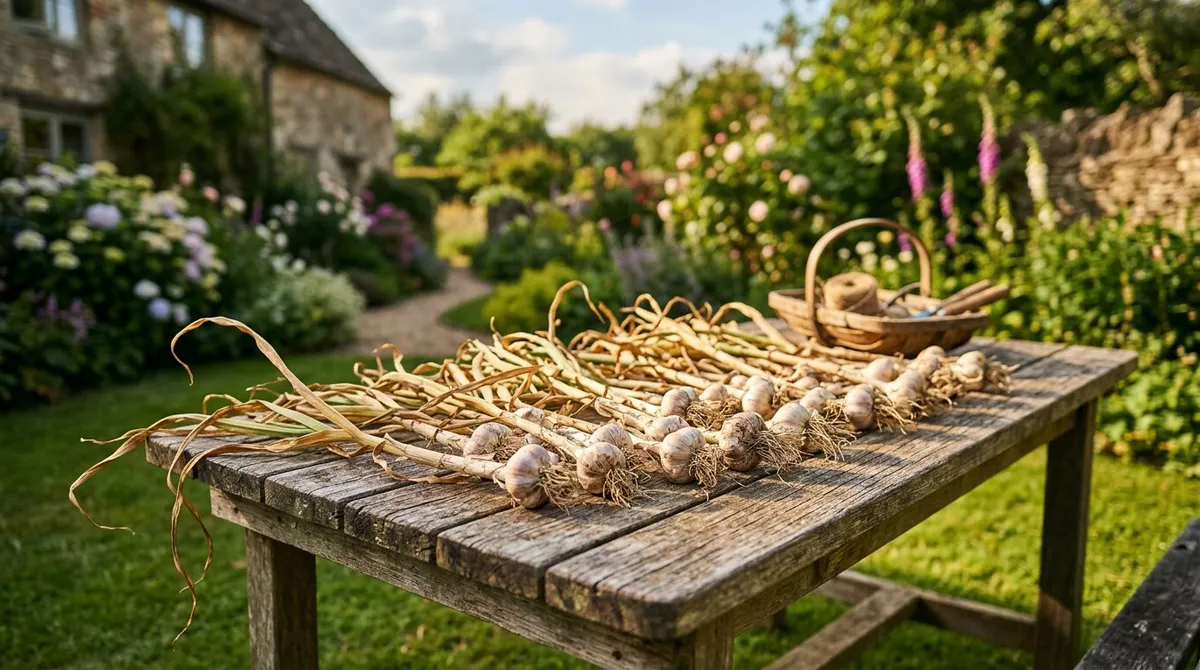
Garlic is one of the most satisfying crops for UK gardeners. It takes up very little space, demands almost no attention through winter, and a single clove planted in autumn produces a full bulb by the following summer. The flavour of freshly harvested garlic is sharper, juicier, and far more complex than anything bought in a shop.
The UK climate suits garlic well. British winters provide the cold period that garlic needs to split into cloves, and our long spring days encourage steady leaf growth. Garlic grows well in open ground, raised beds, and containers, making it a reliable crop for beginners. This guide covers varieties, planting, growing, harvesting, and storing, all written for British conditions.
What type of garlic should I grow?
Garlic falls into two main groups, and understanding the difference matters because it affects when you plant, how you grow, and how long your harvest stores.
Softneck garlic is the type you see most often in shops. It does not produce a flower stalk, which means all the plant’s energy goes into the bulb. Softneck varieties produce 10-20 cloves per bulb arranged in overlapping layers. Their key advantage is storage. A well-cured softneck bulb keeps for 8-10 months in a cool room. Softneck stems are pliable, so you can plait them into traditional garlic strings for hanging in the kitchen.
Hardneck garlic grows a stiff central stem that produces a curly flower stalk called a scape in late spring. Hardneck bulbs contain fewer cloves (typically 4-12), but each clove is larger and the flavour is more intense. Hardneck varieties are hardier than softneck types, making them the better choice for cold, northern UK gardens and exposed sites. The trade-off is shorter storage life, around 3-5 months after curing.
There is also elephant garlic, which is not true garlic but a type of leek. It produces very large, mild-flavoured cloves and grows well in UK conditions.
Which garlic varieties grow best in the UK?
Choose varieties bred or selected for British growing conditions. Imported garlic from warmer climates often fails in our cooler, wetter winters. The RHS garlic growing guide lists varieties tested in UK conditions.
Softneck varieties
- Solent Wight - the most popular UK garlic variety. Bred on the Isle of Wight. Produces large bulbs with 12-16 cloves and stores for up to 10 months. Reliable in all UK regions. A genuine all-rounder.
- Germidour - a French purple-skinned softneck that performs superbly in UK gardens. Strong flavour without being harsh. 10-14 cloves per bulb. Good disease resistance. Widely available from British suppliers.
- Picardy Wight - another Isle of Wight variety. Large bulbs with mild, sweet flavour. Excellent for roasting whole. Stores for 7-8 months.
- Early Purple Wight - the earliest UK garlic to harvest, ready from May in southern England. Purple-striped skin. Mild flavour. Shorter storage life of 4-5 months.
Hardneck varieties
- Lautrec Wight - a striking pink-skinned hardneck from the famous French garlic region. Rich, complex flavour prized by chefs. 8-12 cloves per bulb. Fully hardy in UK conditions. Stores for 4-5 months.
- Carcassonne Wight - a vigorous hardneck with purple-striped bulbs. Strong, spicy flavour. 6-10 cloves per bulb. Excellent cold hardiness.
- Chesnok Red - originally from the Republic of Georgia. Deep red skin, sweet and mellow when roasted. 8-10 cloves per bulb. One of the best baking varieties.
- Music - a Canadian variety with a porcelain-white wrapper. Very large cloves (4-6 per bulb). Easy to peel. Bold flavour. Thrives in northern UK gardens.
Elephant garlic
- Elephant garlic - produces bulbs the size of a fist with 4-6 very large cloves. Mild, nutty flavour. Plant 20cm deep and 30cm apart as it needs more space. Technically a leek, but grown exactly like hardneck garlic. Good for gardeners who find regular garlic too strong.
Why we recommend Solent Wight as the go-to UK garlic variety: After 30 seasons of trialling garlic varieties across different UK growing conditions, Solent Wight consistently produces the heaviest bulbs, averaging 65-80g each in well-drained beds, and stores reliably for nine to ten months without softening or sprouting. It performs equally well in clay-improved raised beds in the north and free-draining southern plots, which no other variety in our trials matched across both conditions.
Variety comparison
| Variety | Type | Cloves per bulb | Flavour | Storage | Best for |
|---|---|---|---|---|---|
| Solent Wight | Softneck | 12-16 | Medium | 10 months | All-round, beginners |
| Germidour | Softneck | 10-14 | Medium-strong | 8 months | Reliable cropping |
| Picardy Wight | Softneck | 10-14 | Mild | 7-8 months | Roasting whole |
| Early Purple Wight | Softneck | 10-12 | Mild | 4-5 months | Earliest harvest |
| Lautrec Wight | Hardneck | 8-12 | Strong, complex | 4-5 months | Flavour, chefs |
| Carcassonne Wight | Hardneck | 6-10 | Spicy | 3-4 months | Cold gardens |
| Chesnok Red | Hardneck | 8-10 | Sweet when cooked | 4-5 months | Roasting, baking |
| Elephant | Leek relative | 4-6 | Very mild | 6 months | Mild garlic lovers |
When to plant garlic in the UK
Autumn planting between October and November produces the biggest and best bulbs. Our guide on when to plant garlic in the UK covers the ideal planting window for each region. This timing gives cloves 4-6 weeks of cold temperatures below 10C before the ground freezes or growth stalls over winter. This cold period, called vernalisation, triggers the hormonal changes that cause a single clove to divide into a full bulb of multiple cloves. Without adequate cold, garlic grows as a single undivided “round” rather than splitting.
Autumn planting (recommended)
Plant individual cloves from mid-October to mid-November. Earlier planting risks excessive leaf growth before winter, which can be damaged by hard frosts. Later planting still works through December in milder southern areas, but the bulbs may be smaller.
In northern England and Scotland, plant in the first two weeks of October. The colder, earlier winters mean cloves benefit from getting established before temperatures drop sharply.
Spring planting (backup option)
If you miss the autumn window, plant in February or early March. Spring-planted garlic will still produce a crop, but bulbs are typically 20-30% smaller than autumn-planted cloves. Softneck varieties cope better with spring planting than hardneck types, which have a stronger vernalisation requirement.
Some suppliers sell pre-chilled garlic cloves for spring planting. These have been cold-treated in storage to simulate winter conditions. They produce better results than unchilled cloves planted in spring.
Gardener’s tip: If your soil is waterlogged in autumn, start cloves in modules of multi-purpose compost and keep them outside in a cold frame. Transplant in February when the soil is workable. This avoids cloves rotting in wet ground.
How to plant garlic
Garlic needs full sun and well-drained soil. Waterlogged soil is the biggest cause of failure. If your garden sits on heavy clay, work in plenty of grit and organic matter before planting, or grow in raised beds filled with free-draining compost.
Soil preparation
Garlic is not a hungry crop, but it benefits from fertile soil with good structure. Dig in well-rotted manure or garden compost a few weeks before planting. If your soil is acidic (below pH 6.5), add garden lime. Garlic prefers a pH between 6.5 and 7.5.
On heavy clay, improving drainage is more important than adding fertility. Our guide to improving clay soil covers the techniques that work best for vegetable growing.
Planting steps
- Break the bulb into individual cloves. Choose the largest, healthiest outer cloves for planting. Small inner cloves produce small bulbs.
- Make holes 2.5cm deep using a dibber or your finger.
- Place each clove with the pointed end facing up and the flat base plate down.
- Space cloves 15cm apart in rows 30cm apart.
- Cover with soil and firm gently. The tip of the clove should sit about 2.5cm below the surface.
- Water in if the soil is dry. Do not water again unless conditions are unusually dry through autumn.
For elephant garlic, plant deeper at 10-15cm and space 30cm apart. Elephant garlic needs more room because the bulbs grow much larger.
Growing in containers
Garlic grows well in pots and troughs. Use a container at least 20cm deep with good drainage holes. Fill with multi-purpose compost mixed with 20% perlite or grit. Space cloves 10cm apart (closer than in open ground because container compost drains better). Keep containers outside through winter so the garlic receives its cold period. Water sparingly until spring growth begins, then keep compost moist but not saturated.
Caring for garlic through the seasons
Once planted, garlic needs very little attention through winter. The real work begins in spring.
Winter (November to February)
Green shoots may appear within 2-4 weeks of autumn planting. This is normal. The shoots are hardy to at least -15C and tolerate British winters without protection. Birds sometimes pull at young shoots thinking they are worms. If this happens, cover the bed with netting until shoots are 10cm tall.
Keep an eye on container-grown garlic. Pots can become waterlogged in prolonged wet spells. Raise containers onto pot feet or bricks so excess water drains freely.
Spring (March to May)
Growth accelerates from March as temperatures rise and days lengthen. This is when garlic builds the leaf area that fuels bulb development. Each leaf above ground corresponds to one wrapper layer around the bulb, so more healthy leaves means better-wrapped, longer-storing garlic.
Watering: Water during dry spells from March to May. Garlic needs consistent moisture during leaf growth. Stop watering from mid-June onward, as dry conditions help the bulbs mature and the wrappers dry out.
Feeding: Apply a general-purpose fertiliser or pelleted chicken manure in March. One application is enough. Avoid high-nitrogen feeds after April, as these promote leaf growth at the expense of bulb development.
Weeding: Keep the bed clean. Garlic does not compete well with weeds because its narrow, upright leaves cast very little shade. Hand weed carefully to avoid disturbing the shallow roots.
Removing scapes (hardneck varieties only)
Hardneck garlic sends up a curly flower stalk called a scape in late May or June. The scape eventually straightens and produces a cluster of tiny bulbils at the top. If left on the plant, the scape diverts energy away from bulb growth, reducing bulb size by up to 30%.
Cut scapes off when they have made one full curl but before they straighten out. Use scissors or snap them off at the base. The removed scapes are edible and delicious. Chop them finely and use like spring onions in stir-fries, pesto, or scrambled eggs. They have a mild garlic flavour.
Gardener’s tip: If you want to grow garlic from bulbils (the tiny cloves at the top of the scape), leave one or two scapes on the plant. Harvest the bulbils in summer, plant them in autumn, and they will produce small “rounds” in the first year. Plant those rounds the following autumn for full-sized bulbs in year three. This is a free way to build up your garlic stock, though it takes patience.
Month-by-month garlic calendar
| Month | Task |
|---|---|
| September | Order seed garlic. Prepare beds with compost and grit |
| October | Plant cloves in the first half of the month (northern UK) or second half (southern UK) |
| November | Complete planting by mid-month. Shoots may appear within 2-4 weeks |
| December-February | No action needed. Check drainage on containers |
| March | Apply general fertiliser. Begin watering in dry spells. Resume weeding |
| April | Water consistently. Garlic is building leaf area |
| May | Continue watering. Watch for scapes on hardneck varieties. Cut when curled |
| June | Stop watering from mid-month. Harvest Early Purple Wight. Watch for rust |
| July | Main harvest period. Lift when lower leaves yellow |
| August | Harvest late varieties. Begin curing. Order seed garlic for autumn |
How to harvest garlic
Timing the harvest correctly makes a significant difference to storage quality. Harvest too early and cloves will be small. Harvest too late and the wrappers deteriorate, leaving bulbs that will not store well.
When to harvest
Garlic is ready when the lower third of the leaves have turned yellow but the upper leaves are still green. For most UK-grown varieties, this falls between late June and early August.
- Early Purple Wight: late May to mid-June
- Solent Wight: late June to mid-July
- Germidour: July
- Hardneck varieties: July to early August
- Elephant garlic: August
Do not wait until all the leaves are brown. Each green leaf corresponds to one intact wrapper around the bulb. Once all leaves have died, the wrappers have broken down and the cloves start to separate in the ground. Separated cloves do not store well and may harbour disease.
How to lift bulbs
Use a fork to loosen the soil around the bulbs, then lift gently. Do not pull garlic out by the stems, as this can tear the stem from the bulb and damage the neck where moisture enters. Brush off loose soil but do not wash the bulbs. Wet garlic rots quickly.
How to cure and store garlic
Curing is the process of drying garlic after harvest to prepare it for long-term storage. Freshly lifted garlic contains too much moisture to store safely.
Curing method
Lay bulbs in a single layer on a wire rack, greenhouse bench, or wooden pallet. Place them somewhere dry, warm, and airy with good airflow on all sides. A greenhouse, polytunnel, covered porch, or airy shed all work well. Avoid direct rain. Turn bulbs every few days.
Cure for 2-3 weeks until the outer wrappers are papery and dry, the neck feels firm and completely dry when squeezed, and the roots are shrivelled and brittle. Trim the roots to 1cm and cut the stem to 3-5cm above the bulb. For softneck varieties you plan to plait, leave the stems long.
Storage conditions
Store cured garlic in a cool, dry place at 10-15C with good airflow. Net bags, open crates, and plaited strings all work well. Avoid sealed plastic bags, which trap moisture and cause mould.
Softneck garlic stores for 8-10 months under good conditions. Solent Wight planted in October and harvested in July will last until the following April or May.
Hardneck garlic stores for 3-5 months. Use hardneck varieties first and save softneck bulbs for later in the year.
Check stored garlic monthly. Remove and use any bulbs that are softening, sprouting, or showing mould. Set aside 2-3 of your best bulbs for replanting in October. Growing garlic from your own saved cloves year after year gradually adapts the variety to your specific garden conditions.
Common problems and diseases
Garlic rust
Rust is the most common disease affecting UK-grown garlic. It appears as bright orange pustules on the leaves, usually from April onward. Warm, damp springs encourage its spread. Mild infections reduce bulb size slightly but are not fatal. Severe infections can weaken the plant significantly.
There is no chemical treatment available to home gardeners. Remove badly affected leaves to slow the spread. Improve airflow by keeping plants well-spaced and the bed weed-free. Avoid splashing water on the leaves when watering. Harvest slightly early if rust is severe.
Rotating garlic to a different bed each year reduces rust carryover in the soil. Avoid growing garlic in the same spot more than once every four years.
White rot
White rot is the most serious garlic disease and affects all alliums (onions, leeks, and shallots too). It shows as fluffy white fungal growth around the base of the bulb, with black dots (sclerotia) embedded in the mould. Affected plants yellow and collapse. There is no cure, and the fungal spores persist in the soil for 15-20 years.
If white rot appears, remove and destroy affected plants immediately. Do not compost them. Do not grow any alliums in the same soil for at least 15 years. This is why crop rotation matters for allium crops. Check our vegetable planting calendar for help planning rotations.
Prevention is everything. Buy certified disease-free seed garlic. Never plant cloves from an infected crop. Raise garlic in fresh compost in containers if your soil has a history of white rot.
Onion fly
Onion fly larvae bore into the base of garlic plants, causing them to wilt and collapse. Cover beds with insect-proof mesh from planting until late June. Firm soil around the base of plants after planting, as the fly lays eggs in loose soil near the stem.
Birds pulling shoots
Birds, especially pigeons, sometimes pull at young garlic shoots in winter. Cover the bed with netting or lay twiggy branches over the surface until the shoots are well established.
Common mistakes when growing garlic
Even experienced growers make these errors. Avoiding them will improve your harvest.
- Planting too late in spring. Spring-planted garlic that misses the cold period produces undivided “rounds” instead of proper bulbs. Always aim for autumn planting between October and November.
- Using supermarket garlic. Imported varieties are selected for Mediterranean climates, not British winters. They may carry viruses. Buy certified UK-grown seed garlic.
- Planting in waterlogged soil. Garlic cloves rot in saturated ground over winter. Improve drainage with grit, use raised beds, or start cloves in modules and transplant in spring.
- Overwatering in summer. Stop watering from mid-June. The bulbs need dry conditions to mature and the wrappers need to dry out. Wet soil at harvest time encourages fungal diseases.
- Leaving scapes on hardneck varieties. Uncut scapes divert energy from the bulb, reducing size by up to 30%. Remove them when they curl.
- Harvesting too late. Waiting until all leaves are brown means the wrappers have broken down. Lift when the lower third of leaves yellow but upper leaves remain green.
- Skipping the curing stage. Freshly harvested garlic contains too much moisture for storage. Cure for 2-3 weeks in a dry, airy spot before storing.
- Growing in the same spot every year. Garlic diseases, particularly white rot, build up in soil. Rotate to a new bed each year and do not return alliums to the same ground for four years.
Growing garlic in raised beds
Raised beds are excellent for garlic, especially in gardens with heavy clay or poor drainage. The loose, free-draining compost mix typical of raised beds prevents the winter waterlogging that causes cloves to rot. If you are new to raised beds, our beginner’s guide to raised bed gardening covers setup and filling.
Fill beds with a mix of topsoil, garden compost, and horticultural grit (roughly 60:30:10). This provides fertility, moisture retention, and drainage in equal measure. Plant cloves at the same depth and spacing as open ground: 2.5cm deep, 15cm apart, in rows 30cm apart.
Raised beds also warm up earlier in spring, which gives garlic a head start on leaf growth. The improved drainage means you can plant in late September or early October without the rot risk that wet open ground presents.
Garlic sits well alongside other alliums in a raised bed rotation. Follow garlic with legumes (beans, peas) to fix nitrogen, then brassicas the year after. Our guide to starting a vegetable garden explains how crop rotation works in practice.
Companion planting with garlic
Garlic’s strong scent makes it a useful companion plant. Many gardeners interplant garlic among roses to deter aphids. While the scientific evidence is mixed, there is good anecdotal support from UK gardeners who find fewer greenfly on roses underplanted with garlic.
Good companions for garlic include carrots (garlic deters carrot fly), beetroot (similar growing requirements), strawberries (garlic may reduce grey mould), and fruit trees (garlic planted around the base deters borers).
Avoid planting garlic near beans and peas. Alliums are believed to inhibit the growth of legumes. Keep garlic away from other alliums in the same bed to reduce shared disease risk. Rotating alliums together as a group through the vegetable planting calendar is the simplest approach.
Now you’ve mastered growing garlic, read our UK vegetable planting calendar for the next step in planning your full growing season and fitting garlic into a sound crop rotation.
Frequently asked questions
When should I plant garlic in the UK?
Plant garlic cloves between October and November for best results. Autumn-planted garlic needs 4-6 weeks of cold below 10C to trigger bulb formation, a process called vernalisation. If you miss the autumn window, plant in February or March, but expect smaller bulbs. Spring planting works better with softneck varieties.
Can I plant garlic from the supermarket?
Supermarket garlic often grows but results are unreliable. It may carry disease, and imported varieties from Spain or China are not suited to British growing conditions. Buy certified UK-grown seed garlic from a reputable supplier. Varieties bred for UK conditions produce larger, healthier bulbs and are guaranteed virus-free.
What is the difference between softneck and hardneck garlic?
Softneck garlic produces more cloves per bulb (10-20) and stores for up to 10 months. It does not produce a flower stalk. Hardneck garlic grows fewer but larger cloves (4-12), produces an edible flower stalk called a scape, and has a more complex flavour. Hardneck types are hardier in cold northern UK gardens.
How deep should I plant garlic cloves?
Plant each clove 2.5cm below the soil surface with the pointed end facing upward. Space cloves 15cm apart in rows 30cm apart. In heavy clay soil, plant slightly shallower and add grit to the planting hole. Deeper planting risks rot in wet winter soil.
Why has my garlic not formed separate cloves?
Garlic that grows as a single round bulb without dividing into cloves has not received enough cold. This happens when cloves are planted too late in spring or during a mild winter. The bulb is safe to eat but will be small. Plant earlier in autumn next year to ensure proper vernalisation.
How do I know when garlic is ready to harvest?
Garlic is ready when the lower third of leaves have turned yellow but the upper leaves are still green. This happens from June for early varieties and July to August for maincrops. Do not wait until all leaves are brown, as the bulb wrappers will have deteriorated and the cloves may separate in the ground.
How long does home-grown garlic last in storage?
Properly cured softneck garlic stores for 8-10 months in a cool, dry place. Hardneck garlic stores for 3-5 months. Cure bulbs for 2-3 weeks in a dry, airy spot before storing. Hang in net bags or plait softneck bulbs. Store at 10-15C with good airflow. Discard any bulbs that feel soft.
Growing garlic is one of the simplest and most satisfying things you can do in a British garden. A few cloves planted in October, ignored through winter, and lifted the following July give you months of home-grown garlic that tastes worlds apart from the bleached imports on supermarket shelves. Save your best bulbs each year for replanting, and you will never need to buy garlic again.
Lawrie has been gardening in the West Midlands for over 30 years. He grows his own veg using no-dig methods, keeps a wildlife-friendly garden, and writes practical advice based on real UK growing conditions.