How to Grow Leeks in the UK
Practical guide to growing leeks in UK gardens. Covers varieties, sowing in modules, the dibber transplant method, earthing up, pests, and harvesting.
Key takeaways
- Sow leek seed in modules from February to March indoors, then transplant outdoors from May to July
- Use the dibber method: drop each seedling into a 15cm deep hole and water in without backfilling
- Space plants 15cm apart in rows 30cm apart for full-sized leeks
- Earth up stems gradually through summer and autumn to produce longer white shanks
- Leeks are very hardy and stand through frost, providing fresh harvests from October to April
- Watch for leek rust and allium leaf miner, the two most common UK problems
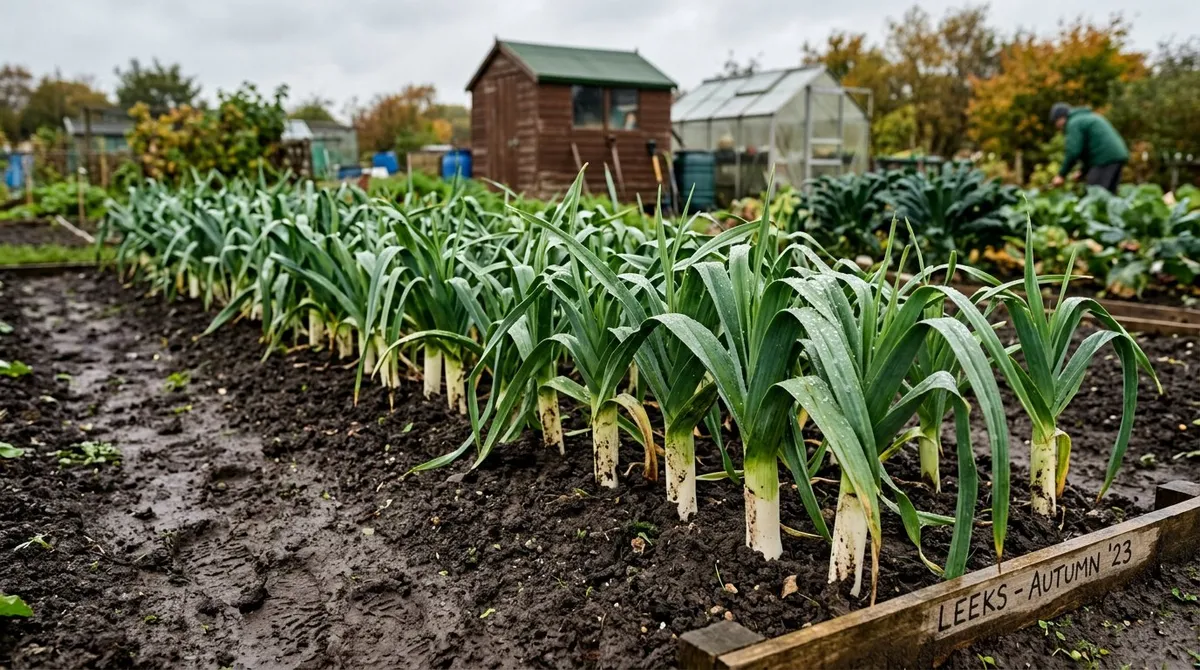
Leeks are one of the most reliable winter vegetables for UK gardens. They stand in the ground through hard frost, shrug off snow, and keep producing fresh stems when little else is available from the plot. A single row of 20 plants, sown in February and transplanted in June, provides harvests from October right through to April the following year.
Unlike their allium relatives, leeks rarely suffer from serious pest or disease problems. They are forgiving of poor soil, tolerate partial shade, and need less attention than onions or garlic. The dibber transplanting method, where seedlings are dropped into deep holes without backfilling, is one of the simplest and most satisfying techniques in vegetable growing. If you are starting a vegetable garden for the first time, leeks are an excellent crop to build confidence with. This guide covers every stage from sowing to harvest, written for British conditions and varieties.
What are the best leek varieties for the UK?
Choosing the right variety determines when you harvest. Leeks fall into three groups: early, mid-season, and late. Growing one variety from each group extends your harvest from September to April.
Early varieties (September to November)
- King Richard - a fast-growing variety producing long, slender stems. Ready from September. Mild flavour, excellent in salads and stir-fries. Less hardy than late varieties, so harvest before the hardest frosts arrive.
- Carlton F1 - a reliable early hybrid with good uniformity. Smooth, medium-thick shanks. Harvest from September to November. Good bolt resistance for early sowings.
Mid-season varieties (November to February)
- Musselburgh - the classic Scottish heirloom variety, grown in British gardens since the 1830s. Thick, sturdy shanks with a mild, sweet flavour. Very hardy. Tolerates a wide range of soil types. The best all-round choice for beginners.
- Bleu de Solaise - a French heirloom with striking blue-green leaves that deepen to violet in cold weather. The colour change looks dramatic in the winter plot. Hardy through severe frost. Excellent flavour. Harvest from December to March.
Late varieties (January to April)
- Bandit - a top-performing late leek bred for standing through the harshest winters. Very thick, dark green shanks. Good resistance to leek rust. Holds in the ground until April without bolting. One of the best choices for northern UK gardens.
- Apollo F1 - a vigorous late variety with tall, uniform stems and excellent frost hardiness. Resists rust well. Holds quality in the ground for months without deteriorating.
Variety comparison table
| Variety | Season | Harvest period | Hardiness | Rust resistance | Best feature |
|---|---|---|---|---|---|
| King Richard | Early | Sep - Nov | Moderate | Low | Speed, slender stems |
| Carlton F1 | Early | Sep - Nov | Moderate | Moderate | Uniformity, bolt resistance |
| Musselburgh | Mid | Nov - Feb | Very hardy | Moderate | All-round reliability |
| Bleu de Solaise | Mid | Dec - Mar | Very hardy | Moderate | Colour, flavour |
| Bandit | Late | Jan - Apr | Extremely hardy | Good | Winter standing, disease resistance |
| Apollo F1 | Late | Jan - Apr | Very hardy | Good | Long standing without bolting |
Gardener’s tip: For a complete winter supply, sow King Richard for early eating and Bandit for late-winter harvests. The two varieties together cover September through to April.
Why we recommend Musselburgh as the best all-round leek for beginner UK growers: After 30 seasons of growing leeks on various soil types across Britain, Musselburgh consistently produces the most reliable results regardless of conditions. In direct comparisons with Carlton F1 and King Richard in the same bed, Musselburgh produced heavier stems in poor, stony ground where the F1 hybrids underperformed. The variety also showed the best tolerance of irregular watering, a real-world advantage for gardeners who cannot always keep to a fixed schedule.
How to sow leeks in modules
Sowing in modules gives leek seedlings the best start. It protects them from slugs, cold, and competition while they are small. You can start earlier than direct sowing and produce stronger transplants.
When to sow
Sow leek seed indoors from late January to March. February is the ideal month for most UK growers. This gives seedlings 10-12 weeks to grow before transplanting in May or June. Later sowings in March or April still produce a good crop, though the leeks will be smaller at harvest.
Sowing method
Fill module trays (cells of 2-3cm) with seed compost or fine multipurpose compost. Sow 2-3 seeds per cell at a depth of 1cm. Water gently with a fine rose. Place the trays on a windowsill, in an unheated greenhouse, or in a cold frame. Leek seed germinates at 12-15C and takes 14-21 days to appear. Do not use a heated propagator. Leeks prefer cool conditions from the start.
The seedlings look like fine grass blades. Grow them on in good light, watering when the compost surface dries. There is no need to thin the seedlings at this stage. If you sowed 2-3 per cell, they grow happily together and are separated at transplanting time.
Hardening off
From late April, move the trays outdoors during the day and bring them inside at night. Do this for 7-10 days. This toughens the seedlings and prepares them for life in open ground. By transplanting time, each seedling should be roughly pencil thickness (6-8mm) and 15-20cm tall.
How to transplant leeks: the dibber method
The dibber method is the traditional way to transplant leeks, and it works brilliantly. It blanches the stems below ground from day one, producing those long white shanks that make leeks worth growing.
Preparing the bed
Choose a sunny or partially shaded spot with reasonably fertile, well-drained soil. Leeks are less fussy than most vegetables about soil quality. If you added compost or manure for a previous crop, no extra preparation is needed. On poor or compacted ground, dig in well-rotted compost a few weeks before planting.
Transplanting step by step
- Water the module tray thoroughly an hour before transplanting. This makes the seedlings easier to remove without damaging roots.
- Make holes using a dibber, thick dowel, or the handle of an old spade. Each hole should be 15cm deep and roughly 2cm wide. Space holes 15cm apart within the row, with 30cm between rows.
- Lift each seedling from its module. If you sowed multiple seeds per cell, gently tease them apart. Trim the roots to about 3-4cm and the leaf tips to roughly 15cm. This reduces transplant stress.
- Drop one seedling into each hole so the roots touch the bottom. The seedling will look small and lost in the deep hole. This is exactly right.
- Water each hole gently using a can with a fine rose. Fill each hole almost to the top with water. Do not push soil back into the hole. The water washes a small amount of soil over the roots, and the stem gradually fills the space as it grows. This is the key to the dibber method.
Why you must not backfill
Backfilling the hole with soil traps earth between the leaves as the leek grows. This creates gritty leeks that are tedious to clean. The traditional open-hole method keeps the developing stem clean. Rainfall and watering naturally settle soil around the roots over time.
Spacing options
| Planting type | In-row spacing | Row spacing | Expected stem diameter |
|---|---|---|---|
| Standard leeks | 15cm | 30cm | 3-5cm |
| Baby/mini leeks | 5cm | 15cm | 1-2cm |
| Exhibition leeks | 23cm | 40cm | 5-8cm |
Baby leeks are a useful option if space is limited. They mature faster, suit stir-fries and salads, and you can fit more plants into a raised bed.
How to earth up leeks for longer white stems
Earthing up is the process of gradually mounding soil around the leek stems as they grow. It blocks light from reaching the lower stem, extending the blanched white portion. This is the edible heart of the leek and the part you want as long as possible.
When to start
Begin earthing up in late July or August, once the stems are at least 2cm thick. Do not earth up too early, as small, thin stems can rot if buried deeply while still immature.
How to earth up
Draw soil gently around the stems using a hoe or rake. Add 5-7cm of soil each time, being careful not to let earth fall between the leaves. Some growers wrap cardboard tubes or lengths of drainpipe around the stems to keep soil out of the leaf folds. Repeat the process every 3-4 weeks through autumn, building up the mound gradually.
An alternative method is to grow leeks in a trench. Dig a trench 15cm deep at planting time and set the seedlings in the bottom. As they grow, gradually fill the trench with soil. This achieves the same blanching effect with less effort than mounding.
Gardener’s tip: Slide a section of cardboard toilet roll tube over each seedling at transplanting time. As you earth up, the tube keeps soil out of the leaf joints. This produces cleaner leeks that need less washing.
Feeding, watering, and aftercare
Leeks are not demanding plants. Once transplanted and established, they need minimal intervention.
Watering matters most in the first two weeks after transplanting and during dry spells in summer. Water deeply once a week rather than lightly every day. Once established, leeks tolerate dry conditions reasonably well, though consistent moisture produces thicker stems. Reduce watering in autumn as growth slows.
Feeding is straightforward. If the soil was prepared with compost, additional feeding is rarely necessary. On poorer soils, apply a general-purpose granular fertiliser in June or July. A high-nitrogen liquid feed (such as diluted comfrey tea) every two weeks from June to August encourages leaf growth and thicker stems. Stop feeding by September.
Weeding is important while the plants are young. Leeks grow slowly in the early months and weeds can smother them. Hoe between rows carefully, keeping the blade shallow. Hand-weed close to the stems. Once the leeks reach full size in autumn, their broad leaves shade out most weeds.
Month-by-month leek growing calendar
| Month | Task |
|---|---|
| January | Order seed. Begin sowing indoors in late January (southern UK) |
| February | Main sowing month. Sow in modules on a cool windowsill or cold frame |
| March | Continue sowing for successional planting. Start hardening off early sowings |
| April | Harden off seedlings outdoors during the day. Prepare transplanting beds |
| May | Transplant first batch using the dibber method. Water in well |
| June | Transplant remaining seedlings. Water in dry spells. Begin weeding. Check the UK vegetable planting calendar for other crops to sow alongside |
| July | Water and weed regularly. Apply liquid feed on poor soils. Start earthing up once stems thicken |
| August | Continue earthing up every 3-4 weeks. Watch for early signs of leek rust |
| September | Early varieties (King Richard) ready to harvest. Cover crops with mesh against allium leaf miner |
| October | Harvest early and mid-season varieties as needed. Late varieties continue growing |
| November | Harvest continues. Leeks tolerate first hard frosts without damage |
| December | Harvest as needed through winter. Leeks stand in frozen ground without harm |
| January - March | Lift remaining leeks before they bolt in spring. Use or freeze any left by April |
Pests and diseases
Leeks suffer fewer pest problems than most alliums, but two issues deserve attention in UK gardens.
Leek rust
Leek rust (Puccinia allii) is the most common disease affecting UK leeks. It appears as orange or rust-coloured spots and pustules on the leaves, typically from late summer onwards. Warm, humid conditions encourage it. Mild infections are cosmetic only. The leeks remain perfectly safe to eat after removing affected outer leaves.
Severe infections weaken the plant and reduce stem thickness. To minimise rust:
- Space plants properly (15cm apart minimum) for good airflow
- Avoid high-nitrogen feeding after August
- Remove and destroy badly affected leaves
- Grow resistant varieties such as Bandit and Apollo F1
- Rotate crops and do not grow leeks in the same bed for consecutive years
Allium leaf miner
Allium leaf miner (Napomyza gymnostoma) is an increasingly common pest across England and Wales. The adult fly punctures leaves to feed on sap, leaving rows of tiny white dots. It then lays eggs inside the leaf tissue. The larvae tunnel through the leaves and into the stem, causing brown lines, distortion, and secondary rot.
There are two active periods each year: March to April and October to November. The most effective prevention is covering crops with fine insect mesh (such as Enviromesh with a maximum 0.8mm hole size) during these windows. No chemical controls are available to home gardeners. Inspect plants regularly and destroy any showing signs of mining.
Other problems
- Slugs attack young transplants. Use organic slug pellets, beer traps, or copper tape around raised beds in the first few weeks after planting
- White tip is a fungal disease causing white, papery leaf tips. It is mainly cosmetic and rarely affects the edible stem. Good drainage and air circulation help prevent it
- Bolting occurs when leeks produce a flower stalk instead of continued stem growth. It is triggered by a cold spell followed by warm weather in spring. Harvest any bolting leeks immediately, as the stem becomes woody and hollow once the flower develops
Five common mistakes when growing leeks
Backfilling the dibber holes
The single most common error. Pushing soil back into the planting hole traps grit between the leaf layers. You then spend ages cleaning the leeks in the kitchen. Water the holes in and leave them open. The soil settles naturally.
Transplanting too late
Seedlings transplanted after mid-July produce thin, short stems by winter. Aim to get all transplants in the ground by the end of June, or mid-July at the latest. Earlier planting gives the leeks more growing time before the short autumn days slow everything down.
Forgetting to earth up
Without earthing up, you get a short white shank and a long green top. The green portion is edible but tougher and stronger in flavour. Earthing up from late July onwards doubles the length of the tender white stem. Even two or three sessions of mounding soil makes a noticeable difference.
Overfeeding with nitrogen
High-nitrogen feeds late in the season produce lush, soft growth that is more susceptible to leek rust and frost damage. Feed sparingly and stop entirely by September. Leeks grown in well-composted soil rarely need any additional fertiliser at all.
Not using crop rotation
Growing leeks (or any allium) in the same spot year after year allows soil-borne diseases to build up. White rot, in particular, persists in the soil for 15-20 years once established. Move leeks to a different bed each year, returning to the same position only after a gap of at least three years.
Harvesting leeks
Leeks are ready to harvest once the stems reach a usable thickness, typically 2cm or more in diameter. There is no rush. Unlike many vegetables, leeks do not deteriorate if left in the ground. They stand through frost, snow, and freezing rain without damage. Most UK varieties tolerate temperatures down to minus 10C or below.
When to harvest each type
- Early varieties (King Richard, Carlton F1): September to November
- Mid-season varieties (Musselburgh, Bleu de Solaise): November to February
- Late varieties (Bandit, Apollo F1): January to April
How to lift leeks
Push a fork into the soil 10cm away from the stem and lever the leek out gently. Do not pull leeks straight up by the leaves, as this often snaps the stem and leaves the root plate behind in the soil. Shake off loose soil and trim the roots.
Harvest leeks as you need them rather than lifting them all at once. The ground is a better storage place than the fridge. Leeks left in the soil stay fresh, firm, and flavourful for weeks longer than lifted ones. Once pulled, leeks keep for 7-10 days in the fridge, wrapped loosely in a damp cloth.
Clearing the bed
Lift all remaining leeks by late March or early April. Once temperatures rise in spring, overwintered leeks begin to bolt. The central stem becomes woody and a flower head forms inside. Bolted leeks are not pleasant to eat. If you have more leeks than you can use, slice and freeze them for soups and stews.
Growing leeks in containers
Leeks adapt well to containers, making them a good choice for patios, balconies, and small gardens. Choose a pot or trough at least 30cm deep to accommodate the long roots and allow for earthing up. Use multipurpose compost mixed with a handful of perlite for drainage.
Plant seedlings 10cm apart using the dibber method, making holes 10-12cm deep. Water regularly through summer, as containers dry out far faster than open ground. Feed every two weeks with a balanced liquid fertiliser from June to August.
Compact varieties like King Richard and Jolant work best in pots. You will not grow exhibition-sized leeks in a container, but pencil-thick stems from closely spaced plantings are tender and full of flavour.
Leeks in the kitchen
Leeks are more versatile than many growers realise. The white and pale green parts are the mildest and most tender. The dark green tops are tougher but add excellent flavour to stocks and soups.
To clean leeks, trim the root end and tough outer leaves. Slice lengthways and rinse under cold running water, fanning the layers apart to flush out any trapped soil. This is especially important if you did not use the dibber method or if soil washed between the leaves during earthing up.
Classic UK uses include leek and potato soup, cheese and leek pie, and leeks in white sauce as a side dish. Leeks also roast when halved lengthways, brushed with oil, and cooked at 200C for 25-30 minutes. The RHS guide to growing leeks has further information on varieties suited to different culinary uses.
Now you’ve mastered growing leeks, read our UK vegetable planting calendar to plan what to sow alongside your leeks each month and keep the plot productive from February right through to autumn.
Frequently asked questions
When should I sow leeks in the UK?
Sow leek seed indoors from February to March. Use module trays filled with seed compost, sowing 2-3 seeds per cell at a depth of 1cm. Germination takes 14-21 days at 12-15C. Transplant seedlings outdoors from May to July once they reach pencil thickness. In milder southern counties, direct sowing outdoors is possible from March.
How do you transplant leeks using the dibber method?
Make a 15cm deep hole with a dibber or stick. Drop one trimmed seedling into the hole so the roots touch the bottom. Water the hole gently. Do not push soil back into the hole. The water settles soil around the roots, and the stem gradually fills the space as it grows. This produces a long, blanched white shank.
How far apart should I plant leeks?
Space leeks 15cm apart within rows and 30cm between rows. This gives each plant enough room to develop a thick stem. For smaller baby leeks, reduce spacing to 5cm apart. Closer spacing produces thinner stems that suit stir-frying and salads.
Do leeks survive frost in the UK?
Leeks are extremely frost-hardy vegetables. Most varieties tolerate temperatures down to minus 10C without damage. They stand in the ground through the entire British winter and are one of the few fresh vegetables available from December to March. Harvest as needed rather than lifting all at once.
What causes orange spots on leek leaves?
Orange or rusty spots indicate leek rust, a fungal disease. It is common in warm, humid conditions from late summer onwards. Mild cases do not affect eating quality. Remove badly infected outer leaves. Improve spacing for better airflow. The variety Bandit shows good resistance to rust.
What is allium leaf miner and how do I prevent it?
Allium leaf miner is a fly whose larvae tunnel into leek stems. It has two active periods in the UK: March to April and October to November. Cover crops with fine insect mesh during these windows. There is no chemical treatment available to home gardeners. Inspect plants regularly and destroy any showing signs of mining.
Can I grow leeks in containers?
Yes, leeks grow well in deep containers of at least 30cm. Use multipurpose compost and plant seedlings 10cm apart. Water regularly, as pots dry out faster than open ground. Choose a compact variety like Jolant or King Richard. Feed monthly with a liquid fertiliser from June onwards.
Lawrie has been gardening in the West Midlands for over 30 years. He grows his own veg using no-dig methods, keeps a wildlife-friendly garden, and writes practical advice based on real UK growing conditions.