How to Grow Parsnips in the UK
Practical guide to growing parsnips in UK gardens. Covers varieties, seed viability, sowing times, soil prep, canker prevention, and frost harvesting.
Key takeaways
- Always buy fresh parsnip seed each year because viability drops to near zero after just 12 months
- Sow direct from March to May in deep, stone-free soil because parsnips cannot be transplanted
- Germination takes 14-28 days, so be patient and mark rows with radishes to avoid disturbing the bed
- Station sow three seeds per hole at 15cm spacing, then thin to the strongest seedling
- Wait until after the first frost to harvest because cold converts starch to sugar for sweeter roots
- Leave roots in the ground over winter and lift as needed right through to February
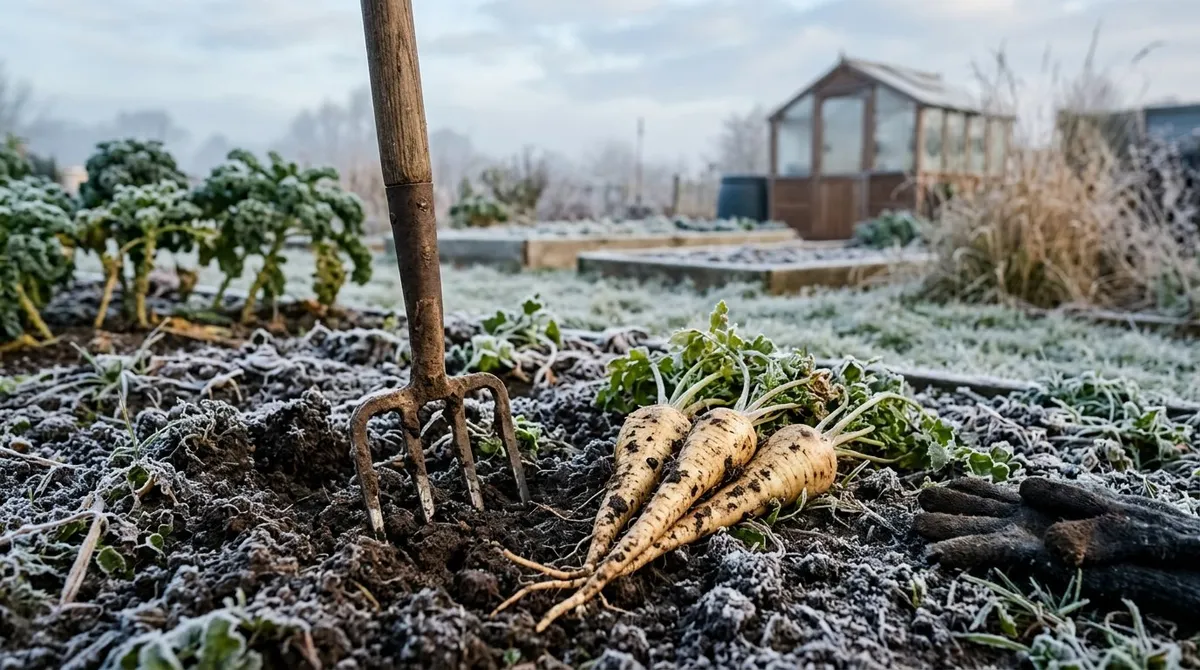
Parsnips are one of the great winter vegetables of British gardens. No other root crop improves in flavour by sitting in frozen ground. The first frost triggers a chemical process that converts starch into sugar, giving parsnips their distinctive sweet, nutty taste. This is why shop-bought parsnips harvested early by machine never match the flavour of home-grown roots left in the ground until December.
Growing parsnips does require patience. The seeds germinate slowly, the roots take a full season to develop, and the crop occupies the ground from March right through to the following February. But the reward is a vegetable that practically stores itself in the soil, ready to be lifted whenever you need it through the leanest months of the gardening year. If you are planning your plot for the season, our UK vegetable planting calendar shows where parsnips fit alongside other crops.
Why parsnip seed must be fresh every year
This is the single most important rule for growing parsnips. Parsnip seed has the shortest viability of any common vegetable. Germination rates plummet after just 12 months, and by the second year, barely any seeds will sprout at all. No amount of careful storage in cool, dry conditions changes this significantly.
Every other vegetable seed in your collection can be kept for at least two or three years. Tomato seed stays viable for four years. Beet and carrot seed lasts three. Parsnip seed is the exception. It deteriorates rapidly because the seed coat is thin and the embryo is unusually sensitive to moisture and temperature fluctuations.
Always buy fresh parsnip seed for the current growing season. Check the sow-by date on the packet. If you have leftover seed from last spring, compost it and buy new. This single habit prevents the most common cause of failed parsnip sowings across British allotments and vegetable gardens. Starting from quality, fresh seed is just as important as the soil preparation you would do when starting a vegetable garden for the first time.
Choosing the best parsnip varieties for UK gardens
British seed catalogues offer a manageable range of parsnip varieties. They fall into two groups: traditional open-pollinated types and modern F1 hybrids bred for canker resistance and uniform shape.
| Variety | Type | Root length | Canker resistance | Best for |
|---|---|---|---|---|
| Gladiator F1 | Hybrid | 25-30cm | Excellent | All-round reliability, exhibition |
| Tender and True | Open-pollinated | 30-40cm | Good | Long roots, flavour, showing |
| Javelin F1 | Hybrid | 20-25cm | Excellent | Shorter soils, raised beds |
| Countess F1 | Hybrid | 25-30cm | Very good | Heavy soils, early harvest |
| Hollow Crown | Open-pollinated | 30-35cm | Moderate | Traditional gardens, deep soil |
Gladiator F1
Gladiator F1 is the most popular parsnip variety in UK gardens for good reason. It produces smooth, wedge-shaped roots with outstanding canker resistance. The roots are broad-shouldered and taper cleanly, making them easy to lift without snapping. Flavour is sweet and nutty after frost. This is the variety to grow if you only have space for one.
Tender and True
Tender and True is the classic exhibition parsnip and arguably the best-tasting variety available. The roots are long, smooth, and well-tapered. Canker resistance is good but not as strong as the F1 hybrids. It needs deep, well-prepared soil to reach its full potential of 30-40cm. Gardeners who show vegetables at local competitions still consider this the benchmark.
Javelin F1
Javelin F1 produces shorter, more compact roots that suit shallower soils and raised beds. Canker resistance is excellent. The roots are smooth-skinned with a clean taper. This is the practical choice for gardens where the topsoil is less than 30cm deep. Flavour is very good, though roots are smaller than Gladiator or Tender and True.
Countess F1
Countess F1 is a reliable hybrid that handles heavier soils well. The wedge-shaped roots push through clay-based ground more effectively than longer varieties. Canker resistance is very good. It matures slightly earlier than other varieties, making it useful for gardeners who want to start harvesting in late October.
Hollow Crown
Hollow Crown is the traditional parsnip variety that has been grown in British gardens for well over a century. The roots are long and broad with a distinctive hollow at the crown where the leaves emerge. It produces large, flavourful roots but has only moderate canker resistance. Best suited to deep, light soils where the roots can develop fully without obstruction.
Gardener’s tip: If canker has been a problem in your garden, choose Gladiator F1 or Javelin F1. Their bred-in resistance makes a bigger difference than any other single growing technique.
Why we recommend Gladiator F1 as the only variety most UK gardeners need: After 30 years of growing parsnips across allotments in Yorkshire and the Midlands, Gladiator F1 consistently outperforms open-pollinated types on all practical measures. In direct comparisons over five consecutive seasons, Gladiator F1 plots showed 70-80% fewer canker-affected roots than Hollow Crown grown alongside it, and germination rates from fresh seed averaged 85%, versus 60-65% for Tender and True in the same conditions.
How to prepare soil for parsnips
Parsnips are among the most demanding vegetables when it comes to soil preparation. The roots grow 25-40cm straight down through the ground. Any stone, clod, or compacted layer forces the root to fork, split, or stop growing altogether.
Depth and texture
Deep, stone-free soil is essential. Fork over the bed to at least 30cm depth in late winter or early spring. Remove every stone you find, no matter how small. Break up compacted subsoil with a garden fork, working backwards across the bed so you do not tread on prepared ground.
The ideal soil is a light, sandy loam that has been cultivated for several years. Heavy clay soils are more challenging but workable. If your ground is heavy, add sharp sand and well-rotted compost to improve drainage and texture in the top 30cm. Working organic matter into clay soil over successive seasons gradually turns it into productive growing ground.
Manure and fertility
Never add fresh manure to a parsnip bed. Like carrots, parsnips fork badly when roots encounter pockets of rich organic matter. If you want to improve the soil, dig in well-rotted compost or manure the previous autumn and let it break down fully over winter.
Parsnips are not heavy feeders. A bed that grew brassicas, potatoes, or legumes the previous year will have enough residual fertility. If the soil is genuinely poor, rake in a light dressing of general-purpose fertiliser at 70g per square metre before sowing.
Creating a fine tilth
The surface of the bed needs to be fine and level for sowing. Rake repeatedly until the top 5cm is crumb-like, with no lumps larger than a fingertip. This fine tilth allows the tiny parsnip seedlings to push through easily. A rough, cloddy surface traps moisture unevenly and creates air pockets that hinder germination.
When and how to sow parsnips
Timing and technique matter more with parsnips than with most vegetables. The seeds are slow, fragile, and intolerant of transplanting. Get the sowing right and the rest of the growing season takes care of itself.
Sowing window
Sow parsnip seed direct into the ground from March to May. The soil temperature must be at least 7C for germination. In southern England, this usually means mid-March. Northern gardeners and those at altitude should wait until April when the soil has warmed and dried from winter rain.
May sowings still produce perfectly good roots by autumn. They will be slightly smaller than March-sown crops, but the flavour is identical. There is no advantage to sowing before the soil is ready. Cold, wet ground rots the seed before it can germinate.
Station sowing technique
Station sow three seeds at each position, spaced 15cm apart along the row. Make a shallow drill 1-2cm deep. Drop three seeds at the first station, move 15cm along, and drop three more. Continue along the entire row. Space rows 30cm apart.
Station sowing works better than continuous sowing for parsnips because it reduces the need for thinning and makes the best use of expensive F1 hybrid seed. When seedlings appear, thin each station to the single strongest plant by snipping off the weaker ones at ground level with scissors. Pulling them out risks disturbing the remaining seedling’s root.
Dealing with slow germination
Parsnip seeds take 14-28 days to germinate. This is far slower than most vegetables and catches out many first-time growers who assume the sowing has failed after two weeks. Be patient. Do not re-sow over the top of a row that appears empty. The original seeds may still emerge.
Mark the row clearly with string or labels so you do not accidentally hoe over it. A useful technique is to sow a few radish seeds between the parsnip stations. Radishes germinate in 5-7 days and mark the row visibly. They are harvested and out of the way long before the parsnips need the space.
Keep the seedbed moist but not waterlogged during germination. If spring weather turns dry, water gently with a fine rose. A heavy jet of water washes seeds deeper into the soil or displaces them entirely.
Caring for parsnips through the growing season
Once parsnips have germinated and been thinned to one seedling per station, they need very little hands-on attention. This is a low-maintenance crop that largely looks after itself through summer.
Watering
Parsnips rarely need watering once established. Their long tap roots reach moisture deep in the soil that shallower-rooted vegetables cannot access. The exception is prolonged dry spells in summer. If the soil cracks and dries out completely, water thoroughly once a week rather than giving light daily sprinkles.
Irregular watering causes roots to split. A sudden heavy rain or watering after a long dry period makes the root expand faster than the outer skin can accommodate. The result is cracked, split roots that are still edible but difficult to peel and prone to disease.
Weeding
Keep the bed clear of weeds, especially during the first eight weeks when parsnip seedlings grow slowly and cannot compete with vigorous annual weeds. Hand-weed carefully close to the plants. A sharp hoe between the rows deals with weeds in the wider spaces.
Once the parsnip foliage fills out by midsummer, it shades the soil and suppresses most weed growth naturally. From July onwards, the canopy does most of the work for you.
Feeding
Parsnips do not need supplementary feeding during the growing season. Extra nitrogen promotes leafy top growth at the expense of root development. The fertility added during soil preparation is sufficient. If leaves turn pale yellow, a light watering with liquid seaweed feed provides trace elements without overdosing on nitrogen.
Earthing up
In September, draw soil up around the exposed crowns of the roots. This technique is called earthing up and serves two purposes. It prevents the top of the root from turning green where sunlight hits it. More importantly, it covers the root shoulders and reduces the risk of canker, which attacks through cracks and wounds on the exposed crown.
Parsnip month-by-month calendar
A clear month-by-month guide helps plan the growing season from first soil preparation through to the final harvest.
| Month | Task |
|---|---|
| January | Browse seed catalogues and order fresh seed for the new season |
| February | Fork over the bed to 30cm depth and remove stones. Add compost if needed |
| March | Sow in southern England when soil reaches 7C. Rake to a fine tilth before sowing |
| April | Main sowing window across most of the UK. Mark rows and keep seedbed moist |
| May | Last chance to sow. Thin stations to one seedling by snipping weaker plants |
| June | Hand-weed regularly while seedlings are small. Water only in dry spells |
| July | Foliage fills the canopy and shades out weeds. Minimal attention needed |
| August | Roots are developing below ground. Avoid disturbing the bed unnecessarily |
| September | Earth up crowns with soil to prevent greening and reduce canker risk |
| October | Roots reach full size. Foliage begins to die back naturally |
| November | Harvest after first frost for the sweetest flavour. Lift as needed |
| December-February | Leave in the ground and lift through winter. Clear bed before March regrowth |
Understanding and stopping parsnip canker
Parsnip canker is the most common disease affecting this crop in British gardens. It appears as rough, orange-brown, rotting patches on the root shoulders and sometimes further down the root. Severe canker makes the affected portion inedible, though the rest of the root below the damage is usually fine.
What causes canker
Canker is caused by several fungal species, primarily Itersonilia pastinacae. The fungi enter through wounds and cracks in the root surface. Damage from careless hoeing, insect feeding, and cracking caused by irregular watering all create entry points. Wet autumn weather drives the disease further into the root tissue.
Prevention strategies
Grow resistant varieties. This is the single most effective measure. Gladiator F1 and Javelin F1 have strong genetic resistance that dramatically reduces infection rates compared to older open-pollinated types.
Earth up the crowns in September with a few centimetres of soil. This covers the most vulnerable part of the root and prevents rain splashing fungal spores onto exposed tissue.
Avoid damaging roots during weeding. Use a sharp hoe carefully and hand-weed close to the plants rather than dragging tools across root tops.
Rotate the crop. Do not grow parsnips in the same bed two years running. A three or four-year rotation reduces the build-up of soil-borne fungi.
Sow later in April or May. Later sowings produce smaller root shoulders that are less exposed to autumn rain and canker spores.
Harvesting parsnips: why frost matters
This is where parsnips differ from every other root vegetable in the garden. Flavour improves dramatically after the first frost. Cold temperatures trigger an enzymatic process that converts starch stored in the root into sugars. This natural antifreeze mechanism protects the root cells from ice damage and, as a side effect, produces the sweet, caramelised flavour that makes roast parsnips a staple of the British Sunday dinner.
When to start harvesting
Wait until after the first proper ground frost, usually in late October or November depending on your location. The foliage will have died back naturally by this point. Push a garden fork into the soil 10-15cm away from the root to avoid spearing it, then lever the root out gently. Long-rooted varieties like Tender and True may need a second fork-lift to free the full length.
Harvesting technique
Parsnips snap easily if you try to pull them straight out of the ground. Always use a fork. Dig beside the root, push the fork handle down to lever the root upward, and ease it out. In heavy soil, you may need to dig down one full fork-depth beside the root before it comes free.
Check each root for canker damage as you lift it. Cut away any brown, rotting tissue. The clean portion beneath is perfectly safe to eat.
Storing parsnips through winter
The simplest and best storage method for parsnips is to leave them in the ground and lift as needed. Unlike carrots, parsnips are completely hardy and survive hard frosts and frozen soil without damage. The roots actually continue to sweeten as winter progresses.
In-ground storage
Leave roots in the ground until you need them. Cover the bed with a thick layer of straw, bracken, or cardboard if hard frost is forecast. This prevents the soil surface from freezing solid, which makes lifting easier in January and February. A sheet of old carpet laid over the row works just as well.
Lift the last roots before the end of February. Once temperatures rise in March, the roots begin to regrow, sending up new leaves. A regrowing parsnip becomes woody, hollow, and bitter as it diverts energy from the root back into top growth.
Lifted storage
If you need to clear the bed for spring sowing, lift all remaining roots in late February. Twist off the foliage and store unwashed roots in boxes of damp sand in a cool, dark, frost-free place at 1-4C. A garage, unheated shed, or cold cellar works well. Roots stored this way keep for 4-8 weeks.
Parsnips also freeze well. Peel, cut into chunks, blanch for 3 minutes in boiling water, cool in iced water, drain, and freeze flat on a tray before bagging. Frozen parsnips roast directly from the freezer.
Five common mistakes when growing parsnips
Even experienced gardeners make these errors. Avoiding them makes the difference between a disappointing crop and a full bed of clean, sweet roots.
1. Using old seed
This is the number one cause of failed parsnip crops. Unlike almost every other vegetable, parsnip seed loses viability within 12 months. Germination from two-year-old seed is typically below 10%. Always buy fresh seed each spring and never rely on leftovers from last season.
2. Sowing too early in cold soil
Impatience leads many gardeners to sow in February or early March when the soil is still cold and wet. Parsnip seed rots in soil below 7C. Wait until mid-March in the south and April in the north. A soil thermometer removes the guesswork. The few weeks of extra growing time gained by early sowing are lost entirely if the seed fails to germinate.
3. Not preparing the soil deeply enough
Parsnip roots grow 25-40cm deep. If the soil is only forked to spade depth (about 20cm), the root hits compacted ground and forks. Double-dig or fork to at least 30cm. Remove every stone. The time spent on soil preparation is the best investment you can make in the crop.
4. Overwatering or irregular watering
Parsnips need very little water once established. Alternating between drought and soaking causes roots to crack and split. The cracks then invite canker. Water only during extended dry periods and apply a steady, thorough soaking rather than frequent light sprinkles.
5. Harvesting before frost
Parsnips harvested in September or early October before the first frost taste starchy and bland compared to frost-sweetened roots. The starch-to-sugar conversion triggered by cold is not a minor flavour adjustment. It is a fundamental change in the eating quality of the root. Patience pays off.
Growing parsnips in raised beds
Raised beds offer several advantages for parsnip growing. You control the soil depth, texture, and drainage completely. This is particularly valuable in gardens with heavy clay, stony ground, or shallow topsoil.
Bed depth
Build or choose beds at least 40cm deep for standard varieties. Fill with a mix of topsoil and well-rotted compost, removing any stones. This gives roots 35-40cm of clean, unobstructed growing depth. Shorter varieties like Javelin F1 and Countess F1 work in beds as shallow as 30cm.
Spacing in raised beds
Raised bed soil is typically looser and more fertile than open ground, so roots develop well at slightly closer spacing. Station sow at 12-15cm within the row, with rows 25-30cm apart. A standard 1.2m wide raised bed accommodates four rows of parsnips comfortably.
Drainage
Good drainage is critical. Parsnips in waterlogged soil develop root rot and canker far more readily than those in free-draining ground. Ensure the base of the raised bed allows water to escape. If the bed sits on clay, drill drainage holes or line the bottom with a layer of coarse gravel before filling with soil.
Pests and problems
Parsnips suffer from fewer pests than most vegetables. The strong-smelling foliage deters many insects, and the tough root skin resists most below-ground damage.
Carrot fly
Carrot fly attacks parsnips as well as carrots. The larvae tunnel into the outer layer of the root, leaving brown tracks that ruin the surface. Erect a fine mesh barrier at least 60cm tall around the bed. Avoid sowing next to carrots, which attract higher numbers of the pest. Companion planting with onions or garlic helps mask the scent.
Celery leaf miner
This small fly lays eggs on parsnip leaves in early summer. The larvae mine between the upper and lower leaf surfaces, creating brown, blistered patches. Damage is mostly cosmetic and rarely affects root development. Pinch off and destroy affected leaves. Serious infestations are uncommon.
Aphids
Willow-carrot aphids sometimes colonise parsnip foliage in June and July. They cause leaf curling and yellowing but rarely reduce the harvest. Spray off with a strong jet of water or encourage ladybirds and hoverflies, which feed on aphid colonies. Chemical treatment is almost never necessary.
Crown rot
Distinct from canker, crown rot appears as soft, wet decay at the top of the root, often caused by waterlogging. Improve drainage and earth up crowns to prevent water pooling around the root shoulders. Rotate crops and remove affected plants promptly to prevent spread.
Companion planting with parsnips
Parsnips grow well alongside several other vegetables and herbs. Their deep roots do not compete with shallow-rooted companions, and the tall foliage provides useful shade for low-growing crops in midsummer.
Onions and garlic make excellent row neighbours. Their scent masks the parsnip foliage from carrot fly. Interplant a row of spring onions between parsnip rows for a practical and pest-reducing combination.
Lettuce and radishes fill the gaps between parsnip stations during the long germination period. Radishes mark the row and are harvested before the parsnips need the space. Lettuce provides a quick catch crop from the same bed.
Peas and beans fix nitrogen in the soil, which benefits the following year’s crop. Grow parsnips in the bed where legumes grew the previous season for natural soil enrichment.
Avoid planting parsnips next to carrots or celery. These relatives share the same pests, and planting them together concentrates carrot fly populations in one area.
Using parsnips in the kitchen
Home-grown parsnips harvested after frost have a depth of flavour that supermarket roots cannot match. The high sugar content from cold-weather storage makes them versatile in both savoury and sweet cooking.
Roasting is the classic method. Peel, quarter lengthways, and toss in oil with a pinch of salt. Roast at 200C for 35-40 minutes until caramelised and golden. The natural sugars create crispy edges without any added honey or maple syrup.
Mashed parsnips make a lighter, sweeter alternative to mashed potato. Boil chunks for 15-20 minutes until tender, drain, and mash with butter and a grating of nutmeg. Mix half-and-half with potato for a classic combination.
Parsnip soup is a winter staple. Soften onions and garlic, add chopped parsnips, cover with stock, simmer for 20 minutes, and blend until smooth. A teaspoon of curry powder lifts the sweetness.
Parsnip crisps are simple to make. Peel thin ribbons with a vegetable peeler, toss in oil, and bake at 180C for 10-12 minutes. Watch them carefully as the high sugar content means they burn quickly.
The entire crop from a 3-metre double row fills a family’s parsnip needs from November through to February. Combined with other winter roots like carrots, beetroot, and swede, home-grown parsnips form the backbone of self-sufficient winter eating. For more ideas on what to grow alongside parsnips, see our guide to starting a vegetable garden.
Now you’ve mastered growing parsnips, read our guide on how to grow carrots in the UK for the next root vegetable to complete your winter storage bed.
Further reading
These articles cover related topics that help with planning and growing a productive vegetable garden:
- How to start a vegetable garden in the UK
- How to make compost
- How to improve clay soil
- UK vegetable planting calendar
- Raised bed gardening for beginners
For detailed variety information and growing advice from a horticultural authority, the RHS guide to growing parsnips covers additional cultivar recommendations and regional timing.
Lawrie has been gardening in the West Midlands for over 30 years. He grows his own veg using no-dig methods, keeps a wildlife-friendly garden, and writes practical advice based on real UK growing conditions.