Grow Redcurrants and Blackcurrants
UK guide to growing redcurrants and blackcurrants. Covers varieties, planting, pruning differences, cordons, pest control, and harvesting 4-5kg per bush.
Key takeaways
- Both currant types are self-fertile, so a single bush produces a full crop without a pollination partner
- Each established bush yields 4-5kg of fruit per season, enough for jams, cordials, and freezing
- Blackcurrants fruit on young wood and need 1/3 of old stems removed each winter
- Redcurrants fruit on permanent spurs and can be grown as space-saving cordons at 30cm apart
- Blackcurrants contain three times more vitamin C than oranges, weight for weight
- Net bushes from early June, as bullfinches strip buds and blackbirds take ripe fruit
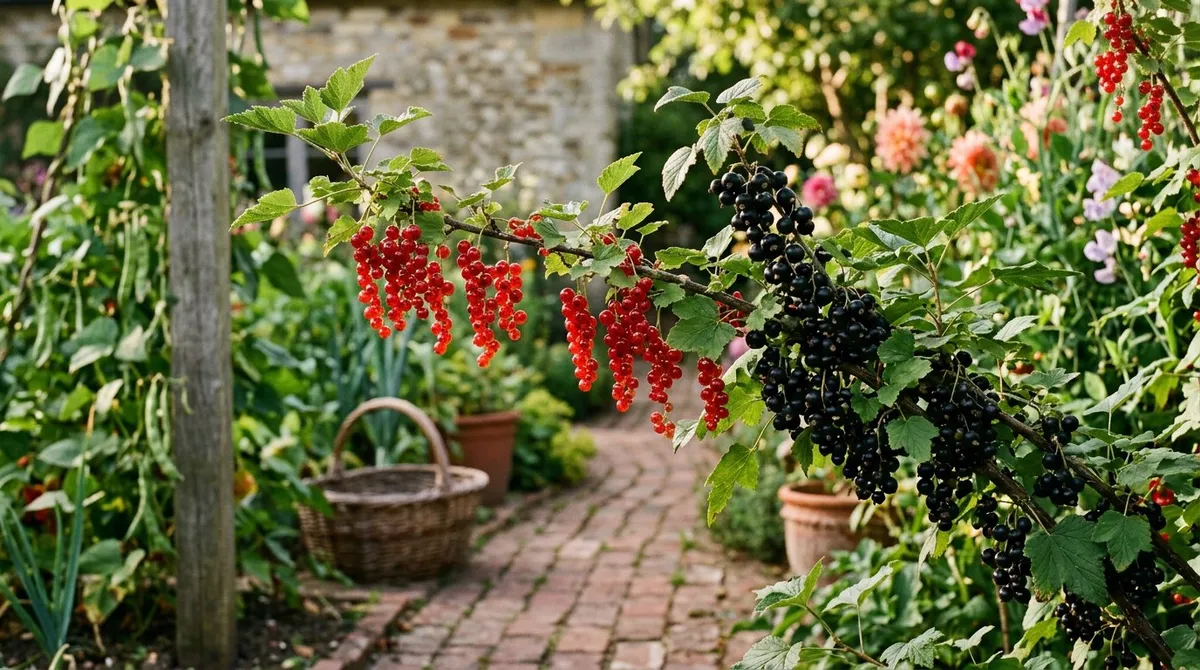
Currants are among the most productive soft fruit you can grow in a UK garden. A single established bush produces 4-5kg of fruit each summer. The berries freeze well, make outstanding jams and cordials, and blackcurrants deliver three times the vitamin C of oranges. Both types are self-fertile, so one bush is enough to produce a full crop.
Blackcurrants and redcurrants look similar on the nursery bench, but they differ in growth habit, pruning needs, and preferred growing conditions. Getting the pruning wrong is the most common reason for poor harvests. This guide covers both types in detail, including whitecurrants, which follow the same rules as redcurrants. For more soft fruit advice, browse our growing guides or see our dedicated articles on raspberries and blueberries.
Why blackcurrants and redcurrants need different treatment
Understanding the fruiting habit of each type is the single most important thing for a good harvest. Get this right and pruning makes complete sense. Get it wrong and you cut off next year’s fruit.
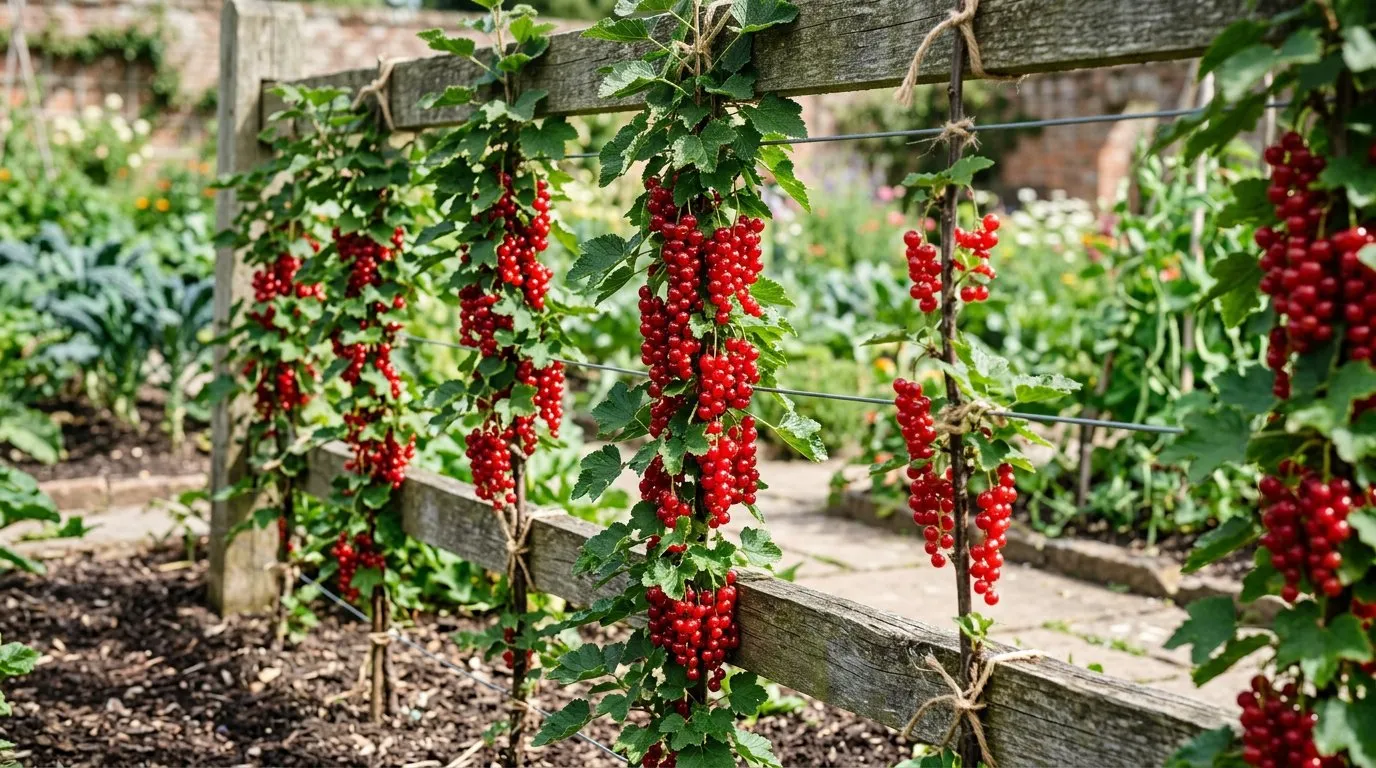 Redcurrant cordons. Single-stem training suits small spaces and produces excellent fruit.
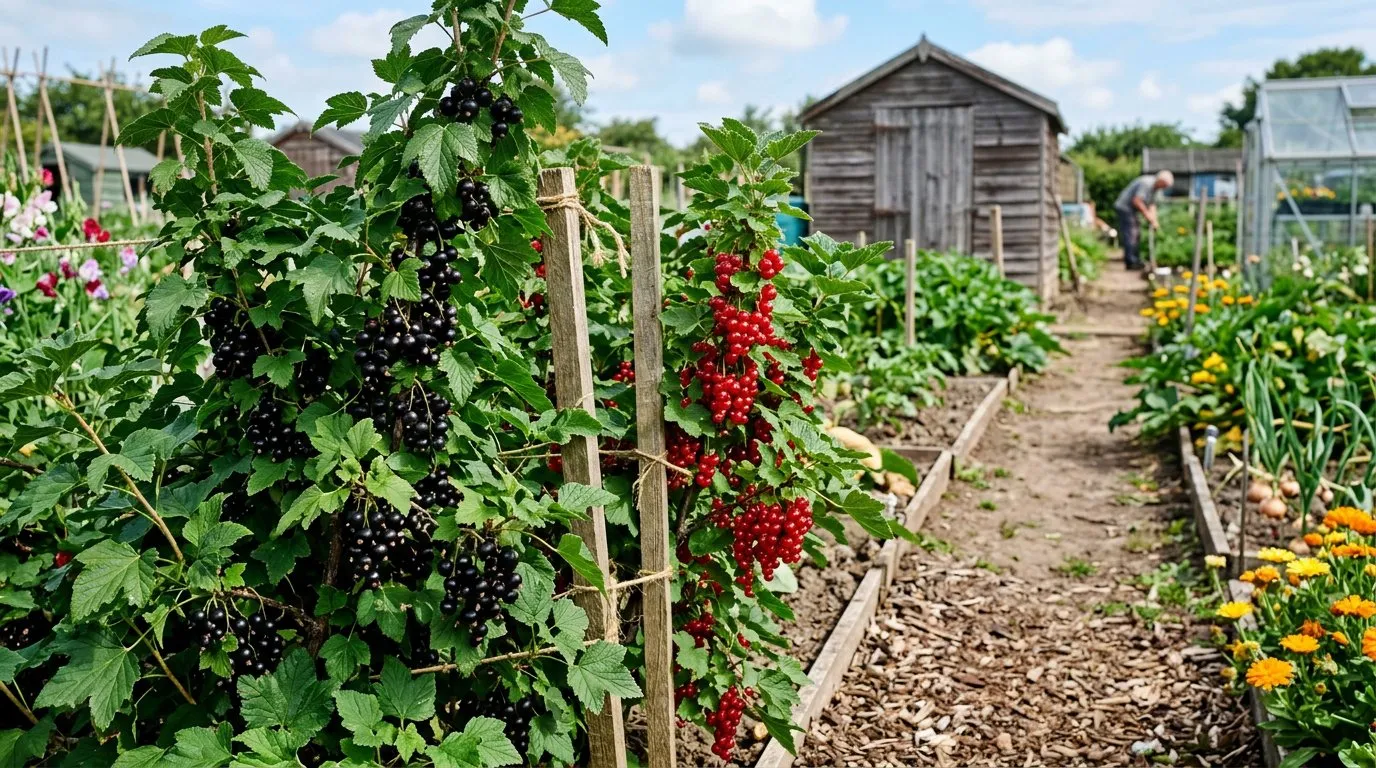 Blackcurrant and redcurrant bushes side by side. They need different pruning approaches.
Blackcurrants fruit on wood produced the previous year. Young, vigorous stems carry the heaviest crops. Old, grey-barked stems produce less fruit each year. The pruning strategy is simple: remove one third of the oldest stems annually to make room for strong new growth from the base. This keeps the bush constantly renewing itself.
Redcurrants fruit on older wood, forming permanent fruiting spurs along a framework of branches. They produce on two-year-old and older wood, building up clusters of short spurs that carry fruit year after year. Pruning aims to maintain an open, goblet-shaped framework and keep those spurs productive. The approach is identical to gooseberry pruning.
Whitecurrants are a colour variant of redcurrants. They need the same soil, pruning, and care. The fruit is translucent pale gold with a milder, sweeter flavour.
This fundamental difference in fruiting habit means the two types need different planting depths, different pruning methods, and sometimes different positions in the garden.
Choosing the best varieties
All currant varieties sold in the UK are self-fertile. You do not need a pollination partner. One bush of each type produces a full crop on its own.
Blackcurrant varieties
The Ben series, bred at the James Hutton Institute in Scotland, dominates UK blackcurrant growing. These varieties suit the British climate and resist many common diseases.
- Ben Sarek - compact bush reaching 1.2m tall. Heavy cropper on a small plant. Ideal for smaller gardens and containers. The most widely recommended variety for beginners.
- Ben Conmore - large fruit on a vigorous bush. Excellent flavour. Good disease resistance. The best choice for cooking and jam making.
- Ben Hope - bred with resistance to gall mite, the most damaging blackcurrant pest. Strong grower with good yields. Choose this variety if gall mite is a problem in your area.
- Big Ben - produces the largest fruit of any blackcurrant. Berries are sweet enough to eat fresh from the bush. Vigorous growth. Outstanding flavour.
Redcurrant varieties
- Jonkheer van Tets - early season. Heavy, reliable cropper. Large berries on long trusses. The best early redcurrant for UK gardens.
- Red Lake - mid-season classic. Well-known variety, widely available. Good flavour and reliable yields. Easy to pick thanks to long fruit clusters.
- Rovada - late season. Exceptionally heavy cropper with very long trusses. The berries hang well on the bush without dropping. Extends the picking season into August.
- Stanza - reliable and compact. Good disease resistance. Suits smaller gardens. Consistent cropper in most UK conditions.
Whitecurrant varieties
- White Versailles - the standard whitecurrant. Large, sweet fruit with a delicate flavour. Widely available. Excellent for eating fresh.
- Blanka - heavy cropper with large berries. Good vigour and disease resistance. Slightly later than White Versailles.
Variety comparison table
| Variety | Type | Season | Fruit size | Vigour | Key feature |
|---|---|---|---|---|---|
| Ben Sarek | Blackcurrant | Mid | Medium | Compact | Small garden, containers |
| Ben Conmore | Blackcurrant | Mid | Large | Strong | Cooking, jam making |
| Ben Hope | Blackcurrant | Mid | Medium | Strong | Gall mite resistant |
| Big Ben | Blackcurrant | Mid | Very large | Vigorous | Eating fresh, flavour |
| Jonkheer van Tets | Redcurrant | Early | Large | Strong | Earliest harvest |
| Red Lake | Redcurrant | Mid | Medium | Moderate | Reliable, easy picking |
| Rovada | Redcurrant | Late | Large | Strong | Heaviest cropper |
| Stanza | Redcurrant | Mid | Medium | Compact | Disease resistance |
| White Versailles | Whitecurrant | Mid | Large | Moderate | Eating fresh, flavour |
| Blanka | Whitecurrant | Mid-late | Large | Strong | Heavy cropper |
Gardener’s tip: Plant an early redcurrant (Jonkheer van Tets) alongside a late one (Rovada) to spread the harvest across six weeks or more. The same principle applies to strawberry growing, where mixing early, mid, and late varieties extends picking from June to October.
When and how to plant currant bushes
Planting time
Plant bare-root currant bushes from October to March while they are dormant. November is the best month because autumn rainfall keeps roots moist and the soil is still warm enough for some root growth before winter. Bare-root bushes cost less than container-grown plants and establish faster.
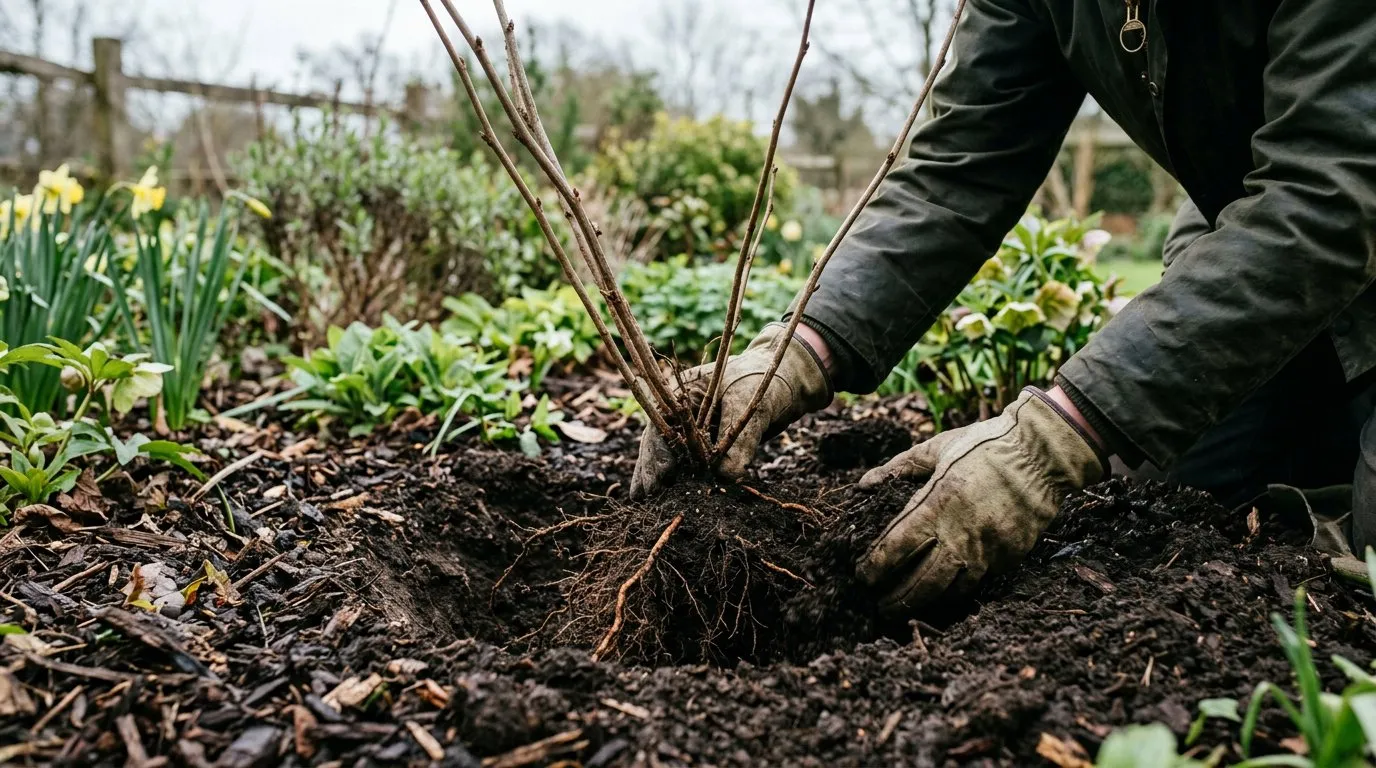 Planting a blackcurrant bush 5cm deeper than the nursery mark to encourage new basal shoots.
Container-grown bushes can go in at any time of year, but they are more expensive and offer no real advantage over bare-root stock planted during the dormant season.
Soil and position
Blackcurrants need a sunny, sheltered position and rich, moisture-retentive soil. They are heavy feeders that demand generous amounts of organic matter. Dig in two or three buckets of well-rotted compost per planting position before setting the bush.
Redcurrants and whitecurrants are less demanding. They tolerate partial shade and grow successfully against north-facing or east-facing walls. Their lower nutrient demands make them easier to accommodate in most gardens.
Both types dislike waterlogged soil. Improve drainage in heavy clay before planting. Avoid frost pockets, as late spring frosts damage flowers and reduce the crop.
Planting depth matters
This is where blackcurrants differ from every other fruit bush.
Plant blackcurrants 5cm deeper than they grew at the nursery. Bury the lowest branches slightly below soil level. This encourages strong new shoots to emerge from below ground, which is exactly what you want. Blackcurrants need a constant supply of vigorous young stems from the base.
Plant redcurrants and whitecurrants at the same depth they grew at the nursery. Do not bury them deep. Set the rootball so the soil mark on the stem sits level with the surrounding ground. Redcurrants grow on a permanent framework, and burying the stem encourages unwanted suckers.
Spacing
- Blackcurrant bushes: 1.5m apart
- Redcurrant and whitecurrant bushes: 1.2-1.5m apart
- Redcurrant and whitecurrant cordons: 30cm apart
How to prune blackcurrants
Pruning blackcurrants is straightforward once you understand the principle. Remove old wood to make room for young wood. That is the entire strategy.
When to prune
Prune blackcurrants in late autumn or winter (November to February) after leaf fall. The bare stems make it easy to see the structure and identify old wood.
What to remove
Each winter, cut out one third of the oldest stems at ground level. Old stems are thicker, darker, and grey-barked compared to the smooth, lighter-coloured young wood. Use loppers or a pruning saw for the thickest stems.
Also remove any stems that are:
- Damaged or diseased - cut them out completely
- Crossing the centre of the bush - these create congestion and reduce airflow
- Weak and spindly - they will not produce worthwhile fruit
- Low and trailing along the ground - fruit on these stems sits in the mud
After pruning
A well-pruned blackcurrant bush has a roughly equal mix of one-year, two-year, and three-year stems. No stem stays on the bush beyond its third winter. New stems grow from the base each year to replace those removed. Feed generously after pruning with a thick mulch of well-rotted manure spread around the base.
How to prune redcurrants and whitecurrants
Redcurrant and whitecurrant pruning follows the same method as gooseberry pruning. The goal is an open goblet shape with a clear framework of branches carrying fruiting spurs.
Winter pruning
Prune in late winter (January to February) before the buds break.
- Maintain 8-10 main branches forming an open goblet shape
- Cut back the leader (main tip) of each branch by one third to an outward-facing bud
- Shorten all sideshoots to one or two buds from the main branch
- Remove any branches growing into the centre of the bush
- Cut out any dead, diseased, or crossing wood
Summer pruning
In late June or July, pinch or cut back all new sideshoots to five leaves. This concentrates the plant’s energy into the developing fruit and builds up the fruiting spurs for next year.
Growing redcurrants as cordons
Cordons are single-stemmed plants trained vertically against a wall, fence, or post-and-wire support. They are ideal for small gardens because they take up almost no ground space.
Space cordon plants 30cm apart. Tie the main stem to a vertical bamboo cane attached to horizontal wires. Each winter, shorten the leader by one third and cut all sideshoots to one bud. In summer, pinch sideshoots back to five leaves. A row of four cordons fits into just 1.2m of wall or fence, yet produces a worthwhile crop.
Feeding and watering currants
Blackcurrant feeding
Blackcurrants are heavy feeders. They demand more nutrients than almost any other soft fruit. Underfed bushes produce thin growth and small, sparse clusters.
- Late winter (February): Spread a thick mulch of well-rotted farmyard manure (8-10cm deep) around the base of each bush. Keep the mulch away from direct contact with the stems.
- Spring (March): Apply a general-purpose fertiliser such as Growmore at 100g per square metre around the bush and water in.
- After harvest (August): A second application of compost mulch replenishes what the plant has used during fruiting and supports new growth for next year’s crop.
Redcurrant and whitecurrant feeding
Redcurrants and whitecurrants are less demanding. They still benefit from annual feeding but do not need the same heavy applications.
- Late winter (February): Mulch with garden compost or well-rotted manure
- Spring (March): Apply sulphate of potash at 15g per square metre to encourage fruit production
Watering
Water all currant bushes regularly during fruit swell in June and July. Irregular watering causes fruit to split. Blackcurrants need more water than redcurrants because of their larger leaf area and more vigorous growth. A deep soak once a week during dry spells is better than frequent light watering.
Pests and diseases to watch for
Big bud mite and reversion virus
Big bud mite (Cecidophyopsis ribis) is the most serious blackcurrant pest. Infested buds swell to a noticeably round shape in winter, resembling tiny Brussels sprouts. Affected buds fail to open in spring and produce no flowers or fruit.
The mite also carries reversion virus, which permanently reduces yields and cannot be cured. Infected bushes produce smaller leaves with fewer lobes and progressively less fruit each year.
Management:
- Pick off swollen buds by hand in winter and burn them
- Grow resistant varieties, particularly Ben Hope
- Destroy heavily infested bushes and replant with certified virus-free stock on a fresh site
- The RHS guide to blackcurrant gall mite provides further identification photographs
Big bud mite rarely affects redcurrants.
Sawfly
Gooseberry sawfly attacks both currant types and gooseberries. The pale green, caterpillar-like larvae strip leaves rapidly, working from the centre of the bush outward. A severe attack in spring can defoliate a bush completely within days.
Check the underside of leaves from late April onwards. Hand-pick larvae as soon as you spot them. Organic sprays based on pyrethrin provide some control if hand-picking is not practical.
Bird damage
Birds cause two distinct types of damage to currants. Bullfinches strip flower buds in late winter and early spring, reducing the potential crop before it even forms. Blackbirds and thrushes eat ripe fruit from July onwards.
Net bushes from early June with 15mm mesh bird netting. A permanent fruit cage is the best long-term solution for protecting multiple bushes. Without protection, birds can take the entire crop.
Check netting daily for trapped wildlife. Hedgehogs and small birds sometimes become tangled.
Powdery mildew
American gooseberry mildew occasionally affects redcurrants, coating young shoots and leaves with a white powdery film. Improve airflow by maintaining an open bush shape. Remove affected shoots. Avoid overhead watering, which spreads spores. Redcurrant varieties with good mildew resistance include Stanza and Rovada.
Harvesting and using currants
When to harvest
Redcurrants ripen first, typically from early to mid-July. The fruit turns bright red and slightly translucent when ready. Harvest entire trusses by cutting the stalk at the top, then strip the berries from the truss later with a fork.
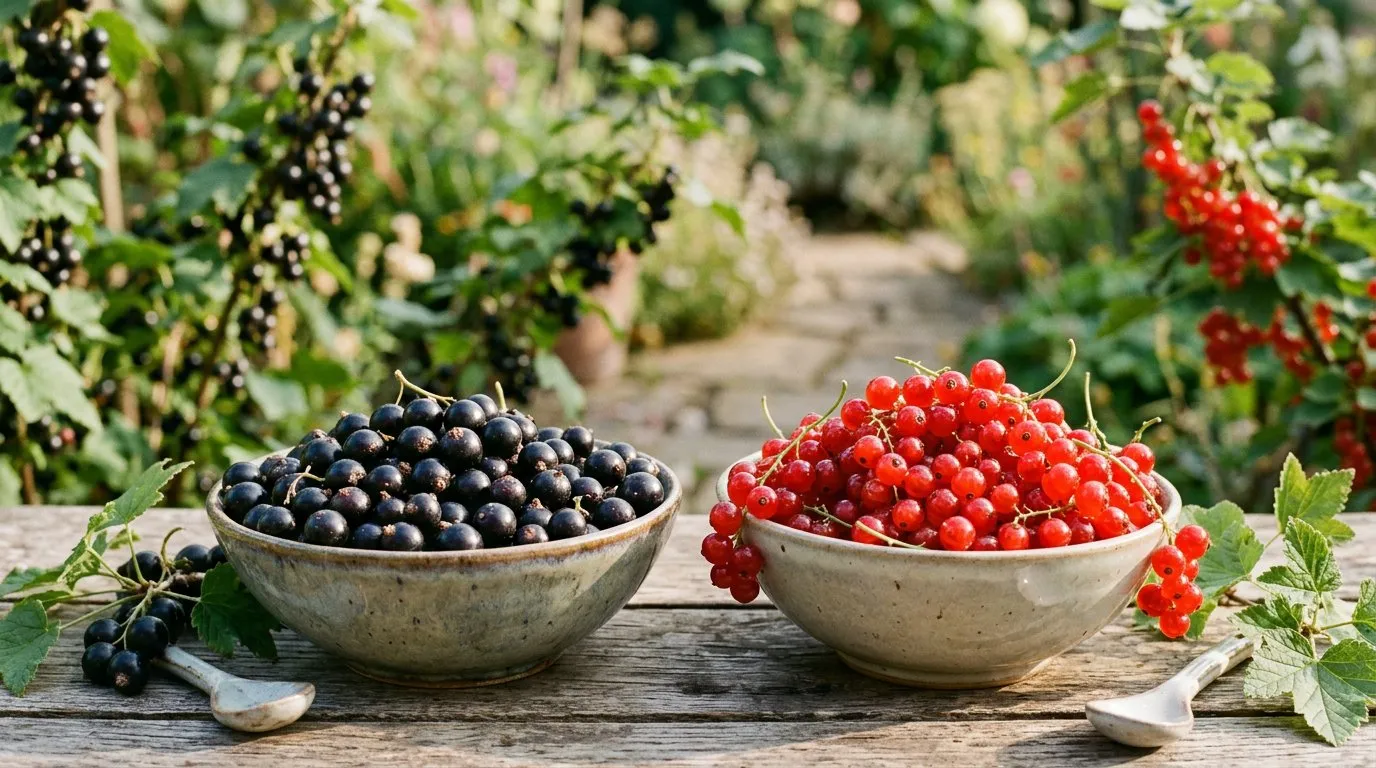 Freshly picked currants. Blackcurrants have three times the vitamin C of oranges.
Blackcurrants follow, ripening from mid-July to August. The berries at the top of each truss ripen first. On most modern varieties (the Ben series), the entire truss ripens evenly enough to pick in one go. Older varieties may need two or three pickings per bush as the berries ripen unevenly.
Whitecurrants ripen at the same time as redcurrants. The fruit is ready when it turns translucent pale gold.
Yields
An established bush produces 4-5kg of fruit per season. That amount from a single plant makes currants one of the most productive soft fruit you can grow. For context on what else to pick through summer, our monthly harvest guide covers the full UK calendar.
Nutritional value
Blackcurrants are vitamin C powerhouses. They contain three times more vitamin C per 100g than oranges. A small handful of blackcurrants provides more than a full day’s recommended intake. They are also rich in anthocyanins, the purple pigments with antioxidant properties.
Redcurrants and whitecurrants contain less vitamin C than blackcurrants but are still a useful source.
Uses
- Blackcurrant jam - the classic use. The high pectin content of blackcurrants makes jam-setting easy.
- Redcurrant jelly - the traditional accompaniment to roast lamb. Strain through muslin for a clear jelly.
- Cordials and syrups - both types make outstanding drinks. Blackcurrant cordial is particularly good.
- Freezing - spread berries on a tray to freeze individually, then bag. They keep for 12 months in the freezer.
- Crumbles, pies, and summer pudding - mix redcurrants and blackcurrants with blackberries and raspberries for a classic summer pudding.
Month-by-month currant growing calendar
| Month | Task |
|---|---|
| January | Winter prune blackcurrants. Pick off swollen buds (big bud mite). Order bare-root plants |
| February | Winter prune redcurrants and whitecurrants. Apply manure mulch. Plant bare-root bushes |
| March | Final month for bare-root planting. Apply general fertiliser. Watch for sawfly larvae |
| April | Protect flowers from late frost with fleece if needed. Check for sawfly eggs on leaf undersides |
| May | Water during dry spells. Hand-pick any sawfly larvae immediately |
| June | Net against birds. Summer-prune redcurrant sideshoots to five leaves. Water during fruit swell |
| July | Harvest redcurrants and whitecurrants from early July. Start picking blackcurrants mid-month |
| August | Continue blackcurrant harvest. Apply compost mulch after picking. Take hardwood cuttings (month end) |
| September | Take hardwood cuttings from healthy bushes. Clear weeds around the base |
| October | Plant new bare-root bushes. Prepare planting sites with compost |
| November | Best month for planting bare-root currants. Continue planting through to March |
| December | Check for big bud on blackcurrants. Plan next season’s varieties |
Why we recommend Ben Hope for blackcurrants and Rovada for redcurrants: After 30 seasons of growing currants across different UK plots, these two varieties deliver the most consistent yields with the least intervention. Ben Hope’s gall mite resistance is the deciding factor for blackcurrants, in a trial plot where neighbouring bushes of Ben Sarek lost 40% of their buds to big bud mite over three winters, Ben Hope showed no visible infestation and produced 4.8kg in its fourth season. Rovada’s exceptionally long trusses make harvest twice as fast as Red Lake, and it holds fruit on the bush without dropping for over two weeks.
Common mistakes when growing currants
Pruning blackcurrants like redcurrants
The most damaging mistake. Shortening blackcurrant sideshoots removes the young wood that carries next year’s fruit. Blackcurrants need entire old stems removed at ground level, not spur pruning. If you have been tip-pruning a blackcurrant bush and getting poor harvests, switch to removing one third of the oldest stems each winter and the bush will recover within two seasons.
Planting blackcurrants too shallow
Blackcurrants must go in 5cm deeper than they grew at the nursery. Shallow planting produces a bush that grows from a single point rather than sending up strong new stems from below ground. Without those new basal shoots, the bush cannot renew itself and harvests decline within a few years.
Ignoring big bud mite
Swollen, rounded buds on blackcurrants look harmless enough, but they contain hundreds of microscopic mites. Left unchecked, the mite spreads to every bud on the bush and eventually transmits reversion virus. Pick off affected buds promptly in winter. Replace heavily infested bushes with resistant varieties like Ben Hope rather than trying to save a plant that is already carrying virus.
Failing to net against birds
Many growers net too late, after the birds have already discovered the fruit. Net from early June, before the first berries start to colour. Bullfinches are particularly destructive in late winter, stripping dormant flower buds. A permanent fruit cage pays for itself within two seasons in saved fruit.
Not feeding blackcurrants enough
Blackcurrants are among the hungriest soft fruit plants. Without generous annual feeding, stems grow thin and short, and fruit clusters are small and sparse. Apply a thick manure mulch every February and a granular feed in March. The difference between a fed and unfed blackcurrant bush is dramatic.
Now you’ve mastered redcurrants and blackcurrants, read our guide on growing raspberries in the UK for the ideal soft fruit companion to mix with currants in summer puddings and jam.
Frequently asked questions
When should I plant currant bushes in the UK?
Plant from October to March during the dormant season. Bare-root bushes establish faster and cost less than container-grown plants. November planting is ideal because autumn rain keeps roots consistently moist. Container-grown currants can go in at any time, but bare-root stock gives the strongest start.
What is the difference between blackcurrant and redcurrant pruning?
Blackcurrants fruit on young wood from the previous year. Cut out one third of the oldest stems at ground level each winter. Redcurrants fruit on permanent spurs along a branch framework. Prune them to an open goblet shape, shortening sideshoots to one or two buds. These two approaches are fundamentally different.
Can I grow redcurrants as cordons?
Yes, cordons save significant space. Train a single vertical stem against a wall or fence at 30cm spacing. Prune sideshoots to one bud each winter and pinch new growth to five leaves in summer. Four cordon plants fit into 1.2m of wall. Cordons also make netting and picking easier because the fruit hangs within easy reach.
Do currant bushes need full sun?
Blackcurrants produce the best crop in full sun. They tolerate light shade but yields drop noticeably. Redcurrants and whitecurrants are more shade-tolerant and grow well against north-facing or east-facing walls. Shaded redcurrants ripen a week or two later than those in sun but still crop reliably.
How do I protect currants from birds?
Net bushes with 15mm mesh from early June, before fruit starts to colour. Bullfinches also strip flower buds in late winter and spring, so consider permanent netting over valuable bushes. A walk-in fruit cage is the best long-term investment for anyone growing multiple soft fruit plants. Check netting daily for trapped wildlife.
What is big bud mite on blackcurrants?
The gall mite causes buds to swell abnormally into a rounded shape during winter. Infested buds do not open in spring and produce no fruit. The mite also spreads reversion virus, which permanently reduces plant health and yields. Pick off swollen buds by hand and burn them. Grow mite-resistant varieties such as Ben Hope. Replace heavily infested plants.
How long do currant bushes produce fruit?
Expect 10-15 years of good cropping from well-maintained bushes. Blackcurrants remain productive only when pruned annually to maintain a supply of young fruiting wood. Redcurrants can last even longer because their permanent spur framework keeps bearing. Feed annually and prune correctly to get the maximum lifespan from each bush.
Are whitecurrants different from redcurrants?
Whitecurrants are a colour variant of redcurrants, not a separate species. They require identical soil, position, pruning, and care. The translucent pale gold fruit has a sweeter, milder flavour. White Versailles is the most popular variety, widely available from UK nurseries. Blanka is a heavier cropper with slightly later fruit.
Lawrie has been gardening in the West Midlands for over 30 years. He grows his own veg using no-dig methods, keeps a wildlife-friendly garden, and writes practical advice based on real UK growing conditions.