What to Harvest This Month UK
Month-by-month UK harvest calendar covering vegetables, fruit, and herbs. Know exactly when to pick each crop for the best flavour and yield.
Key takeaways
- UK gardens produce harvestable crops in all twelve months with the right planning
- July and August are the peak months, with 25+ crops ready to pick
- Winter harvests rely on hardy brassicas, root vegetables, and stored squash
- Picking at the right stage increases flavour and encourages further cropping
- Southern England harvests 2-3 weeks earlier than Scotland and northern England
- Freezing, pickling, and storing gluts prevents waste during peak months
Knowing what to harvest and when separates a productive kitchen garden from a wasteful one. Crops picked too early lack flavour. Left too late, they turn woody or go to seed. This month-by-month UK harvest calendar covers every crop from forced rhubarb in January to the last leeks in December.
Whether you grow on an allotment or in a few patio pots, timing your harvest correctly boosts flavour and yield. For help planning what to sow, see our seed sowing calendar.
January harvest UK
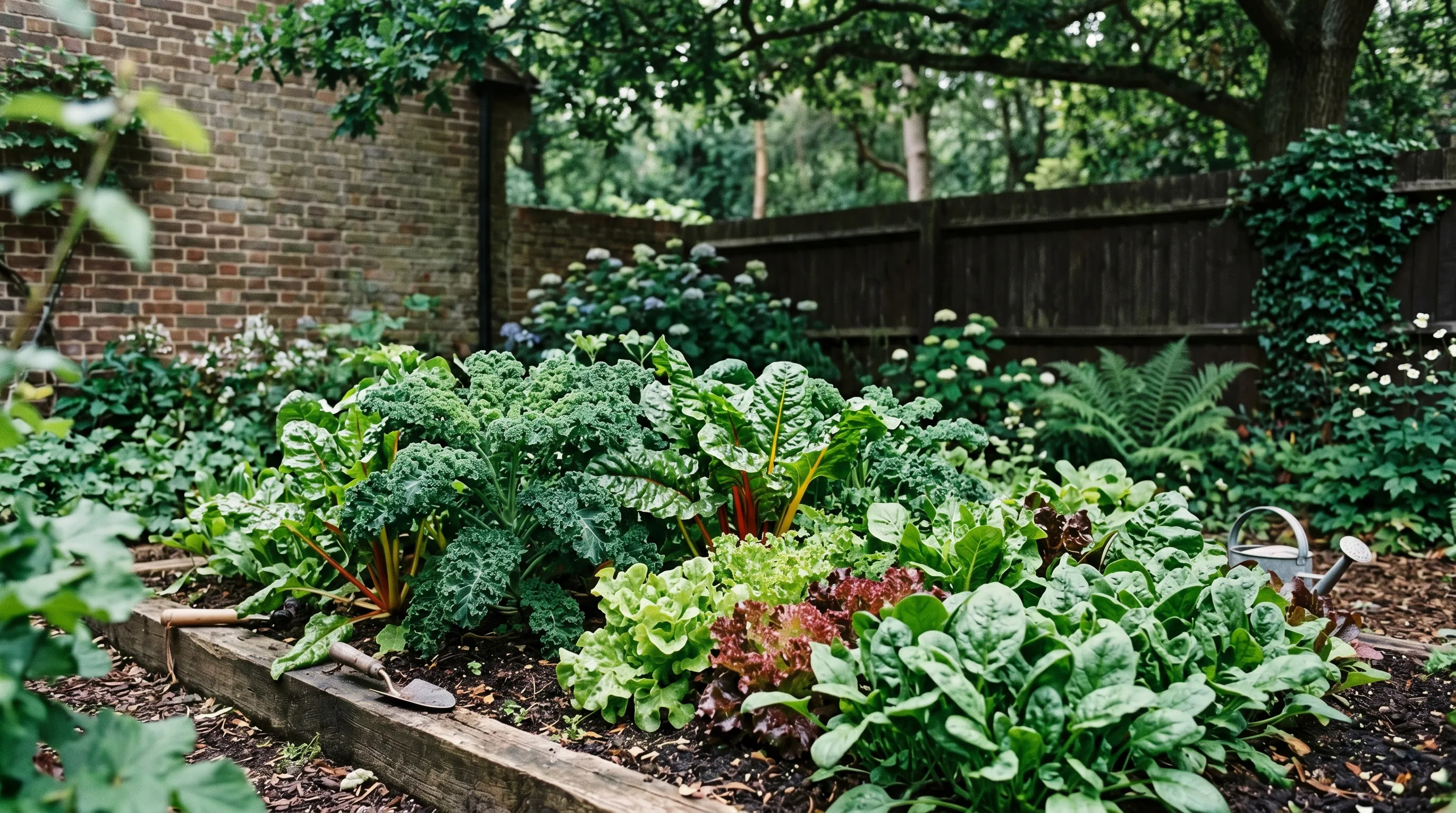
Forced rhubarb, leeks, Brussels sprouts, kale, and parsnips are the main January crops. January is the quietest month in the kitchen garden. There is still food to pick if you planned ahead.
Forced rhubarb produces tender pink stems from mid-January under a forcing pot or upturned dustbin. It tastes sweeter than the main-season crop. See our rhubarb growing guide for details on forcing.
Leeks stand in the ground through the coldest weather. Lift them as needed. Parsnips improve in flavour after hard frosts, converting starch to sugar. Brussels sprouts and kale keep producing through January in most gardens. Winter cabbages and stored pumpkins from autumn fill the gaps.
Gardener’s tip: Leave parsnips in the ground until you need them. They store better in soil than in a fridge or shed. The flavour keeps improving through winter.
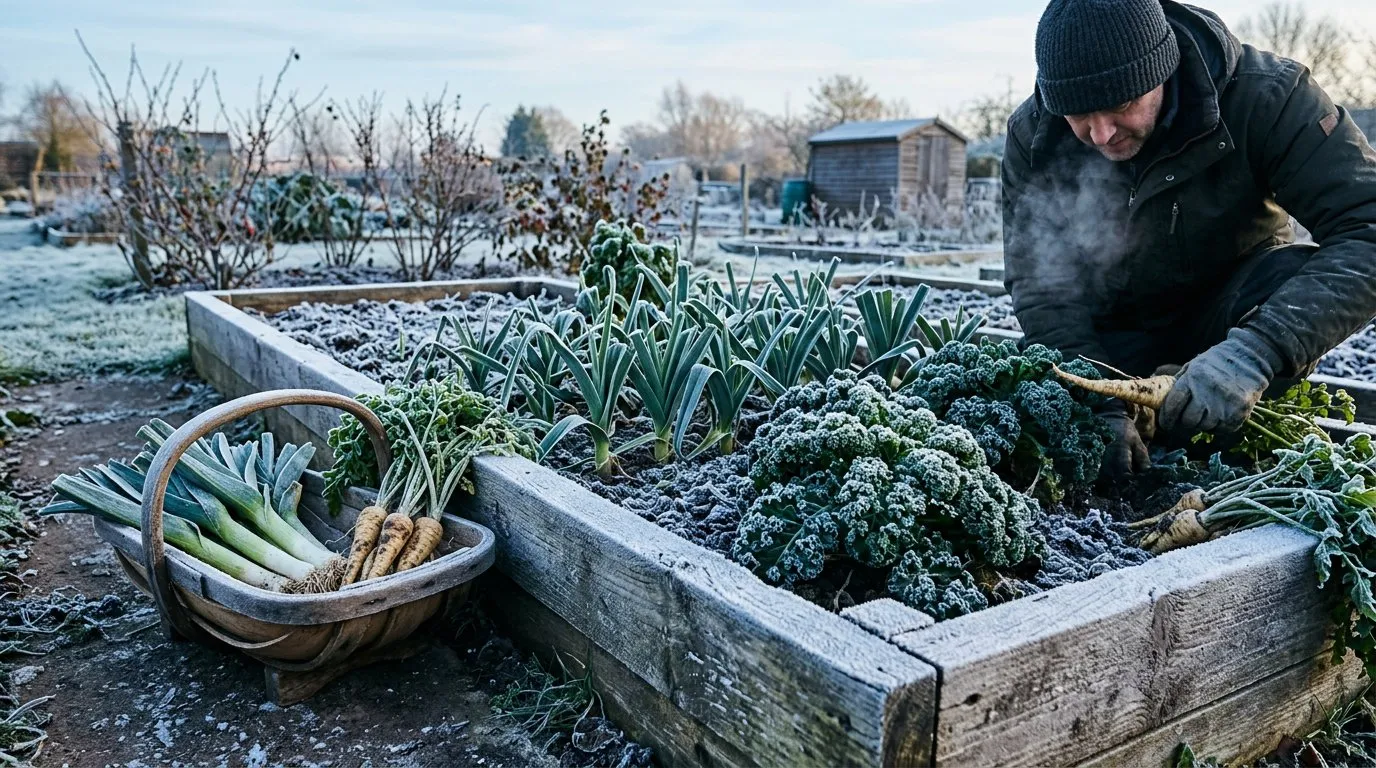 January harvest, leeks, kale, and parsnips pulled fresh from a frosty raised bed
February harvest UK
February’s harvest mirrors January, with sprouting broccoli and the last stored roots added. Purple sprouting broccoli begins producing spears in late February in southern England. It is one of the most rewarding winter crops. Pick the central head first to encourage side shoots that keep cropping for 6-8 weeks.
Leeks, kale, Brussels sprouts, and parsnips continue from January. Use up stored potatoes and onions before they begin to sprout. Chard and perpetual spinach may still be cropping in milder areas, though growth is very slow.
Forced rhubarb is at its best in February, with stems reaching 30-40 cm. Pull rather than cut the stalks, twisting gently at the base. Stop picking after 4-5 stalks to let the plant build energy for the main season.
Gardener’s tip: If your purple sprouting broccoli flowers before you pick it, the tiny yellow blooms are still edible. Toss them into salads for colour.
March harvest UK
March brings the first spring harvests: spring onions, early rhubarb, and overwintered salads. The garden begins to wake up. The gap between winter stores and summer abundance is at its widest. Kitchen gardeners call this the “hungry gap.”
Outdoor rhubarb starts producing thick stems by mid-March in the south. Spring onions overwintered from an autumn sowing are ready to pull. Early lettuces sown under cloches or cold frames produce the first leaves. Leeks and kale continue until they run to seed.
This is also the month to check your spring gardening jobs list. Start chitting potatoes and sow broad beans. The sowing you do now determines what you harvest from June onward.
Gardener’s tip: Harvest the last of your leeks by the end of March. Once they start forming a flower stalk the centre turns tough and woody.
April harvest UK
Asparagus arrives in April, the first real spring harvest worth waiting for. Cut spears at 15-18 cm tall, slicing at soil level. Our asparagus growing guide covers establishing beds that crop for 20 years. Stop cutting by mid-June to let the crowns build strength.
Spring cabbage hearts up and is ready to cut. Overwintered broad beans from an October sowing produce first pods in southern counties. Rhubarb is in full production. Radishes sown in March produce their first roots.
Salad leaves are now growing fast under cover and outdoors. Lettuce, rocket, and spinach provide the first fresh greens of the year. Chives, mint, and parsley are growing strongly enough to cut regularly.
April is also when you see the first strawberry blossom under cloches in warm gardens. The fruit follows in May.
May harvest UK
May fills the harvest gap with asparagus at its peak, new potatoes, and broad beans. Salad crops are now producing fast. First earlies planted in March are ready by late May in sheltered southern gardens. A freshly dug new potato beats anything from the shops.
Broad beans from autumn sowings are producing well. Pick when the beans inside the pod are still small and bright green. Larger beans develop a tougher skin and lose flavour. Pinch out the growing tips once the bottom trusses have set to reduce blackfly.
Radishes mature every 4-6 weeks from repeat sowings. Spring onions are available continuously now. Salad leaves and spinach are growing fast. Cut them regularly to prevent bolting.
Gooseberries begin ripening in late May. Pick them slightly under-ripe for cooking. Leave them a few more weeks to eat fresh once they soften and sweeten.
June harvest UK
June marks the start of the main harvest season, with strawberries, new potatoes, peas, and early beetroot all ready. The plot is suddenly producing more than you can eat. This surplus only grows through July and August.
Strawberries are the show of June. Pick every day or two, taking fruit that is evenly red and slightly soft. Morning picking gives the best flavour. Net plants against birds or expect to lose half the crop.
Peas are ready when the pods are plump and bright green. Pick regularly to keep the plants cropping. Early potatoes produce 1-2 kg per plant, enough for a meal straight from the soil.
Beetroot reaches golf-ball size from April sowings. Pull them small for the sweetest flavour. Leave them to tennis-ball size for roasting. The leaves are edible too, tasting like mild chard.
Early carrots and turnips reach picking size this month. The first courgette fruits appear on well-grown plants.
| Crop | Ready in June | How to tell |
|---|---|---|
| Strawberries | Early-mid June | Uniformly red, slight give when pressed |
| New potatoes | Mid-late June | Foliage flowers, tubers egg-sized |
| Peas | Mid-late June | Pods plump, bright green |
| Broad beans | All June | Beans visible through pod, still green |
| Beetroot | Late June | Roots 4-6 cm across at soil level |
| Carrots (early) | Late June | Shoulders visible, orange colour at crown |
July harvest UK
July is one of the two peak harvest months, with 25 or more crops reaching maturity. Tomatoes ripen under glass from mid-July. Runner beans start producing heavy crops. Pick every 2-3 days to keep pods tender.
Courgettes produce 2-3 fruits per plant per week at their peak. Cut them at 15-20 cm for the best texture. Miss a day and they become marrows. French beans, mangetout, and climbing beans are all in full swing.
Soft fruit reaches its best. Raspberries and blackcurrants ripen in July, followed by redcurrants and blueberries. Gooseberries left on the bush since May are now sweet enough to eat raw. Cherries finish their short season early in the month.
Main-crop potatoes in bags and beds are ready once the foliage starts to yellow. Garlic planted last autumn is ready when the lower leaves brown and dry. Lift the bulbs and cure them in a warm, airy spot for two weeks. See our garlic growing guide for curing details.
Gardener’s tip: Pick courgettes, beans, and peas every two to three days. Leaving mature fruit on the plant signals it to stop producing.
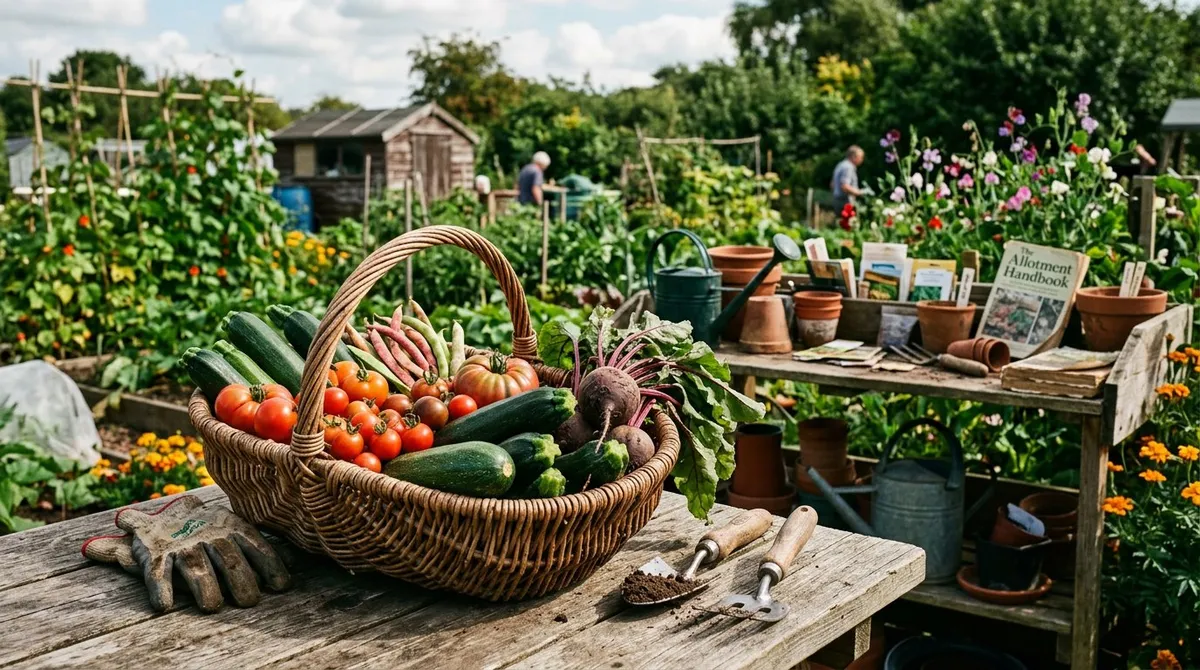
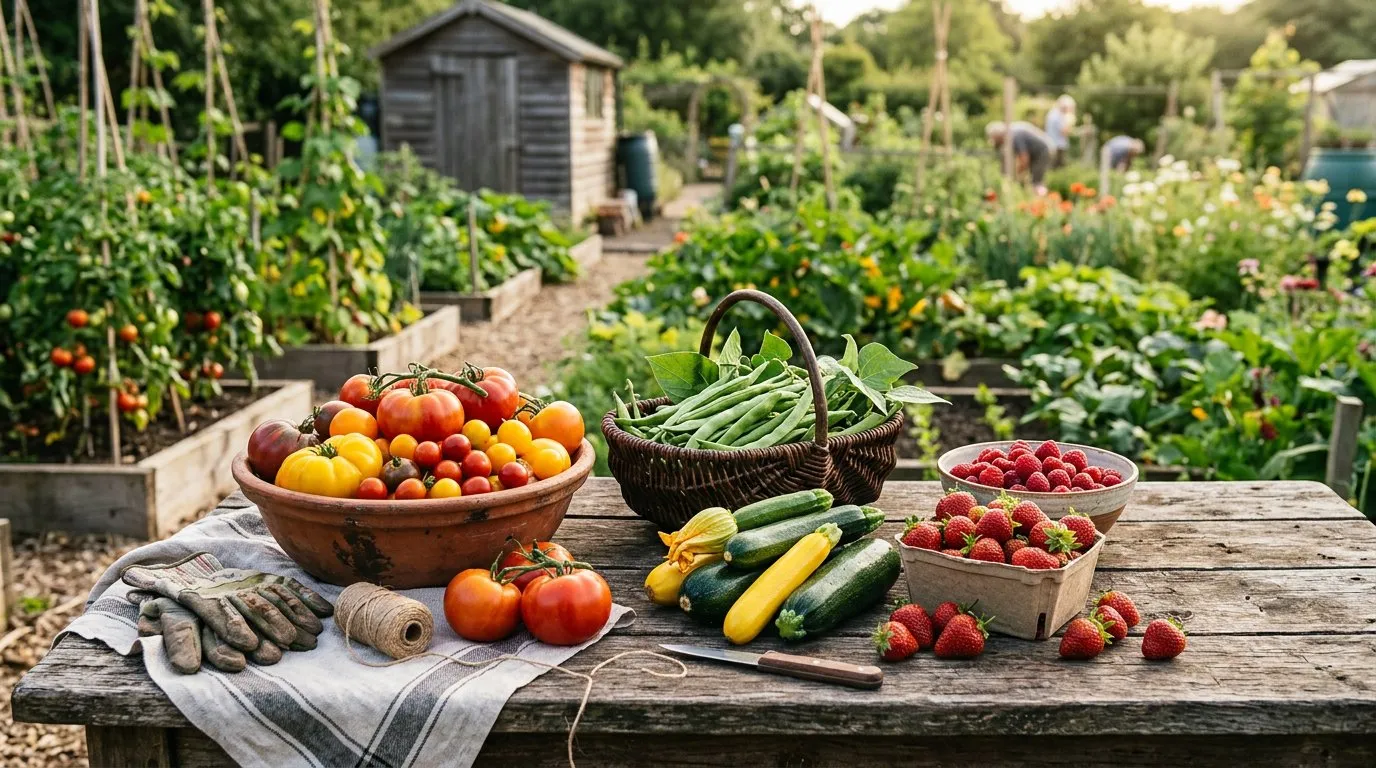 The July harvest table, tomatoes, runner beans, courgettes, and soft fruit at their peak
August harvest UK
August is peak harvest, with the widest variety of any month. Sweetcorn reaches maturity in southern gardens. Peel back the husk and press a kernel. Milky liquid means it is ready. Watery liquid means give it another week.
Tomatoes are in full production outdoors and under glass. Pick when the fruit is uniformly coloured and gives slightly when squeezed. The best vegetables to grow at home all hit their stride this month.
Onions are ready when the tops fall over and start to yellow. Bend over any upright tops to start curing. Lift the bulbs and dry them on a rack for two weeks until the skins rustle.
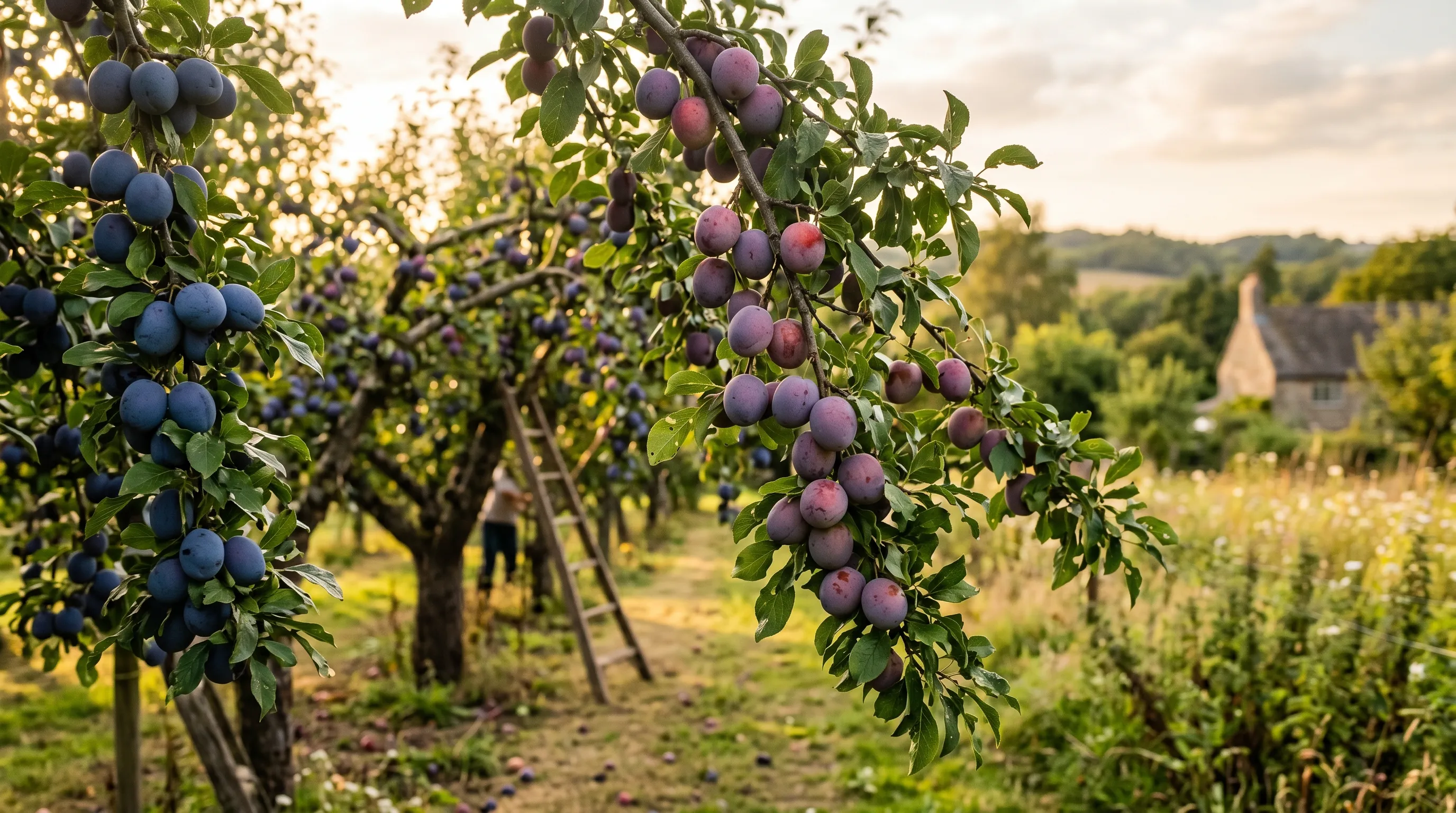
Second-early and maincrop potatoes are in full harvest. Plums and damsons join the fruit harvest, along with the first early apples. Blackberries begin ripening in hedgerows and gardens. They are free fruit for anyone willing to pick.
| Crop | Pick when | Storage tip |
|---|---|---|
| Tomatoes | Uniformly coloured, slight give | Ripen green ones on a windowsill |
| Sweetcorn | Milky kernel liquid, silks brown | Eat within hours for best sweetness |
| Onions | Tops fallen, skins papery | Cure 2 weeks, store in nets |
| Runner beans | 15-20 cm, beans not bulging | Blanch and freeze the surplus |
| Courgettes | 15-20 cm long, glossy skin | Use within 5 days or make chutney |
| Potatoes (maincrop) | Foliage dead, skins firm | Store in paper sacks, cool and dark |
September harvest UK
September is the month for storing and preserving the last of the summer glut. Pumpkins and winter squash are ready when the skin is hard. Look for the stem cracking where it meets the fruit. Cure them in sunshine for 10-14 days before storing indoors. Our guide to growing pumpkins and squash covers curing in detail.
Late tomatoes need bringing indoors to ripen before the first frost. Place green tomatoes in a paper bag with a banana. The ethylene gas triggers ripening within a week. Green tomato chutney handles whatever refuses to turn red.
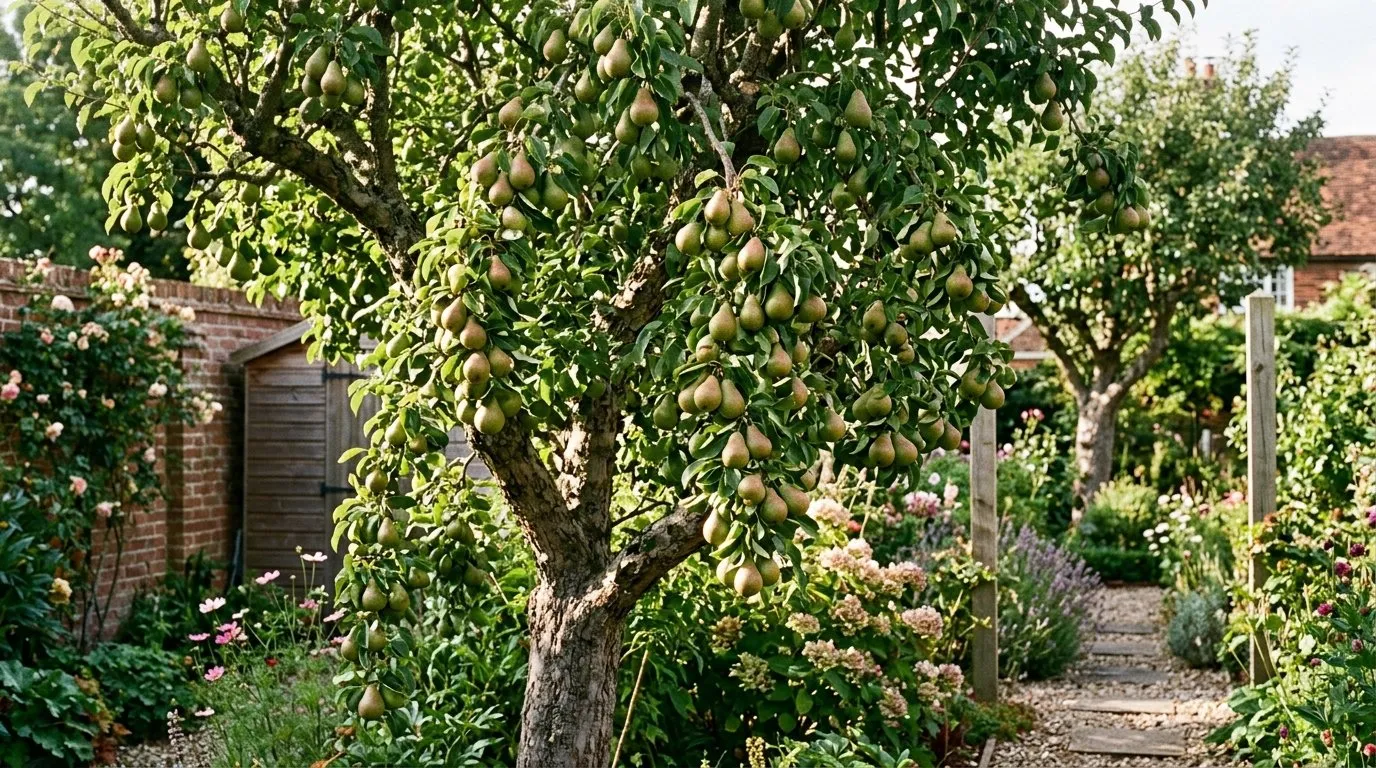
Apples and pears dominate the fruit harvest, alongside autumn-fruiting raspberries. Pick apples when they twist easily from the branch. If you have to tug, they need more time.
Runner beans, beetroot, carrots, and leeks all continue. This is the last month for reliable outdoor tomato harvests in most of the UK.
Gardener’s tip: Press your thumbnail into a squash’s skin. If it does not leave a mark, the skin is cured and hard enough for storage.
October harvest UK
October marks the shift from summer surplus to winter crops. Lift maincrop carrots now before the first hard frosts. Store them in boxes of damp sand in a cool shed or garage. They keep for 3-4 months this way.
Beetroot and celeriac can stay in the ground a while longer under a straw mulch. Leeks are now in their prime and will be a kitchen staple until March.
Late apple varieties like Bramley and Conference are at their best. Quinces ripen to golden yellow and fill the kitchen with their scent when brought indoors.
The last runner beans and courgettes finish as night temperatures drop. Autumn-sown salads under cloches or cold frames begin producing. Kale is now at its best, tasting sweeter after the first light frosts.
November harvest UK
November’s harvest relies on hardy crops that shrug off frost and cold rain. Brussels sprouts taste better after a hard frost. Start picking from the bottom of the stem and work upward. Each plant produces 1-2 kg of sprouts over the winter months.
Leeks, parsnips, and kale are all still in good condition. Jerusalem artichokes are ready to lift once the stems die back. Their knobbly tubers store badly, so dig them as needed.
The last outdoor salad leaves finish unless protected under fleece or glass. Winter purslane and corn salad are cold-hardy alternatives that keep producing through December.
Stored squash and potatoes from earlier months supplement the fresh harvest. Check stores regularly and remove anything showing rot before it spreads.
December harvest UK
December’s harvest is small but worthwhile: Brussels sprouts, leeks, parsnips, and kale see you through. Stored roots fill the gaps. Parsnips for Christmas dinner should be lifted after at least two hard frosts for the best flavour.
Brussels sprouts are the star of December. Pick what you need for each meal rather than stripping the plant. Leeks and winter cabbage provide the fresh green options. Chard or perpetual spinach may still be standing too.
Forced chicory produces pale, crunchy chicons if you potted up roots in October. Stored apples and potatoes continue to provide food from your summer harvest. The garden to table approach means December still has something home-grown on the plate.
Gardener’s tip: Start forcing rhubarb in late December. Place a large pot or bin over a dormant crown. You will have tender stems by late January.
Quick-reference UK harvest calendar
This table shows the main harvest window for popular UK crops. Southern England sits at the early end of each range. Scotland and northern England run 2-3 weeks behind.
| Crop | Main harvest months | Peak month |
|---|---|---|
| Asparagus | April-June | May |
| Beetroot | June-October | August |
| Broad beans | May-July | June |
| Brussels sprouts | November-February | December |
| Carrots | June-October | August |
| Courgettes | July-October | August |
| French beans | July-September | August |
| Garlic | June-July | July |
| Kale | October-March | January |
| Leeks | October-March | January |
| Lettuce | May-October | July |
| Onions | July-September | August |
| Parsnips | November-March | January |
| Peas | June-August | July |
| Potatoes (early) | June-July | June |
| Potatoes (maincrop) | August-October | September |
| Pumpkins/squash | September-October | September |
| Radishes | April-October | June |
| Rhubarb (forced) | January-March | February |
| Rhubarb (outdoor) | March-June | May |
| Runner beans | July-October | August |
| Spinach | April-October | June |
| Strawberries | June-July | June |
| Sweetcorn | August-September | August |
| Tomatoes | July-October | August |
| Turnips | June-November | September |
How to tell when vegetables are ready
Timing the harvest correctly makes a real difference to flavour and texture. Leaving crops too long reduces quality and can stop the plant producing more.
Root vegetables are ready when the tops of the roots show at the soil surface. Carrots should show bright orange shoulders. Beetroot is sweetest at 4-6 cm diameter. Parsnips can stay in the ground until needed. They improve after frost. The RHS harvesting guide has photos showing readiness signs for each crop.
Podded crops need regular checking. Runner beans are best at 15-20 cm before the seeds inside bulge. Peas should be plump but bright green. Broad beans taste best when the scar on each bean is still green rather than black.
Fruiting crops signal readiness through colour and size. A ripe tomato gives slightly when squeezed and is uniformly coloured. Courgettes need picking at 15-20 cm before they turn watery. Cucumbers should be firm and dark green.
Dealing with a summer glut
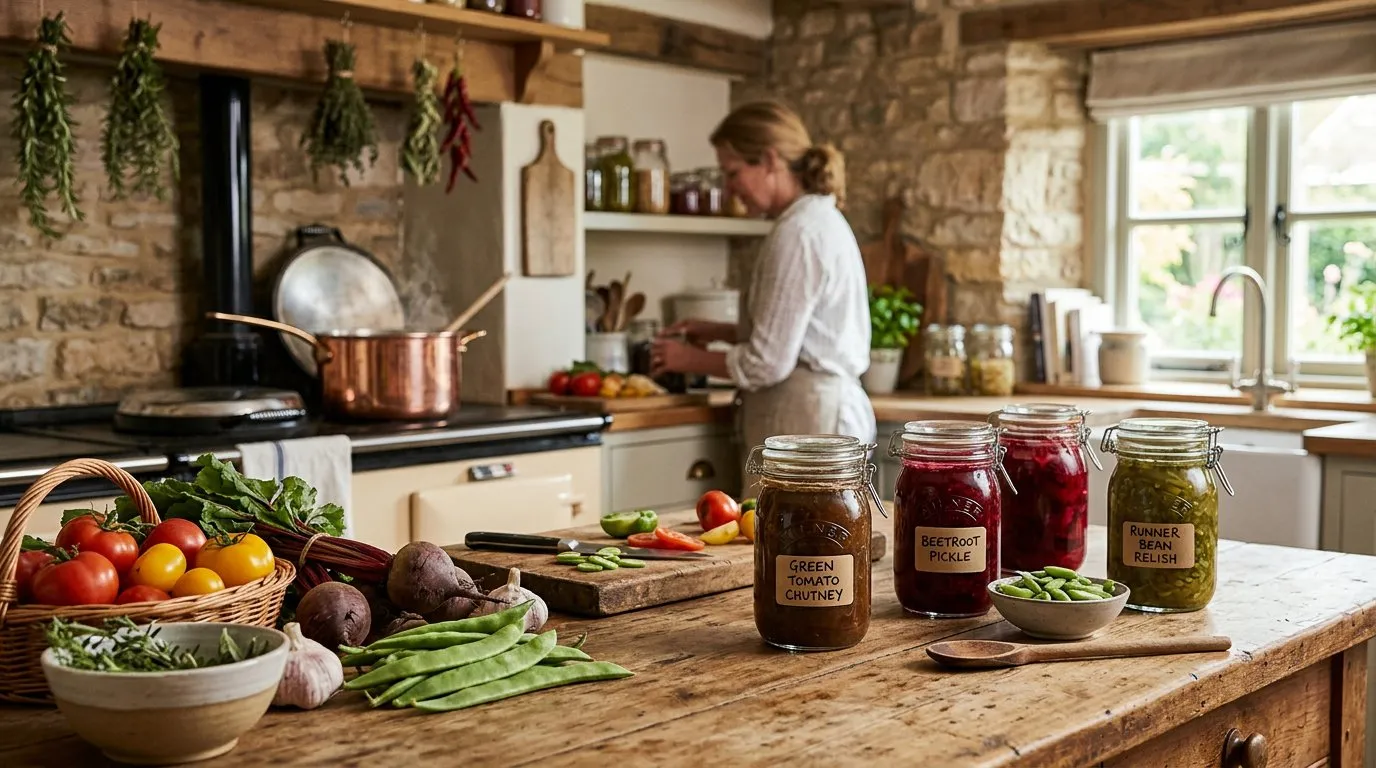 Preserving the surplus, chutneys, pickles, and relishes extend the harvest into winter
Peak harvest months produce more than most families can eat fresh. A plan for surplus prevents waste and stretches home-grown food into winter.
Freezing works well for runner beans, broad beans, peas, and soft fruit. Blanch vegetables in boiling water for 2 minutes, then plunge into ice water. Bag and freeze. Most frozen vegetables keep for 12 months. Garden Organic has storage advice for organic growers.
Storing suits root vegetables, onions, and squash. Potatoes need a cool, dark, frost-free space in paper or hessian sacks. Onions and garlic hang in nets or braid into strings. Winter squash stores for 3-6 months in a dry room at 10-15C.
Preserving turns surplus into chutneys, jams, and pickles. Green tomato chutney and beetroot pickle are classic kitchen garden preserves. Dry herbs in bunches hung upside down in a warm room. Making your own compost from spent crops feeds next year’s beds.
Why we recommend picking courgettes and beans every two days without fail: After 30 seasons of kitchen gardening, regular harvesting is the single habit that doubles yield more reliably than any other. Courgette plants left 72 hours between picks produce roughly half the total fruit of those picked every 48 hours. The same logic applies to runner beans, French beans, and peas. Frequent picking keeps the plant in production mode rather than seed-setting mode, extending the cropping window by 4-6 weeks.
Regional timing differences across the UK
Southern England harvests 2-3 weeks earlier than northern England, and 3-4 weeks earlier than central Scotland. Coastal areas in Cornwall and Devon have the mildest climate and the longest growing season. Some gardeners there pick outdoor tomatoes into late October.
The Midlands and northern England sit in the middle. Altitude matters as much as latitude. A hilltop garden in Derbyshire may harvest later than a sheltered city garden in Edinburgh.
Scottish Highlands and exposed upland areas have the shortest season. Early-maturing varieties help. Cloches and fleece extend the season by 3-4 weeks at each end. For a full planting schedule adjusted by region, see our vegetable planting calendar.
Now you’ve mastered the harvest calendar, read our guide on starting a vegetable garden for the next step in planning what to grow across the whole season.
Further reading
- Container vegetable gardening — grow crops in pots and small spaces
- Start a vegetable garden — how to begin growing food from scratch
- How to grow spinach — a versatile year-round leaf crop
- How to grow radishes — the fastest crop in the garden
- Foraging in your garden — edible wild plants already growing around you
Lawrie has been gardening in the West Midlands for over 30 years. He grows his own veg using no-dig methods, keeps a wildlife-friendly garden, and writes practical advice based on real UK growing conditions.