What to Plant in January in the UK
What to sow indoors, plant outdoors, and plan in January across UK gardens. Covers vegetables, flowers, bare-root trees, and essential winter jobs.
Key takeaways
- Sow chillies, peppers, and aubergines indoors at 21-25C for the longest possible growing season
- Plant bare-root fruit trees, roses, and hedging while dormant on frost-free days
- Force rhubarb by covering crowns now for tender stems by late February
- Start chitting seed potatoes from late January, shoots pointing upward in egg boxes
- Plant garlic cloves outdoors before February for the best bulb development
- Grow microgreens and sprouting seeds on a windowsill for fresh greens in 7-14 days
January is the deepest winter month in the UK garden. Daylight hours sit below nine, soil temperatures hover at 2-5C across most regions, and hard frosts are frequent. Yet January is not a month for sitting still. The earliest indoor sowings start now. Bare-root planting continues through mild spells. This is also the month to plan the season ahead. Our winter gardening jobs checklist covers the full range of seasonal tasks beyond sowing and planting.
This guide covers every vegetable, flower, and fruit you can sow or plant in January. It is organised by growing method: indoor sowings, outdoor planting, and essential maintenance jobs. All timings are based on UK conditions. If you missed December’s planting tasks, many bare-root jobs carry over into this month. For a full year-round overview, see our seed sowing calendar. For more growing advice, browse our growing guides. Looking ahead, our February planting guide picks up where January leaves off.
Indoor sowings for January
Indoor sowing in January targets the slowest-growing crops. These plants need the longest possible season to produce a worthwhile harvest in the UK climate. A heated propagator or warm windowsill is essential.
Chillies and peppers
Sow chillies and peppers in early January at 21-25C. These are the first seeds of the year because they need the longest growing season of any vegetable. Germination takes 14-21 days, sometimes longer for superhot varieties. Sow two seeds per 7cm pot, 1cm deep, and remove the weaker seedling after germination.
Keep seedlings on a bright south-facing windowsill or under grow lights. They need 8-10 weeks of indoor growing before potting on. Without a January start, many chilli varieties will not ripen fruit before autumn frosts arrive. Tomatoes can wait until February or early March, but peppers and chillies cannot.
Why we recommend a thermostatically controlled heated propagator for January sowings: After 30 years of starting chillies and peppers in January, a propagator with a built-in thermostat is the single piece of equipment that makes the difference between reliable germination and repeated failure. A basic heat mat fluctuates by 8-10C overnight on a cold windowsill, stalling germination for 2-3 weeks. A thermostat-controlled model holds the temperature within 1-2C, consistently producing germination in 10-14 days even in the depths of winter.
Aubergines
Aubergines also need an early start. Sow at 21-25C from mid-January. They are slower to establish than peppers and need warmth throughout their growing season. Sow in 7cm pots, 1cm deep. Germination takes 10-21 days. Pot on into 9cm pots when the first true leaves appear.
Onions from seed
Exhibition onions like Ailsa Craig and Kelsae need a January sowing for the largest bulbs. Sow thinly in trays at 15-18C, 1cm deep. Onion seedlings grow slowly and need 12-14 weeks indoors before planting out in April. Multi-sown modules of 4-5 seeds per cell produce reliable crops of smaller bulbs for the kitchen.
Leeks and celery
Sow leeks in trays at 15-18C. January-sown leeks produce longer, thicker shanks than later sowings. Celery also benefits from a January start at 15-18C. Surface sow celery seed because it needs light to germinate. Do not cover with compost.
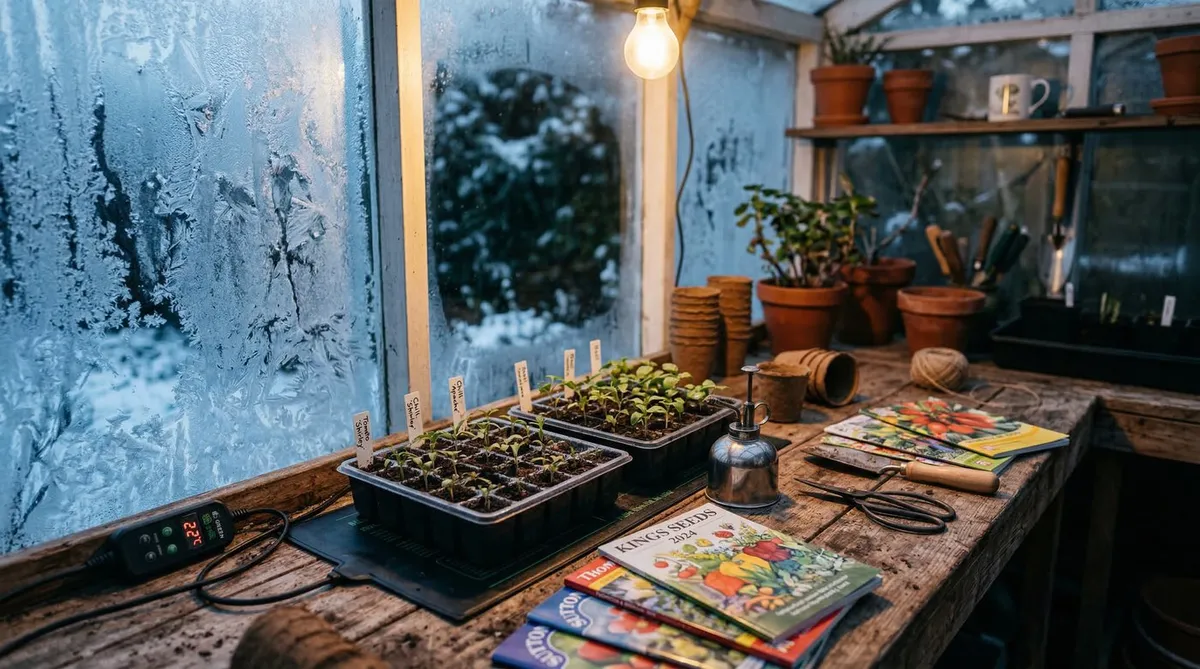
Gardener’s tip: Use a heated propagator with a thermostat. Most January sowings need consistent warmth between 18-25C. A cold windowsill at night can drop to 8C, stalling germination for weeks.
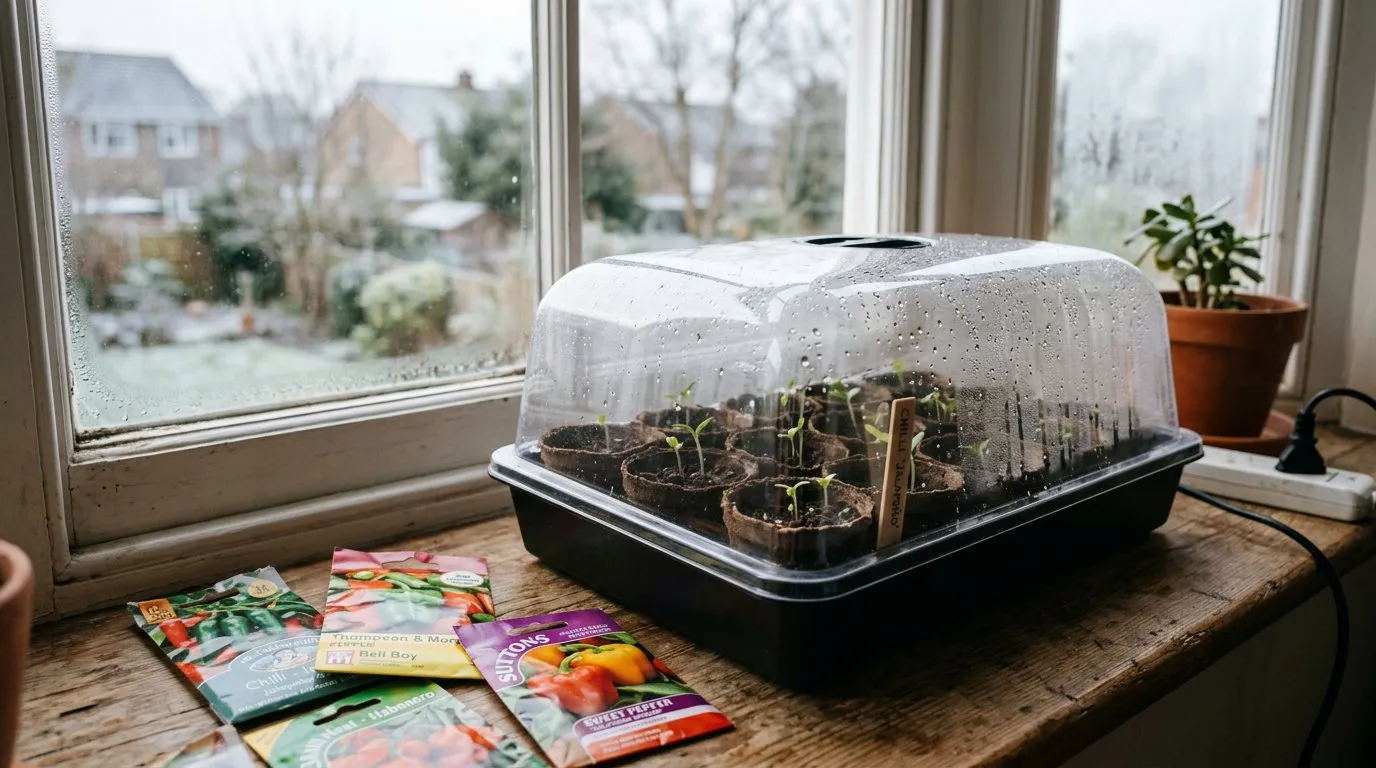 A heated propagator and grow lights on a January windowsill. Consistent warmth of 21-25C is essential for germinating chillies and peppers.
Flowers to sow indoors in January
January is too early for most flowers, but several slow-growing species benefit from the head start. All need indoor warmth and bright light.
Sweet peas
Sow sweet peas in root trainers or deep pots in January. Plant one seed per cell, 2cm deep. Soak seeds overnight in warm water before sowing to soften the hard seed coat. Keep at 15-18C. Germination takes 7-14 days. Pinch out the growing tip when two pairs of leaves appear to encourage bushy, multi-stemmed plants.
January-sown sweet peas flower earlier and longer than spring sowings. They are a staple of any cottage garden planting plan and one of the best cut flowers for UK gardens.
Begonias
Begonias need surface sowing at 21C. The seed is dust-fine. Mix with a pinch of dry sand and scatter onto the surface of damp seed compost. Do not cover. Press gently with a flat piece of card. Cover the tray with a clear lid or cling film. Germination takes 14-28 days.
January sowing gives begonias the 16-20 weeks they need to reach flowering size by summer bedding time in late May.
Pelargoniums (geraniums)
Sow pelargoniums at 20-22C in January for flowers by May. Sow two seeds per 7cm pot, 1cm deep. Germination takes 7-14 days. These are not true geraniums but the tender bedding plants sold as geraniums in garden centres. January sowing produces sturdy, well-branched plants with earlier blooms.
Lobelia and antirrhinums
Both lobelia and antirrhinums are slow starters. Surface sow lobelia at 18-20C. The seedlings are tiny and grow slowly for the first month. Antirrhinums germinate at 18-21C and need pricking out early to prevent overcrowding. Both reward the patience of a January sowing with earlier and longer flowering.
What to plant outdoors in January
Outdoor planting in January is limited to dormant stock. The ground must be frost-free and workable, not waterlogged. Choose mild days when the temperature sits above 5C.
Bare-root fruit trees
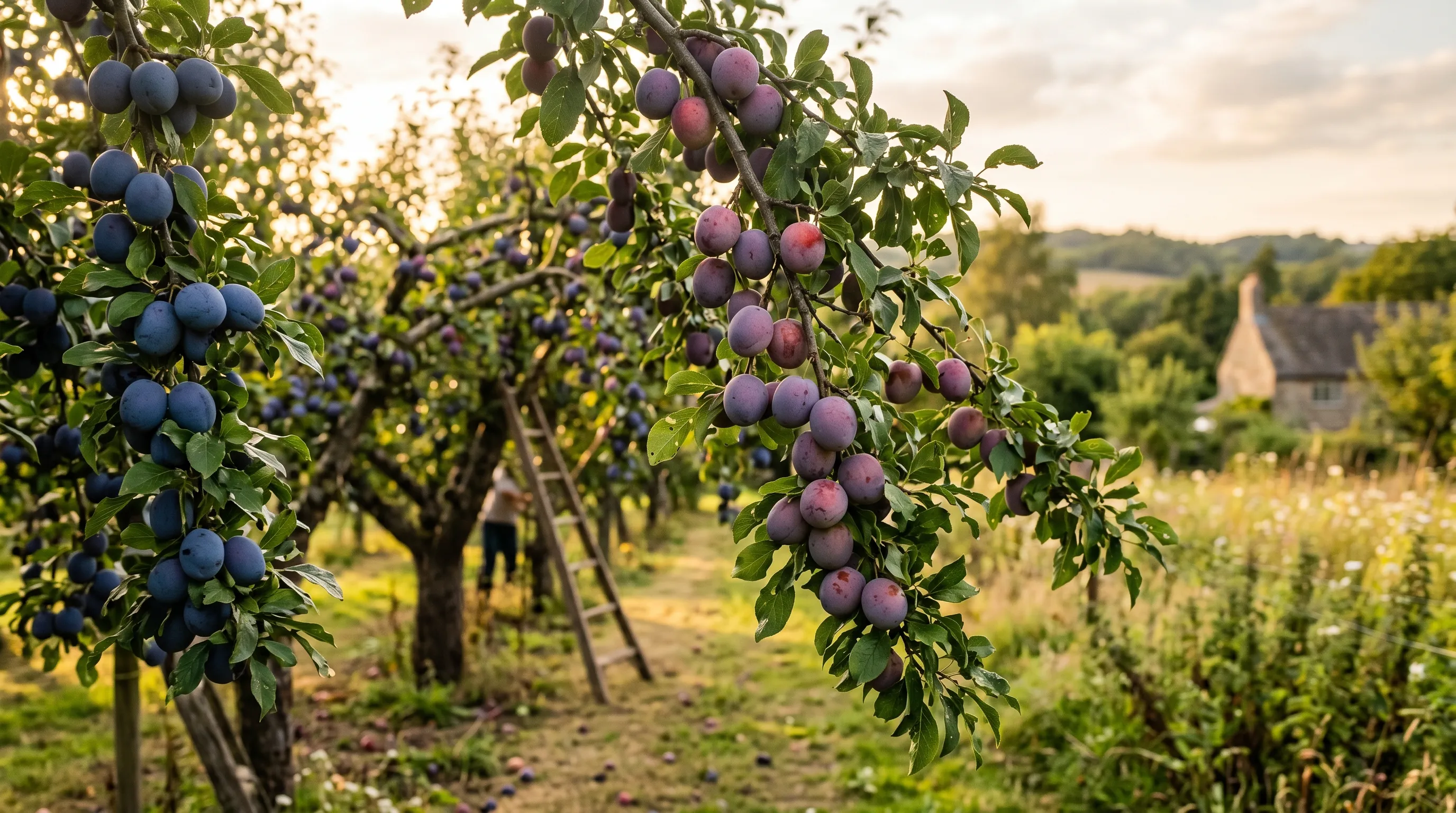
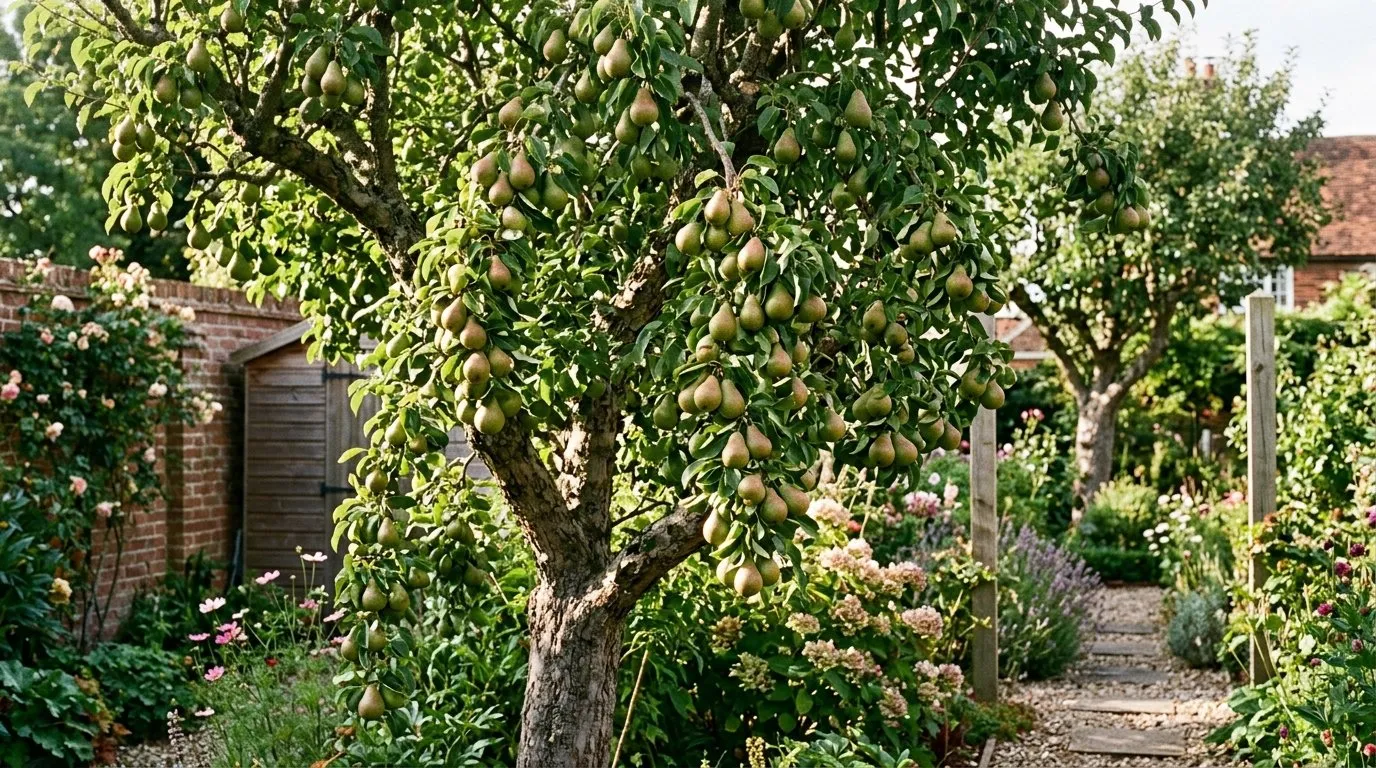
January is prime time for planting bare-root fruit trees. Trees planted in winter dormancy establish stronger root systems than container-grown trees planted in spring. Dig a hole twice the width of the root spread. Spread roots evenly and backfill with the excavated soil. Firm in with your heel and water thoroughly.
Stake all trees with a short stake (45cm above ground) and a tree tie. Mulch around the base with a 10cm layer of garden compost to retain moisture and suppress weeds.
| Variety | Type | Pollination group | Harvest month | Best for |
|---|---|---|---|---|
| Bramley | Apple (cooking) | Group 3 | October | Pies, crumbles, baking |
| Cox’s Orange Pippin | Apple (eating) | Group 3 | October | Fresh eating, juice |
| Conference | Pear | Group 3 | October-November | Fresh eating, cooking |
| Victoria | Plum | Self-fertile | August-September | Eating, jam, cooking |
| Stella | Cherry | Self-fertile | July | Fresh eating |
Bare-root roses
Plant bare-root roses on any frost-free day. Bare-root roses are cheaper than container-grown plants and establish faster. Soak roots in water for two hours before planting. Dig a hole deep enough so the graft union sits 5cm below the soil surface. Spread roots evenly and backfill.
Hedging plants
January is the cheapest time to buy hedging. Bare-root hawthorn, beech, and hornbeam whips are available in bundles of 25 or more. Dig a trench 30cm deep, space whips 30-45cm apart, and firm soil around the roots. Water along the trench. Bare-root hedging planted in January puts on strong growth by May.
Garlic cloves
This is the last chance to plant garlic before February. Autumn planting is ideal, but January-planted garlic still produces good bulbs. Push cloves 5cm deep, 15cm apart, with the pointed end upward. Choose a sunny, well-drained spot. Varieties like Solent Wight, Germidour, and Sprint suit UK conditions.
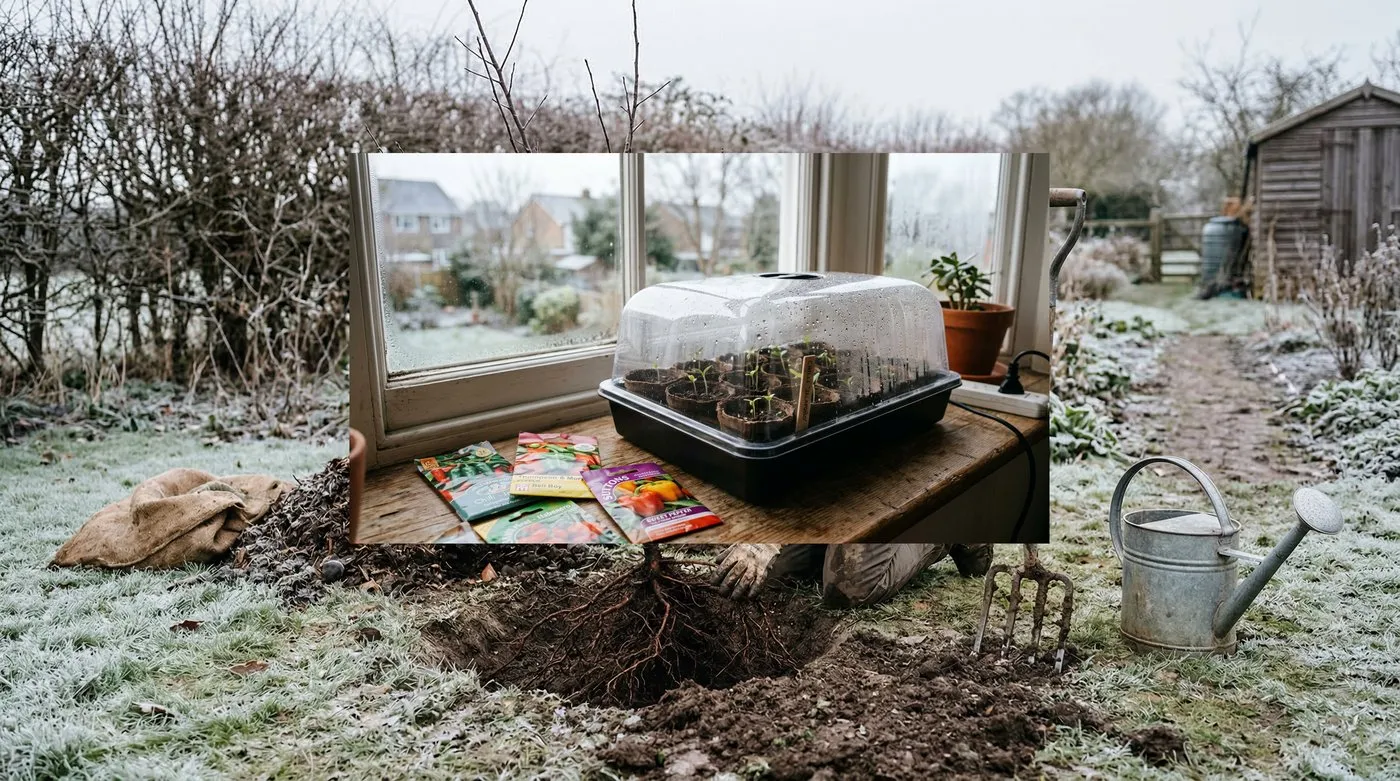 Planting a bare-root fruit tree in January. Dig wide, spread roots evenly, stake firmly, and mulch with 10cm of compost.
Force rhubarb
Cover established rhubarb crowns (at least three years old) with a forcing pot, upturned dustbin, or large bucket. Exclude all light completely. The warmth trapped underneath encourages early growth. The darkness produces long, pale stems with a sweeter flavour and less oxalic acid than outdoor-grown sticks.
Place covers in early January. The forced stems are ready in 6-8 weeks, typically by late February or early March. Only force a crown once every two years. The process exhausts the plant, and it needs a full season of open growth to recover energy.
Microgreens and sprouting seeds
The only productive indoor growing option through January is microgreens and sprouting seeds. These produce fresh greens on a windowsill in 7-14 days, regardless of outdoor conditions.
What to grow
Pea shoots are the most popular microgreen. Soak dried peas overnight and spread on a tray of damp compost, 1cm apart. Cover with a layer of damp newspaper until shoots emerge, then uncover and grow on in bright light. Ready in 12-14 days. Cut above the lowest leaf and they regrow for a second harvest.
Radish, mustard and cress, rocket, and broccoli microgreens all grow quickly on a windowsill. Sow thickly on damp kitchen paper or compost in a shallow tray. Mist daily. Harvest with scissors when 5-8cm tall.
Microgreens are packed with nutrients. A 2012 study by the University of Maryland found they contain 4-40 times the nutrient concentration of mature leaves. They make a useful addition to winter salads when the garden offers little else.
January garden jobs checklist
The January garden is about preparation. Every task you complete now saves time in the frantic spring months.
Order seeds
Order seeds early for the widest selection. Popular varieties sell out fast. Check last year’s seed packets. Most vegetable seeds remain viable for 2-3 years if stored in a cool, dry place. Parsnip seed is the exception. It must be fresh every year.
Plan your orders around a crop rotation system. Group brassicas, legumes, roots, and potatoes into four beds and rotate annually to prevent soil-borne disease buildup.
Clean and maintain tools
Scrub dried soil from spades, forks, and trowels. Oil metal surfaces with linseed oil to prevent rust. Sharpen secateur and shear blades with a whetstone. Replace any worn handles. Well-maintained tools last decades and make every job easier.
Chit seed potatoes
Start chitting seed potatoes from late January. Stand tubers in egg boxes or seed trays with the end that has the most eyes pointing upward. Place in a cool, bright room at 8-10C. Not a dark cupboard. The shoots should be sturdy, green, and 2-3cm long by planting time in March or April.
Check stored vegetables
Inspect stored root vegetables, onions, and squash weekly. Remove anything showing signs of rot before it spreads. A single rotting onion will spoil a whole crate. Keep stores in cool, dark, dry conditions with good air circulation.
Protect pots from frost
Wrap terracotta and ceramic pots in bubble wrap or hessian. Move them against a south-facing wall for extra warmth. Raise pots on feet or bricks so drainage holes stay clear. Standing water in a pot freezes, expands, and cracks the container.
Greenhouse maintenance
Clean greenhouse glass inside and out to maximise winter light. Replace cracked panes. Check heaters are working and set thermostats to 2-5C for frost protection. Ventilate on mild days to reduce condensation and fungal disease. January is a good month to consider raised bed gardening as a project while the garden is quiet.
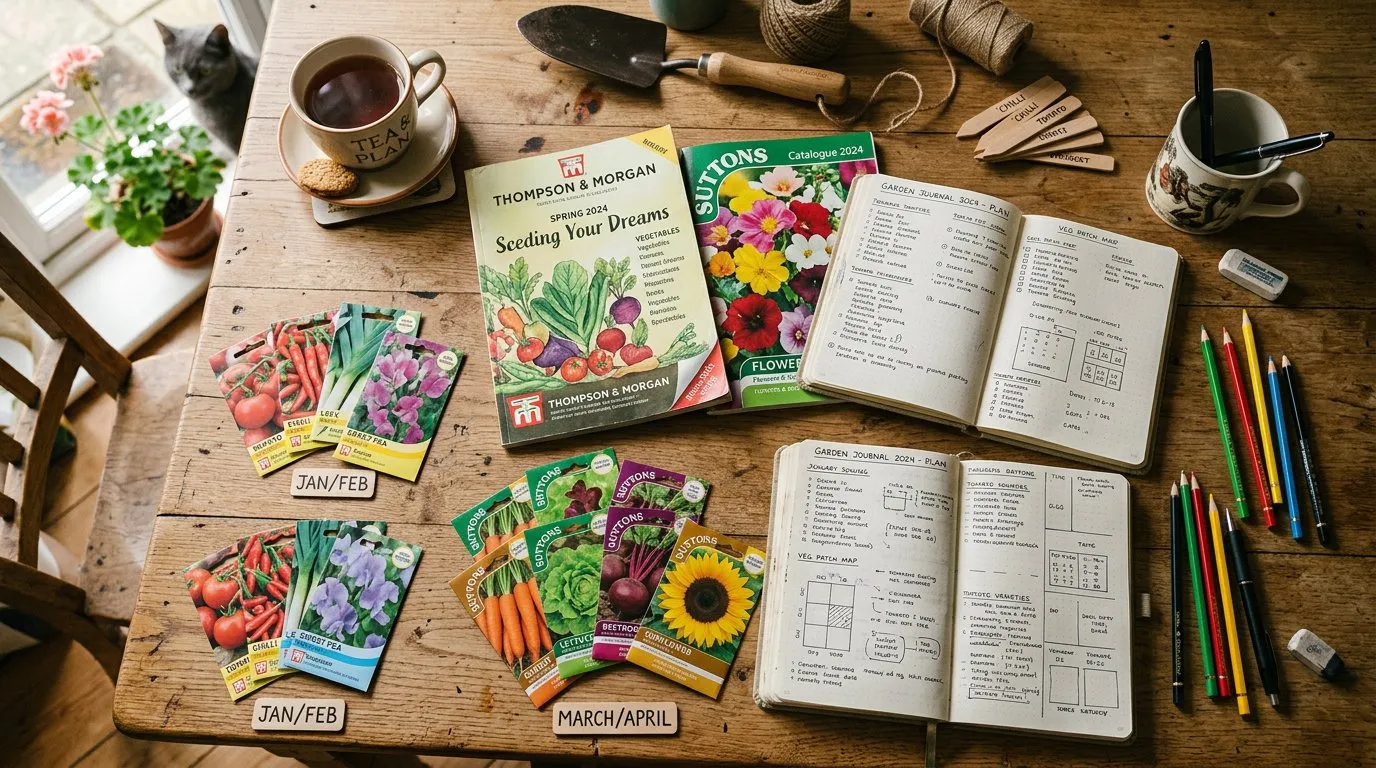 Planning the season ahead. Order seeds in January for the best selection before popular varieties sell out.
Wildlife in the January garden
The garden supports wildlife through the hardest month of the year. Small actions make a real difference to survival rates.
Feed birds daily
Put out food every morning. High-energy foods like sunflower hearts, fat balls, and peanuts help birds survive cold nights. Clean feeders weekly to prevent disease. Provide fresh water daily. A bird bath with a tennis ball on the surface stays ice-free longer. The ball moves with the wind and keeps the water open. Supporting bee-friendly garden plants through the rest of the year helps pollinators that are dormant now.
Keep pond ice free
Never smash ice on a pond. The shockwave harms fish and other aquatic life. Instead, place a pan of hot water on the surface to melt a hole. This allows gases to escape and oxygen to enter. A floating pond heater is the most reliable solution for prolonged freezing.
Leave leaf piles for hedgehogs
Hedgehogs hibernate through January in piles of leaves, log stacks, and quiet garden corners. Do not disturb bonfire piles or compost heaps without checking first. Leave some areas of the garden deliberately untidy to provide shelter.
January planting calendar
| Week | Indoors | Outdoors | Maintenance |
|---|---|---|---|
| Week 1 (1-7 Jan) | Chillies, peppers, sweet peas | Bare-root fruit trees, roses | Clean tools, plan crop rotation |
| Week 2 (8-14 Jan) | Aubergines, begonias, pelargoniums | Hedging plants, garlic cloves | Order seeds, check greenhouse |
| Week 3 (15-21 Jan) | Onions from seed, leeks, celery | Bare-root hedging, rhubarb crowns | Inspect stored vegetables |
| Week 4 (22-31 Jan) | Lobelia, antirrhinums, microgreens | Garlic (last chance), bare-root roses | Start chitting potatoes, protect pots |
Regional differences across the UK
January is deep winter everywhere in the UK. Regional differences affect outdoor planting windows rather than indoor sowing schedules.
Southern England and sheltered coastal areas
The mildest January conditions. Soil temperatures sit at 3-6C. Bare-root planting is possible on most frost-free days. Garlic planted now still has time to develop. Some mild coastal gardens in Cornwall and Devon see early bulb shoots by late January.
Midlands and central England
Expect January soil temperatures of 1-4C. Ground freezes regularly. Bare-root planting is possible during mild spells but check the weather forecast for the week ahead. Protect newly planted trees with a mulch ring. Indoor sowings follow the same schedule as the south.
Northern England
January is harder and colder. Bare-root planting is only practical on the mildest days. Focus energy on indoor sowings, tool maintenance, and planning. The soil remains frozen for longer periods. Cover broad bean sowings in pots under glass for a head start.
Scotland
The shortest daylight hours and coldest temperatures. Outdoor planting is largely impractical in most areas. Indoor sowings of chillies and peppers follow the same January schedule because they rely on artificial warmth, not outdoor conditions. Focus on greenhouse cleaning, tool maintenance, and seed ordering. The main outdoor sowing season begins in March.
Now you’ve mastered January garden tasks, read our guide on what to plant in February for the next step as daylight hours lengthen and more sowing windows open.
Frequently asked questions
Can I sow seeds in January UK?
Yes, several crops benefit from a January start. Sow chillies, peppers, and aubergines indoors at 21-25C. These slow-growing crops need the earliest possible start to fruit reliably in a UK summer. Sweet peas, begonias, and pelargoniums also germinate well from January indoor sowings. Outdoor seed sowing is not practical until March for most crops.
What vegetables can I plant outside in January?
Outdoor options are limited in January. Plant garlic cloves 5cm deep in well-drained soil on frost-free days. Plant bare-root fruit trees, rhubarb crowns, and asparagus crowns while they are dormant. Most vegetable seed sowing outdoors waits until March when soil temperatures rise above 7C.
Is it too early to start chitting potatoes in January?
Late January is the right time to start. Stand seed potatoes in egg boxes with the eye-heavy end pointing upward. Place in a cool, bright room at 8-10C. Chitting takes 4-6 weeks, producing sturdy 2-3cm shoots ready for planting from mid-March in southern England.
What flowers can I sow in January?
Sow slow-growing flowers indoors in January. Sweet peas in root trainers, begonias surface-sown at 21C, pelargoniums at 20-22C, lobelia, and antirrhinums all benefit from an early start. These produce stronger plants and earlier flowers than later sowings. Most flower sowings wait until March or April.
Can I plant bare-root trees in January?
January is one of the best months for bare-root planting. Fruit trees, roses, and hedging plants establish best during winter dormancy. Plant on frost-free days when the soil is workable, not frozen or waterlogged. Stake trees firmly, water thoroughly, and mulch around the base with 10cm of compost.
How do I protect plants from frost in January?
Use horticultural fleece over vulnerable plants and early outdoor sowings. Wrap terracotta pots in bubble wrap to prevent cracking. Move tender container plants against a south-facing wall for extra shelter. Keep greenhouse heaters set to 2-5C to prevent freezing. Ventilate greenhouses on mild days to reduce condensation and fungal disease.
Lawrie has been gardening in the West Midlands for over 30 years. He grows his own veg using no-dig methods, keeps a wildlife-friendly garden, and writes practical advice based on real UK growing conditions.