What to Plant in July in the UK
Everything to sow and plant in July in UK gardens. Covers succession vegetables, autumn prep, biennial flowers, fruit care, and summer jobs.
Key takeaways
- Over 20 crops can still be sown or planted in July across UK gardens
- Sow spring cabbage, kale, and chard now for autumn and winter harvests
- Continue successional sowings of lettuce, beetroot, and spring onions every 2-3 weeks
- Order spring-flowering bulbs like tulips, daffodils, and alliums for autumn planting
- Harvest courgettes, French beans, new potatoes, soft fruit, and the first tomatoes
- Raise mowing height during dry spells to protect lawn roots from drought stress
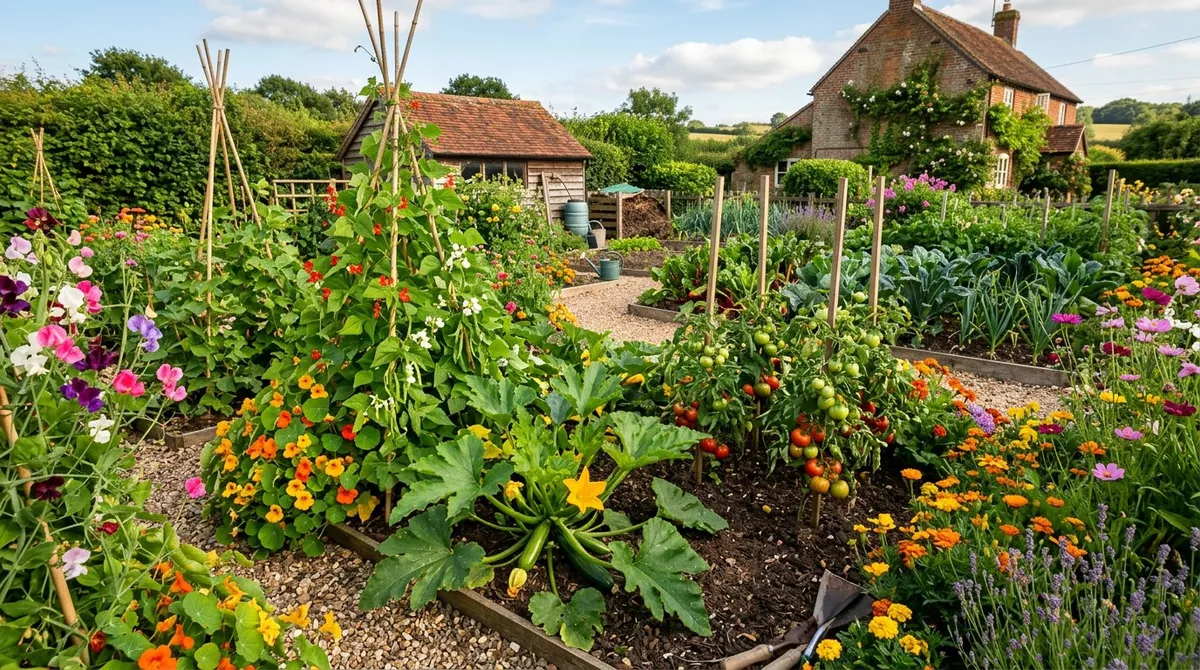
July is the height of the UK growing season. The garden is producing more than you can eat, and every border is in full flower. But this is not a month for sitting back. The sowings you make now determine what you harvest in autumn and winter.
For the full seasonal checklist beyond sowing and planting, see our summer gardening jobs guide. This is the last reliable month for many successional vegetable sowings. After mid-July, shortening days slow growth enough to make late sowings unreliable. At the same time, the first serious harvests of summer crops demand daily attention. Courgettes, beans, and soft fruit all need picking before they go over. This guide follows on from our June planting guide and connects back to the full vegetable planting calendar.
Vegetables to sow and plant in July
July is your final window for many crops. Make every sowing count.
Spring cabbage
Sow spring cabbage in early to mid-July for transplanting in August or September. These plants overwinter as small rosettes and produce tight heads from March to May the following year. Varieties like Durham Early and April are bred for winter hardiness.
Sow in modules or a seed bed outdoors. Transplant when seedlings have 4-6 true leaves, spacing 30cm apart in rows 45cm apart. Firm the soil well around each plant. Pigeons are the main threat over winter, so net with 50mm mesh from planting until harvest.
Kale
Kale sown in July still has time to establish before winter. It is the hardiest vegetable in the garden and survives temperatures below -10C. July sowings produce leaves from late autumn through to the following spring.
Sow in modules and transplant in August, spacing 45cm apart. Good varieties for July sowing include:
- Cavolo Nero - dark, strappy leaves ideal for soups and pasta
- Dwarf Green Curled - compact plants suited to smaller plots
- Red Russian - flat, tender leaves for salads when picked young
- Nero di Toscana - tall plants with heavily textured leaves
Why we recommend Cavolo Nero for July kale sowings: After 30 years of growing kale through UK winters, Cavolo Nero consistently delivers the best combination of hardiness and culinary quality from a July sowing. The dark, strappy leaves survive temperatures down to -10C and improve noticeably in flavour after the first hard frosts. A single July sowing of 6-8 plants produces enough for weekly harvesting from November through to April, filling the hungriest part of the hungry gap.
Beetroot succession
Continue sowing beetroot every 3 weeks until mid-July. These late sowings produce roots from September through November. Choose fast-maturing varieties like Boltardy or Pablo that reach pulling size in 8-10 weeks.
Sow 2cm deep in rows 30cm apart. Thin to 10cm between plants when seedlings are large enough to handle. Water consistently in dry weather. Irregular watering causes woody, ringed roots that taste disappointing.
French beans
Sow dwarf French beans directly outdoors until mid-July. Bush varieties like Safari, Tendergreen, and Speedy mature in 8-10 weeks, giving you pods from September into October. Sow 5cm deep and 15cm apart in double rows.
Climbing French beans are too slow for July sowing in most of the UK. Stick to dwarf bush types that crop quickly. Pick pods every 2-3 days once they start producing. Leaving mature pods on the plant signals it to stop flowering.
Turnips
Turnips are one of the fastest root vegetables. July sowings produce tender, golf-ball-sized roots in just 6-8 weeks. Varieties like Atlantic and Snowball are ready from September.
Sow thinly in rows 25cm apart and thin to 15cm. Pull them young. Large turnips turn woody and develop a strong, peppery flavour. Baby turnips are sweet and mild, excellent roasted or added to stews.
Chard
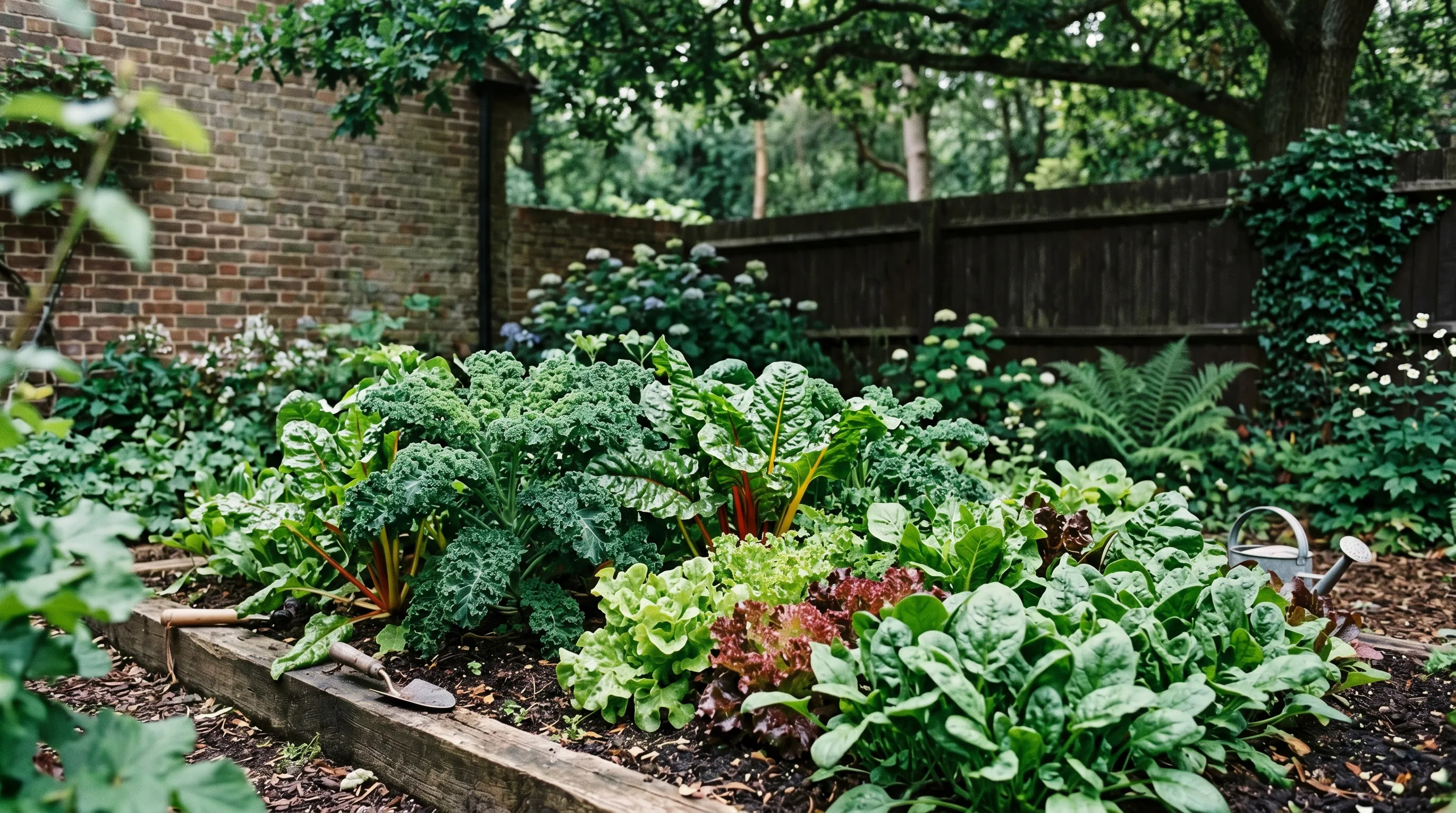
Swiss chard sown in July produces colourful stems and leaves from autumn into the following spring. It is remarkably hardy for a leafy vegetable, surviving all but the hardest UK frosts.
Sow 2cm deep, 15cm apart. Bright Lights produces a mix of red, yellow, orange, and white stems. Harvest outer leaves regularly, leaving the central growing point intact. One July sowing provides fresh greens for 8-9 months.
Gardener’s tip: Water the seed drill thoroughly before sowing, then cover with dry soil. This creates moisture at seed level while keeping the surface loose. In July’s heat, unwatered sowings fail to germinate.
Lettuce for autumn
Sow lettuce every two weeks through July for harvests from September into October. Choose varieties bred for shorter days and cooler conditions. Winter Density, Arctic King, and Valdor all perform well from July sowings.
Sow in light shade during hot weather. Full sun causes July-sown lettuce to bolt within weeks. A position between taller crops or on the north side of a fence gives the cooler conditions lettuce prefers.
Spring onions
Spring onions sown in July are ready from September. White Lisbon is the standard variety. Sow thinly in rows 15cm apart. No thinning is needed. They grow quickly in warm soil and tolerate light frosts, so autumn harvests are reliable.
For a detailed month-by-month sowing plan, see the seed sowing calendar.
Flowers to plant in July
Order autumn-planting bulbs
Order spring-flowering bulbs in July. Suppliers release their new season stock from mid-July, and popular varieties sell out by September. Order now for the best selection.
Key bulbs to order:
- Tulips - plant October to November for April flowers
- Daffodils - plant September to October for March flowers
- Alliums - plant September to October for May flowers
- Crocuses - plant September for February flowers
- Snowdrops - buy “in the green” in February, but order dry bulbs now
Wallflowers
Sow wallflowers in a seed bed outdoors in July. Transplant to their flowering positions in September or October. They bloom from March to May the following year, filling the garden with colour and scent during the gap between spring bulbs and summer perennials.
Erysimum cheiri varieties like Blood Red, Cloth of Gold, and Fire King produce the strongest fragrance. Space 25-30cm apart. Wallflowers prefer alkaline soil and full sun.
Foxgloves
Foxgloves sown in July flower the following June. Scatter seeds on the surface of moist compost in trays. Do not cover, as foxglove seeds need light to germinate. Prick out into individual pots when large enough to handle and plant in their final positions in autumn.
Foxgloves are essential for woodland and shaded borders. They are a magnet for bumblebees, which climb deep into the tubular flowers. For more ideas on bee-friendly planting, pair foxgloves with lavender and hardy geraniums.
Hollyhocks
Hollyhocks sown in July flower the following summer. Sow in 9cm pots and grow on in a cold frame over winter. Plant out in March, 45cm apart, against a south-facing wall or fence. They reach 1.5-2m tall and need staking in exposed gardens.
Hollyhock rust (orange pustules on leaves) is common. Remove affected leaves immediately and avoid overhead watering. Growing as biennials (sowing fresh each year) reduces rust buildup compared to keeping plants as short-lived perennials.
Fruit care in July
Summer-fruiting raspberries
Summer-fruiting raspberries produce their main crop in July. Pick every 2-3 days when berries are deep red and come away from the plug easily. After the final pick, cut all fruited canes down to ground level. These canes will not fruit again.
Tie in the new green canes that have grown this year. These will carry next summer’s crop. Select the strongest 6-8 canes per plant and remove the rest. Spread them evenly along the support wires, spacing 10cm apart.
Strawberry runners
Strawberry runners appear throughout July. If you need new plants, peg the strongest runner from each parent into a 9cm pot of compost sunk into the soil beside it. The runner roots into the compost within 4-6 weeks. Cut it free from the parent once rooted and plant in its new position.
Remove all other runners. Every runner left attached diverts energy from fruit production. A plant producing runners is a plant not producing strawberries.
Soft fruit harvesting
Blackcurrants, redcurrants, and gooseberries all crop in July. Pick blackcurrants and redcurrants as whole trusses when the lowest berries on each string are fully coloured. Gooseberries are ready when they give slightly when squeezed.
Summer-prune blackcurrant bushes by removing one in three of the oldest, darkest stems at ground level after picking. This encourages new growth from the base, which carries the best fruit. The RHS pruning guide has detailed instructions.
Lawn care in July
Raise the cutting height
Raise your mower blades during July dry spells. Cut at 3-4cm rather than the usual 2.5cm. Longer grass blades shade the soil, reduce moisture loss, and help roots survive drought. A closely mown lawn turns brown much faster than one left slightly longer.
Watering lawns
A brown lawn in summer is dormant, not dead. UK grasses recover quickly when autumn rain returns. If you do water, give a thorough soaking of 2.5cm once a week rather than a light daily sprinkling. Push a screwdriver into the soil after watering. If it goes in 15cm easily, the water has penetrated deep enough.
Mowing in dry weather
Mow less frequently during drought. Once a fortnight is adequate if the lawn is not actively growing. Leave clippings on the surface to act as a mulch, returning moisture and nutrients. Never remove more than a third of the leaf blade in a single cut.
Other essential July jobs
Deadheading
Deadhead roses, dahlias, and bedding plants weekly. Removing spent flowers prevents the plant from setting seed and diverts energy into producing more blooms. Cut rose stems back to a healthy outward-facing bud. With dahlias, remove the entire flower stem back to the next bud or side shoot.
Watering priorities
Focus watering on the crops that need it most:
- Tomatoes - water daily in containers, every 2-3 days in the ground. Irregular watering causes blossom end rot (black patches on the base of the fruit).
- Courgettes and cucumbers - heavy drinkers. Water at the base, not over the leaves, to reduce mildew risk.
- Runner beans - water the roots generously when flowers appear. Drought causes flowers to drop without setting pods.
- New plantings - anything planted in the last 4 weeks needs daily watering until roots establish.
Gardener’s tip: Water in the evening, not the morning. Evening watering gives plants all night to absorb moisture before the next day’s heat. Morning watering loses more to evaporation. The exception is plants prone to slugs. Water those in the morning so the soil surface dries by nightfall.
Harvesting
Pick crops regularly. Courgettes left on the plant for 3 days become marrows. French beans left too long turn stringy. Runner beans go tough if pods swell visibly. Regular picking keeps plants productive and extends the harvest by weeks.
Summer pruning wisteria
Prune wisteria in July by cutting back all the long, whippy side shoots to 5-6 leaves from the main framework. This controls the vigorous summer growth and encourages flower bud formation for next spring. A second, shorter prune in February tidies the same shoots to 2-3 buds.
Composting
July produces masses of garden waste. Add spent crops, lawn clippings, and weeds (without seed heads) to the compost heap. Mix green nitrogen-rich material (grass clippings, vegetable waste) with brown carbon-rich material (cardboard, straw, dried stems) in roughly equal proportions. Turn the heap fortnightly in warm weather.
What to harvest in July
| Crop | When ready | How to tell |
|---|---|---|
| Courgettes | Daily picking | 15-20cm long, firm and glossy |
| French beans | Every 2-3 days | Pods snap cleanly, no visible bean swelling |
| Runner beans | Every 2-3 days | 15-20cm long, before beans swell inside |
| Broad beans | Weekly | Pods plump, beans visible through skin |
| New potatoes | From early July | Plants flowering, tubers golf-ball size |
| Beetroot | From early July | Roots 5-7cm diameter at soil level |
| Carrots | From mid-July | Tops of roots visible and orange at the crown |
| Lettuce | Ongoing | Firm hearts or outer leaves large enough to pick |
| Tomatoes | From late July | Fully coloured, slight give when gently squeezed |
| Cucumbers | From mid-July | 15-20cm for outdoor types, longer for greenhouse |
| Peas | Ongoing | Pods well filled, peas tender and sweet |
| Raspberries | Throughout July | Deep red, pull away from plug easily |
| Strawberries | Until mid-July | Fully red all over, fragrant |
| Blackcurrants | Mid-late July | Lowest berries on string fully black |
| Redcurrants | Mid-July | Strings fully red, translucent |
| Gooseberries | Early-mid July | Give slightly when squeezed |
Common mistakes with July planting
Neglecting autumn and winter crops
The busiest harvest month is the easiest one to forget about forward planning. If you do not sow spring cabbage, kale, and chard in July, there is no second chance. Set aside one session in early July specifically for sowing winter crops.
Letting courgettes become marrows
A courgette can double in size in 48 hours during warm weather. Check plants daily. Once a courgette becomes a marrow, the plant slows its production of new fruit. Cutting off oversized fruits immediately restarts flowering.
Watering at the wrong time
Watering in full midday sun wastes water to evaporation and can scorch wet leaves. Watering in the evening is most efficient, but can encourage slugs on vulnerable crops. The ideal compromise is late afternoon, giving leaves time to dry before nightfall.
Forgetting to feed container plants
Container-grown tomatoes, peppers, and herbs exhaust the nutrients in their compost within 6-8 weeks. From July onwards, feed weekly with a high-potash liquid feed (tomato feed). Unfed container plants produce fewer flowers and smaller fruit.
Stopping successional sowings too early
July is the last reliable month for succession sowings of lettuce, beetroot, spring onions, and radish. Many gardeners stop sowing after June, creating a gap in harvests during September and October. Keep sowing short rows every 2-3 weeks through mid-July.
If you are new to growing your own vegetables, our guide to starting a vegetable garden covers the basics of soil preparation, plot planning, and crop rotation.
July planting calendar
| Week | Sow indoors | Sow outdoors | Plant out | Harvest |
|---|---|---|---|---|
| Week 1 | Spring cabbage, kale | French beans, beetroot, lettuce | Late brassica transplants | Broad beans, peas, new potatoes |
| Week 2 | Chard, Chinese cabbage | Turnips, spring onions, radish | Wallflower seedlings | Courgettes, French beans, raspberries |
| Week 3 | Pak choi | Lettuce (last main sowing), spinach | Nursery perennials | Runner beans, tomatoes, strawberries |
| Week 4 | - | Spring onions (last), beetroot (last) | - | Blackcurrants, redcurrants, gooseberries |
Now you’ve mastered July planting, read our guide on what to plant in August for the next step as the harvest peaks and the last winter sowings must be made.
Frequently asked questions
What vegetables can I sow in July UK?
Over 20 vegetables can start in July. Sow spring cabbage, kale, chard, lettuce, beetroot, spring onions, turnips, and dwarf French beans. Start Chinese cabbage and pak choi for autumn salads. July is the last reliable month for many successional vegetable sowings before daylight hours begin to shorten noticeably.
Is July too late to sow beetroot?
July is not too late for beetroot. Sow until mid-July for roots ready from September to November. Choose fast-maturing varieties like Boltardy or Pablo that reach harvest size in 8-10 weeks. Water consistently in dry weather to prevent woody, ringed roots that taste disappointing.
What flowers should I plant in July?
Sow biennial flowers in July for blooms next year. Foxgloves, wallflowers, hollyhocks, and sweet William all need sowing now to flower the following spring or summer. Order spring-flowering bulbs for autumn planting. Plant autumn-flowering bulbs like colchicums and nerines directly into borders.
Can I still sow French beans in July?
Yes, sow dwarf French beans until mid-July. They mature in 8-10 weeks and crop from September into October. Choose bush varieties over climbers, as bush types produce faster. Sow directly outdoors 5cm deep and 15cm apart. Pick every 2-3 days to keep plants cropping.
What should I harvest in July UK?
July is the most productive harvest month. Pick courgettes, French beans, runner beans, broad beans, new potatoes, beetroot, carrots, lettuce, tomatoes, cucumbers, peas, raspberries, strawberries, gooseberries, blackcurrants, and redcurrants. Harvest courgettes when 15-20cm long before they turn into marrows.
How often should I water the garden in July?
Water newly planted crops daily until established. Give established plants a deep soak twice a week rather than a light daily sprinkling. Water in the evening to reduce evaporation. Containers may need watering twice daily in hot weather. Mulch around plants with compost or bark to retain moisture.
When should I order spring bulbs?
Order spring-flowering bulbs from mid-July onwards. Suppliers release new stock in July, and popular varieties like named tulip cultivars and giant alliums sell out by September. Order tulips, daffodils, alliums, crocuses, and snowdrops now. Plant from September (daffodils) through to November (tulips) when soil temperatures drop.
Lawrie has been gardening in the West Midlands for over 30 years. He grows his own veg using no-dig methods, keeps a wildlife-friendly garden, and writes practical advice based on real UK growing conditions.