What to Plant in June in the UK
Everything to sow and plant in June across UK gardens. Covers successional vegetables, winter brassicas, flowers, herbs, and late-season crops.
Key takeaways
- Over 25 crops can still be sown or planted in June across UK gardens
- Sow kale, purple sprouting broccoli, and Brussels sprouts for winter harvests
- Continue successional sowings of lettuce, radish, and beetroot every 2-3 weeks
- French beans and runner beans can still be direct sown until mid-June
- Harvest first early potatoes, broad beans, and salad crops from spring sowings
- Begin sowing biennials like wallflowers and foxgloves for next year's flowers
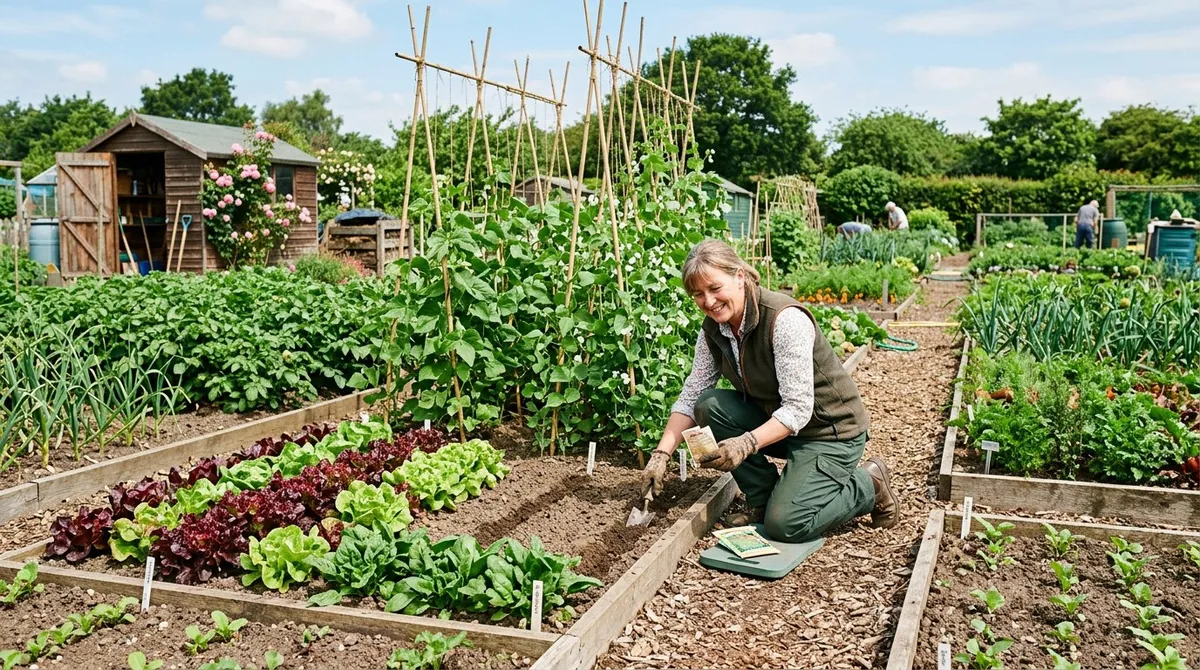
June marks a turning point in the UK gardening year. The frantic sowing and planting of spring is winding down, but the garden is far from finished. This is the month for successional sowings that keep your harvest running through late summer, and for starting the winter crops that will feed you from November to March.
At the same time, the first rewards arrive. New potatoes, broad beans, and fresh salads from spring sowings reach the table. The garden shifts from pure investment to a balance of sowing, maintenance, and harvest. This guide follows on from our May planting guide and connects back to the full vegetable planting calendar.
Successional vegetable sowings
The most valuable June activity is successional sowing. Crops sown now fill the gap between early summer and autumn harvests.
Salads and leaves
Sow lettuce every two weeks through June. Choose bolt-resistant varieties like Lollo Rossa, Little Gem, or Batavia types. Summer heat causes many lettuce varieties to bolt (run to seed), producing bitter leaves. Sow in light shade or between taller crops like runner beans for cooler conditions.
Rocket germinates in 3-5 days and produces peppery leaves within 4 weeks. It bolts quickly in heat, so treat it as a cut-and-come-again crop. Harvest leaves when 10cm long.
Spinach from June sowings tends to bolt. Switch to perpetual spinach (actually a type of chard), which resists bolting and produces leaves through summer and into the following spring. Sow 2cm deep, 15cm apart.
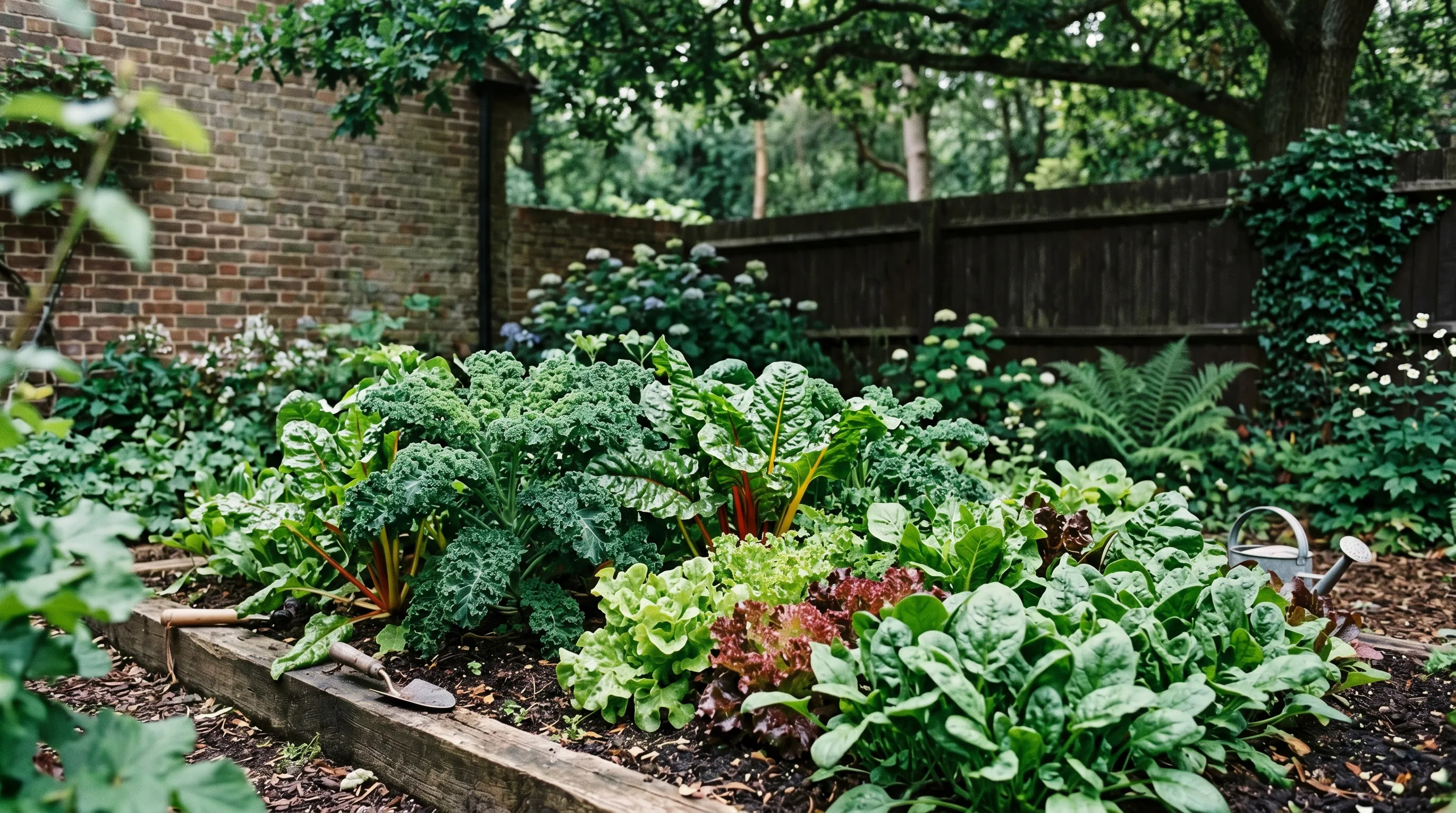
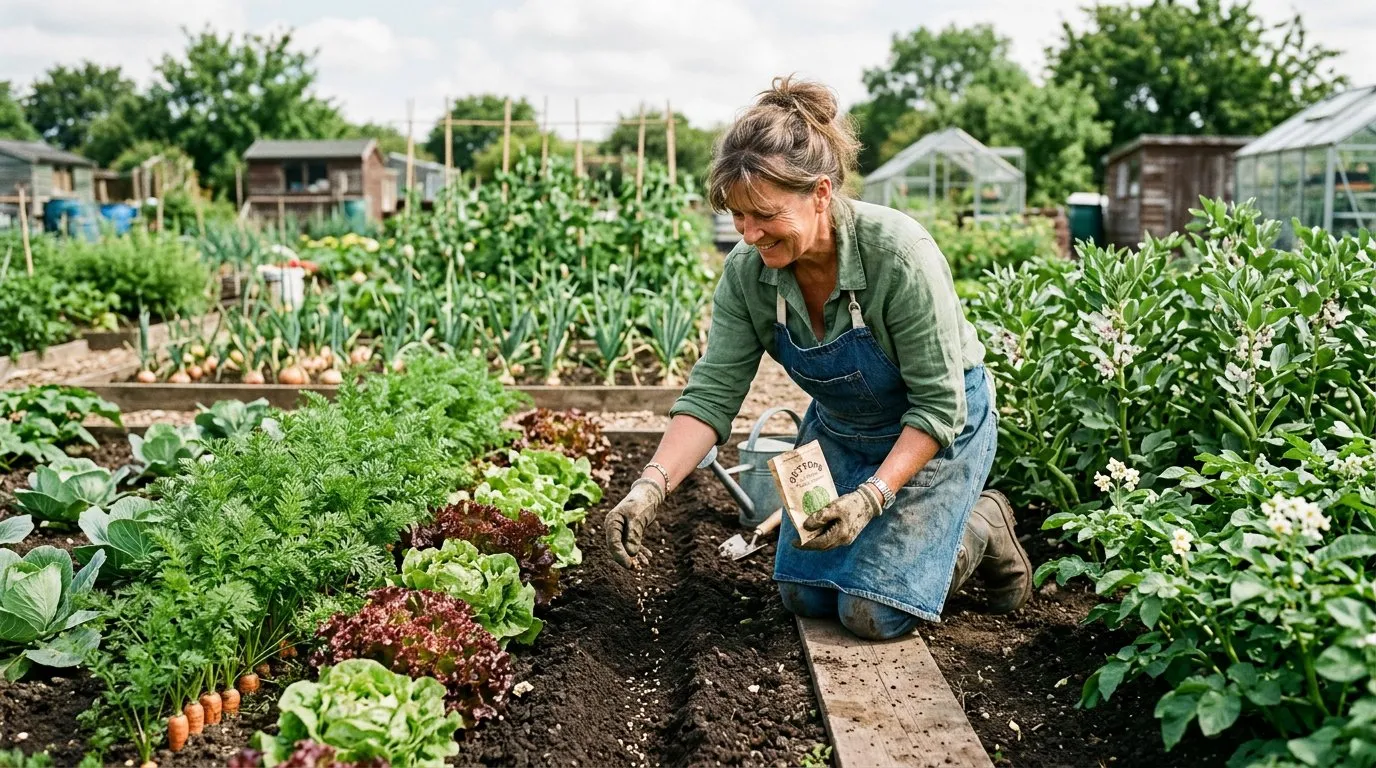 Successional sowing in June. Short rows of lettuce sown every two weeks keep salad leaves coming until October.
Root vegetables
Beetroot sown in June produces roots from August into autumn. Sow every 3-4 weeks for a continuous supply. Boltardy remains the best variety for avoiding premature flowering.
Carrots can still be sown until mid-July. June sowings avoid the worst of the first-generation carrot fly (which is active in May). Cover with fine mesh regardless. Varieties like Nantes and Chantenay mature in 10-14 weeks.
Turnips sown in June grow quickly in warm soil. Ready in 6-10 weeks. Pull them young and tender at golf-ball size.
Spring onions sow every three weeks from now until August. They germinate fast in warm soil and are ready in 8 weeks.
Gardener’s tip: Water all June sowings into the drill before covering with soil. Dry soil in summer prevents germination. A thorough watering of the seed drill followed by dry soil on top creates the ideal combination of moisture below and insulation above.
Beans
French beans can be direct sown until mid-June. Both bush and climbing types crop well from June sowings, producing pods from August to October. Sow 5cm deep, 15cm apart.
Runner beans can go in until mid-June. Later sowings produce smaller yields but still give you fresh pods from late August. If your March or April-sown runner beans failed to frost or slugs, this is your fallback window.
Warning: After mid-June, there is not enough growing season for runner beans to reach full production. A mid-June sowing gives roughly 8 weeks of picking from late August. A late June sowing gives only 4-6 weeks, which may not justify the space.
Winter brassicas
June is the critical sowing month for winter vegetable crops. Miss this window and you will have nothing to harvest from November to March.
Kale
Kale is the hardiest winter vegetable. It survives temperatures below -10C and actually tastes better after frost, which converts starches to sugars. Sow in modules indoors at 15-18C. Transplant to final positions in July or August, spacing 45cm apart.
Varieties to sow in June:
- Cavolo Nero (Black Tuscan) - dark, strappy leaves for soups and stir-fries
- Curly Kale (Dwarf Green Curled) - traditional variety for boiling and steaming
- Red Russian - flat, oak-shaped leaves, tender when young for salads
- Redbor - deep purple leaves, ornamental and edible
Purple sprouting broccoli
Purple sprouting broccoli sown in June produces spears the following February to April. It occupies the ground for 9-10 months, which demands space. But the harvest arrives when little else is growing, making it one of the most valuable winter crops.
Sow in modules and transplant in August. Space 60cm apart in rich soil. Net against pigeons, which strip brassica leaves over winter. Stake tall plants in exposed gardens to prevent wind rock.
Why we recommend purple sprouting broccoli as the best value winter brassica: After 30 years of growing vegetables through UK winters, purple sprouting broccoli sown in June delivers more harvests per square metre than any other brassica. A single plant produces spears for 6-8 weeks from February to April, precisely when the hungry gap is at its worst. The February harvest alone justifies the space it occupies from August to March. No other crop fills that window as reliably.
Brussels sprouts
Sow Brussels sprouts in June for Christmas harvests. They need 20-28 weeks from sowing to picking. Transplant in July, spacing 75cm apart. These are large plants that need firm soil. Tread around the base after planting and stake in windy sites.
Calabrese
Calabrese (green broccoli) sown in June crops from August to October. Unlike purple sprouting broccoli, calabrese produces a single large head first, then smaller side shoots for several weeks. Sow in modules and transplant 40cm apart.
Spring cabbage
Sow spring cabbage in late June for planting out in August. These overwinter as small plants and produce heads the following March to May. Varieties like Durham Early and April are bred for overwintering.
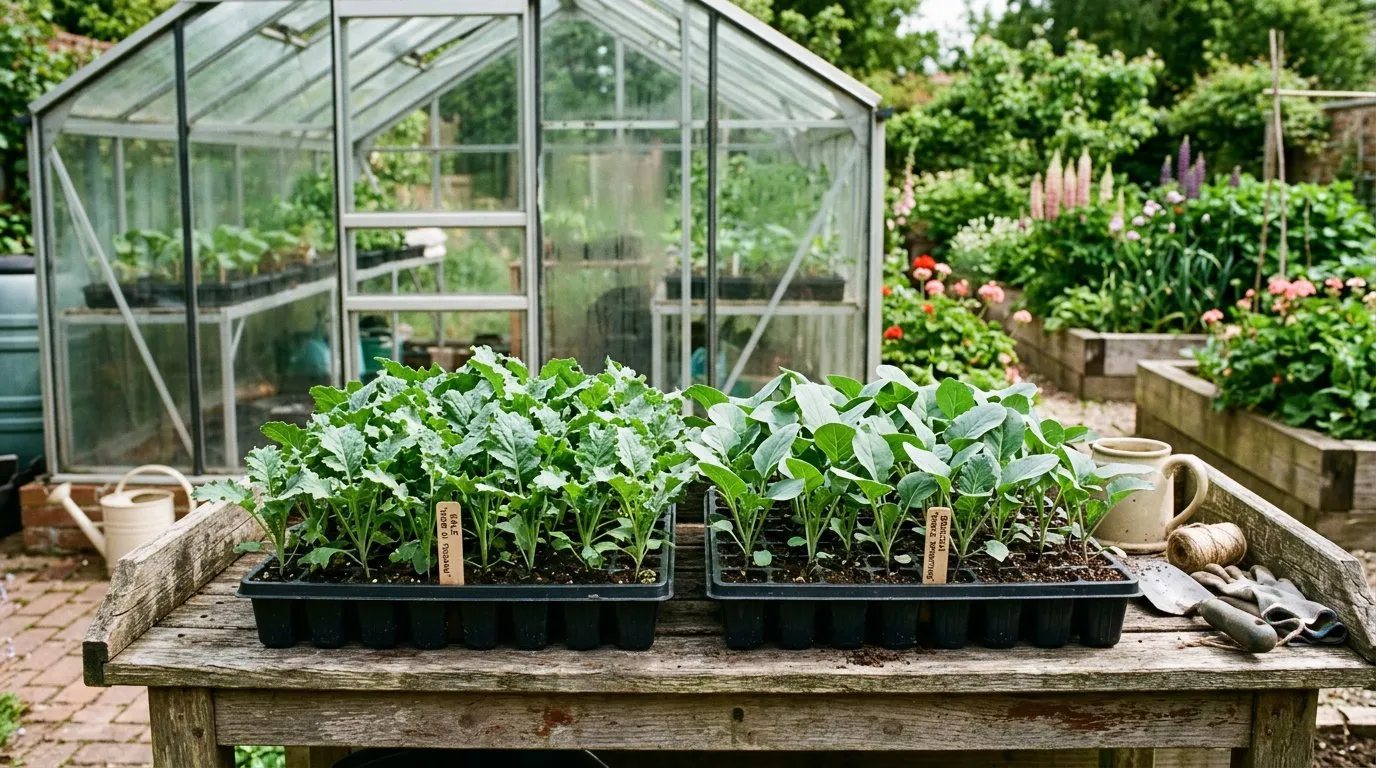 Winter brassica seedlings started in June. These kale and broccoli plants will produce harvests from November to March.
Late plantings
Courgettes
If your April or May courgette plants failed, nursery-grown replacements planted in early June still produce well. Courgettes are fast growers. A plant put in the ground on 1 June produces fruit by mid-July. One plant is enough for most households.
Tomatoes
June is late for tomato growing, but not impossible. Buy established plants from a garden centre rather than sowing seed. Plant in a greenhouse for the best results. Outdoor cherry varieties like Gardener’s Delight and Sungold ripen fastest. Expect harvests from late August.
Cucumbers
Outdoor ridge cucumbers planted in early June crop from late July. Keep them well-watered and feed weekly with a high-potash liquid feed once fruits form. Greenhouse cucumbers can still be planted from nursery-grown plants.
Flowers to sow and plant in June
Biennials for next year
June is the month to sow biennial flowers that will bloom the following spring and summer:
- Foxgloves - sow on the surface of moist compost. Seeds are tiny and need light to germinate. These are well suited to shaded spots and wildlife gardens. They attract bees deep into the flower tubes.
- Wallflowers - sow in a seed bed and transplant in September for flowers from March. The scent is one of the strongest in the spring garden.
- Sweet William - sow in rows outdoors and transplant to final positions in autumn.
- Honesty (Lunaria) - sow outdoors. Flowers the following spring and produces decorative seed pods.
Filling gaps
Use nursery-grown plants to fill gaps in borders. Cosmos, salvias, and verbena bonariensis are widely available in June and provide instant colour. Plant in groups of three or five for natural-looking drifts.
Sunflowers
Sunflowers can still be sown directly outdoors until mid-June. They grow rapidly in warm soil and will still reach flowering height by August and September. For variety recommendations, see our guide on when to plant sunflowers.
Sweet peas
Continue picking sweet peas regularly to extend flowering. Remove seed pods immediately. Once sweet peas set seed, they stop producing flowers. A weekly pick keeps plants productive until September. These are a classic cottage garden favourite.
Herbs
Sow outdoors
- Basil - sow directly outdoors from early June once soil is warm. Pinch out flower buds to keep leaves coming.
- Coriander - sow every three weeks for continuous supply. June sowings bolt faster than spring ones, so pick leaves young.
- Dill - final outdoor sowings. Harvest leaves before the plant flowers.
Harvest regularly
Cut mint, chives, oregano, and thyme regularly through June. Frequent harvesting encourages fresh, productive growth and prevents plants from becoming woody and leggy.
Fruit
Harvesting
Strawberries ripen from mid-June onwards. Pick daily. Ripe fruit left on the plant attracts slugs and wasps. Net against birds. For growing tips, see our strawberry guide.
Gooseberries are ready from late June. Thin the crop in early June by removing every other berry. The remaining fruit grows larger and sweeter. Use thinned berries for cooking.
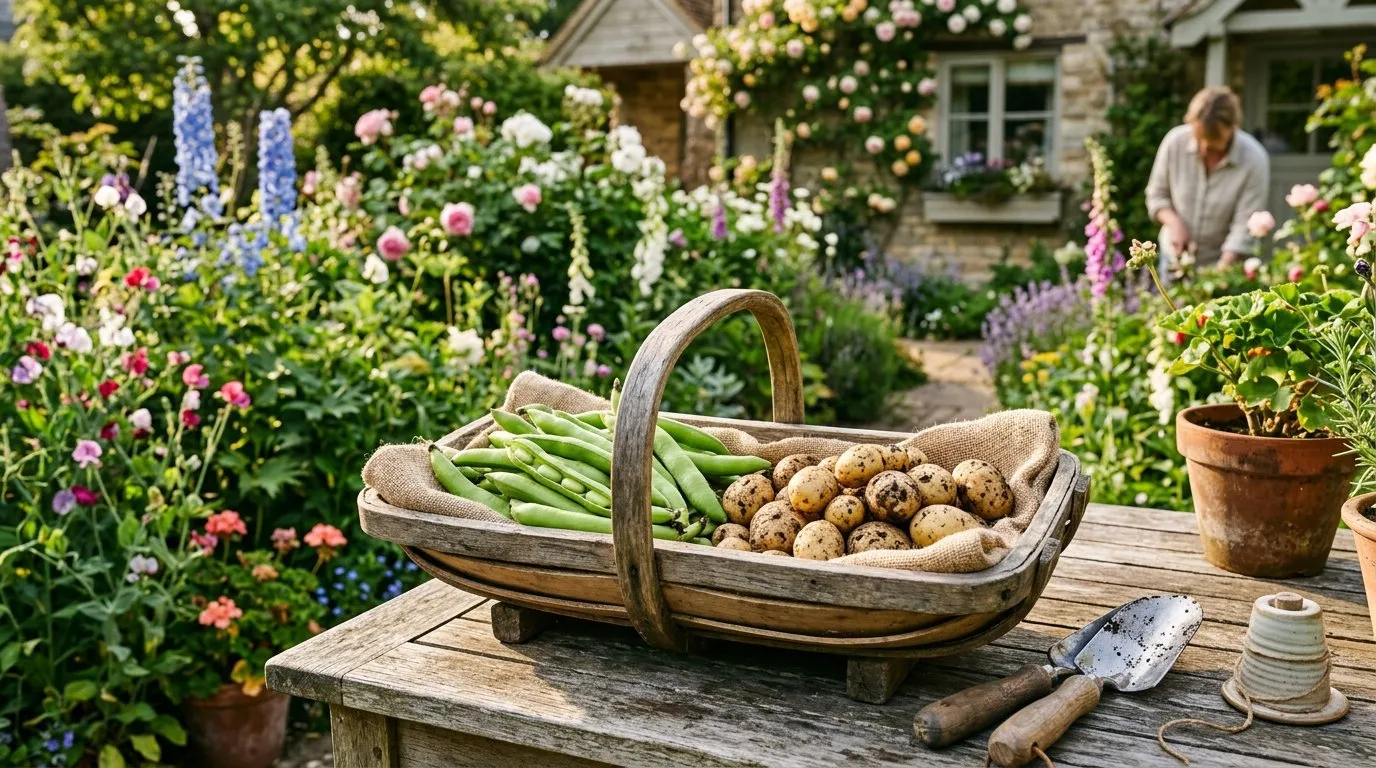 The first harvests of the season. Broad beans and new potatoes sown in spring are ready to pick in June.
Summer pruning
Begin summer pruning of trained fruit trees (cordons, espaliers, fans) from late June. Cut back new side shoots to 5 leaves from the main stem. This directs energy into fruit development rather than leafy growth.
Runners
Strawberry runners appear from June. If you want new plants, peg the first runner from each parent plant into a small pot of compost placed next to it. Cut the runner from the parent once the new plant has rooted (4-6 weeks). Remove all other runners to direct energy into fruit production.
Lawn and garden maintenance
Lawn care
Mow weekly in June as growth peaks. Set blades to 2.5-3cm for a formal lawn, 3-4cm for a family lawn. Leave clippings on the lawn during dry weather to return nutrients and retain moisture. Apply a liquid lawn feed if growth is pale or patchy.
Watering
June can be dry. Water newly planted crops and seedlings daily until established. Established plants benefit from deep, infrequent watering rather than daily sprinkling. A thorough soaking twice a week encourages deeper root growth than a light daily watering.
Weeding
Hoe between rows on dry days. Annual weeds die within hours when cut off at the root on a sunny morning. Hoeing is faster and more effective than hand-pulling once beds are full of growing crops.
June planting calendar
| Week | Sow indoors | Sow outdoors | Plant out | Harvest |
|---|---|---|---|---|
| Week 1 | Kale, calabrese, Brussels sprouts | French beans, lettuce, radish | Last courgettes, peppers | Broad beans, lettuce |
| Week 2 | Purple sprouting broccoli | Beetroot, carrots, spring onions | Nursery perennials | Peas, spring onions |
| Week 3 | Spring cabbage | Turnips, spinach, runner beans (last) | Fill border gaps | Radish, new potatoes |
| Week 4 | - | Foxgloves, wallflowers, sweet William | - | Strawberries, gooseberries |
Common mistakes with June planting
Missing the winter brassica window
Kale, sprouting broccoli, and Brussels sprouts must be sown by the end of June to produce winter crops. Delay until July and they may not mature before hard frosts arrive. Set a reminder for early June and treat it as a non-negotiable task.
Stopping successional sowings
Many gardeners sow enthusiastically in spring then forget to sow through summer. The result is a feast-or-famine harvest: a glut in June and July, nothing in September. Keep sowing short rows of lettuce, radish, and beetroot every 2-3 weeks through June and July.
Overwatering established plants
Newly planted seedlings need regular water. Established plants do not need daily watering. Overwatering creates shallow root systems and can cause root rot. Water deeply twice a week rather than lightly every day. Exception: tomatoes, courgettes, and cucumbers in containers need daily watering in hot weather.
Ignoring blight risk
Potato blight and tomato blight arrive from late June in warm, humid conditions. Check leaves weekly for brown patches with white mould on the undersides. Remove affected foliage immediately. Grow blight-resistant potato varieties like Sarpo Mira for maincrops. Greenhouse tomatoes are less at risk than outdoor ones.
Letting crops bolt
Lettuce, spinach, and coriander bolt quickly in June heat. Once a plant bolts, the leaves turn bitter. Harvest regularly and sow bolt-resistant varieties. Water consistently. Drought stress triggers bolting.
Now you’ve mastered June planting, read our guide on what to plant in July for the next step as successional sowing windows start to close.
Frequently asked questions
What vegetables can I still sow in June UK?
Over 20 vegetables can start in June. Sow French beans, runner beans, beetroot, carrots, lettuce, radish, spring onions, turnips, and courgettes (from nursery plants). Start winter brassicas like kale and calabrese indoors in modules. June is the last main sowing month for many summer crops.
Is June too late to plant tomatoes?
June is late but still possible. Buy established plants from a garden centre rather than sowing seed, which needs 6-8 weeks of indoor growth. Plant in a greenhouse for the best results, or in the warmest outdoor spot against a south-facing wall. Cherry varieties ripen fastest. Expect harvests from late August.
What should I sow in June for winter?
Sow kale, purple sprouting broccoli, Brussels sprouts, and spring cabbage in June for autumn and winter harvests. These brassicas need a long growing season of 20-30 weeks. Sow indoors in modules at 15-18C and transplant to their final position in July or August when they have 4-6 true leaves.
Can I still sow runner beans in June?
Yes, sow runner beans directly outdoors until mid-June. Later sowings produce smaller total harvests but still crop well from late August into October. Sow two seeds per cane position, 5cm deep. Remove the weaker seedling. After mid-June, the growing season is too short for full production.
What flowers can I plant in June?
Plant out remaining half-hardy annuals and summer bedding. Sow biennial flowers like foxgloves, wallflowers, and sweet William for blooms next spring. Direct sow sunflowers for late summer flowers. Fill gaps in borders with instant-colour nursery plants. Continue picking sweet peas to extend flowering.
When do I harvest spring-sown vegetables?
First harvests arrive from early June. First early potatoes are ready when the plants flower, about 10-12 weeks after planting. Broad beans crop from late June. Lettuce, radish, and spring onions from March sowings are ready now. Peas follow from mid-June. Strawberries ripen from mid-June.
Lawrie has been gardening in the West Midlands for over 30 years. He grows his own veg using no-dig methods, keeps a wildlife-friendly garden, and writes practical advice based on real UK growing conditions.