What to Plant in November in the UK
Everything to plant and do in November across UK gardens. Covers garlic, broad beans, bare-root trees, tulip bulbs, lawn care, and essential winter jobs.
Key takeaways
- November is the ideal month for planting bare-root fruit trees, roses, and hedging plants
- Plant garlic cloves and Aquadulce Claudia broad beans for the earliest spring harvests
- Get tulip bulbs in the ground before mid-December for the strongest spring display
- Harvest parsnips after the first frost when their flavour is at its sweetest
- Lift and store dahlia tubers once the foliage blackens after a hard frost
- Spread well-rotted manure on empty beds now and let winter weather break it down
November marks the shift from autumn into winter across UK gardens. The growing season is over for most crops, but this is far from a quiet month. Some of the most important planting of the year happens now, while the soil is still workable and bare-root plants are available at their cheapest.
This is the month for garlic, tulips, bare-root fruit trees, and roses. It is also the time to prepare the garden for winter: clearing fallen leaves, insulating taps, and spreading manure on empty beds. Smart work in November sets up an easier and more productive spring. For the full seasonal checklist, see our winter gardening jobs guide. This guide follows on from the full vegetable planting calendar and connects to our seed sowing calendar for year-round planning.
Vegetables to plant in November
November planting is limited but the crops that go in now are among the most valuable in the garden. They use winter cold to their advantage.
Garlic
Garlic needs a period of cold (below 10C for at least 4-6 weeks) to trigger proper bulb division. November planting gives it exactly that. Autumn-planted garlic produces larger, better-formed bulbs than spring-planted cloves.
Choose a hardneck variety like Lautrec Wight or Caulk Wight for the strongest flavour, or a softneck like Solent Wight or Picardy Wight for longer storage. Buy certified virus-free seed garlic from a supplier rather than using supermarket bulbs, which may carry disease.
Break the bulb into individual cloves. Plant each clove 2.5cm deep and 15cm apart in rows 30cm apart. The pointed end faces upward. Choose a sunny, well-drained spot. Garlic sitting in waterlogged soil over winter will rot. If your soil is heavy clay, plant in raised beds or add grit to the planting area.
Broad beans
Aquadulce Claudia is the only broad bean variety bred for autumn sowing. Sow seeds directly outdoors in November, 5cm deep and 20cm apart in double rows. These tough plants overwinter as small seedlings and produce the earliest bean harvest the following May, several weeks ahead of spring-sown crops.
In colder areas of the UK (Scotland, northern England, or exposed upland sites), sow into modules in an unheated greenhouse or cold frame instead. Transplant the seedlings in early spring once the worst frosts pass. For detailed sowing windows by region, see our guide on when to plant broad beans.
Gardener’s tip: Pinch out the growing tips of autumn-sown broad beans in late April. This removes the soft shoots that blackfly colonise first, and directs energy into pod production.
Rhubarb crowns
November is an excellent month for planting bare-root rhubarb crowns. Plant with the growing bud just at or slightly above soil level. Space crowns 90cm apart. Victoria and Timperley Early are reliable UK varieties. Do not harvest any stalks in the first year. Let the plant establish a strong root system.
Bare-root asparagus
Plant bare-root asparagus crowns in November while the soil is still warm enough for root establishment. Dig a trench 20cm deep and 30cm wide. Make a ridge along the bottom and drape the roots over it. Cover with 5cm of soil initially, then fill gradually as the crowns grow. Asparagus needs patience: do not harvest for the first two years.
Flowers to plant in November
Tulip bulbs
November is the ideal time for tulip bulbs. Late planting is deliberate: warm soil encourages tulip fire (Botrytis tulipae), a fungal disease that distorts leaves and rots bulbs. Waiting until soil temperatures drop below 10C reduces this risk significantly.
Plant tulip bulbs 15-20cm deep, pointed end up, in well-drained soil. Deeper planting protects against frost heave and discourages squirrels from digging them up. You can plant tulips until mid-December and still expect a strong spring display. Our guide on when to plant tulip bulbs covers the ideal timing for each UK region.
Group tulips in clusters of 7-15 bulbs for the best visual effect. Try mixing early, mid, and late-flowering varieties for a display that lasts from March to May.
Bare-root roses
November is the start of bare-root rose season. Bare-root roses are cheaper than container-grown plants and establish faster because the roots grow directly into garden soil. Soak the roots in water for at least two hours before planting. Dig a hole wide enough to spread the roots, and plant with the graft union (the knobbly join between rootstock and stem) just below soil level.
For pruning advice once your roses are established, see our guide on how to prune roses.
Bare-root shrubs and hedging
Bare-root hedging plants are available from November to March, and November planting gives the longest establishment period before spring growth. Native species like hawthorn, blackthorn, field maple, and hazel are ideal for wildlife hedges and attract a wide range of garden birds.
Lifting and storing dahlia tubers
After the first hard frost blackens the foliage, it is time to lift dahlia tubers. Cut the stems back to 10cm above ground level. Carefully fork up the tubers, being careful not to spear them. Brush off loose soil and turn them upside down for a week to drain moisture from the hollow stems.
Once dry, store the tubers in trays of slightly damp compost or vermiculite in a frost-free shed, garage, or cellar. Check monthly through winter and discard any that show signs of rot. In mild areas or sheltered gardens, dahlias can overwinter in the ground under a thick mulch of bark or straw.
Wallflowers and sweet Williams
Plant out wallflower and sweet William plants that were sown in summer. These biennials flower the following spring and early summer. Plant in sunny, well-drained positions. Wallflowers produce one of the most fragrant spring displays.
Protecting tender plants
Move tender plants in pots (cannas, tree ferns, citrus trees, olive trees) into an unheated greenhouse, conservatory, or sheltered porch. Wrap borderline-hardy plants left outdoors with horticultural fleece, especially the crown and base.
Fruit
Bare-root fruit trees
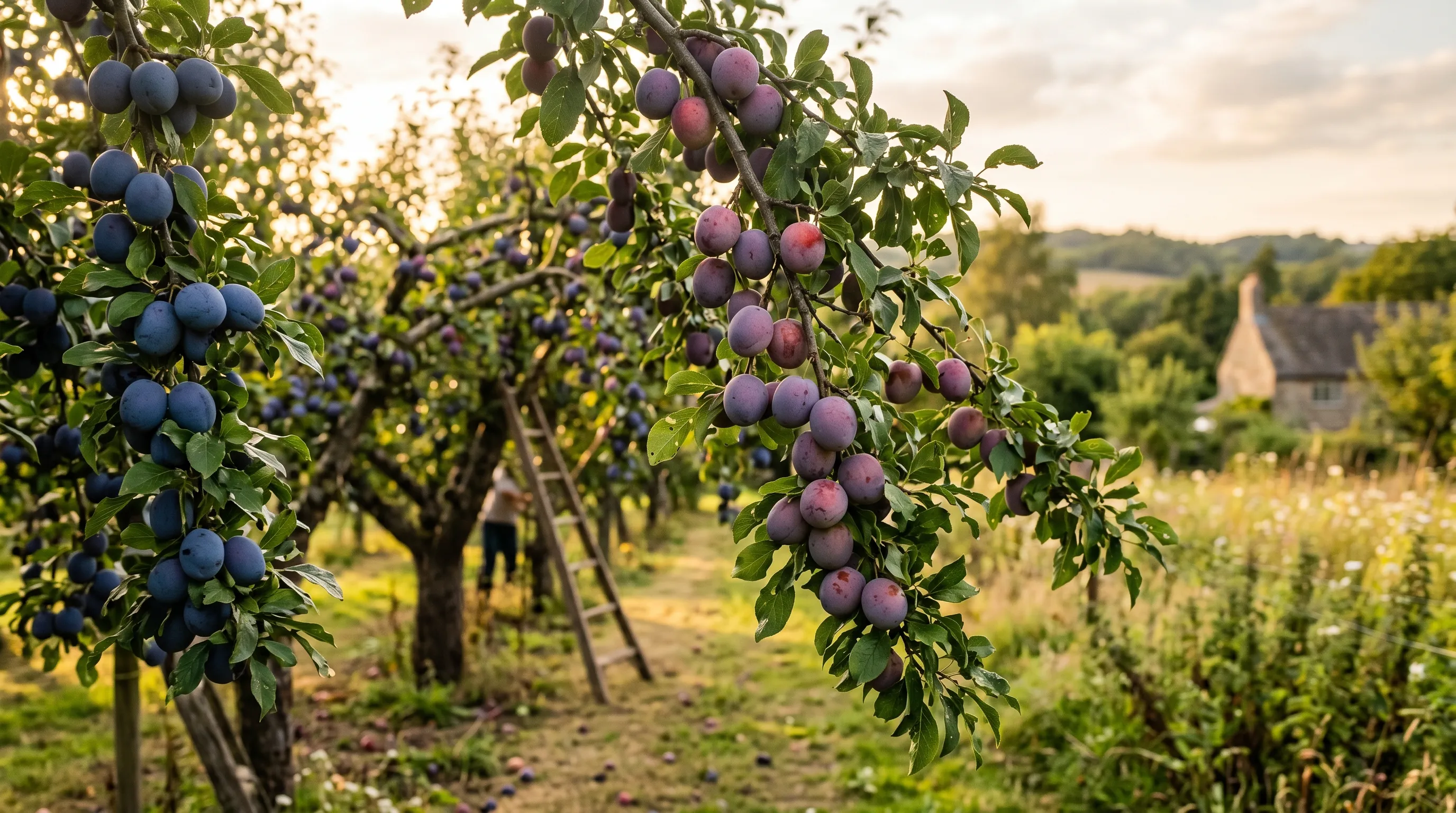
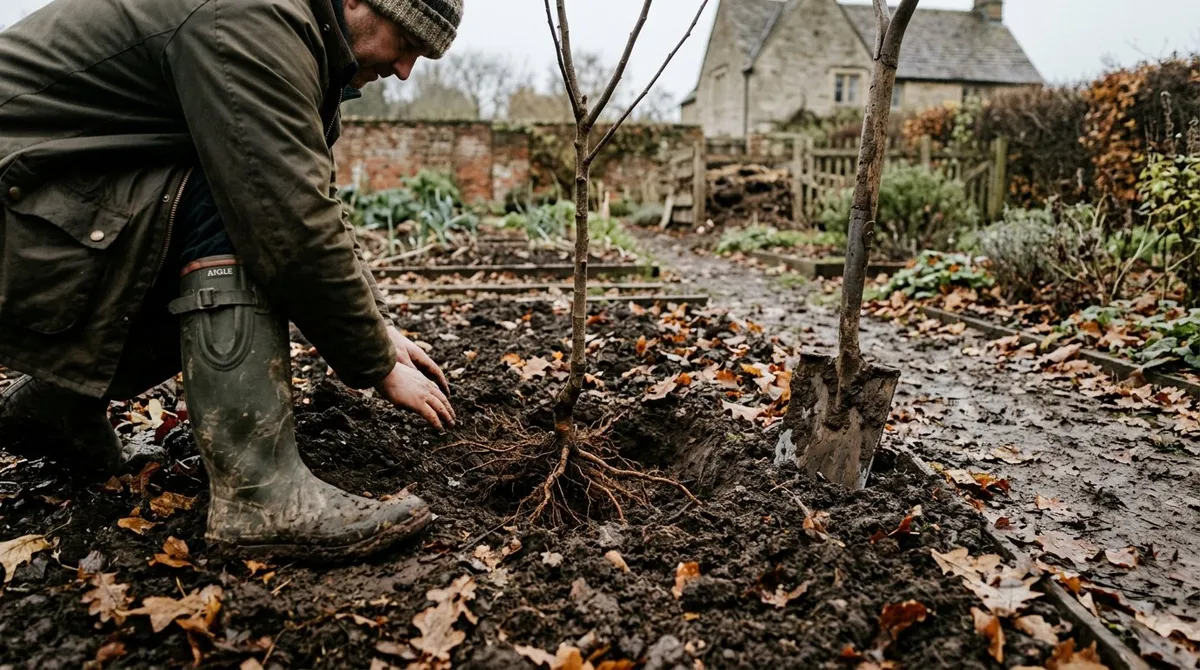
November is the single best month for planting bare-root fruit trees. Nurseries lift trees from the field once dormant, and November planting gives roots the longest possible period to establish before spring growth begins.
Apple trees are the most popular choice. Choose varieties on M26 rootstock (semi-dwarfing, 2.5-3.5m tall) for small to medium gardens, or MM106 (semi-vigorous, 3.5-4.5m) for larger plots. Good dual-purpose varieties include Bramley’s Seedling (cooking), James Grieve (eating/cooking), and Cox’s Orange Pippin (eating).
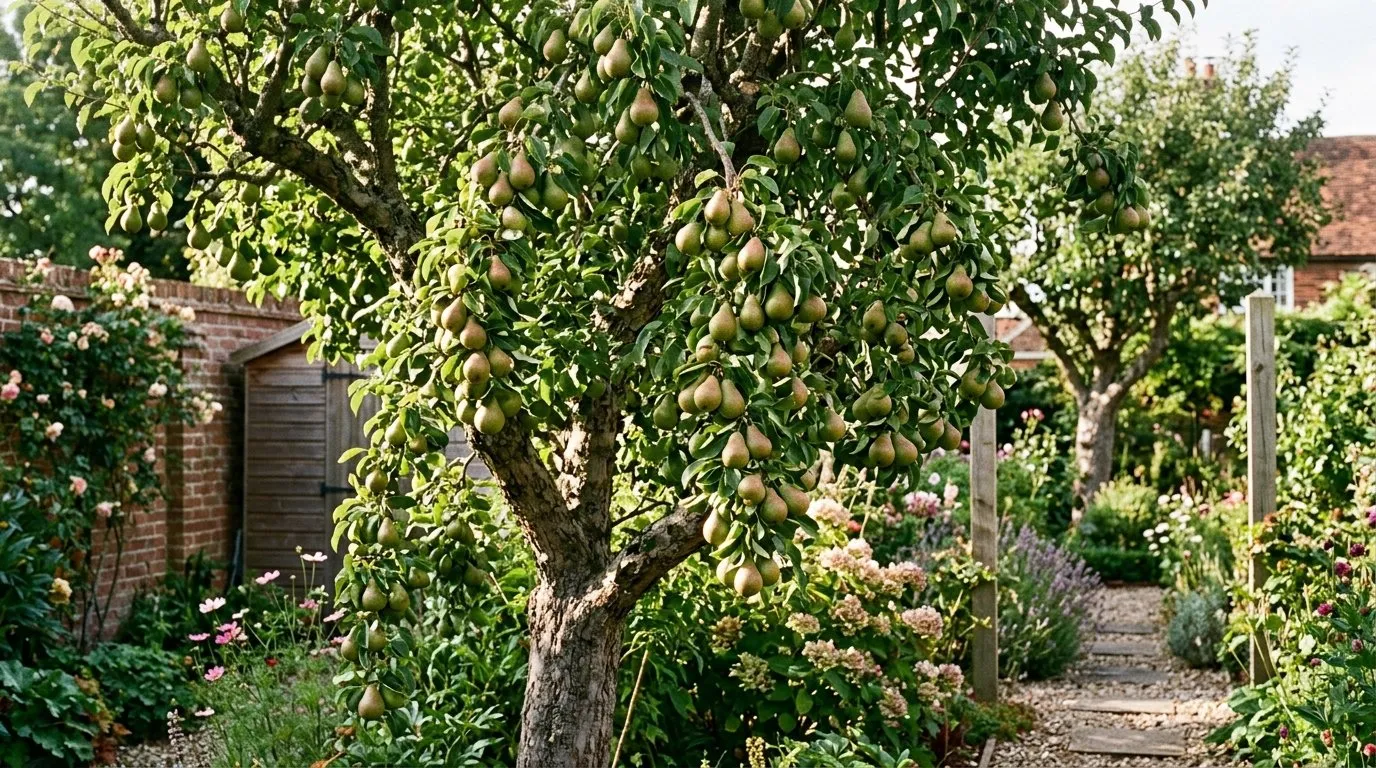
Pear trees need a warm, sheltered position. Conference is the most reliable self-fertile variety. For the best crops, plant two compatible varieties for cross-pollination.
Plum, cherry, and damson trees also plant well in November. Stake all newly planted trees with a short stake (45cm above ground) angled at 45 degrees into the prevailing wind.
Gardener’s tip: When planting fruit trees, dig a hole twice the width of the root spread but no deeper. The tree should sit at exactly the same depth it grew in the nursery. Look for the soil mark on the trunk and match it to your ground level.
Why we recommend M26 rootstock apple trees: After 30 years of planting bare-root fruit trees across British gardens, M26 rootstock consistently produces the best results for average-sized plots. Trees on M26 reach 2.5-3.5m and start cropping within two to three years of planting. On more vigorous MM106 rootstock, you can wait five years or more for the first meaningful harvest.
Gooseberry and currant bushes
Plant bare-root gooseberry, blackcurrant, redcurrant, and whitecurrant bushes in November. These fruit well for 10-15 years with minimal care. Blackcurrants should be planted 5cm deeper than they were in the nursery to encourage strong new shoots from below ground level. Gooseberries and redcurrants are planted at the same depth.
Pruning apple and pear trees
Once leaves have fallen and trees are fully dormant, begin winter pruning of apple and pear trees. Remove dead, diseased, and crossing branches first. Then thin out crowded growth to let light and air into the centre of the tree. Cut back to an outward-facing bud.
Winter pruning encourages strong new growth the following spring. Do not prune plum or cherry trees in winter, as they are susceptible to silver leaf disease through winter wounds. Prune stone fruit in summer only.
Lawn care in November
Final mow
Give the lawn a final mow on the highest blade setting (4-5cm). Only mow on a dry day when the grass is not frozen or waterlogged. This last cut tidies the lawn for winter without scalping the grass before its dormant period.
Clearing fallen leaves
Remove fallen leaves from the lawn regularly through November. A thick layer of leaves blocks light and traps moisture, creating the perfect conditions for fungal diseases and bare patches. Rake leaves onto borders as a natural mulch, or collect them to make compost and leaf mould.
Laying turf
Turf can still be laid in November. Autumn and early winter are good times because rainfall keeps the turf moist and roots establish through winter without the stress of summer heat. Prepare the ground thoroughly before laying. Avoid walking on newly laid turf when it is frozen or waterlogged.
Other essential November jobs
Insulate outdoor taps
Wrap outdoor taps and exposed pipes with lagging or old towels secured with duct tape. A burst pipe from a frozen tap is one of the most common and avoidable winter problems. Turn off the water supply to outdoor taps if possible and drain any remaining water.
Clean out bird boxes
November is the right time to clean bird boxes. Remove old nesting material and give the box a scrub with boiling water (no chemicals). This kills parasites that overwinter in the box. Dry thoroughly and replace the lid. Clean boxes are more likely to attract nesting birds the following spring. For more tips on supporting garden birds, see our guide to attracting birds to your garden.
Spread well-rotted manure
Spread a 5-10cm layer of well-rotted manure or garden compost over empty vegetable beds. Do not dig it in. Leave it on the surface and let winter weather, worms, and soil organisms incorporate it naturally. By spring, the soil will be richer, better structured, and ready for planting without heavy digging.
The Royal Horticultural Society recommends an annual application of organic matter as the single most important thing you can do to improve soil health and structure.
Build a leaf mould cage
Collect fallen leaves in a simple wire mesh cage made from chicken wire and four stakes. Pack leaves down firmly and leave for 12-18 months. The result is leaf mould: a dark, crumbly material that makes an excellent soil conditioner and potting compost ingredient. Oak and beech leaves break down best. Avoid thick, waxy leaves like laurel or evergreen magnolia.
Protect containers from frost
Wrap terracotta and ceramic pots with bubble wrap or hessian to prevent frost damage. Group pots together against a sheltered house wall. Raise pots onto pot feet or bricks to prevent waterlogging and improve drainage. Move the most vulnerable pots under cover.
What to harvest in November
November brings some of the finest seasonal flavours. Several crops actually improve after frost.
| Crop | Harvest notes | Frost benefit |
|---|---|---|
| Parsnips | Lift as needed after the first frost | Frost converts starch to sugar, producing a sweeter flavour |
| Leeks | Harvest from the outside of the row first | Hardy to -15C, leave in the ground until needed |
| Brussels sprouts | Pick from the bottom of the stem upward | Flavour improves significantly after frost |
| Winter cabbage | Cut when heads are firm and solid | Hardy, stores well in a cool shed |
| Kale | Pick outer leaves, leaving the growing tip | Sweetens after frost, crops all winter |
| Beetroot | Lift remaining roots before hard frost | Does not benefit from frost, can be damaged |
| Winter salads | Pick lamb’s lettuce, winter purslane, corn salad | Hardy to -10C under cloches |
| Celeriac | Lift or mulch heavily for winter protection | Mild frost acceptable, hard frost damages |
Gardener’s tip: Leave parsnips in the ground and harvest through winter. They store better in the soil than anywhere else. Mark the row clearly so you can find them under snow or frost.
Common mistakes in November gardening
Planting garlic too shallow
Garlic cloves planted less than 2cm deep often get pushed out of the soil by frost heave or pulled out by birds. Plant 2.5cm deep as a minimum. In exposed or heavy soils, planting 5cm deep gives better results. Check cloves after heavy frost and push any displaced ones back in.
Ignoring drainage
November planting fails when soil is waterlogged. Bare-root trees, roses, and garlic all rot in standing water. If your soil is heavy clay, improve drainage before planting. Add grit to the planting hole, use raised beds, or choose a better-drained spot. Never plant into soil that squelches underfoot.
Forgetting to stake new trees
Wind rock is the biggest killer of newly planted bare-root trees. The wind moves the trunk, which rocks the root ball and tears new roots as they form. Stake every new tree at planting. Use a short stake (no more than one-third of the tree’s height) angled into the prevailing wind.
Pruning too early
Do not prune fruit trees until they are fully dormant. Pruning while leaves are still attached wastes the tree’s stored energy and can encourage new growth that is killed by frost. Wait until all leaves have fallen naturally. For most apple and pear trees, this means late November or December.
Leaving leaves on the lawn
A thick layer of wet leaves on the lawn creates bare, yellowed patches by spring. Remove leaves at least weekly through November. Use them productively: add to the compost heap, build a leaf mould cage, or spread as mulch on borders where they protect plant roots and feed the soil.
Now you’ve mastered November planting, read our guide on what to plant in October to catch up on the jobs that set November up for success.
November planting calendar
| Week | Plant outdoors | Jobs | Harvest |
|---|---|---|---|
| Week 1 | Garlic, tulip bulbs, broad beans (Aquadulce Claudia) | Final lawn mow, clear leaves, insulate taps | Parsnips, leeks, kale |
| Week 2 | Bare-root fruit trees, roses, hedging | Clean bird boxes, spread manure on beds | Brussels sprouts, winter cabbage |
| Week 3 | Gooseberry and currant bushes, rhubarb crowns | Lift dahlia tubers, protect tender plants | Winter salads, beetroot (lift remaining) |
| Week 4 | Tulip bulbs (continue until mid-December), wallflowers | Build leaf mould cage, wrap containers | Celeriac, parsnips, leeks |
Frequently asked questions
Can you plant garlic in November UK?
Yes, November is one of the best months for planting garlic. Plant individual cloves 2.5cm deep and 15cm apart in well-drained soil. Garlic needs a period of cold (below 10C for 4-6 weeks) to form proper bulbs. Autumn-planted garlic produces larger, better-flavoured bulbs than spring-planted. Harvest the following June or July. Choose certified virus-free seed garlic rather than supermarket bulbs.
Is November too late to plant tulip bulbs?
No, November is the ideal time for tulips. Late planting reduces the risk of tulip fire disease, which thrives in warm soil. Plant bulbs 15-20cm deep, pointed end up, in well-drained soil. You can plant tulips right through to mid-December and still get a strong spring display. Deeper planting also deters squirrels.
What vegetables grow in winter UK?
Several vegetables grow actively through winter. Broad beans sown in November overwinter as small plants and crop in May. Garlic needs winter cold to form bulbs. Winter salads like lamb’s lettuce and winter purslane crop under cloches. Overwintered onion sets produce early summer bulbs. Kale, leeks, and Brussels sprouts continue growing slowly and can be harvested throughout winter.
When should I lift dahlia tubers?
Lift dahlias after the first hard frost blackens the foliage. Cut stems to 10cm above ground level. Carefully fork up the tubers without piercing them. Brush off loose soil and turn them upside down for a week to drain moisture from the hollow stems. Store in slightly damp compost or vermiculite in a frost-free shed or garage. Check monthly for rot.
Can I still mow my lawn in November?
Yes, give the lawn one final mow on the highest setting. Set blades to 4-5cm and only mow on a dry day when the grass is not frozen or waterlogged. This final cut tidies the lawn before winter dormancy without stressing the grass. After this cut, stay off the lawn as much as possible during wet weather to avoid compaction.
What fruit trees can I plant in November?
November is the best month for bare-root fruit trees. Plant apple, pear, plum, cherry, and damson trees while fully dormant. Bare-root trees cost less than container-grown and establish faster because roots grow directly into the garden soil. Stake every new tree at planting. Water well, even in wet weather, to settle soil around the roots and remove air pockets.
Should I cut back perennials in November?
Leave most perennials standing through winter. Dead stems shelter overwintering insects, provide food for birds, and look attractive with frost. Cut back only stems that are diseased, collapsed, or creating a path hazard. Hardy geraniums, sedums, and ornamental grasses are best left until late February or March when new growth starts to appear.
Lawrie has been gardening in the West Midlands for over 30 years. He grows his own veg using no-dig methods, keeps a wildlife-friendly garden, and writes practical advice based on real UK growing conditions.