What to Plant in September in the UK
Everything to sow, plant, and harvest in September across UK gardens. Covers spring bulbs, overwintering vegetables, lawn renovation, and autumn fruit.
Key takeaways
- Plant daffodils, crocus, and hyacinth bulbs now but wait until November for tulips
- Set overwintering onion sets and garlic cloves for harvest next June and July
- September is the best month for lawn renovation including sowing, scarifying, and overseeding
- Sow green manures like field beans and grazing rye on cleared vegetable beds
- Establish new strawberry beds from runners for a full crop next summer
- Sow broad beans Aquadulce Claudia outdoors for an early harvest next May
September is the most important planting month of the entire autumn. The soil is still warm from summer, rainfall is increasing, and conditions are ideal for root establishment. What you plant now determines the success of your garden for the next eight months.
This is the month for spring bulbs, overwintering vegetables, lawn renovation, and new fruit plantings. It is also harvest time for the last of the summer crops. The pace shifts from summer maintenance to strategic autumn planting. This guide follows on from our June planting guide and connects back to the full vegetable planting calendar.
Vegetables to sow and plant in September
September marks the start of a new growing cycle. The vegetables you plant now will produce harvests next spring and early summer.
Overwintering onion sets
Overwintering onion sets planted in September produce bulbs 4-6 weeks earlier than spring-planted sets. Push each set into prepared soil with the tip just showing above the surface. Space 10cm apart in rows 25cm apart.
Reliable overwintering varieties:
- Radar - round, golden-skinned, ready from late May
- Shakespeare - medium-sized, brown-skinned, good disease resistance
- Senshyu Yellow - flat-shaped Japanese type, mild flavour, ready from June
Choose a well-drained spot. Onion sets sitting in waterlogged soil over winter will rot. Raised beds work particularly well for overwintering onions because they drain freely.
Garlic
Garlic planted in September produces the largest bulbs. Each clove needs a cold period below 10C for at least 4-6 weeks to trigger proper bulb formation. Earlier planting gives a longer growing season and bigger harvests.
Plant individual cloves 5cm deep, 15cm apart, with the pointed end facing upward. Choose a sunny, well-drained position. Do not use supermarket garlic. Buy certified virus-free seed garlic from a garden supplier.
Good varieties for UK gardens:
- Solent Wight - a softneck type bred specifically for the UK climate
- Germidour - purple-striped French variety, stores well
- Elephant garlic - actually a leek relative, mild flavour, enormous cloves
Broad beans
Sow broad beans Aquadulce Claudia outdoors from mid-September to early November. This variety is bred for autumn sowing and overwinters as a small plant. It produces an early crop in May, roughly 4 weeks ahead of spring-sown beans.
Sow 5cm deep, 20cm apart, in double rows 20cm apart. Choose a sheltered spot out of the worst winter winds. In exposed gardens, wait until October and start them in pots under cover instead.
Gardener’s tip: Autumn-sown broad beans avoid the worst blackfly infestations. By the time blackfly populations peak in June, autumn-sown plants have already finished cropping. This alone makes the autumn sowing worthwhile.
Winter salads
Early September is the last window for sowing winter salad crops outdoors. These grow slowly through autumn and provide leaves from November to March.
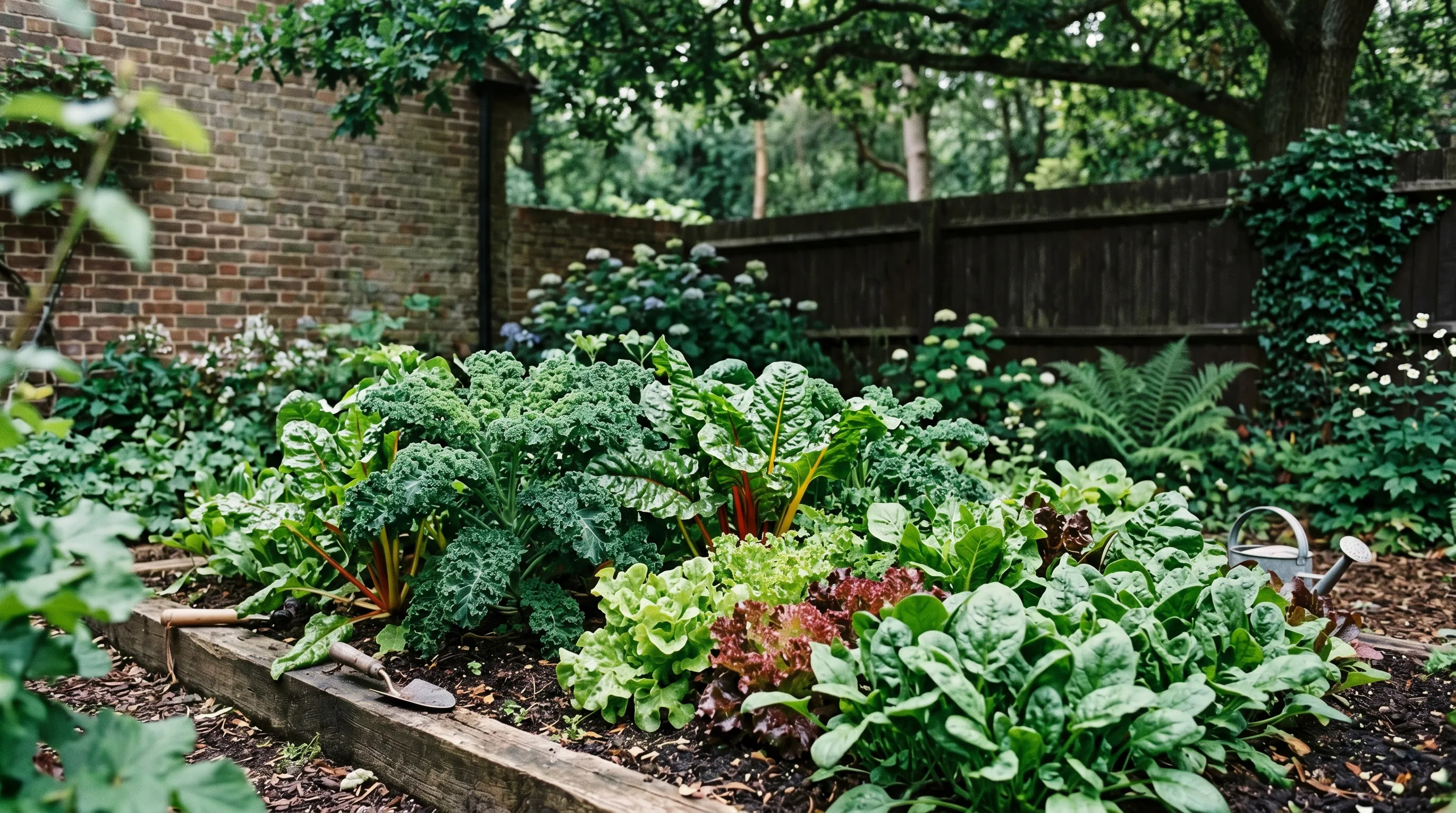
- Lamb’s lettuce (corn salad) - the hardiest winter salad, survives hard frost. Sow in rows and harvest leaves from November. It grows steadily through winter when little else will.
- Winter lettuce - varieties like Winter Gem and Arctic King tolerate frost. Sow by mid-September. Protect with cloches from November.
- Winter-hardy spinach - sow by early September. Produces leaves through autumn and again in spring. Hardier than summer spinach varieties.
- Mizuna and mibuna - fast-growing Asian greens. Sow now and harvest baby leaves in 4-6 weeks. Protect with fleece in hard frost.
For a full sowing schedule, see our seed sowing calendar.
Green manures
Green manures are the single most valuable thing you can sow on empty vegetable beds in September. They protect bare soil from winter rain, suppress weeds, and add nutrients when dug in next spring.
Best green manures for September sowing:
- Field beans (Vicia faba) - fix nitrogen in the soil, tough enough to survive winter. Sow 15cm apart in rows. Dig in during March before they flower.
- Grazing rye - grows fast, produces dense root mass that breaks up compacted soil. Sow broadcast and rake in. Dig in at least 4 weeks before spring planting.
- Phacelia - killed by hard frost, leaving a mulch that protects soil. Sow on beds you want to plant early next spring.
- Crimson clover - fixes nitrogen, produces red flowers that attract pollinators. Sow in blocks.
Spring cabbage
Spring cabbage plants raised from July sowings should be transplanted to their final positions in September. Space 30cm apart in rows 45cm apart. These overwinter as small plants and produce tight heads from March to May.
Varieties like Durham Early and April are bred for overwintering. Net against pigeons, which attack brassicas throughout winter.
Flowers to plant in September
September is the main bulb-planting month. The bulbs you plant now create the colour in your garden next spring.
Spring bulbs
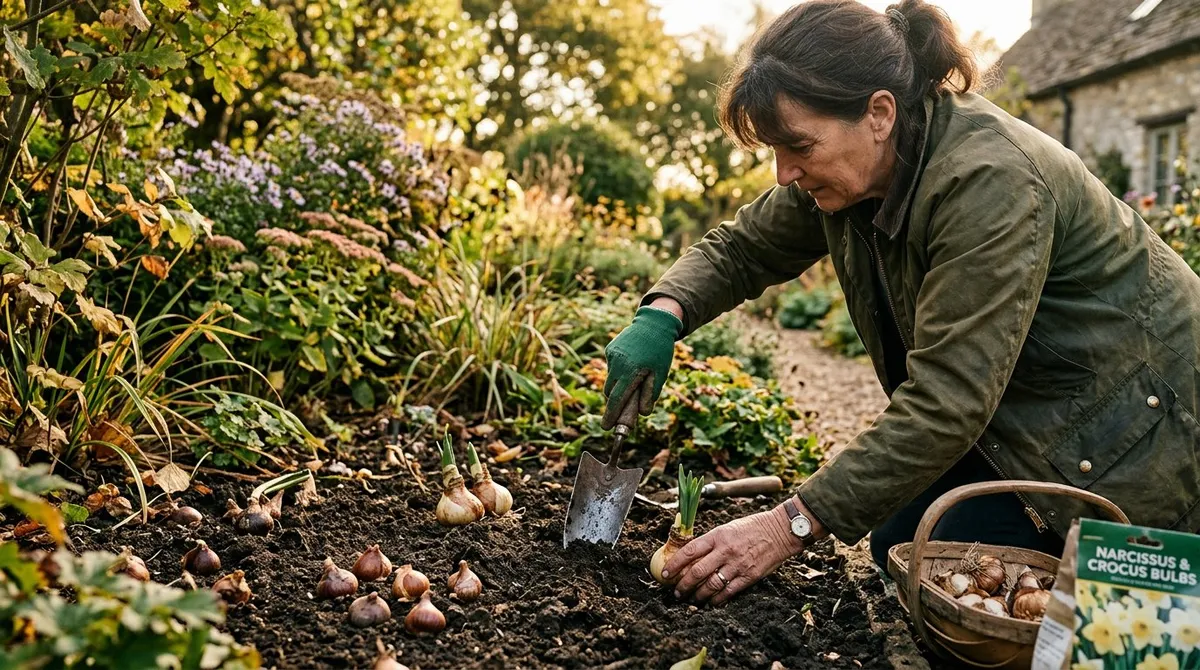
Plant spring-flowering bulbs from mid-September. The general rule is to plant at a depth roughly three times the height of the bulb.
Daffodils - plant now for the best root establishment before winter. They need 12-16 weeks of cold to flower. Choose a mix of early, mid, and late varieties for flowers from February to April. Plant 10-15cm deep, 10cm apart.
Crocus - plant 8cm deep in groups of 10-20 for maximum visual impact. They work well naturalised in lawns. Choose Crocus tommasinianus for naturalising, or large Dutch crocus for borders.
Hyacinths - plant 10cm deep, 15cm apart. Wear gloves when handling hyacinth bulbs. They contain calcium oxalate crystals that irritate skin. Choose a sheltered spot because heavy flower heads blow over in wind.
Alliums - plant large allium bulbs 15cm deep now. These architectural flowers add height to borders in May and June. They work well planted among low perennials that hide the dying foliage.
Important: Do not plant tulips yet. Wait until November. Early planting increases the risk of tulip fire (Botrytis tulipae), a fungal disease that distorts leaves and ruins flowers. Cooler November soil reduces this risk significantly.
Dividing perennials
September is the best month to divide overcrowded perennials. Warm soil and autumn moisture help divisions establish quickly.
Lift the entire clump with a garden fork. Split into sections with 3-5 healthy shoots each. Discard the old, woody centre of the clump. Replant the outer sections at the same depth and water thoroughly.
Perennials to divide in September:
- Hostas - divide before foliage dies back completely
- Daylilies (Hemerocallis) - virtually indestructible, divide with a spade
- Hardy geraniums - pull apart by hand
- Asters - divide every 2-3 years to prevent congestion
- Rudbeckia - split into clumps of 3-5 shoots
Hardy cyclamen and winter pansies
Hardy cyclamen (Cyclamen hederifolium) planted now flowers from September to November. It thrives in dry shade under trees and hedges where little else grows. The marbled foliage persists through winter and provides ground cover. Plant tubers just below the soil surface. Learn more about shade-tolerant plants in our best plants for shade guide.
Winter-flowering pansies and violas planted in September flower from autumn right through to spring, with only a brief pause in the coldest weeks. Plant in containers, window boxes, or at the front of borders. They provide colour when the rest of the garden is dormant. These are excellent for attracting late-season pollinators alongside other bee-friendly plants.
Fruit
Plant new strawberry beds
September is the ideal month to establish new strawberry beds. Plants set out now develop strong root systems through autumn and produce a full crop the following June and July.
Use runners pegged down in summer, or buy cold-stored runners from a supplier. Plant 35-45cm apart in rows 75cm apart. Enrich the soil with well-rotted compost before planting. Remove any flowers that appear before winter to direct energy into root development. For detailed growing advice, see our strawberry guide.
The best varieties for UK gardens:
- Cambridge Favourite - reliable, heavy cropping, good disease resistance
- Elsanta - supermarket standard, excellent flavour, firm fruit
- Malling Centenary - modern variety, large fruit, good shelf life
- Florence - late-season variety, extends the harvest into July
Why we recommend Cambridge Favourite for September planting: After more than 30 years of establishing strawberry beds in September, Cambridge Favourite is the variety that delivers most consistently for home gardeners. Runners planted in the first two weeks of September produce a full crop the following June with no additional protection through winter. Newer varieties like Malling Centenary produce larger fruit but are noticeably more sensitive to waterlogging during the establishment phase.
Order bare-root trees
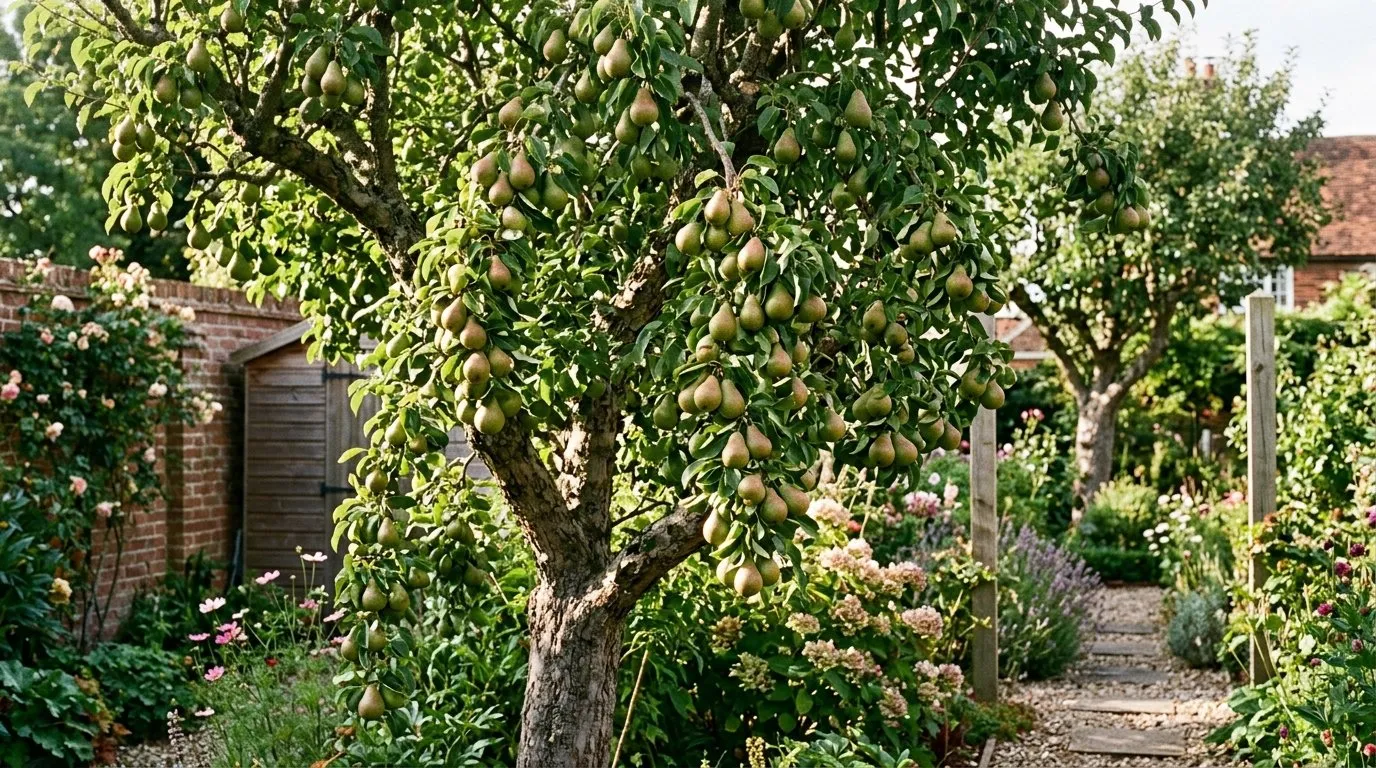
September is the month to order bare-root fruit trees for November planting. Bare-root trees are cheaper than container-grown trees, establish faster, and offer a wider choice of varieties and rootstocks.
Decide on rootstock before ordering:
- M27 - very dwarfing, trees to 1.8m, needs permanent staking
- M9 - dwarfing, trees to 2.5m, good for small gardens
- M26 - semi-dwarfing, trees to 3m, the most popular garden choice
- MM106 - semi-vigorous, trees to 4m, good for larger gardens
Order from specialist fruit nurseries for the widest selection. Popular varieties sell out by October.
Lawn care
September is the single best month of the year for lawn work. Warm soil, cooler air temperatures, and increasing rainfall create ideal conditions for grass growth. If you are only going to do one month of lawn maintenance all year, make it September.
Sow new lawns
Grass seed sown in September germinates in 7-14 days and establishes quickly in warm soil. Prepare the ground by removing weeds, raking level, and firming the surface. Scatter seed at 35g per square metre. Rake lightly to cover, then water if rain does not fall within 48 hours.
Keep off the lawn for at least 8 weeks. Give the first cut when grass reaches 5cm, setting the mower blade to 3cm.
Lay turf
Turf laid in September roots rapidly into warm soil. It needs less watering than spring-laid turf because autumn rain does most of the work. Lay on prepared soil, butt joints tightly together, and stagger the seams like brickwork. Water well and avoid walking on it for 3 weeks.
Scarify and aerate
Scarifying removes the layer of dead grass, moss, and debris (thatch) that builds up on the lawn surface. Thatch prevents water and feed from reaching the roots. Scarify after mowing short with the blade at its lowest comfortable setting.
Aerate compacted lawns by pushing a garden fork in 10cm deep at 15cm intervals across the entire lawn. On heavy clay soils, brush horticultural sand into the holes to improve drainage. This single job makes more difference to a struggling lawn than any feed or treatment.
Overseed bare patches
After scarifying, scatter grass seed onto thin or bare areas. The combination of scarified soil and warm September conditions gives the best germination results of the year. Apply an autumn lawn feed (high in potassium, low in nitrogen) to strengthen grass for winter.
Other September jobs
Start composting fallen leaves
Fallen leaves arriving from late September are too good to waste. Collect them separately from the main compost heap. Pack into black bin bags with a few holes punched in them, add a splash of water, and leave for 12-18 months. The result is leaf mould, which is the best soil conditioner you can make. It costs nothing and improves every soil type.
Alternatively, build a simple leaf mould cage from chicken wire and posts. For advice on composting and soil improvement, see our composting guide.
Gardener’s tip: Oak and beech leaves make the finest leaf mould. Thick, leathery leaves like sycamore and horse chestnut take longer to break down. Shred them with a mower first to speed decomposition.
Clean the greenhouse
September is the time to clean the greenhouse before winter crops move in. Remove all plant debris, old pots, and spent compost. Wash the glass inside and out to maximise light during the low-light months. Disinfect staging and benches with a garden disinfectant.
Check for broken panes, failed seals, and gaps where draughts enter. Fix these before cold weather arrives. A clean, sealed greenhouse keeps winter salads and overwintering tender plants alive through to spring.
Reduce watering houseplants
As daylight hours shorten, houseplants enter a period of slower growth. Reduce watering frequency gradually through September. Most houseplants need roughly half as much water from October to March as they do in summer. Overwatering in autumn is the primary cause of houseplant root rot. Check the top 2cm of compost before watering. If it feels damp, leave it alone.
What to harvest in September
September is a generous month. Summer crops are still producing while autumn harvests begin.
| Crop | Harvest notes |
|---|---|
| Runner beans | Pick every 2-3 days to keep plants cropping. Pods left too long become stringy. |
| French beans | Continue picking. Plants crop until the first frost. |
| Courgettes | Harvest at 15-20cm. Check daily because they grow fast. |
| Tomatoes | Pick as fruits ripen. Bring green tomatoes indoors at month end to ripen on a windowsill. |
| Sweetcorn | Ready when the tassels turn brown. Test by pressing a kernel with a thumbnail. Milky liquid means ready. |
| Beetroot | Pull at tennis-ball size. Leave smaller roots to grow on. |
| Carrots | Maincrops are ready. Lift before the first hard frost. |
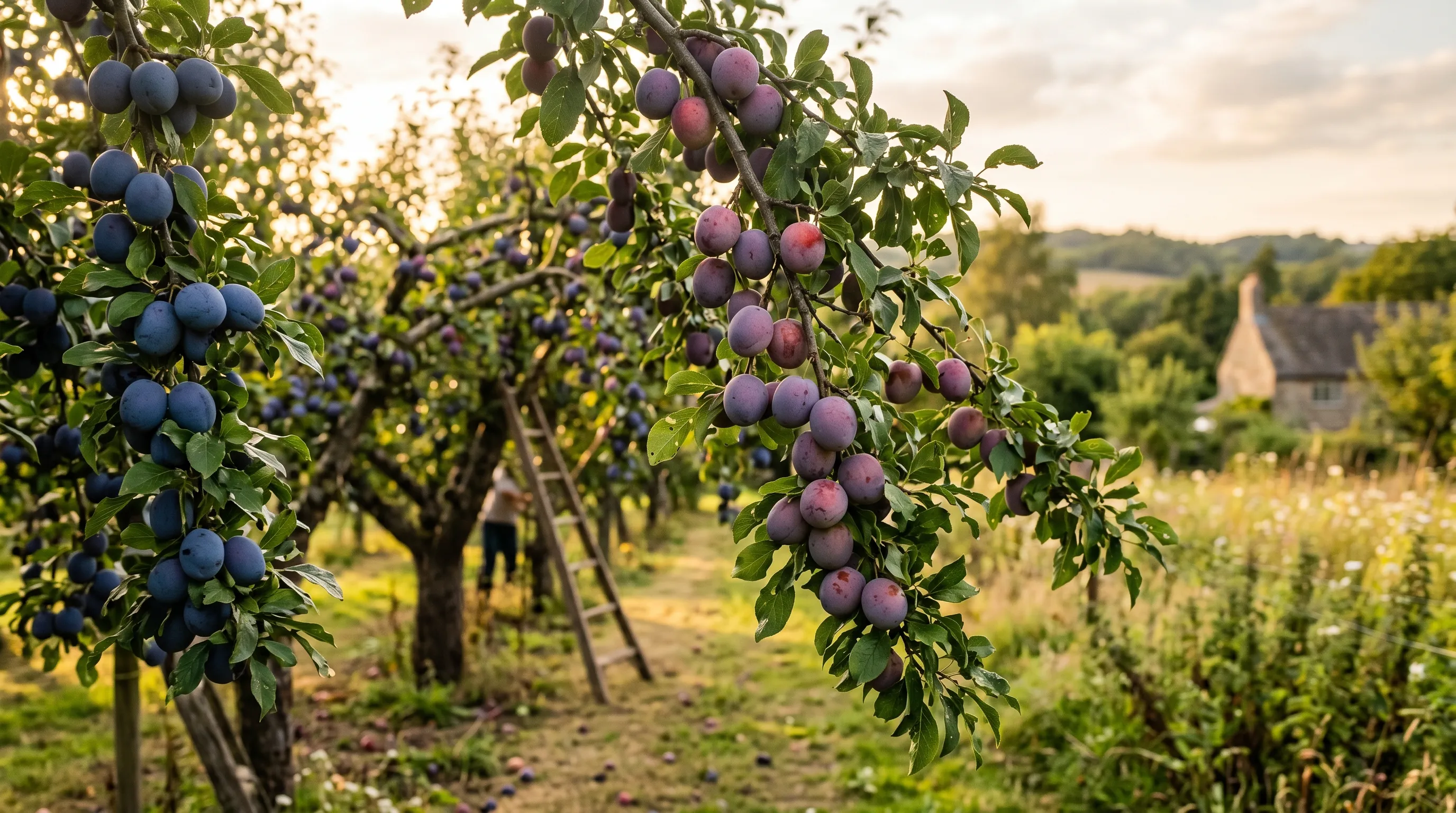
| Plums and damsons | Pick when fruit separates easily from the branch. |
| Apples (earlies) | Early varieties like Discovery and James Grieve ripen now. Lift and twist gently. |
| Blackberries | Pick fully black berries. Freeze any surplus immediately. |
| Autumn raspberries | Varieties like Autumn Bliss and Polka crop from September to first frost. |
Common mistakes with September planting
Planting tulips too early
Tulip bulbs planted in September sit in warm soil for weeks, increasing the risk of tulip fire (Botrytis tulipae). This fungal disease causes distorted, brown-streaked leaves and ruined flowers. Wait until November when soil temperatures drop below 10C. All other spring bulbs go in now. Tulips are the exception.
Neglecting the lawn
Many gardeners view autumn as lawn winding-down time. The opposite is true. September is the peak month for lawn improvement. Scarifying, aerating, and overseeding now produces results that are visible by the following spring. Miss September and you wait another full year for the same conditions.
Leaving bare soil over winter
Empty vegetable beds left bare through winter lose nutrients to rain leaching and develop compaction. Sow green manures on any cleared ground. They cost pennies, take minutes to sow, and protect the soil structure that you worked hard to build all summer. If you are building new beds, see our guide to starting a vegetable garden.
Forgetting to order bare-root stock
Bare-root fruit trees, hedging plants, and roses are available from November to March. The best varieties sell out early. Order in September for delivery when the plants are dormant. Leaving it until November means settling for whatever remains in stock.
Not protecting tender plants
Check the weather forecast regularly from mid-September. Early frosts can arrive in northern and inland gardens from late September. Have fleece or cloches ready to protect tender crops like runner beans, courgettes, and outdoor tomatoes. A single night of frost can destroy an entire crop that would otherwise produce for another month.
Now you’ve mastered September planting, read our guide on what to plant in October to keep the momentum going into autumn.
September planting calendar
| Week | Sow / plant outdoors | Plant under cover | Jobs | Harvest |
|---|---|---|---|---|
| Week 1 | Winter lettuce, lamb’s lettuce, spinach, spring cabbage (transplant) | - | Clean greenhouse, scarify lawn | Runner beans, courgettes, tomatoes |
| Week 2 | Daffodil and crocus bulbs, overwintering onion sets | Broad beans (pots) | Aerate and overseed lawn | Sweetcorn, beetroot, plums |
| Week 3 | Garlic cloves, hyacinth bulbs, green manures | Winter salads in greenhouse | Divide perennials, order bare-root trees | Apples, blackberries, carrots |
| Week 4 | Hardy cyclamen, winter pansies, allium bulbs | - | Collect fallen leaves, reduce houseplant watering | Autumn raspberries, runner beans |
Frequently asked questions
What bulbs should I plant in September UK?
Plant daffodils, crocus, hyacinth, and alliums in September. These bulbs need 12-16 weeks of cold to flower properly the following spring. Plant at a depth roughly three times the bulb height. Hold tulips back until November, as early planting increases the risk of tulip fire disease. The Royal Horticultural Society has detailed planting depth guidance for all common bulbs.
Can I sow grass seed in September?
September is the best month for sowing grass seed. Warm soil from summer and increasing autumn rainfall create ideal germination conditions. Seed germinates in 7-14 days. New lawns establish quickly before winter dormancy. Prepare the soil, rake level, and keep off the new grass for at least 8 weeks.
When should I plant garlic in the UK?
Plant garlic from September to November. September planting gives the longest growing season and the largest bulbs. Each clove needs 4-6 weeks of cold below 10C to form a proper bulb. Plant cloves 5cm deep, 15cm apart, with the pointed end facing upward. Buy certified seed garlic rather than supermarket bulbs.
What vegetables can I sow in September?
Sow winter lettuce, lamb’s lettuce, winter-hardy spinach, and spring cabbage in early September. Plant overwintering onion sets like Radar and Shakespeare. Sow broad beans Aquadulce Claudia for an early crop next May. Sow green manures on any bare soil to protect it over winter and improve fertility for spring planting.
Is September too late to plant strawberries?
September is the ideal month for strawberries. Plants established now develop strong root systems before winter and produce a full crop the following June and July. Plant runners 35-45cm apart in soil enriched with well-rotted compost. Remove any flowers that appear before winter so the plant directs all energy into root growth.
What flowers should I divide in September?
Divide hardy perennials including hostas, daylilies, geraniums, asters, and rudbeckia in September. Lift the clump with a fork, split into sections with 3-5 shoots each, and replant immediately at the original depth. Water well after planting. September divisions establish before winter and flower strongly the following year.
Should I scarify my lawn in September?
Yes, September is the ideal scarifying month. Scarify after mowing short, then overseed bare patches immediately. Warm soil helps grass seed germinate within two weeks. Apply an autumn lawn feed (high in potassium, low in nitrogen) after scarifying. The lawn recovers fully before winter dormancy, and the results show clearly the following spring.
Lawrie has been gardening in the West Midlands for over 30 years. He grows his own veg using no-dig methods, keeps a wildlife-friendly garden, and writes practical advice based on real UK growing conditions.