When to Plant Dahlias in the UK
Month-by-month guide to planting dahlias in the UK. Covers starting tubers indoors, planting out dates by region, and variety selection for UK gardens.
Key takeaways
- Plant tubers outdoors mid-April to mid-May after the last frost has passed in your area
- Start tubers indoors in pots from March for flowers 4-6 weeks earlier than outdoor-planted tubers
- Dahlias are killed by frost so never plant out before your region's last frost date
- Plant 10-15cm deep and 45-90cm apart depending on the variety's mature size
- Feed fortnightly with high-potash fertiliser from first bud formation for continuous flowering
- Lift tubers after the first autumn frost and store at 5-10C in a frost-free place over winter
Dahlias deliver more colour per pound spent than almost any other garden plant. A single tuber costing three to five pounds produces dozens of flowers from July right through to the first hard frost in October or November. That is four solid months of blooms at a time when many summer plants are fading. The trick is getting the planting timing right for your part of the UK.
Timing matters because dahlias are tropical plants from the mountains of Mexico and Central America. They have zero tolerance for frost. A single night below minus 2C destroys the foliage. Sustained cold kills the tubers underground. Plant too early and a late April frost wipes them out. Plant too late and you lose weeks of potential flowering time. This guide covers the exact planting windows for every UK region, plus how to start tubers indoors for earlier blooms. For the full growing, feeding, and overwintering guide, see our how to grow dahlias article.
When to start dahlia tubers indoors
Starting tubers indoors in pots is the best way to get a head start on the season. Indoor-started dahlias flower four to six weeks earlier than those planted directly outside.
Indoor starting timeline
Begin in early to mid-March. Place each tuber in a 2-litre pot of multipurpose compost with the old stem stub pointing upward. Cover the tuber with 5cm of compost. Water lightly and place on a bright windowsill, in an unheated greenhouse, or in a conservatory. You do not need heat. Temperatures of 10-15C are enough to trigger sprouting.
Shoots appear within two to three weeks. Once the shoots are 10-15cm tall, the plant is growing strongly and building a root system that gives it a real advantage when planted out. Indoor-started dahlias can be flowering by late June in southern England, a full month before outdoor-planted tubers.
Avoiding leggy growth
If your windowsill gets less than six hours of direct light, the shoots will stretch toward the window and become thin and weak. Turn the pot 180 degrees every two to three days. If shoots are still leggy, move the pot to a brighter spot. A south-facing window is ideal. Unheated greenhouses give the best results because the light comes from all directions.
Gardener’s tip: Pinch out the main growing tip when the plant is 30-40cm tall. Remove the tip just above the fourth pair of leaves. This forces the plant to branch from lower down, producing a bushier shape with three to four times more flowering stems. It delays the first flower by about two weeks, but the total flower count over the season is much higher.
When to plant dahlia tubers outdoors
The outdoor planting window depends on your local last frost date. Dahlias need warm soil and frost-free nights.
Planting dates by UK region
| Region | Last frost (average) | Plant outdoors from | Indoor start from |
|---|---|---|---|
| South-west England | Mid-April | Mid-April | Early March |
| Southern England | Late April | Late April to early May | Early March |
| London and south-east | Late April | Late April to early May | Early March |
| Midlands | Early May | Early to mid-May | Mid-March |
| Northern England | Mid-May | Mid to late May | Mid-March |
| Scotland (lowlands) | Late May | Late May to early June | Late March |
| Scotland (highlands) | Early June | Early to mid-June | Early April |
These are average dates. In a warm spring, you can plant a week earlier. In a cold spring, wait a week longer. Check the forecast for the five days after planting. If night temperatures are predicted to drop below 2C, delay planting or cover new plants with fleece overnight.
Soil temperature requirements
Dahlia tubers need a soil temperature of at least 10C to sprout reliably in the ground. Below this, tubers sit dormant in cold, wet soil and risk rotting. Push a soil thermometer 10cm into the ground at the planting spot. Take readings in the morning for the most accurate picture.
In practice, soil reaches 10C around the same time as the last frost date in most UK regions. The two indicators align well. If you do not own a soil thermometer, using the last frost date for your area is a reliable guide.
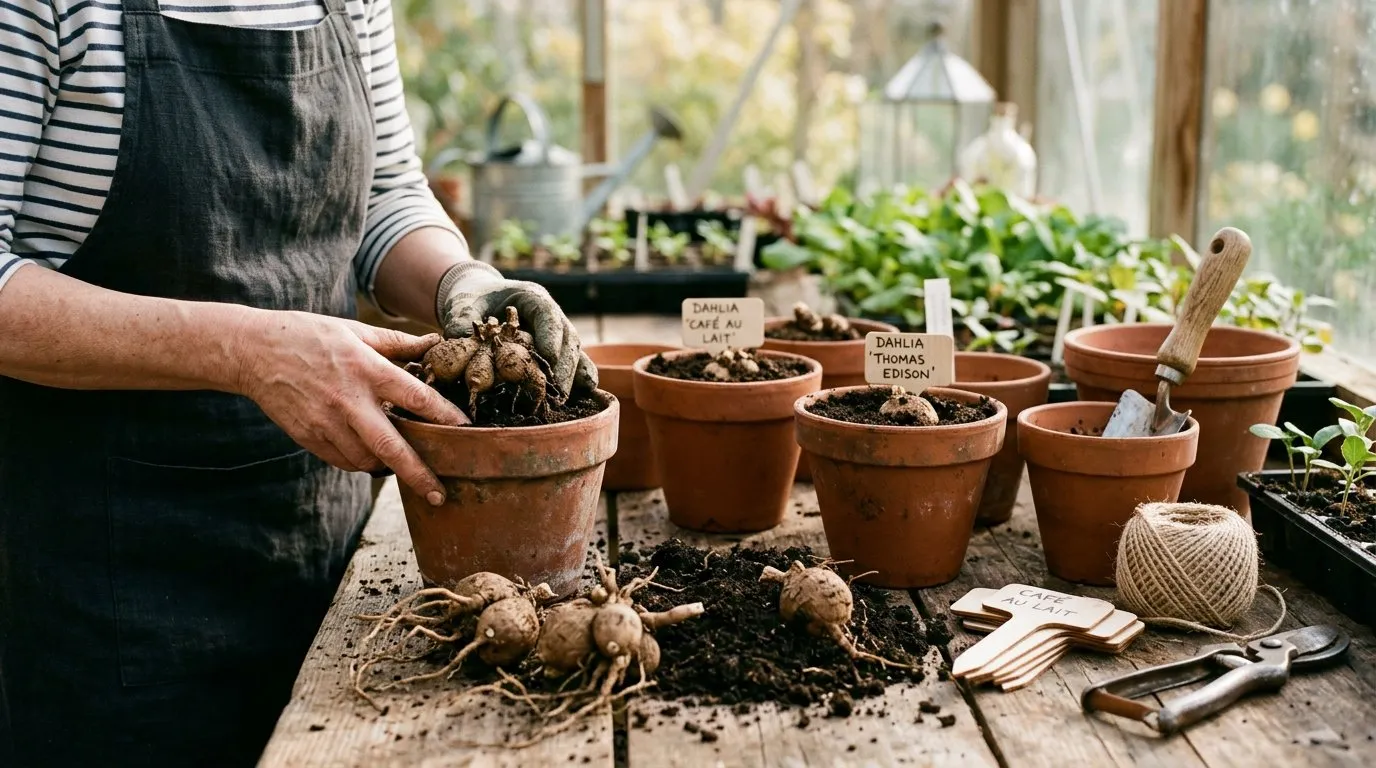 Planting dahlia tubers 10-15cm deep with the old stem stub pointing upward. The eye buds on the crown are where new shoots will emerge.
How to plant dahlia tubers step by step
Getting the planting technique right ensures your tubers establish quickly and flower prolifically.
Choosing the planting spot
Dahlias need full sun: a minimum of six hours of direct sunlight daily. A south-facing or west-facing border is ideal. Shelter from strong winds prevents tall stems from snapping. Avoid planting at the base of north-facing walls or under tree canopies where they will not receive enough light.
The soil should be well drained. Dahlias hate sitting in waterlogged ground, which rots the tubers. If you garden on heavy clay, dig in plenty of coarse grit or perlite before planting. Alternatively, plant into raised beds where drainage is naturally better. For container growing tips, see our guide to container vegetable gardening, which covers drainage principles that apply equally to dahlias.
Planting method
Dig a hole 30cm wide and 20cm deep. Fork over the base to loosen the subsoil. Mix in a handful of general-purpose fertiliser (such as blood, fish, and bone) and a spadeful of garden compost. This gives the tuber slow-release nutrition as it grows.
Place the tuber in the hole with the old stem stub pointing upward. The eye buds, visible as small pink or green bumps on the crown, should face up. Cover with 10-15cm of soil. Deeper planting protects the growing point from any surprise late frost.
For tall varieties (over 90cm), install the stake at planting time. Push a stout 1.5m bamboo cane or wooden stake into the ground 5cm from the tuber. Staking after the plant has grown risks damaging the underground tuber. Tie the main stem to the stake as it grows, using soft garden twine in a figure-of-eight loop.
Water the planted area lightly. Do not soak it. Overwatering freshly planted tubers in cool spring soil encourages rot. Once shoots appear above the surface (usually two to four weeks after planting), increase watering gradually as the plant grows.
Best dahlia varieties for UK gardens
Choosing the right varieties for your space and purpose makes the difference between a good display and a spectacular one.
Top dahlia varieties comparison
| Variety | Type | Flower colour | Height | Flower size | Best for |
|---|---|---|---|---|---|
| Bishop of Llandaff | Peony | Scarlet red | 90cm | 8cm | Borders, containers, pollinators |
| Cafe au Lait | Decorative | Blush pink/cream | 120cm | 25cm | Cutting, weddings, wow factor |
| David Howard | Decorative | Bronze orange | 75cm | 10cm | Borders, dark foliage contrast |
| Thomas Edison | Decorative | Deep purple | 120cm | 20cm | Cutting, mixed borders |
| Gallery Art Deco | Decorative (dwarf) | Pink/peach blend | 40cm | 12cm | Pots, front of borders |
| Karma Choc | Semi-cactus | Dark burgundy | 90cm | 12cm | Modern borders, cutting |
| Sam Hopkins | Waterlily | Soft pink | 100cm | 12cm | Elegant cutting, borders |
| Waltzing Mathilda | Collerette | Pink/white collar | 90cm | 8cm | Wildlife, pollinators |
Dahlias for cutting
If you grow dahlias for vases, choose varieties with long, strong stems and flowers that last well in water. ‘Cafe au Lait’ is the florist’s favourite, with huge blush blooms that fill a vase on their own. ‘Thomas Edison’ provides deep purple that contrasts with lighter flowers. Ball and pompon types are excellent for smaller arrangements because the round flowers hold their shape for seven to ten days in water.
Cut dahlia stems in the early morning when they are fully hydrated. Cut stems 30-40cm long. Place immediately in a bucket of tepid water with a drop of flower food. Strip leaves below the waterline. Change the water every two days.
Dahlias for containers
Dwarf varieties under 60cm are ideal for pots. The ‘Gallery’ series (‘Gallery Art Deco’, ‘Gallery Singer’, ‘Gallery Pablo’) grow to just 35-45cm and produce masses of flowers without staking. ‘Bishop of Llandaff’ at 90cm works in large pots of 40 litres or more. Use a quality multipurpose compost mixed with 20% perlite for drainage. Feed weekly with high-potash liquid fertiliser from July.
Dahlias for wildlife
Open-centred dahlias provide the best access for bees, hoverflies, and butterflies. Collerette types like ‘Waltzing Mathilda’ and single types like ‘Bishop of Llandaff’ and ‘Moonfire’ have exposed central discs packed with pollen and nectar. Fully double varieties like decorative and cactus types are beautiful but offer little to pollinators because the tightly packed petals block access. For more pollinator-friendly planting ideas, visit our bee-friendly garden plants guide.
Warning: Buy tubers from reputable UK suppliers only. Cheap imported tubers sold online may carry dahlia virus, which causes stunted growth, mottled leaves, and poor flowering. There is no cure. Infected plants must be destroyed. Check tubers on arrival for any signs of mould, soft spots, or unusual markings.
Feeding and caring for dahlias through the season
Dahlias are hungry plants. Without regular feeding, flowering drops off sharply by late August.
Feeding schedule
| Growth stage | Feed type | Frequency | Notes |
|---|---|---|---|
| Planting to first buds | General fertiliser (NPK 7-7-7) | At planting only | Mixed into planting hole |
| First buds forming (July) | High-potash liquid (tomato feed) | Fortnightly | Dilute to recommended strength |
| Full flowering (August-September) | High-potash liquid | Weekly | Increase frequency for heavy feeders |
| Late season (October) | Stop feeding | None | Allow plants to wind down naturally |
High-potash fertiliser is the key to sustained dahlia flowering. Potash (potassium) promotes flower production. Nitrogen promotes leaf growth at the expense of blooms. A standard tomato feed works perfectly. The NPK ratio should be roughly 4-4-8 or similar, with potash as the highest number.
Why we recommend high-potash tomato feed for dahlias: After 30 seasons of growing dahlias for both borders and cutting, switching to a tomato feed the moment the first buds form is the single change that makes the biggest difference to flower count. In a side-by-side comparison using Bishop of Llandaff, plants fed fortnightly with high-potash liquid feed from July produced 47 more blooms per plant over the season than those kept on a balanced general fertiliser.
Deadheading technique
Deadheading is the single most effective thing you can do to extend the flowering season. Remove spent flowers every two to three days. This stops the plant from putting energy into seed production and redirects it into new buds.
The trick is distinguishing a spent bloom from an unopened bud. A spent bloom has a cone-shaped base: rounded and swollen. An unopened bud has a flattened base: tight and compact. If in doubt, leave it for another day.
Watering
Dahlias need consistent moisture, especially in hot weather. Water deeply twice a week rather than lightly every day. Deep watering encourages roots to grow downward, producing a more drought-tolerant plant. A 5cm mulch of garden compost around the base (not touching the stem) retains moisture and keeps roots cool. If you are planning your summer gardening jobs, add dahlia watering to the weekly schedule.
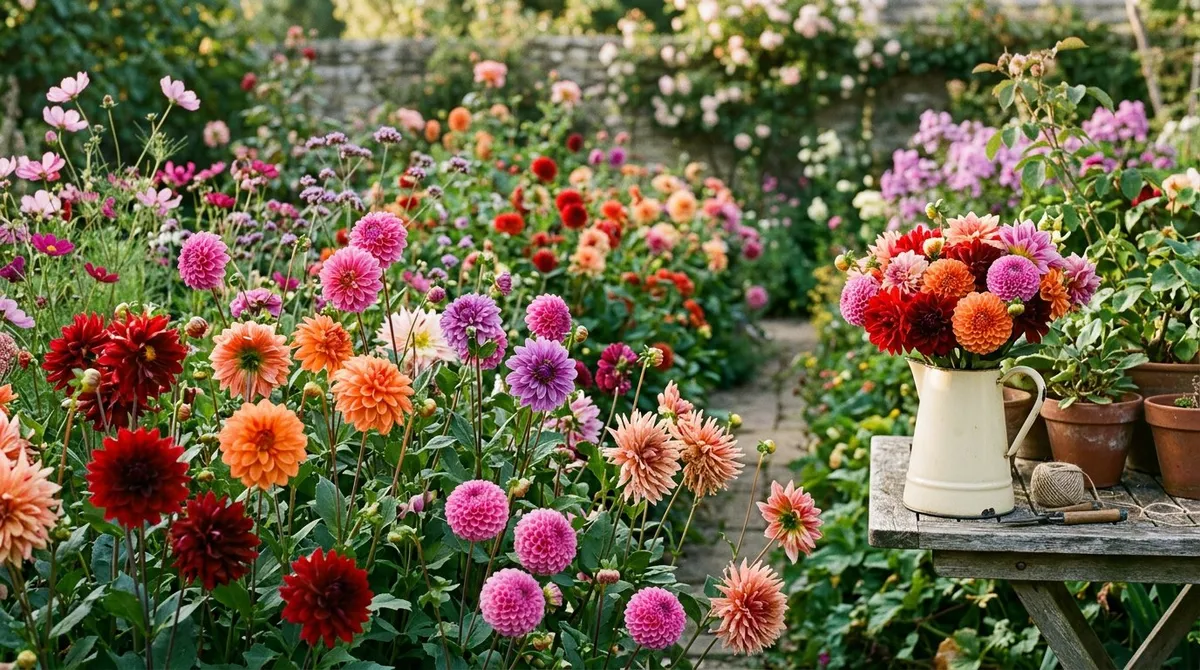
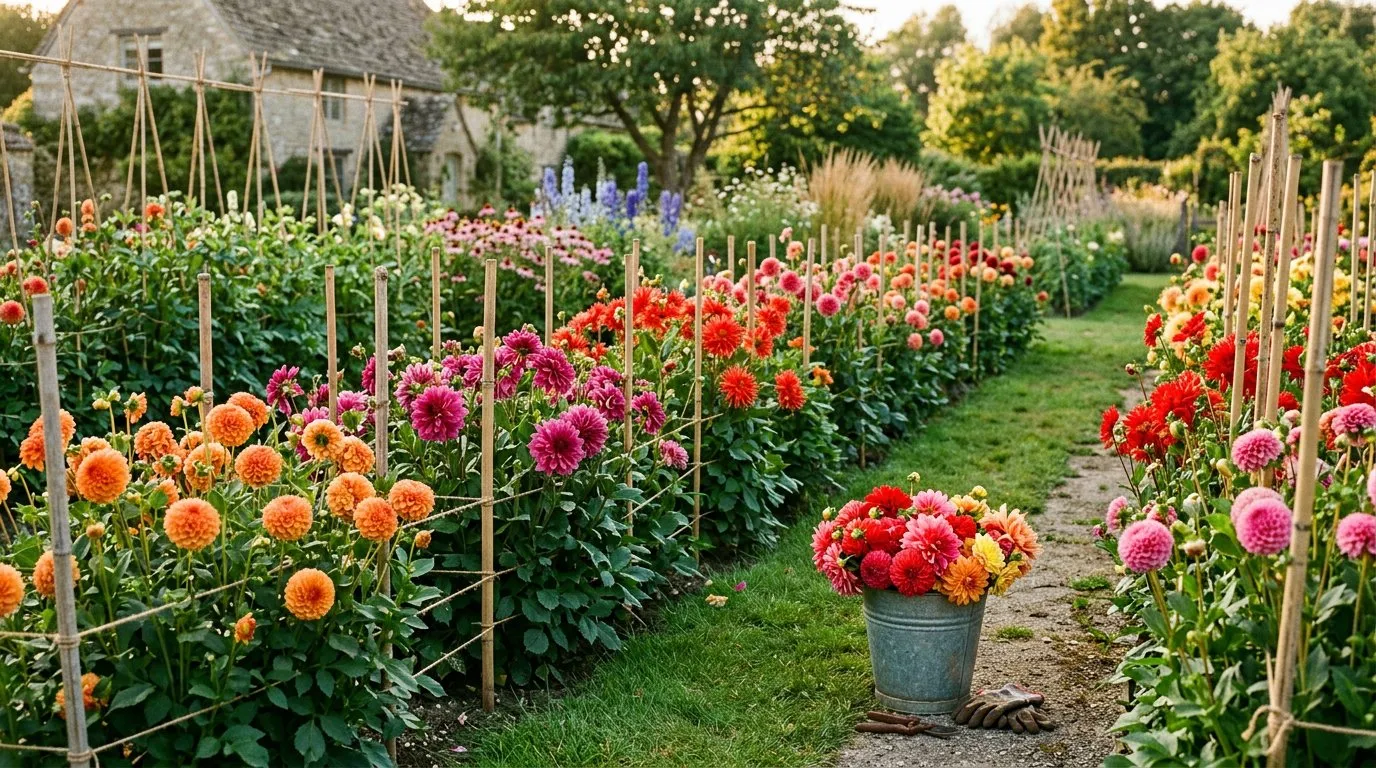 Dahlias in full August flower: deadheading every few days keeps the display going until the first frost.
Month-by-month dahlia planting and care calendar
| Month | Task |
|---|---|
| January | Order tubers from specialist suppliers. Popular varieties sell out early. Plan your colour scheme |
| February | Check stored tubers for rot or shrivelling. Discard any that are soft. Mist dry tubers lightly |
| March | Start tubers indoors in 2-litre pots on bright windowsills. Water lightly. Shoots appear in 2-3 weeks |
| April | Continue indoor growing. Pinch out tips above fourth leaf pair. Harden off from mid-April in the south |
| May | Plant outdoors in southern and central England after last frost. Stake tall varieties at planting time |
| June | Plant outdoors in northern England and Scotland. Water regularly. Apply mulch around stems |
| July | First flowers appear. Begin fortnightly high-potash feeding. Deadhead spent blooms every 2-3 days |
| August | Peak flowering. Increase feeding to weekly. Keep deadheading. Water deeply in hot spells |
| September | Flowering continues. Reduce watering slightly. Stop feeding in late September |
| October | First frosts blacken foliage. Cut stems to 10-15cm after frost. Lift tubers with a garden fork |
| November | Dry tubers upside down for 1-2 weeks. Store in boxes of dry compost at 5-10C in frost-free place |
| December | Check stored tubers monthly for rot or drying out. Mist lightly if shrivelling. Discard rotten tubers |
Lifting and storing dahlia tubers for winter
Dahlias are not frost-hardy. In most of the UK, you must lift tubers in autumn and store them indoors over winter.
When to lift
Wait until the first hard frost blackens the foliage, usually in October or November. A light frost that just nips the leaf tips is fine. A hard frost that turns all the foliage to black mush is your signal. Cut the stems back to 10-15cm above ground level. Leave the stumps in place for two to three days. This allows moisture to drain out of the hollow stems.
How to lift and store
Loosen the soil around the clump with a garden fork, working 30cm from the stems to avoid spearing tubers. Lift the entire clump carefully. Shake off loose soil but do not wash the tubers. Damaged, wet tubers rot in storage.
Turn the clump upside down in a dry, airy shed or garage for one to two weeks. This drains remaining moisture from the hollow stems. Once the stems are dry and the tuber surfaces feel papery, trim off dead roots and any damaged sections. Dust cuts with sulphur powder to prevent fungal infection.
Store in boxes or trays filled with barely damp vermiculite, dry compost, or dry sand. Each tuber should be surrounded by the storage medium but not sealed in an airtight container. Aim for a storage temperature of 5-10C: a frost-free garage, shed, or unheated spare room. Check monthly and remove any tubers showing rot.
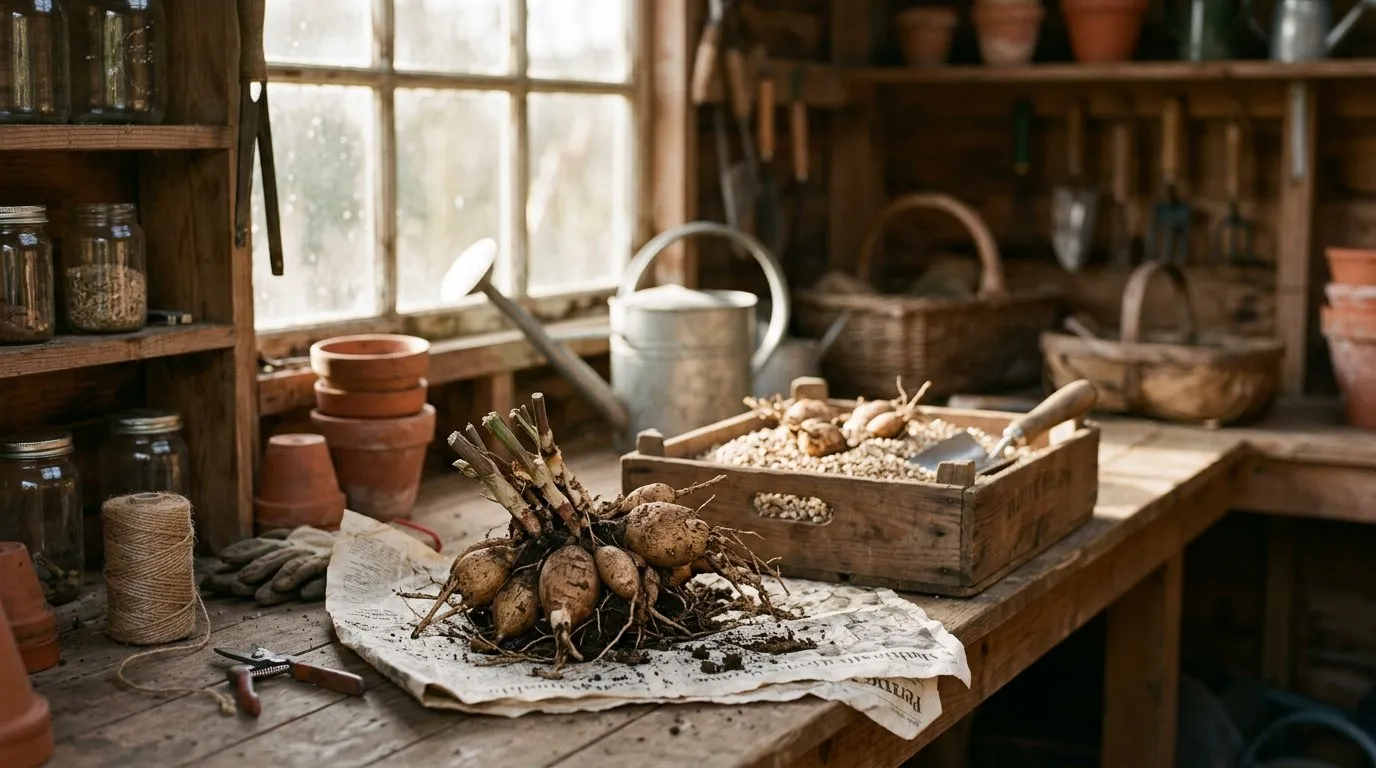 Lifted dahlia tubers drying in the shed before being packed in vermiculite for frost-free winter storage.
Leaving tubers in the ground
In mild areas of south-west England, coastal Wales, and sheltered city gardens, tubers can survive winter in the ground if covered with 15cm of bark mulch or straw after cutting back. This insulates against moderate frosts down to about minus 5C. However, wet winter soil is as dangerous as cold. Heavy clay soil that stays waterlogged will rot tubers even if temperatures stay mild. For most UK gardeners, lifting is the safer option.
Gardener’s tip: Label every tuber at lifting time. Write the variety name on the stem stub with a permanent marker. By spring, all tubers look identical and you will have no idea which is ‘Cafe au Lait’ and which is ‘Bishop of Llandaff’. A minute spent labelling saves confusion in March.
Common mistakes when planting dahlias
Planting out too early
The most frequent mistake. Eager gardeners plant tubers outside in March or early April, only to lose them to a late frost. Dahlias are tropical plants with zero frost tolerance. Even a brief dip to minus 1C kills emerging shoots. Wait until your area’s last frost date has passed and check the five-day forecast before planting. You can start tubers indoors as early as March, but they should not go outside until the risk has passed. Check our spring gardening jobs guide for a full regional timeline.
Forgetting to stake at planting time
A 1.2m dahlia laden with heavy blooms in August catches the wind. Without a stake, the plant snaps at the base and the season is over. Install stakes at planting time when you can see where the tuber is. Pushing a stake in later risks spearing the underground tuber. Use a stout bamboo cane or wooden stake at least 1.5m tall for full-sized varieties.
Overwatering in spring
Freshly planted tubers sitting in cold, wet soil rot before they sprout. Water lightly at planting time and then leave the soil alone until you see shoots. Once growth is active and temperatures are warmer, increase watering gradually. The risk period is the first three to four weeks after planting, when the tuber has no roots yet and cannot absorb excess moisture.
Using high-nitrogen feed all season
Nitrogen promotes leafy growth. Too much nitrogen and your dahlia becomes a 1.5m tower of leaves with barely any flowers. Switch to a high-potash feed (tomato fertiliser) from the moment you see flower buds forming, usually July. The potash drives flower production, not foliage.
Not deadheading regularly
A single seedhead forming on a dahlia sends a chemical signal to the plant to stop producing flowers. Deadheading every two to three days removes this signal and keeps new buds coming. It is a five-minute job that doubles your total flower count over the season.
Planning your dahlia display
Dahlias combine with late-summer perennials. Plant them alongside grasses like Miscanthus, salvias, Japanese anemones, and Verbena bonariensis for a display that peaks in August and September. The RHS dahlia growing guide has excellent planting combination suggestions for British gardens.
For a cottage garden planting plan, dahlias fill the mid-to-late summer gap perfectly. Plant them behind spring-flowering perennials that die back by June, so the dahlias take over the space just as it becomes available. Consider ordering tubers alongside your April planting tasks and May planting tasks for a coordinated seasonal display.
Now you’ve mastered dahlia planting timing, read our guide on cottage garden planting plans for ideas on combining dahlias with late-summer perennials that complement them perfectly.
Frequently asked questions
When should I plant dahlia tubers outside in the UK?
Plant outdoors from mid-April to mid-May in most of England. Northern England and Scotland should wait until late May or early June. The soil temperature must reach at least 10C. Check your local last frost date and watch the five-day weather forecast before planting. Tubers planted into cold, waterlogged soil rot before they can sprout.
Can I plant dahlias in March?
Only indoors in pots, never directly outside in March. Start tubers in 2-litre pots of multipurpose compost on a bright windowsill or in an unheated greenhouse from early March. This gives a four to six week head start. Plants can go outdoors once all frost risk has passed, typically late May in England and early June in Scotland.
How deep should I plant dahlia tubers?
Plant 10-15cm deep with the old stem stub pointing upward. The eye buds on the crown should face up. Deeper planting provides some frost protection for the growing point. In heavy clay soil, plant at 10cm depth and add a handful of horticultural grit beneath the tuber to improve drainage and prevent rot.
Do dahlias come back every year in the UK?
Dahlias are perennial but not frost-hardy in the British climate. In most areas, lift tubers after the first autumn frost, dry them for two weeks, and store at 5-10C in a frost-free shed or garage. In sheltered gardens in the south-west and mild coastal areas, tubers can survive in the ground under a 15cm mulch of bark or straw.
How far apart should I plant dahlias?
Spacing depends on variety size: 30-45cm for dwarf, 60-90cm for tall types. Medium decorative and ball types need 45-60cm. Tall decorative and dinnerplate varieties need 60-90cm. Closer spacing makes a fuller display but increases disease risk from reduced air circulation around the stems and foliage.
When do dahlias start flowering?
Most dahlias start flowering from mid-July and continue until the first frost. Tubers started indoors in March flower from late June. Outdoor-planted tubers from May flower from mid to late July. Deadheading spent blooms every few days extends the season by redirecting the plant’s energy into producing fresh buds instead of seeds.
Should I soak dahlia tubers before planting?
Soaking is not recommended and risks encouraging rot. If tubers look very shrivelled after winter storage, lay them on damp compost for 48 hours to rehydrate gently. Do not submerge in water. Healthy, firm tubers with visible eye buds can go straight into pots or the ground without any pre-treatment at all.
Lawrie has been gardening in the West Midlands for over 30 years. He grows his own veg using no-dig methods, keeps a wildlife-friendly garden, and writes practical advice based on real UK growing conditions.