When to Plant Garlic in the UK
Learn exactly when to plant garlic across the UK. Covers autumn and spring timing, softneck and hardneck varieties, and regional planting windows.
Key takeaways
- Plant garlic cloves in October to November for the largest bulbs, giving them 30 or more days below 10C
- Softneck varieties store for 8-10 months and suit milder southern and central UK gardens
- Hardneck varieties produce stronger flavour and edible scapes but store for only 3-5 months
- Space cloves 15cm apart in rows 30cm apart, planted 2.5cm deep with the pointed end upward
- Spring planting in February to March works as a backup but produces bulbs 20-30 percent smaller
- Never use supermarket garlic as seed stock, as it may carry disease and is unsuited to UK conditions
Garlic is one of the easiest and most rewarding crops you can grow in a British garden. Plant a single clove in autumn, ignore it through winter, and lift a full bulb of pungent, fresh garlic the following summer. The flavour of home-grown garlic, cured and stored in your own kitchen, is sharper and more complex than anything on a supermarket shelf.
Getting the timing right is the most important step. Garlic needs a long, cold winter to develop properly, and the planting date determines whether you get plump, well-divided bulbs or disappointing single rounds. This guide focuses on when to plant in every UK region, with specific advice for softneck and hardneck types. For the full growing process from soil preparation to harvest, see our garlic growing guide.
Why autumn planting produces the best garlic
Garlic needs cold to form bulbs. This biological process, called vernalisation, requires a minimum of 30 days at soil temperatures below 10C. The cold triggers hormonal changes inside the clove that cause it to divide into the familiar ring of individual cloves we recognise as a garlic bulb.
Without enough cold, a planted clove grows into a single undivided lump called a “round.” Rounds are edible but small and disappointing. UK winters reliably provide the cold period garlic needs, which is why autumn planting works so well here. Even mild southern winters rarely fail to deliver 30 days below 10C.
Autumn planting also gives cloves time to develop roots before the ground freezes. A well-rooted clove survives winter far better than one planted late. The root system absorbs moisture and nutrients through the cooler months, so the plant is ready to grow vigorously as soon as spring temperatures rise.
Gardener’s tip: The simplest way to tell if conditions are right for planting is to check whether the soil feels cool to the touch at finger depth. If night temperatures have dropped below 10C for a week, the soil is ready for garlic.
When to plant garlic: regional guide
Planting dates vary across the UK because the onset of winter differs between regions. The table below gives the ideal planting window for each area.
| Region | Ideal planting window | Soil cools below 10C | Notes |
|---|---|---|---|
| South-west England | Mid-October to late November | Late October | Mildest region; avoid very early planting |
| Southern England | Mid-October to mid-November | Mid-October | Good conditions for all varieties |
| Midlands | Early October to mid-November | Early October | Clay soils drain poorly; add grit |
| Northern England | Early to mid-October | Late September | Plant before ground hardens |
| Scotland (lowlands) | Late September to mid-October | Mid-September | Short window before hard frosts |
| Scotland (highlands) | Late September to early October | Early September | Hardneck types are more reliable |
In sheltered urban gardens, you can often extend the window by a week or two. South-facing walls and raised beds warm the soil and protect cloves from the worst of winter wet. If your garden sits on heavy clay, good drainage matters more than the exact planting date.
The autumn window (October to November)
For most UK gardeners, mid-October to mid-November is the sweet spot. At this point the soil has cooled enough for root growth without triggering excessive leaf development that could be damaged by hard winter frosts.
Plant too early in September and cloves may produce tall, soft growth that gets battered by winter weather. Plant too late in December and the root system may be poor, leading to smaller bulbs. The October to November window balances these risks.
The spring backup (February to March)
If you miss the autumn window entirely, plant in February or early March. Spring-planted garlic still produces a worthwhile crop, though bulbs are typically 20-30 percent smaller than those planted in autumn.
To compensate for the missing cold period, pre-chill cloves in a paper bag in the fridge for 4-6 weeks before spring planting. This simulates vernalisation and improves clove division. Softneck varieties handle spring planting better than hardneck types, which have a stronger requirement for natural cold.
For a broader view of spring planting tasks, see our February planting guide and March planting guide.
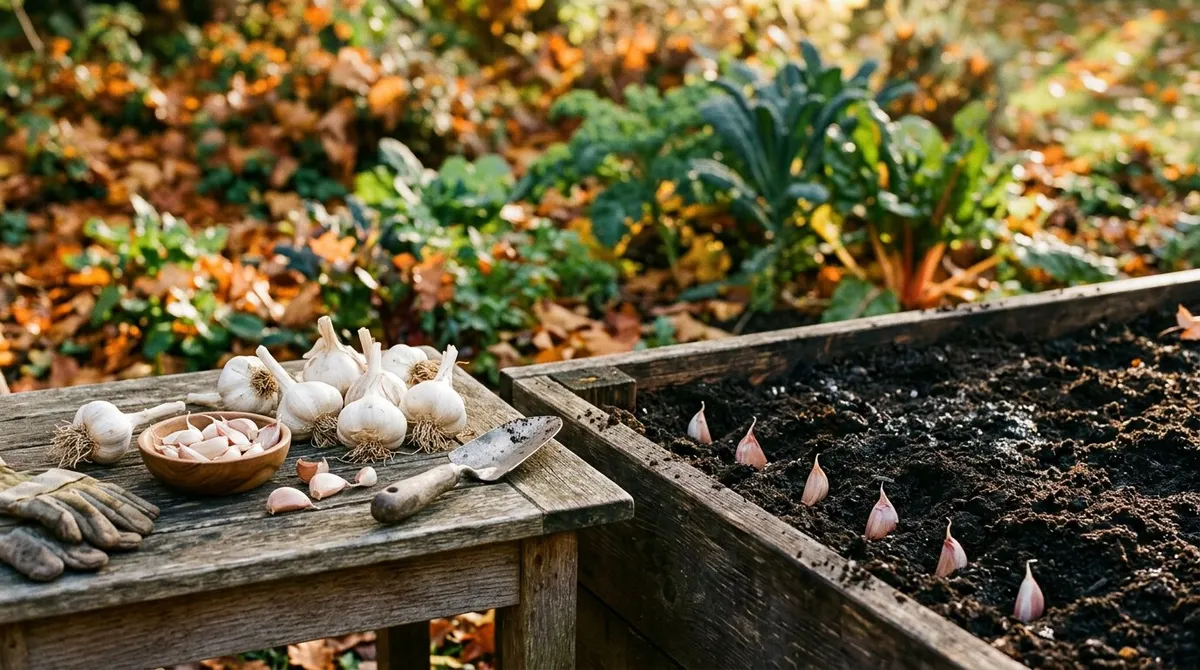
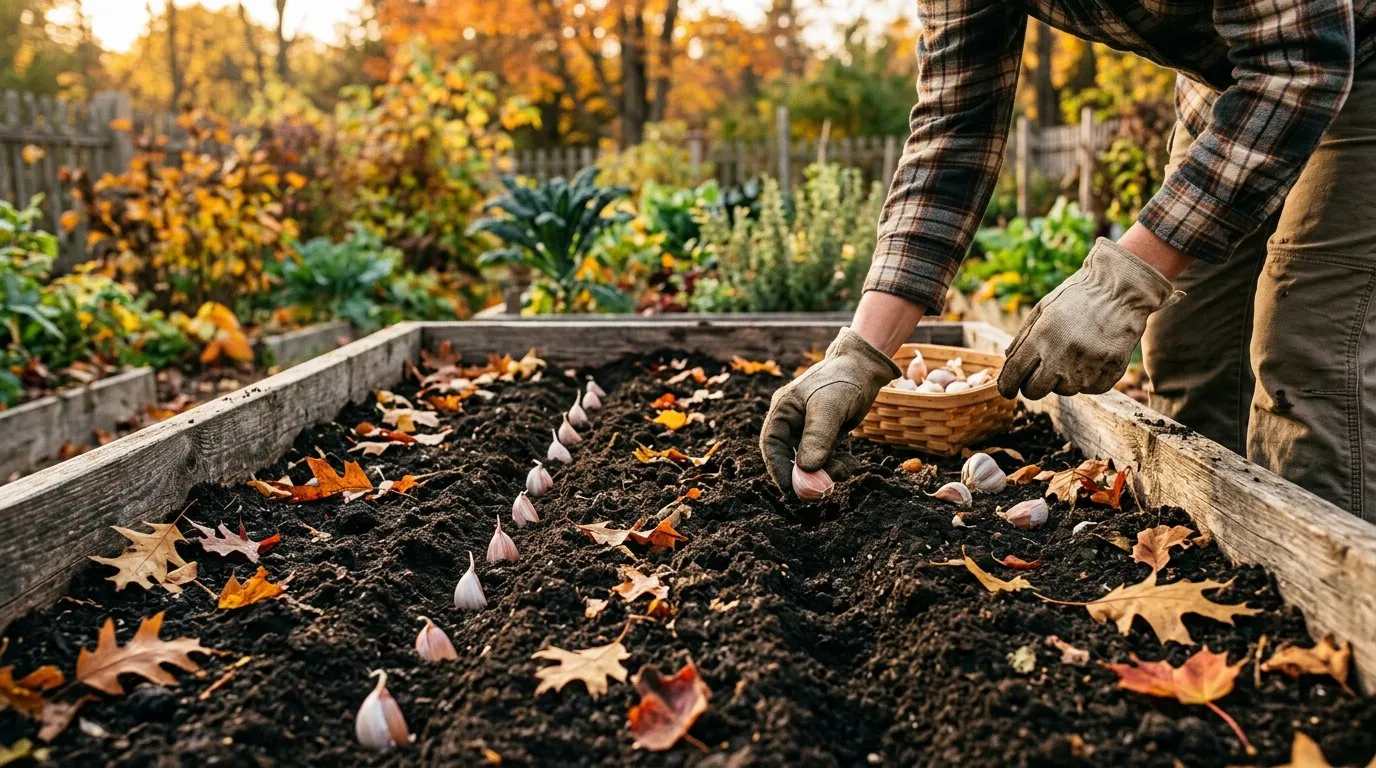 Plant garlic cloves 2.5cm deep with the pointed end facing up. October is the ideal month across most of the UK.
Softneck garlic varieties for UK gardens
Softneck garlic is the most commonly grown type in southern and central England. It does not produce a flower stalk (scape), directing all its energy into the bulb. Softneck bulbs contain 10-20 cloves arranged in overlapping layers, and their outstanding feature is storage life: a well-cured softneck bulb keeps for 8-10 months.
Best softneck varieties
Solent Wight is the standard UK softneck variety. Bred on the Isle of Wight, it produces large bulbs with 12-16 cloves and stores for up to 10 months. It performs reliably in all UK regions and is the best choice for beginners.
Picardy Wight is another Isle of Wight variety with large, mild-flavoured bulbs ideal for roasting. It produces 10-14 cloves per bulb and stores for 7-8 months. The flavour mellows when cooked.
Provence Wight comes from southern France but adapts well to UK conditions. It produces pink-tinged bulbs with a warm, rounded flavour. Good in both southern and central England. Stores for 6-8 months.
Early Purple Wight is the earliest variety to harvest in the UK. Bulbs are ready from May in southern England. The purple-striped skin is attractive, and the flavour is mild but distinctive. Shorter storage life of 4-5 months makes it one to eat first.
Why we recommend Solent Wight for most UK gardeners: After 30 years of growing garlic across a range of British soils and climates, Solent Wight is the variety that produces the most consistently satisfying results for beginners and experienced growers alike. It yields 12-16 cloves per bulb, stores for up to 10 months without sprouting, and performs reliably from Cornwall to the Scottish Borders. Planted in October, it consistently produces bulbs 15-20 percent larger than supermarket-bought cloves grown in identical conditions.
Hardneck garlic varieties for UK gardens
Hardneck garlic grows a stiff central stem that produces a curly flower stalk called a scape in late spring. The scapes are edible and delicious, with a mild garlic flavour well suited to stir-fries and pesto. Hardneck bulbs contain fewer but larger cloves (4-12 per bulb), and the flavour is more complex and intense than softneck types.
Hardneck varieties are hardier than softneck types, making them the better choice for northern England, Scotland, and exposed or high-altitude gardens.
Best hardneck varieties
Lautrec Wight is a striking pink-skinned variety from the famous French garlic region. It produces 8-12 cloves per bulb with a rich, spicy flavour that chefs prize. Fully hardy in UK conditions. Stores for 4-5 months.
Carcassonne Wight is vigorous and cold-tolerant, with purple-striped bulbs and 6-10 cloves. The flavour is punchy and assertive. Excellent in northern gardens where other varieties struggle.
Music is a Canadian porcelain-type hardneck with huge, easy-to-peel cloves (4-6 per bulb). The flavour is bold and rich. It thrives in cold, wet conditions and is one of the most reliable varieties for Scottish gardens.
Elephant garlic
Elephant garlic is technically a close relative of leeks, not true garlic. It produces enormous bulbs the size of a fist, with 4-6 very large, mild-flavoured cloves. Plant elephant garlic in October, 20cm deep and 30cm apart, as it needs more space and deeper planting than regular garlic. Harvest in July.
Elephant garlic is ideal for gardeners who find regular garlic too strong, and the dramatic bulb size makes it a conversation piece in any vegetable garden.
Garlic variety comparison table
| Variety | Type | Cloves per bulb | Flavour | Storage | Plant | Best for |
|---|---|---|---|---|---|---|
| Solent Wight | Softneck | 12-16 | Medium | 10 months | Oct-Nov | Beginners, all regions |
| Picardy Wight | Softneck | 10-14 | Mild | 7-8 months | Oct-Nov | Roasting |
| Provence Wight | Softneck | 10-14 | Warm, rounded | 6-8 months | Oct-Nov | Southern/central UK |
| Early Purple Wight | Softneck | 10-12 | Mild | 4-5 months | Oct-Nov | Earliest harvest |
| Lautrec Wight | Hardneck | 8-12 | Strong, complex | 4-5 months | Oct-Nov | Flavour, cooking |
| Carcassonne Wight | Hardneck | 6-10 | Punchy, spicy | 3-4 months | Oct | Cold northern gardens |
| Music | Hardneck | 4-6 | Bold, rich | 3-5 months | Oct | Scotland, wet sites |
| Elephant | Leek relative | 4-6 | Very mild | 6 months | Oct | Mild flavour preference |
How to plant garlic cloves
Planting garlic is straightforward, but getting the spacing and depth right makes a real difference to bulb size.
Preparing the soil
Garlic needs full sun and well-drained soil with a pH of 6.0 to 7.0. Dig the bed over and work in a bucketful of garden compost or well-rotted manure per square metre. On heavy clay, add horticultural grit to improve drainage. Waterlogged soil over winter is the primary cause of clove rot.
Avoid planting where any allium (garlic, onions, leeks, shallots) has grown in the previous three years. White rot, the most serious garlic disease, can persist in soil for 15 years or more. Crop rotation is your best defence. Our vegetable planting calendar covers rotation planning in detail.
Planting method
- Break the garlic bulb into individual cloves. Use only the large outer cloves for planting. Small inner cloves produce undersized bulbs.
- Do not peel the cloves. The papery skin protects against disease.
- Make a hole 2.5cm deep using a dibber or your finger.
- Place the clove with the pointed end facing up and the flat base plate at the bottom.
- Space cloves 15cm apart in rows 30cm apart.
- Backfill and firm gently. The tip of the clove should be just below the soil surface.
In raised beds, you can reduce row spacing to 20cm. The improved drainage and loose soil in raised beds compensate for the closer planting. See our raised bed guide for soil mix recommendations.
Warning: Never use garlic from the supermarket as seed stock. Imported garlic from Spain or China is not adapted to UK conditions and may carry viruses or white rot. Always buy certified UK-grown seed garlic from a specialist supplier such as The Garlic Farm or Pennard Plants.
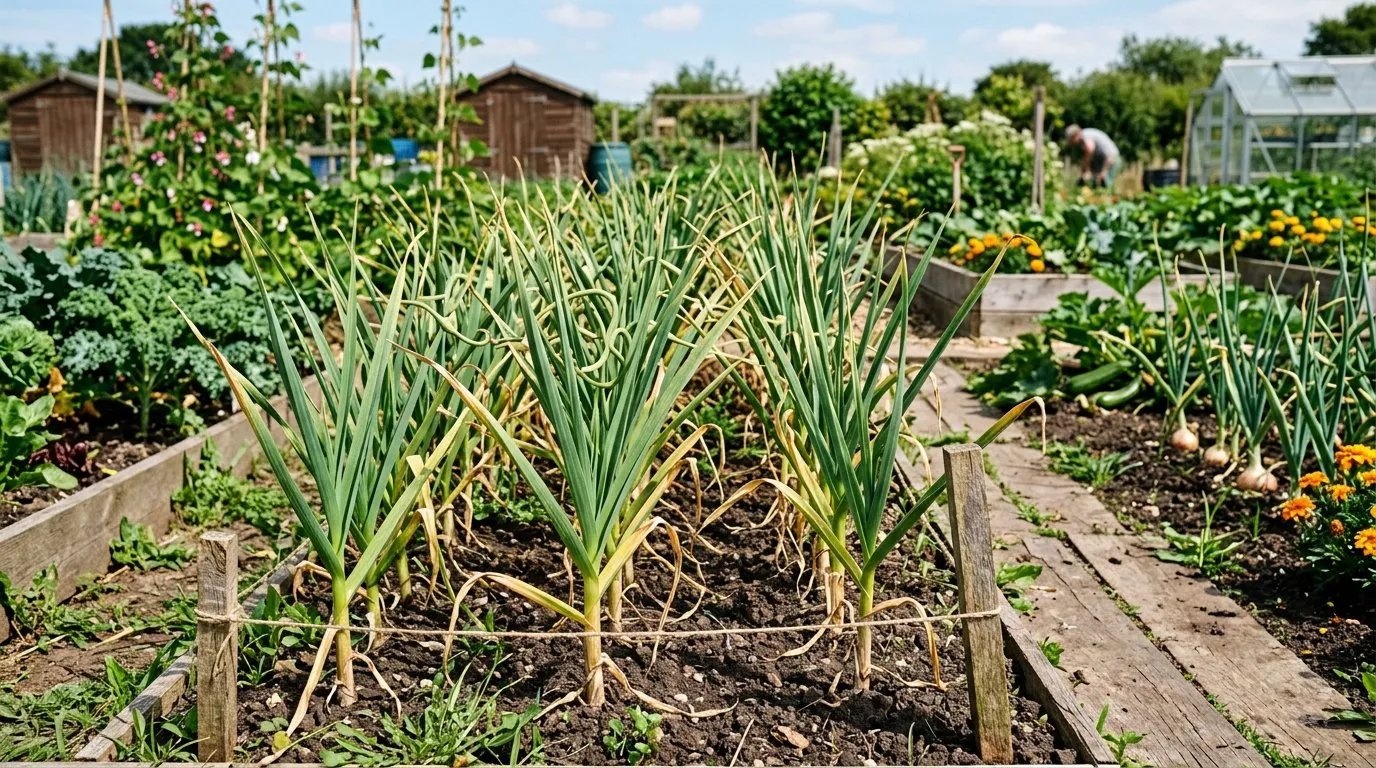 Garlic growing in a raised bed in spring. The well-drained conditions prevent winter rot and produce larger bulbs.
Garlic growing calendar: month by month
This calendar covers the full cycle from planting to storage, showing what to do each month.
| Month | Action | Details |
|---|---|---|
| September | Prepare soil, order seed garlic | Dig in compost, check pH, choose varieties |
| October | Plant cloves (main window) | 2.5cm deep, 15cm apart, pointed end up |
| November | Finish planting | Last chance in southern UK |
| December | Mulch if hard frost forecast | 5cm straw or leaf mould over the bed |
| January | Check for bird damage | Pigeons pull cloves; net beds if needed |
| February | Plant spring garlic if missed autumn | Pre-chill cloves in fridge first |
| March | Weed and water if dry | Growth resumes; keep beds clear |
| April | Feed with general fertiliser | One application of blood, fish, and bone |
| May | Remove scapes from hardneck types | Cut scapes when they curl; use in cooking |
| June | Stop watering two weeks before harvest | Early varieties ready in southern UK |
| July | Main harvest month | Lift when lower leaves turn yellow |
| August | Cure bulbs; late varieties harvested | Dry in airy spot for 2-3 weeks |
| September | Store cured bulbs; save best for replanting | Cool, dry place with airflow |
Harvesting and curing garlic
Knowing when to harvest is as important as knowing when to plant. Lift garlic too early and the cloves will be undeveloped. Too late and the bulb wrappers deteriorate, reducing storage life.
When to harvest
Harvest garlic when the lower third of leaves have turned yellow but the upper leaves are still green. This usually occurs from June for early softneck varieties and July to August for hardneck and maincrop types.
Lift one test bulb before harvesting the entire crop. Cut it in half to check the cloves. They should fill the skin tightly with no gaps. If cloves are small with loose skins, wait another week. If the outer skin is starting to split, harvest immediately.
How to cure
Curing dries the outer skins and neck of the bulb, sealing in moisture and extending storage life dramatically. Lay freshly harvested bulbs on a wire rack, wooden slatted shelf, or in net bags in a dry, airy, shaded spot for 2-3 weeks. A garden shed, open garage, or covered porch works well. Do not cure in direct sun, as this can cook the cloves.
After curing, trim the roots to 1cm and cut the stem to 5cm above the bulb. Softneck garlic can be plaited into traditional strings and hung in the kitchen. Store all garlic at 10-15C with good airflow. A mesh bag in an unheated room is ideal.
Common mistakes when growing garlic
These errors are responsible for most garlic failures in UK gardens. Avoid them and you will harvest reliably every year.
-
Planting supermarket garlic. Imported varieties from warm climates underperform in UK winters. They may carry disease that contaminates your soil for years. Buy certified UK-grown seed garlic from a reputable supplier.
-
Planting too late in spring. Cloves planted after March do not receive enough cold and produce small, undivided rounds. If you miss the October to November window, plant by early March at the latest and pre-chill cloves first.
-
Waterlogged soil over winter. Garlic tolerates cold but not wet feet. Cloves sitting in waterlogged clay soil rot before they root. Improve drainage with grit, use raised beds, or choose a sloping site where water drains away naturally.
-
Leaving scapes on hardneck varieties. The flower stalk diverts energy from the bulb. If left to develop, scapes reduce bulb size by up to 30 percent. Cut them off when they form a curl in late spring. The scapes are edible, so nothing is wasted.
-
Harvesting too late. Waiting until all leaves are completely brown means the protective bulb wrappers have broken down. Exposed cloves store poorly and may separate in the ground. Lift when the lower third of leaves yellow but the top is still green.
Growing garlic in containers
Garlic adapts well to container growing. This is useful if your garden soil is heavy clay, if you rent and cannot dig beds, or if you want to grow garlic on a balcony or patio.
Use a pot at least 20cm deep with drainage holes. Fill with peat-free multipurpose compost mixed with perlite (70:30 ratio) for drainage. Plant cloves 2.5cm deep and 10cm apart. You can fit 6-8 cloves in a 30cm pot.
Keep containers outdoors through winter. Garlic needs the cold, and indoor temperatures are too warm for vernalisation. Water sparingly from autumn to early spring, just enough to stop the compost drying out completely. Increase watering from March as leaf growth accelerates. Stop watering two weeks before harvest.
Container-grown garlic produces slightly smaller bulbs than open-ground plants, but the quality and flavour are identical. Hardneck varieties in pots are particularly satisfying because you get both the edible scapes and the bulbs from a small space.
For more on growing food in containers, see our container gardening guide. The principles of compost mix, drainage, and feeding apply equally to garlic, herbs, and salad crops.
Companion planting with garlic
Garlic’s strong scent makes it a natural companion plant. Interplanting garlic among other crops can deter pests and improve the health of neighbouring plants.
Good companions: plant garlic alongside carrots (the scent deters carrot root fly), beetroot (similar soil and water needs), strawberries (garlic may reduce grey mould), and roses (traditional companion for aphid deterrence).
Bad companions: avoid planting garlic near beans, peas, and other legumes. Alliums are thought to inhibit nitrogen fixation in legume root nodules. Keep garlic away from other alliums in the same bed to reduce the risk of shared diseases, particularly white rot and onion fly.
If you are planning an allotment, group garlic with other alliums (onions, shallots, leeks) in the same rotation bed and move them together each year. The RHS garlic growing guide has further advice on crop rotation and disease management.
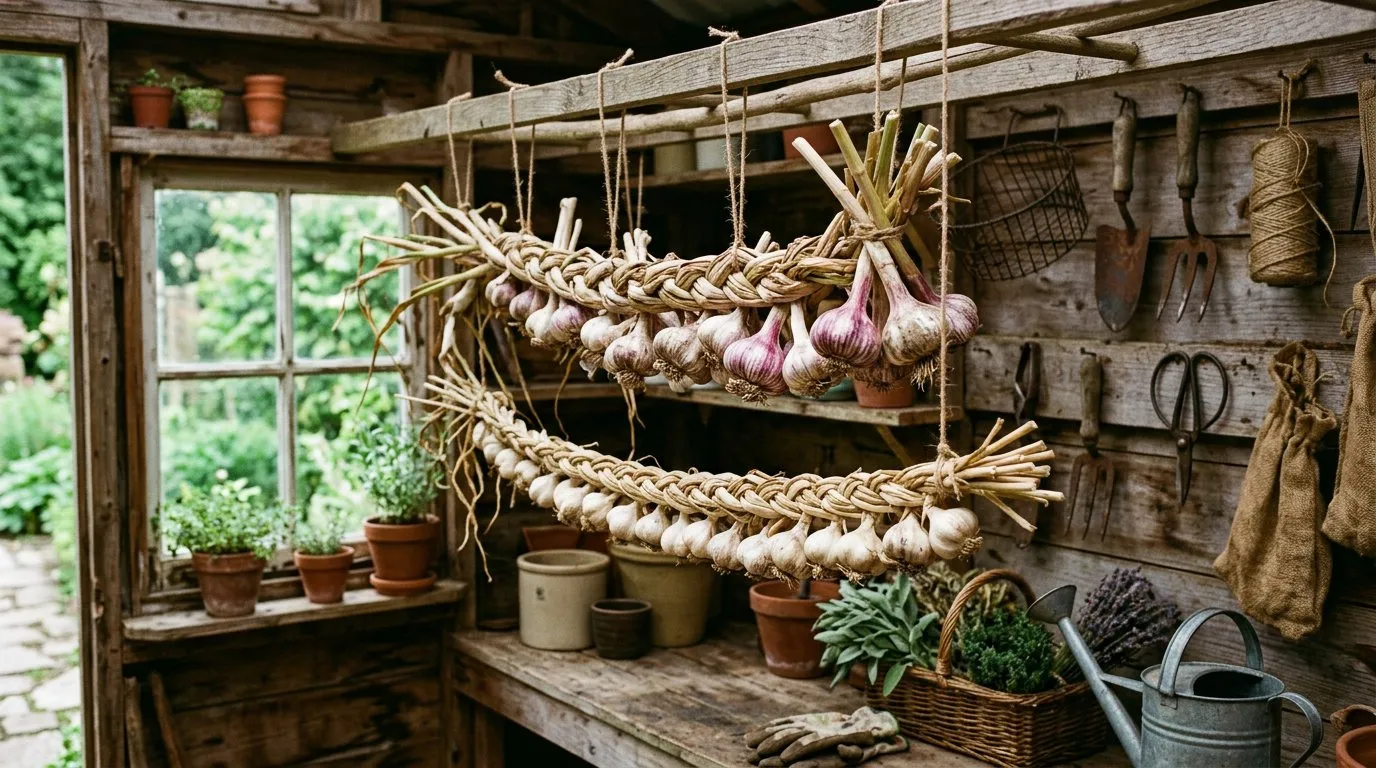 Cure garlic bulbs for 2-3 weeks in a dry, airy spot before storing. Properly cured softneck bulbs last 8-10 months.
Now you’ve mastered garlic planting, read our guide on when to plant broad beans in the UK to get another high-value autumn crop into the ground at the same time.
Frequently asked questions
When is the best month to plant garlic in the UK?
October is the ideal month for most UK regions. Planting in October gives cloves 4-6 weeks to root before the coldest winter weather. In northern England and Scotland, plant in the first two weeks of October. In the south, any time from mid-October to mid-November works well.
Can I plant garlic in spring instead of autumn?
Spring planting works but produces smaller bulbs. Plant in February or early March if you missed autumn. Expect bulbs 20-30 percent smaller than autumn-planted ones. Softneck varieties cope better with spring planting. Pre-chill cloves in the fridge for 4-6 weeks before planting to mimic vernalisation.
Why should I not plant supermarket garlic?
Supermarket garlic is not suited to UK growing conditions. It often comes from Spain or China, where the climate differs greatly. It may carry viruses or white rot disease. Certified UK seed garlic from specialist suppliers is disease-free and selected to perform in British weather.
What is the difference between softneck and hardneck garlic?
Softneck garlic stores longer; hardneck has stronger flavour. Softneck types produce 10-20 cloves per bulb and last 8-10 months in storage. Hardneck types produce 4-12 larger cloves, grow an edible flower stalk called a scape, and have more complex flavour. Hardneck garlic is hardier in cold northern UK gardens.
How do I know when garlic is ready to harvest?
Harvest when the lower third of leaves turn yellow. This typically happens from June for early varieties and July to August for maincrops. Do not wait until all leaves brown, as the bulb wrappers will have deteriorated. Lift one test bulb first to check the cloves have filled out inside the skin.
How long does garlic take to grow from planting to harvest?
Autumn-planted garlic takes 8-10 months to harvest. Cloves planted in October are ready from June to August depending on variety. Spring-planted garlic takes 5-6 months, harvesting from August to September. Early varieties like Early Purple Wight are ready first.
Can I grow garlic in a pot?
Garlic grows well in containers at least 20cm deep. Use peat-free multipurpose compost mixed with perlite for drainage. Plant cloves 2.5cm deep, 10cm apart. Keep pots outdoors through winter, as garlic needs the cold. Water sparingly until spring, then increase as leaves grow actively.
What does vernalisation mean for garlic?
Vernalisation is the cold period that triggers bulb formation. Garlic cloves need 30 or more days at temperatures below 10C. Without this cold exposure, the clove grows into a single round bulb rather than dividing into multiple cloves. UK winters naturally provide this cold in all regions.
Growing your own garlic is one of the simplest ways to improve your cooking. A few cloves pushed into the soil on an October afternoon, left to their own devices through winter, and lifted the following July give you months of intense, home-grown flavour. Save the fattest bulbs from each harvest for replanting, and your garlic patch will sustain itself year after year.
Lawrie has been gardening in the West Midlands for over 30 years. He grows his own veg using no-dig methods, keeps a wildlife-friendly garden, and writes practical advice based on real UK growing conditions.