When to Plant Potatoes in the UK
When to plant potatoes across every UK region. Covers chitting dates, first earlies, second earlies, maincrops, and container timelines.
Key takeaways
- Start chitting seed potatoes in late January, 4-6 weeks before your planned planting date
- Southern England can plant first earlies from mid-March when daffodils are blooming
- Northern England and Scotland should wait until early to mid-April for outdoor planting
- Soil temperature must reach 7-10C at 10cm depth before planting
- Container-grown potatoes can start 2-3 weeks earlier than open ground with fleece protection
Knowing when to plant potatoes in the UK is the difference between a bumper harvest and a disappointing crop. Timing depends on your region, the type of potato, and your soil conditions. Get it right and you could be lifting new potatoes by June.
This guide focuses specifically on planting times across the UK. We cover chitting schedules, regional planting windows, and the differences between earlies and maincrops. For the full growing process from planting through to harvest, see our potato growing guide. If you are planning your spring sowing schedule more broadly, our March planting guide covers everything else you can start this month.
Why timing matters for potatoes
Potatoes are frost-tender. The foliage dies back at temperatures below -2C, and a late frost can set early-planted tubers back by several weeks. Planting too early into cold, wet soil also increases the risk of the seed potatoes rotting before they sprout.
The goal is to plant once the soil has warmed enough for the tubers to grow actively, while timing the emerging shoots to avoid the last frost. In most of England, the last frost falls between mid-April and mid-May. In Scotland and northern upland areas, it can extend into late May.
Soil temperature is the most reliable guide. Push a soil thermometer 10cm into the ground. You need a consistent reading of 7-10C before planting. Air temperature alone is misleading because soil warms more slowly, particularly on heavy clay or north-facing plots.
Traditional indicators are surprisingly accurate. When daffodils are in full bloom and the soil crumbles rather than sticking to your boots, conditions are usually right. These old gardening rules align closely with the 7C soil threshold.
Gardener’s tip: If you do not own a soil thermometer, buy one. They cost under five pounds and take the guesswork out of spring planting for potatoes, beans, peas, and direct-sown seeds.
Chitting: the first step in your potato timeline
Chitting means encouraging seed potatoes to sprout before planting. It gives your crop a head start of roughly two weeks, which is particularly valuable for first earlies.
When to start chitting
Start chitting in late January to early February. Our January planting guide and February planting guide cover this in detail. This gives the shoots 4-6 weeks to develop before the first planting window opens in mid-March. If you are in northern England or Scotland, you can start chitting at the same time but you will plant 2-4 weeks later.
Place seed potatoes in egg boxes or seed trays with the rose end (the end with the most eyes) pointing upward. Keep them in a cool, bright room at 8-10C. An unheated spare room, porch, or bright garage works well. Avoid warmth, as this produces long, pale, fragile shoots. You want short, stubby, dark-coloured sprouts.
When are they ready?
Seed potatoes are ready to plant when the shoots are 2-3cm long and dark green or purple. Shoots longer than this are more likely to snap during planting. If shoots grow too long, you can rub them off and let the tuber re-sprout, though this delays planting by a further two weeks.
For maincrops, chitting is less critical. Many growers plant maincrops without chitting and still achieve good results. The longer growing season of 18-20 weeks means the head start matters less. First and second earlies benefit most from chitting because every extra week of growth counts.
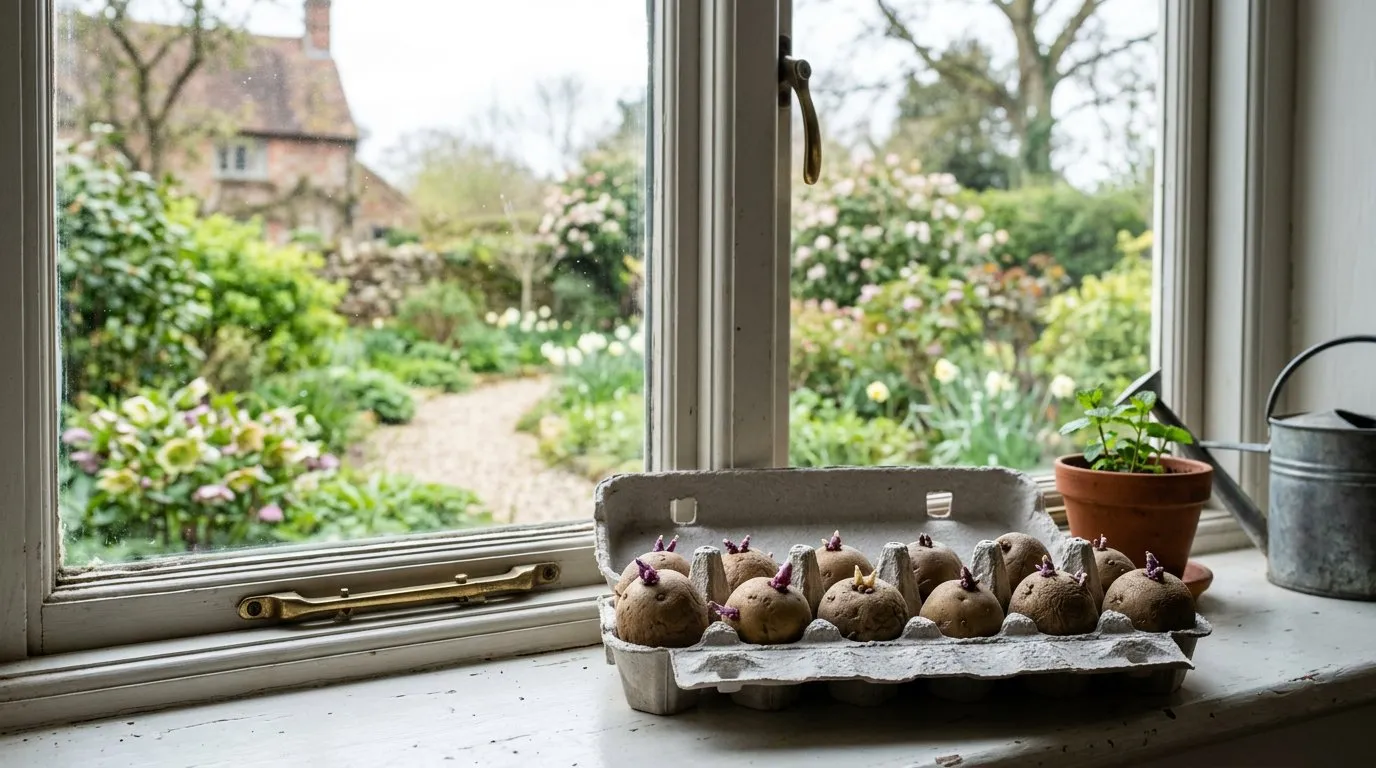 Chitting seed potatoes in January. Stand tubers in an egg box with the rose end facing up in a cool, light room.
When to plant first early potatoes
First earlies are the fastest-maturing potato type. They are ready to harvest in 10-12 weeks and produce small, waxy new potatoes. Popular varieties include Rocket, Swift, Pentland Javelin, and Lady Christl.
Regional planting dates for first earlies
| Region | First early planting | Last frost (average) | Notes |
|---|---|---|---|
| South-west England | Early to mid-March | Late March | Mildest region, earliest planting |
| Southern England | Mid-March | Mid-April | Wait for daffodils to bloom |
| Midlands | Late March | Late April | Clay soils may need longer to warm |
| Northern England | Early April | Early May | Exposed sites delay further |
| Scotland (lowlands) | Mid-April | Mid-May | Short season, chitting essential |
| Scotland (highlands) | Late April | Late May | Consider containers for earlier start |
In sheltered urban gardens, you can often plant a week or two earlier than the dates above. Walls and buildings retain heat, warming the surrounding soil. Coastal gardens in the south-west (Devon, Cornwall, Pembrokeshire) are the earliest planting areas in the UK.
Protecting early plantings
If you plant at the early end of your regional window, be prepared to protect emerging shoots from frost. When shoots appear above the soil, cover them with horticultural fleece or earth them up to ground level. A 5cm layer of straw mulch also insulates against light frosts.
Earthing up is not just for frost protection. It prevents developing tubers from turning green in sunlight. Green potatoes contain solanine, which is toxic. Earth up when shoots reach 15-20cm, drawing soil around the stems to leave just the top few centimetres showing.
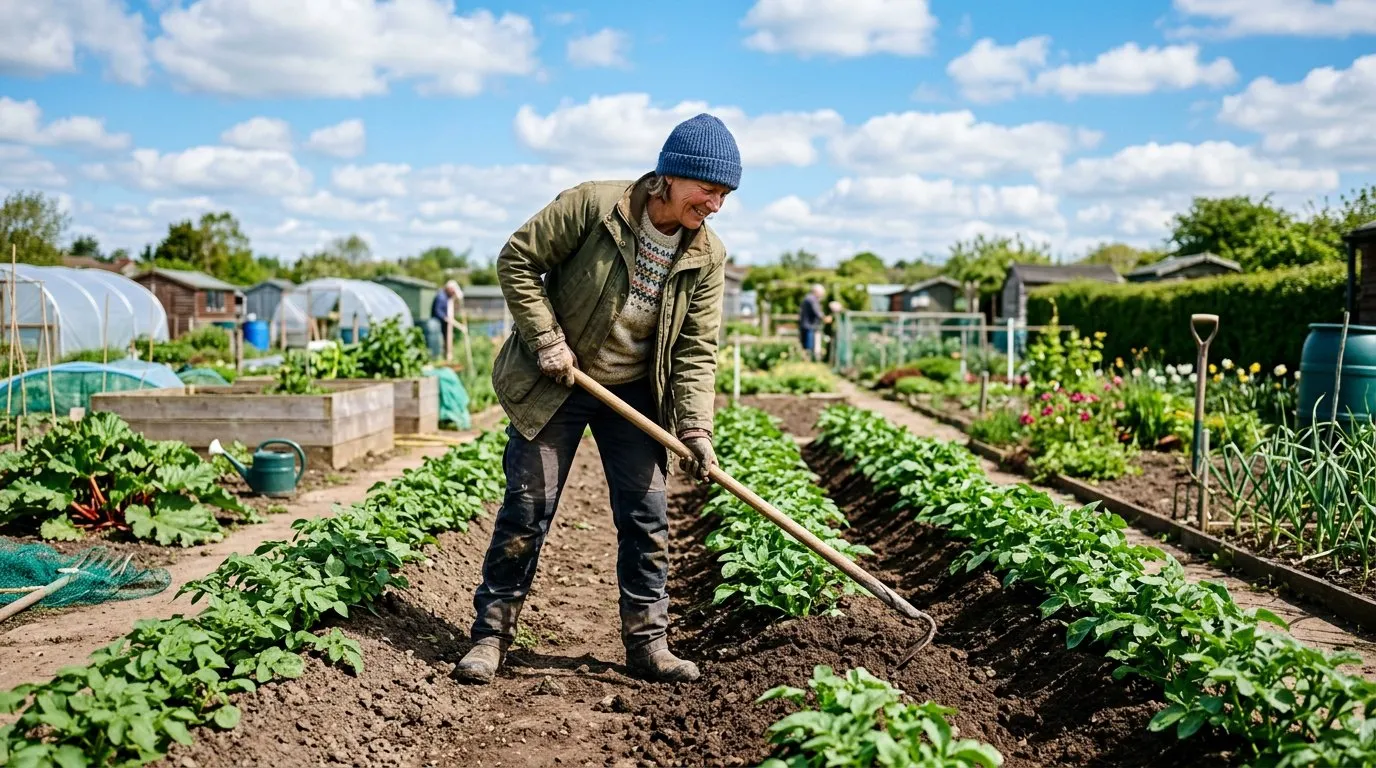 Earthing up potatoes when stems reach 20cm. Mound soil around the stems to prevent tubers turning green.
When to plant second early potatoes
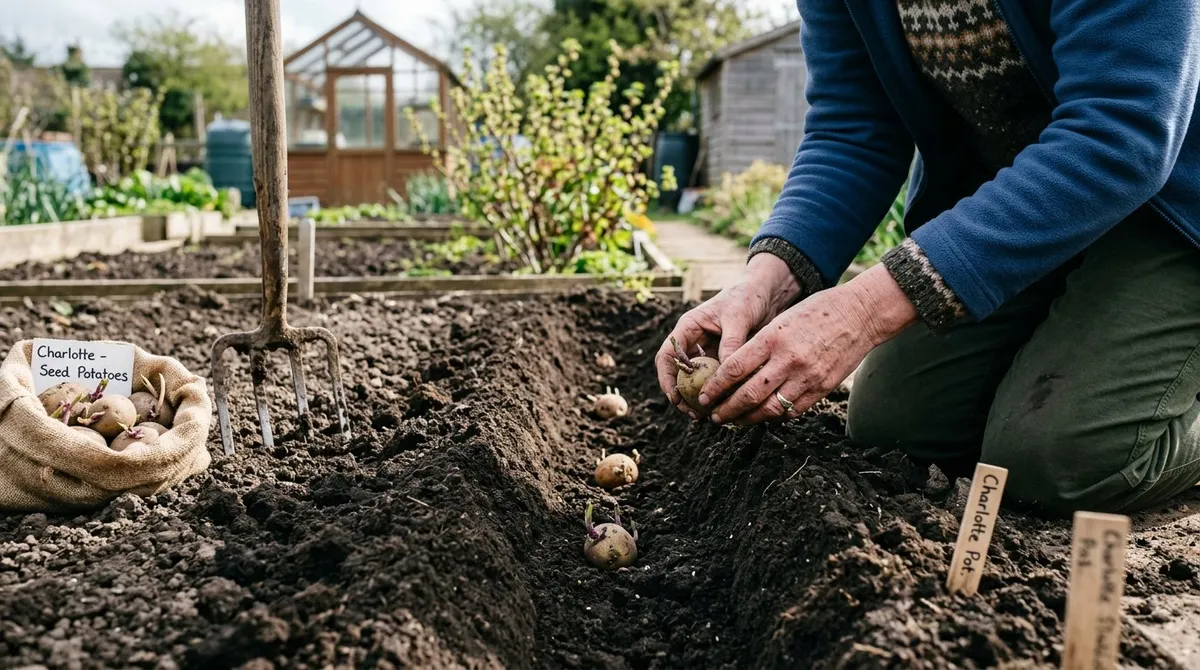
Second earlies take 13-16 weeks to mature and produce larger tubers than first earlies. They are more versatile in the kitchen. Charlotte, Kestrel, and Maris Peer are reliable second early choices.
Plant second earlies two to three weeks after first earlies. In southern England, this means early April. In the Midlands and north, aim for mid to late April. In Scotland, late April to early May. See our April planting guide for everything else you can sow alongside potatoes this month.
Second earlies sit in a useful sweet spot. They mature before the main blight season hits in July and August, meaning you can harvest them before the disease becomes a serious threat. At the same time, they produce heavier yields than first earlies, typically 1.5-2kg per plant.
When to plant maincrop potatoes
Maincrops need the longest growing season: 18-20 weeks. They produce the heaviest yields (2-2.5kg per plant) and store well over winter. Popular varieties include Maris Piper, King Edward, Sarpo Mira, and Desiree.
Plant maincrops from mid-April in southern England and late April to early May in the north and Scotland. They need to be in the ground by mid-May at the latest to have enough growing time before autumn.
Maincrop potatoes need wider spacing than earlies. Allow 40cm between tubers and 75cm between rows. This gives the plants room to develop large root systems and makes earthing up easier.
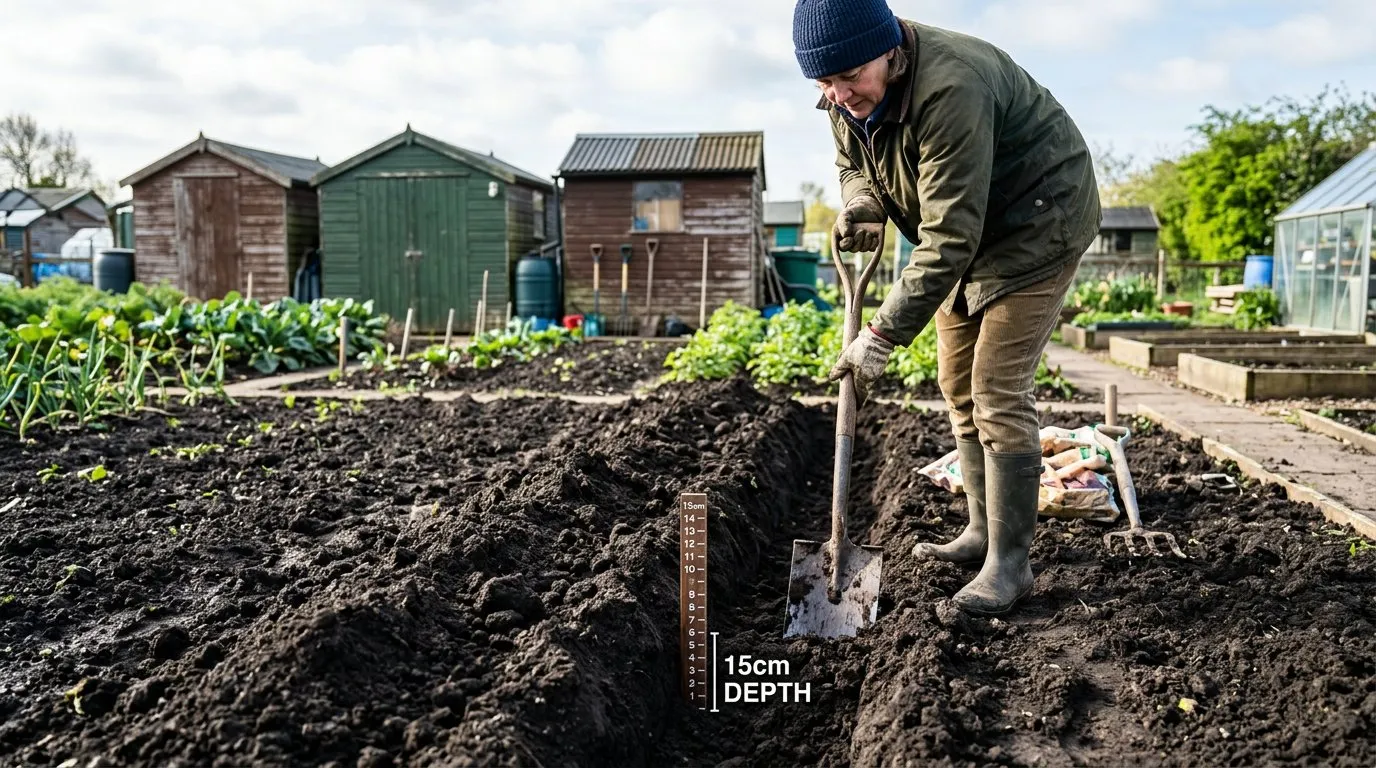 Digging a planting trench 15cm deep. Space trenches 60cm apart for first earlies, 75cm for maincrops.
Blight and maincrop timing
The main risk with maincrops is potato blight (Phytophthora infestans). Blight spores spread rapidly in warm, humid conditions, typically from late June onwards. Maincrops are still in the ground during peak blight season.
If blight is a recurring problem in your area, consider growing blight-resistant varieties. Sarpo Mira and Sarpo Axona were bred specifically for blight resistance and perform well in British conditions. The RHS blight forecasting page provides real-time risk updates.
Why we recommend Sarpo Mira for blight-prone gardens: After 30 years of growing potatoes across a range of UK soils and seasons, Sarpo Mira consistently outperforms all other maincrops in wet summers when blight pressure is highest. In trials on heavy Midlands clay, it yielded 2.5kg per plant in a year when standard Maris Piper was devastated by blight before harvest.
Warning: Never ignore blight symptoms. Brown patches on leaves and white mould on the undersides spread fast. Cut all haulm (foliage) to ground level immediately if blight strikes. Leave tubers in the ground for two weeks before lifting to prevent spores reaching them.
Variety comparison: planting times and characteristics
| Variety | Type | Plant | Harvest | Weeks | Yield per plant | Best use |
|---|---|---|---|---|---|---|
| Rocket | First early | Mid-March | June | 10-11 | 1-1.5kg | New potatoes, salads |
| Swift | First early | Mid-March | June | 10-12 | 1-1.5kg | Boiling, containers |
| Charlotte | Second early | Early April | Jul-Aug | 13-15 | 1.5-2kg | Salads, boiling |
| Kestrel | Second early | Early April | Jul-Aug | 14-16 | 1.5-2kg | All-rounder |
| Maris Piper | Maincrop | Mid-April | Aug-Oct | 18-20 | 2-2.5kg | Roasting, chips |
| King Edward | Maincrop | Mid-April | Sep-Oct | 18-20 | 2-2.5kg | Baking, mash |
| Sarpo Mira | Maincrop | Mid-April | Sep-Oct | 20 | 2.5-3kg | Blight-prone areas |
| Desiree | Maincrop | Mid-April | Aug-Sep | 18-20 | 2-2.5kg | Roasting, general |
All dates assume southern England. Add 2-3 weeks for northern England and 3-4 weeks for Scotland.
Container planting timeline
Growing potatoes in containers offers two advantages for timing. You can start 2-3 weeks earlier than open ground because pots warm faster. You can also move containers under cover if frost threatens.
In southern England, plant container potatoes from early March using first early varieties. Use a pot at least 40cm deep and 40cm wide. Place one or two seed potatoes on 15cm of multipurpose compost, cover with 10cm more, and continue adding compost as shoots grow.
Keep containers in a sheltered, sunny spot. If frost is forecast, move them into a greenhouse, porch, or against a south-facing wall and cover with fleece. For more on maximising small spaces, see our guide to starting a vegetable garden.
Christmas potatoes: the August planting window
Growing potatoes for Christmas dinner is entirely achievable. Plant a first early variety in early to mid-August. Charlotte and Maris Peer are excellent choices because they produce usable tubers in 10-12 weeks.
Plant in containers rather than open ground. By October, temperatures drop fast and you need the option to move pots under cover. Use fresh compost and new seed potatoes. Leftover tubers from spring may carry disease.
Place containers in a warm, sunny spot through August and September. Move under cover before the first frost, which typically arrives in October. Keep watering and feeding as normal. Harvest in late November or December.
Month-by-month potato timeline
| Month | What to do |
|---|---|
| January | Buy seed potatoes. Start chitting late January. |
| February | Continue chitting. Prepare planting beds. Add compost or well-rotted manure. |
| March | Plant first earlies (south mid-March, north early April). Plant container potatoes. |
| April | Plant second earlies and maincrops. Earth up first earlies. |
| May | Earth up all varieties. Water during dry spells. Monitor for slug damage. |
| June | Harvest first earlies when plants flower. Start lifting second earlies late June. |
| July | Continue harvesting earlies. Watch for blight on maincrops. |
| August | Plant Christmas potatoes. Harvest second earlies. Blight risk at peak. |
| September | Harvest maincrops. Let skins set for two weeks after cutting haulm. |
| October | Complete maincrop harvest before heavy frosts. Store in hessian sacks. |
For more crops to plant each month, check our April planting guide, May planting guide, and vegetable planting calendar.
Common mistakes with potato planting times
Planting too early into cold soil
The most common mistake is planting before the soil has warmed to 7C. Seed potatoes sit in cold, wet ground and rot. Use a soil thermometer and resist the urge to plant on the first sunny day in February.
Ignoring regional differences
Planting guides written for “the UK” often give southern England dates. Gardeners in Manchester, Leeds, or Edinburgh who follow these dates plant two to four weeks too early. Know your local last frost date and work backwards from it.
Skipping frost protection for early plantings
Emerging potato shoots are killed by frost. If you plant first earlies at the earliest possible date, you must be ready to earth up or fleece the shoots when frost is forecast. An unprotected crop hit by a late April frost loses three weeks of growth.
Planting maincrops too late
Maincrops need 18-20 weeks. If you plant in late May, you are harvesting in October when the soil is cold and wet. Late-lifted tubers store poorly and slug damage increases as autumn progresses.
Using old or damaged seed potatoes
Seed potatoes bought in January are firm and healthy. By April, unsold stock is often soft, shrivelled, or covered in long, pale shoots. Buy early and chit properly. Never plant tubers that feel soft or show signs of rot.
What to plant alongside potatoes
Potatoes fit neatly into a crop rotation. Follow them with brassicas or legumes the next season. Never plant potatoes in the same bed two years running. This builds up soil-borne disease, particularly eelworm and scab.
For ideas on soil preparation, see our guides on making compost and improving clay soil. If you are looking for other crops to sow alongside your potatoes this spring, our seed sowing calendar lists everything you can start over the coming weeks. Browse more articles in our growing section.
Why we recommend chitting in egg boxes on a bright windowsill: After 15 seasons of trialling different chitting methods including seed trays, open crates, and dark cupboards, Lawrie found that egg boxes in a cool, bright room at 8-10C consistently produce the sturdiest 2-3cm shoots with a 95% survival rate at planting. Dark-chitted tubers produced pale, fragile sprouts that snapped during planting 40% of the time.
Now you’ve mastered potato planting timings, read our guide on growing tomatoes in the UK for the next step.
Frequently asked questions
When is the best month to plant potatoes in the UK?
March to April is the main planting window. First earlies go in from mid-March in southern England. Second earlies follow in early April. Maincrops go in from mid to late April. Northern regions should add two weeks to all these dates. The exact timing depends on soil temperature, which should be at least 7C at 10cm depth.
Can I plant potatoes in February in the UK?
February is too early for outdoor planting. Soil temperatures are below 7C across the entire UK and frost risk remains high. Use February for chitting your seed potatoes indoors instead. Place them in egg boxes in a cool, bright room at 8-10C. The 4-6 weeks of chitting time means late January is the moment to start preparing.
How do I know when the soil is warm enough for potatoes?
Use a soil thermometer pushed 10cm into the ground. You need a consistent reading of 7-10C over several days, not just one warm afternoon. Traditional indicators are helpful too. When daffodils are in full bloom and soil crumbles rather than sticking to your boots, conditions are generally right.
Is it too late to plant potatoes in May?
May is fine for second earlies and maincrops. First earlies planted in May still produce a crop but yield less than those planted in March. Maincrops planted in early May have enough time to mature by September. Avoid planting maincrops after mid-May because they need 18-20 weeks in the ground.
Do I need to chit potatoes before planting?
Chitting gives early varieties a head start of about two weeks. Place seed potatoes in egg boxes with the rose end facing upward, at 8-10C in bright, indirect light for 4-6 weeks. Shoots should be 2-3cm long, dark, and sturdy. For maincrops, chitting is less critical because the longer growing season absorbs any delay.
Can I plant potatoes from the supermarket?
We do not recommend it. Supermarket potatoes are not certified disease-free and may carry viruses, blight spores, or bacterial infections that persist in your soil for years. They may also have been treated with sprout suppressants. Always buy certified seed potatoes from a reputable garden centre or specialist supplier.
When should I plant Christmas potatoes?
Plant Christmas potatoes in early to mid-August using a first early variety such as Charlotte or Maris Peer. Grow them in containers so you can move them under cover before autumn frosts arrive. Keep pots in a warm, sunny spot through August and September, then move to a greenhouse or conservatory from October. Expect to harvest in late November or December.
Lawrie has been gardening in the West Midlands for over 30 years. He grows his own veg using no-dig methods, keeps a wildlife-friendly garden, and writes practical advice based on real UK growing conditions.