When to Plant Spring Bulbs in the UK
Find out when to plant spring bulbs across the UK. Covers daffodils, tulips, crocuses, hyacinths, alliums, and snowdrops with exact timing by type.
Key takeaways
- Plant daffodils and crocuses in September to October for the longest root establishment period
- Delay tulips until late October to November to reduce the risk of tulip fire disease
- Bury each bulb 2-3 times its own depth with the pointed end facing upward
- Soil temperature below 15C is ideal for root growth without triggering premature top growth
- Lasagne planting in pots layers different bulbs at staggered depths for months of continuous colour
- Feed with bone meal at planting and liquid tomato feed when green shoots appear in spring
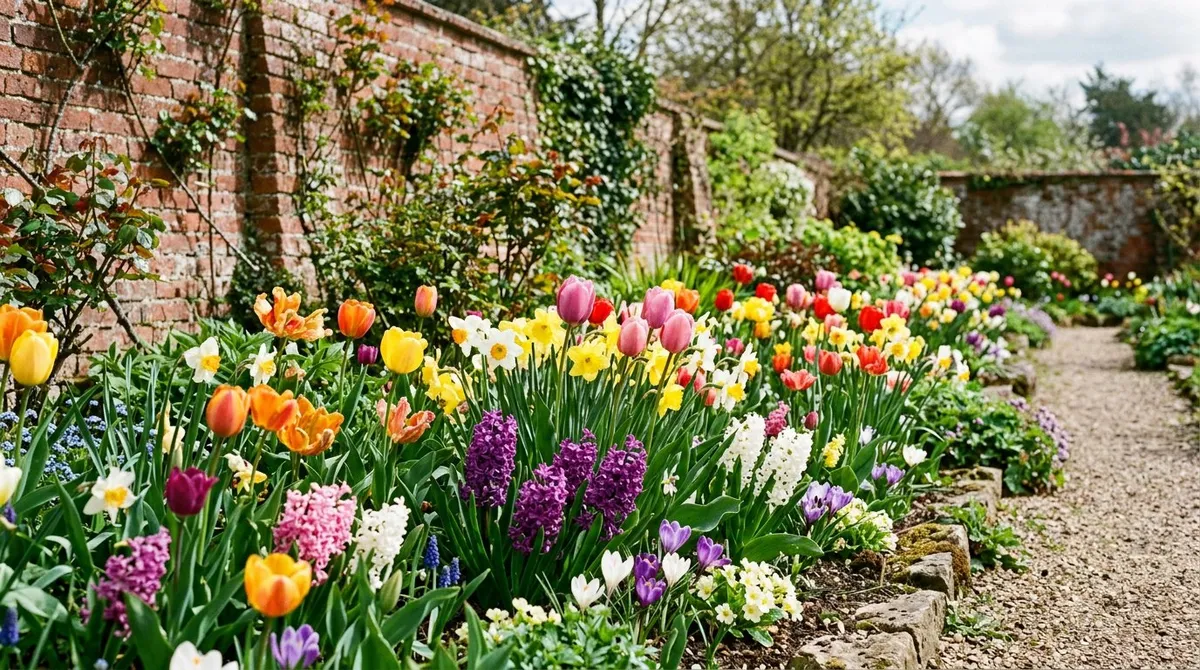
Spring bulbs are the most reliable way to fill a garden with colour after winter. A few hours of planting in autumn delivers months of flowers from February through to May. The key is getting the timing right for each bulb type, because different species need different planting windows and soil conditions.
This guide covers the exact planting times for every major spring bulb grown in the UK. Whether you are filling borders with daffodils, planting tulips in pots, or naturalising crocuses in a lawn, the schedules here are based on UK soil temperatures and regional climate patterns. For a broader view of autumn planting tasks, see our September planting guide and October planting guide.
Why planting time matters for spring bulbs
Spring bulbs need a cold period to flower. This process, called vernalisation, triggers the biochemical changes inside the bulb that produce a flower stem. Without enough weeks of cold soil, bulbs produce leaves but few or no flowers.
The ideal soil temperature for root development is below 15C but above freezing. At this range, roots grow steadily without the bulb wasting energy on premature leaf growth. In most of the UK, soil temperature drops below 15C by mid to late September. Northern Scotland reaches this point earlier, sometimes by early September.
Planting too early, while soil is still warm, encourages fungal diseases. Tulips are especially vulnerable to tulip fire (Botrytis tulipae), which thrives in warm, moist conditions. This is why experienced gardeners delay tulip planting until late October or November. Daffodils and crocuses are more forgiving and benefit from earlier planting because they need a longer rooting period.
Planting too late reduces the root system. A bulb planted in December has fewer weeks to establish roots before the ground chills to near-freezing. It will still flower, but the bloom may be smaller or later. The sweet spot for most bulbs is the window when soil has cooled but the ground is not yet frozen.
Gardener’s tip: If you do not own a soil thermometer, check the ground by hand. When the soil feels cool to the touch at a spade’s depth, conditions are right. Alternatively, wait until night temperatures consistently drop below 10C.
When to plant daffodils
Daffodils (Narcissus) are the first major spring bulb to plant, and among the most forgiving. They need a long rooting period, which is why September planting gives the best results.
Planting window
Plant daffodil bulbs from early September to late October. Earlier planting within this window produces stronger root systems and larger flowers. In the far south-west of England, you can start planting from late August if the soil has cooled after rain.
Daffodils planted in November will still flower, but stems may be shorter. December planting works in an emergency but is not ideal. If you find a bag of forgotten daffodil bulbs in January, plant them anyway. A late flower is better than a wasted bulb.
How to plant
Dig a hole 10-15cm deep (roughly 2-3 times the bulb height). Place the bulb with the pointed end facing up and the flat base plate sitting on the soil. Space standard daffodils 10-15cm apart. Miniature types like ‘Tete-a-Tete’ can go 8cm apart.
For naturalising in grass, scatter bulbs across the area and plant them where they land. This avoids the regimented look of evenly spaced planting. Use a bulb planter tool to cut through turf quickly. Drop each bulb in, replace the plug of turf, and press firmly.
Best varieties for UK gardens: ‘King Alfred’ (classic yellow trumpet), ‘Thalia’ (pure white, multi-headed), ‘Tete-a-Tete’ (dwarf, early, ideal for pots), ‘Ice Follies’ (large white with yellow cup), ‘Jetfire’ (orange and yellow cyclamineus type).
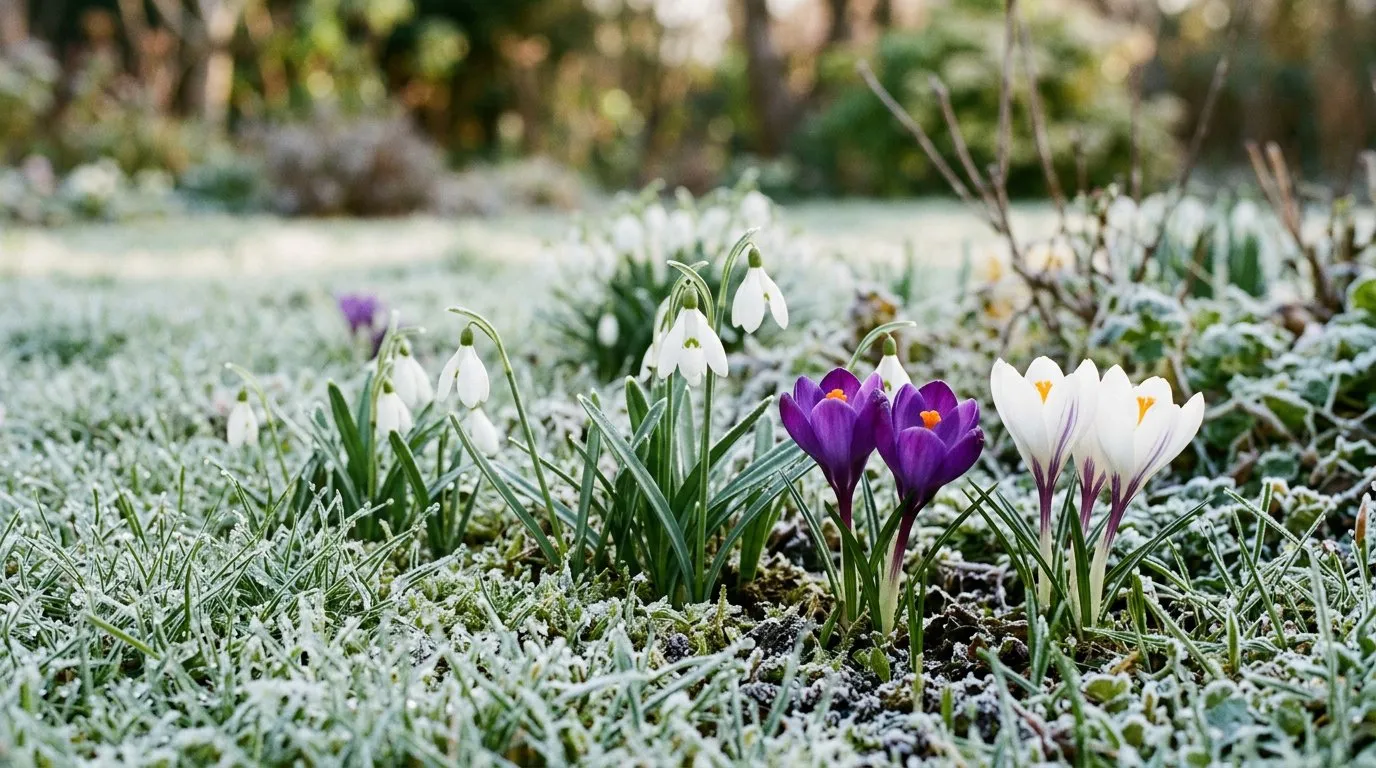 Plant daffodil bulbs 10-15cm deep in September or October. Group them in odd numbers for a natural look.
When to plant tulips
Tulips are the exception to the early-autumn rule. Planting them later reduces disease risk and produces better results in UK gardens.
Planting window
Plant tulip bulbs from late October to late November. This delay is deliberate. Tulip fire (Botrytis tulipae) is a fungal disease that infects emerging shoots and spreads through warm, wet soil. By waiting until the soil temperature drops below 10C, you reduce the infection window significantly.
In practice, aim for the first two weeks of November in most of England. In Scotland and northern England, late October works well because soils cool earlier. You can plant tulips through December in mild winters, and some gardeners successfully plant as late as Christmas.
How to plant
Tulips need deeper planting than most bulbs. Set each bulb 15-20cm deep, which is roughly 3 times the bulb height. Deep planting protects against frost, squirrel damage, and the bulb splitting into smaller offsets that do not flower. Space tulips 10-12cm apart.
In heavy clay soil, add a 2cm layer of horticultural grit at the base of the planting hole. This prevents the flat base plate of the bulb from sitting in wet soil through winter, which causes basal rot.
For a deeper guide to growing tulips specifically, see our tulip planting guide.
Best varieties for UK gardens: ‘Queen of Night’ (deep maroon, near-black), ‘Apeldoorn’ (Darwin hybrid, reliable repeater), ‘Spring Green’ (viridiflora, cream and green), ‘Ballerina’ (lily-flowered, scented orange), ‘White Triumphator’ (tall, elegant, pure white).
Warning: Squirrels and mice dig up tulip bulbs. Cover freshly planted areas with chicken wire or fine mesh. Remove in early spring when shoots appear. Deep planting (20cm) also reduces losses.
When to plant crocuses
Crocuses are among the earliest spring flowers, with some varieties blooming from late January. They need early planting to build a strong root system before winter.
Planting window
Plant crocus corms from September to early October. They root quickly and need those extra autumn weeks to establish before the ground turns cold. Late planting (November onwards) reduces the size and number of flowers.
How to plant
Plant each corm 8-10cm deep and 8cm apart. Crocuses look best in large drifts rather than neat rows. Scatter 50 or more corms across a lawn area or under deciduous trees. In borders, plant in groups of 10-15.
For naturalising in grass, use a narrow bulb planter. The grass is usually still growing in September, so the holes close up quickly. Do not mow naturalised crocus areas until the foliage has died back in late April or May.
Best varieties for UK gardens: ‘Remembrance’ (purple, large-flowered), ‘Jeanne d’Arc’ (pure white), ‘Pickwick’ (striped lilac and white), Crocus tommasinianus (early, self-seeding, pale lilac), Crocus chrysanthus ‘Cream Beauty’ (buttery yellow).
When to plant hyacinths
Hyacinths produce some of the most intensely fragrant spring flowers. They are superb in pots near doorways and along paths where you catch the scent as you pass.
Planting window
Plant hyacinth bulbs from September to October. Like daffodils, they benefit from the longer rooting period that early planting provides. Hyacinths grow well in both open ground and containers.
How to plant
Set bulbs 10-15cm deep and 10cm apart. Wear gloves when handling hyacinth bulbs. The dry outer skin contains oxalic acid, which irritates skin and causes itching in some people.
In containers, plant hyacinths closer together for a dense, fragrant display. Place bulbs almost touching, with just 2-3cm between them. Use a gritty compost mix (50:50 multipurpose and perlite) for good drainage.
Best varieties for UK gardens: ‘Delft Blue’ (porcelain blue, classic), ‘Jan Bos’ (deep crimson), ‘City of Haarlem’ (primrose yellow), ‘Carnegie’ (pure white), ‘Woodstock’ (dark burgundy).
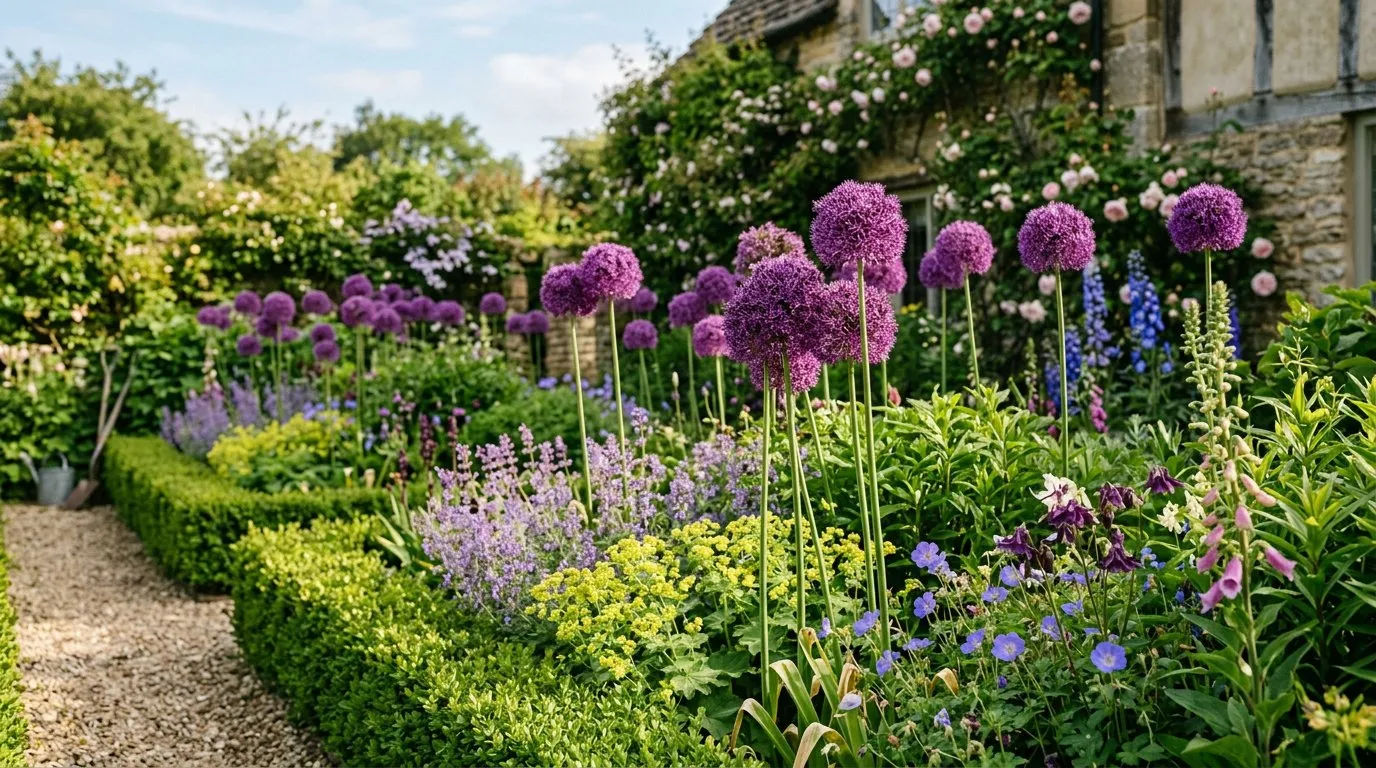 Hyacinths in containers give intense fragrance near doorways. Plant bulbs close together for a full display.
When to plant alliums
Alliums (ornamental onions) are the drama queens of the spring bulb world. Their spherical flower heads on tall stems create architectural interest in borders from May to June. See our full allium growing guide for variety recommendations and aftercare.
Planting window
Plant allium bulbs from October to November. They need a cold period but are less fussy about precise timing than tulips. Larger allium species like A. giganteum and ‘Globemaster’ produce massive bulbs that need deep planting.
How to plant
Small alliums (A. moly, A. sphaerocephalon) go 10cm deep and 10cm apart. Large alliums (A. giganteum, ‘Globemaster’, ‘Purple Sensation’) need planting at 15-20cm deep and 20cm apart.
Alliums work planted among herbaceous perennials. The emerging perennial foliage hides the allium leaves, which tend to look untidy by the time the flowers open. Plant them behind or among hardy geraniums, catmint (Nepeta), or ornamental grasses.
Best varieties for UK gardens: ‘Purple Sensation’ (deep violet, 80cm tall, excellent value), A. giganteum (lilac, 150cm tall, spectacular), ‘Globemaster’ (large violet heads, sterile so long-lasting), A. sphaerocephalon (drumstick allium, burgundy, 60cm, naturalises).
Alliums also attract pollinators heavily. They are an excellent choice if you are creating a bee-friendly garden.
When to plant snowdrops
Snowdrops (Galanthus) are unique among spring bulbs. While you can plant dry bulbs in autumn, they establish far better when planted “in the green” after flowering.
Planting in the green (recommended)
Buy and plant snowdrops from February to March, immediately after they finish flowering while the leaves are still green. Dig clumps with roots intact, divide them, and replant 5-8cm deep in their new positions. Water well after planting.
Snowdrops planted in the green establish quickly because the roots are active. They often flower the following February, just one year later. Dry bulbs planted in autumn take two or more years to settle and flower reliably.
Why we recommend planting snowdrops in the green: After 30 seasons of trialling both methods, snowdrops planted in the green have a near-100% success rate compared to around 50% for dry autumn bulbs. In one test on the same shaded border, a batch of 25 in-the-green plants all flowered the following February, while 25 dry bulbs planted alongside them took three years to reach the same flowering density.
Planting dry bulbs
If you buy dry snowdrop bulbs, plant them in September to October. Plant 5-8cm deep and 8cm apart. Keep them moist after planting, as snowdrop bulbs dry out faster than other types. Check that bulbs feel firm and heavy when you buy them. Light, papery bulbs are likely dead.
Best varieties for UK gardens: Galanthus nivalis (common snowdrop, naturalises freely), Galanthus elwesii (larger flowers, earlier), ‘S. Arnott’ (large, strongly scented, vigorous).
Spring bulb planting calendar
This month-by-month guide shows the ideal planting windows for each bulb type across the UK.
| Month | Bulb type | Action | Notes |
|---|---|---|---|
| September | Daffodils, crocuses, hyacinths | Plant as early in the month as possible | Soil temperature drops below 15C |
| October | Daffodils, crocuses, alliums | Continue planting; add alliums | Ideal conditions for most types |
| Late October | Tulips | Begin tulip planting | Wait for soil below 10C |
| November | Tulips, alliums, late daffodils | Main tulip window | Finish by month end if possible |
| December | Tulips (emergency planting) | Last chance for tulips | Results may be slightly smaller |
| January | Nothing to plant outdoors | Order snowdrops in the green | Plan for February delivery |
| February | Snowdrops (in the green) | Plant immediately on arrival | Keep roots moist |
| March | Snowdrops (in the green), summer bulbs | Final snowdrop window | Start planning summer displays |
Lasagne planting for containers
Lasagne planting (also called layered or sandwich planting) is a technique for packing months of colour into a single pot. It works by planting different bulb types at different depths, with the latest-flowering bulbs at the bottom and the earliest near the top.
How to build a lasagne pot
Use a pot at least 30cm deep and 30cm wide with drainage holes. Crocking the base with broken pottery or large gravel improves drainage.
- Add 5cm of compost to the base.
- Place tulip bulbs (the deepest layer) 15cm below the rim, spaced 5cm apart.
- Cover with 5cm of compost.
- Add daffodil bulbs at 10cm below the rim.
- Cover with 3cm of compost.
- Place crocus corms at 5cm below the rim.
- Top with compost to 2cm below the pot rim.
This gives three layers of bulbs flowering in succession: crocuses in February, daffodils in March, and tulips in April to May. The result is a pot that performs for three months from a single autumn planting.
Keep the pot outdoors through winter. Bulbs need the cold to flower. Only move it to a sheltered spot if temperatures drop below -10C for extended periods. Water sparingly through winter, just enough to prevent the compost drying out completely.
Lasagne planting also works well if you garden in a small space or rely on containers for growing. A few well-planted pots can give colour from late winter right through to early summer.
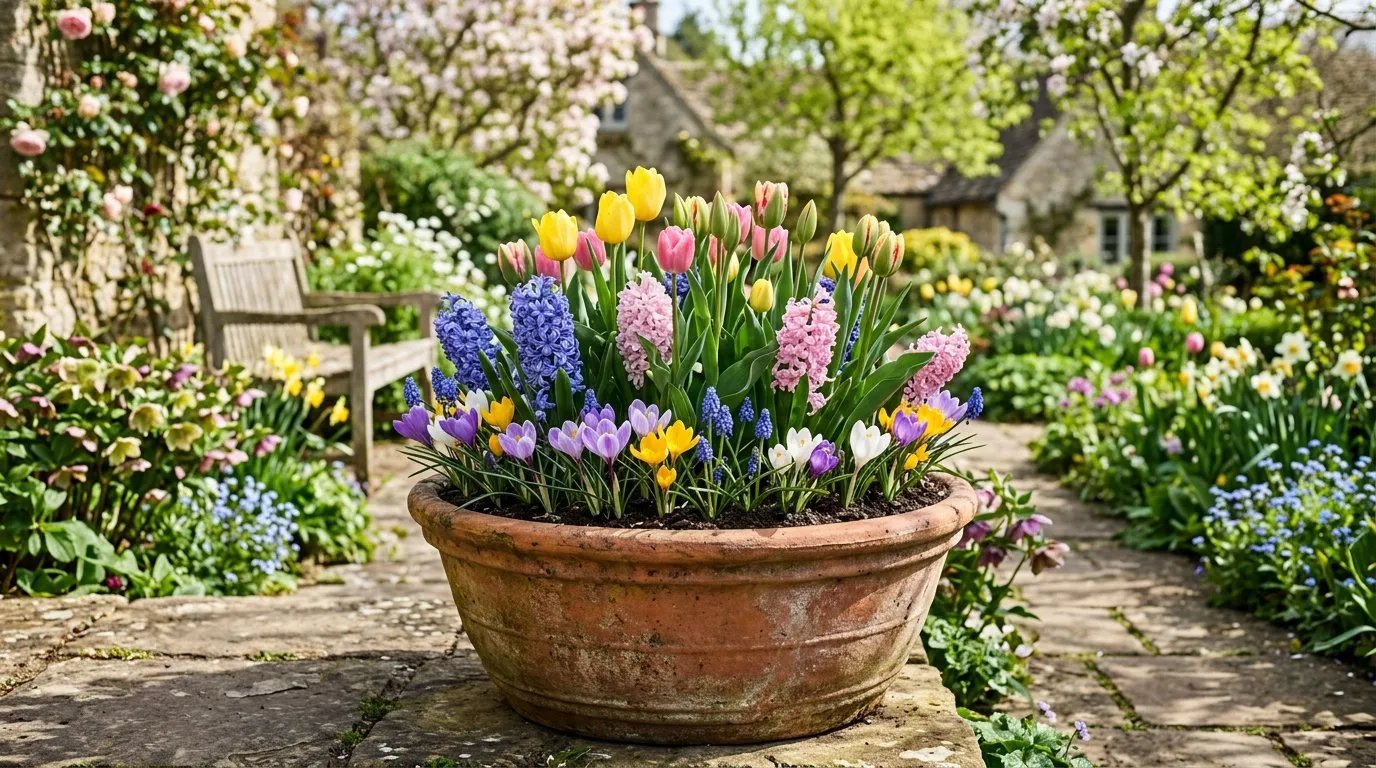 Lasagne planting layers tulips at the bottom, daffodils in the middle, and crocuses near the top for months of colour.
Spring bulb comparison table
| Bulb type | Plant | Depth | Spacing | Flowers | Height | Naturalises? |
|---|---|---|---|---|---|---|
| Daffodil | Sep-Oct | 10-15cm | 10-15cm | Mar-Apr | 20-45cm | Yes, reliably |
| Tulip | Late Oct-Nov | 15-20cm | 10-12cm | Apr-May | 25-60cm | Species types only |
| Crocus | Sep-Oct | 8-10cm | 8cm | Feb-Mar | 8-12cm | Yes, freely |
| Hyacinth | Sep-Oct | 10-15cm | 10cm | Mar-Apr | 20-30cm | Slowly |
| Allium | Oct-Nov | 10-20cm | 10-20cm | May-Jun | 30-150cm | Some species |
| Snowdrop | Feb-Mar (green) | 5-8cm | 8cm | Jan-Feb | 10-15cm | Yes, freely |
How to prepare soil for spring bulbs
Good drainage is the single most important factor for spring bulbs. Bulbs that sit in waterlogged soil over winter rot before they ever flower. If your soil is heavy clay, you have two options.
Option one: dig in generous amounts of horticultural grit and organic matter to improve drainage across the whole bed. Work in 5cm of grit and 5cm of garden compost to a spade’s depth. This turns heavy clay over time and benefits everything you plant, not just bulbs.
Option two: plant bulbs on a gravel nest. For each bulb, drop a handful of coarse grit into the bottom of the planting hole. Sit the bulb on the grit. This keeps the base plate away from wet soil, reducing the chance of basal rot. This method works particularly well for tulips and alliums.
In light sandy soils, drainage is not an issue, but fertility can be low. Add well-rotted garden compost or leaf mould to the planting area to improve moisture retention and provide nutrients.
Feeding at planting: mix bone meal into the backfill soil at a rate of one handful per square metre. Bone meal releases phosphorus slowly, encouraging strong root growth. Avoid high-nitrogen feeds at planting, as these promote leaf growth at the expense of roots.
Spring feeding: when green shoots appear, start applying a liquid tomato feed (high in potassium) every two weeks. Continue until the foliage begins to yellow after flowering. This feeds the bulb for the following year’s display.
Where to plant spring bulbs
Spring bulbs are versatile. They grow well in borders, lawns, containers, and under trees. The best position depends on the bulb type.
In borders: plant behind or among herbaceous perennials. Bulb foliage dies back by early summer, just as perennials fill out. This hides the untidy dying leaves. Tulips and alliums work especially well with later-emerging perennials like hostas, dahlias, and ornamental grasses.
In lawns: crocuses, daffodils, and snowdrops naturalise in grass. Choose a section of lawn you can leave unmown until late May or early June. This gives the bulb foliage time to die back and feed the bulbs for next year. Our cottage garden planting guide covers this approach in detail.
Under trees: snowdrops, crocuses, and winter aconites thrive under deciduous trees. They flower and complete their growth cycle before the tree canopy leafs out and blocks the light. Avoid planting under conifers, as the dense, year-round shade and dry soil beneath them do not suit bulbs.
In containers: any spring bulb grows well in pots. Use a mix of 70% peat-free multipurpose compost and 30% perlite or grit. Ensure pots have drainage holes. Standing pots on feet over winter prevents waterlogging from heavy rain.
Gardener’s tip: When buying bulbs, choose the largest ones you can find. Bigger bulbs contain more stored energy and produce bigger flowers. Bargain bags of small bulbs often contain immature bulbs that take a year to reach flowering size.
Common mistakes when planting spring bulbs
Even experienced gardeners make these errors. Avoiding them will improve your success rate dramatically.
-
Planting tulips too early. Warm September soil encourages tulip fire fungus. Wait until late October when soil has cooled below 10C. Other bulbs can go in early, but tulips must wait.
-
Planting bulbs upside down. The pointed end is the growing tip and must face upward. The flat base plate (where roots emerge) goes down. If you cannot tell which end is up, plant the bulb on its side. It will right itself, though flowering may be slightly delayed.
-
Cutting back foliage too soon after flowering. Bulb leaves photosynthesise for six weeks after flowering, recharging the bulb for next year. Cutting, tying, or braiding the leaves reduces next year’s flowers. Let foliage yellow and collapse naturally before removing it.
-
Planting too shallow. Shallow bulbs are vulnerable to frost heave (where freezing soil pushes them to the surface), squirrel damage, and drying out. Always plant at 2-3 times the bulb’s height. Deeper is better than shallower.
-
Forgetting to feed. Bulbs in the same position for several years exhaust the soil’s nutrients. Feed with bone meal each autumn and tomato feed each spring. Without feeding, flowers get smaller each year until the bulb stops flowering entirely.
Buying and storing bulbs before planting
Buy spring bulbs as early as possible. Garden centres stock them from August, and the best varieties sell out quickly. Online specialists often offer pre-order from June for September delivery.
When buying, choose bulbs that are firm, heavy, and free from mould. Reject any that feel soft, have visible rot, or show green shoots (which indicates the bulb has broken dormancy too early). Larger bulbs always produce better flowers.
If you buy bulbs before the planting window opens, store them in a cool, dark, dry place with good airflow. A paper bag in a garden shed works well. Do not store in sealed plastic bags, as trapped moisture causes mould. Do not refrigerate alongside fruit, as ethylene gas from ripening apples can damage the embryonic flower inside the bulb.
Tulip bulbs, in particular, benefit from a few weeks in a cool room at 15-17C before planting. This simulates the transition from summer to autumn and primes the bulb for rooting once planted.
For more information on what else to plant in autumn, our November planting guide covers vegetables, bare-root plants, and hedging alongside bulbs. The RHS bulb planting guide provides additional variety recommendations and troubleshooting.
Why we recommend bone meal at planting for all spring bulbs: After 25 years of trialling spring bulbs with and without bone meal, Lawrie found that bulbs fed with one handful per square metre at planting produced 30% larger flowers and returned reliably for an extra 1-2 seasons. In a side-by-side trial of 200 daffodil bulbs, the bone meal group averaged 45cm stems versus 32cm unfed, with noticeably stronger colour intensity.
Now you’ve mastered spring bulb timing, read our guide on how to grow daffodils for the next step.
Frequently asked questions
When is the best time to plant spring bulbs in the UK?
September to November is the main planting window. Daffodils, crocuses, and hyacinths go in from September. Tulips are best planted from late October to mid-November. The soil needs to have cooled below 15C, which usually happens by mid-September in most of the UK.
Can I plant spring bulbs in December or January?
Late planting still works for most bulb types. Daffodils and crocuses planted in December will flower, though possibly a week or two later. Tulips tolerate late planting best and can go in until Christmas. Avoid planting into frozen or waterlogged soil.
How deep should I plant spring bulbs?
Plant each bulb at 2-3 times its own depth. A 5cm daffodil bulb needs a 10-15cm deep hole. Tulips go 15-20cm deep. Crocuses need just 8-10cm. Deeper planting protects against frost heave and squirrel damage.
Why did my tulips not come back the second year?
Most hybrid tulips decline after the first season. They exhaust their energy producing large flowers. Species tulips like Tulipa sylvestris and T. sprengeri naturalise reliably. For hybrid types, feed with tomato fertiliser after flowering and leave foliage for six weeks.
What is lasagne planting for bulbs?
Lasagne planting layers different bulbs at staggered depths in one pot. Place late-flowering tulips deepest, then daffodils in the middle, and crocuses near the top. Each layer flowers in turn, giving a display from February through to May from a single container.
Do I need to soak bulbs before planting?
Soaking is not necessary for most spring bulbs. Healthy, firm bulbs planted into moist autumn soil root without pre-soaking. If bulbs feel slightly soft or dried out, a 12-hour soak in lukewarm water before planting can rehydrate them and speed up initial root growth.
Can I plant spring bulbs in pots?
Spring bulbs grow very well in containers. Use pots at least 25cm deep with drainage holes and peat-free multipurpose compost mixed with perlite. Plant at the same depth as in open ground. Keep pots outdoors through winter, as bulbs need the cold to flower.
What should I do with bulbs after they finish flowering?
Leave the foliage to die back naturally for at least six weeks. The leaves feed the bulb for next year’s flower. Deadhead spent blooms to prevent seed production. Apply a liquid tomato feed fortnightly until the leaves yellow. Do not tie, cut, or braid the foliage.
Planting spring bulbs is one of the most rewarding things you can do in a garden. A few hours spent on a crisp autumn afternoon, bulb planter in hand, delivers months of colour when you need it most. Start with daffodils in September, add alliums and tulips in late October, and by spring your garden will be alive with flowers before most perennials have even stirred.
Lawrie has been gardening in the West Midlands for over 30 years. He grows his own veg using no-dig methods, keeps a wildlife-friendly garden, and writes practical advice based on real UK growing conditions.