When to Plant Tomatoes in the UK
Exact timing for sowing and planting tomatoes across UK regions. Covers indoor sowing, greenhouse planting, outdoor planting, and hardening off.
Key takeaways
- Sow tomato seeds indoors from late February to mid-March at 18-21C
- Greenhouse tomatoes can be planted from late April in heated greenhouses
- Outdoor tomatoes go out after the last frost: 15-25 May in the south, late May in the north
- Harden off all plants for 10-14 days before moving them outdoors permanently
- Cherry varieties ripen in 55-65 days from transplanting, beefsteak types need 75-85 days
Tomatoes are the UK’s most popular home-grown crop, but they need careful timing to succeed in our climate. Too early and seedlings sit cold and stunted. Too late and fruit fails to ripen before autumn arrives. The key is matching your sowing date to your growing environment and your region.
This guide covers the exact timing for every stage: sowing, potting on, planting out, and harvesting. It complements our full tomato growing guide, which covers feeding, pruning, and disease management. For a broader spring planting plan, see our guides to what to plant in March and what to plant in April.
When to sow tomato seeds indoors
Sow tomato seeds indoors from late February to mid-March. The exact date depends on where you plan to grow them.
Greenhouse tomatoes
If you have a heated greenhouse, sow from late February. The earlier start gives plants a longer growing season and earlier harvests. Greenhouse-grown tomatoes can be planted into their final positions from late April, so seeds sown in late February are ready at the right time.
Outdoor tomatoes
If growing outdoors, sow from early to mid-March. Outdoor tomatoes cannot go out until late May at the earliest, so sowing before March creates overgrown, leggy plants that struggle when transplanted. A March sowing gives you 8-10 weeks of indoor growing before planting out.
Sowing method
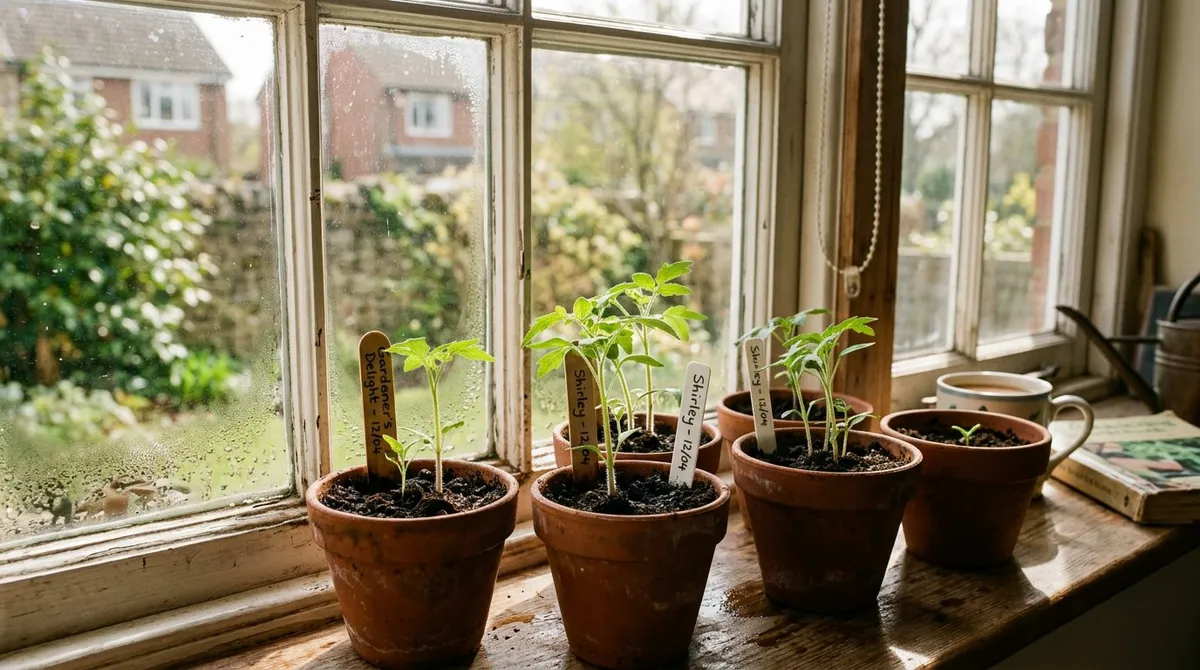
Sow at 18-21C for the fastest germination. Seeds germinate in 7-14 days at this temperature range. Sow 1cm deep in seed compost, either in small pots (two seeds per pot, removing the weaker seedling) or in a seed tray for pricking out later.
A heated propagator is ideal. A warm south-facing windowsill works if the temperature stays above 15C consistently. Below 15C, germination slows dramatically. Below 10C, seeds may not germinate at all.
Gardener’s tip: Sow more seeds than you need. Not every seed germinates, and you want the option to select the strongest seedlings. Sow 50% more than your target number of plants.
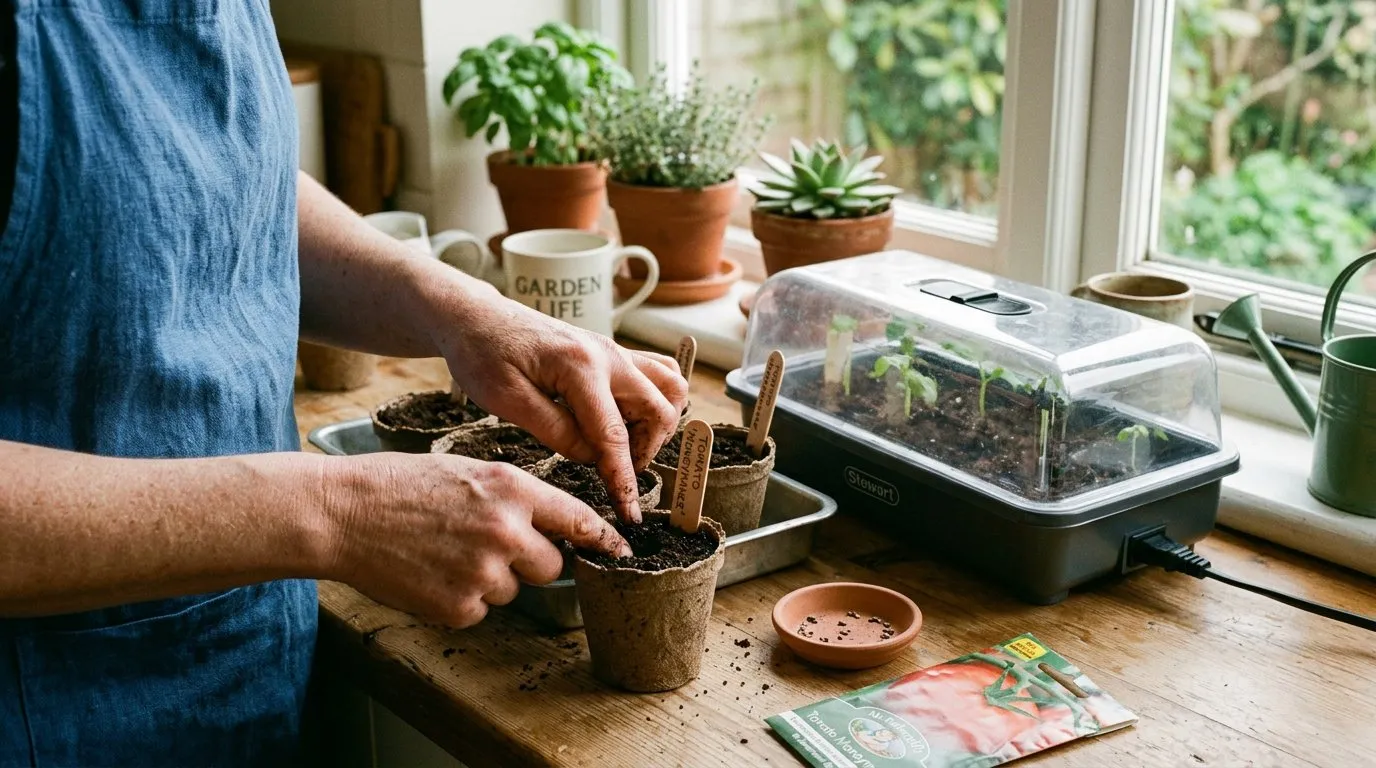 Sowing tomato seeds 1cm deep in seed compost. Germination takes 7-14 days at 18-21C.
Potting on timeline
Once seedlings develop their first pair of true leaves (the second set of leaves, not the initial seed leaves), they need potting on.
Potting stages
| Stage | When | Pot size | Notes |
|---|---|---|---|
| Prick out | 2-3 weeks after sowing | 7-9cm | When first true leaves appear |
| Pot on | 4-5 weeks after sowing | 12-15cm | When roots fill the smaller pot |
| Final position | 8-10 weeks after sowing | Grow bag, large pot, or bed | Greenhouse or outdoors |
Each potting stage stimulates root growth. Skipping a stage and going straight from a small pot to a large one leaves roots in cold, wet compost they cannot reach. Gradual upsizing builds a dense root system that supports strong growth.
Keep temperatures at 15-18C after germination. Cooler conditions (12-15C at night) produce stockier, sturdier plants than constant warmth. Overly warm conditions create tall, thin stems that struggle outdoors.
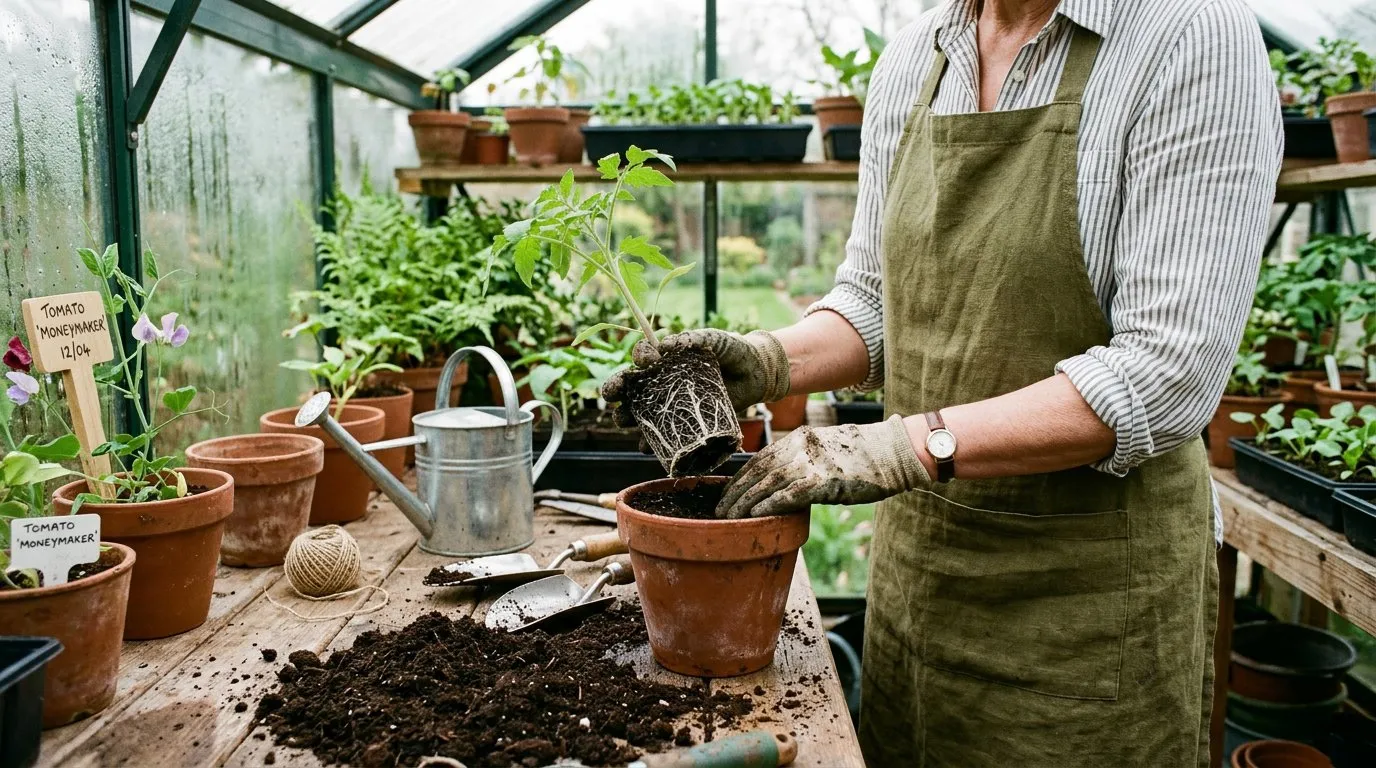 Potting on when roots fill the current pot. Move to a 12-15cm pot to build a strong root system before planting out.
When to plant tomatoes in a greenhouse
Heated greenhouse
Plant tomatoes in a heated greenhouse from late April. The minimum overnight temperature should be 10C. Below this, growth stalls and plants become susceptible to fungal disease.
Unheated greenhouse
Wait until mid-May for an unheated greenhouse. Night temperatures in an unheated greenhouse can drop to 2-4C in April, which damages tomato plants. By mid-May, overnight temperatures in a closed greenhouse rarely fall below 8C in most of England.
Grow bags vs border soil
Most greenhouse growers use grow bags or large pots rather than planting directly into the greenhouse border. Border soil accumulates tomato root diseases over time. If you do plant in the border, replace the top 30cm of soil every 3-4 years or use grafted tomato plants, which have disease-resistant rootstocks.
Place two plants per standard grow bag. Three is too many and leads to competition for water and nutrients. Insert a support cane beside each plant at planting time.
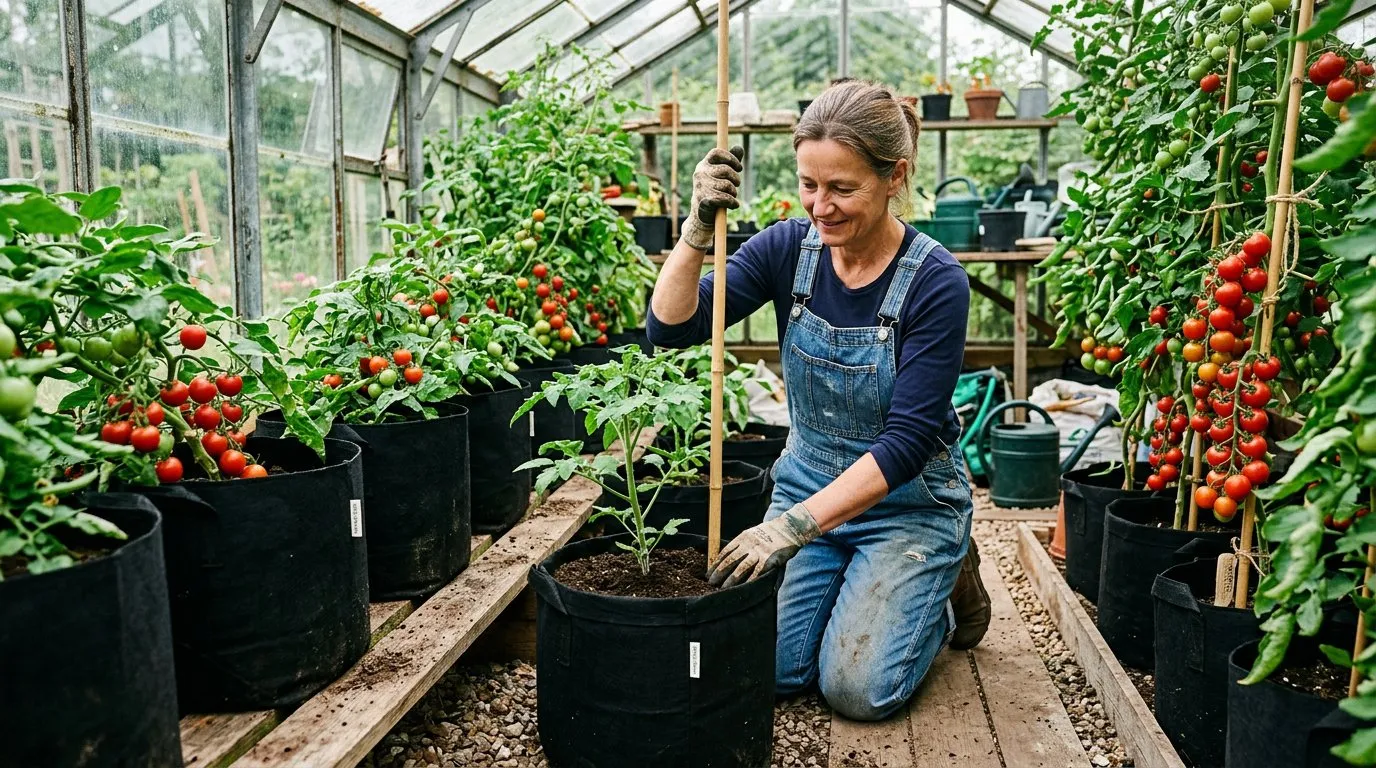 Planting into a grow bag in the greenhouse. Two plants per standard grow bag gives each plant enough room.
When to plant tomatoes outdoors
Regional planting dates
| Region | Earliest outdoor planting | Last frost (typical) |
|---|---|---|
| South-west England | Mid-May | Late April |
| Southern England | Late May (15-25 May) | Mid-May |
| Midlands | Late May | Late May |
| Northern England | Early June | Late May to early June |
| Scotland (lowlands) | Early to mid-June | Early June |
| Scotland (highlands) | Mid-June | Mid-June |
These dates assume a sheltered garden position. Exposed, raised, or north-facing gardens should add a further week.
Best outdoor positions
Outdoor tomatoes need the warmest, most sheltered spot in the garden. A south-facing wall is ideal. The wall absorbs heat during the day and radiates it back at night, creating a microclimate 2-3C warmer than the open garden.
Avoid shaded areas, windy positions, and low-lying frost pockets. Tomatoes need at least 6 hours of direct sunlight daily. Less than this produces small, slow-ripening fruit.
Best outdoor varieties
Not all tomato varieties suit outdoor UK growing. Choose varieties bred for cooler conditions:
| Variety | Type | Days to ripen | Height | Notes |
|---|---|---|---|---|
| Gardener’s Delight | Cherry | 55-60 | 1.5m | Most reliable outdoor variety |
| Sungold | Cherry | 55-65 | 1.5m | Exceptionally sweet orange fruit |
| Tumbling Tom | Cherry (bush) | 60-65 | 30cm | Hanging baskets and containers |
| Moneymaker | Standard | 70-75 | 1.5m | Classic variety, good outdoors |
| Outdoor Girl | Standard | 60-70 | 1.2m | Bred specifically for UK outdoor growing |
| Ferline | Standard | 70-75 | 1.5m | Some blight resistance |
Cherry varieties ripen fastest and are the safest choice for outdoor growing in all UK regions. Beefsteak varieties like Costoluto Fiorentino and Brandywine need a greenhouse to ripen reliably.
Why we recommend Gardener’s Delight for outdoor growing: After 30 years of trialling tomato varieties outdoors across northern and southern UK gardens, Gardener’s Delight consistently delivers a reliable harvest even in poor summers. In a cool, wet season when Moneymaker and Outdoor Girl produced less than 1kg per plant, Gardener’s Delight still yielded an average of 1.8kg per plant against a south-facing wall.
Hardening off: the critical transition
Every indoor-raised tomato plant needs hardening off before going outdoors permanently. This 10-14 day process acclimatises plants to outdoor temperatures, wind, and direct sunlight.
Hardening off schedule
| Day | Action |
|---|---|
| Days 1-3 | Place outdoors in a sheltered, shaded spot for 2-3 hours. Bring indoors at night. |
| Days 4-6 | Increase outdoor time to 4-6 hours. Introduce some direct sunlight. |
| Days 7-9 | Leave out all day. Bring indoors only if frost is forecast. |
| Days 10-12 | Leave outdoors day and night. Cover with fleece if temperatures drop below 5C. |
| Day 13-14 | Plant out into final position. |
Skipping hardening off is one of the most common reasons outdoor tomatoes fail. The temperature shock from a 20C windowsill to a 5C May night stalls growth for weeks and can cause leaf scorch from sudden UV exposure.
Warning: Do not harden off during a cold snap. If temperatures drop below 5C, keep plants indoors and restart the process when milder weather returns. One cold night can undo days of acclimatisation.
Signs your plants are ready to go out
Look for these indicators before planting outdoors:
- Height: 20-30cm tall with a sturdy, dark green stem
- Flowers: The first truss of flowers is visible or just opening
- Leaves: Dark green, not pale or yellowing
- Root system: Roots visible at the bottom of the pot without being severely root-bound
- Hardened off: Completed the 10-14 day hardening off process
A plant showing its first flowers is at the ideal stage for transplanting. Planting earlier means the plant is still too small. Planting much later means it may be root-bound and slow to establish.
Growing season by type
| Type | Sow indoor | Plant out (greenhouse) | Plant out (outdoor) | First harvest |
|---|---|---|---|---|
| Cherry | Late Feb-early Mar | Late April | Late May | Late June-July |
| Standard | Early-mid March | Early May | Late May | July-August |
| Beefsteak | Late February | Late April | Not recommended outdoors | August |
| Bush/patio | Mid-March | Late April | Late May | July |
Greenhouse growing shortens the overall timeline by 2-3 weeks compared to outdoor growing because plants go out earlier and the warmer environment speeds ripening.
Successional sowing
You do not need to sow all your tomatoes at once. A staggered sowing extends the harvest season:
- Late February: First batch for the greenhouse. These produce the earliest fruit in late June.
- Early March: Second batch for greenhouse or outdoor growing. Harvests from July.
- Mid-March: Third batch for outdoor growing. Harvests from late July into September.
This approach gives you fresh tomatoes for 12-16 weeks rather than a single glut. Different varieties also ripen at different rates, further extending the harvest window.
Regional considerations
Southern England
The most favourable region for outdoor tomatoes. Plant out from mid to late May. Both bush and cordon types perform well outdoors. Beefsteak varieties ripen outdoors in warm summers but are unreliable. A south-facing wall dramatically improves results.
Midlands and central England
Outdoor growing works but a greenhouse gives more reliable results. Plant outdoors from late May. Stick to cherry and early-ripening standard varieties outdoors. The shorter, cooler growing season means large-fruited varieties rarely ripen fully before autumn.
Northern England and Scotland
A greenhouse is strongly recommended. Outdoor growing is possible with cherry varieties against a south-facing wall, but harvests are shorter and less certain. Plant outdoors from early June. Choose the fastest-ripening varieties available.
In all regions, an unheated greenhouse extends the season by 4-6 weeks at each end, making a significant difference to total yield. Even a small lean-to greenhouse against a south-facing wall turns your tomato harvest.
For more on what else to plant in your region this season, see our seed sowing calendar and browse our growing guides.
Common mistakes with tomato timing
Sowing too early
Sowing in January or early February for outdoor growing creates oversized, leggy plants by planting-out time. These plants never perform as well as March-sown seedlings that go out at the optimal 8-10 week stage.
Planting out before the last frost
Tomatoes die at -1C. There is no recovery from frost damage. Check your local last frost date and add a safety margin of a week. A tomato planted on 1 June produces almost as much fruit as one planted on 15 May, with zero frost risk.
Keeping seedlings too warm after germination
Seeds need 18-21C to germinate, but seedlings grow best at 15-18C during the day and 12-15C at night. Constant warmth produces tall, thin, weak stems. Cooler nights encourage stocky growth.
Forgetting to pot on
Seedlings left in tiny pots become root-bound. Root-bound plants never establish a strong root system, even when transplanted into larger containers. Pot on as soon as roots fill the current pot.
Growing outdoor varieties in the greenhouse (and vice versa)
Greenhouse varieties bred for warm conditions underperform outdoors. Outdoor varieties bred for UK conditions waste greenhouse space because they do not need the protection. Match the variety to the growing environment.
Why we recommend a heated propagator for tomato seed starting: After 20 seasons of sowing tomatoes on windowsills, in airing cupboards, and in heated propagators, Lawrie found that a thermostat-controlled propagator set to 20C delivers 90-95% germination within 7 days. Windowsill sowings averaged only 60% germination over 14 days due to overnight temperature drops below 15C that stall the process.
Now you’ve mastered tomato planting timings, read our guide on greenhouse growing for the next step.
Frequently asked questions
When should I sow tomato seeds indoors UK?
Sow from late February to mid-March at 18-21C. Seeds germinate in 7-14 days. Sow 6-8 weeks before your planned planting-out date. For greenhouse growing, late February gives the longest season. For outdoor growing, early to mid-March avoids overgrown plants by planting-out time.
When can I put tomatoes outside UK?
After the last frost, typically 15-25 May in southern England. In the Midlands, wait until late May. In northern England and Scotland, early to mid-June is safer. Always harden off for 10-14 days first by gradually increasing outdoor exposure.
Can I plant tomatoes in April UK?
Only in a heated greenhouse where overnight temperatures stay above 10C. Outdoor planting in April risks frost damage. Night temperatures routinely drop below 5C across the entire UK in April. Keep seedlings indoors or in a heated greenhouse.
Is June too late to plant tomatoes?
June is late but still workable. Buy established plants from a garden centre rather than sowing from seed. Plant in a greenhouse or against a south-facing wall for the best chance of ripening. Cherry varieties like Sungold and Gardener’s Delight ripen fastest at 55-65 days from transplanting.
How long do tomatoes take to grow in the UK?
From sowing to first ripe fruit takes 16-20 weeks. Cherry types are fastest at 16-17 weeks from sowing. Standard varieties take 18-20 weeks. Beefsteak types need 20+ weeks. Greenhouse growing shortens the timeline by 2-3 weeks compared to outdoor growing.
Should I grow tomatoes in a greenhouse or outside?
Greenhouses produce earlier, heavier, more reliable harvests in most UK regions. Outdoor growing works in southern England with a warm, sheltered spot and suitable varieties. In the Midlands and north, a greenhouse is strongly recommended. Even a small, unheated greenhouse extends the season by 4-6 weeks.
Lawrie has been gardening in the West Midlands for over 30 years. He grows his own veg using no-dig methods, keeps a wildlife-friendly garden, and writes practical advice based on real UK growing conditions.