When to Sow Wildflower Seeds in the UK
Best times to sow wildflower seeds in the UK with month-by-month calendar. Covers autumn and spring sowing, soil preparation, and native species selection.
Key takeaways
- Autumn sowing (September-October) gives the highest germination rates at 70-90%
- Spring sowing (March-April) works but seeds may need 4-6 weeks of fridge stratification first
- Sow at 3-5g per square metre mixed with dry sand at a 1:4 ratio for even distribution
- Never add fertiliser because wildflowers thrive in poor soil where grasses cannot dominate
- Yellow rattle must be autumn-sown as it needs natural cold to break dormancy
- Cut the meadow once yearly in late August or September and always remove the cuttings
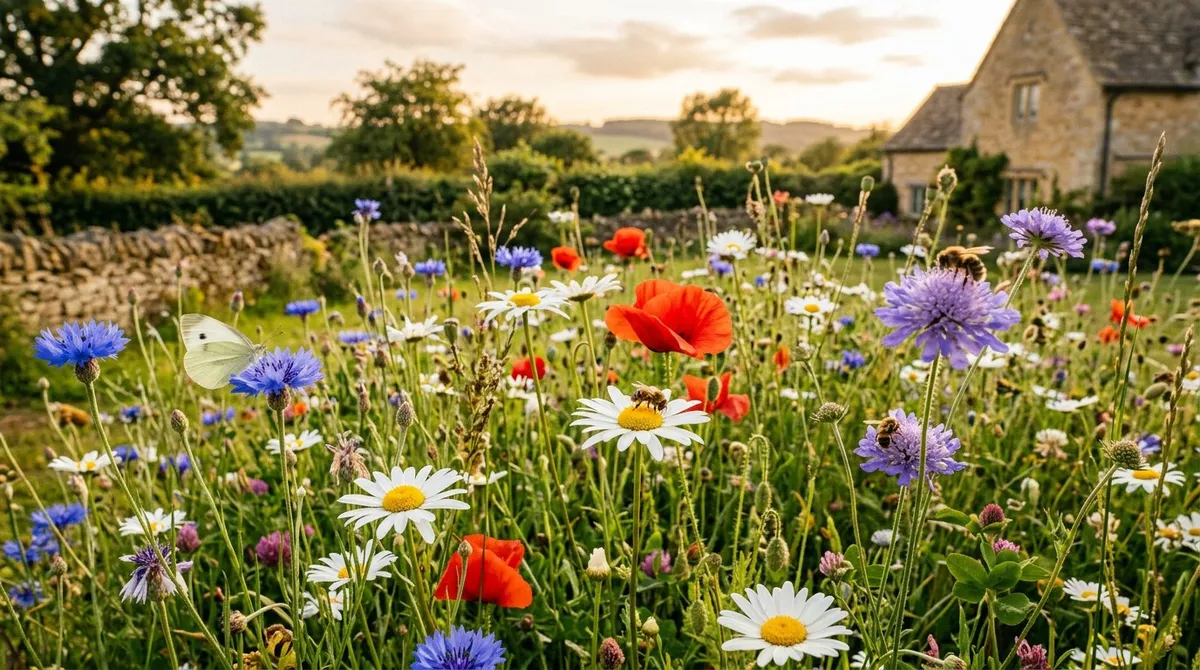
Wildflower meadows are one of the most valuable habitats you can create in a British garden. A single square metre of native meadow can support over 40 species of insect. The flowers provide nectar from April through to September. The seedheads feed finches and sparrows through winter. Even a small patch of 2-3 square metres makes a genuine difference to local biodiversity.
Getting the sowing timing right is the single biggest factor in whether your wildflower seeds succeed or fail. Sow at the wrong time and germination drops below 20%. Sow at the right time, into properly prepared ground, and you can expect 70-90% of seeds to establish. This guide covers both sowing windows, soil preparation, the best native species, and the management your meadow needs to thrive year after year. For a wider look at converting lawn to meadow, see our wildflower lawn guide.
Why autumn sowing is best for wildflower seeds
The autumn sowing window runs from early September to late October. This is the preferred time for most UK wildflower species, and professional meadow creators sow almost exclusively in autumn.
The science behind cold stratification
Many native wildflower seeds have a built-in dormancy mechanism. The seed coat contains chemical inhibitors that prevent germination until the seed has experienced a prolonged period of cold and damp conditions. This process is called cold stratification. In the wild, seeds drop from the plant in late summer, lie on the soil surface through winter, and germinate the following spring when temperatures rise above 8-10C.
When you sow in autumn, you replicate this natural cycle perfectly. The seeds sit in cold, moist soil from October through to February or March. The cold breaks dormancy naturally. Come spring, the seeds germinate strongly as soil temperatures climb. Germination rates for autumn-sown wildflower seed typically reach 70-90%, compared to 40-60% for spring sowings that skip stratification.
Which seeds must be autumn-sown
Yellow rattle (Rhinanthus minor) is the most important autumn-only species. This remarkable plant is semi-parasitic on grass roots. It weakens vigorous grasses by tapping into their root systems, creating gaps where other wildflowers can establish. Yellow rattle has an absolute requirement for cold stratification and will not germinate without it. Sow it between September and November only.
Other species that strongly prefer autumn sowing include cowslip, primrose, wild carrot, and field scabious. These all have hard seed coats that cold weather helps to soften.
Gardener’s tip: If you can only sow once, choose autumn. You will get yellow rattle, better germination across all species, and a head start on the growing season. The Plantlife charity recommends autumn sowing for all native meadow creation in the UK.
How to sow wildflower seeds in spring
The spring sowing window runs from early March to late April. Spring sowing works well for annual meadow mixes and for perennial mixes if you pre-treat the seeds.
Fridge stratification method
For perennial wildflower mixes sown in spring, you need to simulate winter artificially. Mix the seeds with a handful of damp (not wet) horticultural sand. Place the mixture in a sealed plastic bag or container. Store in the fridge at 1-5C for four to six weeks before your planned sowing date. Check weekly that the sand stays damp. After stratification, sow the seed-and-sand mixture directly onto prepared ground.
This method gives spring-sown perennial seeds a germination boost of 30-40% compared to sowing them dry. Annual species like cornfield poppy, corn marigold, and cornflower do not need stratification and can be spring-sown without any pre-treatment.
Spring sowing timing by region
| Region | Sow from | Soil temperature needed | Notes |
|---|---|---|---|
| South-west England | Early March | 7C | Mildest region, earliest start |
| Southern England | Mid-March | 7C | After prolonged wet spells pass |
| Midlands | Late March | 7C | Wait for ground to dry slightly |
| Northern England | Early April | 7C | Later start, still effective |
| Scotland | Mid-April | 7C | Choose fast-establishing mixes |
Soil temperature matters more than air temperature. Use a soil thermometer pushed 5cm into the ground. You need a consistent 7C at that depth for reliable wildflower germination.
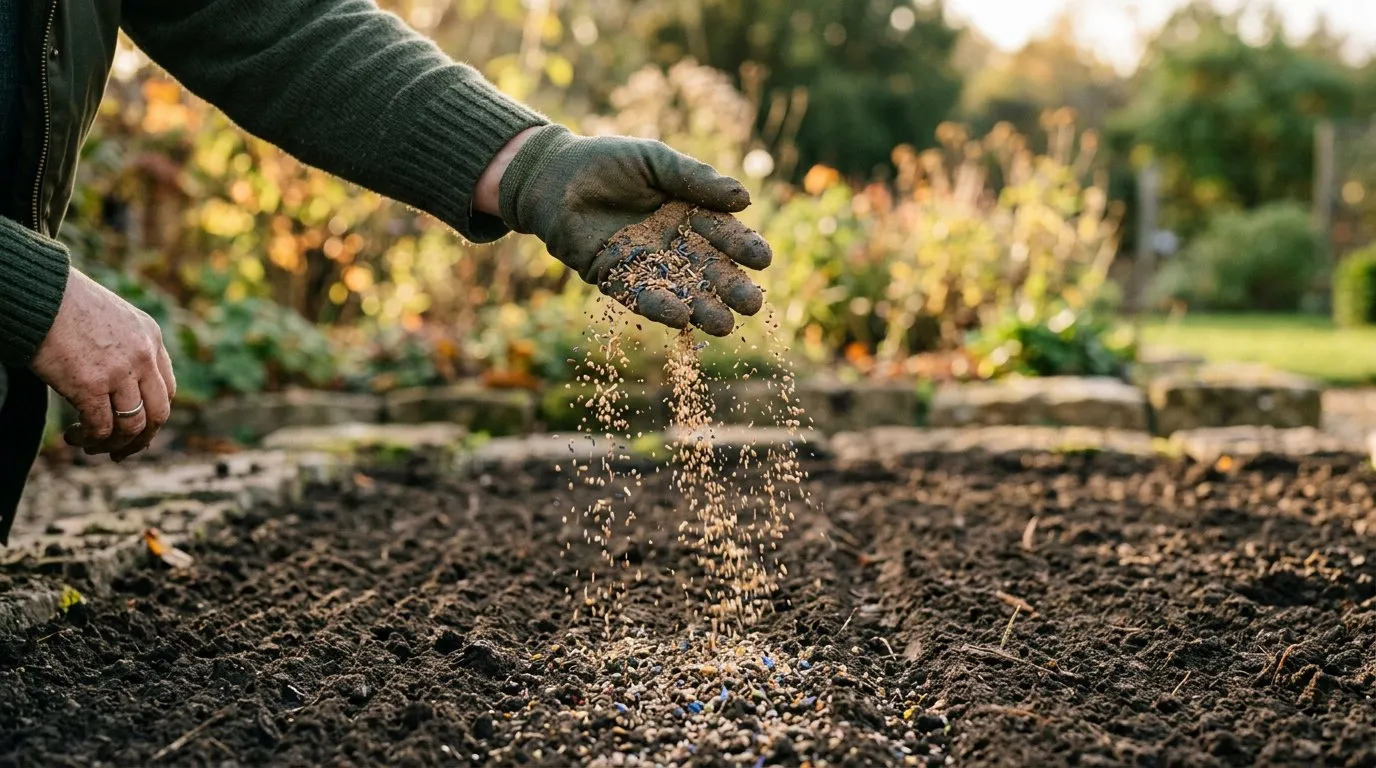 Broadcasting wildflower seed mixed with dry sand. The 1:4 seed-to-sand ratio ensures even coverage across the sowing area.
How to prepare the ground for wildflower seeds
Soil preparation is more important than the seed mix you choose. Wildflowers need poor, open ground. Rich, fertile soil grows thick grass that smothers every wildflower seedling before it can establish.
Removing existing vegetation
Strip the existing turf with a spade or turf cutter. Remove 3-5cm of topsoil if possible. This removes the nutrient-rich top layer and the existing grass seed bank. Stack the removed turf upside down in a corner. It will decompose into useful loam over 12 months.
If you cannot strip turf, scalp the grass to 1cm with a mower on its lowest setting. Rake vigorously with a spring-tine rake to create 50-60% bare soil. This scarification method works best on thin, poor lawns. It is less effective on thick, fertile lawns where grass regrows aggressively.
Creating the right soil conditions
Do not add fertiliser, compost, or manure. This is the single most common mistake. Wildflowers evolved on nutrient-poor soils. They cannot compete with grasses and nettles on rich ground. If your soil is naturally fertile (dark, crumbly, earthworm-rich), consider removing the top 5-10cm to expose poorer subsoil. This sounds drastic but it turns results.
Rake the bare soil to a fine tilth. Remove large stones, roots, and debris. Firm the surface by treading it systematically with your heels or rolling it with a garden roller. You want a firm, fine seedbed: firm enough that your footprint barely dents the surface.
Warning: Never use weedkiller to prepare ground for wildflower sowing. Glyphosate residues can persist in the soil for several weeks and may inhibit wildflower germination. Physical removal of vegetation is safer and more effective.
How to sow wildflower seeds evenly
Even distribution is the key to a natural-looking meadow. Patchy sowing creates clumps of flowers with bare gaps, which looks untidy and allows weeds to colonise.
The sand mixing method
Mix your wildflower seed with dry silver sand at a ratio of 1 part seed to 4 parts sand by volume. This bulks up the seed mix, making it much easier to scatter evenly. The sand also helps you see where you have already sown, since it shows up against dark soil.
For a pure wildflower seed mix (no grass), sow at 3-5g per square metre. For a wildflower and grass mix, follow the supplier’s rate, typically 4-5g per square metre. Measure your area carefully and weigh or measure the seed accurately. Too much seed creates overcrowding. Too little leaves gaps for weeds.
Sowing technique
Divide your seed-and-sand mixture into two equal halves. Broadcast the first half walking north to south across the area. Broadcast the second half walking east to west. This cross-pattern ensures even coverage without stripes or patches.
After sowing, press the seeds firmly into the soil surface. Walk over the entire area on boards laid flat, or use a garden roller. This ensures good seed-to-soil contact, which is critical for germination. Do not rake the seeds in or cover them with soil. Most native wildflower species need light to germinate. Burying them even 1cm deep reduces germination by up to 60%.
Water gently with a fine rose watering can if the weather is dry. Keep the seedbed moist for the first three to four weeks. After that, natural rainfall is usually sufficient.
Best native UK wildflower species to sow
Choosing the right species for your soil type and conditions is essential. Here are the most reliable native wildflowers for UK gardens.
Species for all soil types
Ox-eye daisy (Leucanthemum vulgare) is the classic white meadow daisy. It flowers from May to July, grows to 60cm, and thrives on almost any soil. It establishes quickly and self-seeds readily. One of the easiest wildflowers to grow from seed.
Cornflower (Centaurea cyanus) produces vivid blue flowers from June to August. An annual species that flowers in the first year from a spring sowing. Cornflowers were once common in British cornfields and have declined dramatically since the 1960s. Sow them and you are helping restore a nationally threatened species.
Red campion (Silene dioica) flowers from April to June with bright pink blooms. It tolerates partial shade, making it useful for meadow edges near hedgerows and trees. A perennial that self-seeds generously once established.
Species for clay and damp soils
Ragged robin (Lychnis flos-cuculi) thrives in damp conditions and heavy clay. Its distinctive pink, fringed petals appear from May to June. Ragged robin has declined by 70% in the wild since the 1980s according to the Wildlife Trusts, making it a priority species for garden conservation.
Meadow buttercup (Ranunculus acris) is the tall buttercup of traditional hay meadows. Flowers from April to July. Grows to 90cm. Tolerates poorly drained clay and even waterlogged conditions. A superb nectar source for hoverflies and small beetles.
Species for chalky and sandy soils
Field scabious (Knautia arvensis) produces lilac-blue pincushion flowers from June to September. Loves free-draining chalk and sand. Grows to 70cm. Exceptional for butterflies, especially meadow browns and marbled whites.
Viper’s bugloss (Echium vulgare) is a dramatic biennial with tall spikes of bright blue flowers. It can reach 90cm on chalky soil. One of the top ten UK plants for bees. Seeds freely and returns year after year once established.
The essential role of yellow rattle
Yellow rattle deserves special attention. This annual plant parasitises grass roots, reducing grass vigour by up to 60%. It creates the open spaces that other wildflowers need to germinate and grow. Professional meadow restorers consider yellow rattle the single most important species for converting grassland to wildflower meadow. Remember: autumn sowing only. It will not germinate without winter cold.
Why we recommend yellow rattle as the first species to introduce: After 30 years of creating wildflower areas on every soil type, yellow rattle is the single intervention that turns a grass monoculture into a diverse meadow faster than anything else. In one September sowing on a well-established lawn, yellow rattle established within two seasons and reduced grass coverage by 55%, allowing ox-eye daisy, red campion, and knapweed to self-establish without any further sowing.
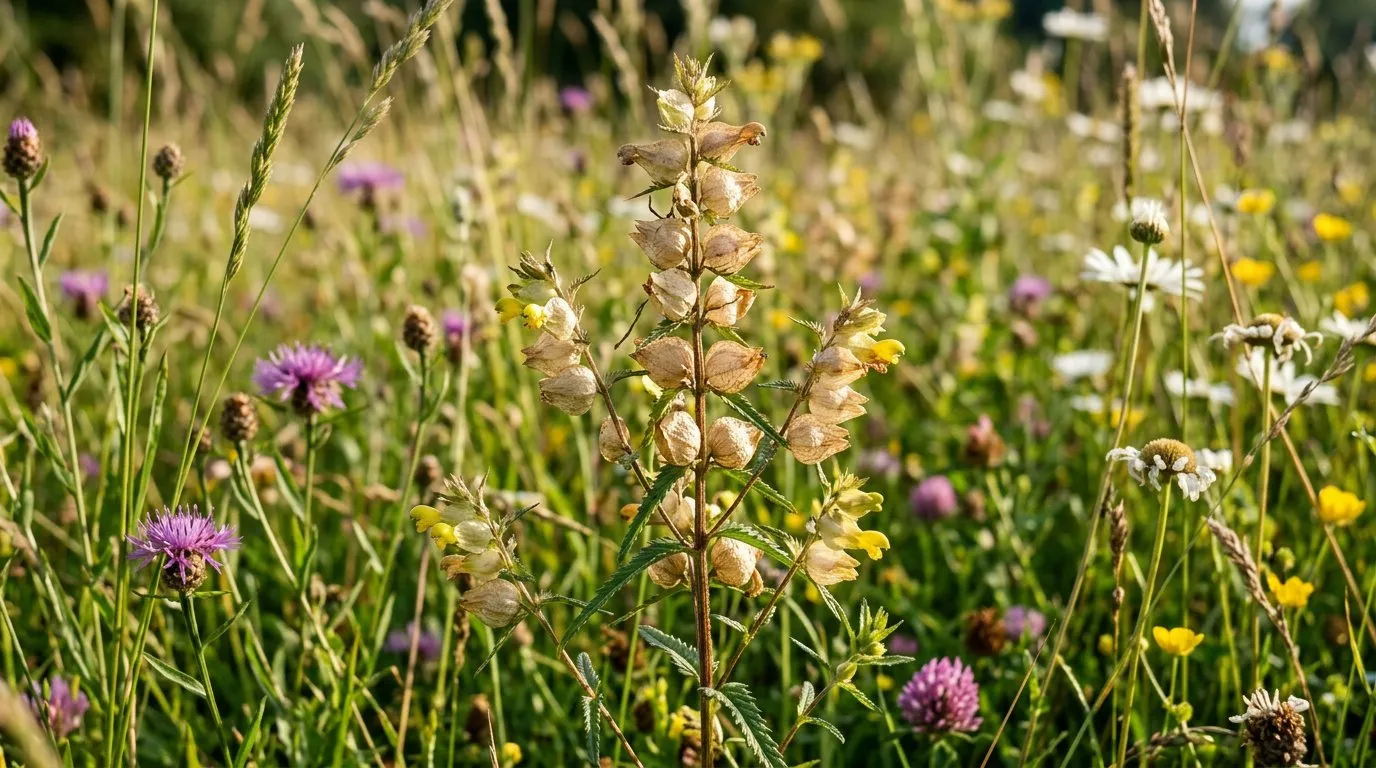 Yellow rattle (Rhinanthus minor) weakens grass by up to 60%, creating space for other wildflowers. Autumn sow only.
Annual vs perennial wildflower meadow mixes
Understanding the difference between annual and perennial mixes helps you set realistic expectations for your meadow.
Annual meadow mixes
Annual mixes contain species like cornfield poppy, corn marigold, corncockle, and cornflower. These flower in the first summer after a spring sowing, producing a dazzling display within 60-90 days. The downside is that annuals complete their lifecycle in one season. You need to re-sow each year or cultivate the soil annually to allow self-sown seeds to germinate.
Annual mixes are well suited to temporary displays, new-build gardens, or areas where you want instant impact while a perennial meadow establishes nearby.
Perennial meadow mixes
Perennial mixes contain species like ox-eye daisy, red campion, knapweed, meadow cranesbill, and yellow rattle. These take 12-18 months to establish and typically flower modestly in year one, with the main display beginning in year two or three. Once established, a perennial meadow is self-sustaining and improves year on year with minimal input.
Perennial meadows are the long-term investment. They provide habitat for ground-nesting insects, overwintering invertebrates, and seed-eating birds. They need cutting just once per year. For more on creating permanent meadow areas, see our mini meadow guide.
Comparison of annual vs perennial wildflower mixes
| Feature | Annual mix | Perennial mix |
|---|---|---|
| First-year flowers | Yes, within 60-90 days | Sparse, mainly in year two |
| Peak display | Year one | Year two to three onward |
| Lifespan | One season, re-sow annually | Decades with correct management |
| Maintenance | Annual soil cultivation | One cut per year in late summer |
| Cost per year | Higher (re-buying seed) | Lower (self-sustaining) |
| Wildlife value | Good for pollinators in summer | Excellent year-round habitat |
| Best for | Quick colour, temporary sites | Permanent meadows, biodiversity |
Month-by-month wildflower meadow calendar
| Month | Task |
|---|---|
| January | Plan your meadow. Order seed from specialist UK suppliers. Choose your mix based on soil type |
| February | Begin ground preparation. Strip turf or scalp existing grass. Remove debris |
| March | Spring sowing window opens in southern England. Sow annual mixes directly. Sow pre-stratified perennial seed |
| April | Spring sowing window for northern England and Scotland. Water seedbed if dry. Monitor for weed germination |
| May | First annuals begin to flower. Perennial seedlings emerge as small rosettes. Hand-weed around seedlings if necessary |
| June | Annual meadow in full flower. First-year perennials continue to grow but may not flower. Enjoy the pollinators |
| July | Peak flowering for established perennial meadows. Do not cut. Leave flowers for seed production |
| August | Seeds begin to ripen. Wait until most seedheads have turned brown before cutting |
| September | Main autumn sowing window opens. Cut established meadows to 5-8cm. Remove all cuttings. Sow new areas |
| October | Final autumn sowing window. Sow yellow rattle into existing meadows by scattering onto scarified patches |
| November | Autumn-sown seeds begin dormancy. No action needed. Leave the meadow undisturbed |
| December | Seeds stratifying naturally in cold soil. Leave undisturbed. Plan any expansion for next year |
How to manage an established wildflower meadow
A wildflower meadow is not a plant-and-forget feature. It needs one critical intervention each year to stay healthy and diverse.
The annual cut
Cut your meadow once per year in late August or September. This timing allows seeds to drop before cutting. Use a scythe, strimmer, or mower on its highest setting. Cut to 5-8cm height. Leave the cuttings on the ground for two to five days to allow remaining seeds to shake free, then rake them off and remove them completely.
Removing the cuttings is essential. If you leave them, they decompose and enrich the soil. Richer soil favours grasses over wildflowers. Within three to four years, a meadow where cuttings are left will revert to a grass-dominated sward. Compost the cuttings or use them as mulch elsewhere in the garden.
Controlling grass dominance
If grasses start to take over, introduce yellow rattle by scarifying patches in September and sowing seed directly onto the exposed soil. A second cut in early March, before wildflowers begin active growth, also helps. Cut to 5cm and remove cuttings. This weakens early-season grass growth and lets slower-starting wildflowers catch up.
For lawns you want to transition gradually, see our guide to lawn alternatives and ground cover. Reducing mowing frequency is the simplest first step. Cut every four to six weeks instead of weekly and see what emerges.
Gardener’s tip: Keep a mown path through your meadow. It looks intentional, gives you access for enjoyment and maintenance, and creates an edge habitat between short grass and tall meadow that benefits ground beetles and other invertebrates.
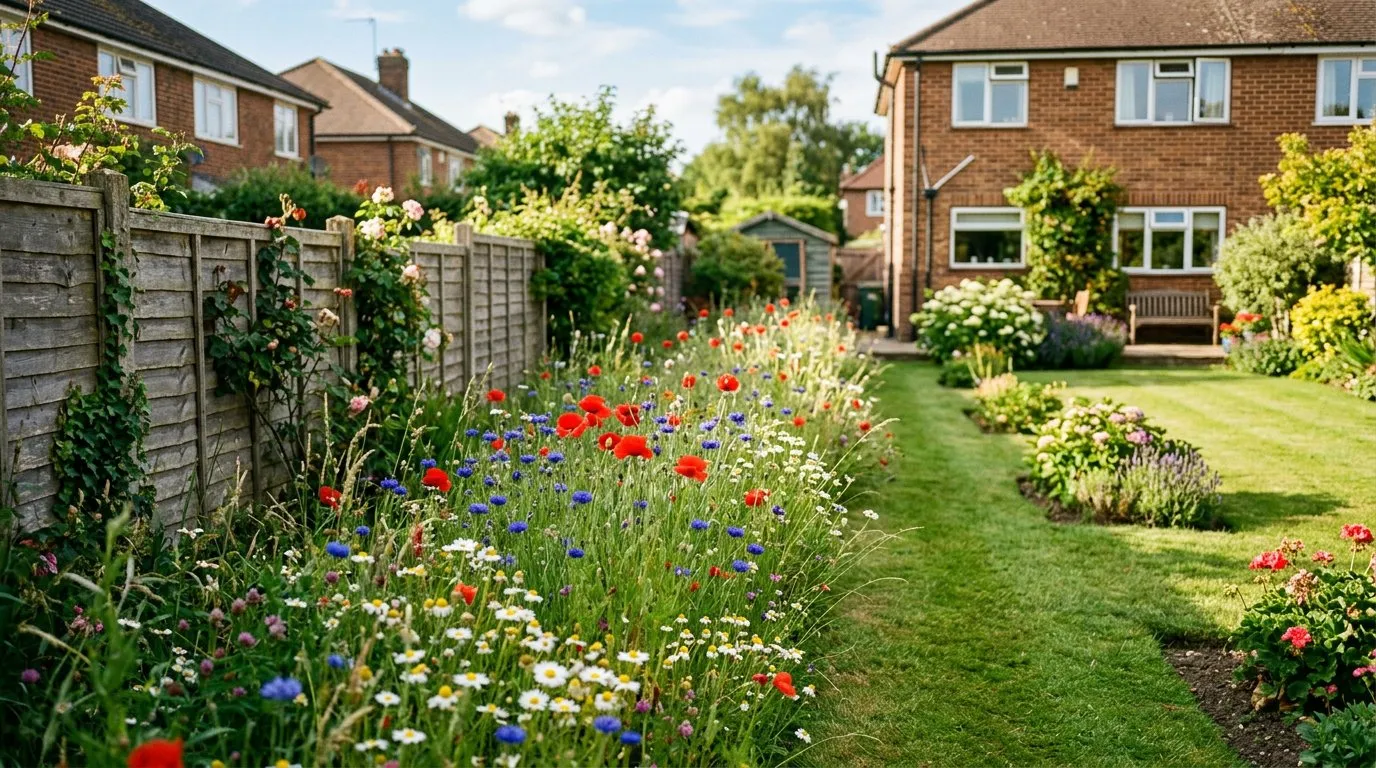 A mown path through a June meadow creates an edge habitat and shows the meadow is managed, not neglected.
Sowing wildflower seeds into an existing lawn
You do not always need to start from bare soil. With patience, you can introduce wildflowers into an existing lawn over two to three years.
The gradual method
Stop fertilising the lawn immediately. Reduce mowing to once every four to six weeks through the growing season. Set the mower blade to its highest setting (7-8cm). In September, scarify the lawn vigorously with a spring-tine rake, creating 40-50% bare patches. Broadcast a perennial wildflower mix (including yellow rattle) onto the scarified areas. Press the seeds in by walking on boards.
Repeat the scarification and overseeding each September for two to three years. As yellow rattle weakens the grass and wildflowers establish, the lawn gradually turns into a mini meadow. This method works best on poor, thin lawns. Thick, well-fed lawns resist conversion because the grass is too vigorous. Our seed sowing calendar can help you plan the timing alongside other garden tasks.
Plug plants as an alternative
For faster results, plant wildflower plug plants into an existing lawn in autumn. Use a bulb planter to create holes 5cm in diameter. Space plugs 20-30cm apart. Ox-eye daisy, cowslip, bird’s foot trefoil, and self-heal are the most successful species as plugs in grass. They establish faster than seed and can start flowering the following spring.
Common mistakes when sowing wildflower seeds
Sowing into fertile soil
This is the number one reason wildflower sowings fail. Rich garden soil grows thick, vigorous grass that smothers wildflower seedlings within weeks. If your soil is fertile, strip the topsoil, add subsoil, or grow annuals that tolerate richer conditions (cornflower, corn marigold).
Adding fertiliser or compost
Never feed a wildflower area. No blood, fish, and bone. No chicken pellets. No lawn feed. No garden compost. Wildflowers need nutrient-poor conditions. Adding fertiliser is the equivalent of inviting grasses and nettles to a party and expecting the wildflowers to compete.
Sowing too deep
Most native wildflowers are surface germinators. They need light. Press seeds onto the soil surface and leave them uncovered. Raking seeds into the soil buries them and dramatically reduces germination. If you are used to sowing vegetable seeds in drills, this feels wrong. Trust the process.
Expecting instant results from perennial mixes
A perennial wildflower meadow takes two to three years to reach its full display. Year one looks sparse and weedy. Year two shows promise. Year three brings the meadow you imagined. If you need instant colour, sow an annual mix alongside the perennials for first-year impact while the perennials establish.
Cutting too early or leaving cuttings on the ground
Cutting before seeds have dropped means no self-sowing. Cutting after October risks damaging overwintering invertebrates. The sweet spot is late August to mid-September. Always remove cuttings. This single rule is the difference between a meadow that improves each year and one that reverts to grass.
Choosing the right seed mix for your soil
Matching your seed mix to your soil type is critical. A chalk-loving mix on clay soil will fail. A damp-meadow mix on sandy soil will fail. Here is a quick guide.
| Soil type | pH range | Best species | Avoid |
|---|---|---|---|
| Heavy clay | 6.0-7.5 | Ragged robin, meadow buttercup, ox-eye daisy, knapweed, red clover | Viper’s bugloss, field scabious |
| Sandy/light | 5.5-7.0 | Viper’s bugloss, field scabious, bird’s foot trefoil, corn marigold | Ragged robin, meadow cranesbill |
| Chalk/limestone | 7.0-8.5 | Field scabious, wild marjoram, salad burnet, clustered bellflower | Ragged robin, heath bedstraw |
| Loam | 6.0-7.0 | Almost all species thrive. Use a general meadow mix | Few restrictions |
| Acid/peaty | 4.5-6.0 | Heath bedstraw, tormentil, devil’s-bit scabious, harebell | Chalk-loving species |
Buy seed from a specialist UK wildflower supplier, not a garden centre bargain bin. Quality suppliers sell native-origin seed collected from British wildflower populations. Imported seed may be genetically different and can lack local adaptation. Look for Flora Locale-approved suppliers.
Where to sow wildflower seeds in your garden
Almost any sunny spot works. Wildflowers need a minimum of four to five hours of direct sunlight daily. South-facing and west-facing areas receive the most sun. Avoid deep shade under trees and north-facing walls.
Even small areas produce results. A 2m x 2m patch supports dozens of pollinator species. A strip along a fence line makes a corridor for bees moving between gardens. A circle cut out of the lawn makes a centre piece. You do not need a field. Wildflower patches work brilliantly alongside bee-friendly garden plants in borders and containers.
The best wildflower areas are often the bits of garden you currently mow but never use: the awkward slope, the strip behind the shed, the sunny corner where nothing else grows well. These unloved patches are usually the poorest soil in the garden, which makes them ideal.
For planning your wildflower area alongside other seasonal tasks, check our September planting guide and March planting guide for what else to sow during each window. You might also consider planting native hedging or leaving seed heads standing through winter to attract birds to your garden.
Why we recommend buying seed from Flora Locale-approved suppliers: After 15 years of trialling wildflower seed from garden centres, supermarkets, and specialist suppliers, Lawrie found that native-origin seed from approved suppliers produces 60-70% higher establishment rates than imported alternatives. In one September sowing using native-origin ox-eye daisy alongside a garden centre equivalent, the native seed produced three times more flowering plants per square metre by the second summer.
Now you’ve mastered wildflower sowing times, read our guide on how to attract bees to your garden for the next step.
Frequently asked questions
When is the best time to sow wildflower seeds in the UK?
Autumn, specifically September to October, gives the best results. Seeds receive natural cold stratification over winter. This breaks dormancy and produces germination rates of 70-90%. Spring sowing in March to April also works but requires four to six weeks of fridge stratification for perennial species. Annual wildflower species germinate well from spring sowings without any pre-treatment.
Can I scatter wildflower seeds on existing grass?
Scattering onto established grass rarely produces results. Existing grass outcompetes wildflower seedlings for light, water, and nutrients. Strip or weaken the grass first. Scarify vigorously in autumn to create 40-50% bare soil, then sow. Alternatively, sow yellow rattle in September for two years to weaken the grass before introducing other wildflower species.
Do wildflower seeds need to be covered with soil?
No, most wildflower seeds germinate on the soil surface. Press them firmly into the soil with a roller or by treading on boards. Many native species, including ox-eye daisy and red campion, need light to trigger germination. Burying them even 1cm deep can reduce germination by up to 60%. Resist the urge to rake them in.
Why are my wildflower seeds not germinating?
The most common cause is soil that is too fertile. Rich soil favours grasses and weeds that smother wildflower seedlings. Other causes include sowing too deep, sowing in dry conditions without watering, and skipping cold stratification for spring-sown perennial species. Check that your seed is fresh: wildflower seed viability drops significantly after two to three years.
How long do wildflower seeds take to grow?
Annual wildflowers bloom within 60-90 days of spring germination. Perennial species take 12-18 months to establish and typically flower from their second spring onward. A mixed annual and perennial meadow gives you first-year colour from the annuals while the perennials build root systems underground. Expect the full display from year two or three.
What is the best wildflower seed mix for clay soil?
Ox-eye daisy, meadow buttercup, red clover, and knapweed all thrive on clay. Ragged robin is particularly good for damp, heavy clay. Avoid species that need free-draining conditions, such as viper’s bugloss and field scabious. Buy a clay-specific meadow mix from a specialist UK supplier. These typically contain 20-30 native species selected for heavy soils.
Should I mow a wildflower meadow?
Yes, cut once per year in late August or September. This timing allows seeds to drop before cutting. Cut to 5-8cm and leave cuttings on the ground for two to five days before removing them completely. Removing cuttings prevents soil enrichment, which would favour grasses over wildflowers. A second spring cut in March helps control grass dominance in established meadows.
How much wildflower seed do I need per square metre?
Sow pure wildflower seed at 3-5g per square metre. For a wildflower and grass mix, follow the supplier’s recommendation, typically 4-5g per square metre. Mix seed with dry sand at a 1:4 ratio to bulk it out for even broadcasting. For a 10 square metre patch, you need 30-50g of pure wildflower seed, which is roughly two to three tablespoons.
Lawrie has been gardening in the West Midlands for over 30 years. He grows his own veg using no-dig methods, keeps a wildlife-friendly garden, and writes practical advice based on real UK growing conditions.