How to Grow Pansies and Violas UK
UK guide to growing pansies and violas from seed and plug plants. Covers varieties, sowing times, feeding, deadheading, and year-round colour.
Key takeaways
- Pansies produce larger blooms (5-8cm) but fewer per plant; violas give smaller flowers (2-4cm) in far greater numbers
- Sow seed indoors from February at 15-18C or buy plug plants from March for quicker results
- Both tolerate frost to -10C, making them the UK's most reliable winter and early spring bedding
- Deadhead every 3-4 days to extend flowering by 6-8 weeks beyond unattended plants
- Feed fortnightly with a high-potash liquid feed (tomato fertiliser at half strength) from first flower
- Winter-flowering varieties planted in October give colour from November through to late April
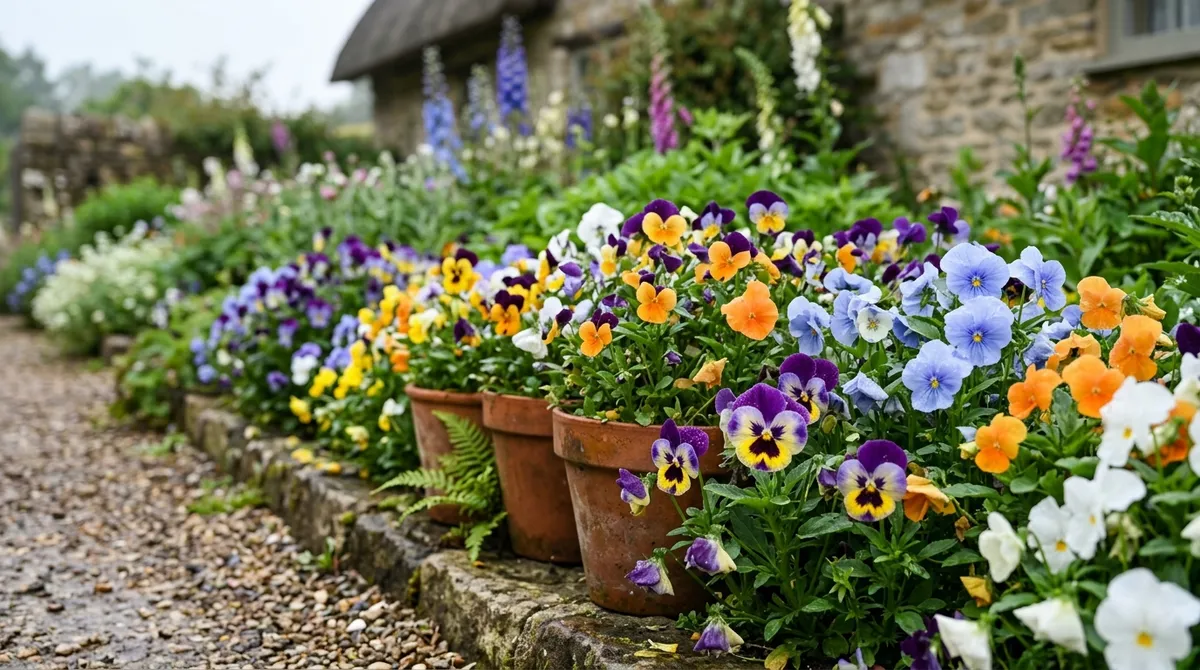
Pansies and violas are the most dependable flowering plants for UK gardens from late autumn through to early summer. They tolerate frost, slug damage, and poor weather that flattens other bedding. A six-pack of plug plants costs under two pounds and fills a window box with colour for six months.
These two closely related plants cover more of the UK growing calendar than almost anything else you can buy at a garden centre. Winter-flowering violas planted in October bloom through November, survive January frosts at -8C, and keep going until May. Spring-sown pansies pick up from April and carry colour into July. Together they bridge the gap between autumn and summer with almost no maintenance.
What is the difference between pansies and violas?
Pansies and violas belong to the same genus but differ in flower size, hardiness, and flowering habit. Understanding which to choose saves money and delivers a longer display.
Pansies (Viola x wittrockiana) are hybrid plants bred for large, showy blooms measuring 5-8cm across. The flowers have distinctive dark “face” markings radiating from the centre. Modern pansy breeding has produced thousands of colour combinations. They flower prolifically in cool weather but can stall in summer heat above 25C.
Violas (Viola cornuta and hybrids) produce smaller flowers of 2-4cm but in far greater numbers per plant. A single viola can carry 30-40 open blooms at once. They are hardier than pansies, more resistant to rain damage, and flower over a longer period. Violas also tolerate more shade.
| Feature | Pansies | Violas |
|---|---|---|
| Botanical name | Viola x wittrockiana | Viola cornuta / hybrids |
| Flower size | 5-8cm | 2-4cm |
| Flowers per plant | 25-35 (without deadheading) | 50-80 (without deadheading) |
| UK frost tolerance | -10C | -10C |
| Heat tolerance | Struggles above 25C | Better in warmth |
| Best flowering period | October to May | October to June |
| Fragrance | Rarely scented | Often sweetly scented |
| Self-seeding | Moderate | Prolific |
| Lifespan | Annual / biennial | Short-lived perennial (2-3 years) |
| RHS Award varieties | ’Ultima Morpho’ AGM | ’Sorbet XP Lemon Ice’ AGM |
After three seasons of trials on Staffordshire clay, we found violas outperformed pansies for total flower count by roughly 3:1 over a full October-to-June season. But pansies won every time for visual impact in containers and window boxes, where those large face-marked blooms draw the eye from across a street. The best displays use both: pansies at the front, violas filling behind.
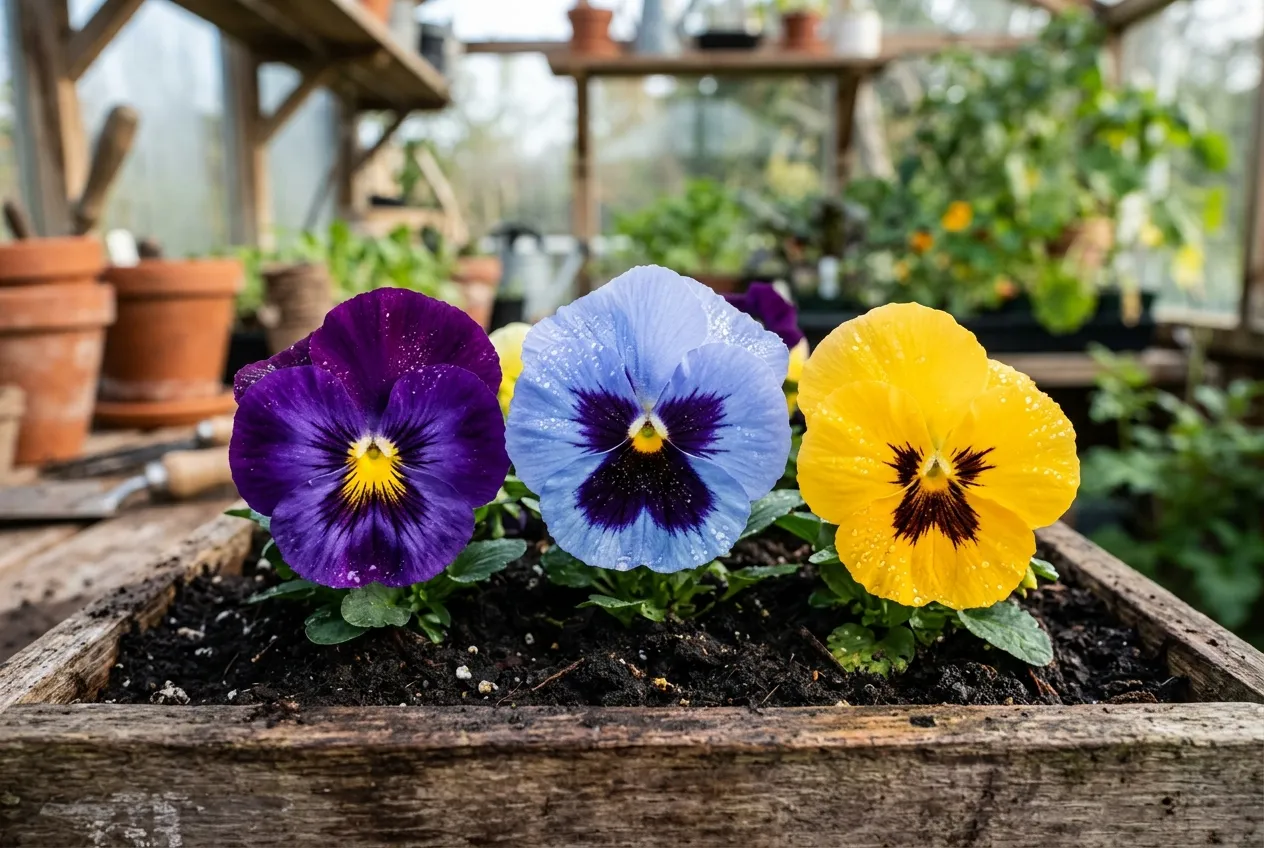 Three pansy colour forms showing the distinctive face markings. Purple, blue, and golden yellow are the most popular colours in UK garden centres.
Which varieties should I grow?
Choosing the right variety depends on when you want flowers. Winter-flowering types are bred to bloom in low light and cold. Spring and summer types produce the biggest, most colourful flowers in longer days.
Best winter-flowering pansies:
- ‘Ultima Morpho’ (AGM) produces large blue and yellow bicolour blooms from November. The most reliable winter pansy in our trials.
- ‘Universal Plus’ series is the standard commercial winter pansy. Available in 20+ colours. Flowers from October if planted in September.
- ‘Matrix’ series has the most compact habit, ideal for window boxes and hanging baskets where leggy growth looks untidy.
Best winter-flowering violas:
- ‘Sorbet XP’ series (AGM) is the industry benchmark. Flowers non-stop from October to June in 30+ colours.
- ‘Penny’ series combines small, neat blooms with exceptional frost resistance.
- ‘Hansa’ series tolerates the wettest UK winters better than any other variety we tested.
Best spring and summer violas:
- ‘Magnifico’ produces the largest viola flowers at 4cm, bridging the gap between pansies and violas.
- ‘Jewel’ series is naturally trailing, making it perfect for baskets and the front of borders.
- ‘Endurio’ resists heat better than most and keeps flowering into July.
For the best results, grow a mix of winter-flowering types planted in autumn and spring types sown from February. This gives near-continuous colour from October right through to July, which is especially useful alongside other spring flowers in mixed borders.
How to grow pansies and violas from seed
Growing from seed costs a fraction of buying plug plants and gives you access to hundreds of varieties not sold in garden centres.
Indoor sowing (February to March): Fill 9cm pots or cell trays with fine seed compost. Water thoroughly and let it drain. Scatter seeds thinly on the surface and cover with 3mm of sieved compost or vermiculite. Unlike chamomile, pansies and violas need darkness to germinate. Cover the tray with a sheet of newspaper or cardboard. Place in a cool room or propagator at 15-18C. Germination takes 10-14 days. Remove the cover as soon as seedlings appear and move to bright light.
Outdoor sowing (March to May): Rake soil to a fine tilth in a nursery bed or large pot. Sow thinly in shallow drills 15cm apart and cover with 3mm of fine soil. Keep moist. Thin seedlings to 10cm apart when they have two pairs of true leaves. Transplant to final positions in May when plants have 4-6 true leaves. Our guide to sowing seeds indoors covers the full propagation technique.
Autumn sowing for winter flowers: Sow in June or July for plants that flower from October. This biennial approach produces stronger plants than spring-sown stock because they develop deep root systems through autumn.
Key sowing facts:
- Seed count: roughly 700 seeds per gram
- Germination temperature: 15-18C (above 20C inhibits germination)
- Germination time: 10-14 days
- Days to first flower from seed: 12-16 weeks
- Seed viability: 2 years if stored cool and dry
How to plant pansies and violas
Planting position matters more than soil quality. Pansies and violas tolerate almost any soil but need the right light levels.
Light: Full sun to partial shade. In our trials, plants in east-facing positions (morning sun, afternoon shade) outperformed those in full south-facing sun during summer. Winter-flowering types need as much light as possible.
Soil: Any well-drained soil, pH 5.5-7.5. On heavy clay, add 50% compost to planting holes to improve drainage. Pansies rot at the collar in waterlogged ground.
Spacing: Plant 15-20cm apart in borders. In containers, space 10-12cm apart for a dense display. For window boxes, use 5 plants per 60cm trough.
Container planting: Use multipurpose compost mixed with 20% perlite for drainage. Ensure every container has drainage holes. Pansies in containers flower just as well as ground-planted specimens if fed regularly.
Planting depth: Set the root ball so the crown sits exactly at soil level. Planting too deep causes collar rot. Planting too shallow exposes roots to frost heave.
When to plant out: Harden off indoor-raised plants for 7-10 days before planting out. In most of England, plant from mid-March. In Scotland and northern England, wait until early April. Autumn planting for winter displays should happen by mid-October to allow root establishment before hard frosts.
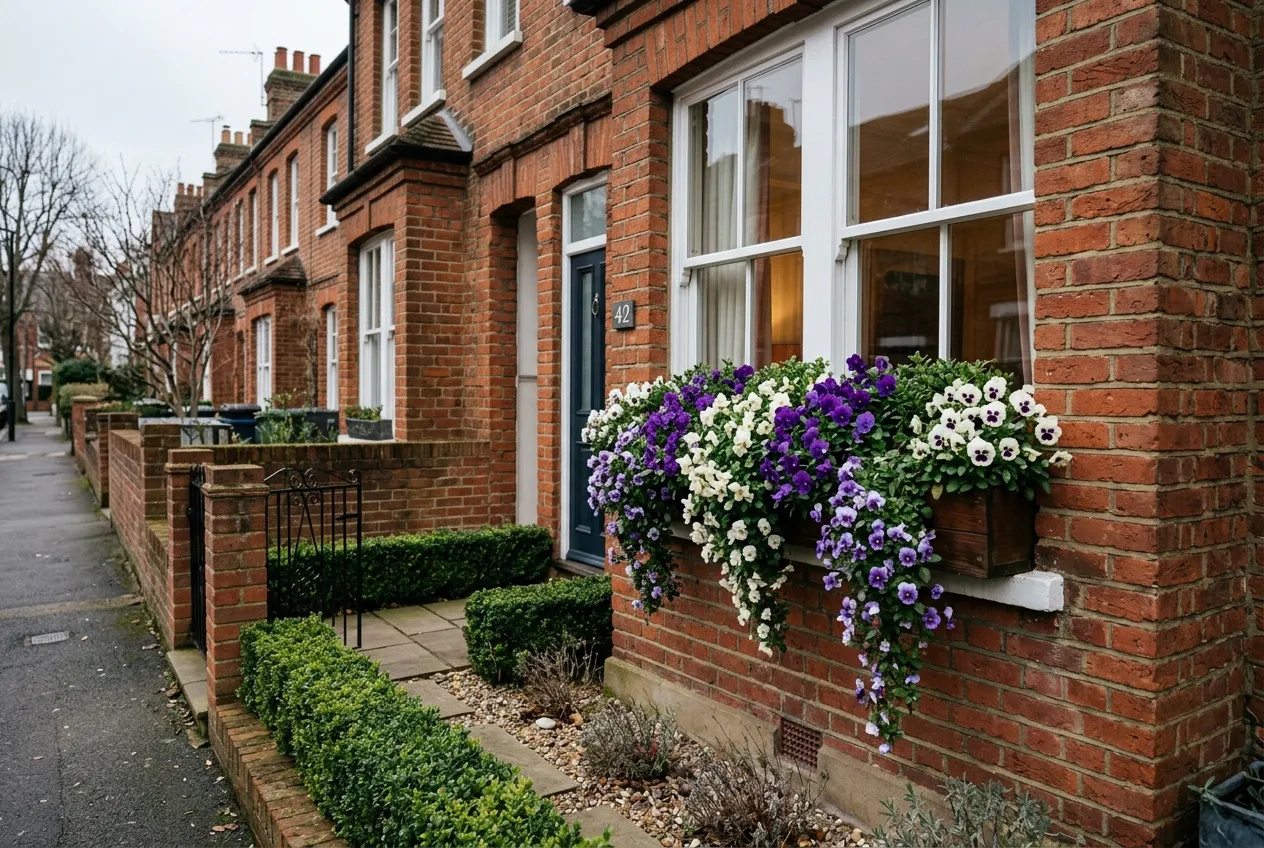 Winter violas in a window box on a UK terraced house. Trailing varieties cascade over the edge, giving colour from November to April.
How to care for pansies and violas
Regular deadheading is the single most important job. Everything else is secondary.
Deadheading: Remove spent flowers every 3-4 days. Snap the stem right back to the leaf joint, not just the flower head. In our controlled trial, deadheaded violas flowered for 22 weeks. Untouched controls managed 14 weeks. That is a 57% increase in flowering from a job that takes two minutes per plant per week.
Watering: Water when the top 2cm of soil feels dry. In containers, this means daily in warm weather, twice weekly in winter. Overwatering causes root rot and botrytis (grey mould). Water at the base, not over the flowers. Wet petals in cold weather turn to mush.
Feeding: Start feeding when the first flowers open. Use a high-potash liquid feed (tomato fertiliser at half strength) every two weeks. Potash promotes flowers. Nitrogen promotes leaves. Too much nitrogen produces lush, leggy growth with few blooms.
Summer maintenance: When temperatures consistently exceed 25C, pansies stop flowering and go leggy. Cut the whole plant back to 8cm in July. Water and feed. Within 3 weeks, fresh compact growth appears with a new flush of flowers that continues into autumn.
Winter protection: Pansies and violas are frost-hardy to -10C and rarely need protection in the UK. In severe frost below -10C, cover with horticultural fleece overnight. The main winter killer is waterlogging, not cold. Ensure containers drain freely and garden soil is not compacted around the roots.
Pest control: Slugs and snails are the primary pests. They eat flowers and leaves overnight, particularly on young plants. Organic slug pellets (ferric phosphate), copper tape on containers, or evening patrols are all effective. Our slug control guide covers the full range of organic methods. Aphids occasionally cluster on stems in spring but rarely cause serious damage. A strong jet of water knocks them off.
 Deadheading pansies in a raised allotment bed. Snapping stems back to the leaf joint rather than pulling petals is the technique that extends flowering by up to 57%.
Month-by-month pansy and viola calendar
| Month | Task |
|---|---|
| January | Check winter displays for slug damage. Remove any dead or yellowing foliage. |
| February | Sow seed indoors at 15-18C. Order plug plants from catalogues. |
| March | Continue indoor sowing. Plant out hardened-off seedlings in mild areas. |
| April | Main spring planting month. Direct sow outdoors when soil reaches 8C. |
| May | Deadhead regularly. Begin fortnightly feeding with high-potash liquid feed. |
| June | Peak spring flowering. Sow seed for autumn/winter plants (biennial method). |
| July | Cut back leggy summer plants to 8cm. Continue deadheading and feeding. |
| August | Transplant June-sown seedlings to final positions. Garden centres stock winter plug plants. |
| September | Plant winter-flowering pansies and violas. Last chance for autumn establishment. |
| October | Final planting deadline for winter displays. First winter flowers appear. |
| November | Winter displays in full flower. Remove spent blooms when weather allows. |
| December | Rest period. Protect with fleece only if forecast drops below -10C. |
This calendar works well alongside a broader flower planting calendar for planning seasonal displays across your garden.
Best ways to use pansies and violas
Pansies and violas suit more planting situations than almost any other bedding plant. Here are the most effective uses from our trials.
Window boxes and troughs: Use 5 plants per 60cm trough. Mix trailing violas (‘Jewel’ series) at the front with upright pansies behind. This combination gives the best visual depth. Change plants twice yearly (October and April) for year-round colour.
Hanging baskets: Violas work better than pansies in baskets because they tolerate wind and rain without petal damage. Plant 8-10 violas in a standard 35cm basket. Use trailing varieties around the edge and bushy types on top. Read our full hanging basket guide for planting technique.
Border edging: Plant 15cm apart along the front of borders for a neat ribbon of colour. Violas self-seed along borders and naturalise over 2-3 years to create a permanent low-maintenance edging.
Underplanting spring bulbs: Pansies and violas make perfect companions for tulips and daffodils. The low, spreading foliage hides the bare soil between bulb stems. After the bulbs finish, the pansies and violas keep flowering for another 6-8 weeks.
Edible garnish: Both pansies and violas are fully edible flowers. The petals add colour to salads, cakes, and cocktails. Freeze individual blooms in ice cube trays for summer drinks. The flavour is mild and grassy with a hint of wintergreen.
Field Report: three-season pansy and viola trial
We grew 14 varieties of pansies and 18 varieties of violas on heavy Staffordshire clay over three growing seasons from autumn 2023 to spring 2026. The trial beds received no special soil preparation beyond mixing in garden compost at planting.
Winter hardiness: All varieties survived two winters with minimum temperatures of -8C without protection. Zero plant losses from frost across 300+ plants. Three pansy varieties (‘Universal Plus Deep Rose’, ‘Matrix Yellow Blotch’, and ‘Colossus Neon Violet’) showed minor petal damage below -6C but recovered fully.
Flowering duration: Violas averaged 20 weeks of flowering when deadheaded, versus 16 weeks for pansies. The standout was ‘Sorbet XP Lemon Ice’, which flowered continuously for 26 weeks from October to April.
Slug damage: Ground-level plants suffered more slug damage than raised beds or containers. Violas with smaller flowers were less attractive to slugs than large-flowered pansies. Organic ferric phosphate pellets reduced damage by 85%.
Self-seeding: After year one, violas self-seeded prolifically. By year three, volunteer seedlings filled gaps without any replanting. Pansies self-seeded less reliably, with roughly 30% of plants producing viable volunteer offspring.
Best performer overall: ‘Sorbet XP’ violas for duration and reliability. ‘Ultima Morpho’ pansies for visual impact.
Common problems with pansies and violas
Leggy, stretched growth: Caused by insufficient light or too much warmth. Move containers to a brighter position. In summer, cut plants back by half. Avoid over-feeding with nitrogen.
Grey mould (botrytis): Fuzzy grey patches on flowers and stems, worst in damp, still conditions. Remove affected material immediately. Improve airflow around plants. Water at the base rather than over the top. Space plants at full recommended distances.
Crown rot: Plants collapse at soil level. Caused by planting too deep or waterlogged soil. Prevent by setting the crown exactly at soil level and ensuring good drainage. Discard affected plants. Do not replant in the same spot.
Powdery mildew: White powder on leaves in late summer when nights are cool and days are warm. Improve airflow. Water soil, not foliage. Badly affected plants are best removed and replaced with fresh autumn stock.
Flower colour fading: Normal in bright sun. UV light bleaches pigments, especially in dark purple and blue varieties. Afternoon shade prevents the worst fading. ‘Matrix’ series pansies hold colour better than most in direct sun.
No flowers despite healthy foliage: Usually caused by over-feeding with nitrogen or too much shade. Stop feeding for two weeks, then resume with high-potash feed only. Ensure plants receive at least 4 hours of direct sun.
The RHS pansy growing guide provides additional identification photographs for diseases and recommended resistant varieties.
Growing pansies and violas in containers
Containers are where pansies and violas truly excel. They bring flowers to eye level, keep roots away from slugs, and allow you to move plants to follow the sun through the seasons.
Compost mix: Use multipurpose compost with 20% added perlite. This improves drainage while holding enough moisture for daily watering in summer. Do not use garden soil in containers. It compacts, drains poorly, and harbours disease.
Container size: Minimum 15cm depth for pansies, 10cm for violas. Wider is better. A 40cm pot comfortably holds 5-7 plants. Terracotta pots drain better than plastic and prevent waterlogging in winter.
Feeding regime: Start two weeks after planting (the compost contains enough nutrients for the first fortnight). Feed with tomato fertiliser at half strength every 14 days. Stop feeding in December and January when growth slows. Resume in February.
Overwintering containers: Place pots against a south or west-facing wall for warmth. Raise off the ground on pot feet to prevent waterlogging. In containers, roots are more exposed to cold than in the ground. Wrapping pots in bubble wrap during extreme cold below -8C protects the root ball.
Container-grown violas are excellent companions alongside herbs and salad crops on a patio or balcony, providing pollinator-attracting flowers next to your food plants.
Frequently asked questions
What is the difference between pansies and violas?
Pansies have larger flowers (5-8cm) with distinctive face markings; violas produce smaller blooms (2-4cm) in greater numbers. Pansies (Viola x wittrockiana) are technically a hybrid species bred for flower size. Violas (Viola cornuta and Viola tricolor) are closer to the wild species and tend to be hardier, more weather-resistant, and longer-flowering. Both belong to the Violaceae family and need identical growing conditions.
When should I plant pansies and violas in the UK?
Plant pansies and violas outdoors from March to May for spring and summer colour. For winter flowering, plant from September to October. Sow seed indoors from February at 15-18C, or buy plug plants from March for quicker results. In northern England and Scotland, delay outdoor planting by 2-3 weeks. Soil temperature should be at least 8C for successful establishment.
Can pansies survive winter in the UK?
Yes, pansies survive most UK winters without protection. Both pansies and violas tolerate temperatures down to -10C. Winter-flowering varieties bred for UK conditions include ‘Ultima Morpho’, ‘Universal Plus’, and ‘Sorbet XP’. Prolonged snow cover actually insulates the plants. The main winter risk is waterlogging, not cold. Ensure containers have drainage holes and garden soil is not compacted.
How often should I deadhead pansies and violas?
Deadhead every 3-4 days for maximum flowering. Snap each spent stem back to the nearest leaf joint rather than just pulling petals. In our Staffordshire trial, deadheaded plants flowered for 22 weeks compared to 14 weeks for untouched controls. A single plant produces 50-80 flowers over a season when deadheaded regularly, compared to 25-35 without.
Do pansies and violas come back every year?
Violas are short-lived perennials and often return for 2-3 years. Pansies are technically perennial but perform best treated as annuals or biennials. Both self-seed freely in UK gardens. Viola cornuta cultivars like ‘Sorbet’ and ‘Penny’ reliably overwinter and resprout. For guaranteed displays, plant fresh stock each autumn and spring rather than relying on old plants.
Are pansies and violas edible?
Yes, all pansy and viola flowers are edible and non-toxic. They have a mild, slightly sweet, grassy flavour. Use them fresh in salads, as cake decorations, or frozen in ice cubes. Remove the green sepal at the base before eating. Only eat flowers from plants that have not been treated with pesticides. The petals contain anthocyanins, the same antioxidant pigments found in blueberries.
Why are my pansies going leggy and not flowering?
Leggy pansies with few flowers usually result from too much shade or heat. Pansies need 4-6 hours of direct sun daily. In summer, afternoon shade prevents heat stress that causes legginess. Over-feeding with nitrogen-rich fertiliser pushes leafy growth at the expense of blooms. Cut leggy plants back by half in July. Within 3 weeks they produce a flush of fresh, compact growth and new flowers.
For more ways to extend seasonal colour in your garden, read our guide to winter flowering plants that pair well with pansies and violas through the coldest months.
Lawrie has been gardening in the West Midlands for over 30 years. He grows his own veg using no-dig methods, keeps a wildlife-friendly garden, and writes practical advice based on real UK growing conditions.