Hanging Baskets: How to Plant and Care
How to plant and maintain hanging baskets in the UK. Best plants, compost mix, watering schedule and feeding regime tested over 10 years in West Midlands.
Key takeaways
- Plant hanging baskets in mid-May after the last UK frost date for your region
- A 35cm wire basket holds enough compost to sustain plants through summer without drying out every hour
- Water retention crystals reduce watering frequency by 25-30% in our trials
- Feed weekly with high-potash liquid fertiliser from June onwards for continuous flowering
- Deadhead trailing petunias and fuchsias weekly to keep flowers coming until October
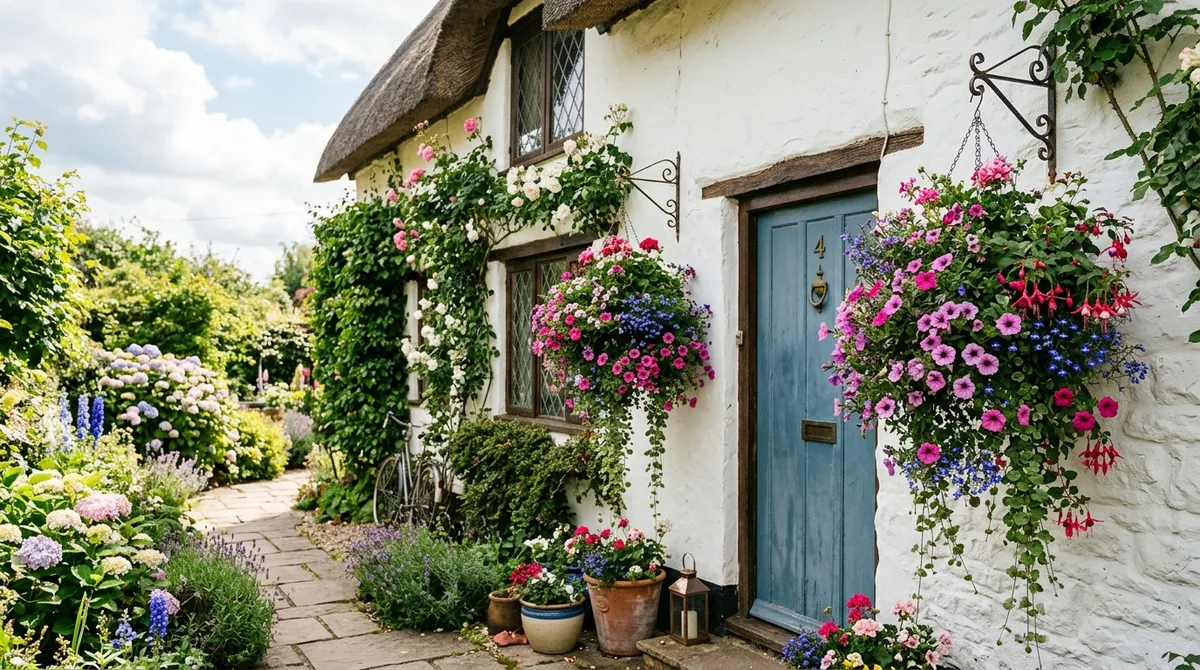
A well-planted hanging basket transforms a bare wall or porch into a cascade of colour from June through to October. The display looks effortless, but getting it right depends on the basket size, the compost mix, the right plants and a consistent watering routine.
After planting over 200 baskets in my West Midlands garden over the past decade, I have refined the method to the point where every basket performs reliably. This guide covers the complete process from choosing a basket to the last feed in September.
Choosing the right basket
Basket size matters more than anything else. A larger basket holds more compost, more water and more root space. This translates directly into better performance through the season.
35cm diameter is the minimum I recommend. Smaller baskets dry out too fast and lack the root volume to sustain vigorous trailing plants. A 35cm wire basket holds approximately 8 litres of compost.
40cm diameter gives much better results. The extra 5cm of diameter adds roughly 40% more compost volume. Plants establish faster, watering is less critical and the display is noticeably fuller.
Wire baskets with moss or liner are the traditional choice and allow planting through the sides for a full globe of colour. Solid plastic baskets with a built-in reservoir are easier to manage but restrict planting to the top.
| Basket type | Diameter | Compost volume | Watering frequency | Best for |
|---|---|---|---|---|
| Wire with moss | 35-40cm | 8-12 litres | Daily (twice in heat) | Maximum flower coverage |
| Solid plastic | 30-35cm | 6-8 litres | Every 1-2 days | Low maintenance |
| Self-watering | 30-35cm | 6-8 litres + reservoir | Every 2-3 days | Holiday-proof baskets |
| Wicker/rattan | 35cm | 8 litres | Daily | Rustic cottage style |
The compost mix that works
Standard multipurpose compost on its own compacts over summer and becomes difficult to re-wet once dry. This mix solves both problems:
- 80% multipurpose compost (peat-free works well from brands like Sylvagrow or Dalefoot)
- 20% perlite for drainage and aeration
- Slow-release fertiliser granules at the rate on the packet (typically 5g per litre of compost)
- Water retention crystals at 3g per litre of compost
The perlite prevents compaction and ensures oxygen reaches the roots even when the basket is saturated after watering. The water retention crystals reduced my watering frequency by 25-30% in direct comparison trials.
Do not add garden soil, sand or gravel. These add weight without benefit and destroy the open structure that basket plants need.
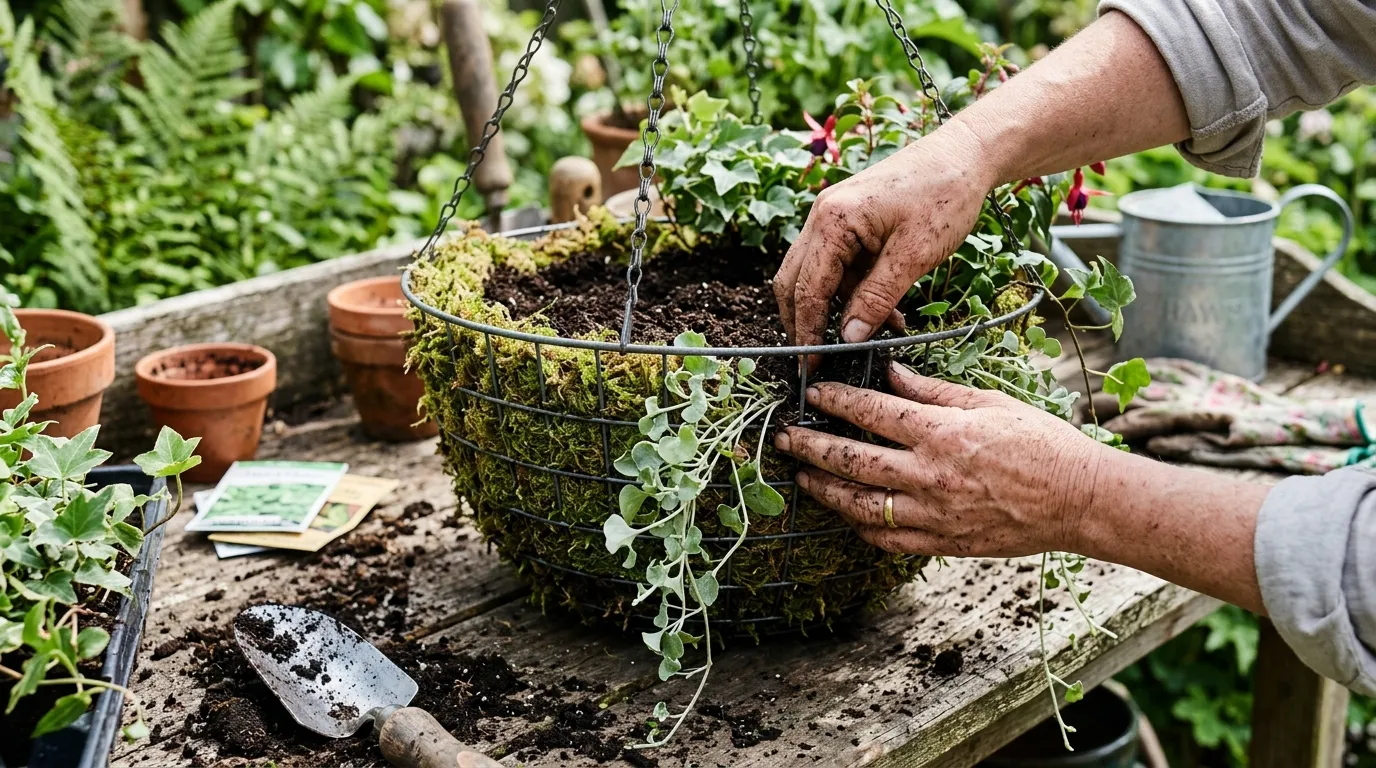
A wire basket lined with moss, half-filled with compost mix. Trailing plants are pushed through the sides before the top layer is added.
Best plants for UK hanging baskets
The ideal hanging basket combines three types of plant: upright varieties for the centre, trailing varieties for the edges and sides, and foliage plants to fill gaps and add texture.
Trailing plants (edges and sides)
Trailing petunias (Surfinia type): The single best basket plant for the UK. Each plant produces cascading stems up to 90cm long, covered in flowers from June to October. Colours range from white through pink, purple and red. Needs full sun and weekly feeding.
Lobelia (trailing varieties): Delicate blue, white or pink flowers in dense cascading sprays. Grows well in partial shade. Cut back by half in August if it gets straggly and it will flush again in September.
Fuchsia (trailing varieties): Elegant pendulous flowers in red, pink, purple and white combinations. Tolerates partial shade better than most basket plants. Hardy fuchsia varieties survive winter but basket types are tender.
Bacopa (Sutera): Small white, pink or blue flowers on trailing stems. Excellent gap filler that continues flowering even when other plants flag in August heat.
Upright plants (centre)
Geraniums (Pelargonium): The traditional centrepiece. Upright habit, bold flower heads, drought tolerant. Zonal types give the strongest colour. Remove spent flower trusses weekly.
Upright fuchsia: Standard or bush varieties provide height in the centre. Combine with trailing types of the same colour family for a unified look.
Osteospermum: Daisy-like flowers that close at night. Best in full sun. Cape daisies work well in south-facing baskets.
Foliage plants
Helichrysum petiolare: Silver trailing foliage that softens the overall display. Vigorous grower that may need trimming in August.
Ivy (small-leaved): Reliable green trailer that provides structure through the entire season. Useful for baskets in partial shade.
| Plant | Type | Sun needs | Flowering period | Trailing length |
|---|---|---|---|---|
| Surfinia petunia | Trailer | Full sun | June to October | 60-90cm |
| Trailing lobelia | Trailer | Sun/part shade | June to September | 30-45cm |
| Trailing fuchsia | Trailer | Part shade | June to October | 45-60cm |
| Bacopa | Trailer | Sun/part shade | May to October | 30-40cm |
| Verbena | Trailer | Full sun | June to October | 30-45cm |
| Geranium | Upright | Full sun | June to October | N/A |
| Helichrysum | Foliage trailer | Full sun | Foliage only | 45-60cm |
Step-by-step planting method
Timing: Plant in mid-May after the last frost. In the West Midlands I plant in the third week of May. Adjust for your location: south coast can go earlier (early May), Scotland and northern England later (late May to early June).
For a 35cm wire basket:
- Rest the basket on a large pot or bucket for stability
- Line with sphagnum moss or a coco fibre liner
- Fill to one-third with compost mix
- Push 3-4 trailing plants through the sides of the basket (for wire/moss baskets only)
- Add compost to two-thirds full
- Push another ring of 3-4 trailing plants through the sides, offset from the first ring
- Fill to 2cm below the rim with compost
- Plant 1 upright plant in the centre and 3-4 trailing plants around the top edge
- Water thoroughly until water drains from the base
- Hang in position and water again the next morning
Total plants per 35cm basket: 8-12 depending on plant size. This feels crowded at planting but gives the full, lush look within 4-6 weeks.
Watering and feeding schedule
Watering is the difference between a basket that thrives and one that dies in July. Here is the schedule that works:
May (after planting): Water every other day. The compost is fresh and holds moisture well. Plants are small with limited leaf area so demand is low.
June: Water daily. Growth accelerates and leaf area increases rapidly. Start weekly liquid feeding with a high-potash fertiliser (tomato feed works perfectly at half strength).
July to August: Water daily, twice daily during heatwaves above 25C. This is the critical period. A basket in full sun on a south-facing wall loses 2-3 litres per day through transpiration. Increase liquid feed to full strength weekly.
September: Reduce to every other day as temperatures drop. Continue weekly feeding until growth slows.
October: Water as needed. Stop feeding. Remove baskets after the first hard frost.
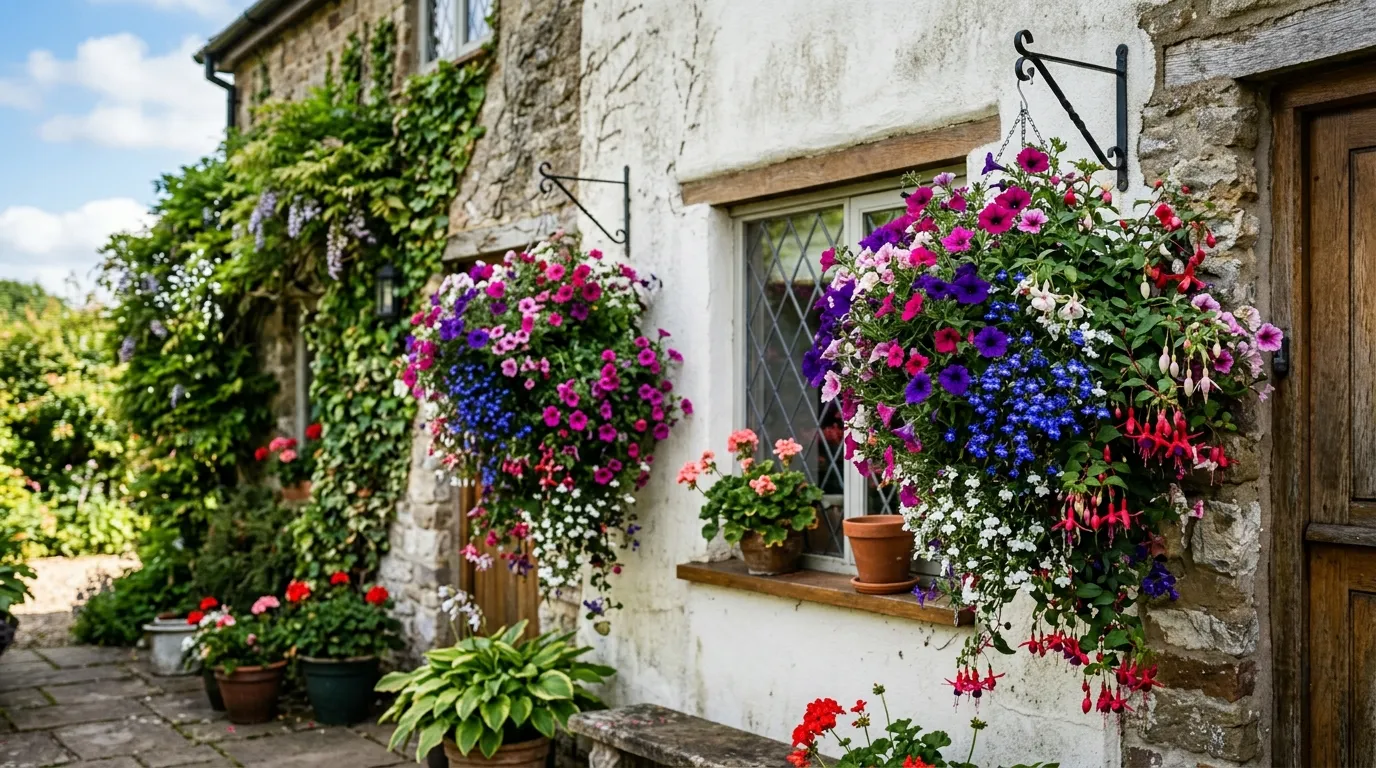
A pair of 40cm baskets in full July display. Trailing petunias, lobelia and fuchsia create a curtain of colour from a south-facing wall.
Maintaining the display through summer
Three tasks keep baskets looking good from June to October:
Deadheading: Remove spent flowers weekly. Trailing petunias benefit most from regular deadheading as it prevents seed formation and redirects energy into new flowers. Pinch off faded blooms where the stem meets the main branch.
Trimming: If lobelia or bacopa becomes straggly in August, cut the trailing stems back by half. New growth follows within two weeks, producing a fresh flush of flowers for September.
Pest watch: Aphids cluster on new growth tips. Spray with dilute washing-up liquid (5ml per litre) or use a biological control. Vine weevil larvae can devastate basket plants. Use nematode drench in August as a preventative.
Winter and spring hanging baskets
Baskets are not just for summer. A winter basket with evergreen foliage and winter-flowering plants provides colour from November to March.
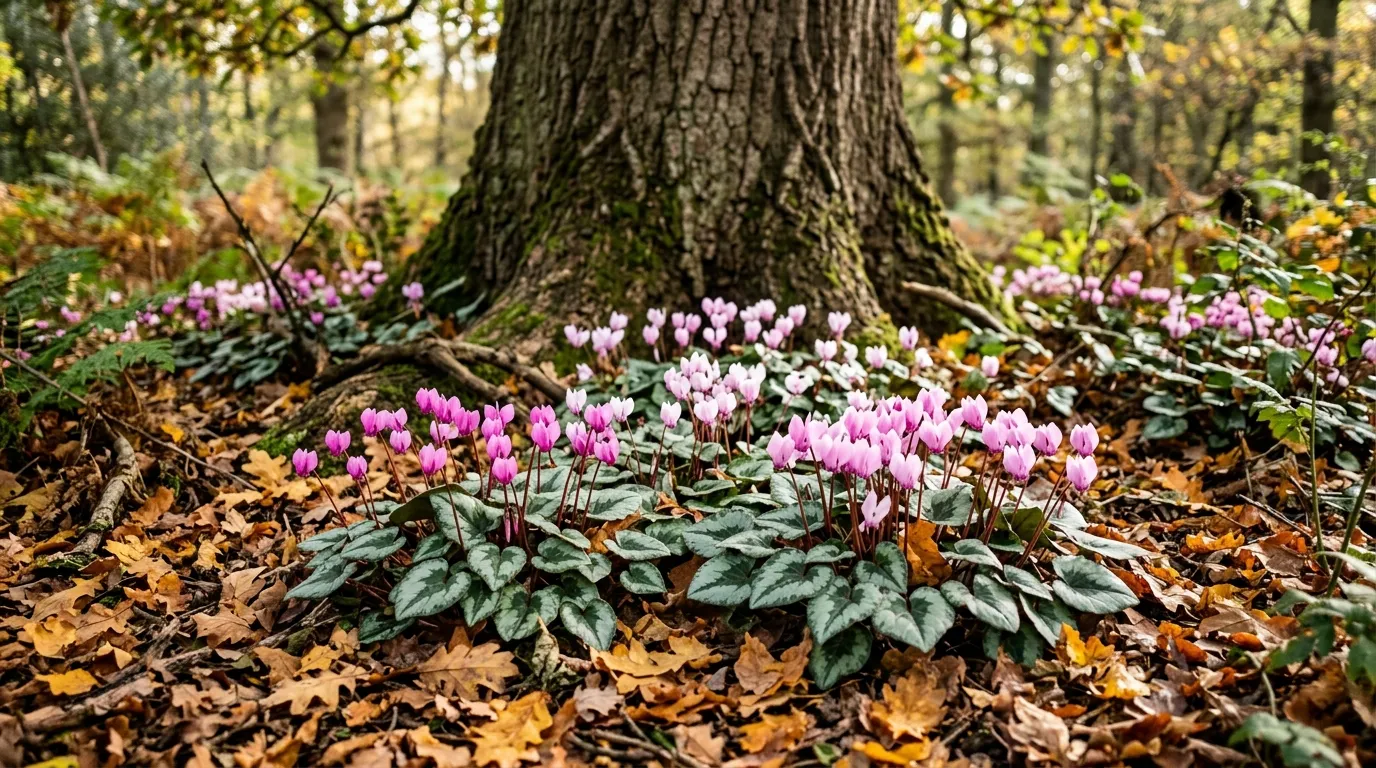
Winter plants: Cyclamen, winter-flowering pansies, heather (Erica), trailing ivy, euonymus, ornamental cabbage. These tolerate frost to minus 5C in a sheltered position.
Spring plants: Primroses, polyanthus, small daffodils (Tete-a-Tete), grape hyacinths, trailing aubrieta. Plant in October for spring colour from February onwards.
Winter baskets need far less watering. Once a week in frost-free periods is usually sufficient. Do not feed between November and February.
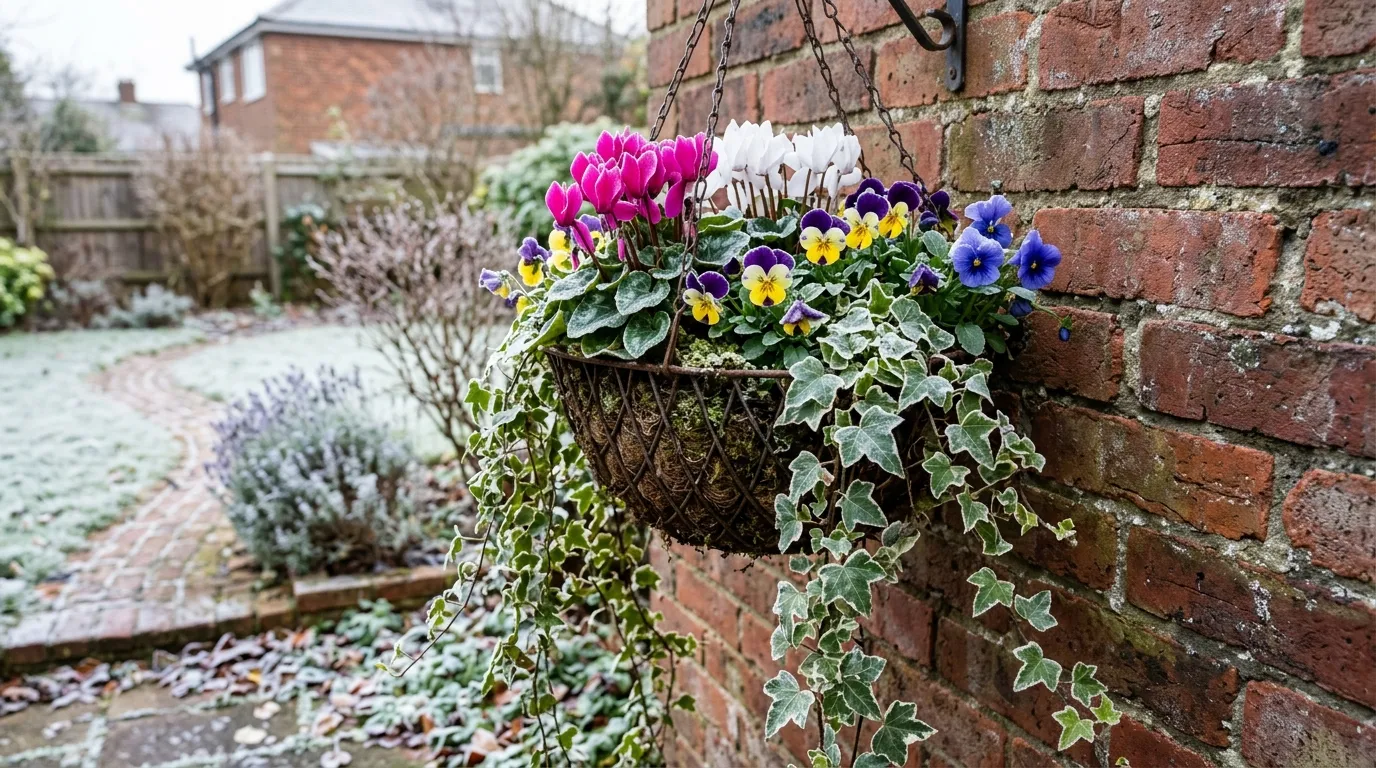
A winter hanging basket with cyclamen, trailing ivy and winter pansies. These tolerate frost and provide colour from November to March.
Related reading
Lawrie has been gardening in the West Midlands for over 30 years. He grows his own veg using no-dig methods, keeps a wildlife-friendly garden, and writes practical advice based on real UK growing conditions.